Given the challenges posed by the low hardness and inadequate wear resistance of Ti-6Al-4V
alloy, this research aimed to explore an innovative solution by employing the laser
cladding technique to develop high-entropy alloy(HEA)coatings composed of TiZrNbCrCo
on the alloy's surface. The primary objectives were to investigate the effects of
varying the number of cladding layers on the elemental composition and to assess how
these variations influenced the phase constitution, microstructure, microhardness,
wear, and electrochemical properties of HEA coatings. To predict the phase composition
of the solid solution phases in HEA coatings with different layer numbers, empirical
thermophysical parameters were utilized. The methodology encompassed a detailed experimental
setup where the laser cladding process was meticulously optimized to fabricate coatings
with varying numbers of layers. This approach enabled the controlled manipulation
of the dilution rate and elemental distribution within the coatings, thereby allowing
for a comprehensive analysis of the resulting phase and microstructural characteristics.
The coatings were systematically analyzed using X-ray diffraction(XRD)to identify
their phase compositions and scanning electron microscopy to elucidate their microstructures.
Microhardness measurements were conducted to evaluate the mechanical enhancements,
while wear tests were performed to assess the wear resistance of the coatings. Furthermore,
electrochemical tests in a 3.5%NaCl solution were carried out to determine the coatings'
corrosion resistance. The results revealed that all coatings, exhibited a consistent
phase composition, predominantly featuring a body-centered cubic (bcc) structured
solid solution phase. This phase was characterized by dendrites rich in Nb and inter-dendrites
rich in Co. It was observed that an increase in the number of cladding layers led
to a decrease in the dilution rate, which in turn facilitated the formation of petal-like
Laves phases enriched in Co and Zr, along with α-Ti precipitates enriched in Zr. Remarkably,
the average microhardness of the coatings reached HV0.1747.7, approximately 2.33 times that of the substrate. This significant enhancement
in microhardness translated to a reduction in wear volume by 68.6% compared to the
substrate. The optimal corrosion resistance was achieved with a two-layer configuration,
which exhibited the lowest self-corrosion current (6.46×10⁻⁶ A·cm−2) a larger self-corrosion potential (-0.286 V), and the lowest corrosion rate, indicating
a substantial improvement in corrosion resistance. The conclusion drawn from this
study highlighted the critical role of laser cladding parameters in influencing the
microstructural and compositional characteristics of HEA coatings. The enhancement
in mechanical and chemical properties could be attributed to the strategic manipulation
of the number of cladding layers, which optimized the microstructural features such
as the distribution of Laves phases and α-Ti precipitates. Moreover, this research
contributed to the broader academic discourse by elucidating the relationship between
laser cladding parameters, microstructural evolution, and the resulting properties
of HEA coatings. In summary, this comprehensive investigation into the development
and characterization of TiZrNbCrCo high-entropy alloy coatings on Ti-6Al-4V alloy
surfaces provided a promising approach for addressing the limitations of conventional
titanium alloys. The research outcomes not only demonstrated the feasibility of significantly
enhancing the hardness, wear, and corrosion resistance of Ti-6Al-4V alloys through
laser cladded HEA coatings but also opened up opportunities for using high-entropy
alloys in surface engineering to meet the needs of modern industries.
Silicon(Si)-based anodes are widely recognized as the most promising alternatives
to conventional graphite anodes for lithium-ion batteries(LIBs), owing to their ultrahigh
theoretical specific capacity(4200 mAh·g-1), lowlithiation potential, abundant crustal reserves, low toxicity, and cost-effectiveness.
However, their large-scale commercialization is severely hindered by two intrinsic
challenges:1) drastic volume expansion(>300%)during lithiation/delithiation, which
induces particle pulverization, electrode integrity degradation, and continuous rupture/reformation
of the solid electrolyte interphase(SEI)films, thereby causing irreversible lithium-ion
consumption; 2) extremely low intrinsic electrical conductivity(1×10⁻⁴ S·cm-1), which restricts ion/electron transport kinetics and thus degrades rate capability.To
address these issues, early research efforts focused on nano-engineering of Si and
the development of Si-based composites. Nanostructured Si can partially alleviate
mechanical fracture by accommodating strain through size-dependent deformation mechanisms;
however, it tends to agglomerate during prolonged cycling and exhibits excessive side
reactions with the electrolyte, reducing the initial Coulombic efficiency(ICE)and
cycling lifespan. Si/carbon(Si/C)composites design, which take advantage of the high
electrical conductivity, chemical stability, and mechanical flexibility of carbon
matrices, have emerged as a primary route toward commercialization. Nevertheless,
challenges related to the inherently low conductivity of Si and inadequate interfacial
bonding between Si and carbon remain unresolved. Against this backdrop, this review
emphasized doping modification as a fundamental strategy to enhance the electrochemical
performance of Si-based anodes. Starting from the lithium storage mechanism of Si—which
stored lithium via an alloying/dealloying reaction to form various Li-Si alloys, with
a theoretical maximum lithiation phase of Li22Si5 accommodating 4.4 Li atoms per Si atom—and its core limitations, we systematically
analyzed the regulation mechanisms and functional effects of different doping approaches.
These were categorized into three types:non-metallic (heteroatom) doping, metallic
doping, and multi-element co-doping. Non-metallic doping(e.g., with B, P, N, or S)effectively
modulated the electronic structure of Si-based materials, improved Li+ transport pathways, enhanced electronic conductivity, and promoted the formation
of a more stable SEI layer. Metallic doping was subdivided into two categories:electrochemically
inactive metals(e.g., Fe, Ti), which enhanced electrical conduction and provided mechanical
reinforcement to alleviate volume expansion, and electrochemically active metals(e.g.,
Mg, Ge), which contributed additional capacity and helped accommodate volume expansion
through synergistic alloying behavior. Multi-element co-doping(including non-metal/non-metal
and metal/non-metal combinations)achieved synergistic optimization of multiple physicochemical
properties, thus further enhancing conductivity, structural stability, and fast-charging
performance. Finally, this review outlined future perspectives for doping modification
technologies in Si-based anodes, including the exploration of novel co-doping systems
to simultaneously address conductivity, volume expansion, and SEI stability; the optimization
of doping processes for precise control over elemental distribution and concentration;
and the integration of in-situ characterization techniques to deepen the understanding
of the influence of doping elements on the lithium storage mechanism. This review
aimed to provide fundamental theoretical insights and practical technical guidance
for the development of high-energy-density and fast-charging Si-based anode materials,
thereby accelerating their commercial adoption.
Aluminum alloys are widely appliedd in the aerospace industry due to their excellent
mechanical properties, superior corrosion resistance, good machinability, high strength
to density ratio, and desirable electrical and thermal conductivity. So far, the aluminization
application ratio of civil aircraft exceeds 70%, while that of military aircraft is
more than 48%. Among them, the second series of aluminum alloys (Al, Cu, Mg), as heat-treatable
strengthend aluminum alloys, have excellent mechanical properties. Therefore, they
are widly used as aircraft structural materials. In recent years, 2324 aluminum alloy
has been optimized by regulating the content of alloying elements and optimizing heat
treatment processes, endowing it with excellent mechanical properties. After aging
treatment, the second phases mainly include S', S and T phases. It is notable that
S phase acts as the main strengthening phase at room temperature for 2324 aluminum
alloy. T phase is the high-temperature strengthening phase, which is a brittle phase
at room temperature and there by deteriorates the comprehensive performance of the
alloy. In-depth researchon S-phase can help to improve the performance of 2324 aluminum
alloy. In this paper, the strain field and nucleation process around S-phase in 2324
aluminum alloy were systematically studied. With transmission electron microscopy
(TEM) and differential scanning calorimetry (DSC), the strain field and nucleation
kinetics around S-phase during aging were investigated. The strain field around S-phase
and its intrinsic characteristics were revealed, and the relationship between activation
energy and transformation fraction, as well as nucleation mechanism of S-phase, were
elucidated. The results showed that a strong stress field existed around the early-formed
S-phase, and the stress magnitude decreased with the increasing distance from S-phase.
The size of S-phase also affected the surrounding stress field, and the smaller the
width of S-phase, the higher the surrounding stress field. On the one hand, S-phase
was incoherent with the alloy matrix, the lattice mismatch between the two phases
induced the formation of a stress field. The calculated lattice mismatch were –1.25%,
1.92%, and –1.45% for [100]S//[100]Al, [010]S//[012]Al, [001]S//[021]Al, respectively. On the other hand, there were diffused Cu/Mg atoms around S phase,
and the concentration of diffused atoms was distributed in a gradient along the direction
away from S-phase. In general, the concentration of Cu/Mg atoms was high in the region
close to S-phase and low in the region far away from it. Since the atomic sizes of
Cu and Mg atoms differed greatly from that of the aluminum atoms of the matrix, a
stress field was formed around S-phase. In summary, the stress field around S-phase
resulted fromthe superposition of two contributions:the stress field generated by
the lattice mismatch and Cu/Mg solute atoms. Moreover, all characteristic temperatures
of S'-phase increased with rising heating rate, indicating that the formation and
dissolution of S' and S-phase were controlled by the reaction kinetics and exhibited
thermal activation characteristics. In addition, the magnitude of precipitation decreased
as the increase of the heating rate, which could be explained by the enhanced solid
solubility of Cu at a higher heating rates. The average values of the activation energies
for the precipitation of S' and S-phases calculated by Kissinger method were 76.65
and 119.57 kJ·mol−1, respectively, and corresponded to vacancy migration energies of 41 and 66.9 kJ·mol−1 in Al-Cu-Mg alloy, respectively. Therefore, the precipitation of S' and S phases
was governed by multiple factors rather thanmerley the diffusion of Cu atoms. Then,
as the heating rate increased, the temperature was higher for the transformation fraction,
indicating that the transformation degree increased with the rising heating rate and
temperature. These features could be explained from two aspects:1) at a certain heating
rate, the diffusion of solute atoms was enhanced with increasing temperature, thereby
promoting the transformation; 2) at a fixed temperature, as the heating rate decreased,
the solute atoms had enough time to diffuse, thus increasing the transformation fraction.
The apparent activation energies E calculated by the Analytical method were 84.98 and 148.53 kJ·mol−1 for S and S' phases, respectively. The activation energy required for S'-phase formation
decreased with the increase of transformation fraction, and the activation energy
during the formation of S-phase increases with the increase of the conversion rate.
The decreasing activation energy of S'-phase was due to the gradual increase in the
nucleation sites during aging. The increase in S-phase activation energy was due to
the decrease in alloying elements and dislocations in the matrix with prolonged aging,
making the nucleation of S-phase increasingly difficult and requiring higher activation
energy. In conclusion, the activation energy of S'-phase decreased with the increase
of the transformation fraction, and the activation energy of S-phase increased with
the increase of the transformation fraction.
In recent years, tungsten disulfide(WS2) and tungsten selenide(WSe2) have emerged as favorable electrode materials because of their high theoretical capacity, large interlayer spacing, and high chemical activity;nevertheless, they have relatively low electronic conductivity and undergo large volume expansion during cycling, which greatly hinder them in practical applications. These drawbacks are addressed by combining a superior type of carbon material, graphene, with WS2 and WSe2 to form a WS2/WSe2@graphene nanocomposites.These materials have received considerable attention in electro-chemical energy storage applications such as lithium-ion batteries(LIBs), sodium-ion batteries(SIBs),and supercapacitors. Considering the rapidly growing research enthusiasm on this topic over the past several years, here the recent progress of WS2/WSe2@graphene nanocomposites in electrochemical energy storage applications is summarized. Furthermore, various methods for the synthesis of WS2/WSe2@graphene nanocomposites are reported and the relationships among these methods, nano/microstructures, and electrochemical performance are systematically summarized and discussed. In addition, the challenges and prospects for the future study and application of WS2/WSe2@graphene nanocomposites in electrochemical energy storage applications are proposed.
Cited: 82
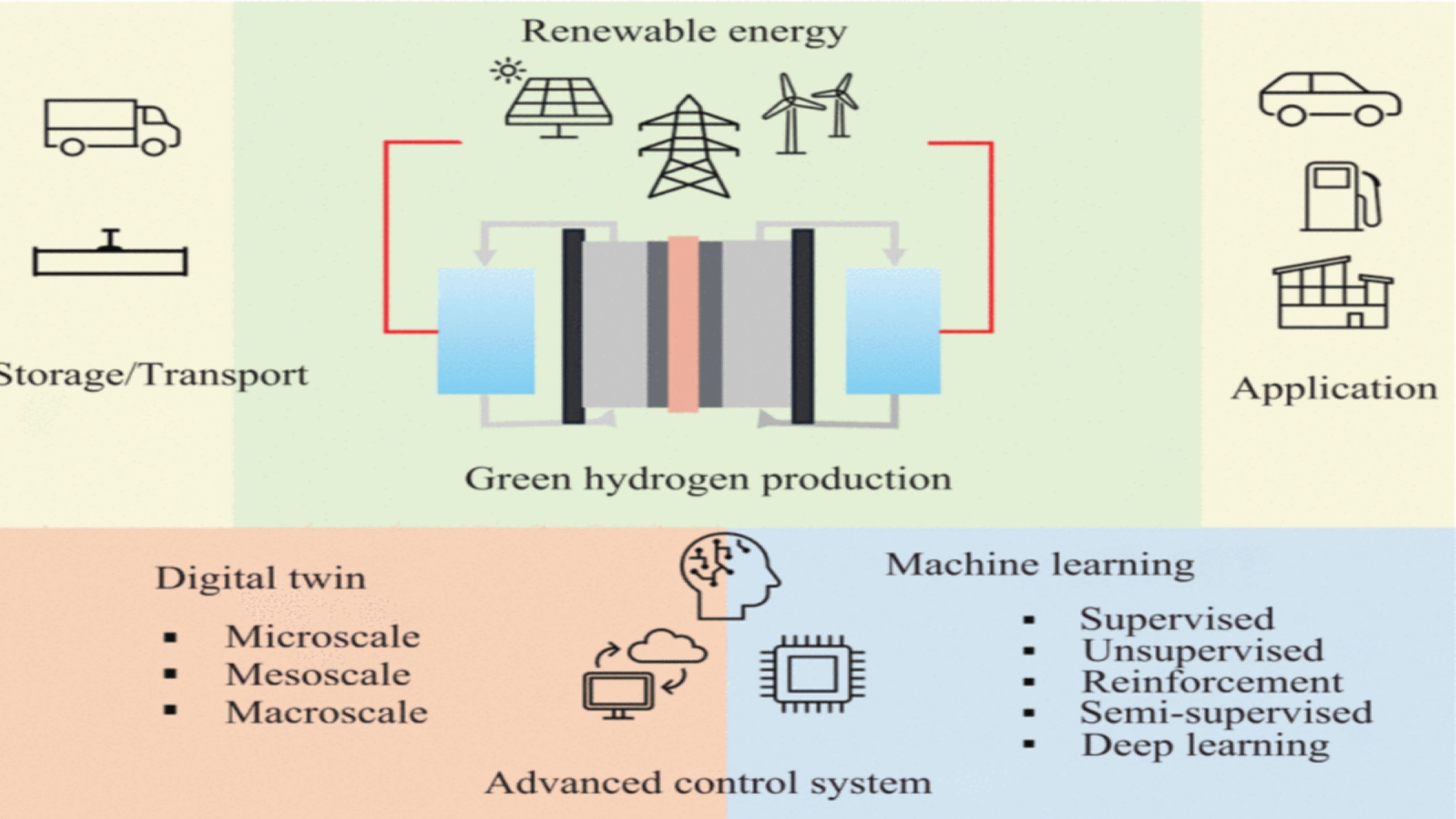
Hydrogen energy is a clean and versatile energy carrier, increasingly recognized for
its role in a sustainable energy future due to its clean and abundant energy production.
Bridging the gap between potential and practicality, digital Twin (DT) technology
emerges as a pivotal artificial intelligence tool, providing a virtual modelling platform
that enhances the operation and integration of hydrogen energy into modern energy
systems. This review firstly explores the multifaceted applications of DT technology
across different stages of the hydrogen energy lifecycle, including production, storage,
transport, and utilization. It commences with a detailed introduction to DT technology,
elucidating its definition, core principles, and structural nuances, thus laying the
groundwork for understanding its pivotal role in energy systems. The core of the review
delves into the applications of DT technology in hydrogen energy, segmenting the discussion
into production, storage, transport, and utilization processes. Specific focus is
given to optimizing fuel cells and hybrid electric vehicles through DT models, along
with the seamless integration of hydrogen systems with broader energy networks. It
further dissects the working mechanism of DT, highlighting the key features that contribute
to itsgrowing prominence in the energy sector.
Cited: 71
The successful reduction of carbon emissions in major sectors such as heavy industry
and long-distance transport depends crucially on the ability to produce green hydrogen
on a large scale. This involves generating hydrogen via water electrolysis, utilizing
power sourced from renewable energies. However, persistent challenges, such as dynamic
inefficiencies, material degradation, and renewable intermittency, demand a paradigm
shift from static control strategies to adaptive, self-optimizing systems. This perspective
argues that the synergistic integration of digital twins (DTs) and machine learning
(ML) offers a transformative framework for real-time optimization, predictive maintenance,
and resilient grid integration. By synthesizing physics-based modeling with data-driven
intelligence, DT-ML systems enable closed-loop control architectures that dynamically
adapt to operational uncertainties. We analyze the technical foundations of this integration,
address critical barriers, and propose actionable pathways for stakeholders to accelerate
the hydrogen economy's transition from promise to practice.
Cited: 44
Benefiting from the synergistic integration of aerial agility and terrestrial endurance,
aerial-ground amphibious platforms can effectively traverse unstructured environments,
demonstrating considerable potential for emergency response and reconnaissance applications.
However, most existing systems adopt a decoupled configuration, utilizing independent
propulsion units for ground and aerial modes. Although this approach enables dual-domain
operation, the duplicated actuators and transmission chains inevitably incur structural
redundancy and additional mass, which reduce overall system integration and payload
efficiency. To address these limitations, this paper proposes a novel aerial-ground
amphibious platform based on an integrated wheel-propeller structure. In the proposed
design, a single electric motor actuates both the wheel and ducted propeller through
a shared powertrain, where an electromagnetic clutch selectively engages the transmission
path to switch between terrestrial locomotion and aerial propulsion. Building upon
this mechanism, an amphibious platform configuration incorporating eight-wheel-propeller
units is developed. By establishing a dynamic simulation model of the platform, the
dynamic response characteristics during the drive-to-fly transition were investigated.
The results demonstrate the feasibility of the operational principle underpinning
the platform. The research provides a feasible technical approach for lightweight
and highly integrated aerial-ground platforms, laying the foundation for future experimental
implementation.
Download: 28
The ionomer coating structure on the catalyst surface critically determines the performance
and durability of proton exchange membrane fuel cell (PEMFC) electrodes. Conventional
fabrication often yields non‑uniform overlayers, increasing oxygen transport resistance,
blocking active sites, and accelerating interfacial degradation. Advancing from random
deposition to controlled coating structure is therefore a key objective. Ionomer adsorption
is governed by its intrinsic properties, support characteristics, and catalyst morphology.
In liquid environments, adsorption involves backbone hydrophobicity and side‑chain
chemical bonding, with the latter dominating the final configuration. Solvent composition,
particularly water content, modulates dispersion, and adsorption behavior. Optimization
strategies focus on two main approaches: suppressing detrimental adsorption (e.g.,
by tailoring support porosity or using additives like ionic liquids) and constructing
favorable mass‑transport pathways (e.g., by designing ionomers with cyclic/porous
structures or engineering porous overlayers). Rational design of ionomer properties,
interface regulation, and integration of these strategies can synergistically enhance
proton conduction, mass transport, and stability, laying a foundation for high‑performance,
durable fuel cell electrodes.
Download: 23
A novel physics-informed recurrent neural network (PIRNN) model has been developed
for data-driven constitutive modeling of metallic materials under high-strain-rate
loading. The proposed PIRNN framework integrates a gated recurrent unit (GRU) network
and a fully connected neural network to capture the rate-dependent stress-strain behavior
directly from synthetic stress and strain sequences generated from the Johnson-Cook
constitutive model. Notably, the inherent memory capability of the GRU model enables
implicit representation of arbitrary loading history, without the need for explicitly
accounting for internal state variables or prescribed constitutive relations, while
the fully connected neural network is utilized to estimate Helmholtz free energy under
general loading conditions. Thermodynamic admissibility is ensured by enforcing Helmholtz
free energy positivity and the dissipation inequality within the loss function. Validation
at the material point level against direct numerical solutions and experimental data
demonstrates the accurate predictive capability of the PIRNN under both multiaxial
and uniaxial loading conditions. The PIRNN is further implemented in ABAQUS for structural
simulations to demonstrate its applicability in structural analyses.
Download: 23