

A survey of electric vehicles in sustainable systems: Environmental benefits, pattern analysis, and AI-driven operation methodologies AITranslate

Abstract AITranslate
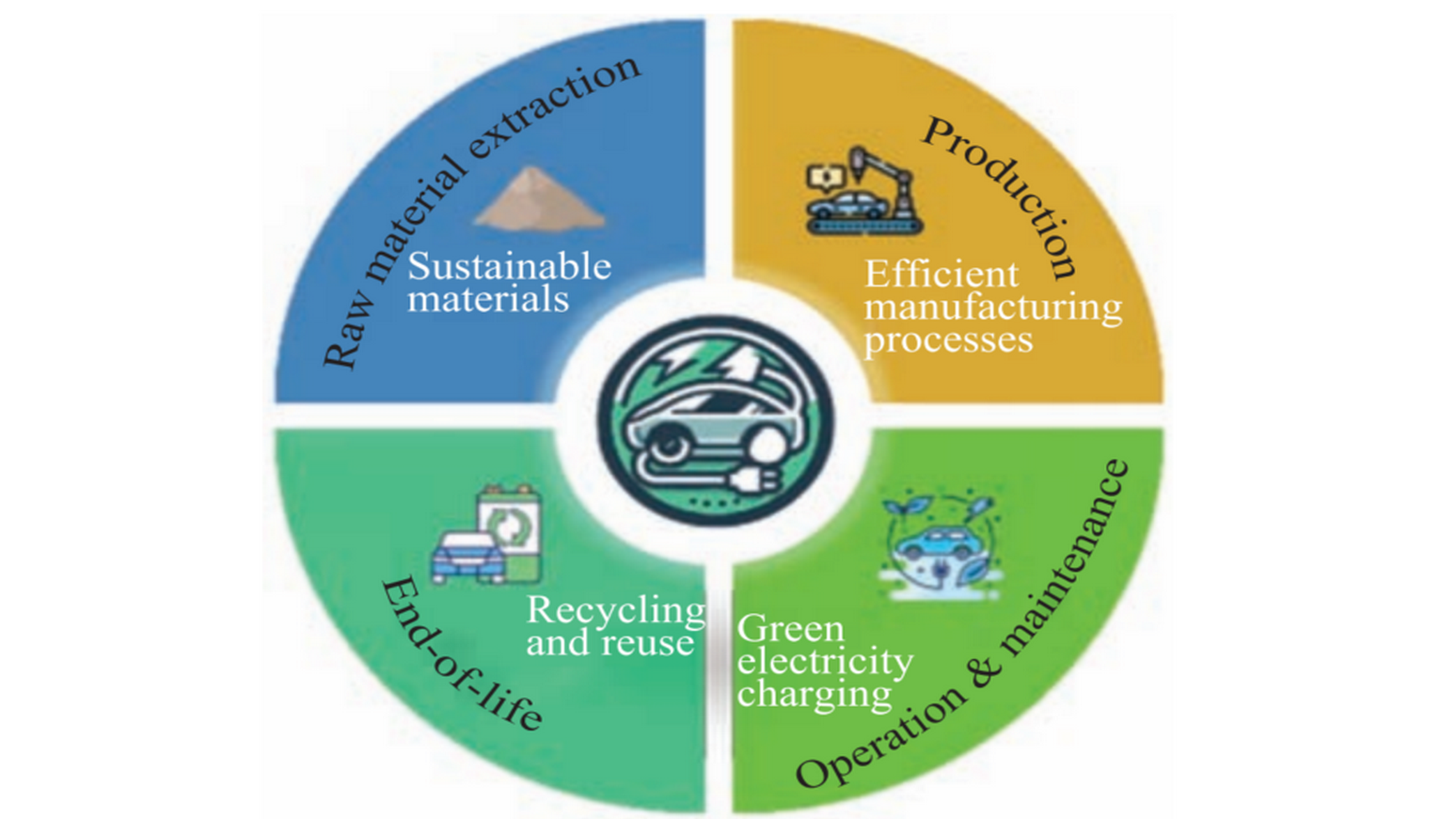
The emergence of electric vehicles (EVs) is critical for reducing environmental impacts and advancing sustainable transportation. Despite the known benefits, the complexities of EV integration with urban systems, power infrastructure, and environmental policies remain in-sufficiently explored. This literature review seeks to fill these gaps by synthesizing recent research across three key domains: environmental impact and sustainability, pattern analysis and system science, and methodology and operation of EV systems. The focus is on how EV adoption impacts climate change, net-zero emissions, air pollution, power grid dynamics, and mobility patterns, along with evaluating the effectiveness of AI-driven methodologies in enhancing EV operation. We conducted a systematic literature review of top-tier publications from journals such as Nature, Science, and PNAS, covering environmental science, urban systems engineering, and operational research related to EVs. Our findings highlighted that while EVs have the potential to reduce greenhouse gas emissions and improve urban air quality significantly, their actual environmental benefits depend heavily on factors such as electricity generation sources and the lifecycle impacts of battery production. Furthermore, we identified patterns in EV integration that can inform infrastructure planning and revealed the efficacy of advanced computational techniques, particularly reinforcement learning, in optimizing EV operations. Our major contributions include a comprehensive overview of the environmental impacts of EVs, insights into the challenges and opportunities of integrating EVs into urban systems, and showcasing the potential of AI-driven methodologies to enhance EV operations, with significant implications for policymakers, urban planners, and researchers.
KeyWords AITranslate
[1]T. R. Hawkins, O. M. Gausen, and A. H. Strømman, "Environmental impacts of hybrid and electric vehicles—A review," The International Journal of Life Cycle Assessment, vol. 17, pp. 997–1014, 2012.
[2]N. C. Onat, M. Kucukvar, and O. Tatari, "Conventional, hybrid, plug-in hybrid or electric vehicles? state-based comparative carbon and energy footprint analysis in the United States," Applied Energy, vol. 150, pp. 36–49, 2015.
[3]J. Van Mierlo, M. Messagie, and S. Rangaraju, "Comparative environmental assessment of alternative fueled vehicles using a life cycle assessment," Transportation Research Procedia, vol. 25, pp. 3435–3445, 2017.
[4]L. La Picirelli De Souza, E. E. Silva Lora, J. C. Escobar Palacio, M. H. Rocha, M. L. G. Renó, and O. J. Venturini, "Comparative environmental life cycle assessment of conventional vehicles with different fuel options, plug-in hybrid and electric vehicles for a sustainable transportation system in brazil," Journal of cleaner production, vol. 203, pp. 444–468, 2018.
[5]L. Yang, B. Yu, B. Yang, H. Chen, G. Malima, and Y. -M. Wei, "Life cycle environmental assessment of electric and internal combustion engine vehicles in China," Journal of Cleaner Production, vol. 285, p. 124899, 2021.
[6]H. Hao, Y. Geng, J. E. Tate, F. Liu, K. Chen, X. Sun, Z. Liu, and F. Zhao, "Impact of transport electrification on critical metal sustainability with a focus on the heavy-duty segment," Nature Communications, vol. 10, no. 1, p. 5398, 2019.
[7]S. Xiong, Y. Wang, B. Bai, and X. Ma, "A hybrid life cycle assessment of the large-scale application of electric vehicles," Energy, vol. 216, p. 119314, 2021.
[8]A. Nunes, L. Woodley, and P. Rossetti, "Re-thinking procurement incentives for electric vehicles to achieve net-zero emissions," Nature Sustainability, vol. 5, no. 6, pp. 527–532, 2022.
[9]C. Zhang, X. Zhao, R. Sacchi, and F. You, "Trade-off between critical metal requirement and transportation decarbonization in automotive electrification," Nature Communications, vol. 14, no. 1, p. 1616, 2023.
[10]Y. Ren, X. Sun, P. Wolfram, S. Zhao, X. Tang, Y. Kang, D. Zhao, and X. Zheng, "Hidden delays of climate mitigation benefits in the race for electric vehicle deployment," Nature Communications, vol. 14, no. 1, p. 3164, 2023.
[11]A. Milovanoff, I. D. Posen, and H. L. MacLean, "Electrification of light-duty vehicle fleet alone will not meet mitigation targets," Nature Climate Change, vol. 10, no. 12, pp. 1102–1107, 2020.
[12]W. J. Requia, M. Mohamed, C. D. Higgins, A. Arain, and M. Ferguson, "How clean are electric vehicles? evidence-based review of the effects of electric mobility on air pollutants, greenhouse gas emissions and human health," Atmospheric Environment, vol. 185, pp. 64–77, 2018.
[13]X. Liang, S. Zhang, Y. Wu, J. Xing, X. He, K. M. Zhang, S. Wang, and J. Hao, "Air quality and health benefits from fleet electrification in China," Nature Sustainability, vol. 2, no. 10, pp. 962–971, 2019.
[14]P. Lazzeroni, V. Cirimele, and A. Canova, "Economic and environmental sustainability of dynamic wireless power transfer for electric vehicles supporting reduction of local air pollutant emissions," Renewable and Sustainable Energy Reviews, vol. 138, p. 110537, 2021.
[15]M. Miotti, G. J. Supran, E. J. Kim, and J. E. Trancik, "Personal vehicles evaluated against climate change mitigation targets," Environmental Science & Technology, vol. 50, no. 20, pp. 10795–10804, 2016.
[16]A. Nordelöf, M. Messagie, A. -M. Tillman, M. L. Söderman, and J. Van Mierlo, "Environmental impacts of hybrid, plug-in hybrid, and battery electric vehicles—what can we learn from life cycle assessment?" The International Journal of Life Cycle Assessment, vol. 19, pp. 1866–1890, 2014.
[17]R. Faria, P. Marques, P. Moura, F. Freire, J. Delgado, and A. T. De Almeida, "Impact of the electricity mix and use profile in the life-cycle assessment of electric vehicles," Renewable and Sustainable Energy Reviews, vol. 24, pp. 271–287, 2013.
[18]D. B. Richardson, "Electric vehicles and the electric grid: A review of modeling approaches, impacts, and renewable energy integration," Renewable and Sustainable Energy Reviews, vol. 19, pp. 247–254, 2013.
[19]M. Isik, R. Dodder, and P. O. Kaplan, "Transportation emissions scenarios for New York city under different carbon intensities of electricity and electric vehicle adoption rates," Nature Energy, vol. 6, no. 1, pp. 92–104, 2021.
[20]A. F. N. Abdul-Manan, Vi. G. Zavaleta, A. K. Agarwal, G. Kalghatgi, and A. A. Amer, "Electrifying passenger road transport in India requires near-term electricity grid decarbonization," Nature Communications, vol. 13, no. 1, p. 2095, 2022.
[21]S. P. Holland, M. J. Kotchen, E. T. Mansur, and A. J. Yates, "Why marginal Co2 emissions are not decreasing for us electricity: Estimates and implications for climate policy," Proceedings of the National Academy of Sciences, vol. 119, no. 8, p. e2116632119, 2022.
[22]A. Mohammed, O. Saif, M. Abo-Adma, A. Fahmy, and R. Elazab, "Strategies and sustainability in fast charging station deployment for electric vehicles," Scientific Reports, vol. 14, no. 1, p. 283, 2024.
[23]H. Hao, Z. Mu, S. Jiang, Z. Liu, and F. Zhao, "GHG emissions from the production of lithium-ion batteries for electric vehicles in China," Sustainability, vol. 9, no. 4, p. 504, 2017.
[24]L. S. Martins, L. F. Guimarães, A. B. B. Junior, J. A. S. Tenório, and D. C. R. Espinosa, "Electric car battery: An overview on global demand, recycling and future approaches towards sustainability," Journal of Environmental Management, vol. 295, p. 113091, 2021.
[25]X. Xia and P. Li, "A review of the life cycle assessment of electric vehicles: Considering the influence of batteries," Science of the Total Environment, vol. 814, p. 152870, 2022.
[26]A. Lal and F. You, "Will reshoring manufacturing of advanced electric vehicle battery support renewable energy transition and climate targets?" Science Advances, vol. 9, no. 24, p. eadg6740, 2023.
[27]A. J. Niri, G. A. Poelzer, S. E. Zhang, J. Rosenkranz, M. Pettersson, and Y. Ghorbani, "Sustainability challenges throughout the electric vehicle battery value chain," Renewable and Sustainable Energy Reviews, vol. 191, p. 114176, 2024.
[28]Z. Khan, G. Iyer, P. Patel, S. Kim, M. Hejazi, C. Burleyson, and M. Wise, "Impacts of long-term temperature change and variability on electricity investments," Nature communications, vol. 12, no. 1, p. 1643, 2021.
[29]M. Webster, K. Fisher-Vanden, V. Kumar, R. B. Lammers, and J. Perla, "Integrated hydrological, power system and economic modelling of climate impacts on electricity demand and cost," Nature Energy, Vol. 7, no. 2, pp. 163–169, 2022.
[30]M. Pierre, C. Jemelin, and N. Louvet, "Driving an electric vehicle. a sociological analysis on pioneer users," Energy Efficiency, vol. 4, no. 4, pp. 511–522, 2011.
[31]R. Gambuti, S. Canale, F. Facchinei, A. Lanna, and A. Di Giorgio, "Electric vehicle trip planning integrating range constraints and charging facilities,"2015 23rd Mediterranean Conference on Control and Automation (Med), 2015, pp. 472–479.
[32]S. Stein, E. H Gerding, A. Nedea, A. Rosenfeld, and N. R. Jennings, "Evaluating market user interfaces for electric vehicle charging using bid2charge,"in Proceedings of the 26th International Joint Conference on Artificial Intelligence, Melbourne, Australia, 2017, pp. 4939–4943.
[33]J. E. Anderson, M. Lehne, and M. Hardinghaus, "What electric vehicle users want: Real-world preferences for public charging infrastructure," International Journal of Sustainable Transportation, vol. 12, no. 5, pp. 341–352, 2018.
[34]Q. Zhang, Y. Hu, W. Tan, C. Li, and Z. Ding, "Dynamic time-of-use pricing strategy for electric vehicle charging considering user satisfaction degree," Applied Sciences-Basel, vol. 10, no. 9, p. 3247, 2020.
[35]J. Zhong, N. Yang, X. Zhang, and J. Liu, "A fast-charging navigation strategy for electric vehicles considering user time utility differences," Sustainable Energy, Grids and Networks, vol. 30, p. 100646, 2022.
[36]H. E. Hafdaoui and A. Khallaayoun, "Mathematical modeling of social assessment for alternative fuel vehicles," IEEE Access, vol. 11, pp. 59108–59132, 2023.
[37]P. G. Machado, A. C. R. Teixeira, E. M. dos Santos, and D. Mouette, "Electric vehicles adoption: A systematic review (2016–2020)," Wiley Interdisciplinary Reviews-Energy and Environment, vol. 12, no. 5, p. e477, 2023.
[38]P. Kautish, R. Lavuri, D. Roubaud, and O. Grebinevych, "Electric vehicles’ choice behaviour: An emerging market scenario," Journal of Environmental Management, vol. 354, p. 120250, 2024.
[39]A. W. Schäfer and S. Yeh, "A holistic analysis of passenger travel energy and greenhouse gas intensities," Nature Sustainability, vol. 3, no. 6, pp. 459–462, 2020.
[40]A. Jenn, "Emissions benefits of electric vehicles in Uber and Lyft ride-hailing services," Nature Energy, vol. 5, no. 7, pp. 520–525, 2020.
[41]J. Morfeldt and Daniel J. A. Johansson, "Impacts of shared mobility on vehicle lifetimes and on the carbon footprint of electric vehicles," Nature Communications, vol. 13, no. 1, p. 6400, 2022.
[42]C. Zanocco, T. Sun, G. Stelmach, J. Flora, R. Rajagopal, and H. Boudet, "Assessing Californians’ awareness of their daily electricity use patterns," Nature Energy, vol. 7, no. 12, pp. 1191–1199, 2022.
[43]M. Herberz, U. J. J, Hahnel, and T. Brosch, "Counteracting electric vehicle range concern with a scalable behavioural intervention," Nature Energy, vol. 7, no. 6, pp. 503–510, 2022.
[44]L. Trahey, F. R. Brushett, N. P. Balsara, G. Ceder, L. Cheng, Y.-M. Chiang, N. T. Hahn, B. J. Ingram, S. D. Minteer, and J. S. Moore, et al., "Energy storage emerging: A perspective from the joint center for energy storage research," Proceedings of the National Academy of Sciences, vol. 117, no. 23, pp. 12550–12557, 2020.
[45]X. Lu, S. Chen, C. P. Nielsen, C. Zhang, J. Li, H. Xu, Y. Wu, S. Wang, F. Song, and C. Wei, et al., "Combined solar power and storage as cost-competitive and grid-compatible supply for China's future carbon-neutral electricity system," Proceedings of the National Academy of Sciences, vol. 118, no. 42, p. e2103471118, 2021.
[46]J. Taalbi and H. Nielsen, "The role of energy infrastructure in shaping early adoption of electric and gasoline cars," Nature Energy, vol. 6 no. 10, pp. 970–976, 2021.
[47]S. Powell, G. V. Cezar, L. Min, I. M. L. Azevedo, and R. Rajagopal, "Charging infrastructure access and operation to reduce the grid impacts of deep electric vehicle adoption," Nature Energy, vol. 7, no. 10, pp. 932–945, 2022.
[48]C. Xu, P. Behrens, P. Gasper, K. Smith, M. Hu, A. Tukker, and B. Steubing, "Electric vehicle batteries alone could satisfy short-term grid storage demand by as early as 2030," Nature Communications, vol. 14, no. 1, p. 119, 2023.
[49]H. Mehrjerdi, "Resilience oriented vehicle-to-home operation based on battery swapping mechanism," Energy, vol. 218, p. 119528, 2021.
[50]G. Raman, G. Raman, and J. C.-H. Peng, "Resilience of urban public electric vehicle charging infrastructure to flooding," Nature Communications, vol. 13, no. 1, p. 3213, 2022.
[51]A. Hussain and P. Musilek, "Resilience enhancement strategies for and through electric vehicles," Sustainable Cities and Society, vol. 80, p. 103788, 2022.
[52]H. Wang, A. F. Abdin, Y.-P. Fang, and E. Zio, "Resilience assessment of electrified road networks subject to charging station failures," Computer-Aided Civil and Infrastructure Engineering, vol. 37, no. 3, pp. 300–316, 2022.
[53]W. Gan, J. Wen, M. Yan, Y. Zhou, and W. Yao, "Enhancing resilience with electric vehicles charging redispatching and vehicle-to-grid in traffic-electric networks," IEEE Transactions on Industry Applications, vol. 60, no. 1, pp. 953–965, 2024.
[54]A. T. D. Perera, K. Javanroodi, D. Mauree, V. M. Nik, P. Florio, T. Hong, and D. Chen, "Challenges resulting from urban density and climate change for the EU energy transition," Nature Energy, vol. 8, no. 4, pp. 397–412, 2023.
[55]B. Borlaug, M. Muratori, M. Gilleran, D. Woody, W. Muston, T. Canada, A. Ingram, H. Gresham, and C. McQueen, "Heavy-duty truck electrification and the impacts of depot charging on electricity distribution systems," Nature Energy, vol. 6, no. 6, pp. 673–682, 2021.
[56]W. Wei, S. Ramakrishnan, Z. A. Needell, and J. E. Trancik, "Personal vehicle electrification and charging solutions for high-energy days," Nature Energy, vol. 6, no. 1, pp. 105–114, 2021.
[57]A. Mohan, S. Sripad, P. Vaishnav, and V. Viswanathan, "Trade-offs between automation and light vehicle electrification," Nature Energy, vol. 5, no. 7, pp. 543–549, 2020.
[58]Y. Zhao, Z. Wang, Z.-J. M. Shen, and F. Sun, "Assessment of battery utilization and energy consumption in the large-scale development of urban electric vehicles," Proceedings of the National Academy of Sciences, vol. 118, no. 17, p. e2017318118, 2021.
[59]D. Roman, S. Saxena, V. Robu, M. Pecht, and D. Flynn, "Machine learning pipeline for battery state-of-health estimation," Nature Machine Intelligence, vol. 3, no. 5, pp. 447–456, 2021.
[60]J. Yang, Y. Wen, Y. Wang, S. Zhang, J. P. Pinto, E. A. Pennington, Z. Wang, Y. Wu, S. P. Sander, J. H. Jiang, et al., "From Covid-19 to future electrification: Assessing traffic impacts on air quality by a machine-learning model," Proceedings of the National Academy of Sciences, vol. 118, no. 26, p. e2102705118, 2021.
[61]A. Aryandoust, A. Patt, and S. Pfenninger, "Enhanced spatio-temporal electric load forecasts using less data with active deep learning," Nature Machine Intelligence, vol. 4, no. 11, pp. 977–991, 2022.
[62]F. Tuchnitz, N. Ebell, J. Schlund, and M. Pruckner, "Development and evaluation of a smart charging strategy for an electric vehicle fleet based on reinforcement learning," Applied Energy, vol. 285, p. 116382, 2021.
[63]N. Sadeghianpourhamami, J. Deleu, and C. Develder, "Definition and evaluation of model-free coordination of electrical vehicle charging with reinforcement learning," IEEE Transactions on Smart Grid, vol. 11, no. 1, pp. 203–214, 2019.
[64]H. He, X. Meng, Y. Wang, A. Khajepour, X. An, R. Wang, and F. Sun, "Deep reinforcement learning based energy management strategies for electrified vehicles: Recent advances and perspectives," Renewable and Sustainable Energy Reviews, vol. 192, p. 114248, 2024.
[65]N. Fescioglu-Unver and M. Y. Aktaş, "Electric vehicle charging service operations: A review of machine learning applications for infrastructure planning, control, pricing and routing," Renewable and Sustainable Energy Reviews, vol. 188, p. 113873, 2023.
[66]N. Wang, C. Wang, Y. Niu, M. Yang, and Y. Yu, "A two-stage charging facilities planning method for electric vehicle sharing systems," IEEE Transactions on Industry Applications, vol. 57, no. 1, pp. 149–157, 2020.
[67]C. A. Marino and M. Marufuzzaman, "Unsupervised learning for deploying smart charging public infrastructure for electric vehicles in sprawling cities," Journal of Cleaner Production, vol. 266, p. 121926, 2020.
[68]M. Zeng, Y. Pan, D. Zhang, Z. Lu, and Y. Li, "Data-driven location selection for battery swapping stations," IEEE Access, vol. 7, pp. 133760–133771, 2019.
[69]C. Jiang, Z. Jing, T. Ji, and Q. Wu, "Optimal location of pevcss using MAS and ER approach," IET Generation, Transmission & Distribution, vol. 12, no. 20, pp. 4377–4387, 2018.
[70]M. A. Kazemi, M. Sedighizadeh, M. J. Mirzaei, and O. Homaee, "Optimal siting and sizing of distribution system operator owned EV parking lots," Applied Energy, vol. 179, pp. 1176–1184, 2016.
[71]Z. Yi, X. C. Liu, R. Wei, X. Chen, and J. Dai, "Electric vehicle charging demand forecasting using deep learning model," Journal of Intelligent Transportation Systems, vol. 26, no. 6, pp. 690–703, 2022.
[72]A. Verma, A. Asadi, K. Yang, A. Maitra, and H. Asgeirsson, "Analyzing household charging patterns of plug-in electric vehicles (PEVs): A data mining approach," Computers & Industrial Engineering, vol. 128, pp. 964–973, 2019.
[73]J. Jin, S. Mao, and Y. Xu, "Optimal priority rule-enhanced deep reinforcement learning for charging scheduling in an electric vehicle battery swapping station," IEEE Transactions on Smart Grid, vol. 14, no. 6, pp. 4581–4593, 2023.
[74]Z. Zhang, Y. Wan, J. Qin, W. Fu, and Y. Kang, "A deep RL-based algorithm for coordinated charging of electric vehicles," IEEE Transactions on Intelligent Transportation Systems, vol. 23, no. 10, pp. 18774–18784, 2022.
[75]J. Lin, P. Dong, M. Liu, X. Huang, and W. Deng, "Research on demand response of electric vehicle agents based on multi-layer machine learning algorithm," IEEE Access, vol. 8, pp. 224224–224234, 2020.
[76]M. J. Shin, D.-H. Choi, and J. Kim, "Cooperative management for PV/ESS-enabled electric vehicle charging stations: A multiagent deep reinforcement learning approach," IEEE Transactions on Industrial Informatics, vol. 16, no. 5, pp. 3493–3503, 2019.
[77]T. Qian, C. Shao, X. Li, X. Wang, Z. Chen, and M. Shahidehpour, "Multi-agent deep reinforcement learning method for EV charging station game," IEEE Transactions on Power Systems, vol. 37, no. 3, pp. 1682–1694, 2021.
[78]C. Fang, H. Lu, Y. Hong, S. Liu, and J. Chang, "Dynamic pricing for electric vehicle extreme fast charging," IEEE Transactions on Intelligent Transportation Systems, vol. 22, no. 1, pp. 531–541, 2020.
[79]D. Qiu, Y. Ye, D. Papadaskalopoulos, and G. Strbac, "A deep reinforcement learning method for pricing electric vehicles with discrete charging levels," IEEE Transactions on Industry Applications, vol. 56, no. 5, pp. 5901–5912, 2020.
[80]Y.-C. Hung and G. Michailidis, "A novel data-driven approach for solving the electric vehicle charging station location-routing problem," IEEE Transactions on Intelligent Transportation Systems, vol. 23, no. 12, pp. 23858–23868, 2022.
[81]B. Lin, B. Ghaddar, and J. Nathwani, "Deep reinforcement learning for the electric vehicle routing problem with time windows," IEEE Transactions on Intelligent Transportation Systems, vol. 23, no. 8, pp. 11528–11538, 2021.
[82]P. Xu, J. Zhang, T. Gao, S. Chen, X. Wang, H. Jiang, and W. Gao, "Real-time fast charging station recommendation for electric vehicles in coupled power-transportation networks: A graph reinforcement learning method," International Journal of Electrical Power & Energy Systems, vol. 141, p. 108030, 2022.
[83]R. Basso, B. Kulcsár, and I. Sanchez-Diaz, "Electric vehicle routing problem with machine learning for energy prediction," Transportation Research Part B: Methodological, vol. 145, pp. 24–55, 2021.
[84]D. Qiu, Y. Wang, M. Sun, and G. Strbac, "Multi-service provision for electric vehicles in power-transportation networks towards a low-carbon transition: A hierarchical and hybrid multi-agent reinforcement learning approach," Applied Energy, vol. 313, p. 118790, 2022.
[85]V. Mnih, K. Kavukcuoglu, D. Silver, A. A. Rusu, J. Veness, M. G. Bellemare, A. Graves, M. Riedmiller, A. K. Fidjeland, G. Ostrovski, et al., "Human-level control through deep reinforcement learning," Nature, vol. 518, no. 7540, pp. 529–533, 2015.
[86]J. Shi, Y. Gao, W. Wang, N. Yu, and P. A. Ioannou, "Operating electric vehicle fleet for ride-hailing services with reinforcement learning," IEEE Transactions on Intelligent Transportation Systems, vol. 21, no. 11, pp. 4822–4834, 2019.
[87]Y. Zhang, Q. Yang, D. An, D. Li, and Z. Wu, "Multistep multiagent reinforcement learning for optimal energy schedule strategy of charging stations in smart grid," IEEE Transactions on Cybernetics, vol. 53, no, 7, 4292–4305, 2022.
[88]L. Yan, X. Chen, Y. Chen, and J. Wen, "A cooperative charging control strategy for electric vehicles based on multiagent deep reinforcement learning," IEEE Transactions on Industrial Informatics, vol. 18, no. 12, pp. 8765–8775, 2022.
[89]T. Qian, C. Shao, X. Wang, and M. Shahidehpour, "Deep reinforcement learning for EV charging navigation by coordinating smart grid and intelligent transportation system," IEEE Transactions on Smart Grid, vol. 11, no. 2, pp. 1714–1723, 2019.
[90]J. Jin and Y. Xu, "Optimal policy characterization enhanced actor-critic approach for electric vehicle charging scheduling in a power distribution network," IEEE Transactions on Smart Grid, vol. 12, no. 2, pp. 1416–1428, 2020.
[91]B. Shuai, Q. Zhou, J. Li, Y. He, Z. Li, H. Williams, H. Xu, and S. Shuai, "Heuristic action execution for energy efficient charge-sustaining control of connected hybrid vehicles with model-free double q-learning," Applied Energy, vol. 267, p. 114900, 2020.
[92]C. Zhang, Y. Liu, F. Wu, B. Tang, and W. Fan, "Effective charging planning based on deep reinforcement learning for electric vehicles," IEEE Transactions on Intelligent Transportation Systems, vol. 22, no. 1, pp. 542–554, 2020.
[93]S. Mao, J. Jin, and Y. Xu, "Routing and charging scheduling for EV battery swapping systems: Hypergraph-based heterogeneous multiagent deep reinforcement learning," IEEE Transactions on Smart Grid, vol. 15, no. 5, pp. 4903–4916, 2024.
[94]Y. Ye, D. Qiu, X. Wu, G. Strbac, and J. Ward, "Model-free real-time autonomous control for a residential multi-energy system using deep reinforcement learning," IEEE Transactions on Smart Grid, vol. 11, no. 4, pp. 3068–3082, 2020.
[95]Z. Wan, H. Li, H. He, and D. Prokhorov, "Model-free real-time ev charging scheduling based on deep reinforcement learning," IEEE Transactions on Smart Grid, vol. 10, no. 5, pp. 5246–5257, 2018.
[96]Y. Liang, Z. Ding, T. Ding, and W. Lee, "Mobility-aware charging scheduling for shared on-demand electric vehicle fleet using deep reinforcement learning," IEEE Transactions on Smart Grid, vol. 12, no. 2, pp. 1380–1393, 2020.
[97]T. Ding, Z. Zeng, J. Bai, B. Qin, Y. Yang, and M. Shahidehpour, "Optimal electric vehicle charging strategy with markov decision process and reinforcement learning technique," IEEE Transactions on Industry Applications, vol. 56, no. 5, pp. 5811–5823, 2020.
Basic Information:
DOI:10.23919/CHAIN.2024.000009
Chinese Library Classification Number:
Citation Information:
The emergence of electric vehicles (EVs) is critical for reducing environmental impacts and advancing sustainable transportation. Despite the known benefits, the complexities of EV integration with urban systems, power infrastructure, and environmental policies remain in-sufficiently explored. This literature review seeks to fill these gaps by synthesizing recent research across three key domains: environmental impact and sustainability, pattern analysis and system science, and methodology and operation of EV systems. The focus is on how EV adoption impacts climate change, net-zero emissions, air pollution, power grid dynamics, and mobility patterns, along with evaluating the effectiveness of AI-driven methodologies in enhancing EV operation. We conducted a systematic literature review of top-tier publications from journals such as Nature, Science, and PNAS, covering environmental science, urban systems engineering, and operational research related to EVs. Our findings highlighted that while EVs have the potential to reduce greenhouse gas emissions and improve urban air quality significantly, their actual environmental benefits depend heavily on factors such as electricity generation sources and the lifecycle impacts of battery production. Furthermore, we identified patterns in EV integration that can inform infrastructure planning and revealed the efficacy of advanced computational techniques, particularly reinforcement learning, in optimizing EV operations. Our major contributions include a comprehensive overview of the environmental impacts of EVs, insights into the challenges and opportunities of integrating EVs into urban systems, and showcasing the potential of AI-driven methodologies to enhance EV operations, with significant implications for policymakers, urban planners, and researchers.
quote
| GB/T 7714-2015 | [1] Hongwei Wang, Jie Song, Xian Li. A survey of electric vehicles in sustainable systems: Environmental benefits, pattern analysis, and AI-driven operation methodologies[J]. Chain, 2024, 1(3): 177-202. DOI:10.23919/CHAIN.2024.000009. |
| MLA | [1] Hongwei Wang, et al., "A survey of electric vehicles in sustainable systems: Environmental benefits, pattern analysis, and AI-driven operation methodologies." Chain, vol. 1, no. 3, 2024, pp. 177-202, https://doi.org/10.23919/CHAIN.2024.000009. |
| APA | [1] Hongwei Wang, Jie Song, & Xian Li. (2024). A survey of electric vehicles in sustainable systems: Environmental benefits, pattern analysis, and AI-driven operation methodologies. Chain, 1(3), 177-202. https://doi.org/10.23919/CHAIN.2024.000009 |
| IEEE | [1] Hongwei Wang, Jie Song, and Xian Li, "A survey of electric vehicles in sustainable systems: Environmental benefits, pattern analysis, and AI-driven operation methodologies," Chain, vol. 1, no. 3, pp. 177-202, 2024, doi: 10.23919/CHAIN.2024.000009. keywords: {electric vehicle (EV) decarbonization;power infrastructure urban mobility;artificial intelligence (AI)} |