

High-dimensional traffic test scenario derivation for autonomous vehicles AITranslate

Abstract AITranslate
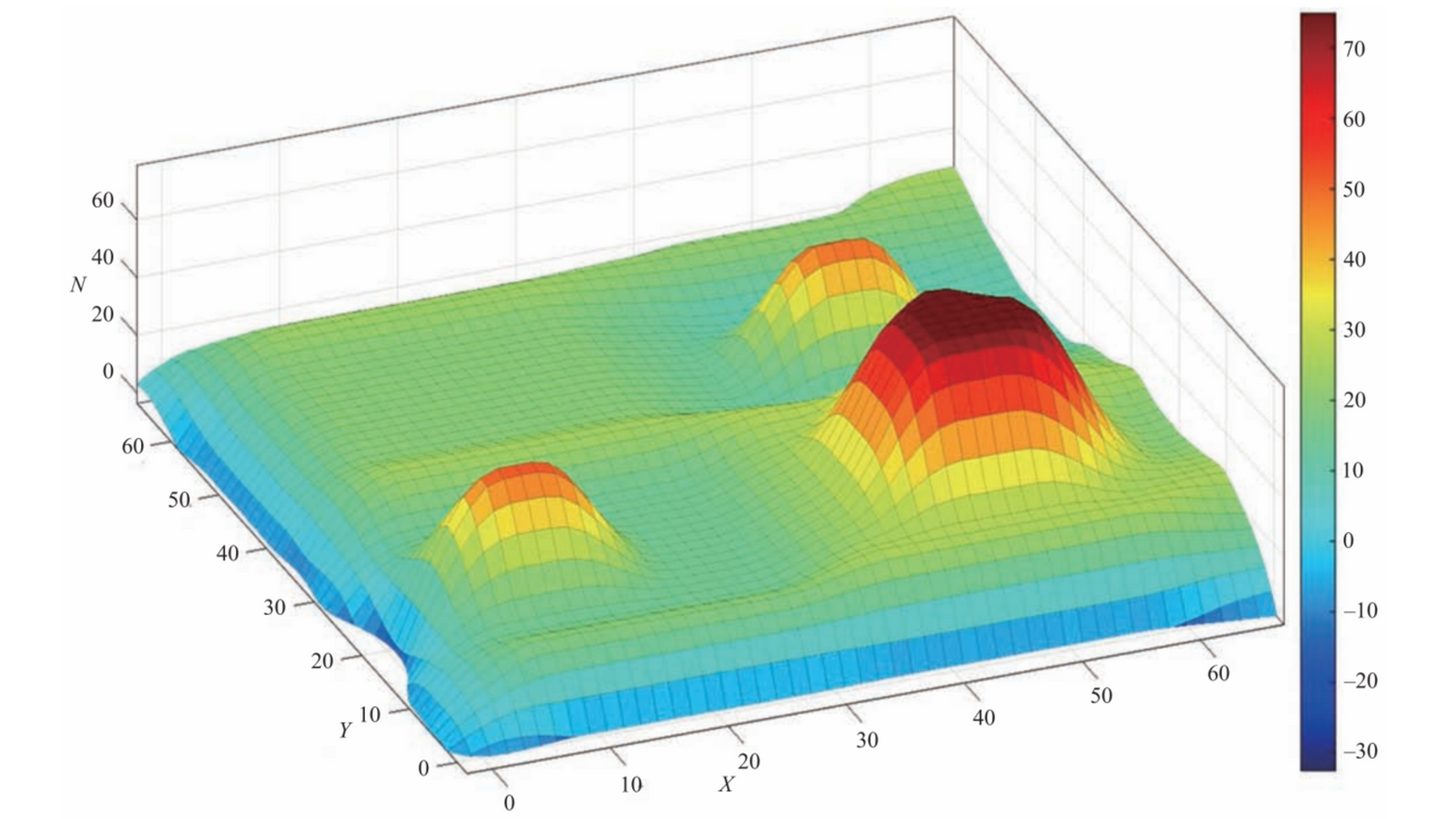
To enhance the testing efficiency of autonomous vehicles, it is essential to derive intelligent traffic test scenarios. Current methods face limitations such as reliance on subjective analysis and neglect of inter-element correlations. This study introduces Kalman particle filtering theory for high-dimensional traffic scenario derivation. By analyzing comprehensive energy fields in normalized scenes with various elements, we define benchmark scenes using field energy theory. Multi-level research is conducted on processing high-dimensional spatial element data, proposing a normative paradigm for weight allocation among scene elements. We perform generalized derivation by extending hierarchical elements based on offset values, meeting functional verification requirements. Simulation experiments comparing risk event detection, decision-making, and feedback behavior between the proposed method and actual driving data show a steering matching index of 0.92, a longitudinal speed matching index of 0.96, and an root mean squared error (RMSE) mean value of 0.06.
KeyWords AITranslate
[1]PEGASUS, "PEGASUS expert worshop #1,"2016, Accessed on June, 2024. [Online] Available: https://www.vvm-projekt.de/en/news-events.
[2]UNECE, "Working party on automated/autonomous and connected vehicles – Introduction,"Accessed on June, 2024. [Online] Available: https://unece.org/transport/vehicle-regulations/working-party-automatedautonomous-and-connected-vehicles-introduction, 2020.
[3]ASAM, "ASAM SIM: Guide, Standardization for highly automated driving,"2021, Accessed on June, 2024. [Online] Available: https://www.asam.net/asam-guide/.
[4]O. Khabit, "Real-time obstacle avoidance for manipulators and mobile robots," The International Journal of Robotics Research, vol. 5, no. 2, pp. 500–505, 1986.
[5]F. Anhalt and S. Hafner, "Concept, implementation, and performance comparison of a particle filter for accurate vehicle localization using road profile data," SAE International Journal of Vehicle Dynamics, Stability, and NVH, vol. 7, no. 3, pp. 405–418, 2023.
[6]G. Y. Chen, J. Yao, Z. H. Gao, Z. Gao, X. M. Zhao, and N. Xu, "Emergency obstacle avoidance trajectory planning method of intelligent vehicles based on improved hybrid A*," SAE International Journal of Vehicle Dynamics, Stability, and NVH, vol. 8, no. 1, pp. 3–19, 2024.
[7]Y. Wang, H. G. Wei, L. Yang, and B. B. Hu, "A review of dynamic state estimation for the neighborhood system of connected vehicles," SAE International Journal of Vehicle Dynamics, Stability, and NVH, vol. 7, no. 3, pp. 367–385, 2023.
[8]D. Gonzalez, J. Perez, V. Milanés, and F. Nashashibi, "A review of motion planning techniques for automated vehicle," IEEE Transactions on Intelligent Transportation Systems, vol. 17, no. 4, pp. 1135–1145, 2016.
[9]S. Ge and Y. Cui, "Dynamic motion planning for mobile robots using potential field method," Autonomous Robots, vol. 13, pp. 207–222, 2002.
[10]A. Einstein, "Unified field theory based on riemannian metrics and distance parallelism," Math Annal, vol. 102, pp. 685–697, 1930.
[11]J. Ji, H. Peng, W. Chi, and M. Tang, "Decision making for vehicle collision avoidance based on dangerous potential field,"in Proceedings of 2015 Annual Meeting of China Automotive Engineering Society, Shanghai, China SAE, 2015.
[12]Y. Ren, L. Zheng, W. Zhang, W. Yang, and Z. B. Xiong, "A study on active collision avoidance control of autonomous vehicles based on model predictive control," Automotive Engineering, vol. 41, no. 4, pp. 404–410, 2019.
[13]C. Xiu and H. Chen, "Research on local path planning of unmanned vehicle based on improved artificial potential field method," Automotive Engineering, vol. 35, no. 9, pp. 808–811, 2013.
[14]K. Lewin, "Field theory in social science," American Catholic Sociological Review, vol. 12, no. 2, p. 103, 1951.
[15]ISO, International standard ISO 21448: 2022, "Road vehicles — Safety of the intended functionality," 2022, Accessed on June, 2024. [Online] Available: https://www.iso.org/standard/70939.html.
[16]S. Ulbrich, T. Menzel, A. Reschka, F. Schuldt, and M. Maurer, "Defining and substantiating the terms scene,situation, and scenario for automated driving,"2015 IEEE 18th International Conference on Intelligent Transportation Systems, Gran Canaria, Spain, 15–18 September, 2015.
[17]Y. Hu, M. Dai, K. Wang, and L. Drugge, "Cut-in critical level prediction via simulation based time-to-collision algorithm,"2020 25th IEEE International Conference on Emerging Technologies and Factory Automation (ETFA), Vienna, Austria, 08–11 September, 2020.
[18]J. Ren, C. Yu, S. Sheng, X. Ma, H. Zhao, S. Yi, and H. Li, "Balanced meta-softmax for long-tailed visual recognition," arXiv:2007.10740 [cs.LG], 22 November, 2020.
[19]M. Hayat, S. Khan, S. W. Zamir, J. Shen, and L. Shao, "Gaussian affinity for max-margin class imbalanced learning,"2019 IEEE/CVF International Conference on Computer Vision (ICCV), Seoul, Korea (South), 27 February, 2020, pp. 6468–6478.
[20]S. H. Khan, M. Hayat, M. Bennamoun, F. A. Sohel, and R. Togneri, "Cost-sensitive learning of deep feature representations from imbalanced data," IEEE Transactions on Neural Networks and Learning Systems, vol. 29, no. 8 pp. 3573–3587, 2018.
[21]P. Wang, K. Han, X.-S. Wei, L. Zhang, and L. Wang, "Contrastive learning based hybrid networks for long-tailed image classification, 2021 IEEE/CVF Conference on Computer Vision and Pattern Recognition (CVPR), Nashville, TN, USA, 20–25 June, 2021, pp. 943–952.
[22]Q. Dong, S. Gong, and X. Zhu, "Class rectification hard mining for imbalanced deep learning," arXiv:1712.03162 [cs.CV], 8 Dec 2017.
[23]T.-Y. Lin, P. Goyal, R. Girshick, K. He, and P. Dollár, "Focal loss for dense object detection,"2017 IEEE International Conference on Computer Vision (ICCV), Venice, Italy, 22–29 October, 2017, pp. 2999–3007.
[24]D. Mahajan, R. Girshick, V. Ramanathan, K. He, M. Paluri, Y. Li, A. Bharambe, and L. Van Der Maaten, "Exploring the limits of weakly supervised pretraining," arXiv:1805.00932 [cs.CV], 2 May 2018.
[25]Y. Cui, Y. Song, C. Sun, A. Howard, and S. Belongie, "Large scale fine-grained categorization and domain-specific transfer learning," arXiv:1806.06193 [cs.CV], 16 Jun, 2018.
[26]B. Kang, S. Xie, M. Rohrbach, Z. Yan, A. Gordo, J. Feng, and Y. Kalantidis, "Decoupling representation and classifier for long-tailed recognition," arXiv:1910.09217 [cs.CV], 19 February, 2020.
[27]B. Zhou, Q. Cui, X. Wei, and Z.-M. Chen, "BBN: Bilateral-branch network with cumulative learning for long-tailed visual recognition," arXiv:1912.02413 [cs.CV], 10 March, 2020.
[28]P. Chu, X. Bian, S. Liu, and H. Ling, "Feature space augmentation for long-tailed data," arXiv:2008.03673 [cs.CV], 9 August, 2020.
[29]J. Liu, Y. Sun, C. Han, Z. Dou, and W. Li, "Deep representation learning on long-tailed data: A learnable embedding augmentation perspective,"2020 IEEE/CVF Conference on Computer Vision and Pattern Recognition (CVPR), Seattle, WA, USA, 13–19 June, 2020, pp. 2967–2976.
[30]J. Kim, J. Jeong, and J. Shin, "M2m: Imbalanced classification via major-to-minor translation," arXiv:2004.00431, 20 December, 2020.
[31]S. S. Mullick, S. Datta, and S. Das, "Generative adversarial minority oversampling,"2019 IEEE/CVF International Conference on Computer Vision (ICCV), Seoul, Korea (South), 27 October, 2019, pp. 1695–1704.
[32]H. Zhang, M. Cisse, Y. N. Dauphin, and D. Lopez-Paz, "mixup: Beyond empirical risk minimization," arXiv:1710.09412 [cs.LG], 27 Apr 2018.
[33]H.-P. Chou, S.-C. Chang, J.-Y. Pan, W. Wei, and D.-C. Juan, "Remix: Rebalanced mixup," arXiv:2007.03943v2 [cs.LG], 19 August, 2020.
Basic Information:
DOI:10.23919/CHAIN.2024.100006
Chinese Library Classification Number:
Citation Information:
To enhance the testing efficiency of autonomous vehicles, it is essential to derive intelligent traffic test scenarios. Current methods face limitations such as reliance on subjective analysis and neglect of inter-element correlations. This study introduces Kalman particle filtering theory for high-dimensional traffic scenario derivation. By analyzing comprehensive energy fields in normalized scenes with various elements, we define benchmark scenes using field energy theory. Multi-level research is conducted on processing high-dimensional spatial element data, proposing a normative paradigm for weight allocation among scene elements. We perform generalized derivation by extending hierarchical elements based on offset values, meeting functional verification requirements. Simulation experiments comparing risk event detection, decision-making, and feedback behavior between the proposed method and actual driving data show a steering matching index of 0.92, a longitudinal speed matching index of 0.96, and an root mean squared error (RMSE) mean value of 0.06.
quote
| GB/T 7714-2015 | [1] Guoyu Zhang, Aijing Kong, Jian Sun, et al. High-dimensional traffic test scenario derivation for autonomous vehicles[J]. Chain, 2024, 1(4): 323-340. DOI:10.23919/CHAIN.2024.100006. |
| MLA | [1] Guoyu Zhang, et al., "High-dimensional traffic test scenario derivation for autonomous vehicles." Chain, vol. 1, no. 4, 2024, pp. 323-340, https://doi.org/10.23919/CHAIN.2024.100006. |
| APA | [1] Guoyu Zhang, Aijing Kong, Jian Sun, & Peng Hang. (2024). High-dimensional traffic test scenario derivation for autonomous vehicles. Chain, 1(4), 323-340. https://doi.org/10.23919/CHAIN.2024.100006 |
| IEEE | [1] Guoyu Zhang, Aijing Kong, Jian Sun, and Peng Hang, "High-dimensional traffic test scenario derivation for autonomous vehicles," Chain, vol. 1, no. 4, pp. 323-340, 2024, doi: 10.23919/CHAIN.2024.100006. keywords: {pan-scene architecture;field theory;particle filter;intelligent driving scenario;intelligent driving system} |