

Unlocking carbon capture and storage potential: Policy incentives, economic challenges, and infrastructure integration for CO2 transport AITranslate
Abstract AITranslate
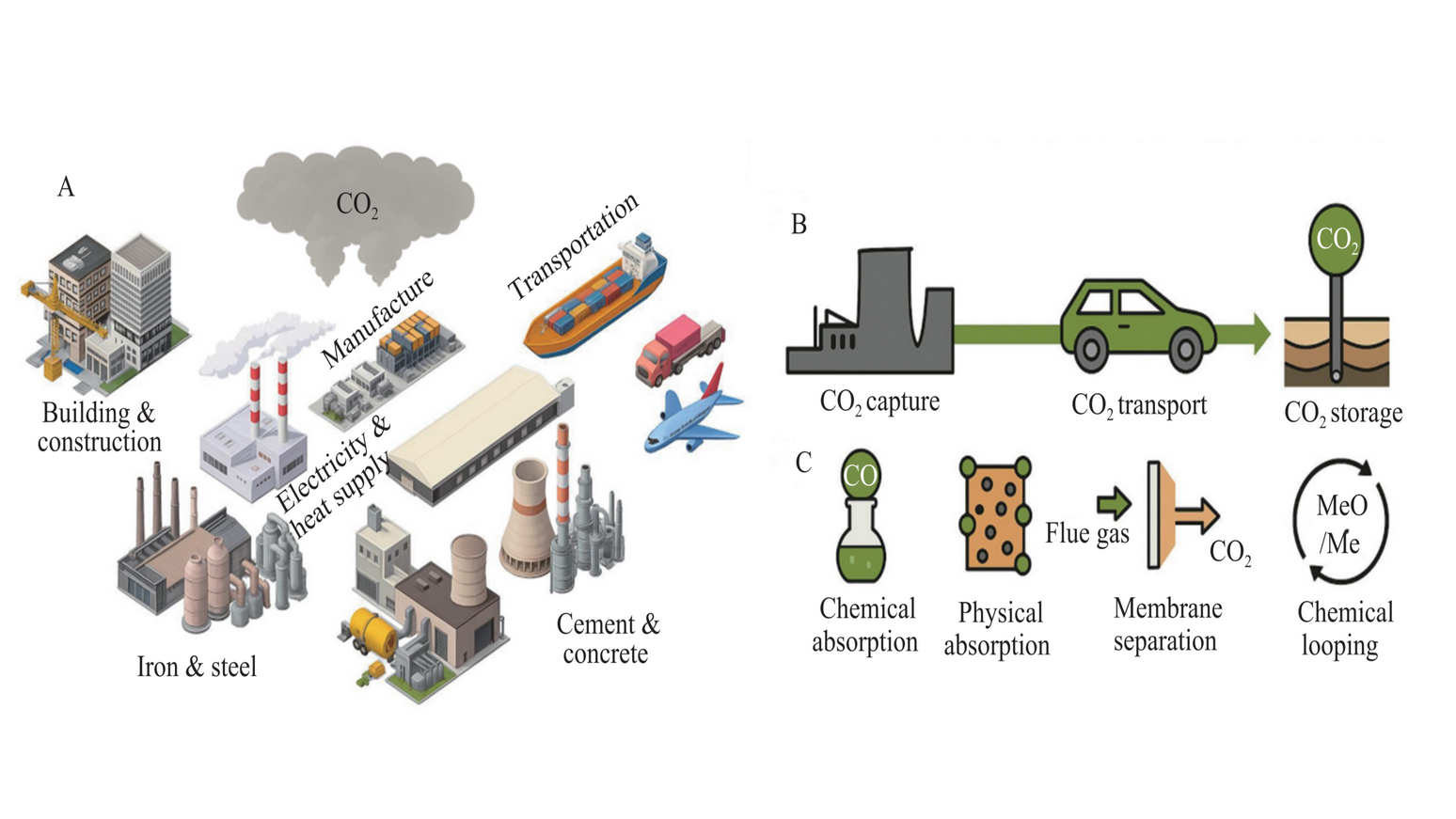
As countries accelerate efforts to meet carbon neutrality targets, carbon capture and storage (CCS) is gaining renewed attention as a critical mitigation strategy. This review provides a structured synthesis of global CCS policy evolution, highlighting how incentive mechanisms have shifted from generic subsidies toward hybrid approaches integrating carbon pricing, green finance, and legal risk-sharing. Building on this, the paper introduces a policy classification framework that categorizes instruments into market-based tools, command-and-control regulations, and institutional support, offering analytical coherence for future cross-country comparisons. Beyond the industrial and power sectors, the review foregrounds an often-overlooked CCS application: addressing residual emissions in hard-to-abate sectors such as transportation. We emphasize the strategic role of CO2 transport infrastructure–including pipelines, shipping routes, and port retrofitting–and introduce a dedicated section analyzing its cost-leveraging effects, infrastructure integration models, and life-cycle trade-offs. By embedding a life-cycle assessment (LCA) perspective, we demonstrate how different transport modes shape both economic and carbon efficiency. Drawing on case studies from the U.S., EU, and China, we distill key governance lessons and identify the enabling conditions for scaling up CCS deployment. The paper also highlights governance gaps related to cross-border infrastructure coordination, carbon market integration, and just siting. Overall, this review contributes to literature on CCS governance and infrastructure transitions by offering a replicable analytical structure, expanding the scope beyond capture technology, and linking fragmented insights into an integrated policy roadmap for large-scale CCS commercialization.
KeyWords AITranslate
[1]T. Kazlou, A. Cherp, and J. Jewell, "Feasible deployment of carbon capture and storage and the requirements of climate targets," Nat. Clim. Chang., vol. 14, no. 10, pp. 1047–1055, 2024.
[2]E. Martin-Roberts, V. Scott, S. Flude, G. Johnson, R. Haszeldine, and S. Gilfillan, "Carbon capture and storage at the end of a lost decade," One Earth, vol. 4, no. 11, pp. 1569–1584, 2021.
[3]D. Shu, S. Deutz, B. A. Winter, N. Baumgärtner, L. Leenders, and A. Bardow, "The role of carbon capture and storage to achieve net-zero energy systems: Trade-offs between economics and the environment," Renewable and Sustainable Energy Reviews, vol. 178, p. 113246, 2023.
[4]C. Brunner, Z. Hausfather, and R. Knutti, "Durability of carbon dioxide removal is critical for Paris climate goals," Commun Earth Environ, vol. 5, p. 645, 2024.
[5]"Carbon capture, utilisation and storage: Tracking clean energy progress," International Energy Agency (IEA), n.d.
[6]"Global status of CCS 2022," Global CCS Institute, 2022.
[7]S. Laska, and A. Leuschner, "An overlooked opportunity: Incentivising carbon capture and storage in the United States," Louisiana State University, Center for Energy Studies, 2020.
[8]S. Markus, A. D. Andersen, J. Finstad, T. Hansen, J. Hanson, K. Jordal, T. Mäkitie, A. Nordholm, M. Ryghaug, and A. Santoalha, "CCS technological innovation system dynamics in Norway," International Journal of Greenhouse Gas Control, vol. 136, p. 104171, 2024.
[9]L. Monica, and H. J. Herzog, "NER300: Lessons learnt in attempting to secure CCS projects in Europe," International Journal of Greenhouse Gas Control, vol. 19, pp. 19–25, 2013.
[10]J. B. Skjærseth, and P. O. Eikeland, "Governing EU low-carbon innovation: From strategic energy technology plan to European green deal," In Handbook on European Union climate change policy and politics, pp. 259–273, 2023.
[11]"Reflection note on carbon contracts for difference (CCfD)," European Roundtable on Climate Change and Sustainable Transition (ERCST), 2022.
[12]D. Finon, "Efficiency of policy instruments for CCS deployment," Climate Policy, vol. 12, no. 2, pp. 237–254, 2012.
[13]"CCUS development in China: A review of opportunities and challenges," Oil and Gas Climate Initiative (OGCI), 2021.
[14]"EU expert group puts forward recommendations on sustainable finance," Global CCS Institute, 2020.
[15]M. Wifling, "Financial precautions, carbon dioxide leakage, and the European Directive 2009/31/EC on carbon capture and storage (CCS)," Climatic Change, vol. 163, no. 2, pp. 787–806, 2020.
[16]A. Gabriela, and O. Bokareva, "Transboundary transportation of CO2 streams by ships: Regulatory barriers for scaling up carbon capture and sub-seabed storage," Frontiers in Marine Science, vol. 11, p. 1423962, 2024.
[17]D.Y. Leung, G. Caramanna, and M. M. Maroto-Valer, "An overview of current status of carbon dioxide capture and storage technologies," Renewable and sustainable energy reviews, vol. 39, pp. 426–443, 2014.
[18]"Carbon capture and storage: A canadian environmental superpower opportunity," Integrated CO2 Network (ICO2N), 2011.
[19]"Why carbon capture and storage costs remain high," International Institute for Sustainable Development (IISD), 2022.
[20]A. Hossa, and A. Pierru, "Mitigating climate change while producing more oil: Economic analysis of government support for CCS-EOR," The Energy Journal, vol. 45, no. 1, pp. 5–18, 2024.
[21]"CCS projects in the world 2023,".Japan Organization for Metals and Energy Security (JOGMEC), 2023.
[22]"Mechanism under the Paris Agreement," United Nations Framework Convention on Climate Change (UNFCCC), Article 6.4, n.d.
[23]S. G. Subraveti, K. Hansen, R. Anantharaman, C. Fu, S. Gardarsdottir, D. Kim, J. A. Ouassou, and S. Roussanaly. "CO2 capture from multiple sources: To be, or not to be clustered, that is the question," Carbon Capture Science & Technology, vol. 15, p. 100422, 2025.
[24]P. Brandl, M. Bui, J. P. Hallett, and N. M. Dowell, "Beyond 90% capture: Possible, but at what cost?" International Journal of Greenhouse Gas Control, vol. 105, pp. 103239, 2021.
[25]J. Kjärstad, R. Ramdani, P. M. Gomes, J. Rootzén, and F. Johnsson, "Establishing an integrated CCS transport infrastructure in northern Europe–challenges and possibilities," Energy Procedia, vol. 4, pp. 2417–2424, 2011.
[26]E. Smith, J. Morris, H. Kheshgi, G. Teletzke, H. Herzog, and S. Paltsev, "The cost of CO2 transport and storage in global integrated assessment modeling," International Journal of Greenhouse Gas Control, vol. 109, p. 103367, 2021.
[27]J.-Y. Jung, C. Huh, S. G. Kang, Y. Seo, and D. Chang, "CO2 transport strategy and its cost estimation for the offshore CCS in Korea," Applied energy, vol. 111, pp. 1054–1060, 2013.
[28]A. Arasto, E. Tsupari, J. Kärki, J. Lilja, and M. Sihvonen, "Oxygen blast furnace with CO2 capture and storage at an integrated steel mill—Part I: Technical concept analysis," International Journal of Greenhouse Gas Control, vol. 30, pp. 140–147, 2014.
[29]V. Omahne, D. Krajnc, and R. K. Lukman, "A critical overview of scientific publications on life cycle assessment in transport-related topics, " Clean Technologies and Environmental Policy, vol. 23, no. 3, pp. 711–730, 2021.
[30]B. Cox, "Mobility and the energy transition: A life cycle assessment of swiss passenger transport technologies including developments until 2050," Doctoral dissertation, ETH Zurich, 2018.
[31]C. Antonini, K. Treyer, E. Moioli, C. Bauer, T. J. Schildhauer, and M. Mazzotti, "Hydrogen from wood gasification with CCS–a techno-environmental analysis of production and use as transport fuel," Sustainable Energy & Fuels, vol. 5, no. 10, pp. 2602–2621, 2021.
[32]"Carbon capture and storage: Actions needed to improve DOE management of demonstration projects," United States Government Accountability Office (GAO), Report no. GAO-18–619, 2018.
[33]"Still not dead – Petra nova's new lease on life a critical test for carbon capture technology," RBN Energy, 2023.
[34]"Meeting the dual challenge: A roadmap to At-scale deployment of carbon capture, utilization, and storage– Volume II, chapter 3: Capturing CO2 from power and industrial sources.U.S.," Department of Energy (DOE), 2019.
[35]"Why the IRA's carbon capture tax credit could increase greenhouse emissions," Kleinman Center for Energy Policy, 2023.
[36]"Industrial carbon management," European Commission, n.d.
[37]"Designing carbon contracts for difference," Clean Air Task Force (CATF), 2022.
[38]"CCUS in clean energy transitions," International Energy Agency (IEA), 2020.
[39]"Carbon removals and carbon farming," European Commission, n.d.
[40]"Carbon Border Adjustment Mechanism (CBAM)," European Commission, n.d.
[41]"An energy sector roadmap to carbon neutrality in China," International Energy Agency (IEA), 2021.
[42]S.-J. Lu, M.-X. Fang, Q. Wang, L. Huang, W.-T. Sun, Y.-Y. Zhang, Q.-F. Li, and X.-J. Zhang, "Public acceptance investigation for 2 million tons/year flue gas CO2 capture, transportation and oil displacement storage project," International Journal of Greenhouse Gas Control, vol. 111, p.103442, 2021.
[43]Q. Ma, S. Wang, Y. Fu et al., "China's policy framework for carbon capture, utilization and storage: Review, analysis, and outlook," Front. Energy, vol. 17, pp. 400–411, 2023.
[44]PetroRaya, "Can Indonesia lead southeast Asia's CCS Future? Only if we move fast and smart," PetroRaya, 2024.
[45]"South Korea: Country assessment and emissions projections", Climate Action Tracker, n.d.
[46]J. Kim, "Korea's strategy for CCUS deployment," Presentation, World Bank CCUS Knowledge Sharing Workshop, 2024.
[47]Y. Fujioka, "CCUS projects and ship-based CO2 transport in Japan," Presentation, IMO Science Day Symposium, 2024.
[48]"Norway and France establish arrangement on cross-border CO2 transport and storage," Government of Norway, 2024.
[49]L. Lefstad, and N. R. Rivadeneira, "From the rainforest to the fjords: examining equity in carbon capture and storage climate policy," Climate Policy, pp. 1–15, 2025.
[50]T. Krüger, "Conflicts over carbon capture and storage in international climate governance," Energy Policy, vol. 100, pp. 58–67, 2017.
Basic Information:
DOI:10.23919/CHAIN.2025.000015
Chinese Library Classification Number:
Citation Information:
As countries accelerate efforts to meet carbon neutrality targets, carbon capture and storage (CCS) is gaining renewed attention as a critical mitigation strategy. This review provides a structured synthesis of global CCS policy evolution, highlighting how incentive mechanisms have shifted from generic subsidies toward hybrid approaches integrating carbon pricing, green finance, and legal risk-sharing. Building on this, the paper introduces a policy classification framework that categorizes instruments into market-based tools, command-and-control regulations, and institutional support, offering analytical coherence for future cross-country comparisons. Beyond the industrial and power sectors, the review foregrounds an often-overlooked CCS application: addressing residual emissions in hard-to-abate sectors such as transportation. We emphasize the strategic role of CO2 transport infrastructure–including pipelines, shipping routes, and port retrofitting–and introduce a dedicated section analyzing its cost-leveraging effects, infrastructure integration models, and life-cycle trade-offs. By embedding a life-cycle assessment (LCA) perspective, we demonstrate how different transport modes shape both economic and carbon efficiency. Drawing on case studies from the U.S., EU, and China, we distill key governance lessons and identify the enabling conditions for scaling up CCS deployment. The paper also highlights governance gaps related to cross-border infrastructure coordination, carbon market integration, and just siting. Overall, this review contributes to literature on CCS governance and infrastructure transitions by offering a replicable analytical structure, expanding the scope beyond capture technology, and linking fragmented insights into an integrated policy roadmap for large-scale CCS commercialization.
quote
| GB/T 7714-2015 | [1] Nan Liu, Yuqing Zhan, Rui Tan, et al. Unlocking carbon capture and storage potential: Policy incentives, economic challenges, and infrastructure integration for CO2 transport[J]. Chain, 2025, 2(3): 211-226. DOI:10.23919/CHAIN.2025.000015. |
| MLA | [1] Nan Liu, et al., "Unlocking carbon capture and storage potential: Policy incentives, economic challenges, and infrastructure integration for CO2 transport." Chain, vol. 2, no. 3, 2025, pp. 211-226, https://doi.org/10.23919/CHAIN.2025.000015. |
| APA | [1] Nan Liu, Yuqing Zhan, Rui Tan, Guoqing Zhao, & Jianing Song. (2025). Unlocking carbon capture and storage potential: Policy incentives, economic challenges, and infrastructure integration for CO2 transport. Chain, 2(3), 211-226. https://doi.org/10.23919/CHAIN.2025.000015 |
| IEEE | [1] Nan Liu, Yuqing Zhan, Rui Tan, Guoqing Zhao, and Jianing Song, "Unlocking carbon capture and storage potential: Policy incentives, economic challenges, and infrastructure integration for CO2 transport," Chain, vol. 2, no. 3, pp. 211-226, 2025, doi: 10.23919/CHAIN.2025.000015. keywords: {carbon capture and storage (CCS);carbon neutrality policy incentive mechanisms;economic viability;climate policy;CO transport} |