ContentsFigures & Tables
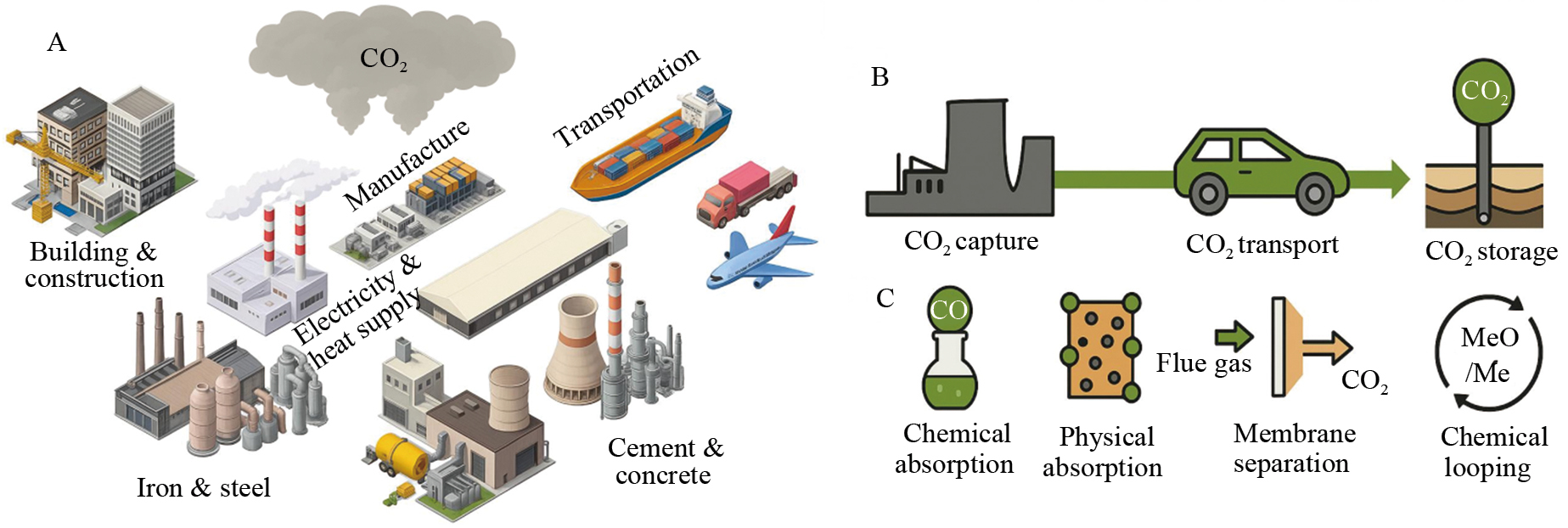
Achieving carbon neutrality by mid-century has become a defining objective of national and international climate policy, with an expanding suite of legislative frameworks–ranging from the EU's "Fit for 55" package and the U.S. Inflation Reduction Act to China's "Dual Carbon" goals–aimed at accelerating deep decarbonization. Across key emission sectors–including industry, transportation, buildings, and energy supply systems–anthropogenic CO2 emissions are generated through both process-related activities and energy consumption (as shown in Fig. 1(a)). Among a range of mitigation technologies, carbon capture and storage (CCS) has emerged as a critical enabler for reducing emissions from hard-to-abate industries. Yet despite its rising strategic prominence, real-world CCS deployment remains limited, uneven, and often stalled by non-technological constraints [1]. In particular, the integration of CO2 transport infrastructure–linking emitters to shared pipelines, hubs, or maritime shipping systems–has received far less attention than capture and storage technologies, even though it plays a decisive role in determining cost-efficiency, scalability, and system-wide feasibility.
Given these challenges, CCS is increasingly discussed not only as a mitigation tool for traditional stationary sources but also as a strategic option for addressing hard-to-abate sectors. Although direct capture from mobile sources remains technologically difficult, CCS can indirectly contribute to transport-sector decarbonization through upstream interventions in fuel production processes, life-cycle emissions reductions in associated supply chains, and compensating for residual transport emissions via negative emissions technologies such as bioenergy with CCS (BECCS) and direct air capture with storage (DACCS). Against this broader backdrop, understanding the role and potential of CCS in national decarbonization strategies–specifically its ability to complement sector-specific mitigation actions in transportation–becomes essential.
Many authoritative scenario analyses, such as those by International Energy Agency (IEA) and Intergovernmental Panel on Climate Change (IPCC), indicate that CCS is expected to contribute a significant proportion of emission reductions: for example, the IEA's Sustainable Development Scenario (SDS) predicts that CCS will provide approximately 15% of cumulative emission reductions, requiring the storage of about 5.6 Gt of CO2 annually by 2050 [2]. CCS can not only significantly reduce CO2 emissions from electricity and industrial sectors but also achieve negative emissions through combination with bioenergy CCS (BECCS) or direct air capture (DAC) to offset residual emissions that are difficult to eliminate [3]. From a technical perspective, CCS typically consists of three main stages: CO2 capture, CO2 transport–which increasingly relies on pipeline networks, maritime shipping routes, and associated port facilities–and CO2 storage. As such, CO2 transport infrastructure is becoming an integral part of broader transportation and logistics systems, linking industrial emission sources to geological storage sites. As illustrated in Fig. 1(a) and Fig. 1(b), the system's basic framework involves capturing CO2 using methods such as chemical absorption, physical adsorption, membrane separation, and chemical looping, followed by transport and permanent geological storage.
However, despite the continuously emphasized importance of CCS, its deployment progress lags far behind the requirements of climate targets–the global expansion rate of CCS projects is approximately two orders of magnitude slower than the speed needed to achieve the Paris Agreement goals [4]. As of 2021, there were only 26 large-scale CCS facilities operating globally, while achieving the IEA net-zero scenario would require an increase to over 2,000 facilities by 2040 (a hundredfold increase) [2]. At the current pace, CO2 storage capacity by 2050 may only reach 700 million tons per year, approximately one-tenth of the required scale–it is evident that without more aggressive policy interventions and coordinated actions globally, relying on CCS to achieve national carbon neutrality commitments will be extremely difficult [5]. The past decade has been termed as the "lost decade" for CCS development [2]: despite substantial R&D investments by various countries, CCS has not achieved large-scale commercialization, with the fundamental reason being the lack of effective policy incentives and economic viability support.
Yet, existing scholarly debates on CCS governance remain disproportionately focused on capture technologies and carbon pricing instruments, with insufficient attention to the role of transport infrastructure as a critical enabler or constraint. Fragmented treatment of pipelines, shipping terminals, and port retrofitting in policy analyses has led to a governance blind spot: CO2 transport is often treated as a technical implementation detail rather than a policy domain requiring its own institutional frameworks and investment strategies. This review addresses this gap by advancing an integrated analytical framework that classifies CCS-relevant policy instruments into three functional types–market-based tools, command-and-control regulations, and institutional support measures–with a particular emphasis on infrastructure integration. In doing so, it contributes to emerging literature on infrastructure transitions and CCS policy coordination, challenging the conventional assumption that economic viability hinges solely on capture cost reduction and carbon price signals.
This review is organized as follows: Section 2 introduces the analytical framework for classifying CCS policy instruments; Section 3 assesses the economic viability of CCS deployment; Section 4 analyzes CO2 transport infrastructure integration; Section 5 presents case studies of typical countries and regions; Section 6 discusses institutional coordination challenges; Section 7 concludes.
Given the high capital intensity and initially weak market signals surrounding CCS projects, policymakers have developed a wide array of instruments to stimulate investment and reduce perceived risks. This review adopts an analytical framework that classifies CCS-related policy instruments into three primary categories: market-based tools (carbon taxes and tax credits); command-and-control instruments (emissions performance standards and permitting requirements); and institutional support mechanisms (responsibility sharing and legal guarantees) [6, 7]. This categorization enables comparative analysis of national strategies and clarifies the distinct yet complementary roles these tools play in overcoming different barriers to CCS deployment. The following sections apply this framework to review key instruments across jurisdictions.
Carbon pricing mechanisms, including carbon taxes and carbon trading systems, work by setting a price on CO2 emissions, thereby internalizing environmental externalities and enhancing the economic case for deploying CCS. In some countries, high carbon taxes have directly led to the emergence of CCS projects. A typical case is Norway, which as early as 1991 imposed a carbon tax on the North Sea oil industry (approximately $50 ton−1 CO2). The tax level was so high that oil companies chose to implement CCS to avoid paying the tax, leading to the Sleipner gas field launching the world's first large-scale CCS project in 1996 [8]. Overall, if carbon tax or carbon market prices are sufficiently high, the emission fees saved by enterprises capturing and storing one ton of CO2 will exceed CCS costs, creating inherent economic incentives. However, carbon prices in most regions have remained low for extended periods, failing to adequately incentivize CCS investment. The European Union's Emissions Trading System (EU ETS) experienced low carbon prices in the 2010s, which is considered one of the reasons for poor progress in EU CCS demonstration projects [9]. Recently, with rising carbon prices (EU ETS carbon prices have risen to tens of euros per ton or higher) and the introduction of policies such as the Carbon Border Adjustment Mechanism, the driving effect of carbon pricing mechanisms on CCS is expected to improve.
Governments provide financial assistance, low-interest loans, or tax incentives for CCS projects to reduce project costs and improve investment returns. The United States leads in this area–the Federal 45Q Tax Credit passed in 2018 significantly increased tax incentive levels for CCS, providing $50 in tax credits for each ton of CO2 captured and stored (previously capped at $20 ton−1), with CO2 used for enhanced oil recovery (EOR) and other purposes receiving $35 ton−1 in tax credits [2]. This fiscal incentive was further enhanced in the 2022 Inflation Reduction Act (geological storage increased to $85 ton−1, EOR and other utilization increased to $60 ton−1), significantly improving the revenue expectations of CCS projects. The tax credit mechanism, through performance-based payments, has stimulated the initiation of numerous new CCS projects in the United States, becoming a benchmark case for CCS policy tools [2]. Besides tax credits, countries have also adopted direct subsidies and joint financing models to support CCS demonstrations. The EU once allocated funds through the "European Economic Recovery Program (EEPR)" and NER300 fund to support CCS demonstration projects (planning to fund up to 12 projects by 2015), but ultimately failed to bring any CCS project to completion due to multiple reasons [9]. The lessons show that financial support alone is insufficient; supporting market demand and policy environment are equally crucial. In recent years, the EU has launched the Innovation Fund to provide substantial funding to low-carbon technologies including CCS, and some member states have adopted "contracts for difference" (CfD) methods to lock in future carbon prices for CCS projects, thereby securing their revenue [10, 11]. These fiscal incentive measures have played important roles in reducing initial economic pressure and attracting enterprise participation. The United States has also invested enormous funds through the Department of Energy to support CCS R&D and demonstration (over $5 billion invested since 1997), helping projects share risks, expand scale, and reduce costs in the early stages [2].
Command-and-control instruments refer to regulatory mechanisms in which governments impose legally binding obligations on firms, such as emissions limits, technology standards, or conditional permitting requirements. In the context of CCS, these instruments include mandates for CCS installation, performance-based emissions benchmarks for high-emission sectors, and integration of CCS-readiness into the approval processes for new facilities [12]. Unlike market-based tools that operate through price signals, command-and-control policies rely on legal enforcement and punitive measures to induce compliance. In some jurisdictions, these instruments are embedded within Best Available Technology (BAT) frameworks, which require firms to adopt emission abatement technologies–such as CCS–if they are technically feasible and economically reasonable.
Although mandatory CCS regulations remain limited in scope, several policies have explicitly identified CCS as a viable compliance pathway. For example, the United Kingdom's Industrial Decarbonisation Strategy includes CCS among the permitted options for meeting future emissions constraints in the steel and cement industries. Similarly, the EU's Carbon Border Adjustment Mechanism (CBAM) and forthcoming product carbon footprint standards introduce embedded carbon intensity thresholds that may effectively incentivize CCS adoption in export-oriented manufacturing. In some high-emission industries, there have been proposals to make CCS a condition for operational licensing. These instruments offer regulatory clarity and standardization but may impose uneven compliance burdens in the absence of parallel infrastructure or financial support. As such, command-and-control policies are best understood as a structural component within a broader policy mix–reinforcing incentive schemes and institutional support mechanisms through enforceable compliance architecture.
Incorporating CCS into green finance systems to attract more social capital investment. Governments and financial institutions provide preferential loan rates, bond financing, and investment facilitation for CCS projects through green credit guidelines, green bonds, green funds, and other channels. For example, China has recently included CCUS1 in its green industry catalog and established CCUS development funds to support pilot project financing [13]. The EU's sustainable finance taxonomy also considers CCS as a qualified technology that can be used across industries for emission reduction, making CCS-related projects eligible for green investment funds [14]. The introduction of green finance tools helps reduce CCS project financing costs and improve investor confidence. Additionally, some countries are exploring public sector loan guarantees or insurance to reduce default and technical risks of CCS projects, improving the support system from the financial side.
Since CCS involves long-term CO2 monitoring and storage safety, clarifying responsibilities among parties and appropriate government assumption of partial long-term risks helps alleviate enterprise concerns. Some countries and regions have established specialized CCS regulations defining legal responsibilities at various project stages. For example, EU Directive 2009/31/EC stipulates that after storage site closure and at least 20 years of monitoring proving permanent safe storage of CO2, long-term responsibility for storage sites can be transferred from operating enterprises to government authorities [15]. This means that once strict permanent storage standards are met (no detectable leakage, storage reservoir evolving toward long-term stable state), the government can take over subsequent monitoring and maintenance obligations for the reservoir. This mechanism balances enterprise and public interests: enterprises do not need to bear potential leakage responsibilities indefinitely, while the government serves as the "ultimate guardian" ensuring environmental safety. Of course, before responsibility transfer, regulations require enterprises to provide adequate financial guarantees for storage period monitoring and compensation in case of leakage. Besides long-term responsibility allocation, many countries have also established licensing and regulatory systems for CCS projects, standardizing site selection, operation, and closure phases to ensure safe and environmentally sound CCS implementation [16]. Overall, sharing CCS risks and responsibilities between government and enterprises through legal and institutional arrangements is an important component of policy tools. This includes both explicit legislation (such as injection permits, environmental liability, financial guarantee requirements) and implicit risk sharing (such as government commitments to cover cost overruns in demonstration projects). Comprehensive legal guarantees can increase enterprise willingness to participate in CCS and enhance public trust in CCS safety.
In summary, countries have constructed multi-layered policy tool combinations around CCS, employing market-based tools, command-and-control instruments and institutional support tools. Historical experience shows that single policies are often insufficient to drive large-scale CCS deployment, measures need to work synergistically. In the context of carbon neutrality, policy design continues to innovate, such as the UK exploring support for power sector CCS through capacity markets and contracts for difference, and the EU considering establishing carbon contract difference mechanisms to lock in industrial CCS revenues. These new policy practices aim to overcome institutional barriers in past CCS promotion and pave the way for large-scale commercialization.
Economic feasibility remains one of the most critical barriers to the large-scale deployment of CCS, driven by high upfront costs, uneven cost distribution across the full chain, and limited commercial returns under current market conditions. The CCS full chain involves three segments: capture, transport, and storage, with high overall costs and uneven cost distribution across components. The CO2 capture segment is the most capital-intensive, generally accounting for approximately 70%–80% of total costs [17]. This is because separating high-purity CO2 from flue gas or industrial processes is technically complex and highly energy-intensive. For example, implementing post-combustion capture at coal-fired power plants often costs tens of dollars per ton of CO2, with costs increasing as gas becomes more dilute, while capture costs at high-concentration sources like chemical industry pure CO2 can be reduced to below $30 ton−1 [17]. Transport and storage segments have relatively lower costs, typically accounting for 20%–30% of total costs [18]. Large-scale CO2 transport through pipelines costs several to over ten dollars per ton, and geological storage operational costs are also in the range of several dollars per ton, but upfront exploration and facility investments must be considered. Overall, current complete costs for most CCS projects are estimated to range from tens to over a hundred dollars per ton of CO2, depending on specific industries and technologies [19]: for example, in natural gas processing and other high-purity CO2 fields, overall costs may be only $30–40 ton−1, while retrofitting coal-fired power plants with CCS often exceeds $60–100 ton−1 CO2. Such high emission reduction costs do not compare favorably with alternative solutions like renewable energy, thus requiring special economic measures to achieve commercial viability.
Investment returns and business models are also key factors determining whether CCS can be promoted on a large scale. Under pure market conditions, due to limited additional revenue and insufficient carbon pricing, many CCS projects struggle to achieve positive investment returns, and the private sector lacks investment incentives. Therefore, in reality, the vast majority of implemented CCS projects rely on additional revenue sources or policy support. For example, using captured CO2 for enhanced oil recovery (CO2-EOR) is a classic model for improving project revenues. Industrial facilities can sell captured CO2 to oil fields for oil displacement, with revenues partially offsetting CCS costs [20]. Many operating projects in the United States operate precisely because EOR brings profitability, as U.S. crude oil production areas have long conducted CO2 flooding, not only storing carbon but also producing oil. However, it should be noted that using oil recovery revenues to subsidize CCS is controversial in terms of climate benefits (since additional oil eventually burns and still emits), so from a policy perspective, its transitional role needs to be weighed. Another example is obtaining carbon credits as a potential business model, selling stored emission reductions as carbon allowances or carbon offset credits. Under the Kyoto Protocol framework, the United Nations Clean Development Mechanism (CDM) included CCS in qualified project categories in 2011 to allow developing country CCS projects to obtain carbon reduction credits and sell them to developed countries [21]. However, cases of large-scale funding support for CCS through carbon markets remain very limited to date. In the future, if the international carbon market mechanism under Article 6 of the Paris Agreement improves, or regional carbon clubs emerge, new investment return channels for transnational CCS cooperation may become possible [22].
Risks and uncertainties are also major factors affecting CCS economics, including technical reliability, construction and operation cost overruns, and long-term storage responsibilities. The higher the uncertainty, the higher the return rate demanded by investors, thereby increasing financing difficulties. Traditionally, "first mover" full-scale CCS demonstrations often struggle to find purely commercial funding and must rely on government risk-sharing costs [2]. Governments can reduce risk premiums for early projects through co-investment or providing guarantees. For example, Canada's Saskatchewan Boundary Dam power station CCS and the U.S. Petra Nova coal CCS projects both received government funding support, reducing investment risk exposure. Similarly, the U.S. Department of Energy has helped a series of CCS pilots "get through the high-risk, low-return initial phase" through funding allocations over many years [2]. Some scholars view this government support as a necessary measure to address the "demonstration valley", otherwise large-scale low-carbon demonstrations may fall into the "valley of death" [9]. Regarding long-term risks, the legal liability transfer mechanism mentioned earlier is also a measure to reduce long-term enterprise burdens and improve project economics. Additionally, standardization and modularization help reduce project cost uncertainties, for example, factory pre-fabrication of capture equipment can reduce construction cost overrun risks.
Innovative models to enhance economic viability are currently emerging to reduce average CCS costs and improve asset utilization rates. One model is establishing "hub-cluster" CO2 networks, where multiple factories in industrial areas with concentrated emission sources share a set of CO2 transport pipelines and storage facilities [23]. Through economies of scale, the infrastructure costs shared by each enterprise decrease, thereby improving overall economics. Research shows that deploying CCS in industrial clusters can significantly reduce unit capture and storage costs compared to individual factory construction schemes [23]. European North Sea coastal areas are promoting such cluster projects, such as the Netherlands’ "Porthos" project, which will centrally transport CO2 from multiple enterprises in Rotterdam Port to offshore gas fields for storage; the UK is also planning to build shared capture and pipeline networks in industrial clusters like Teesside in the northeast. Such regional cooperation models are not only more economically efficient but also facilitate participation of small and medium emission sources in emission reduction. Additionally, some new technological breakthroughs may improve CCS economics, such as more efficient solvents reducing energy consumption, new materials reducing equipment costs, and improving CO2 capture rates (even exceeding 90%) to maximize emission reduction benefits [24].
Finally, from a policy perspective, stable and adequate carbon pricing or subsidies are fundamental guarantees for economic viability: only when the value of carbon emission reduction (whether reflected through carbon markets or government subsidies) exceeds CCS costs will enterprises have sustained economic motivation to operate CCS. Therefore, looking ahead, promoting CCS scale-up must simultaneously exert force from both cost reduction and revenue enhancement–on one hand, relying on technological progress and scale effects to lower cost curves, and on the other hand, through policy pricing of carbon emissions or providing incentives to raise revenue curves. The intersection of these two is the turning point for large-scale CCS deployment.
CO2 transport infrastructure integration plays a pivotal role in determining per-ton abatement costs and shaping overall project feasibility [25]. Infrastructure integration for CO2 transport refers to the strategic coordination, design, and co-utilization of pipelines, shipping terminals, compression facilities, and intermediate hubs to ensure cost-efficient, scalable, and interoperable movement of captured carbon dioxide from emission sources to storage sites. While CCS often dominate cost discussions, the availability–or absence–of shared transport infrastructure can dramatically affect investment decisions, particularly for smaller emitters. In regions with well-developed CO2 pipeline networks and centralized storage hubs, such as the U.S. Gulf Coast or the Port of Rotterdam, economies of scale and asset co-utilization allow multiple facilities to connect to shared pipelines and injection sites. This "hub-and-cluster" model significantly reduces capital duplication and operational costs compared to isolated point-to-point transport. For example, the Porthos project in the Netherlands enables industrial emitters at Rotterdam to share a pipeline leading to an offshore storage site, lowering unit transport costs and mitigating risk through infrastructure pooling [26]. Similarly, the U.S. has seen organic growth of pipeline corridors linked to CO2-EOR operations, creating natural incentives for new projects to piggyback on existing assets.
In contrast, fragmented or project-specific pipeline planning, such as in many Asian regions including China, leads to higher unit costs, limited flexibility, and suboptimal asset utilization. Without national corridor strategies or coordinated investment, smaller projects face disproportionately high transport costs, making them economically non-viable even when capture costs are moderate. Furthermore, the lack of port retrofitting for maritime CO2 shipment adds another layer of friction. Offshore storage–especially in Europe and Southeast Asia–requires liquefied CO2 to be transported via ships. Only a few regions (e.g., Norway's Northern Lights) have invested in dual-purpose terminals capable of handling this need. Without such port infrastructure, projects must either overinvest in pipeline construction or forgo offshore storage options altogether, raising marginal costs. From a policy standpoint, failure to integrate transport infrastructure into CCS strategies leads to geographic lock-ins, poor scalability, and underutilization of public investments [27]. Thus, alongside capture cost reduction and price incentives, infrastructure co-planning and funding should be treated as a third pillar of CCS cost-efficiency. Countries that proactively develop corridor-based pipeline networks, shared shipping hubs, and coordinated port retrofitting will be better positioned to achieve scale at lower cost and attract private capital.
Furthermore, integrating a life-cycle assessment (LCA) perspective into transport-related CCS planning provides a more holistic understanding of both economic and environmental trade-offs. While pipeline-based transport is often considered the least-cost option for large, concentrated emitters over land, its installation and operation also involve substantial embodied emissions–such as those from steel production, land clearing, and compression energy. In contrast, maritime shipping of liquefied CO2, though geographically flexible and scalable for offshore storage, generates significant upstream emissions from the liquefaction process and ship fuel combustion, particularly if conventional marine fuels are used.
A comparative LCA study by Arasto et al. (2014) suggest that, per ton of CO2 transported, pipelines generally yield lower life-cycle emissions for distances under 1,000 km, while shipping may become more efficient for longer routes or when integrated with existing port infrastructure [28]. These findings underscore that transport mode selection should not be based solely on capital and O&M costs, but on total life-cycle carbon intensity and energy use [29]. For policy design, this implies that infrastructure subsidies or incentives must be structured to reflect not only upfront investment but also long-term climate externalities embedded in the full system. Accordingly, incorporating LCA frameworks into CCS transport planning enables policymakers to identify infrastructure pathways that deliver both economic feasibility and maximum net CO2 abatement [30]. This perspective is particularly critical in contexts where carbon accounting rigor–such as in the EU Taxonomy or voluntary offset markets–depends on transparent disclosure of cradle-to-grave emission profiles [31].
Different countries and regions have their own characteristics in CCS policy practices and project advancement. The following selects the United States, European Union, and Asia (mainly China) as typical cases to analyze how CCS has been incorporated into their respective carbon reduction pathways under different institutional environments, as well as the progress and lessons achieved.
The United States currently leads in the number and scale of CCS projects, with its successful experience mainly stemming from strong fiscal incentives and diverse market applications. Early CCS demonstrations in the United States were mostly directly funded by the federal government and Department of Energy, such as the Future-Gen project in the 2,000s (though not successfully completed) [32] and the Petra Nova power station project (which received hundreds of millions of dollars in DOE funding) [33]. However, the policy with more sustained impact lies in the tax credit mechanism. The "45Q" tax credit was first introduced in 2008 and was significantly expanded through the bipartisan Budget Act in 2018, increasing credit amounts and extending duration [34]. Under the new regulations, CO2 captured and stored in qualified facilities receives $50 in federal tax credits per ton; if CO2 is used for EOR and other purposes, it receives $35 per ton in credits [2]. This incentive level is far higher than before (more than doubling), greatly improving the economic prospects of CCS projects. Taking the coal chemical field as an example, capture costs might be $40–$50 ton−1 CO2, but with 45Q credits, this is equivalent to having $50 in revenue to offset costs, significantly enhancing project profitability. Driven by this, private sector investment interest in CCS in the United States has risen significantly: in just a few years since 45Q expansion, the number of planned CCS facilities announced nationwide has surged, covering multiple industries including power, natural gas processing, ethanol, and biomass power generation. According to statistics, by 2022, the United States had approximately dozens of large CCS projects in planning or development stages, with planned capture capacity exceeding billion-ton levels annually.
During this process, the carbon utilization market also played a promoting role–particularly CO2-EOR, which has had decades of commercial practice in the United States. Some regions have stable demand for CO2, providing natural buyers and revenue sources for CCS [20]. The 45Q policy also covers situations where CO2 is supplied to oil fields ($35 credit per ton), allowing capture facilities to not only receive payments from oil companies but also additional federal incentives, achieving "dual benefits". Besides 45Q, there are supplementary measures at the U.S. state level, such as California's Low Carbon Fuel Standard (LCFS) providing carbon credits for qualifying CCS emission reductions, and California and Illinois exploring state government assumption of long-term monitoring responsibilities to reduce enterprise burdens. Regarding policy effects, although some critics worry that 45Q will be used by the fossil fuel industry to extend oil production (due to CO2 flooding relationships) [35], it is undeniable that this policy has greatly boosted investment confidence and actual project growth in the CCS field. In the 2022 Inflation Reduction Act, 45Q credit amounts were further increased (permanent storage increased to $85 ton−1, utilization increased to $60 ton−1), application thresholds were relaxed, and more projects are expected to be catalyzed [2]. The U.S. case shows that substantial economic incentives (particularly sustained incentives based on emission reduction performance) can significantly improve CCS business models and leverage private sector investment. Meanwhile, U.S. experience also reflects that CO2 utilization (such as EOR) has provided important transitional support for CCS at the current stage. Looking ahead, the U.S. challenge lies in ensuring these projects truly achieve expected emission reductions and gradually expanding to pure storage projects that can operate without relying on oil recovery revenues.
The European Union has experienced a tortuous course of "high start, low performance, and revival" in CCS development. As early as around 2007, the EU listed CCS as a key energy and climate policy priority, issued the CCS Directive in 2009 to pave the legal path for technology, and planned to fund a batch of large demonstration projects. However, in the first phase (2009-2015), the EU's CCS strategy failed to deliver on its ambitions: multiple demonstration projects submitted by member states were successively shelved due to funding gaps, public opposition, or lack of economic viability. The NER300 fund at the EU level originally allocated approximately €7.1 billion specifically for CCS, but in the first round of funding in 2012, no CCS projects were selected [9]. Analysis suggests that the EU's early CCS sluggishness had four strikes: renewable energy competition (expensive renewable subsidies made CCS pale in comparison), project complexity (involving cross-border pipelines and new facilities, difficult to advance), low carbon prices (EU ETS carbon prices remained around €5 per ton for extended periods, unable to provide sufficient revenue for CCS), and fiscal austerity and climate policy fatigue after the financial crisis [16]. Three of these were related to insufficient expected market demand rather than funding willingness issues. This experience rang alarm bells for the EU: one-time subsidies are far from sufficient; lasting market incentives and improved external conditions must be created.
Entering the 2020s, with the introduction of the "European Green Deal" and 2050 net-zero commitments, the EU's attitude toward CCS has clearly shifted, beginning to view it as one of the key solutions for hard-to-decarbonize industry sectors. The EU's latest "Industrial Carbon Management Strategy" (released February 2023) details CCS's role in reducing over 90% of emissions from cement, steel, chemical, and other industries, proposing a goal of storing at least 50 million tons of CO2 within EU territory by 2030 [36]. To promote achieving these goals, the EU and member states have pursued multiple approaches in policy and funding: First, the EU level has established the unprecedented Innovation Fund (funded by carbon market revenues), allocating approximately €2.1 billion to several CCS-related projects in the first round of funding and increasing to €7.1 billion in the third round [37]. These funded projects include the Netherlands’ Porthos cluster, Sweden's biomass CCS, and Belgium and France's industrial CCS, marking the EU's commitment of real money to CCS. Second, the EU has strengthened infrastructure coordination, incorporating CO2 transport networks and storage facilities into Trans-European Energy Network (TEN-E) planning, supporting member states in sharing transport and storage capacity. For example, Norway's "Northern Lights" project is building large-scale CO2 storage facilities in Norwegian offshore areas, which will receive and store industrial CO2 transported from EU countries in the future, serving as a demonstration of cross-border CCS cooperation [38]. For this purpose, the London Protocol was amended in 2019 to allow cross-border transport of CO2 for geological storage (previously restricted as cross-border dumping), and EU members are also advancing bilateral agreements to resolve responsibility-sharing issues. Third, some EU countries have introduced domestic support policies: Norway has invested heavily in implementing the "Longship" CCS flagship project, planning to build a complete chain from cement plants/waste incineration plants to North Sea storage facilities with the government bearing most costs; the UK (although post-Brexit, its experience is still referential) has adopted cluster competition mechanisms, promising to provide long-term operational subsidies to winning industrial cluster CCS projects through CfD and other means. Policy innovation is also reflected in the market side: the EU is discussing introducing carbon removal certification mechanisms in carbon market reforms, ensuring that certified stored CO2 can be traded, thereby providing market returns for CCS [39]. Additionally, the EU is also strengthening carbon constraints through legislation, such as the Carbon Border Adjustment Mechanism (CBAM), which will force imported steel, cement, and other products to bear carbon costs, pressuring enterprises to consider emission reduction solutions like CCS [40]. The EU case reflects the profound impact of institutional environment on CCS promotion: under a strong, stable policy framework (high carbon prices + special funds + infrastructure coordination), CCS is expected to regain development momentum and be incorporated into mainstream emission reduction pathways; conversely, policy absence or instability once led to numerous project failures. As the EU strengthens climate goals and improves policy combinations (including the recently proposed Net-Zero Industry Act to simplify approvals and accelerate key technology investment [16]), CCS in Europe is welcoming new development opportunities. However, the EU also faces challenges: ensuring coordinated advancement of pipeline and storage facility construction among member states, balancing public acceptance, and forming beneficial complementarity rather than crowding-out effects with renewable energy investment. Through continuously learning from previous lessons, the EU's CCS strategy is moving from early setbacks toward a new phase of pragmatic and comprehensive deployment.
Asian emerging economies are also beginning to emphasize CCS's role in achieving carbon reduction goals, with China as the representative. China has committed to carbon peaking before 2030 and carbon neutrality before 2060 [41]. Under this goal guidance, CCS (domestically often called CCUS, including utilization) has been incorporated into national strategic science and technology directions and emission reduction technology lists. As early as the "Eleventh Five-Year Plan" period, China initiated CO2 capture experimental facility construction, and in recent decades has gradually conducted a series of CCUS test demonstrations. As of 2022, China has completed nearly 20 CCUS pilot projects, with the largest single-unit scale reaching million-ton levels. A typical case is the Qilu Petrochemical-Shengli Oilfield CCUS project put into operation by Sinopec in 2022, which is China's first million-ton full-process CCUS demonstration, capturing approximately 1 million tons of CO2 annually from chemical plants and transporting it through pipelines to oil fields nearly 200 kilometers away for flooding and storage [42]. This project integrates refining and chemical industries with oil and gas field enterprises, viewed as an important attempt to establish carbon reduction industrial chains. Another example is Shenhua Group's coal-to-oil plant CCS demonstration in Ordos, which stores hundreds of thousands of tons of CO2 annually in saline aquifers, accumulating data for geological storage in China.
Regarding policy, the Chinese government has released multiple policy documents supporting CCUS in recent years. Research compilation found that as of July 2022, China had issued 59 CCUS-related policy documents at the central level, involving more than ten ministries [43]. These documents cover scientific research and development, demonstration pilots, standard specifications, and industrial planning. For example, the Ministry of Science and Technology has listed CCUS in national key R&D program projects; the Ministry of Ecology and Environment has issued draft CCUS environmental management guidelines for public comment; the National Development and Reform Commission and other departments have explicitly promoted a batch of CCUS demonstration projects in "Fourteenth Five-Year Plan" planning [43]. Overall, China is forming a preliminary CCUS policy support framework, but currently still mainly focuses on supply-side (technology R&D and demonstration) policies, with relatively insufficient demand-side incentives and constraints [43]. For example, China has not yet established explicit carbon pricing mechanisms to drive enterprise proactive CCS deployment (national carbon market coverage is limited and carbon prices are low, insufficient to support CCS investment). Additionally, regulations and standards for mandatory emission reductions in industrial fields (such as emission performance standards) have not yet clearly required CCS adoption. Policy analysis points out that approximately 70% of China's current CCUS policies focus on R&D pilots, while market-driven policies (demand-side) are almost absent, making it difficult to support CCS transition from demonstration to large-scale application [43]. Therefore, experts suggest China needs to formulate more powerful incentive measures, such as giving certain carbon trading quotas to stored CO2, reducing environmental taxes and fees for enterprises using CCS, or introducing mandatory CCS proportions in high-emission industries [43]. Additionally, at the legal level, China has not yet issued specialized CCS legislation, and issues such as project approvals and long-term responsibilities need clarification, which also affects social capital involvement.
Nevertheless, China has also achieved some bright experiences in CCS pilots: for example, developing low-energy amine-based capture processes suitable for coal-fired power plants, exploring "CCUS+" models such as CO2 enhanced shale gas recovery, and gradually cultivating domestic technology and engineering teams. Other Asian countries are also attempting CCS: Japan completed the Hokkaido Tomakomai CCS demonstration project in 2016, successfully storing approximately 300,000 tons of CO2 in offshore underground formations, becoming Asia's first large-scale demonstration and providing valuable data [44]. South Korea has formulated a comprehensive CCS roadmap, planning to launch demonstrations around 2030 [45]; Singapore, Indonesia, Malaysia, and other Southeast Asian countries are cooperating with international oil companies to assess offshore storage potential and plan regional CCS centers [46]. These countries commonly face challenges of insufficient funding and technology, thus mostly seeking international cooperation support.
Overall, CCS in Asian countries is still in the pilot demonstration and policy formulation stages. Taking China as an example, to achieve the 2060 carbon neutrality vision, CCS is expected to play unique roles in power, steel, cement, chemical, and other fields, with some studies estimating its emission reduction contribution could reach over 10% of national total emission reductions [43]. Whether Asian CCS can be deployed on a large scale in the future will depend on whether policy support can develop from current scattered exploration into systematic and powerful incentive-constraint combinations, and whether countries can strengthen regional coordination to share resources (such as jointly building CO2 transport and storage networks). In this process, international community technology transfer and financial assistance are also considered key factors in promoting Asian CCS.
Large-scale CCS deployment is not only a matter of domestic policies in various countries but also involves complex international cooperation and global governance issues. First, cross-border collaboration is increasingly prominent in the CCS field because CO2 storage resources are geographically unevenly distributed, with certain industrial center regions lacking suitable geological storage facilities and having to rely on cross-border transport to other countries for storage. According to estimates, to achieve mid-century climate goals, global annual CO2 storage needs could reach 6 Gt by 2040 and exceed 8 Gt by 2050 [16]. Such enormous storage demands cannot be completed within one country's borders, especially in regions like Europe and Southeast Asia, where ideal storage locations are often offshore or in neighboring countries. This requires countries to reach cooperation mechanisms allowing and regulating cross-border CO2 transport and storage. For this purpose, international maritime law and environmental treaties have made some adjustments: the London Protocol passed amendments in 2009 exempting cross-border transport of CO2 for seabed storage from restrictions (removing it from the "ocean dumping" category) [47], paving the legal path for international CCS cooperation. However, this amendment has not yet received sufficient country ratifications to take effect, and countries currently mostly resolve legal issues through temporary bilateral agreements. For example, the EU and Norway have signed agreements clarifying regulatory and responsibility divisions for EU-sourced CO2 storage in Norway. Such transnational legal arrangements are crucial for large regional CCS networks [48].
Second, global carbon markets and climate governance frameworks need to incorporate CCS to provide transnational incentives. On one hand, Nationally Determined Contributions (NDCs) under the Paris Agreement currently lack clear accounting rules for imported or exported CO2 emission reductions: if one country captures CO2 and another country stores it, which side counts the emission reduction and whether there is double counting all need international rule agreements. The Paris Agreement Article 6 implementation rules passed at the 2021 climate conference established general principles for international carbon trading, but specific guidance for CCS negative emissions and transferred emission reduction situations is still needed. In the future, if international carbon markets can recognize verified CCS emission reductions as tradable commodities, developed countries paying funds to developing countries to obtain CCS emission reductions (similar to early CDM models) will become possible, which can promote CCS project construction in developing countries and achieve globally cost-effective emission reductions. However, global governance in this area still lags, with some multilateral funds (such as the Green Climate Fund) not yet clearly supporting CCS projects, mainly focusing on renewable energy and other fields. This reflects cognitive differences in the international community regarding CCS: some countries and environmental groups question CCS's role in extending fossil fuel use and are unwilling to make it a climate finance priority [49, 50]. Therefore, international discourse and governance around CCS are full of interest games and conceptual conflicts. Developed countries (such as Norway and the United States) tend to promote CCS technology diffusion, while some developing countries are concerned about technology and funding thresholds, worrying that high CCS costs will affect funding for other mitigation measures.
Third, standards and regulatory coordination is an important aspect of global CCS governance. Currently, there is no unified set of international CCS technical standards or monitoring guidelines, with countries adopting their own specifications. This creates obstacles for cross-border projects and technology transfer. For this purpose, organizations like ISO have established relevant technical committees to develop international standards for CO2 capture, transport, and storage safety, but implementing these standards in various countries still requires time. Additionally, liability and compensation mechanisms are not yet clear at the international level: if cross-border CCS projects experience CO2 leakage, who bears responsibility and how is compensation provided? Existing environmental treaties (such as Environmental Liability Conventions) do not yet include this new issue. Perhaps new bilateral or multilateral agreements are needed to fill this gap, such as establishing joint regulatory bodies or compensation funds for transnational CCS projects to ensure timely handling without buck-passing when problems occur.
Finally, global knowledge sharing and capacity building are also governance challenges. CCS involves relatively specialized geological, engineering, and regulatory knowledge, with many countries lacking experience. International cooperation mechanisms such as the Carbon Sequestration Leadership Forum (CSLF), Clean Energy Ministerial CCUS Initiative, and Global CCS Institute have played certain roles in information exchange and capacity building, but developing country participation and voice remain limited. Future efforts need to further strengthen South-South cooperation and technical training in the CCS field under UN frameworks or regional cooperation organizations, enabling more countries to have CCS implementation capabilities.
In summary, global CCS governance is still in its infancy, currently showing fragmented characteristics: legally lacking comprehensive frameworks covering the full process, with multiple key issues unresolved; policy-wise, countries have varying intensity levels with weak international coordination mechanisms. Facing the common challenge of climate change, countries need to strengthen cooperation and governance innovation in CCS. Recommendations include: promptly promoting relevant international legal amendments to take effect, clarifying cross-border project rules; giving CCS its due position in climate finance and carbon markets, particularly supporting developing countries in conducting CCS; establishing regional CO2 transport-storage network agreements to achieve resource complementarity; and constructing global CCS best practice sharing platforms to promote standard unification and public acceptance. Only by incorporating CCS into the global governance system can transnational emission reduction and responsibility allocation issues be effectively resolved, creating a fair and favorable international environment for large-scale CCS application.
In the journey toward carbon neutrality, CCS as an important technological option for addressing climate change is full of both opportunities and challenges. On one hand, numerous studies and scenario analyses indicate that without large-scale CCS deployment, many countries will find it difficult to achieve deep decarbonization goals. CCS can reduce unavoidable residual emissions from power and industrial sectors and provide negative emission capabilities, playing the role of "safety valve" and "balancer" in the global net-zero transition over the coming decades. However, on the other hand, experiences from the past few decades also warn us that without effective policy and economic drivers, CCS will struggle to escape the demonstration trap. Current CCS deployment speed is far below required levels, and for the world to increase CCS capacity a hundredfold in the next twenty years requires a leap in policy and action.
Looking ahead, to unlock CCS potential, countries need to formulate comprehensive policy strategies:
Strengthen incentive-compatible policy systems: Establish long-term clear carbon price signals or incentive mechanisms to make emission reduction benefits reliable and predictable. This can be achieved through setting gradually increasing carbon tax/carbon price floors, continuing and optimizing tax credits, contracts for difference, and other methods. Policies should ensure that enterprises can obtain reasonable returns after investing in CCS to mobilize private sector enthusiasm.
Increase public investment and risk sharing: Governments should continue to play funding and risk-bearing roles in the early stages of CCS, including funding more full-scale demonstration projects, supporting infrastructure (pipeline and storage facility) construction, and providing loan guarantees and insurance arrangements. This can help new projects cross the "valley of death" and drive cost reduction and technological progress through scaled practice.
Improve regulations and regulatory innovation: Timely update environmental and energy regulations to pave the way for CCS. For example, simplify project licensing processes, establish long-term monitoring handover systems for storage sites, and clarify legal responsibilities for cross-border projects. Some countries' introduced Net-Zero Industry Acts are explorations in this area, aimed at eliminating unnecessary administrative barriers and accelerating the implementation of net-zero technologies like CCS.
Promote regional and international cooperation: Encourage joint construction of CO2 transport and storage networks at the regional level to achieve optimal resource utilization and cost sharing; at the international level, incorporate CCS into climate cooperation agendas through technical assistance, capacity building, and financing support to help developing countries conduct CCS. Developed countries should share experiences and provide funding channels, while international institutions should develop unified standards and accounting methods to ensure CCS emission reduction contributions are recognized and rewarded globally.
Strengthen public participation and awareness guidance: Although this review focuses on policy economic analysis, it must be recognized that CCS project advancement also depends on public acceptance and social license. Future strategies should include transparent information disclosure, stakeholder consultation, and exploring models that combine CCS with local development (such as employment and investment) to enhance social support for CCS.
In summary, CCS's future depends on the combined effect of policy, economic, and social multi-dimensional factors. Based on technical feasibility, cleverly designed policy incentives and sound governance frameworks will be key to unleashing CCS potential. By constructing a stable, coordinated, and forward-looking policy environment, we can expect to accelerate CCS from scattered demonstrations to large-scale commercial applications, enabling it to play its due role in national carbon neutrality roadmaps. As researchers have said, achieving climate goals requires "all tools working together"–beyond renewable energy and energy efficiency measures, CCS success will provide humanity with an important "trump card" for addressing climate change. Looking ahead, we should embrace innovation and cooperation to continuously improve CCS policy strategies and provide solid guarantees for integrating this key technology into global carbon reduction pathways.
Beyond the scope of this review, several emerging themes merit closer investigation. These include the role of digital technologies and AI in real-time CCS monitoring and compliance, the integration of CCS projects into voluntary carbon markets, and the distributional justice implications of siting storage facilities in vulnerable or marginalized communities. These dimensions will be essential in evolving CCS governance toward a more adaptive, transparent, and socially responsible framework in the future.
T. Kazlou, A. Cherp, and J. Jewell, "Feasible deployment of carbon capture and storage and the requirements of climate targets," Nat. Clim. Chang., vol. 14, no. 10, pp. 1047–1055, 2024.
E. Martin-Roberts, V. Scott, S. Flude, G. Johnson, R. Haszeldine, and S. Gilfillan, "Carbon capture and storage at the end of a lost decade," One Earth, vol. 4, no. 11, pp. 1569–1584, 2021.
D. Shu, S. Deutz, B. A. Winter, N. Baumgärtner, L. Leenders, and A. Bardow, "The role of carbon capture and storage to achieve net-zero energy systems: Trade-offs between economics and the environment," Renewable and Sustainable Energy Reviews, vol. 178, p. 113246, 2023.
C. Brunner, Z. Hausfather, and R. Knutti, "Durability of carbon dioxide removal is critical for Paris climate goals," Commun Earth Environ, vol. 5, p. 645, 2024.
"Carbon capture, utilisation and storage: Tracking clean energy progress," International Energy Agency (IEA), n.d.
S. Laska, and A. Leuschner, "An overlooked opportunity: Incentivising carbon capture and storage in the United States," Louisiana State University, Center for Energy Studies, 2020.
S. Markus, A. D. Andersen, J. Finstad, T. Hansen, J. Hanson, K. Jordal, T. Mäkitie, A. Nordholm, M. Ryghaug, and A. Santoalha, "CCS technological innovation system dynamics in Norway," International Journal of Greenhouse Gas Control, vol. 136, p. 104171, 2024.
L. Monica, and H. J. Herzog, "NER300: Lessons learnt in attempting to secure CCS projects in Europe," International Journal of Greenhouse Gas Control, vol. 19, pp. 19–25, 2013.
J. B. Skjærseth, and P. O. Eikeland, "Governing EU low-carbon innovation: From strategic energy technology plan to European green deal," In Handbook on European Union climate change policy and politics, pp. 259–273, 2023.
"Reflection note on carbon contracts for difference (CCfD)," European Roundtable on Climate Change and Sustainable Transition (ERCST), 2022.
D. Finon, "Efficiency of policy instruments for CCS deployment," Climate Policy, vol. 12, no. 2, pp. 237–254, 2012.
"CCUS development in China: A review of opportunities and challenges," Oil and Gas Climate Initiative (OGCI), 2021.
"EU expert group puts forward recommendations on sustainable finance," Global CCS Institute, 2020.
M. Wifling, "Financial precautions, carbon dioxide leakage, and the European Directive 2009/31/EC on carbon capture and storage (CCS)," Climatic Change, vol. 163, no. 2, pp. 787–806, 2020.
A. Gabriela, and O. Bokareva, "Transboundary transportation of CO2 streams by ships: Regulatory barriers for scaling up carbon capture and sub-seabed storage," Frontiers in Marine Science, vol. 11, p. 1423962, 2024.
D.Y. Leung, G. Caramanna, and M. M. Maroto-Valer, "An overview of current status of carbon dioxide capture and storage technologies," Renewable and sustainable energy reviews, vol. 39, pp. 426–443, 2014.
"Carbon capture and storage: A canadian environmental superpower opportunity," Integrated CO2 Network (ICO2N), 2011.
"Why carbon capture and storage costs remain high," International Institute for Sustainable Development (IISD), 2022.
A. Hossa, and A. Pierru, "Mitigating climate change while producing more oil: Economic analysis of government support for CCS-EOR," The Energy Journal, vol. 45, no. 1, pp. 5–18, 2024.
"CCS projects in the world 2023,".Japan Organization for Metals and Energy Security (JOGMEC), 2023.
"Mechanism under the Paris Agreement," United Nations Framework Convention on Climate Change (UNFCCC), Article 6.4, n.d.
S. G. Subraveti, K. Hansen, R. Anantharaman, C. Fu, S. Gardarsdottir, D. Kim, J. A. Ouassou, and S. Roussanaly. "CO2 capture from multiple sources: To be, or not to be clustered, that is the question," Carbon Capture Science & Technology, vol. 15, p. 100422, 2025.
P. Brandl, M. Bui, J. P. Hallett, and N. M. Dowell, "Beyond 90% capture: Possible, but at what cost?" International Journal of Greenhouse Gas Control, vol. 105, pp. 103239, 2021.
J. Kjärstad, R. Ramdani, P. M. Gomes, J. Rootzén, and F. Johnsson, "Establishing an integrated CCS transport infrastructure in northern Europe–challenges and possibilities," Energy Procedia, vol. 4, pp. 2417–2424, 2011.
E. Smith, J. Morris, H. Kheshgi, G. Teletzke, H. Herzog, and S. Paltsev, "The cost of CO2 transport and storage in global integrated assessment modeling," International Journal of Greenhouse Gas Control, vol. 109, p. 103367, 2021.
J.-Y. Jung, C. Huh, S. G. Kang, Y. Seo, and D. Chang, "CO2 transport strategy and its cost estimation for the offshore CCS in Korea," Applied energy, vol. 111, pp. 1054–1060, 2013.
A. Arasto, E. Tsupari, J. Kärki, J. Lilja, and M. Sihvonen, "Oxygen blast furnace with CO2 capture and storage at an integrated steel mill—Part I: Technical concept analysis," International Journal of Greenhouse Gas Control, vol. 30, pp. 140–147, 2014.
V. Omahne, D. Krajnc, and R. K. Lukman, "A critical overview of scientific publications on life cycle assessment in transport-related topics, " Clean Technologies and Environmental Policy, vol. 23, no. 3, pp. 711–730, 2021.
B. Cox, "Mobility and the energy transition: A life cycle assessment of swiss passenger transport technologies including developments until 2050," Doctoral dissertation, ETH Zurich, 2018.
C. Antonini, K. Treyer, E. Moioli, C. Bauer, T. J. Schildhauer, and M. Mazzotti, "Hydrogen from wood gasification with CCS–a techno-environmental analysis of production and use as transport fuel," Sustainable Energy & Fuels, vol. 5, no. 10, pp. 2602–2621, 2021.
"Carbon capture and storage: Actions needed to improve DOE management of demonstration projects," United States Government Accountability Office (GAO), Report no. GAO-18–619, 2018.
"Still not dead – Petra nova's new lease on life a critical test for carbon capture technology," RBN Energy, 2023.
"Meeting the dual challenge: A roadmap to At-scale deployment of carbon capture, utilization, and storage– Volume II, chapter 3: Capturing CO2 from power and industrial sources.U.S.," Department of Energy (DOE), 2019.
"Why the IRA's carbon capture tax credit could increase greenhouse emissions," Kleinman Center for Energy Policy, 2023.
"An energy sector roadmap to carbon neutrality in China," International Energy Agency (IEA), 2021.
S.-J. Lu, M.-X. Fang, Q. Wang, L. Huang, W.-T. Sun, Y.-Y. Zhang, Q.-F. Li, and X.-J. Zhang, "Public acceptance investigation for 2 million tons/year flue gas CO2 capture, transportation and oil displacement storage project," International Journal of Greenhouse Gas Control, vol. 111, p.103442, 2021.
Q. Ma, S. Wang, Y. Fu et al., "China's policy framework for carbon capture, utilization and storage: Review, analysis, and outlook," Front. Energy, vol. 17, pp. 400–411, 2023.
PetroRaya, "Can Indonesia lead southeast Asia's CCS Future? Only if we move fast and smart," PetroRaya, 2024.
J. Kim, "Korea's strategy for CCUS deployment," Presentation, World Bank CCUS Knowledge Sharing Workshop, 2024.
Y. Fujioka, "CCUS projects and ship-based CO2 transport in Japan," Presentation, IMO Science Day Symposium, 2024.
"Norway and France establish arrangement on cross-border CO2 transport and storage," Government of Norway, 2024.
L. Lefstad, and N. R. Rivadeneira, "From the rainforest to the fjords: examining equity in carbon capture and storage climate policy," Climate Policy, pp. 1–15, 2025.
[1] In this review, we use the term carbon capture and storage (CCS) to refer specifically to technologies that capture CO2 and store it permanently in geological formations. While some literature adopts the broader term carbon capture, utilization, and storage (CCUS) to include CO2 reuse pathways, we focus exclusively on storage-related aspects. Therefore, “CCS” is used consistently throughout the paper for conceptual precision.
 Top