ContentsFigures & Tables
In the context of the global pursuit of carbon neutrality, the electrification of the transportation sector has emerged as an inevitable trend. As a pivotal component of public transit, electric buses (EBs), characterized by their zero emissions and low noise, are gradually expanding their operational scope from urban centers to intercity routes. However, compared to urban driving cycles, intercity passenger routes are distinguished by longer travel distances, higher cruising speeds, and significant topographical undulations [1–3]. These factors pose severe challenges for EBs, particularly regarding the "range anxiety" induced by limited battery capacity and the trade-off between maintaining operational efficiency and minimizing energy consumption.
To enhance the energy efficiency of EBs, predictive cruise control (PCC) has become a significant research hotspot [4–6]. By leveraging road gradient information, PCC optimizes velocity trajectories over a long prediction horizon to achieve superior mobility and energy efficiency. Nevertheless, optimization for long-distance routes encounters a critical bottleneck: the limited computational power of on-board controllers is often insufficient to solve complex global optimization problems spanning several kilometers in real time [7, 8]. With the advancement of connected and automated vehicles (CAVs) and vehicle-road-cloud integration, the synergy of cloud computing and intelligent electric buses (IEBs) equipped with Vehicle-to-Everything (V2X) communication offers a promising solution. The "cloud-edge" collaborative architecture facilitates the offloading of computation-intensive global planning tasks to the cloud, allowing the vehicle to focus on real-time execution [9, 10]. In this context, extensive exploration has been conducted surrounding predictive eco-driving in intercity expressway scenarios.
Wu et al. [11] developed a slope-adaptive PCC with dynamic weighting for 4-wheel drive (4WD) electric vehicles to optimize both energy efficiency and speed tracking performance. Polverino et al. [12] presented a PCC-based speed planning algorithm considering speed limits and slope variation to minimize energy consumption. Heuts et al. [13] designed an eco-driving strategy for an electric heavy-duty vehicle to achieve energy reduction, wherein the optimal control problem (OCP) is formulated as a convex optimization problem and a receding horizon move-blocking strategy is employed to compute in real-time. With the development of artificial intelligence, deep reinforcement learning (DRL) is increasingly being applied to predictive eco-driving to enhance real-time computational efficiency [14, 15]. Gao et al. [16] introduced an equivalent state compress deep reinforce learning (ESC-DRL) method that simplifies slope information and facilitates adaptive multi-objective control, in which an adaptive weighting mechanism is designed to resolve the conflict between travel duration and energy-saving. Tong et al. [17] proposed an intelligent pulse-and-glide (I-PnG) strategy for plug-in hybrid electric vehicles (PHEVs) based on a deep Q network (DQN) in high-speed scenarios, which contained two operational modes: an ECO mode designed to minimize energy consumption, and a SPORT mode aimed at boosting dynamic performance. Furthermore, considering the dynamic disturbances in real-world road scenarios, several studies have incorporated the dynamics of the vehicle ahead to optimize the energy-efficient velocity of the ego vehicle [18, 19]. Chu et al. [20] presented a PCC method for electric vehicles that considers the velocity prediction of the vehicle ahead to achieve energy-saving and car-following, and Dynamic Programming (DP) and sequential quadratic programming (SQP) are employed to resolve the OCP. Dong et al. [21] presented a high-performance efficient PCC to enhance the energy-saving for intelligent electric vehicles in the car-following scenario. In this work, the OCP is transformed into a smooth nonlinear programming (NLP) problem to solve, and the Hardware-in-the-Loop (HIL) experiment is implemented to verify the effectiveness of the method. Li et al. [22] designed a bi-level PCC system for electric vehicles, which comprised two layers: a V2X-enabled speed planner at the planning level and a sliding mode control (SMC) driven adaptive cruise control (ACC) at the executing level. In this work, HIL simulations verified the system's real-time operational capability. Ling et al. [23] developed an enhanced Proximal Policy Optimization (PPO) driven eco-driving strategy tailored for multi-mode dual-motor electric vehicles (DMEVs) on three-lane highways, and the multi-objectives of energy efficiency, safety, stability, and ride comfort are optimized concurrently.
With the development of vehicle-road-cloud integration, some scholars have begun to investigate cloud-supported eco-driving strategies [24–26]. To illustrate, Liu et al. [27] proposed a multi-objective PCC for electric heavy-duty trucks within a cyber-physical system, wherein dynamic speed regulation using real-time cloud-to-vehicle data exchange is utilized to enhance the cost-effectiveness of fleet battery swapping. Lin et al. [28] designed an intensified predictive cruise cloud control (PCCC) framework operating on a hierarchical application platform, validating its performance across diverse traffic conditions via simulation. Li et al. [29] designed a PCC algorithm for heavy trucks based on a cloud control system (CCS) to optimize the velocity and gear by utilizing road gradient data, and simulations verified that the proposed method is more energy-efficient than the constant speed cruise strategy. Furthermore, to improve the energy-saving effect of PCC when there is a preceding vehicle condition, Gao et al. [30] developed a cloud-assisted predictive adaptive cruise control (PACC) strategy framework that incorporates both terrain profiles and leading vehicle dynamics. In this research, long-term economic speed trajectories are generated at the cloud layer via the DP algorithm, and an on-board model predictive control (MPC) integrating reference speed with real-time leading vehicle state is realized to achieve driving safety and energy-saving. Simulation results demonstrate that the proposed strategy enhances energy efficiency compared to ACC.
Although existing eco-driving strategies have demonstrated a certain potential for energy conservation, current research still exhibits notable limitations. First, there remains a lack of in-depth research on how to plan an optimal velocity trajectory for energy-efficiency synergy in intercity expressway scenarios. Existing strategies tend to disproportionately prioritize energy minimization, which typically results in a substantial reduction in average vehicle speed, thereby compromising the punctuality and operational efficiency of passenger services. Second, the majority of existing studies are confined to numerical simulations or HIL tests and thus lack sufficient experimental validation. They often neglect the impact of critical real-world factors—such as data transmission latency in actual communication environments, road surface uncertainties, and vehicle dynamic responses—on control performance, consequently leaving the effectiveness of such systems in practical engineering applications unverified.
To address these research gaps, this paper proposes a cloud-supported predictive eco-driving control strategy for intercity electric buses. The system adopts a hierarchical control framework: leveraging the superior computational power of the cloud and map data, the optimal velocity trajectory is derived based on a DP algorithm to achieve the trade-off between energy efficiency and trip duration. The planning speed is then transmitted to the vehicle for execution, while driving safety is considered. The main contributions of this paper are as follows:
(i) A cloud-supported efficient eco-driving strategy that balances travel efficiency with driving energy consumption is proposed. Distinct from traditional strategies that focus solely on energy minimization, this method incorporates a time penalty term into the optimization objective and explicitly accounts for the operational schedule constraints of intercity buses, thereby achieving a balanced optimization of energy consumption and travel time. Experimental results demonstrate that this strategy not only reduces energy consumption but also effectively increases the average vehicle speed.
(ii) The real-vehicle experimental validation via a vehicle-cloud collaborative system is performed on an actual intercity bus route. In contrast to existing literature that relies primarily on numerical simulations or HIL testing, this study validates the proposed strategy on a full-scale intelligent electric bus under real-world road conditions and utilizing actual the fifth generation (5G) communication links. The experiments prove that the system achieves significant efficiency improvements and energy savings while robustly handling communication latency and traffic disturbances, thereby verifying its engineering practicality.
The remainder of this paper is organized as follows: Section 2 describes the intercity driving scenario. Section 3 introduces the dynamics modeling of the electric bus. Section 4 elaborates on the proposed cloud-supported predictive eco-driving strategy. Section 5 discusses the real-vehicle experimental results. Finally, Section 6 concludes the paper.
Intercity bus transportation serves as a long-distance, high-frequency mode of public transit connecting adjacent cities or transportation hubs within urban agglomerations [31]. It is characterized by fixed routes, large inter-station spacing, and relatively high operating speeds. To mitigate the range anxiety during long-distance operations, this study focuses on the operational scenario of IEBs in intercity expressway environments.
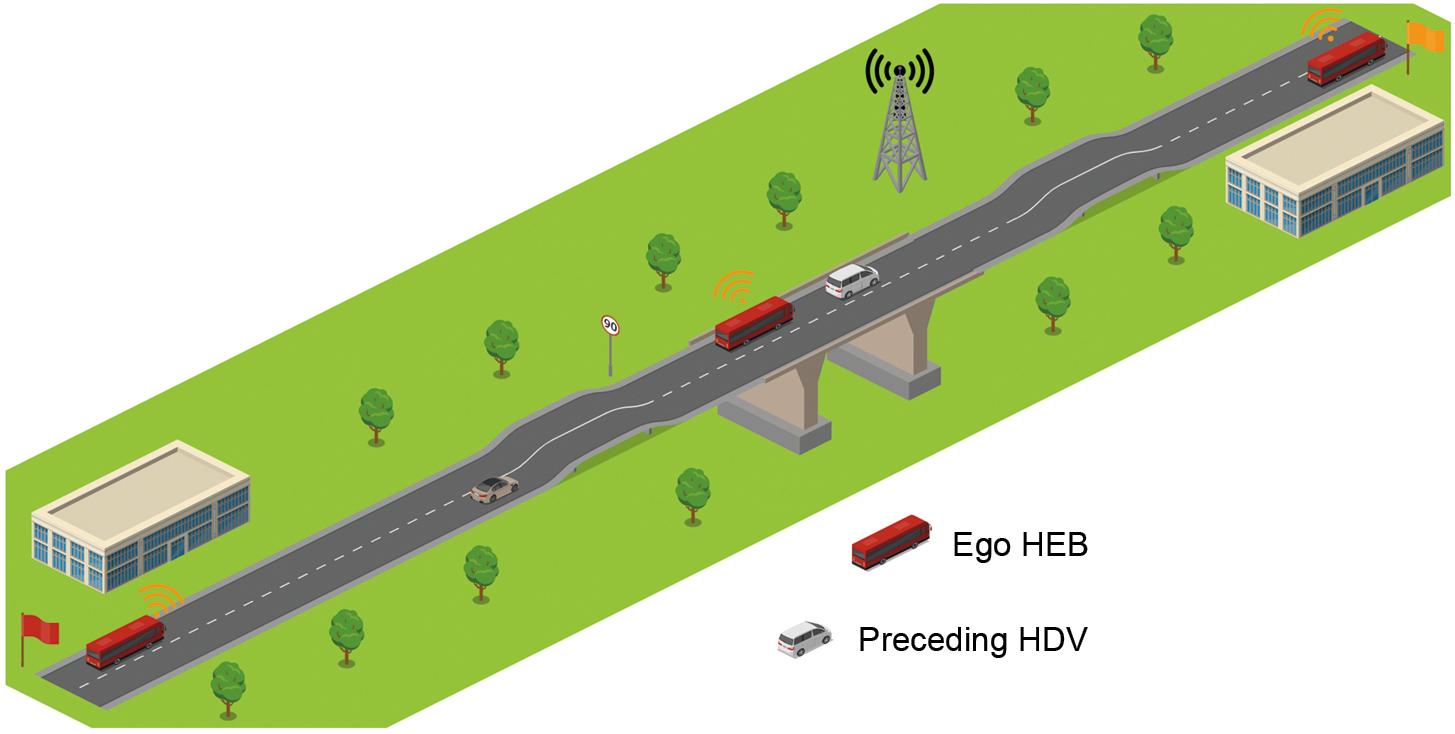
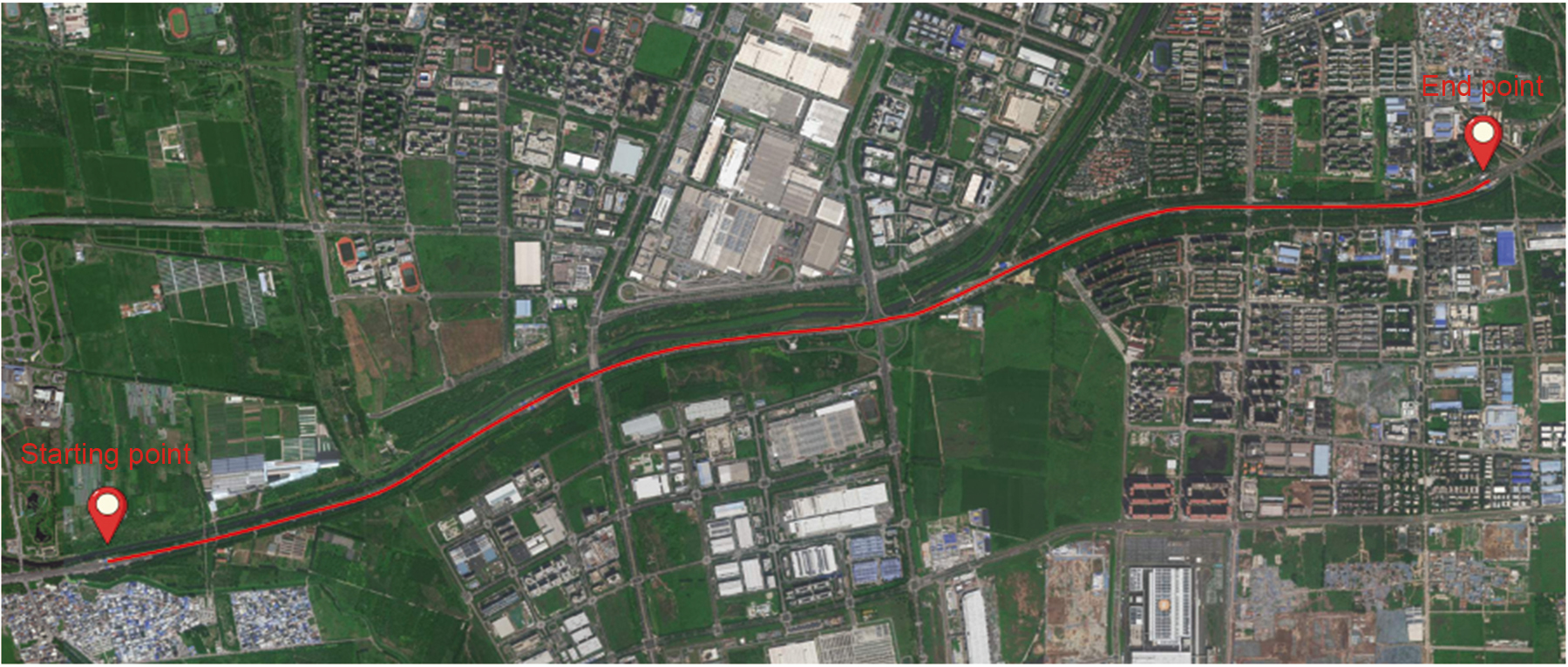
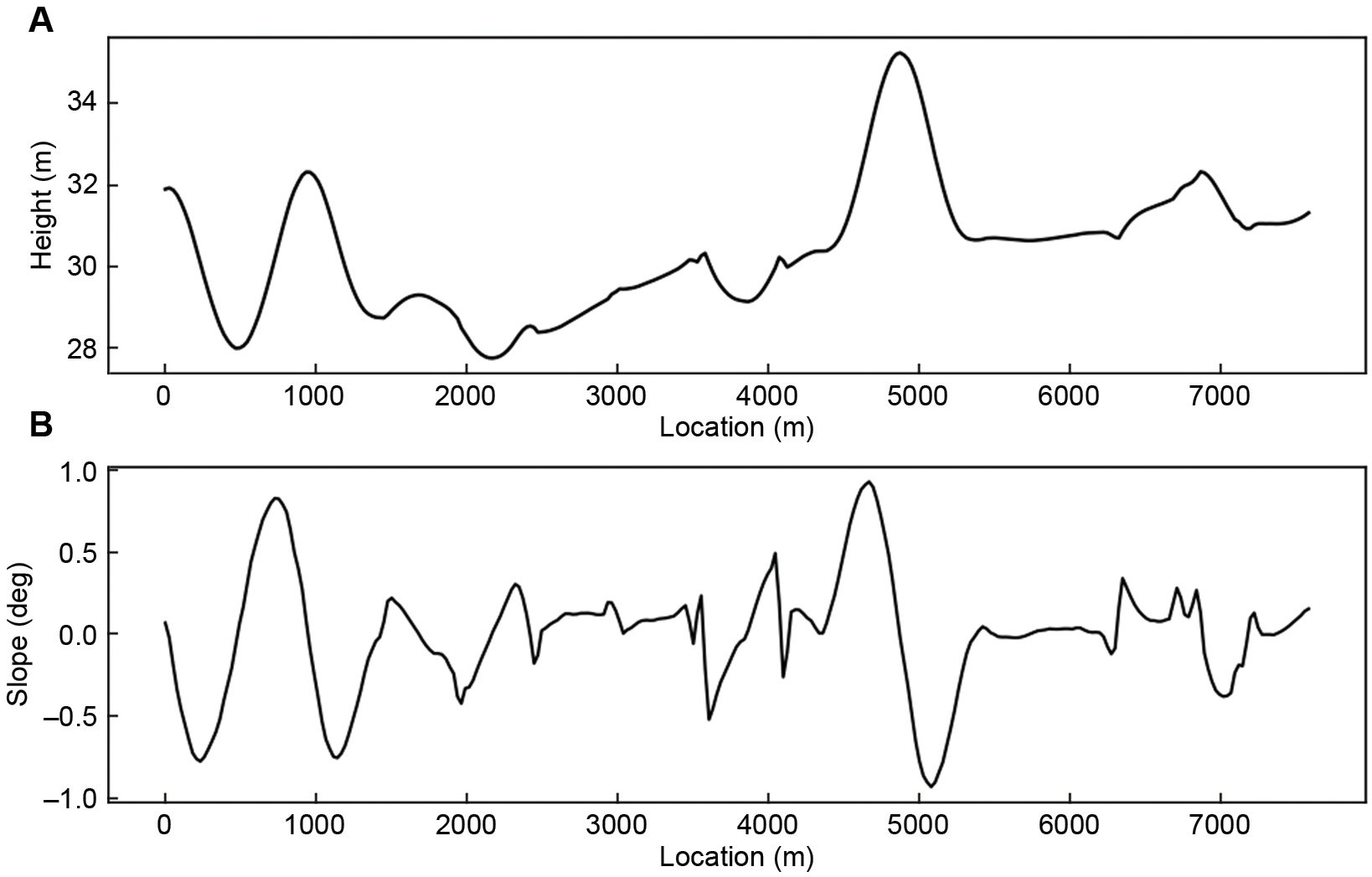
As shown in Figure 1, in the intercity bus scenario under investigation, the electric bus departs from the origin terminal, traverses a section of intercity expressway or highway featuring significant slope variations and dynamic speed limits, and finally arrives at the destination terminal. Throughout the journey, the vehicle is required to adjust its speed in real-time according to road grades and speed limits while considering the dynamics of the vehicle ahead, thereby ensuring a safe following distance and simultaneously improving energy utilization efficiency. Figure 2 is a real-world intercity expressway bus route. The elevation profile and gradient characteristics of the intercity bus route are illustrated in Figure 3.
Accordingly, the eco-driving control scheme for the ego vehicle within the scenario shown in Figure 1 is established upon the following assumptions:
(i) The ego vehicle does not overtake the preceding vehicle. It is assumed that the vehicle does not make stops or change driving directions.
(ii) The electric bus is characterized as an intelligent connected vehicle (ICV) equipped with Vehicle-to-Cloud (V2C) communication capabilities. The cloud platform is capable of receiving vehicle status data and transmitting control commands instantaneously.
(iii) The ego vehicle is equipped with on-board sensors capable of perceiving the position and speed of the leading vehicle in real-time.
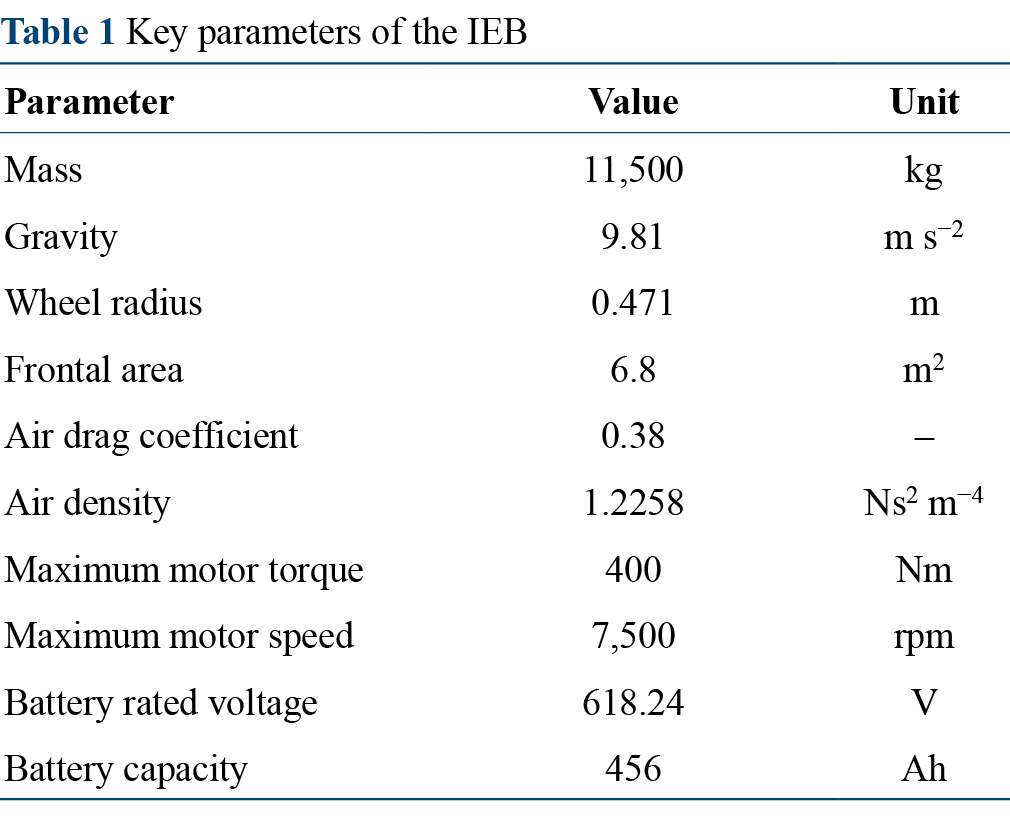
In this section, the vehicle model of an intelligent electric bus is established. Table 1 summarizes the primary parameters for each subsystem.
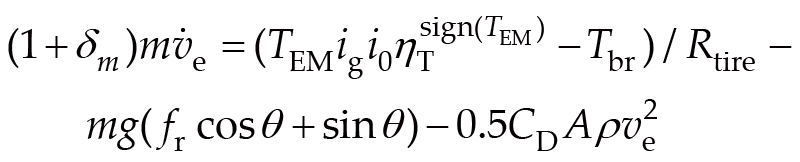
The primary objective of eco-driving is to optimize the speed trajectory. This paper considers only the longitudinal dynamics of the vehicle, while the influence of lateral dynamics is neglected. The longitudinal dynamics model of electric vehicles can be described by:(1)where TEM and Tbr are the motor and braking torques; ig, i0 denotes the transmission ratio and the final drive ratio; ve is the vehicle speed; ηT means the transmission efficiency of the transmission system, and sign(·) is the sign function; θ is the slope angle of the road. δm represents the equivalent mass coefficient, and m represents curb mass. Rtire, CD, ρ, A, fr are wheel radius, air drag coefficient, air density, windward area, and rolling resistance coefficient, respectively.
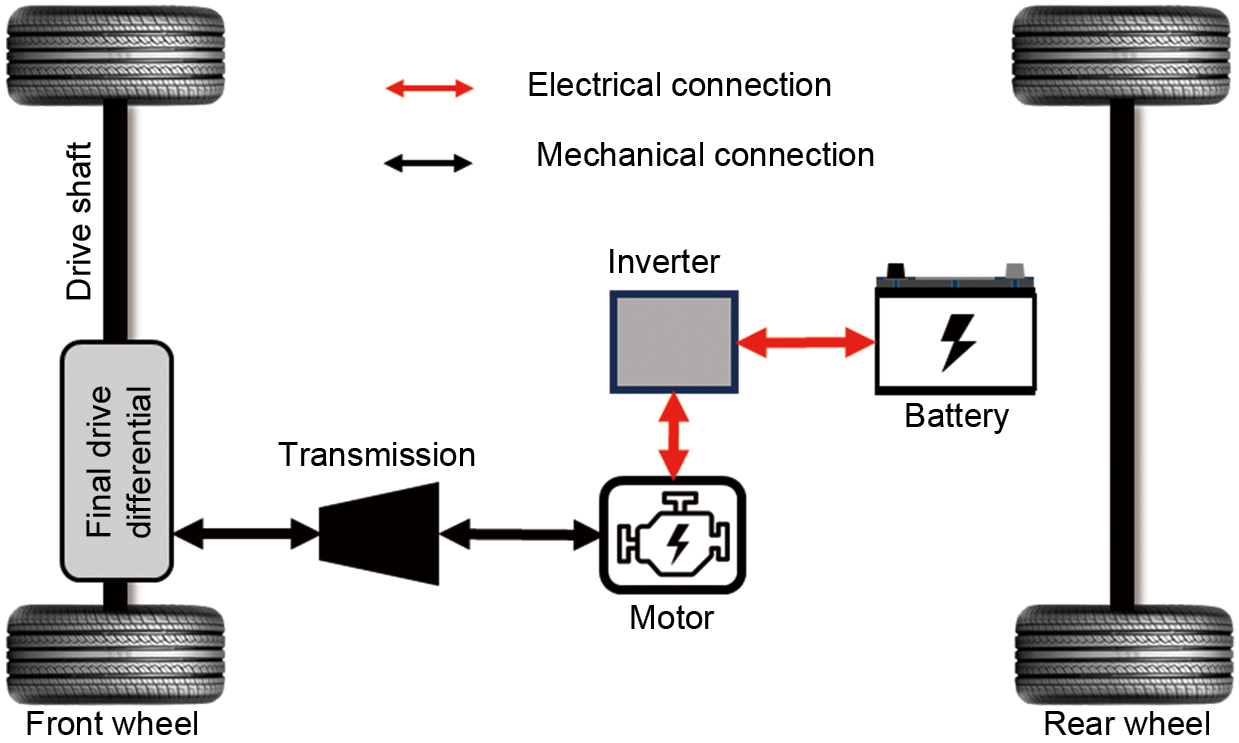
As shown in Figure 4, the architecture of the electric bus and its powertrain fundamentally consists of an electric motor (EM) and a power battery pack. Electrical energy from the battery pack is routed through an inverter to the traction motor, which subsequently delivers mechanical torque to the drive wheels via the gearbox and differential.
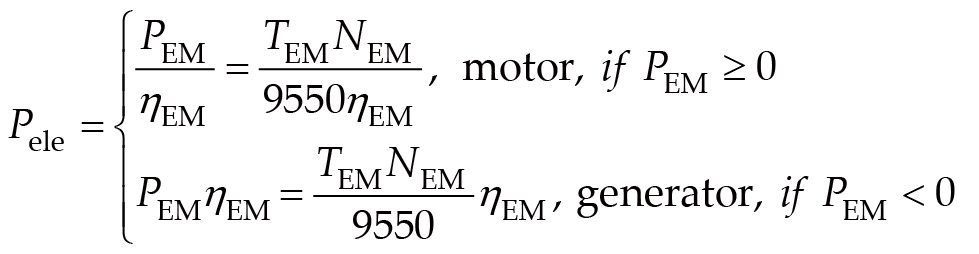
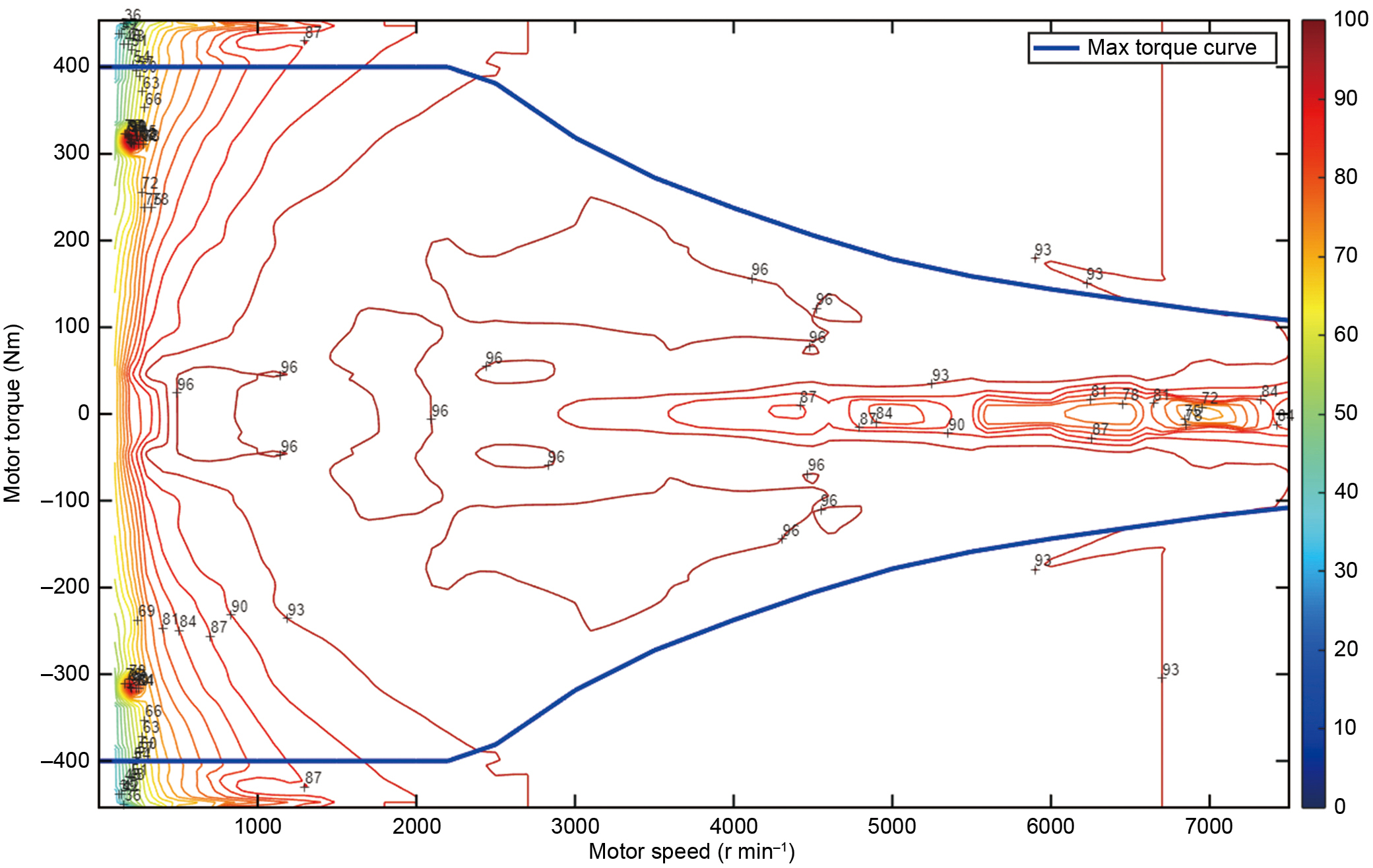
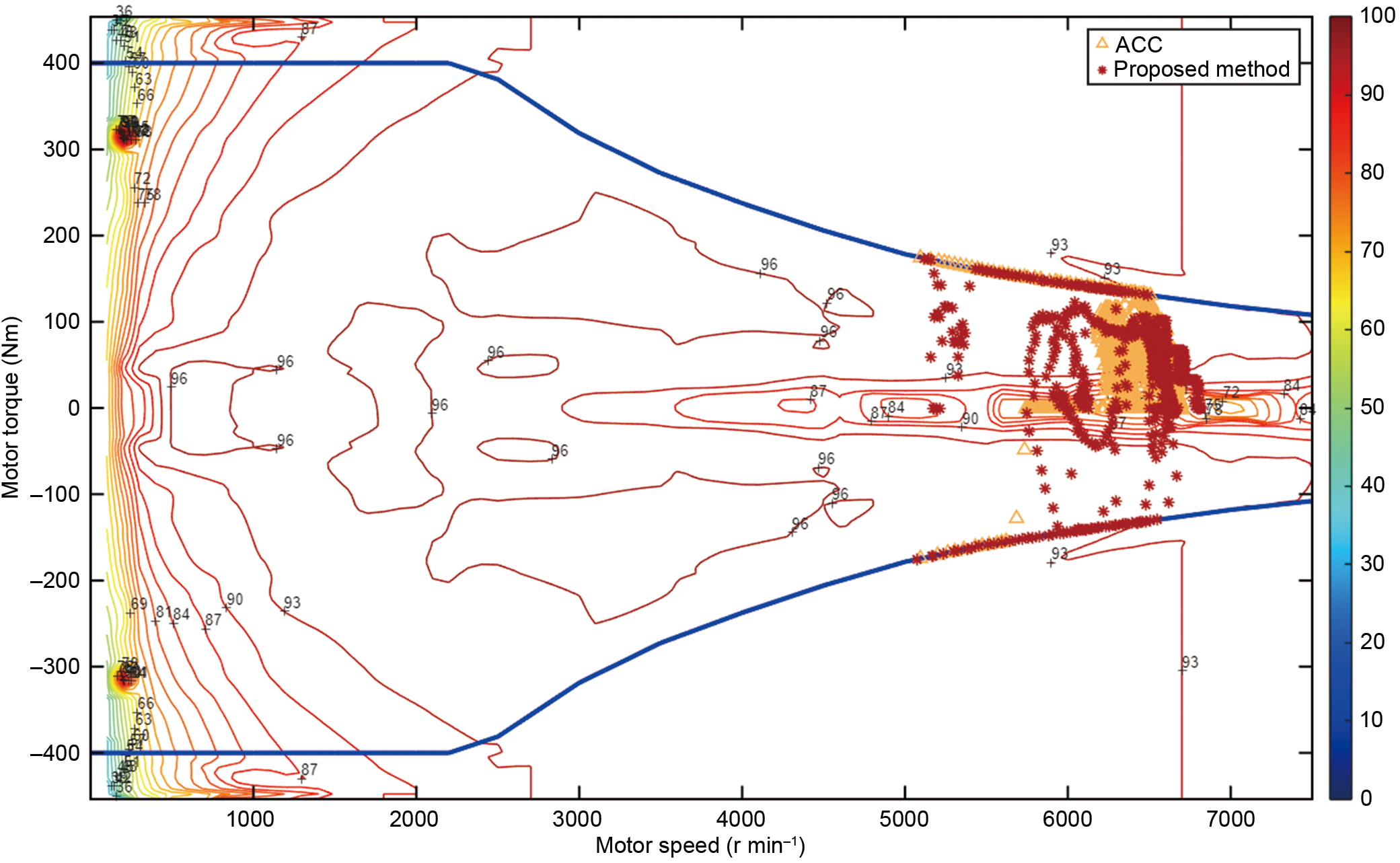
The electric motor functions in two modes: propelling the vehicle and recharging the battery pack via regenerative braking. EM power is formulated as:(2)where PEM is the mechanical power of EM, and Pele is the electric power. TEM, NEM, ηEM are the torque, speed, and efficiency of EM. As shown in Figure 5, ηEM is a mapping function of EM torque and EM speed, as:(3)
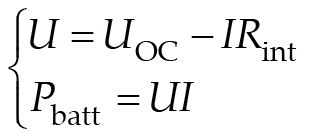
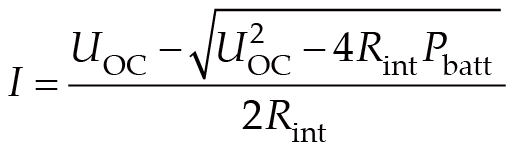
The equivalent-circuit model is introduced to characterize the power battery of IEB in this study [32]. The battery's load current is analytically deduced through Kirchhoff's voltage law to complete the modeling process. Based upon the equivalent-circuit model, the formulas for calculating battery voltage U and battery power Pbatt are as follows:(4)where UOC and Rint are the open-circuit voltage and the internal resistance, which can be acquired by interpolation. Therefore, the formula for calculating current can be derived as follows:(5)
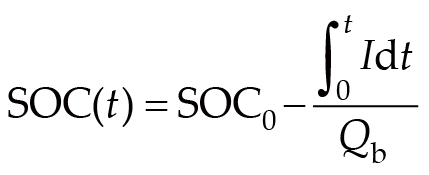
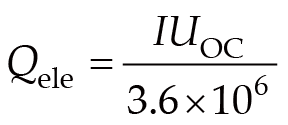
Then, the battery state of charge (SOC) is calculated utilizing the Ampere-hour integral method, as:(6)where SOC0 is the initial SOC, Qb is the battery capacity. The electricity consumption Qele (unit: kWh) per unit time can be accumulated as:(7)
In intercity expressway operational scenarios, EBs confront the dual challenges of limited driving range and strict punctuality requirements. To address this issue, this section presents a cloud-supported predictive eco-driving control strategy that balances energy consumption and travel efficiency. Firstly, a vehicle-cloud hierarchical architecture is designed to achieve a closed-loop from velocity planning to vehicle control. The energy-efficient velocity optimization problem is then formulated, and a receding horizon optimization is introduced.
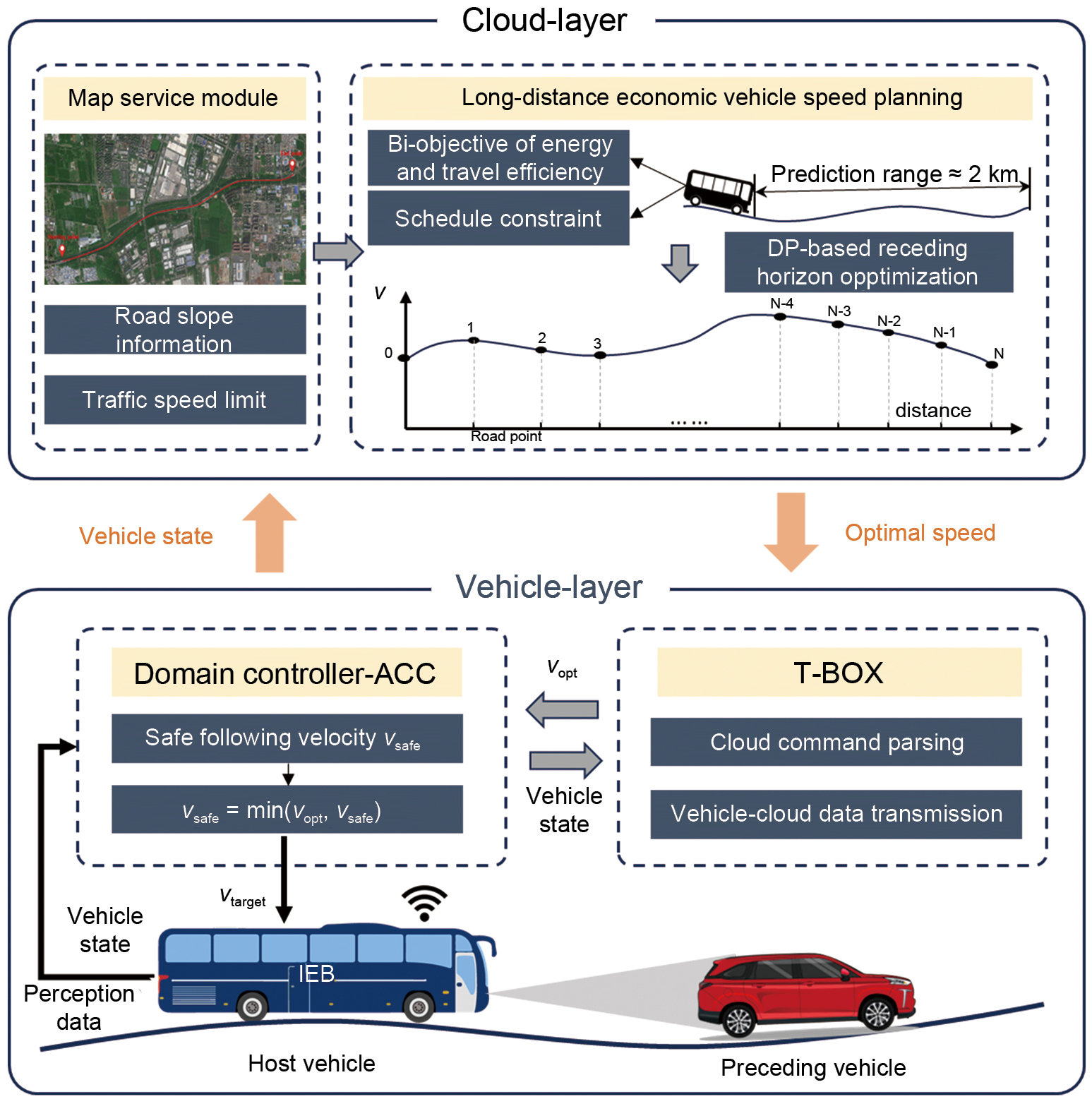
A hierarchical control scheme (as shown in Figure 6) is established to solve the predictive eco-driving problem for the IEBs on the intercity highway, which consists of two parts: (1) long-distance economic speed planning at the cloud-layer; (2) safety-prioritized velocity tracking control at the vehicle-layer. At the cloud level, an economic speed sequence is planned over a kilometer-scale horizon using global gradient and speed limit info to optimize energy and efficiency. At the vehicle level, the cloud-recommended speed is tracked and controlled based on a safety-prioritized arbitration logic.
Upper layer: cloud planning layer is deployed on cloud servers, where computation-intensive global optimization tasks are handled. Route gradients, road speed limits, and operational schedule requirements of the intercity bus are taken as inputs, and the DP algorithm is utilized to solve for the global optimal velocity trajectory in the spatial domain. Consequently, an optimal reference velocity sequence balancing energy efficiency and travel time is generated and periodically transmitted to the vehicle via the V2X network.
Lower layer: vehicle real-time control layer is executed on the on-board computing unit, where millisecond-level motion control and safety decision-making are conducted. The reference velocity transmitted from the cloud, along with the status of the preceding vehicle (relative distance and relative velocity) detected by on-board radar, are received as inputs. Subsequently, safety arbitration is performed based on the real-time traffic environment. Finally, the desired acceleration is output to regulate motor torque or braking pressure.
To balance the target velocity with car-following safety, a safety-prioritized arbitration strategy is adopted to switch decisions between the "Cloud-based Efficient Eco-driving Mode" and the "ACC Car-following Mode":
(i) Perception input: the relative distance drel and relative velocity vrel between the ego vehicle and the preceding vehicle are monitored in real-time.
(ii) ACC calculation: the car-following velocity vsafe required to maintain a safe inter-vehicle distance under the current traffic state is calculated based on the ACC function.
(iii) Decision execution: the cloud optimized velocity is compared with the ACC safety velocity by the controller, and the minimum of the two is selected as the final target execution velocity: vtarget = min(vopt, vsafe).
This logic ensures that under free-flow conditions (i.e., no preceding vehicle or sufficient headway, vsafe > vopt), the optimal velocity planned by the cloud is strictly executed. Conversely, the system is automatically degraded to the ACC mode when obstruction by a preceding vehicle or close-range car-following conditions (vsafe < vopt) are encountered.
Based on the vehicle longitudinal dynamics and energy consumption models established previously, an optimal velocity planning model is formulated in the spatial domain, considering road gradient and the strict limitations of the operational schedule. Subsequently, a receding horizon optimization is constructed to solve the OCP.
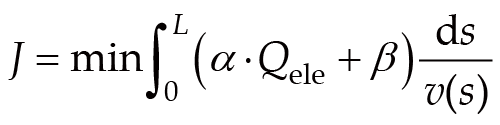
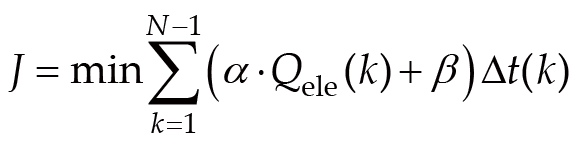
To balance energy economy with travel efficiency during long-distance driving, the cost function is defined as a weighted sum of the total vehicle electric energy consumption and travel time. Based on the battery energy consumption model presented in Equation (7), the optimization objective is formulated as follows:(8)where Qele denotes the electric energy consumption per unit time, v(s) represents the velocity at distance s, L is the total distance of the trip, and α and β signify the weighting coefficients for the energy consumption objective and the travel time objective, respectively.
The optimization process is subject to the dual constraints of the vehicle's physical limits and the external operational environment:
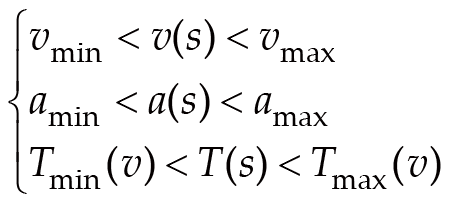
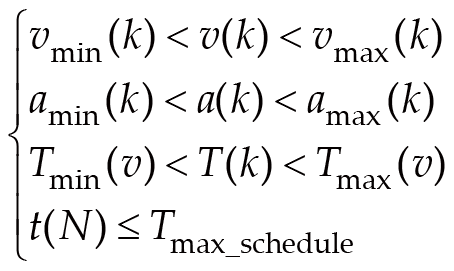
Physical and road constraints: the vehicle state is required to satisfy the motor characteristic curve and the legal speed limits of the current road section:(9)where vmin and vmax denote the minimum and maximum vehicle speed limits, respectively; amin and amax represent the minimum and maximum acceleration constraints imposed to ensure driving comfort; T(s) indicates the motor output torque; and Tmin(v) and Tmax(v) refer to the minimum and maximum available motor torque at the current speed v, respectively.
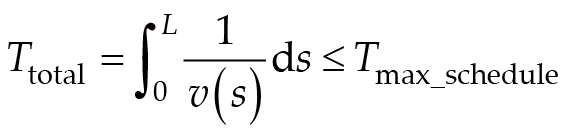
Operational schedule constraint: the total travel time Ttotal to the destination is required not to exceed the upper limit Tmax_schedule stipulated by the operational schedule:(10)
The aforementioned optimization problem is characterized by non-convexity and non-linearity. To derive the global optimal solution and adapt to disturbances during the driving process, a DP algorithm based on spatial discretization is designed, and a receding horizon optimization mechanism is introduced.
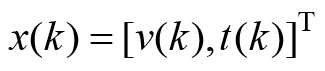
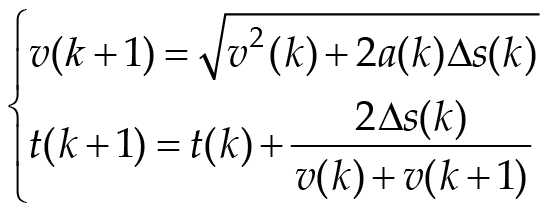
The route with a total length L is discretized into N stages (corresponding to a waypoint map composed of a series of longitude and latitude points), with a step size of Δs. To address the time constraints, the state variables are required to be augmented. The state vector x(k) at the k-th stage is defined as:(11)where v(k) denotes the vehicle velocity at the current position, and t(k) represents the accumulated travel time. The acceleration a(k) at this stage is selected as the decision variable u(k). The state transition equation is determined by the vehicle dynamics:(12)
According to Equations (8−10), the discretization of the objective function and constraints is performed as follows:(13)(14)
According to Bellman's Principle of Optimality, the problem is solved using backward recursion. The accumulated minimum cost Vk(xk) at the k-th stage is expressed as:(15)where Lcost(xk, uk) represents the single-step energy and time cost, and Φ(tk+1) denotes the terminal penalty term. If the predicted arrival time t(N) exceeds the schedule limit, an infinite penalty value is imposed, thereby ensuring that the planned velocity trajectory satisfies the punctuality requirement.
To eliminate the influence of model errors and traffic flow disturbances on global planning, a receding horizon optimization strategy is adopted: Upon the arrival of the vehicle at each map waypoint, the current real state of the vehicle is re-uploaded to the cloud; subsequently, the optimal velocity trajectory is recalculated by the cloud algorithm and transmitted to the vehicle.
To comprehensively validate the practical performance of the proposed cloud-supported predictive eco-driving system, this section conducts a vehicle-cloud closed-loop field experiment in real-world road environments. First, the architecture of the vehicle-cloud collaborative experimental platform is introduced in detail. Then, field tests on communication latency and packet loss rate are analyzed, and comparative experiments between the proposed strategy and the ACC system are carried out on actual intercity bus routes.
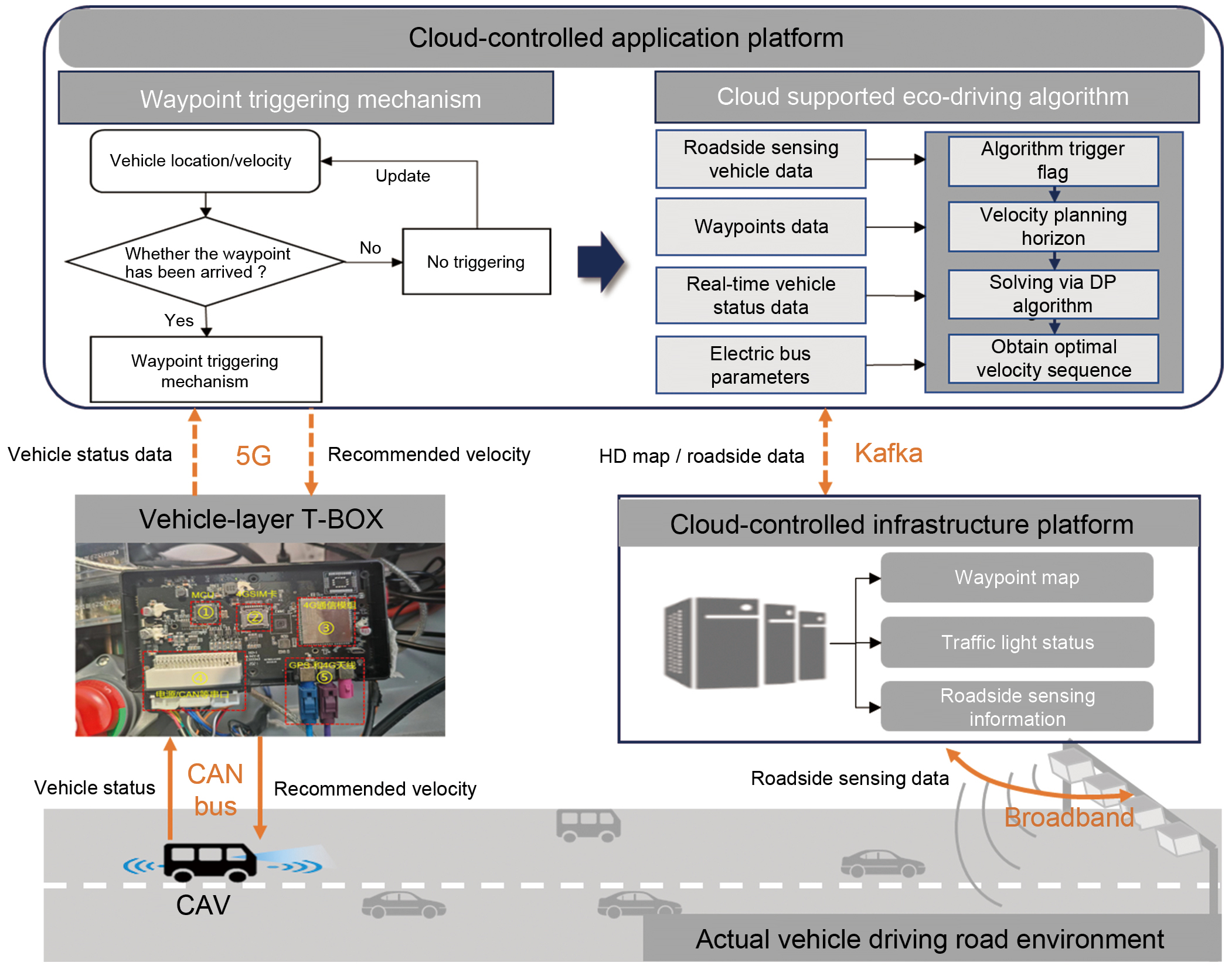
As illustrated in Figure 7, an experimental platform based on a vehicle-road-cloud collaborative architecture is constructed to verify the effectiveness of the proposed eco-driving method. The platform consists of three parts: the cloud control application platform, the cloud control basic platform, and the on-board system.
First, vehicle operating status (including velocity, acceleration, SOC, etc.) is collected in real-time by the on-board telematics BOX (T-BOX) via controller area network (CAN) and sensors, and the data is uploaded to the cloud relying on the T-BOX and 5G network. The cloud control basic platform is responsible for the storage, processing, and distribution of large-scale data, utilizing stream processing frameworks such as Kafka to achieve high-throughput management of vehicle status data and road environment information. On this basis, the predictive eco-driving optimization algorithm for intercity buses is integrated into the cloud control application platform. On the one hand, a waypoint triggering mechanism for the cloud-based eco-driving algorithm is implemented by this module according to the real-time status information of the electric bus. On the other hand, the optimal velocity sequence is calculated by the cloud-based eco-driving algorithm based on the waypoint map data and the status information uploaded by the vehicle in real-time, and is subsequently sent to the vehicle-side T-BOX. The optimal velocity sequence is parsed by the T-BOX, and the first value is transmitted as the target velocity via the CAN bus to the on-board ACC function module, thereby completing velocity tracking. The aforementioned process from data upload to velocity command transmission constitutes one iteration, and the entire experimental process undergoes receding horizon optimization according to the algorithm triggering mechanism. In the event of packet loss, excessive latency, or temporary cloud-side replanning failure, the T-BOX executes the buffered optimal velocity sequence from the previous update to maintain continuity.
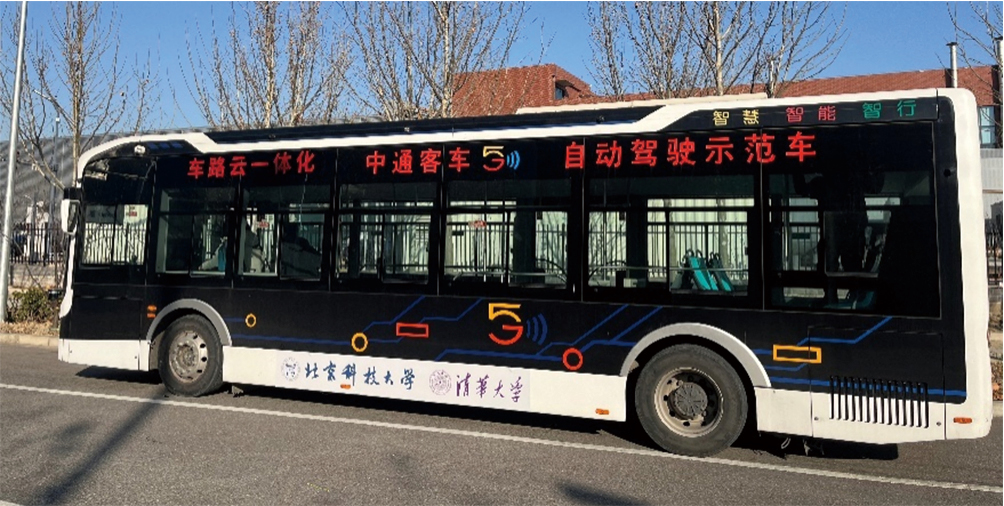
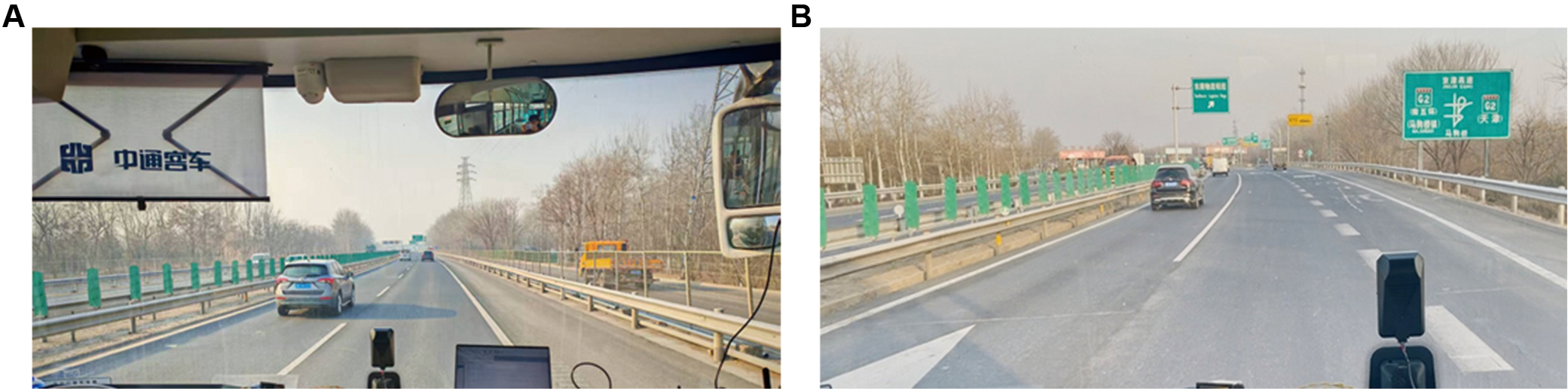
The proposed eco-driving strategy is compared with ACC for benchmarking purposes. In this study, the cloud-side velocity optimization is implemented with a 100 m discretization interval over a 2 km receding horizon. Using an Intel Xeon Gold 6240 CPU server, the average execution time is approximately 36 ms. The experimental route and its associated characteristic information are illustrated in Figures 4, 5. The real-world road scenario and the electric bus selected in this study are depicted in Figures 8, 9. The experimental time intervals were scheduled from 09:30 to 11:00 and from 14:00 to 17:00. Both the proposed method and the comparative method were tested six times under this scenario. During the experiments, vehicle-side driving data for each trip were recorded utilizing CANOE, and the indicators for driving energy consumption and travel efficiency were subsequently calculated.
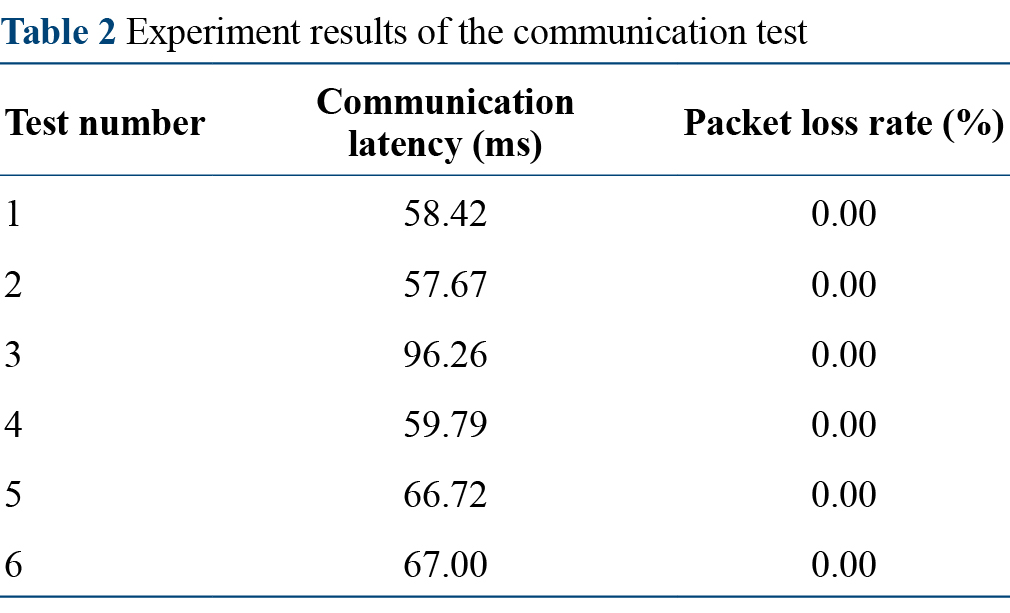
To evaluate the quality of the vehicle-cloud communication link, communication latency and packet loss rate were selected as the core evaluation metrics, and multiple tests were conducted in a real-world 5G network environment. The average communication latency is defined as the mean value of the transmission delay for cloud-to-vehicle downlink data. The packet loss rate is defined as the proportion of recommended velocity commands transmitted from the cloud that failed to be received by the T-BOX. The results of six random communication tests conducted under a standard 5G network environment are presented in Table 2.
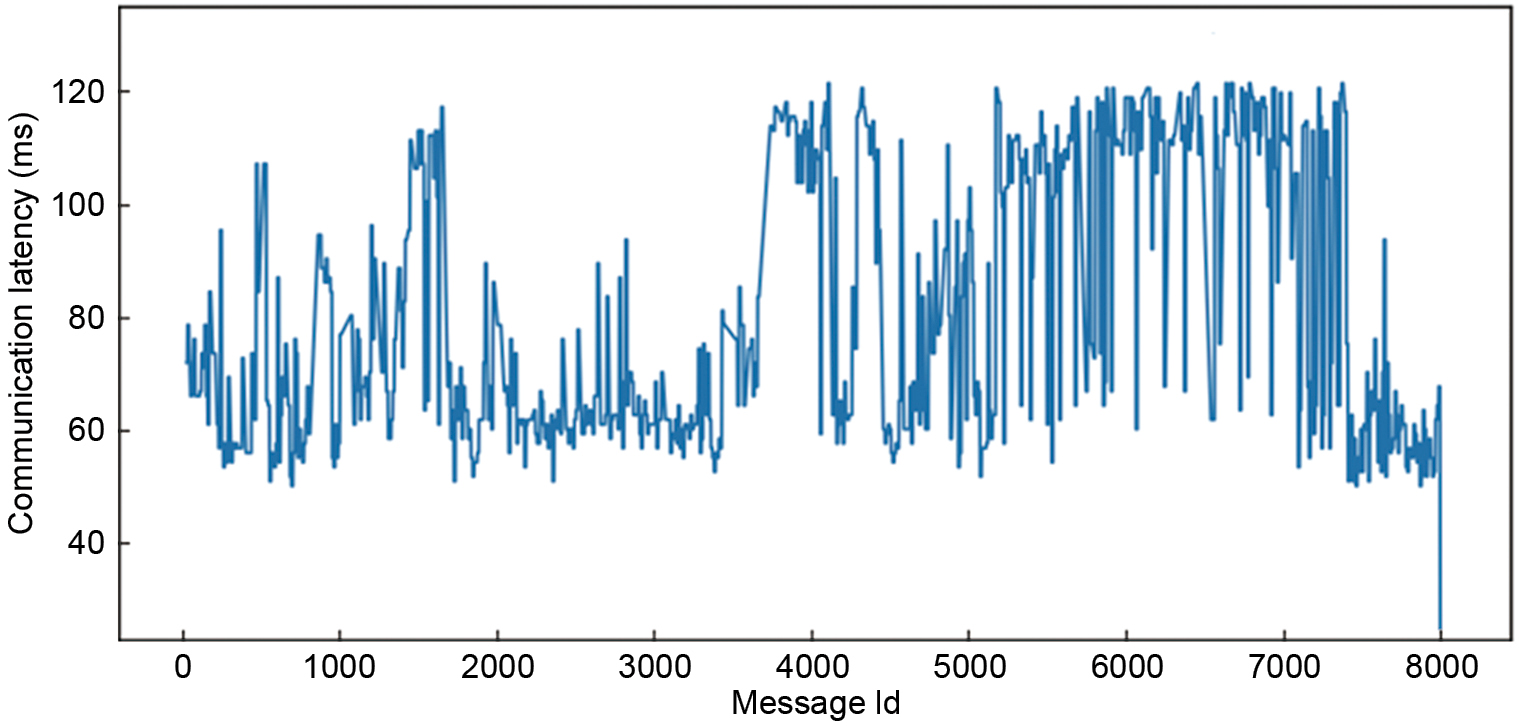
According to the experimental data, the one-way average communication latency is distributed within the range of 57.67 to 96.26 ms. For the majority of test groups (e.g., Tests 1, 2, and 4), the latency was stabilized at approximately 60 ms, demonstrating favorable real-time performance. Figure 10 presents the experimental results of Test number 3. Despite the existence of fluctuations, all test results were found to be significantly lower than the control cycle of the system's upper planning layer (approximately 2 s). This implies that sufficient time is available for the cloud to complete velocity planning and transmit commands; consequently, the impact of communication latency on long-horizon predictive control is considered negligible. Furthermore, the packet loss rate was consistently maintained at 0.00% across all test groups. These results show that highly reliable data transmission is achieved within the selected experimental route and network environment.
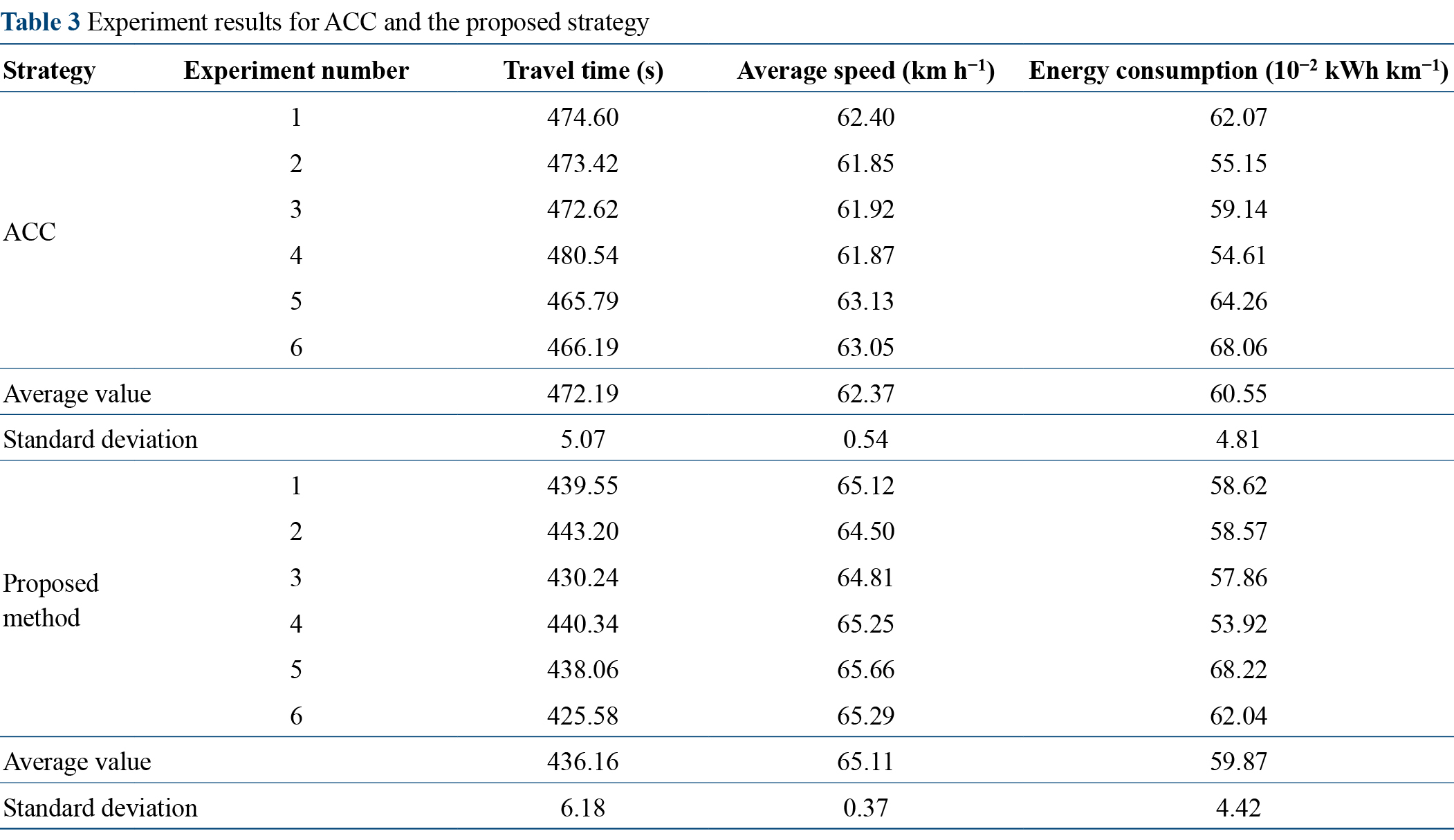
To verify the comprehensive effectiveness of the proposed eco-driving strategy, six sets of comparative tests against the traditional ACC strategy were conducted under the same experimental conditions. The specific performance of both strategies in terms of travel time, average velocity, and energy consumption is detailed in Table 3.
As shown in Table 3, a comparative analysis is presented as follows: compared with ACC, the travel time is reduced by approximately 7.63%, the average velocity is increased by approximately 4.21%, and energy consumption is lowered by approximately 1.12% utilizing the strategy proposed in this paper. The comparative experimental results indicate that long-horizon road speed limit and gradient information can be effectively utilized by the cloud-supported predictive eco-driving strategy. Consequently, synergistic optimization of travel efficiency and energy consumption is achieved subject to the operational schedule constraints of intercity buses.
Furthermore, a comparison of the vehicle velocity profiles and accumulated energy consumption curves is further illustrated in Figure 11. In contrast to the frequent velocity fluctuations generated by the ACC strategy due to reliance solely on local line-of-sight perception, the velocity trajectory generated by the efficient eco-driving strategy proposed in this paper is significantly smoother, benefiting from cloud-based long-horizon planning.
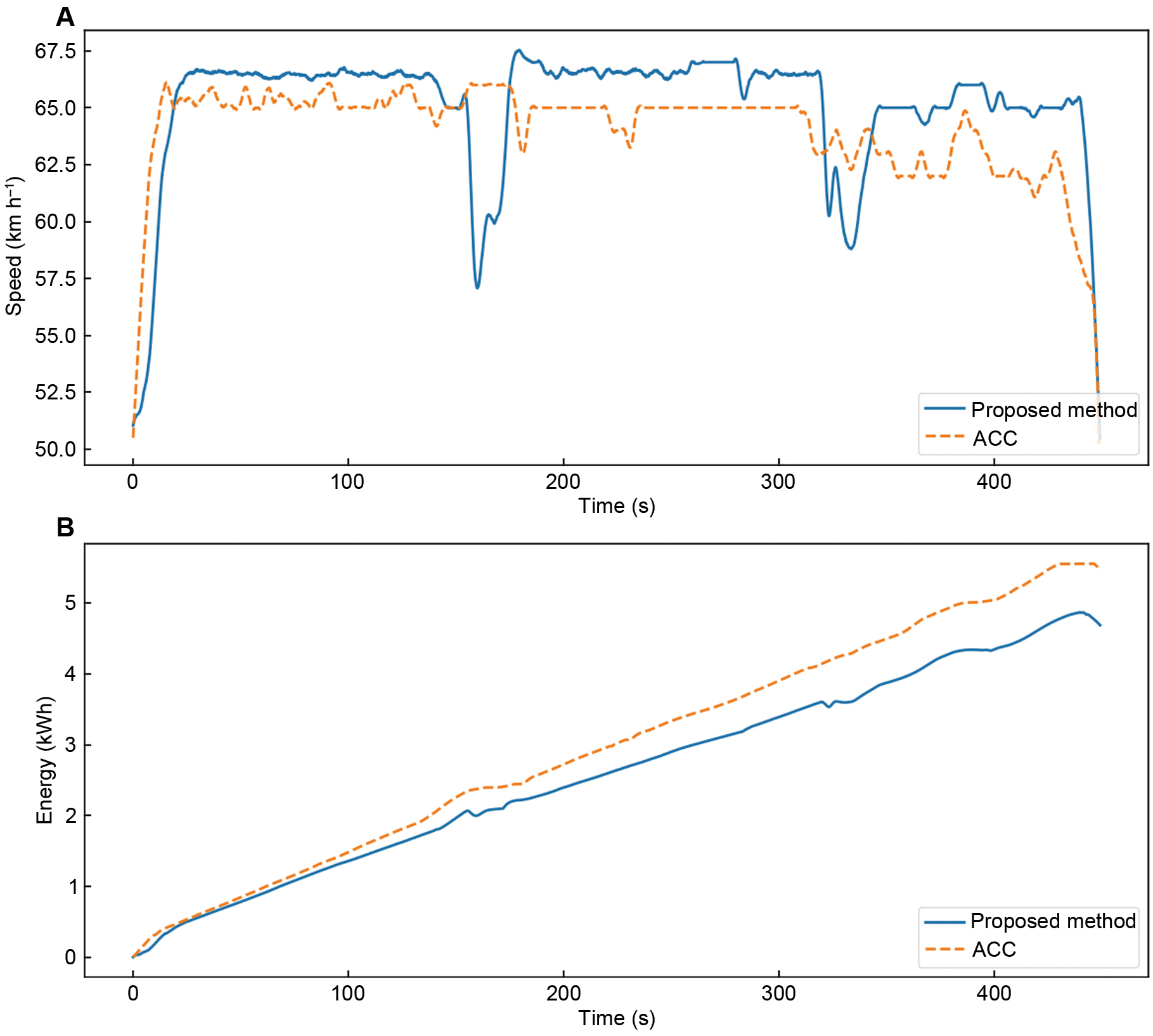
This strategic difference is also clearly reflected in the motor operating points (Figure 12). While the ACC strategy rigidly concentrates its operating points in the positive torque region to maintain speed, the proposed method dynamically adjusts its torque, notably exhibiting a large number of operating points in the negative torque region. For road sections with significant gradients ahead, anticipatory deceleration or coasting is enabled by the proposed strategy (e.g., at t ≈ 160 and 330 s). This smooth and prospective velocity planning effectively avoids invalid acceleration-deceleration cycles, thereby reducing energy consumption. The final results demonstrate that while a higher average velocity is maintained throughout the process by the PCC strategy, the accumulated energy consumption is significantly reduced, which intuitively verifies the effectiveness of the proposed strategy.
In this study, a cloud-supported efficient eco-driving control strategy is proposed for intelligent electric buses operating on intercity routes. A hierarchical vehicle–cloud control architecture was developed, in which long-horizon velocity planning is performed in the cloud using road gradient and speed limit information, while real-time safety-oriented velocity execution is carried out on the vehicle side.
(i) By formulating a DP-based optimization problem that jointly considers electric energy consumption and travel time, the proposed method achieves a balanced trade-off between energy efficiency and operational punctuality. A safety-prioritized arbitration strategy further ensures reliable car-following performance under dynamic traffic conditions.
(ii) Vehicle-cloud closed-loop experiments conducted under a commercial 5G network demonstrate the practical feasibility of the proposed approach. Compared with the ACC strategy, the proposed method increases average vehicle speed while reducing energy consumption, thereby realizing a synergistic improvement in travel efficiency and energy economy.
While the current longitudinal-only control ensures safety through an onboard arbitration layer, its eco-driving performance can be constrained by a slow-moving vehicle ahead. Future work will investigate the integration of lateral decision-making (e.g., proactive lane changes) into the vehicle-cloud collaborative framework. This will allow the intelligent bus to resolve speed conflicts by overtaking, thereby maintaining a higher degree of fidelity to the cloud-optimized energy-efficient velocity profiles.
Yue Wang: Writing–original draft; software; methodology. WeiliangLi: Writing–review & editing; methodology. Honglei Qi: Writing–review & editing; resources. Chen Li: Supervision; funding acquisition. Yanbo Lu: Formal analysis; writing–review & editing. Kang Liu: Data curation; software. Yaoyang Wang: Validation; investigation. Sichang Wei: Validation. Bolin Gao: Supervision.
The data that support the findings of this study are available from the corresponding author upon reasonable request.
C. Pasquale, S. Sacone, S. Siri, and A. Ferrara, "Optimal Control of Electric Automated Buses in Intercity Lines: Scenario-Based Analysis of the Pareto-Optimal Solutions," IFAC-PapersOnLine 58, no. 10 (2024): 37–42, https://doi.org/10.1016/j.ifacol.2024.07.315.
Ó. García-Afonso, "Impact of Powertrain Electrification on the Overall CO2 Emissions of Intercity Public Bus Transport: Tenerife Island Test Case," Journal of Cleaner Production 412 (2023): 137365, https://doi.org/10.1016/j.jclepro.2023.137365.
A. Ozdagoglu, G. Z. Oztas, M. K. Keles, and V. Genc, "A Comparative Bus Selection for Intercity Transportation with an Integrated PIPRECIA & COPRAS-G," Case Studies on Transport Policy 10, no. 2 (2022): 993–1004, https://doi.org/10.1016/j.cstp.2022.03.012.
B. Gao, R. Mei, Y. Lu, et al., "Predictive Lane-Changing Control for Platoon Based on Cloud Control System in Highway Scenarios," CHAIN 1, no. 1 (2024): 75–98, https://doi.org/10.23919/chain.2023.000001.
L. Qi, J. Zhang, and X. Jiao, "Predecessor Speed Prediction-Based Predictive Cruise Control of Connected Autonomous Vehicle in Platoon with Multiple-Human-Driven-Vehicles," Control Engineering Practice 158 (2025): 106286, https://doi.org/10.1016/j.conengprac.2025.106286.
X. Li, J. Zhang, J. Xue, L. Qi, W. Tang, and X. Jiao, "Predictive Cruise Control for Connected Autonomous Vehicles Considering Communication Delay in Mixed Traffic," IFAC-PapersOnLine 58, no. 29 (2024): 172–177, https://doi.org/10.1016/j.ifacol.2024.11.139.
Z. Wang, R. Zhang, S. Niu, D. Zhang, and B. Gao, "Cloud-Based Energy-Efficient Predictive Cruise Control Accounting for Nonlinear Vehicle Dynamics on Highways," Energy 346 (2026): 139984, https://doi.org/10.1016/j.energy.2026.139984.
H. Gao, X. Zhang, X. Zeng, D. Yang, D. Song, and L. Zhou, "Predictive Cruise Control for Hybrid Electric Vehicles Based on Hierarchical Convex Optimization," Energy Conversion and Management 299 (2024): 117883, https://doi.org/10.1016/j.enconman.2023.117883.
S. Ma, C. Niu, M. Zhang, et al., "Edge-Cloud Collaboration-Driven Predictive Planning of Electric Vehicle Charging Load for Microgrids," Applied Energy 408 (2026): 127362, https://doi.org/10.1016/j.apenergy.2026.127362.
S. Li, H. Wang, and J. Hu, "Ecological Driving at an Actuated Signalized Intersection: A Practical Solution of Vehicle-Road-Cloud Integration System," Transportation Research Part C: Emerging Technologies 17 (2025): 105198, https://doi.org/10.1016/j.trc.2025.105198.
D. Wu, Q. Yuan, C. Du, F. Yan, and Y. Li, "Predictive Cruise Control for 4WD Electric Vehicle Based on Dynamic Weight Factors," Energy Reports 8 (2022): 237–246, https://doi.org/10.1016/j.egyr.2022.10.097.
P. Polverino, E. A. Adinolfi, and C. Pianese, "Target Speed Computation through Predictive Cruise Control for Vehicles Energy Consumption Reduction," Energy Conversion and Management 298 (2023): 117757, https://doi.org/10.1016/j.enconman.2023.117757.
Y. J. J. Heuts, J. J. F. Wouters, O. F. Hulsebos, and M. C. F. Donkers, "Modeling, Implementation and Experimental Verification of Eco-Driving on a Battery-Electric Heavy-Duty Vehicle," Applied Energy 390 (2025): 125782, https://doi.org/10.1016/j.apenergy.2025.125782.
S. Chen, Y. Huang, J. Zhang, X. Yu, Y. Lu, and D. Xuan, "Research on a Novel Multi-Agent Deep Reinforcement Learning Eco-Driving Framework," Energy 326 (2025): 136308, https://doi.org/10.1016/j.energy.2025.136308.
X. Sun, Y. Lu, Q. Wu, et al., "An Eco-Driving Strategy of Vehicle Comfort-Safety and Energy Efficiency Based on Deep Reinforcement Learning," Alexandria Engineering Journal 132 (2025): 252–263, https://doi.org/10.1016/j.aej.2025.10.040.
H. Gao, J. Leng, Y. Li, et al., "Predictive Slope Information Compression Using in Deep Reinforce Learning for Enhancing the Economic and Trip Efficiency of Battery Electric Vehicles," Journal of Energy Storage 146 (2026): 120049, https://doi.org/10.1016/j.est.2025.120049.
H. Tong, L. Chu, Y. Zhang, et al., "Towards Sustainable High-Speed Cruising: Optimizing Energy Efficiency of Plug-in Hybrid Electric Vehicle via Intelligent Pulse-and-Glide Strategy," Energy 311 (2024): 133412, https://doi.org/10.1016/j.energy.2024.133412.
Y. Liang, H. Dong, D. Li, and Z. Song, "Adaptive Eco-Cruising Control for Connected Electric Vehicles Considering a Dynamic Preceding Vehicle," eTransportation 19 (2023): 100299, https://doi.org/10.1016/j.etran.2023.100299.
C. Wang, Z. Yang, L. Zhu, and L. Zhang, "Learning-Augmented Hierarchical Control for Signal-Aware Safe Eco-Driving of Connected Autonomous Vehicles," Applied Energy 401 (2025): 126807, https://doi.org/10.1016/j.apenergy.2025.126807.
H. Chu, S. Dong, J. Hong, H. Chen, and B. Gao, "Predictive Cruise Control of Full Electric Vehicles: A Comparison of Different Solution Methods," IFAC-PapersOnLine 54, no. 10 (2021): 120–125, https://doi.org/10.1016/j.ifacol.2021.10.151.
S. Dong, X. Luo, Y. Zhang, Q. Liu, B. Gao, and H. Chen, "Computationally Efficient Predictive Cruise Control of Electric Vehicles with Nonsmooth System," Control Engineering Practice 164 (2025): 106466, https://doi.org/10.1016/j.conengprac.2025.106466.
Y. Li, C. Pan, J. Wang, Z. Li, J. Liang, and C. Cai, "Research on Energy Consumption Optimization of Predictive Cruise Control Considering the State of the Leading Vehicle," Energy 308 (2024): 132843, https://doi.org/10.1016/j.energy.2024.132843.
C. Ling, J. Peng, Y. Fan, Z. Wang, S. Yu, and C. Wu, "Safety-Awareness Enhanced Eco-Driving Strategy for Dual-Motor Electric Vehicle in Highway Scenarios Based on Improved Proximal Policy Optimization Algorithm," Energy 340 (2025): 139177, https://doi.org/10.1016/j.energy.2025.139177.
J. Huang, K. Wan, J. Chen, et al., "A Forward-Looking Sequential Asynchronous Lane-Change Strategy for Vehicle Platoon Under Cloud-Vehicle-Road Integrated Architecture," CHAIN 2, no. 1 (2025): 43–56, https://doi.org/10.23919/chain.2025.000007.
L. Yang, M. Yuan, Y. Liu, et al., "Optimization of Task Scheduling and Resource Allocation for Autonomous Vehicle Testing in Vehicle-Road-Cloud Collaborative Systems," Expert Systems with Applications 299 (2026): 129943, https://doi.org/10.1016/j.eswa.2025.129943.
Z. Li, Z. Cui, H. Liao, et al., "Steering the Future: Redefining Intelligent Transportation Systems with Foundation Models," CHAIN 1, no. 1 (2024): 46–53, https://doi.org/10.23919/chain.2024.100003.
Y. Liu, Z. Liang, W. Zhong, et al., "Multi-Objective Predictive Cruise Control for Electric Heavy-Duty Trucks Considering Fleet Battery Swapping under Cyber-Physical System," Energy 321 (2025): 135462, https://doi.org/10.1016/j.energy.2025.135462.
J. Lin, Y. Li, and H. Xiao, "Predictive Cruise Cloud Control Scheme Design on Notable Vehicles—Under the Perspective of Cyber-Physical Systems," IEEE Transactions on Intelligent Transportation Systems 25, no. 7 (2024): 6796–6810, https://doi.org/10.1109/tits.2023.3341834.
S. Li, K. Wan, B. Gao, R. Li, Y. Wang, and K. Li, "Predictive Cruise Control for Heavy Trucks Based on Slope Information under Cloud Control System," Journal of Systems Engineering and Electronics 33, no. 4 (2022): 812–826, https://doi.org/10.23919/jsee.2022.000081.
B. Gao, L. Wang, S. Li, et al., "Cloud-Based Predictive Adaptive Cruise Control Considering Preceding Vehicle and Slope Information," Journal of Systems Engineering and Electronics 35, no. 6 (2024): 1542–1562, https://doi.org/10.23919/jsee.2024.000108.
X. Li, R. Ma, Y. Guo, W. Wang, B. Yan, and J. Chen, "Investigation of Factors and Their Dynamic Effects on Intercity Travel Modes Competition," Travel Behaviour and Society 23 (2021): 166–176, https://doi.org/10.1016/j.tbs.2021.01.003.
D. Song, D. Bi, X. Zeng, and S. Wang, "Energy Management Strategy of Plug-In Hybrid Electric Vehicles Considering Thermal Characteristics," International Journal of Automotive Technology 24, no. 3 (2023): 655–668, https://doi.org/10.1007/s12239-023-0055-0.
 Top
Top