Ionomer adsorption governs coverage structure: interfacial engineering of fuel cell
electrodes toward high-efficiency proton/oxygen transport
Daozeng Yang1Zhongzheng Huang1Wei Xu1Weibo Zheng1Jue Wang1Daijun Yang1Pingwen Ming1Bing Li1
✉
School of Automotive and Energy Engineering, Tongji University, Shanghai 201804, China
Abstract:
The ionomer coating structure on the catalyst surface critically determines the performance
and durability of proton exchange membrane fuel cell (PEMFC) electrodes. Conventional
fabrication often yields non‑uniform overlayers, increasing oxygen transport resistance,
blocking active sites, and accelerating interfacial degradation. Advancing from random
deposition to controlled coating structure is therefore a key objective. Ionomer adsorption
is governed by its intrinsic properties, support characteristics, and catalyst morphology.
In liquid environments, adsorption involves backbone hydrophobicity and side‑chain
chemical bonding, with the latter dominating the final configuration. Solvent composition,
particularly water content, modulates dispersion, and adsorption behavior. Optimization
strategies focus on two main approaches: suppressing detrimental adsorption (e.g.,
by tailoring support porosity or using additives like ionic liquids) and constructing
favorable mass‑transport pathways (e.g., by designing ionomers with cyclic/porous
structures or engineering porous overlayers). Rational design of ionomer properties,
interface regulation, and integration of these strategies can synergistically enhance
proton conduction, mass transport, and stability, laying a foundation for high‑performance,
durable fuel cell electrodes.
Keywords:
ionomer adsorption; ionomer coating structure; mass transport; PEMFC; proton conduction
Received:
2026-03-25
1 Introduction
At present, the global energy structure transition and deep decarbonization process
have entered a critical phase [1]. As a major source of carbon emissions, the transportation sector faces particularly
urgent demands for clean transformation [2]. Among various new energy technology pathways, proton exchange membrane fuel cells
(PEMFCs)—with advantages such as high energy density, rapid start-up capability, low-temperature
operation, and zero emissions—are gradually expanding from passenger vehicle applications
to high-power-density scenarios including heavy-duty trucks, aircraft, and large vessels
[3–5]. Currently, fuel cell technology is expanding from passenger vehicles into scenarios
requiring high power density. This transition necessitates the coordination of materials
innovation with system integration, as evidenced by the technological trends revealed
through the visualization analysis conducted by Qing et al. [6]. This evolution not only represents a natural trend in technological development
but also constitutes a strategic choice for addressing global climate governance targets,
enhancing national energy security, and shaping new competitive advantages in industry
[7].
However, on the path toward high-power-density applications, fuel cell technology
faces a series of complex and interconnected challenges: to achieve megawatt-level
continuous output, the system must simultaneously meet the dual goals of "ultra-high
power density" and "tens of thousands of hours of longevity" under stringent weight
and volume constraints [8, 9]; it also requires excellent dynamic response and environmental adaptability to cope
with frequent power fluctuations, start-stop cycles, and multi-condition impacts such
as salt spray, low temperatures, and vibration in fields like heavy-duty trucks, shipping,
and aviation, all while ensuring high safety and reliability [9, 10]; furthermore, all technological advances must ultimately stand the test of commercialization,
meaning they must be cost-competitive with traditional power systems in terms of total
lifecycle cost [11]. These intertwined challenges collectively form the systemic bottleneck that fuel
cell technology must break through to move from the laboratory to large-scale application
[12, 13].
The electrode catalyst layer (CL) serves as the core functional structure of the PEMFC
and can be regarded as its "heart" [14, 15]. Its complexity is manifested in three interrelated aspects: multiphase coexistence,
multiscale coupling, and multi-interface interactions, which collectively determine
the overall performance of the fuel cell [16]. In terms of multiphase coexistence, the CL constitutes a micro‑nanoscale space
where gas (reactant gases), liquid (liquid water), and solid (catalyst, carbon support,
and ionomer) phases coexist [17]. Within this confined domain, key processes such as oxygen transport, electron conduction,
proton conduction, water generation, and removal are intricately coupled [18]. Any hindrance in the transport of one phase can lead to sluggish reaction kinetics,
thereby constraining the overall power output of the cell [19].
Regarding its multiscale characteristics, the CL architecture spans from the nanometer
to the micrometer scale [20, 21]. At the nanoscale, platinum catalyst particles (typically 2–5 nm) dispersed on
carbon supports form the active reaction sites, which are coated with an ionomer film
ranging from several to tens of nanometers in thickness, constructing the proton-conduction
network [22, 23]. At the microscale, the composite structure comprising catalyst, ionomer, and pores
exhibits a thickness of approximately 2–10 µm, wherein the distribution of mesopores
and micropores directly governs gas permeation and liquid‑water removal [24]. Such multiscale structural features render the macroscopic electrochemical performance
highly dependent on nanoscale interfacial processes.
Conventionally fabricated ionomer coatings are usually non-uniform and poorly controlled.
They drastically increase oxygen transport resistance at high current densities and
accelerate long-term performance degradation [25]. An excessively thick or uneven ionomer overlayer significantly extends the diffusion
path for oxygen to reach active sites, while the low oxygen solubility within the
ionomer further restricts reactant supply, causing severe concentration polarization
[26]. Moreover, uneven coating blocks a portion of active sites, reduces platinum utilization,
and accelerates interfacial aging processes such as ionomer structural rearrangement,
degradation, or delamination, resulting in the dual deterioration of both performance
and durability [27, 28]. Therefore, achieving an engineered transformation of the ionomer coating structure
from random and uncontrollable to precise and designable becomes the central challenge
for optimizing the triple‑phase boundary, coordinating mass transport, and enhancing
the overall performance of the CL. This represents a critical breakthrough urgently
needed in current fuel cell catalyst‑layer research.
"Coating engineering" focuses on the proactive design and precise regulation of the
spatial distribution, nanoscale morphology, and interfacial bonding states of the
ionomer, representing a shift from random attachment in conventional processes toward
predictable and reproducible optimization of three‑dimensional coating structures.
Its core aims are threefold: spatially, to coordinate the ionomer network with mass‑transport
pathways for efficient proton and reactant transport; morphologically, to fine‑tune
coating thickness, uniformity, and microphase‑separated structure to balance proton
conduction and gas diffusion; and interfacially, to understand and optimize the chemical
interactions and stability between the ionomer and catalyst support. This reflects
a paradigm shift in the field from "whether to coat" to "how to optimize the coating,"
elevating the ionomer from a passive component to an actively designable "microstructural
unit." The objective is to resolve the inherent conflict among proton conduction,
reactant transport, and interfacial stability by tuning key parameters such as coverage
and thickness. This is fundamentally a multi‑scale, multi‑objective collaborative
optimization problem, requiring a transition in research methodology from empirical
trial‑and‑error to mechanism‑based rational design. It demands the integration of
in‑situ characterization, cross‑scale simulation, and data science to establish quantitative
structure–property relationships linking "material–process–structure–performance,"
ultimately enabling the precise construction of coating architectures and a leap in
CL performance.
2 Mechanisms of the Electric Double Layer (EDL) Process in Fuel Cell Electrodes
The EDL at the electrode interface is not only a core fundamental phenomenon in electrochemistry
but also the physical origin of ionomer adsorption and coating formation in the catalyst
layer. Charge separation, electrostatic interaction, and ion redistribution within
the EDL directly determine the adsorption behavior, interfacial configuration, and
nanoscale structure of the ionomer coating, which further govern proton conduction,
oxygen mass transport, and the stability of the three-phase boundary. Therefore, understanding
the EDL mechanism is a prerequisite and theoretical foundation for establishing the
structure–performance relationship of ionomer coating engineering and for developing
rational optimization strategies. As a core interfacial phenomenon determining cell
performance, the EDL at the fuel cell electrode involves multiscale coupling of charge
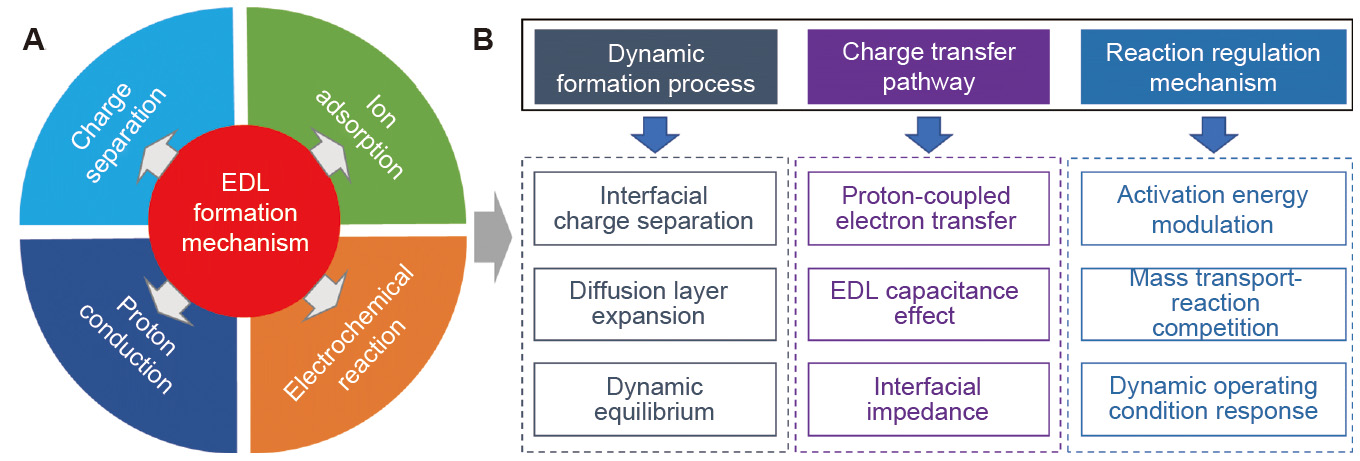
separation, ion adsorption, proton conduction, and electrochemical reactions (Figure 1A) [29, 30]. Its mechanism requires systematic analysis from three aspects: the dynamic formation
process, charge transfer pathways, and reaction regulation mechanisms (Figure 1B) [31]. The dynamic formation process includes interfacial charge separation, diffusion
layer expansion, and dynamic equilibrium. Interfacial charge separation occurs when
active crystalline particles (e.g., Pt crystals) in the electrode come into contact
with the ionomer (e.g., Nafion), leading to electron transfer due to the difference
in Fermi levels [32]. Under oxygen reduction reaction (ORR) potentials, the Pt surface becomes positively
charged, attracting anions (e.g., −SO3−) and H2O molecules from the ionomer [30]. The −SO3− groups in Nafion are attracted to the positively charged Pt surface, forming the
inner Helmholtz layer, while water molecules align under the electric field to form
a hydrogen-bond network. Driven by the interfacial electric field, H+ ions migrate through the Nafion phase toward the Pt surface, while the −SO3− groups remain fixed on the ionomer backbone, establishing a charge gradient (Gouy–Chapman
layer) [33]. The thickness of the diffusion layer is influenced by ion concentration; higher
H⁺ concentrations compress this layer [34]. However, the adsorbed −SO3− groups and water molecules partially screen the initial polarizing electric field
(analogous to "charge redistribution"), which in turn modulates the interfacial potential
ΔΦ, ultimately achieving a dynamic equilibrium [35, 36].
Charge transfer pathways involve concerted electron–proton transfer, EDL capacitive
effects, and interfacial impedance [37]. Among these, concerted electron–proton transfer is the core mechanism enabling
efficient electrochemical reactions such as the ORR and hydrogen oxidation reaction
(HOR) [38, 39]. The transport paths of electrons and protons are distinct yet closely coupled,
and their collaborative efficiency directly dictates fuel cell performance [40, 41]. Electron transport occurs through solid-phase conduction, where carbon supports
serve as conducting media and Pt particles act as reactive sites regulating electron
transfer—a process governed primarily by the quality of the conductive network [42]. In contrast, proton transport relies on the liquid-phase or ionomer-phase [43, 44]. Its slower kinetics, influenced by the hydration state of the ionomer and interfacial
adsorption, often limits the overall reaction rate [45]. The instantaneous nature of electron transfer versus the delayed response of proton
transport necessitates coordinated regulation of the conductive network and ionomer
hydration [46]. An ideal three-phase interface must ensure simultaneous contact of Pt particles
with the carbon support (electron-conducting phase), the ionomer (proton-conducting
phase), and pore spaces (gas phase). Insufficient ionomer coverage disrupts proton
pathways, while excessive coverage blocks electron and gas transport, thereby compromising
interfacial synergy.
Electrochemical polarization regulation reflects the intrinsic influence of electron–proton
collaborative efficiency on reaction rates through the exchange current density (i0) and transfer coefficient (α) in the Butler–Volmer equation [47], while the competition between mass transfer and charge transfer is quantified by
the Thiele modulus (Φ = L(k/D)0.5) [48]. When Φ > 1, the reaction becomes limited by O2 diffusion. An ideal EDL features continuous proton channels and allows O2 to permeate freely to the Pt surface [49]. Conversely, pore blockage by the ionomer leads to concentration polarization [50], and disruption of the EDL results in activation polarization [51]. At high current densities, rapid consumption of H⁺ within the EDL requires efficient
replenishment via the Nafion network, which can induce localized abrupt pH shifts
[52]. Therefore, collaborative optimization of the ionomer interface (proton pathway)
and pore structure (mass transfer pathway) is essential to achieve kinetic balance.
The dynamic equilibrium of the EDL is influenced by interfacial impedance; therefore,
it necessitates the integration of advanced monitoring methods such as data-driven
electrochemical impedance spectroscopy (EIS) coupled models to quantify degradation
and optimise proton transport [53]. In summary, the structural attributes of the EDL in fuel cell electrodes play a
central role in governing electron, proton, and gas transport at the electrode/ionomer
interface.
The EDL in fuel cell electrodes is supported by the catalyst-bonded ionomer layer
(CBIL), which consists of catalyst particles (e.g., carbon-supported Pt) and an ionomer
(e.g., Nafion). Its properties are influenced by multiple factors, including catalyst
characteristics [54], ionomer properties [55], and interfacial coupling effects [56]. In recent years, significant advances are made in the morphological control and
physicochemical optimization of catalysts and ionomers, alongside improved understanding
of interfacial coupling mechanisms during electrode reactions. However, current research
on CBIL optimization remains largely focused on modifications of individual materials,
with a lack of systematic design strategies for the interfacial architecture. Therefore,
developing controllable strategies for interfacial structure regulation to achieve
precise constructions of CBIL has become a key research priority. Currently, fuel
cell electrodes are primarily fabricated via wet-processing techniques. Controlling
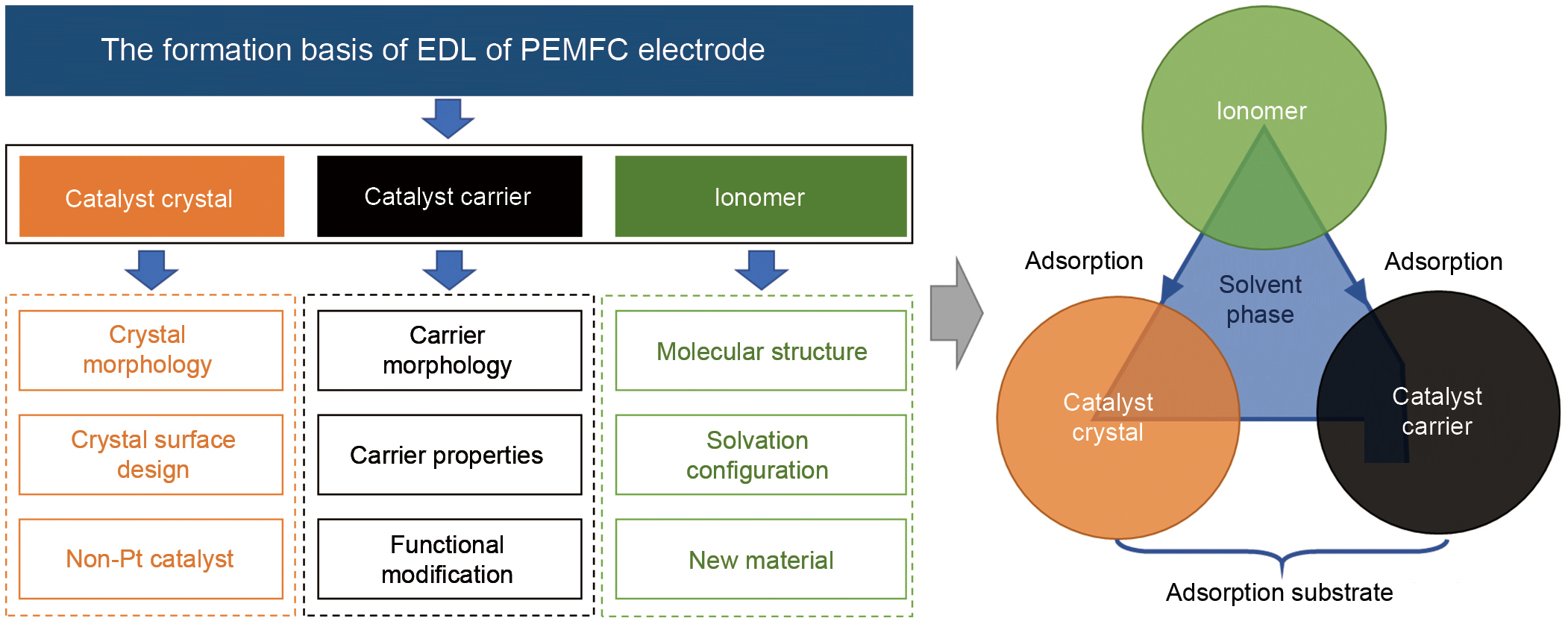
the adsorption behavior of the ionomer and catalyst (e.g., carbon-supported Pt) in
the liquid phase represents a major route for the controllable construction of CBIL
(Figure 2).
3 Design and Construction of Material Surface Characteristics and Morphology Structure
3.1 Surface design of Pt-based catalysts
The morphology, crystal facet, surface electronic structure, and particle size of
Pt‑based catalysts directly determine the adsorption strength, spatial distribution,
and conformation of ionomers on the catalyst surface, which further dominate the formation,
uniformity, and mass‑transport properties of the ionomer coating. Therefore, understanding
the structural characteristics of catalysts with different crystal morphologies and
their synthesis routes is not only a prerequisite for regulating catalyst–ionomer
interfacial interactions but also a core basis for realizing precise ionomer coating
engineering. This section focuses on the structural design and controllable synthesis
of Pt‑based catalysts, aiming to clarify the relationship between catalyst surface
characteristics and ionomer adsorption behavior, so as to provide material design
principles for the subsequent regulation of coating structure and performance optimization.
The morphology of nano catalysts significantly influences their adsorption behavior
toward ionomers, primarily through factors such as crystallographic facet type, defect
density, and surface curvature [57]. Isotropic nanospheres, with their complex facet composition and high density of
defect sites, often induce strong and heterogeneous adsorption of ionomers [58]. In contrast, anisotropic nanorods exhibit preferential facet exposure: their side
surfaces are typically composed of strongly adsorbing facets, while the ends consist
of weakly adsorbing facets, resulting in distinct direction-dependent adsorption behavior
[59]. One-dimensional nanowires, characterized by continuous atomic ordering and low
defect density, facilitate more uniform ionomer adsorption and promote the formation
of efficient mass transport channels [60, 61]. Among shape-controlled polyhedral nanocrystals, cubes are predominantly enclosed
by strongly adsorbing facets, whereas octahedra and icosahedra are dominated by weakly
adsorbing facets [62]. Truncated polyhedra allow precise tuning of facet ratios to optimize adsorption
strength. Therefore, rational catalyst design—favoring the exposure of weakly adsorbing
facets and reducing highly active defect sites—represents a key strategy for enhancing
resistance to ionomer poisoning.
Significant progress has been made in the design and synthesis of Pt-based alloy catalysts
with various morphologies, such as nanocubes, nanowires, and polyhedra, aimed at optimizing
their electrocatalytic activity and stability [63]. However, compared to the systematic investigation into the relationship between
morphology and catalytic performance, studies on the adsorption behavior between these
alloy catalyst surfaces and ionomers, along with the underlying mechanisms, remain
insufficient. Most research focuses on the enhancement of ORR performance through
alloy composition, while overlooking issues such as interfacial poisoning and mass
transport limitations caused by ionomer molecules under realistic catalytic conditions.
In particular, there is still a lack of systematic understanding and experimental
validation—from the atomic level to macroscopic performance—regarding how the surface
characteristics of differently shaped alloys influence the strength, distribution,
and structure–property relationships of ionomer adsorption. Therefore, further research
into the correlation between the morphology, electronic structure, and anti-adsorption
capability of alloy catalysts toward ionomers is of crucial scientific and practical
importance for the design of high-performance, poisoning-resistant fuel cell electrode
materials.
Previous studies have extensively explored the structural design of Pt-based catalysts.
Based on first-principles calculations, researchers have systematically investigated
the segregation energy (Eseg) of solute atoms migrating from the bulk to the surface in various heavy-metal/transition-metal
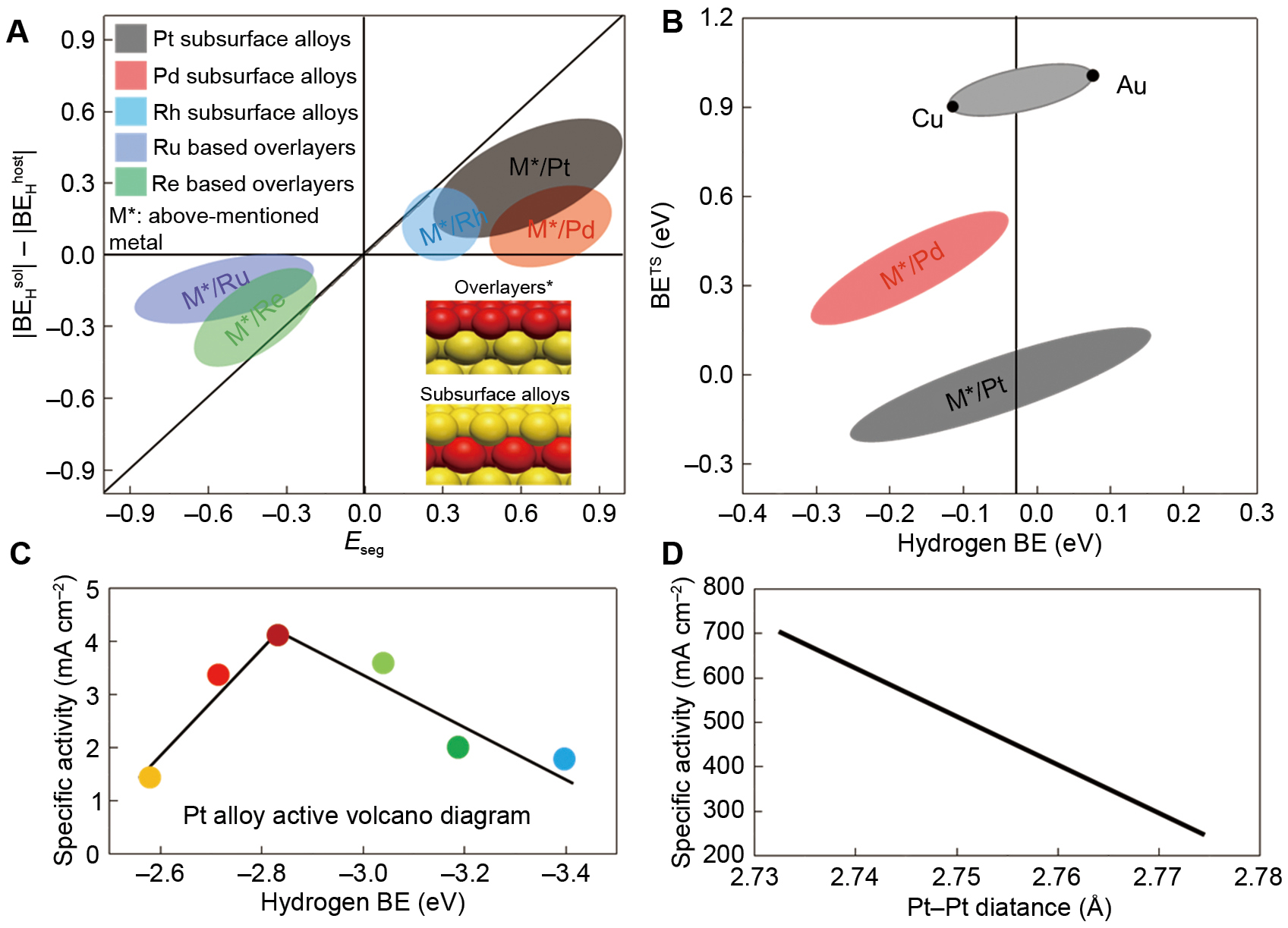
alloy systems. A correlation has been established between Eseg and the difference in hydrogen binding energy (Δ|BEH| = |BEHsol| – |BEHhost|) between pure solute metals and pure host metals, thereby revealing the manipulation
mechanisms underlying the structural stability of near-surface alloys (NSAs) in hydrogen
environments. As shown in Figure 3A, when Δ|BEH| > 0, the solute metal exhibits stronger hydrogen adsorption than the host metal;
otherwise, it is weaker [64]. This parameter reflects the modification of the surface electronic structure by
solute elements and is of key importance for understanding the catalytic performance
of alloys. Furthermore, by analyzing the coupling between the transition state energy
(ETS) and the hydrogen binding energy during H2 dissociation on pure noble metal and NSA surfaces, studies have linked kinetic energy
barriers to thermodynamic adsorption strength, establishing a descriptor framework
for catalytic activity (Figure 3B). This relationship provides an important basis for the rational design of high-performance
catalysts: optimal catalytic performance typically occurs near the peak of the volcano
curve, where moderate hydrogen binding energy and low reaction barriers are achieved.
Research has also shown that the ORR activity of Pt3M alloys is closely related to the d-band center position of their surfaces, a trend
observed for both Pt-skin and Pt-skeleton surface structures (Figure 3C) [65]. Through combined experimental and theoretical approaches, a curve has been constructed
demonstrating how the Pt–Pt distance systematically influences the specific activity
of the catalysts (Figure 3D) [23]. Building on this in-depth understanding of the structure–performance relationships
in Pt-based catalysts, numerous researchers have employed controlled synthesis methods
to realize these desired structural features.
In recent years, a variety of synthesis strategies have been successfully developed
for the controlled morphology and composition of platinum-based and non-precious metal
catalysts. Huang et al. [66] employed a surfactant-free and external magnetic field-free hydrothermal method
to precisely control the composition of Pt alloy nanoparticles by adjusting the molar
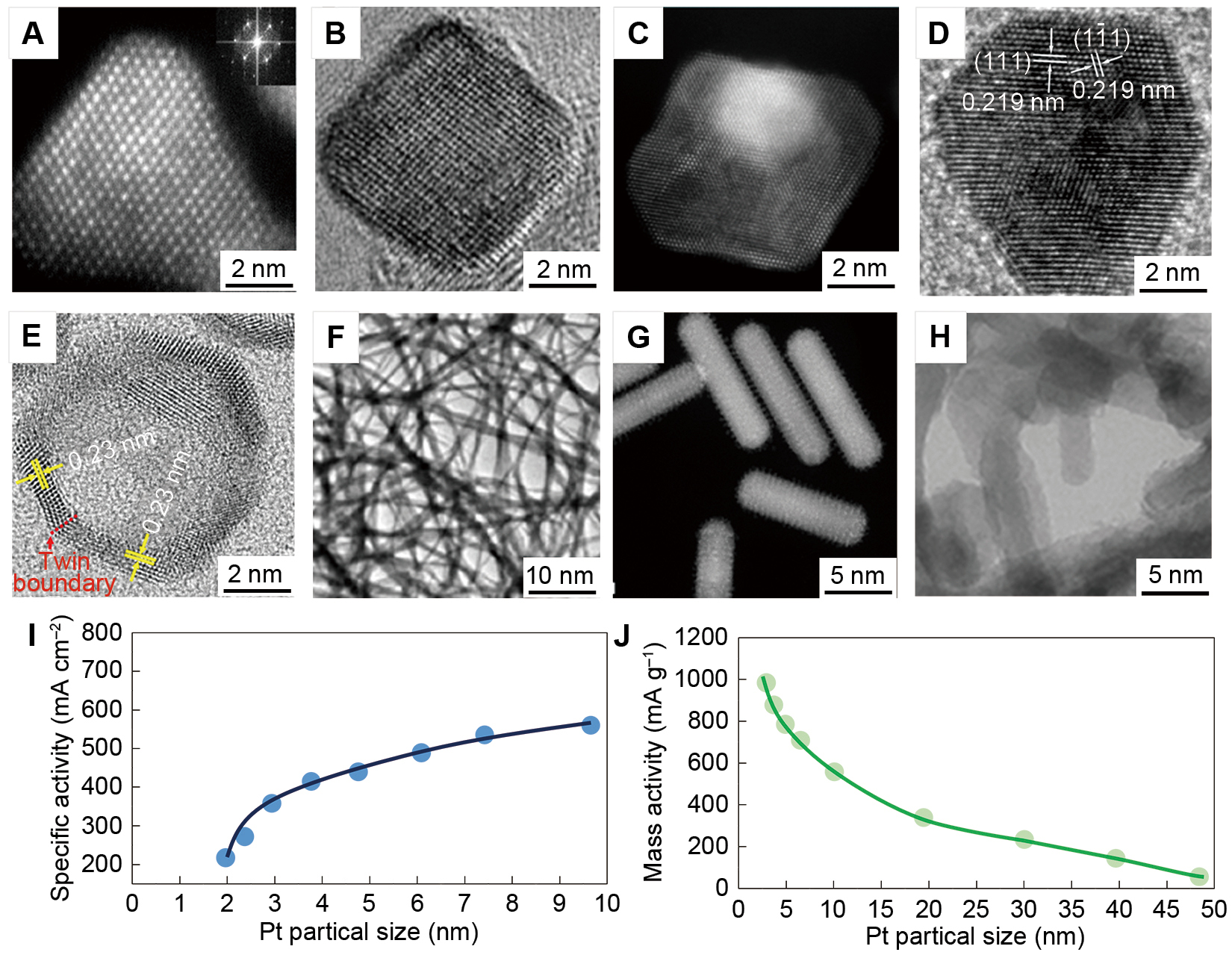
ratio of platinum and palladium precursors, successfully obtaining tetrahedral crystals
enriched with Pt (111) facets (Figure 4A). Zhang et al. [67] synthesized well-defined platinum nanocubes via thermal decomposition in an organic
phase, combined with high-temperature annealing to effectively remove surfactants.
By varying precursor addition methods (co-dissolution vs. stepwise dripping), heating
rate, and reaction time, extending this approach to the preparation of Pt–Co, Pt–Fe,
and Pt–Ni alloy cubes (Figure 4B). Kong et al. [68] developed a solvothermal morphology-control strategy using I− as a shape-directing agent. By tuning the metal precursor ratio, they successfully
synthesized composition-tunable octahedral PtCu-based binary and ternary alloy nanocrystals
(Figure 4C).
Wu et al. [69] proposed a mild surface treatment process using n-butylamine at room temperature
to simultaneously achieve ligand exchange and carbon support loading, avoiding structural
damage from high-temperature treatment. This method directly converted morphology-specific
Pt3Ni nanocrystals into practical catalysts ready for electrocatalytic testing (Figure 4D). Wang et al. [70] reported a template-based synthesis of hollow platinum nanoframes: slow injection
of a platinum precursor enabled atomically smooth epitaxial growth to form a uniform
Pt shell, followed by oxidative etching to selectively remove the Pd template, ultimately
yielding high-surface-area platinum nanoframes that retained an icosahedral morphology
(Figure 4E). Feng et al. [71] utilized a solvothermal system with Polyvinylpyrrolidone (PVP) and citric acid as
modulating agents. By precisely controlling the reaction temperature, they successfully
prepared composition-tunable networked Pt alloy nanowires (Figure 4F). Feng et al. [72] employed a seed-mediated growth method to fabricate Pt nanorods (Figure 4G). Wang et al. [73] found that optimizing the acid leaching process effectively reduces iron impurities
in FeNC catalysts, thereby mitigating degradation induced by Fenton reactions. This
treatment resulted in an approximate doubling of fuel cell activity and a significant
enhancement in stability, although improvements were not evident in half-cell tests.
(Figure 4H). Shinozaki et al. [74] systematically investigated the effect of platinum nanocrystal size on electrocatalytic
specific activity and mass activity, providing a theoretical basis for particle size
optimization (Figure 4I, J).
Jiang et al. [32] employed first-principles calculations to investigate the changes in reaction kinetics
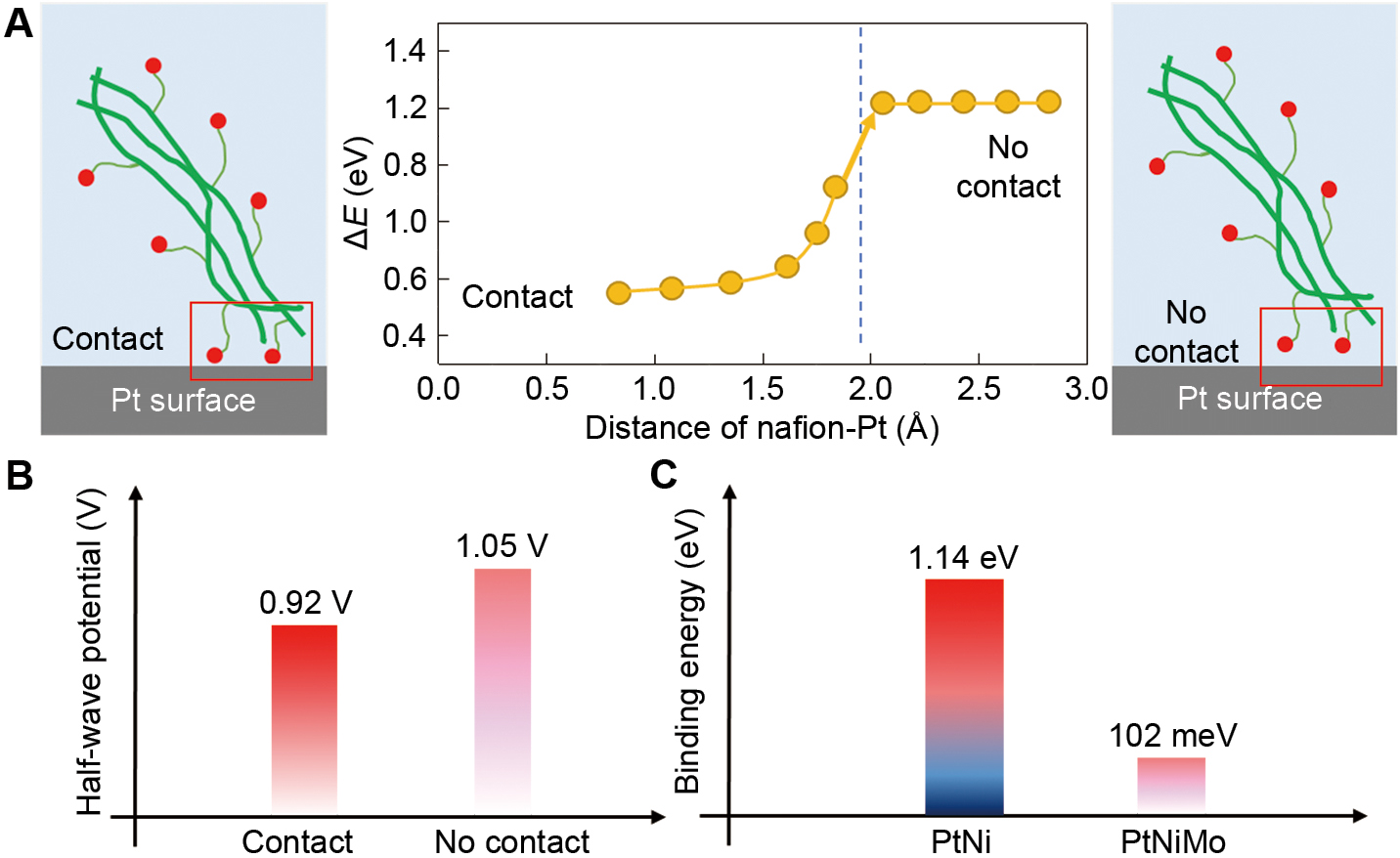
of Pt facets before and after adsorption of the ionomer side chain −SO3−. The study reveals that the transition of the sulfonic acid group from an adsorbed
to a non-adsorbed state triggers abrupt changes in both the system energy and the
side-chain conformation, leading to a classification of the Pt/ionomer interface into
contact and non-contact structures (Figure 5A). When −SO3− is in contact with the Pt surface, it causes a downward shift in the d-band center
of Pt, weakens the interfacial electric field, and disrupts the hydrogen-bond network,
thereby exerting a blocking effect on the ORR, and a loss of mass activity (Figure 5B). Huang et al. [75] used density functional theory to calculate the effect of transition-metal doping
on the adsorption energy of Pt(111). Their results indicate that doping with transition
metals lowers the adsorption energy of oxygen-adsorption sites on the surface, thereby
enhancing the desorption rate of reaction intermediates (Figure 5C). These findings demonstrate that polar oxygen-containing groups in the ionomer backbone
can spontaneously adsorb onto Pt facets, and that modifying the interfacial surface
energy of Pt can regulate such adsorption behavior. Yoshimune et al. [76] applied small-angle scattering to examine the influence of Pt density on the carbon
support surface on the ionomer adsorption layer. They observed that increasing Pt
density thickens the ionomer adsorption layer but reduces its density, indicating
that specific adsorption between the ionomer and Pt increases the layer thickness
while altering the orientation of the side chains, which in turn affects the layer
density. Furthermore, by modifying the surface with nitrogen-based groups, they found
that the dense ionomer adsorption layer thickened from 1 to 3 nm and exhibited increased
density compared to the unmodified interface [77]. Collectively, these studies highlight that the specific adsorption of the ionomer
side-chain −SO3− group is a key factor governing the characteristics of the adsorption layer.
In addition to transition-metal-doped alloy catalysts, high-entropy catalysts offer
distinct local coordination environments and electronic structures, enabling modulation
of the adsorption configurations of ionomer functional groups, thereby synergistically
enhancing selective ion transport and proton conduction at electrochemical interfaces.
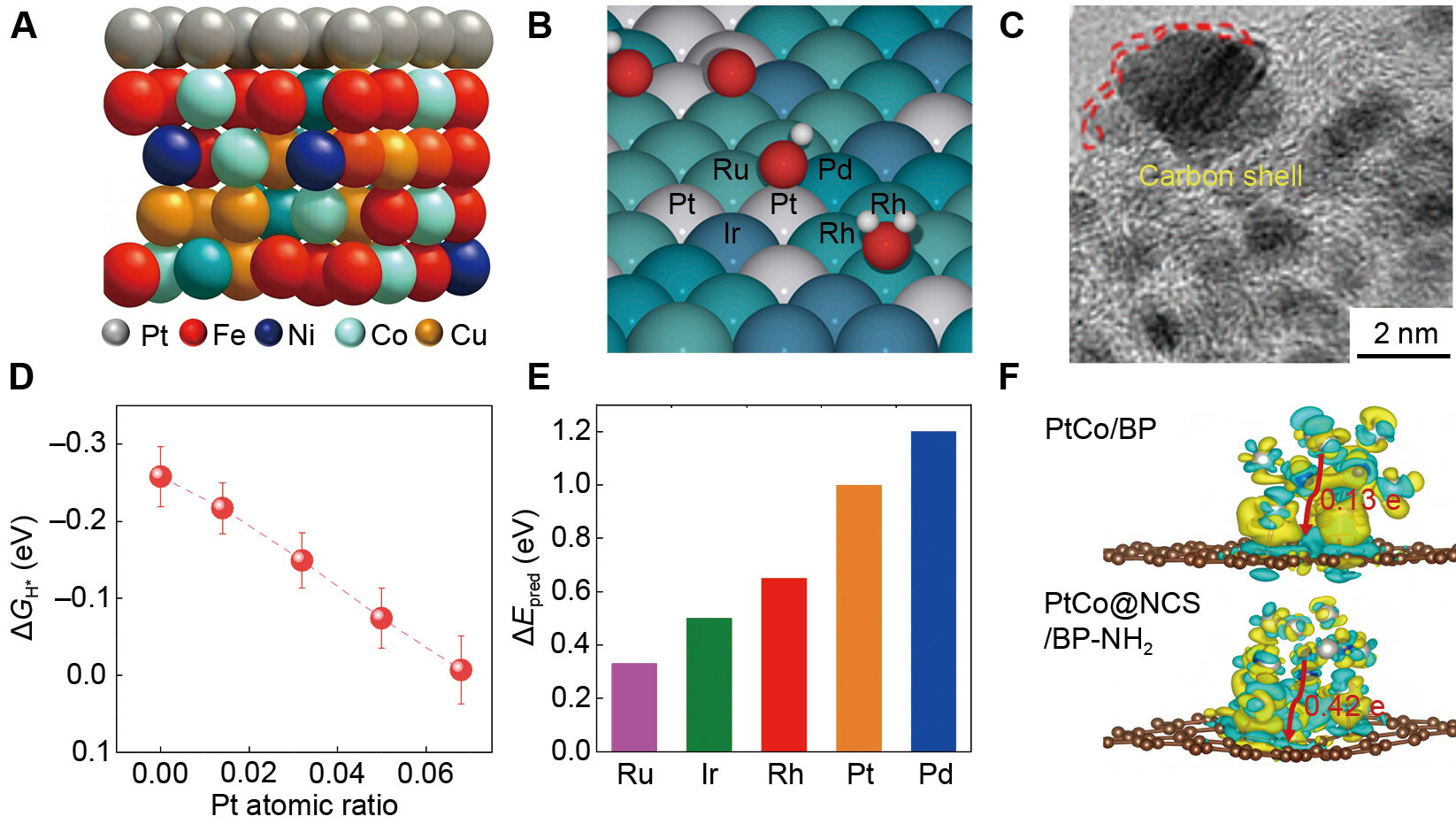
Chen et al. [78] designed a high-entropy catalyst via density functional theory (DFT) calculations
that circumvents the limitations imposed by the Sabatier principle. By adjusting the
Pt concentration within the alloy, the adsorption energy on the alloy surface was
effectively tuned (Figure 6A, B). Batchelor et al. [79] applied DFT to compute the adsorption energies of oxygen-containing intermediates
on high-entropy alloys with varied compositions. Their results demonstrated that altering
the types of transition metals in high-entropy alloys modifies the surface adsorption
energy, indicating the potential to regulate ionomer adsorption behavior (Figure 6C, D).
Carbon-shell catalysts, with their tunable shell structures and electronic properties,
enable stable encapsulation of active sites and precise control of the reaction microenvironment.
While improving catalytic stability and selectivity, carbon shells effectively suppress
sintering, leaching, and poisoning of the metal components. The presence of carbon
shells also inhibits specific adsorption between the ionomer side chain −SO3− and the crystal facets. Kim et al. [80] synthesized Pt-based catalysts coated with carbon shells of varying thicknesses
using organic ligands, suggesting that carbon shells can be utilized to mitigate −SO3−–facet specific adsorption (Figure 6E). Wan et al. [81] performed DFT calculations to examine the charge density on carbon-shell-coated
catalyst surfaces. Their findings reveal a significant enhancement in surface charge
density for catalysts with −NH2-functionalized carbon shells. The chemisorption between −NH2 and −SO3− further provides an effective strategy for tailoring ionomer adsorption behavior
(Figure 6F).
In summary, the performance of the catalyst–ionomer interface in proton exchange membrane
fuel cells hinges on regulating the adsorption behavior of sulfonate groups on the
catalyst surface. By modifying catalyst morphology, size, alloy composition, and even
introducing high-entropy alloys or carbon-shell structures, the surface adsorption
energy can be systematically tuned, thereby shifting sulfonate groups from excessively
strong chemisorption toward a dynamically moderate adsorption state that facilitates
proton conduction. Combined with density functional theory calculations, the influence
of catalyst parameters on adsorption energy can be quantitatively elucidated, providing
theoretical guidance and a design basis for the rational engineering of highly efficient
and stable catalyst–ionomer composite interfaces and for optimizing mass transport
within the triple-phase boundary region.
3.2 Design and optimization of carbon carrier structure
The physicochemical properties of carbon supports play a critical role in modulating
the CBIL [82]. The physicochemical properties of carbon supports—including morphology [83], pore structure [84], specific surface area [85], graphitization degree [86], and surface functional groups—critically modulate the adsorption behavior of the
ionomer and the interfacial mass transport in the catalyst layer. [87–89] High specific surface area provides more adsorption sites, while pore architecture
affects ionomer accessibility and reactant transport. Support morphology influences
the uniformity of ionomer coverage, and graphitization level governs electrical conductivity
and interfacial stability [90]. Surface functional groups further tune adsorption configuration and binding strength
through hydrogen bonding or acid‑base interactions [91]. Systematic studies using various carbon materials and advanced techniques have
quantified adsorption thermodynamics and kinetics, revealing how hydrophobic, hydrogen‑bonding,
and electrostatic forces collectively regulate the interfacial assembly and stability
of ionomer layers [92–94]. Although molecular‑level insights into ionomer adsorption on carbon surfaces have
been advanced, translating these findings to the complex multiphase environment of
practical fuel cell electrode inks remains a key challenge.
In fuel cell electrode systems, spherical carbon particles (30–50 nm in diameter)
are widely used due to their excellent electrical and thermal conductivity. Studies
have shown that spherical carbon supports with different structures—including carbon
black, highly graphitized carbon, mesoporous carbon, and solid carbon spheres—exhibit
significant differences in pore size distribution, specific surface area, and degree
of graphitization. These structural parameters directly influence the loading behavior
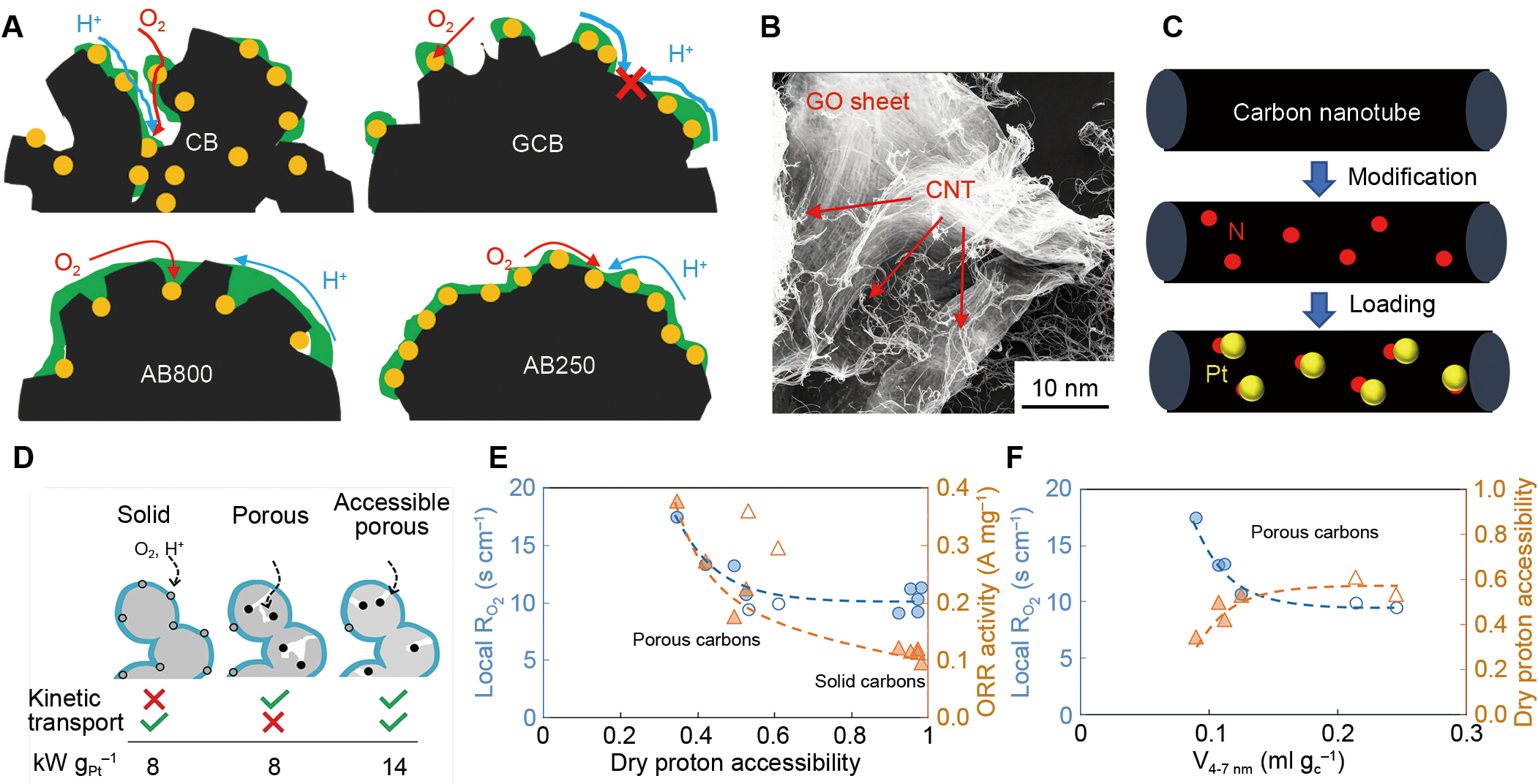
of Pt nanoparticles and the adsorption characteristics of the ionomer. The work by
Park et al. [90] systematically revealed this structure–performance relationship: although the porous
structure of conventional carbon black provides a large specific surface area conducive
to the dispersion of Pt particles within the pores, the tortuous pore channels lead
to non-uniform ionomer adsorption, thereby hindering oxygen transport. On highly graphitized
carbon black surfaces, Pt particles tend to aggregate at graphitic stripes or defect
sites, resulting in uneven ionomer coverage and discontinuous ion transport pathways.
AB800, a mesoporous carbon precursor, possesses a well-ordered pore structure that
enables uniform Pt loading; however, due to size exclusion effects, ionomers are unable
to penetrate deep into the pores, leaving some Pt active sites without effective contact
with the ionomer. In contrast, solid carbon spheres allow uniform distribution of
both Pt nanoparticles and the ionomer. Electrochemical tests further confirmed that
these distinct interfacial structures significantly affect the ORR kinetics and mass
transport behavior (Figure 7A). Beyond spherical carbons, carbon nanotubes and their modified derivatives also
exhibit unique interfacial properties (Figure 7B, C) [71, 95]. Recent studies indicate that well-designed mesoporous carbon structures can synergistically
optimize ORR kinetics and mass transport, offering a promising strategy to overcome
the inherent limitations of solid carbon spheres (excessive ionomer coverage) and
porous carbons (tortuous mass transfer paths) (Figure 7D–F) [96].
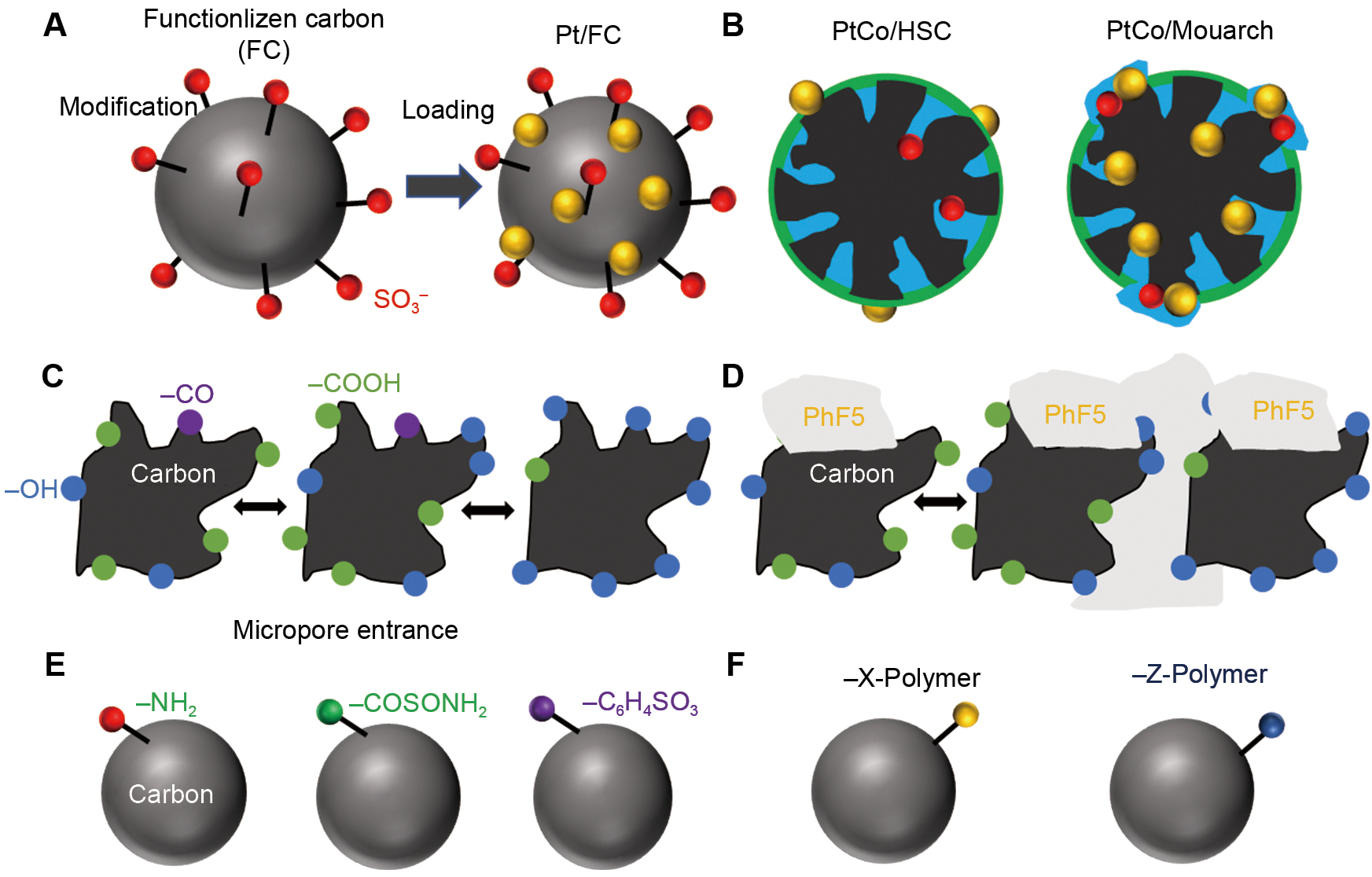
In the study of carbon surface functionalization, the introduction of groups such
as −SO3− and −NH2+ can significantly alter the chemical properties of the carbon surface, thereby modulating
the adsorption behavior of the ionomer (Figure 8A, B) [97]. Specifically, −NH2+ groups can form specific adsorption through electrostatic attraction with the −SO3− side chains of the ionomer, enhancing interfacial binding [98]. In contrast, −SO3− groups suppress adsorption due to electrostatic repulsion with the ionomer side chains.
Beyond hydrophilic modification, Forouzandeh et al. [99] achieved hydrophobic modification by grafting pentafluorophenyl groups (−PhF5) onto the carbon surface, strengthening the hydrophobic interactions of carbon particles
in liquid environments (Figure 8C, D). Furthermore, the introduction of aniline or benzenesulfonic groups via diazonium
reactions allows fine-tuning of the interaction mode between the carbon surface and
the ionomer (Figure 8E) [100]. More notably, the strategy of directly anchoring and grafting ionomer monomers
onto the carbon surface enables the carbon support to serve dual functions of proton
conduction and binding. This approach not only alters the conventional interaction
mechanism between the ionomer and carbon but also restructures the mass transport
and reaction kinetics across the entire three-phase interface (Figure 8F) [101].
In recent years, carbon-based materials derived from metal–organic frameworks (MOFs)
and zeolitic imidazolate frameworks (ZIFs) have attracted widespread attention as
novel catalyst supports [102]. By precisely controlling pyrolysis conditions—such as temperature, atmosphere,
and heating rate—MOF/ZIF precursors can be transformed into porous carbon materials
with high specific surface area, tunable pore size distribution, and abundant active
sites [103]. Among them, metal-free carbon supports exhibit excellent electrical conductivity
and surface activity by preserving the porous structure of the precursor and incorporating
nitrogen doping [104]. In contrast, metal-doped carbon supports utilize metal nodes from the precursor
or externally introduced metal species to form atomically dispersed metal–nitrogen–carbon
(M–N–C) active sites during pyrolysis. These materials not only inherit the structural
advantages of the MOF/ZIF precursors but also achieve synergistic control over the
pore structure, surface chemical properties, and distribution of active sites through
ligand carbonization and metal reduction/aggregation during pyrolysis [105]. The unique surface chemistry (e.g., M–Nₓ sites and N-doping), hierarchical pore architecture (micro–meso–macro pore synergy),
and modulated electronic structure (e.g., degree of graphitization and d-band center)
of MOF/ZIF-derived carbon supports influence the interaction mechanisms with the ionomer—such
as hydrogen bonding, electrostatic interactions, coordination bonds, and π–π stacking—at
the molecular scale, thereby governing the adsorption thermodynamics and mass transport
kinetics at the three-phase interface [106, 107].
3.3 Design and configuration adjustment of polymer molecular chains
In PEMFC electrodes, the ionomer serves as a key polymeric material that combines
ionic conductivity with structural regulation [108, 109]. It not only forms a continuous proton-conducting network within the CL through
its sulfonate groups (−SO3−), enabling efficient proton transport, but also modulates the microenvironment of
the reaction interface via interactions between its side chains and the catalyst surface
(e.g., Pt) [110]. The nanoscale coating layer formed by the ionomer on the carbon-supported catalyst
directly governs the construction of the triple-phase boundary: an excessively thick
or nonuniform coating impedes oxygen diffusion, leading to mass transport losses at
high current densities, while insufficient coating reduces proton conduction efficiency
and increases interfacial resistance [111–113]. Moreover, the chemical structure, side-chain length, equivalent weight (EW), and
adsorption configuration of the ionomer on the catalyst surface collectively determine
the proton conductivity, gas permeability, water management, and long-term chemo-mechanical
stability of the CL [108, 114]. Therefore, the rational design and interfacial engineering of ionomers represent
a core research direction for overcoming the performance and durability limitations
of high-performance fuel cell electrodes [115, 116].
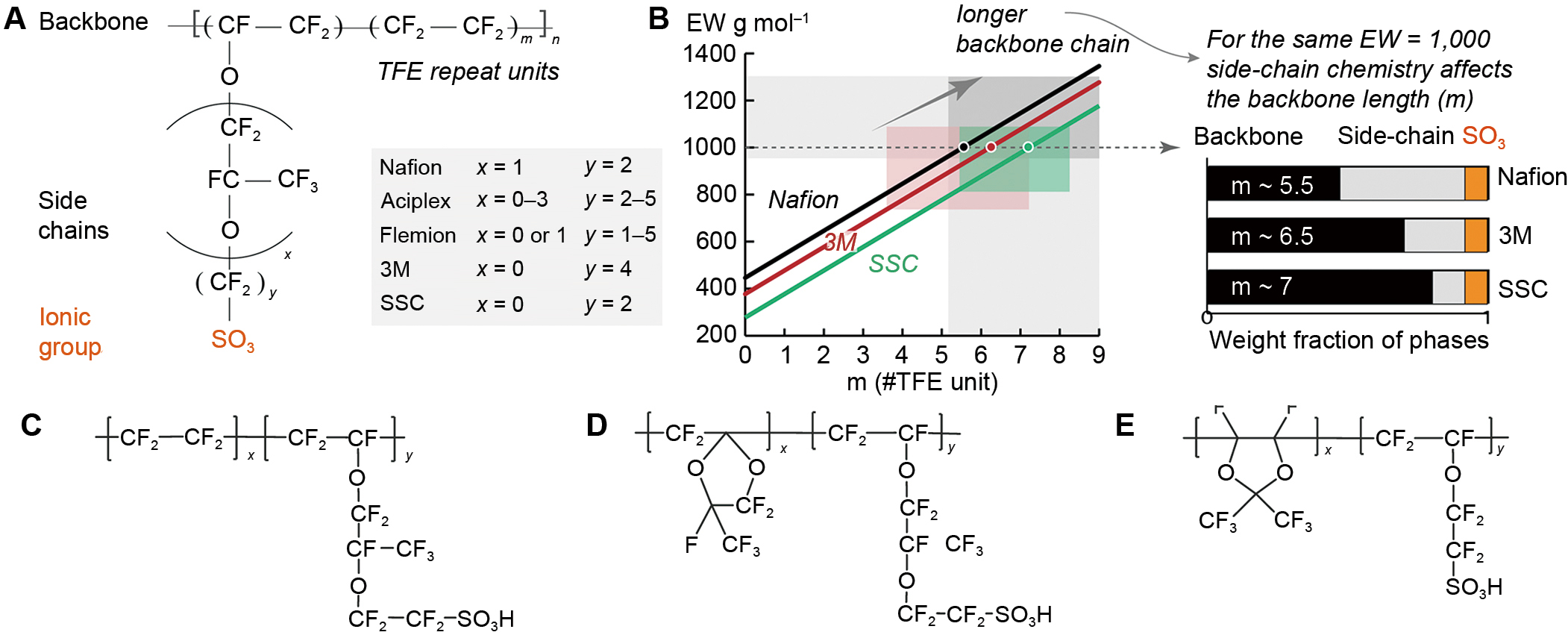
Ionomers are typically sulfonated perfluorinated polymers (e.g., Nafion®) or partially fluorinated/non-fluorinated polymers. Based on the number of −C3F6O− units (x) and −CF2− units (y) in the side chains, ionomers can be classified into types such as Nafion, Aciplex,
Flemion, 3M, and short side chain ionomer (SSC) (Figure 9A) [108]. The EW of an ionomer, defined as the polymer mass per mole of ion-exchange groups,
is jointly determined by the number of −CF2− repeat units between two side chains (m) and the molecular structure of the side
chains (Figure 9B) [108]. The EW value directly influences the ionic conductivity, water uptake, and mechanical
stability of the material, serving as a key parameter for regulating ion transport
efficiency and membrane-electrode durability in proton exchange membrane fuel cells.
Furthermore, beyond typical ionomers with polytetrafluoroethylene backbones, ionomers
possessing special backbone structures also exist. Their non-linear monomer architectures
can reduce material density while also affecting proton conductivity (Figure 9C–E) [117].
The application process of ionomers in electrode CLs involves their dissolution and
dispersion in solvents, adsorption onto catalyst agglomerate surfaces, and dehydration/de-alcoholization
during drying. Therefore, studying the dispersion state of ionomers in solvents is
crucial. Wei et al. [118] investigate the relationship between the chain distribution of ionomers in solvents
and their characteristic small-angle scattering exponent. They found that when ionomers
exhibit poor solubility and structural collapse, the exponent is –3; when the chains
follow a Gaussian distribution, the exponent is –2; and when the ionomers are fully
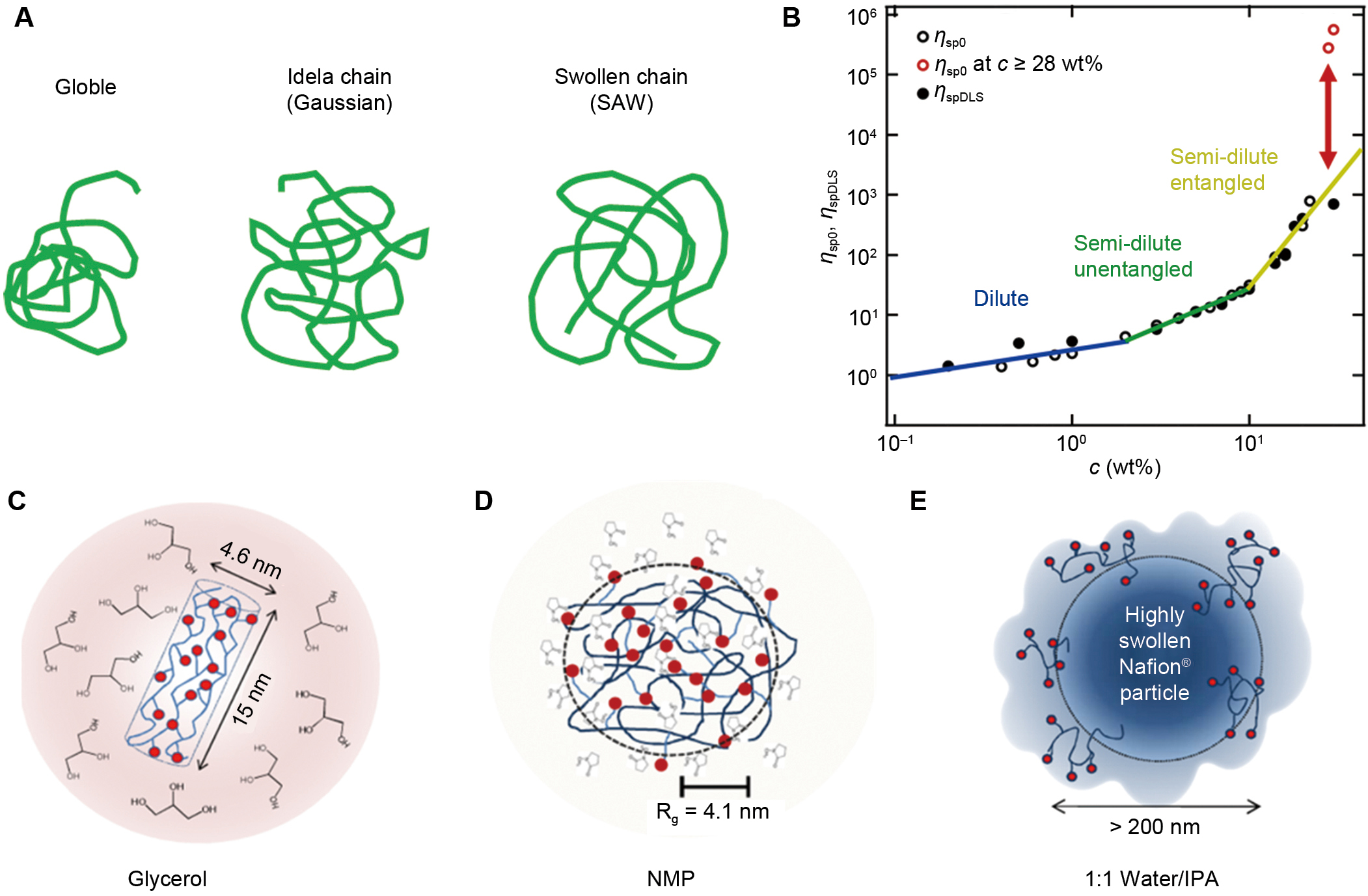
swollen with well-extended chain structures, the exponent is –1.7 (Figure 10A). Gupit et al. [115] employed rotational rheometry to examine the relationship between ionomer solution
mass fraction and zero-shear viscosity. Based on linear fitting, the ionomer dispersions
were categorized into dilute (< 2.5 wt%), semi-dilute (2.5 wt%–10 wt%), concentrated
(10 wt%–30 wt%), and gel (> 30 wt%) regimes (Figure 10B), clarifying the dispersion characteristics of ionomers at different stages of electrode
fabrication, such as slurry preparation and drying. Welch et al. [116] also used small-angle scattering to study the morphological structure of ionomers
in different solvents. In ethylene glycol and glycerol, the ionomers form rod-like
structures (Figure 10C); in N-Methyl-2-pyrrlidone (NMP), they adopt extended disordered coil structures
(Figure 10D); and in water/isopropanol solvents, they exhibit a disk-like morphology with entangled
central chain segments and extended peripheral segments (Figure 10E).
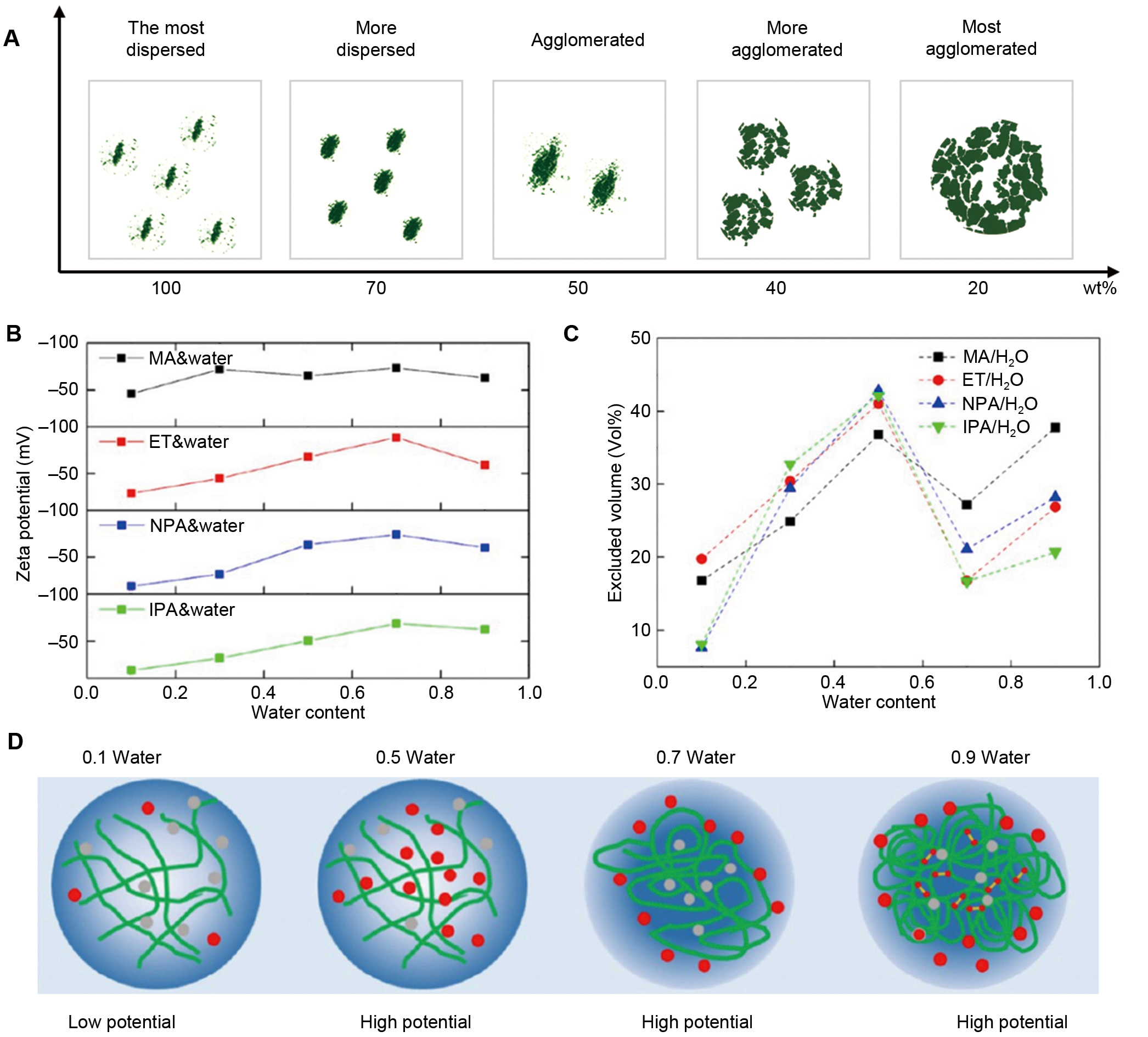
Ngo et al. [26] investigated the influence of alcohol content on the dispersion behavior of ionomers
using cryo-transmission electron microscopy and dynamic light scattering. The results
reveal that in pure alcohol solvent (100 wt%), the solubility parameters of the ionomer
closely match those of the solvent, leading to the formation of relatively small particles.
When the alcohol content is reduced to 70 wt%, ionomer aggregates emerge, which is
attributed to hydrogen‑bonding interactions between the −SO3− groups on the ionomer side chains and water molecules. As the alcohol content decreases
further to 60 wt%, the ionomers form dispersed rod‑like aggregates. At an alcohol
content of 50 wt%, these aggregates begin to interconnect, resulting in secondary
agglomeration (Figure 11A). Dynamic light scattering measurements show that increasing water content shifts
the radius‑of‑gyration distribution of the ionomer from a unimodal to a bimodal profile,
indicating the coexistence of two distinct size populations: smaller and larger particles.
This suggests that the rise in water content induces conformational collapse of the
ionomer, reducing the primary particle size, while simultaneously promoting secondary
aggregation through hydrogen‑bonding interactions, thereby yielding larger secondary
agglomerates. Yang et al. [119] also investigated the influence of water content in the solvent on the dispersion
state of ionomers. As the water content increases, the zeta potential of ionomer particles
decreases, with a pronounced decline observed when the water mass fraction exceeds
0.7. As the water mass fraction rises from 0.1 to 0.5, the excluded volume fraction
of the ionomers gradually increases; however, when the water mass fraction reaches
0.7, the excluded volume fraction drops abruptly (Figure 11B, C). The increase in excluded volume indicates a more extended conformation of the ionomers,
while the sharp decrease suggests a collapse of the ionomer conformation (Figure 11D). Therefore, clarifying the molecular weight, molecular configuration, functional
group characteristics, and solvation conformation of the ionomer is crucial for regulating
the structure of the adsorption layer.
Collectively, the surface characteristics of Pt-based catalysts, the physicochemical
properties of carbon supports, and the molecular structure and solvation behavior
of ionomers form three interrelated core factors that jointly determine the interaction
strength and adsorption configuration at the catalyst–ionomer interface. Clarifying
the independent and synergistic effects of these three components lays a solid foundation
for understanding the formation mechanism of ionomer adsorption layers in practical
electrode inks. On this basis, we can further investigate the dynamic evolution of
ionomer adsorption and deposition processes, identify key parameters that dominate
coating morphology and uniformity, and then propose targeted regulation strategies,
thus achieving a smooth logical transition from material property analysis to interfacial
process control and finally to performance-oriented coating structure optimization.
4 Formation Process of the Ionomer Adsorption Layer in Electrode Slurries
4.1 Study on the adsorption state of ionomer in liquid-phase environments
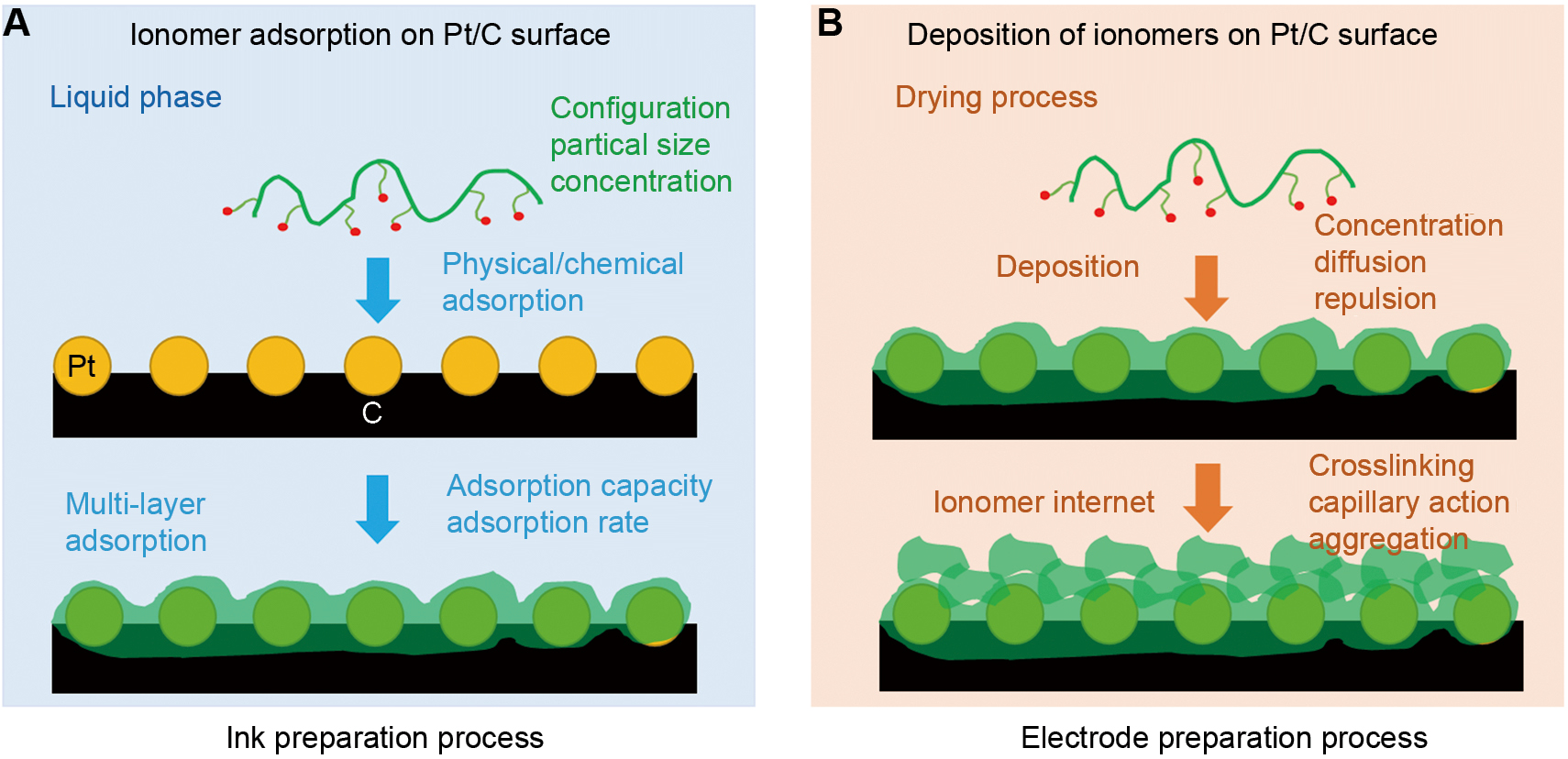
The formation of the ionomer overlayer in electrodes primarily comprises two stages:
multilayer adsorption of the ionomer on the surface of catalyst agglomerates, followed
by its deposition [120]. The multilayer adsorption behavior is jointly regulated by the intrisic structure
of the ionomer, the physicochemical state of the agglomerate surface, and the properties
of the solvent (Figure 12A) [77, 114]. In contrast, the deposition process is closely associated with factors such as
component concentration, particle diffusion–repulsion–aggregation, capillary action,
and particle network formation (Figure 12B). Among these, the multilayer adsorption of the ionomer in the liquid phase serves
as the key controlling step that determines the final ionomer coating structure at
the triple‑phase boundary of the electrode [121–123].
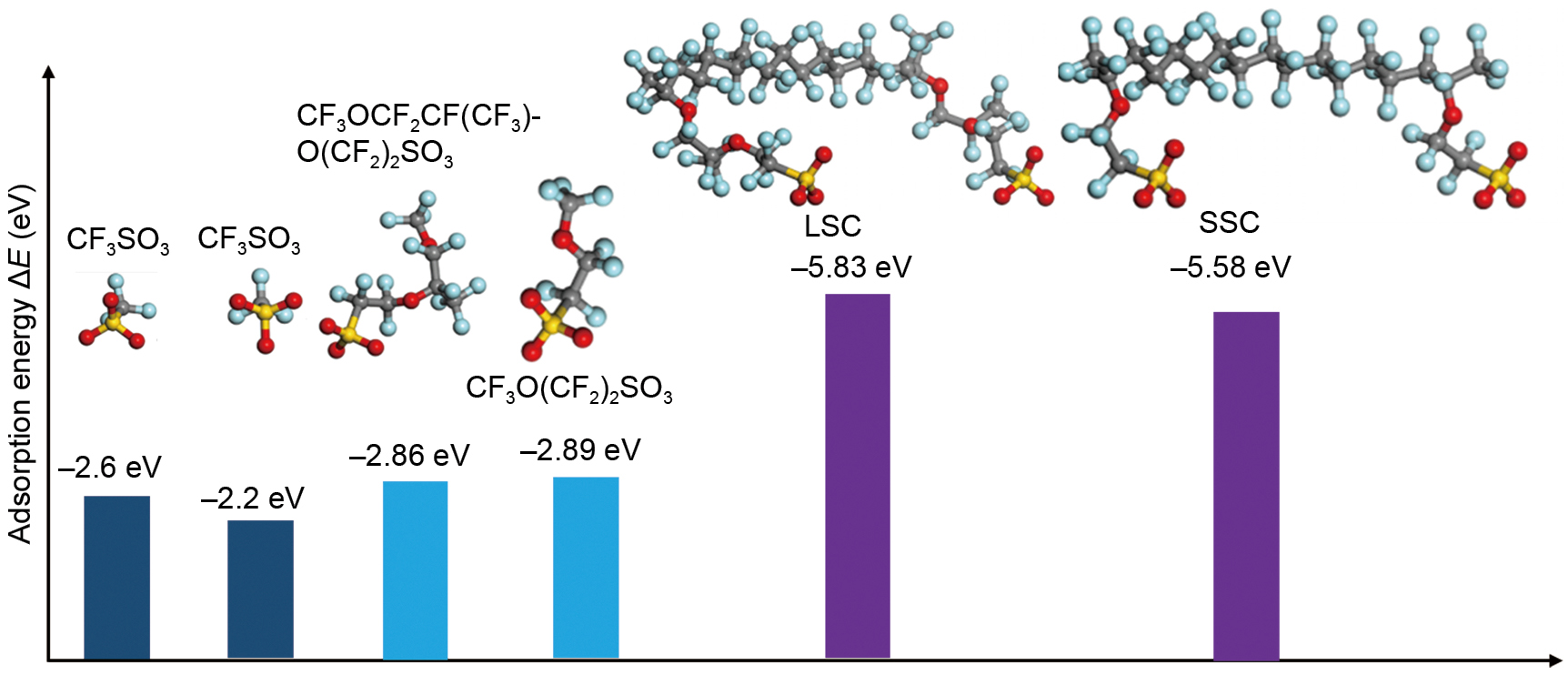
Gao et al. [124] performed DFT calculations to determine the adsorption energies of different segments
of ionomers on Pt surfaces (Figure 13). The results indicate that the ether linkages (−O−) in the middle section of long-side-chain
(LSC) ionomers can adsorb onto Pt crystal surfaces, whereas the shorter side chains
of SSC ionomers restrict the contact between ether groups and the Pt surface. Specific
adsorption of the sulfonate group from the ionomer side chain onto Pt primarily occurs
via oxygen atoms in −SO3−. When two oxygen atoms face the Pt surface, the adsorption energy is ΔE = −2.6013 eV; when only one oxygen atom is oriented toward Pt, the adsorption energy
is ΔE = −2.2066 eV. The adsorption energy of the LSC ionomer side chain on Pt is ΔE = −2.8558 eV, while that of the SSC ionomer is ΔE = −2.8871 eV. However, for the entire ionomer monomer, the adsorption energy on Pt
is ΔE = −5.8321 eV for the LSC type and ΔE = −5.5823 eV for the SSC type. Although the more concentrated polar groups (−O−,
−SO3−) on the short side chain enhance the adsorption energy of the side chain itself,
the overall rigidity of the SSC ionomer reduces the adsorption energy of the full
monomer. In contrast, the flexible LSC ionomer exhibits stronger overall adsorption
on the Pt surface.
Berlinger et al. [92] The molecular mechanisms and dynamic regulation of ionomer-catalyst interactions
in porous electrodes were systematically elucidated through multiscale characterization
techniques. The thermodynamic behavior of ionomer adsorption on model Pt/C surfaces
under different solvent environments was quantitatively analyzed using quartz crystal
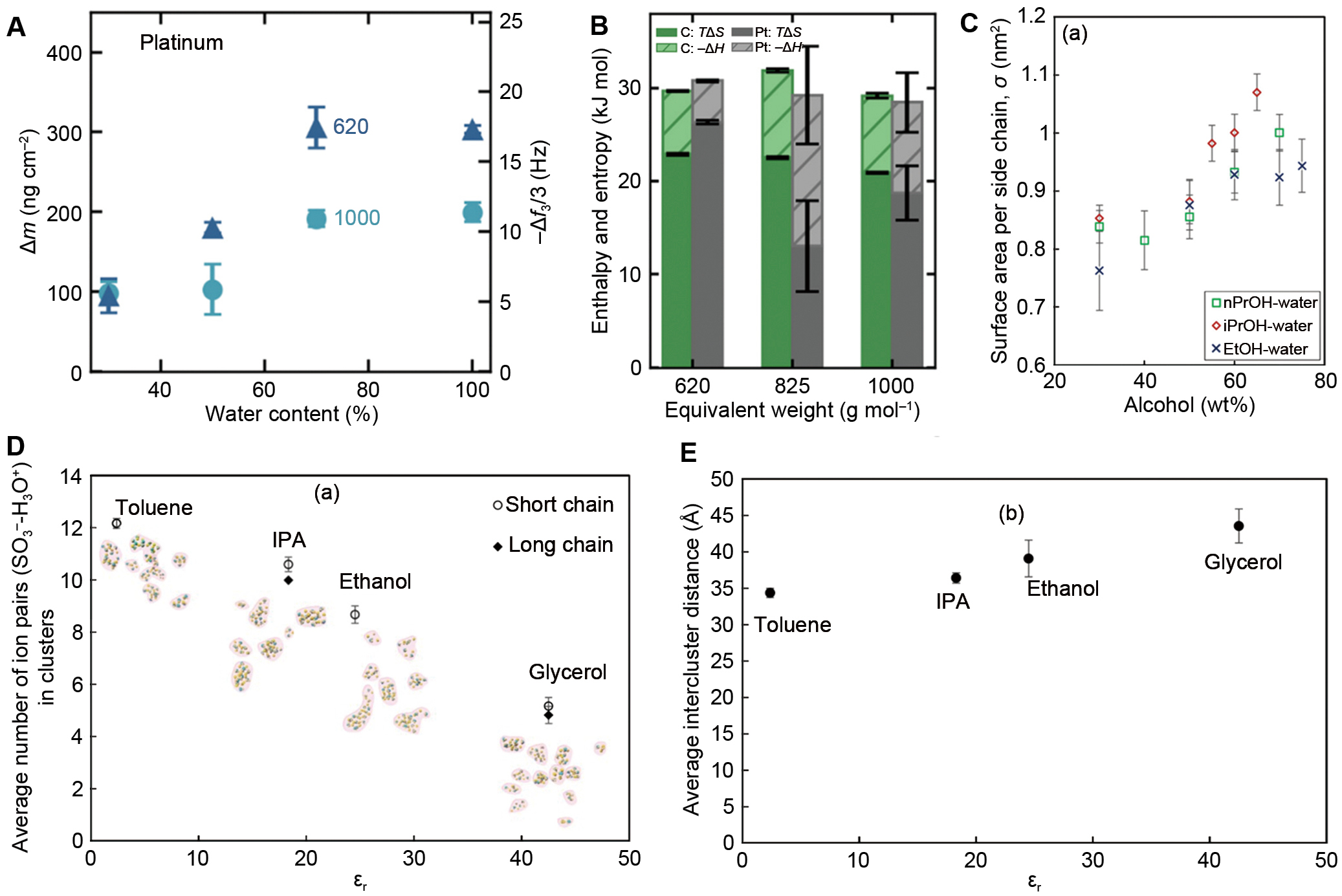
microbalance (QCM) and isothermal titration calorimetry (ITC). QCM measurements revealed
that an ionomer with an EW of 620 g mol−1 exhibited higher adsorbed mass on Pt surfaces compared to an ionomer with an EW of
1,000 g mol−1, and the adsorbed mass increased with higher water content in alcohol–water solvent
mixtures (Figure 14A).
ITC results indicated that ionomer adsorption on both Pt and C surfaces is driven
by combined enthalpic and entropic contributions, with entropy-driven behavior predominating
on carbon surfaces. On Pt surfaces, the adsorption mechanism was influenced by ionomer
EW: for EW values of 620 and 1,000 g mol−1, adsorption was primarily entropy-driven, whereas for an EW of 825 g mol−1, the enthalpic contribution became significantly more pronounced (Figure 14B). Novy et al. [125] investigated the influence of alcohol-to-water ratio on the surface side-chain density
of ionomer aggregates. They observed that the side-chain density increased with increasing
alcohol content in the solvent (Figure 14C). Tarokh et al. [126] further demonstrated through simulations that an increase in solvent dielectric
constant leads to a reduction in the number of side‑chain −SO3− groups at the ionomer aggregate interface, while also increasing the distance between
adjacent side‑chain −SO3− groups (Figure 14D, E). In summary, the distribution density of ionomer side‑chain −SO3− not only influences its adsorption mechanism but also results in different morphologies
and spatial distributions under solvent‑driven conditions.
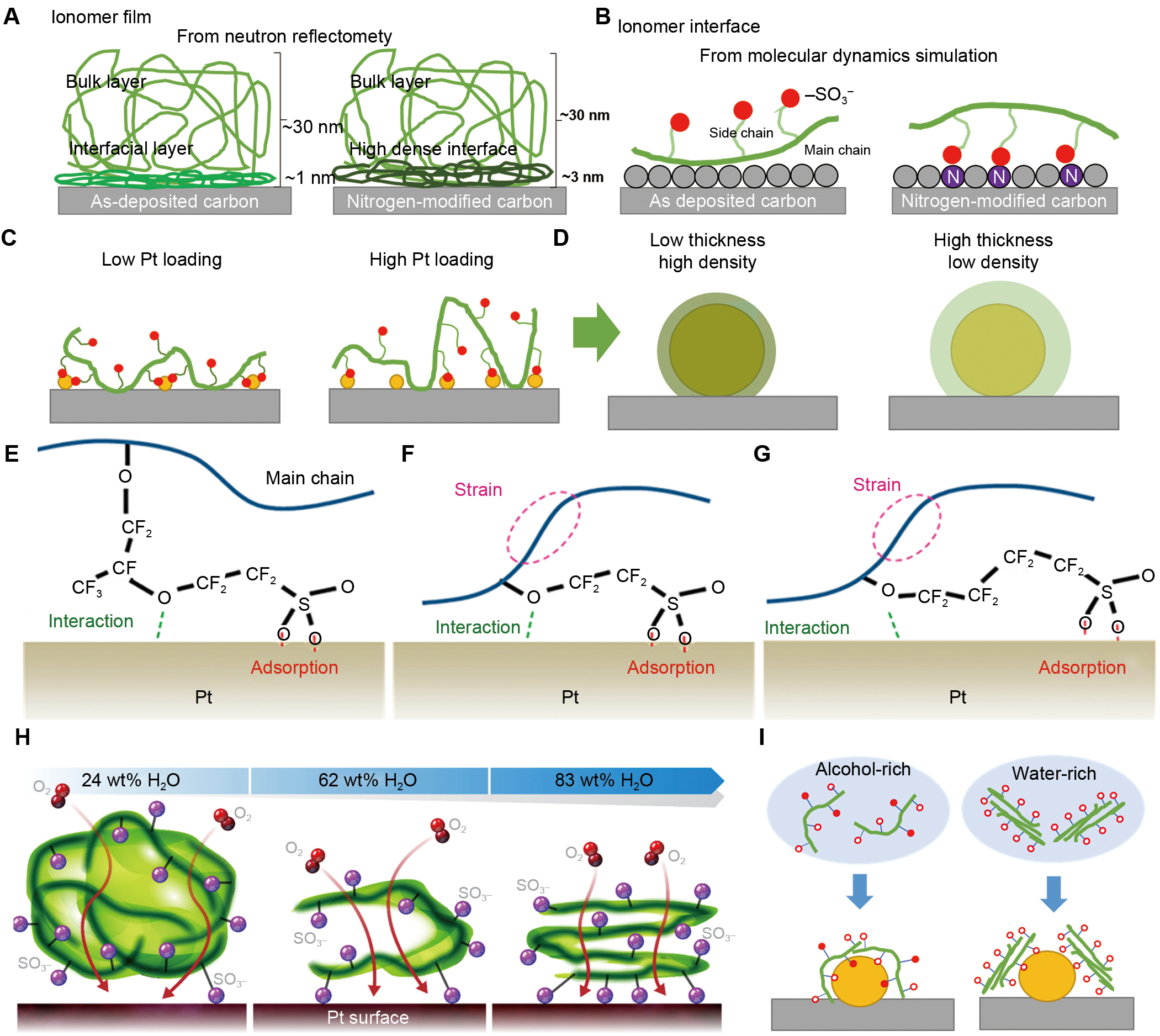
Yoshimune et al. [77] investigated the adsorption mechanism of the ionomer on nitrogen (N)-group-modified
carbon surfaces and its influence on the adsorption layer structure. The ionomer backbone
adsorbs onto the carbon surface via hydrophobic interactions, undergoing conformational
collapse to form a compact adsorption layer approximately 1 nm thick and an extended
layer of about 30 nm. After N‑group modification, chemical adsorption occurs between
the −SO3− groups on the ionomer side chains and the N‑groups, resulting in a significant increase
in both the thickness and density of the compact layer (Figure 15A, B). Furthermore, they employed small‑angle X‑ray scattering (SAXS) to examine the influence
of Pt density on the carbon surface on the structure of the ionomer adsorption layer.
The results reveal that increased Pt density enhances the interaction between −SO3− and Pt, leading to a decrease in the density of the ionomer adsorption layer and
an increase in its thickness (Figure 15C, D) [76]. Kodama et al. [127] systematically studied the adsorption behavior of perfluorosulfonic acid-based compounds
(including small-molecule analogs and ionomers) on platinum surfaces and their impact
on the ORR using electrochemical voltammetry and surface-enhanced infrared absorption
spectroscopy (SEIRAS). The results reveal that compounds containing ether bonds (−O−)
exhibit significantly stronger adsorption on both Pt (111) single crystals and polycrystalline
Pt films compared to those without ether groups, indicating a specific interaction
between the ether group and the Pt surface (Figure 15E–G). Cleve et al. [128] examined the influence of water content in the solvent on ionomer aggregation and
adsorption. Their findings show that in water-rich environments, ionomers form smaller
aggregates, strengthening the interaction between sulfonate groups and Pt. In alcohol-rich
solvents, however, ionomers assemble into larger aggregates, weakening the ionomer/catalyst
surface interaction (Figure 15H). Furthermore, LSC ionomers, with higher flexibility, allow easier orientation of
ether groups toward the Pt surface, whereas short-side-chain ionomers, being more
rigid, hinder effective contact (Figure 15I) [129].
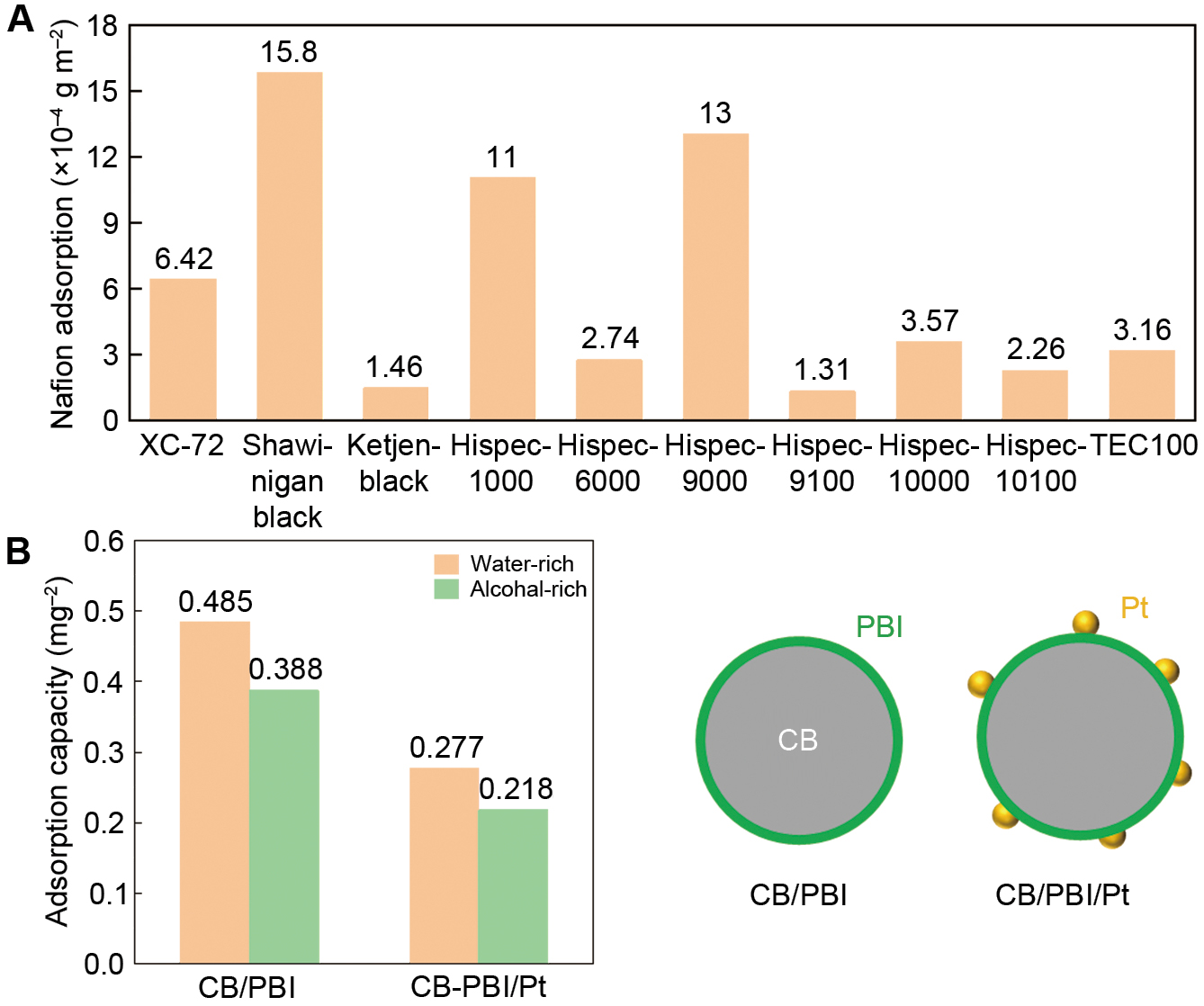
The type of carbon support also influences the adsorption amount of ionomers. Ma et
al. [130] investigated the ionomer adsorption behavior on the surfaces of different carbon
particles (Figure 16A). The ionomer rapidly reached the first plateau on XC‑72 carbon, indicating that
graphitization promotes ionomer adsorption. Among Vulcan XC‑72, Shawinigan Black,
Ketjenblack, and Hispec 1000, Shawinigan Black exhibited the highest saturated adsorption
capacity for the ionomer, followed by Hispec 1000, Vulcan XC‑72, and then Ketjenblack,
which showed the lowest adsorption.
Compared to Hispec 1000, the alloying of Pt with Ru in Hispec 6000 lowers the adsorption
energy of Pt facets, thereby reducing the ionomer adsorption amount. In contrast to
Hispec 1000, the deposition of Pt particles on carbon particles in Hispec 9000 enhances
ionomer adsorption. Relative to Hispec 9000, the reduction of Pt particle size from
5.47 to 2.48 nm in Hispec 9100 leads to a notable decrease in saturated ionomer adsorption.
Compared to Hispec 6000, supporting Pt/Ru alloys on carbon carriers in Hispec 10000
results in a significant increase in saturated ionomer adsorption. In contrast to
Hispec 10000, the change in support type for Hispec 10100 causes a marked decline
in adsorption capacity. Relative to Hispec 9100, the larger specific surface area
of TEC10 substantially promotes ionomer adsorption. In summary, alloying reduces ionomer
adsorption, whereas decreasing Pt particle size and enhancing carbon‑support properties
promote ionomer adsorption. Wu et al. [129] investigated the adsorption of ionomers on CB/PBI and CB/PBI/Pt surfaces before
and after Pt loading. After Pt deposition, the first adsorption plateau of the ionomer
increased from 0.1 to 0.25, whereas the second plateau exhibited a smaller change
in magnitude but a narrower plateau range (Figure 16B). This indicates that Pt loading modifies the adsorption behavior of the ionomer
on the Pt‑containing surface.
In summary, ionomers undergo both physical and chemical adsorption at interfaces in
liquid‑phase environments. The backbone adsorbs physically via entropy‑driven hydrophobic
interactions, whereas the side chains—containing polar groups such as −O− and −SO3− —participate in both physical and chemical adsorption on carbon‑supported metal crystallites,
with chemical adsorption dominating the final adsorbed configuration. Building on
this, previous studies have modulated ionomer adsorption behavior by altering the
surface chemical composition of catalysts to control the strength of chemical adsorption.
4.2 Tailoring the electrodes’ ionomer overlayer structure through adsorption behavior
regulation
Extensive studies have been conducted to optimize the ionomer coating structure at
the triple‑phase boundary of electrodes, with a focus on the morphology and surface
chemistry of carbon supports. Due to the size effect of ionomer particles, which range
from tens to hundreds of nanometers upon solvation, their adsorption and penetration
into support pores are strongly influenced by pore dimensions.
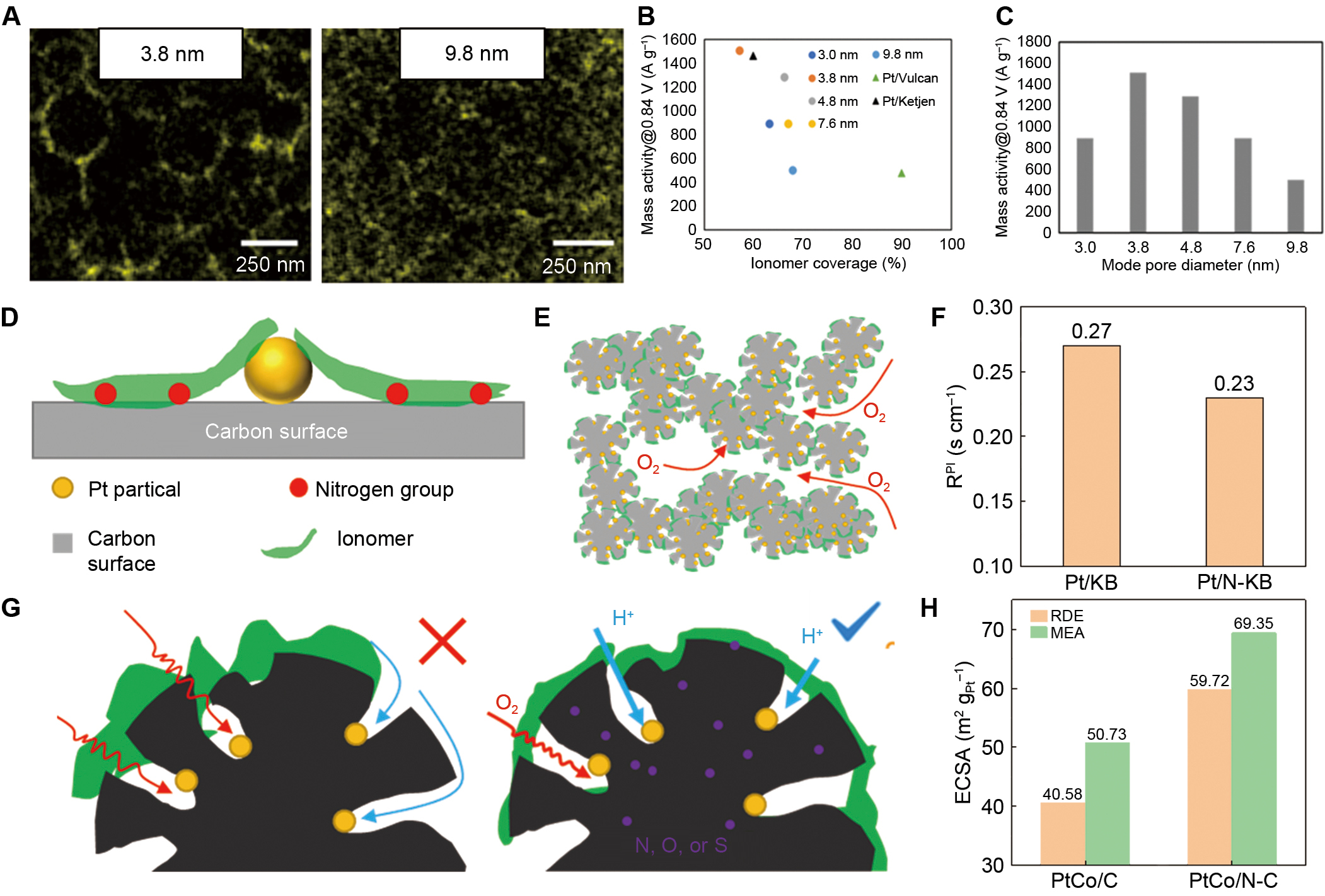
Takeshita et al. [131] prepared carbon supports with pore sizes ranging from 3.8 to 9.8 nm using a templating
method and investigated ionomer penetration within the pores (Figure 17A). Their results show that when the pore size is smaller than 3.8 nm, ionomers cannot
penetrate the pores and instead form a coating around the support particles. As the
pore size increases, ionomers gradually infiltrate the pores, leading to higher ionomer
coverage on the Pt surface (Figure 17B) and a gradual decrease in the mass activity of the catalyst (Figure 17C). Ott et al. [132] modified the surface chemistry of porous carbon supports with nitrogen (N) groups,
which enhanced the chemical adsorption between the −SO3− side chains of the ionomer and the support surface (Figure 17D). This promoted uniform adsorption of the ionomer on the catalyst surface (Figure 17E) and prevented ionomer penetration into the mesopores, thereby effectively reducing
the oxygen transport resistance within the electrode (Figure 17F). Sun et al. [133] examined the influence of O‑, S‑, and N‑group‑modified carbon supports on the ionomer
coating structure, finding that N‑groups facilitate the formation of a uniform thin
ionomer overlayer on the catalyst surface, optimizing the transport pathways for O2 and water (Figure 17G). Electrochemical tests further demonstrated that N‑group modification significantly
improves the mass activity and electrochemical surface area of the catalyst and enhances
the performance of the membrane electrode assembly under 20% relative humidity (Figure 17H).
The ionomer overlayer not only significantly influences the transport of O2, water, and protons, but its side‑chain –SO₃− adsorption on Pt particles also occupies active reaction sites, thereby reducing
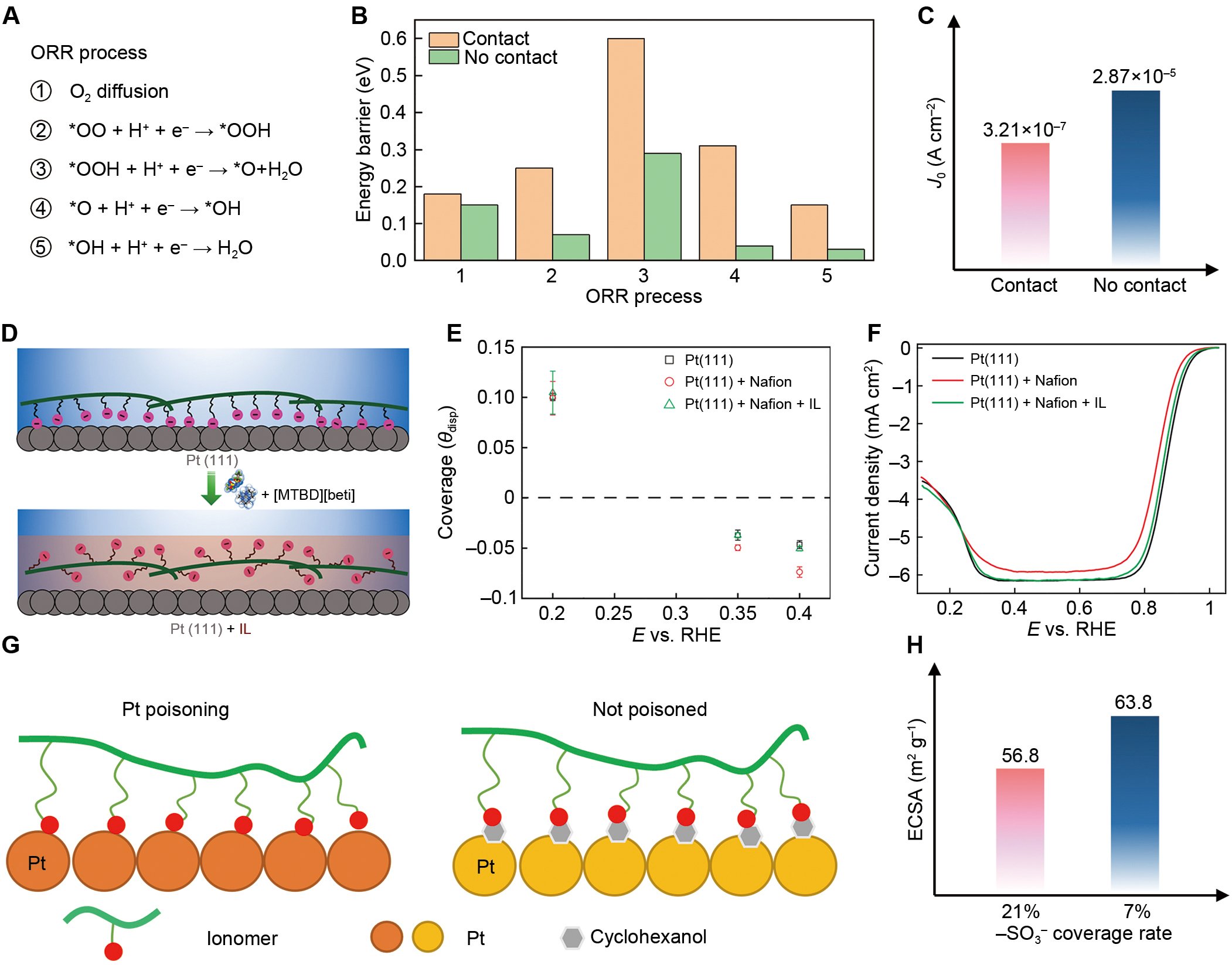
the catalytic activity of Pt [134]. Previous studies have examined the impact of −SO3− adsorption on the steps of the ORR and improved the catalytic performance of membrane
electrode assemblies by suppressing −SO3− adsorption on Pt. Jiang et al. [32] investigated the diffusion, adsorption, and desorption processes of oxygen and its
intermediates on Pt facets (Figure 18A) and found that −SO3− adsorption markedly increases the energy barriers of each elementary step (Figure 18B) and lowers the exchange current density of the ORR (Figure 18C). Li et al. [135] innovatively introduced an ionic liquid at the ionomer‑Pt interface (Figure 18D), enabling the ionic conductor [MTBD][beti] to bond with −SO3−, thereby effectively reducing −SO3− coverage on Pt facets (Figure 18E). This ionic conductor also provides proton conductivity, compensating for the proton
transport loss due to ionomer bonding and significantly enhancing the mass activity
of the electrode (Figure 18F). Chen et al. [136] explored the use of cyclohexanol to tailor the ionomer coating structure. This approach
effectively hinders −SO3− adsorption on Pt, substantially lowering −SO3− coverage on the Pt surface (Figure 18G). Moreover, the cyclic structure of cyclohexanol reduces the density of the ionomer
overlayer, further improving the catalytic activity of the membrane electrode assembly
(Figure 18H).
4.3 Innovation in materials and structures of three-phase interface ionomer layers
In addition to tailoring the ionomer adsorption process to design the coating structure
at the triple‑phase boundary, previous studies have also focused on innovating ionomer
structures and optimizing the overlayer to enhance the structural and transport properties
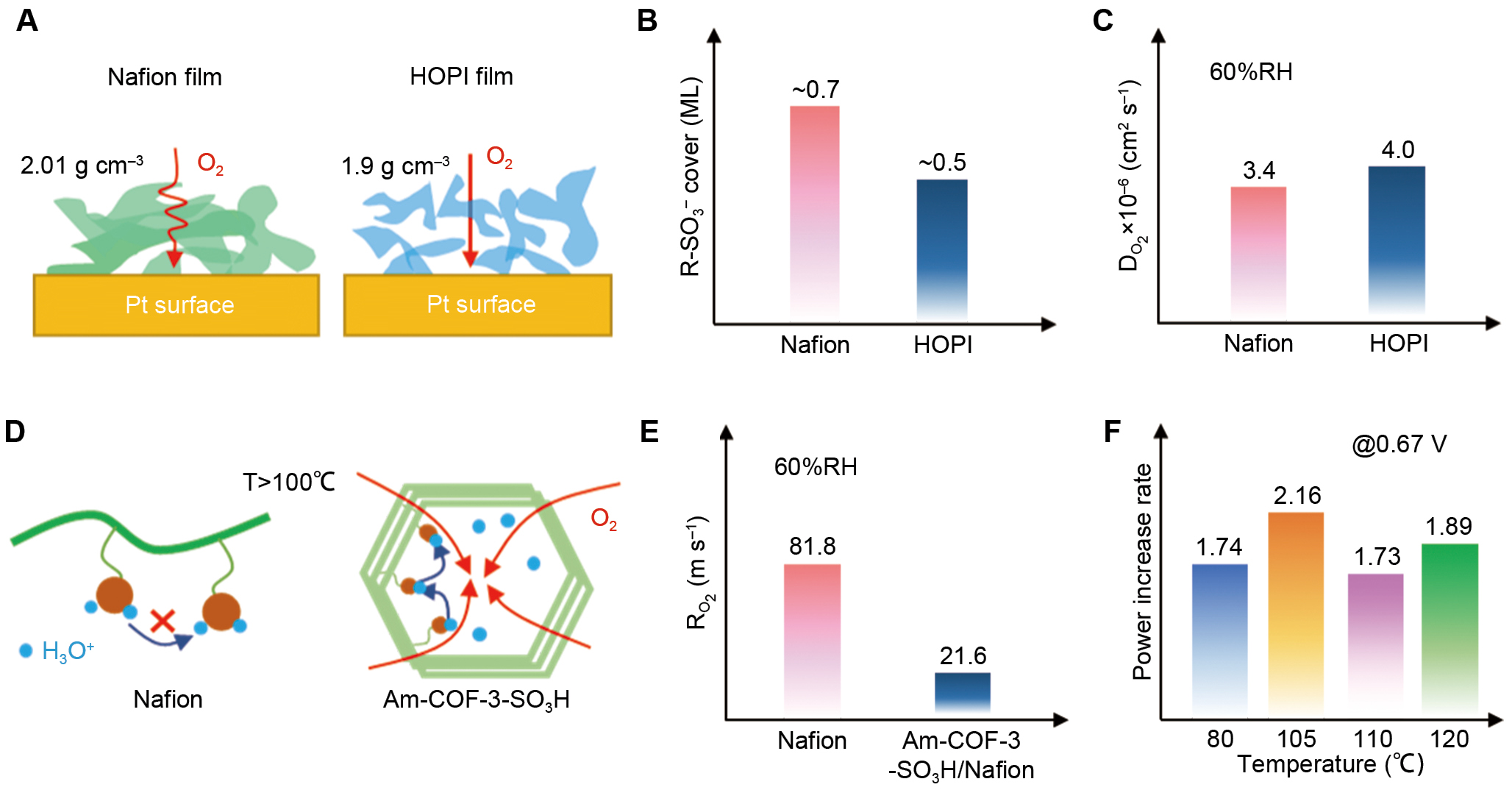
of the interface. Jinnouchi et al. [117] synthesized a high‑oxygen‑permeability ionomer using cyclic monomers and employed
molecular dynamics simulations to compare the adsorption layers of Nafion and this
ionomer. The ring‑shaped structure introduces steric hindrance that reduces the density
of the ionomer overlayer, thereby promoting oxygen transport (Figure 19A). Computational results show that compared to Nafion, the cyclic ionomer exhibits
lower −SO3− coverage on Pt surfaces, indicating reduced poisoning of Pt facets (Figure 19B). Moreover, the oxygen diffusion coefficient within this ionomer layer is higher
and its diffusion resistance lower at humidities above 20%RH (Figure 19C). Yang et al. [137] developed an α‑aminoketone‑covalent organic framework ionomer interwoven with Nafion
(Figure 19D). This approach utilizes synergistic hydrogen‑bonding to retain water molecules,
enhancing hydration and proton transport while reducing oxygen transport resistance
(Figure 19E). The Am‑COF‑3‑SO3H matrix linked via α‑aminoketone bonds stabilizes water through cooperative hydrogen
bonds, enabling efficient Grotthuss‑type proton hopping. This accelerates oxygen‑proton
transport in fuel cells, mitigates Pt poisoning, and significantly improves power
density at medium‑to‑high temperatures (Figure 19F).
In addition to innovating the intrinsic physicochemical properties of ionomers, previous
studies have also employed technical strategies to engineer porous ionomer overlayers,
maintaining proton transport while effectively reducing oxygen transport resistance.
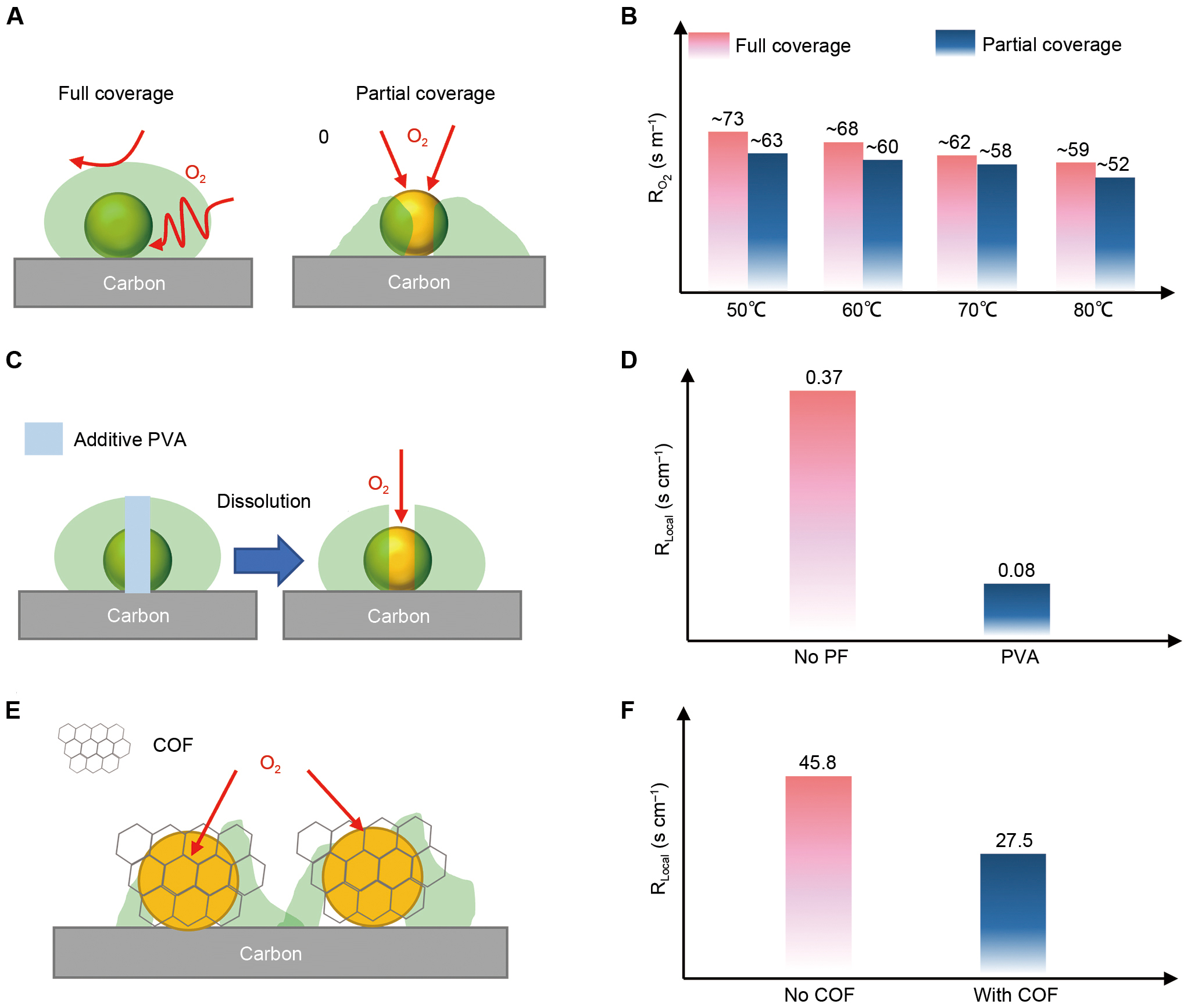
Doo et al. [138] fabricated a nanoscale mask on Pt particles via nanoengineering to prevent ionomer
adsorption, thereby preventing complete coverage of Pt by the ionomer. After chemically
removing the mask, a partially covered ionomer structure was obtained (Figure 20A). This structure significantly reduced oxygen transport resistance at low‑to‑medium
temperatures and effectively enhanced the power density of the fuel cell (Figure 20B). Cheng et al. [139] utilized the mutual solubility between polyethylene glycol and Nafion, along with
its self‑generated water leaching effect, to prepare an ionomer coating with abundant
pore structures (Figure 20C). This architecture allows oxygen to reach the Pt surface directly through pores
rather than relying on bulk diffusion through the ionomer. Although the transport
resistance of this glycol‑doped Nafion layer increases rapidly with thickness, and
its bulk transport resistance is notably high, its unique porous structure reduces
the local oxygen transport resistance in the electrode by 4–5 times (Figure 20D). Zhang et al. [140] introduced a COF‑type cyclic organic compound at the ionomer‑Pt interface, which
avoided direct coverage of Pt particles by the ionomer (Figure 20E). Electrochemical tests showed that this structure significantly improves the mass
activity of the electrode and greatly lowers oxygen transport resistance (Figure 20F).
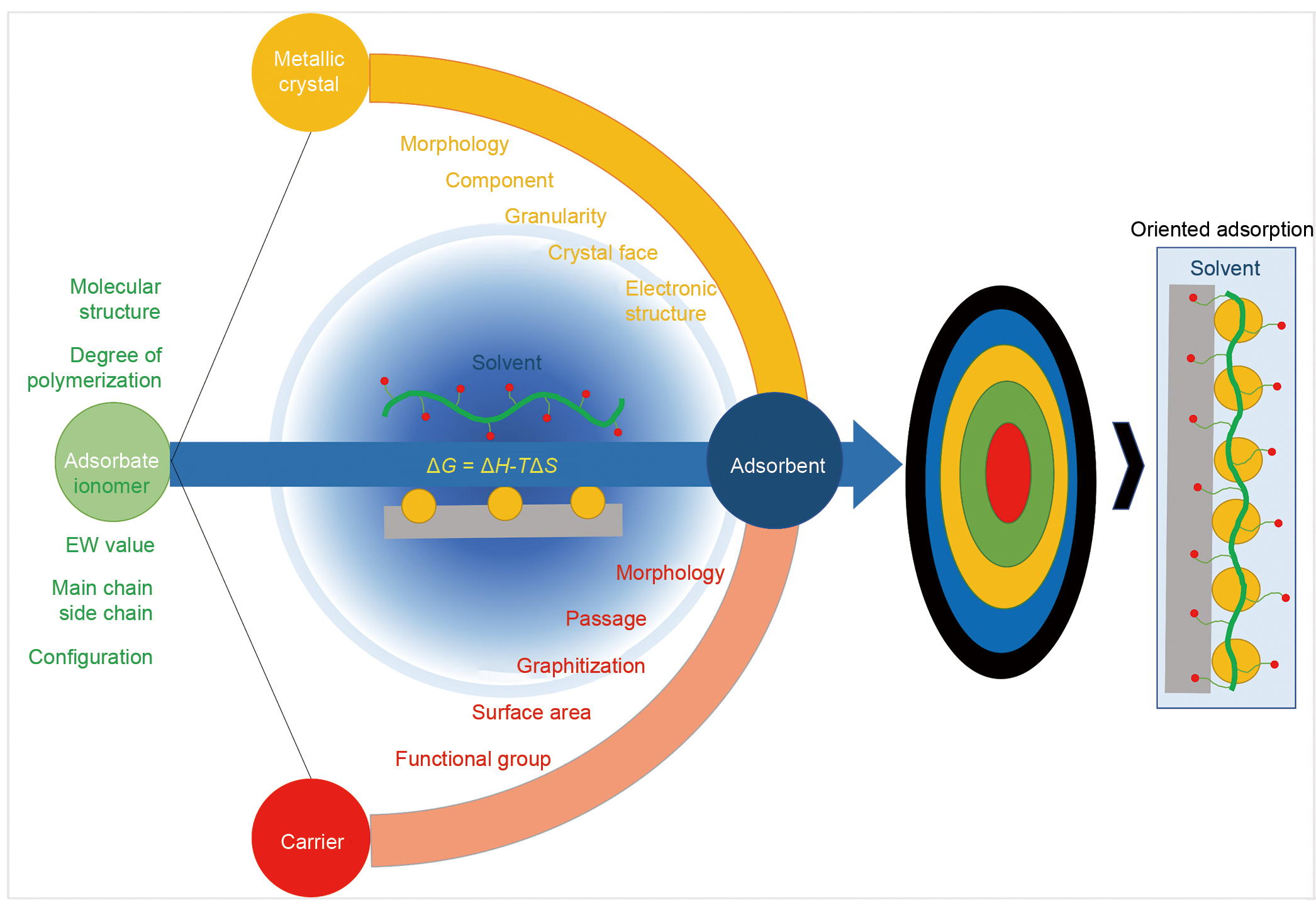
In summary, it is evident that numerous factors influence the adsorption behavior
of ionomers (Figure 21). For the adsorbate—the ionomer itself—its molecular structure, degree of polymerization,
EW, backbone/side-chain architecture, and solvation conformation collectively determine
its adsorption characteristics. For the adsorbent—the metal-crystal-supported catalyst—the
morphology, composition, particle size, crystallographic facets, electronic and geometric
structure of the metal crystals, as well as the morphology, pore structure, degree
of graphitization, surface area, and functional groups of the support, all contribute
to defining the adsorption sites. These diverse factors do not act independently but
interact synergistically to modulate interfacial adsorption thermodynamics, including
adsorption energy, binding strength, and adsorption equilibrium, which further dominate
the final coverage, uniformity, and nanostructure of the ionomer coating. From these
coupled effects, the most influential parameters include the crystal facet and surface
electronic structure of Pt catalysts, the pore structure and surface functional groups
of carbon supports, and the equivalent weight and side-chain configuration of ionomers.
These key parameters provide direct guidance for the rational design of catalyst surfaces,
support microstructures, and ionomer molecular architectures toward optimized adsorption
behavior and coating structure. Studying the adsorption behavior of ionomers on catalyst
surfaces in liquid environments thus requires the integration of multiple variables,
which presents considerable complexity. Focusing on interfacial adsorption thermodynamics
offers an effective approach to disentangle these factors through combined physicochemical
experiments and computational simulations. This strategy enables the identification
of key parameters governing ionomer adsorption and represents the most efficient pathway
toward achieving controlled ionomer adsorption on catalyst surfaces. Such an approach
structurally optimizes the EDL processes in fuel cell electrodes, thereby facilitating
the coordinated transport of protons, electrons, and gases—ultimately leading to breakthroughs
in fuel cell performance.
5 Conclusions
In summary, the formation, structure, and properties of the ionomer adsorption layer
are central to the performance of fuel cell electrodes. This review has elucidated
the multi-faceted nature of ionomer adsorption on catalyst and support surfaces, which
is influenced by a complex interplay of factors including catalyst properties (e.g.,
morphology, crystallographic facet, size, and electronic structure), and support features
(e.g., specific surface area, porosity, graphitization degree, and surface functionalization),
ionomer characteristics (e.g., equivalent weight, side-chain architecture, and solvation
state). The core philosophy of ionomer coating engineering lies in shifting from empirical
random deposition toward mechanism-driven rational regulation of ionomer spatial distribution,
interfacial configuration, and nanoscale coating morphology, to reconcile the inherent
trade-off among proton conduction, gas mass transport, and active site utilization.
It should be noted that the adsorption model established in this study applies to
liquid-phase interfaces, while the structural reconstruction effects occurring during
the drying process require separate optimization in conjunction with the specific
electrode fabrication protocols. Across surveyed material systems, several universal
design principles can be generalized: optimizing catalyst crystal facet and surface
electronic properties to moderate interfacial affinity toward sulfonate groups helps
alleviate ionomer-induced active site poisoning; matching the pore size of carbon
supports with the hydrodynamic diameter of solvated ionomers enables precise modulation
of ionomer coverage and avoids excessive aggregation; and tailoring ionomer equivalent
weight and side-chain structure effectively balances solvation behavior and interfacial
interaction, favoring the construction of uniform and stable coating architecture.
The adsorption process is governed by diverse mechanisms—such as electrostatic interactions,
coordination bonding, hydrophobic effects, and entropy-driven assembly—which collectively
determine the nanoscale distribution of the ionomer, the integrity of the triple-phase
boundary, and the overall functionality of the EDL. Advanced in situ characterization
techniques and multiscale simulations have proven essential in decoupling these contributions,
providing a thermodynamic and kinetic framework for rational interface engineering.
6 Future Perspectives
Despite significant progress in ionomer coating engineering, several critical challenges
remain unresolved, and the translation of fundamental insights into practical high-performance
electrodes still faces substantial barriers. The most pressing challenge is the long-standing
discrepancy between idealized model systems and complex real-world electrode slurries:
most current mechanistic studies, including density functional theory calculations
and single-crystal surface experiments, are conducted under highly simplified conditions,
while practical catalyst inks are multi-phase, multi-component, and dynamically evolving
systems containing catalyst agglomerates, ionomer aggregates, solvent mixtures, and
additives, with interactions occurring across multiple length and time scales. To
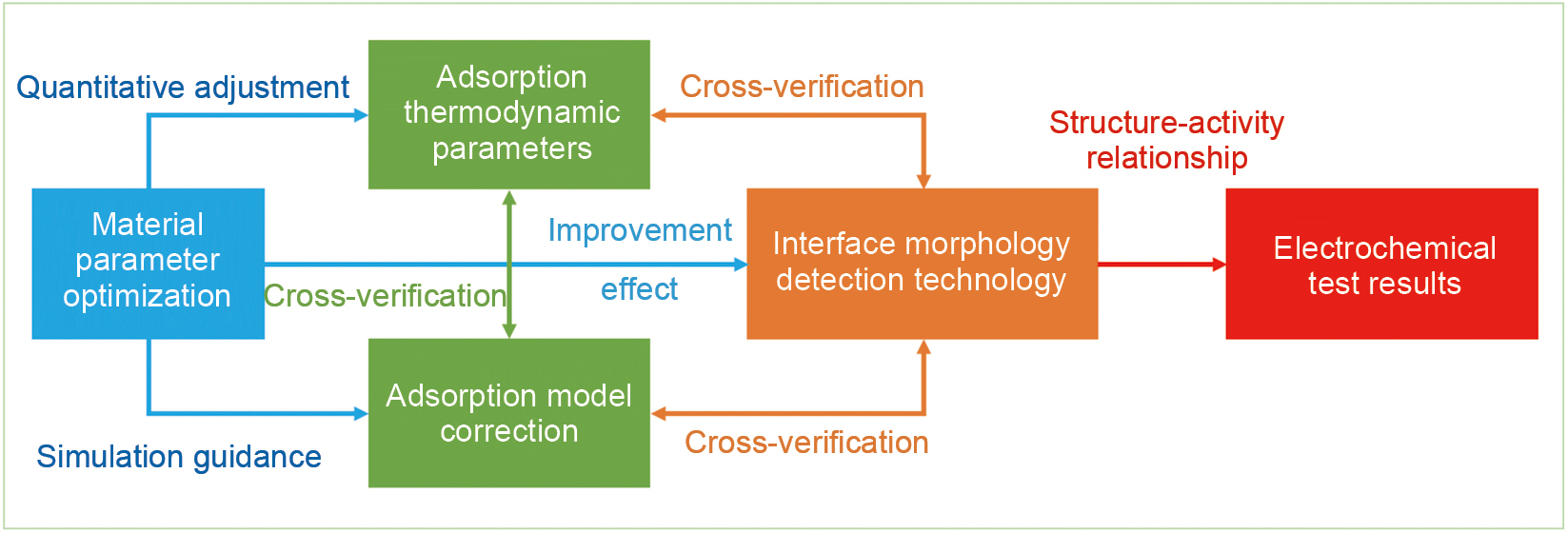
bridge this gap, future research should prioritize the development of advanced in-situ
and operando characterization techniques to directly observe ionomer adsorption, aggregation
and film formation processes in real slurries, establish multiscale simulation frameworks
that integrate atomic-scale density functional theory, nanoscale molecular dynamics
and microscale finite element methods to model the full lifecycle of ionomer coatings
from ink preparation to electrode operation, and systematically quantify the effects
of ink formulation parameters including solid content, pH and additive concentration
on ionomer adsorption thermodynamics and kinetics (Figure 22).
In addition, since the final ionomer coating structure is strongly influenced by electrode
fabrication processes which are still largely empirical leading to poor batch-to-batch
reproducibility, it is essential to establish quantitative relationships between process
parameters such as mixing speed, coating rate, and drying temperature and coating
microstructures, develop novel coating techniques including electrospray deposition
and atomic layer deposition to achieve nanoscale precision in ionomer film thickness
and uniformity, and apply machine learning algorithms to optimize fabrication processes
and accelerate the translation of laboratory results to industrial scale. To enhance
coating stability, future research could incorporate real-time state of health (SOH)
estimation techniques to enable precise control over degradation. And future research
should incorporate macro-level trend analysis to optimise the adaptability of coating
engineering across diverse application scenarios.