ContentsFigures & Tables
The escalating threat of climate change and the declaration of climate emergencies worldwide underscore the urgent need to reduce carbon emissions across all industrial sectors [1]. Among these, aviation has emerged as a significant contributor, responsible for approximately 2.5% of global carbon dioxide (CO2) emissions [2]. Although this represents a relatively small fraction, the impact is disproportionate because only about 10% of the global population travels by air annually, a figure projected to increase significantly with growing travel demand [3]. Despite ongoing advances in aerodynamics and turbine efficiency, dependence on kerosene-based jet fuels continues to impede progress toward carbon-neutral aviation [4].
To overcome this limitation, electrification has already demonstrated transformative potential in the automotive sector, where the widespread adoption of electric vehicles (EVs) has reduced emissions and reshaped global perspectives on sustainable mobility [5–7]. This success has inspired interest in extending electrification to aviation as a pathway toward deep decarbonization. However, adapting battery technology for flight introduces unique challenges that exceed those faced in ground transportation, including low energy density, stringent weight limitations, restricted range, and demanding thermal management and safety requirements [8].
Despite these challenges, recent industrial prototypes and government-funded demonstrators have played an important role in evaluating the feasibility of electric propulsion in aviation. Several high-profile programs, including the Eviation Alice [9] and NASA's X-57 Maxwell [10], have since been discontinued, yet they provided valuable technical insights. Alice faced repeated program delays and a notable battery fire in 2020, while the X-57 was officially terminated by NASA in 2023 due to escalating technical complexity, integration difficulties, and certification barriers. Nevertheless, these projects, along with active efforts such as the Beta Technologies Alia-250 [11], have served as critical technology testbeds, advancing knowledge in high-energy battery integration, distributed electric propulsion, power electronics, and thermal management architectures [12]. Collectively, they highlight both the promise and persistent bottlenecks associated with scaling electric flight.
Building upon these developments, this review examines the feasibility of integrating advanced battery systems into aircraft propulsion architectures by analysing performance characteristics, economic trade-offs, safety implications, and environmental sustainability. A systematic assessment of existing literature, industrial data, and prototype case studies provides a comprehensive evaluation of the evolving landscape of electrified aviation. The study aims to identify technological pathways and policy frameworks that can accelerate the transition toward a sustainable and carbon-neutral aviation ecosystem.
Batteries operate through electrochemical energy conversion, enabling the storage and controlled release of electrical energy [13]. A conventional battery consists of an anode, a cathode, and an electrolyte. During discharge, oxidation at the anode releases electrons, which flow through an external circuit to generate an electric current, while reduction occurs at the cathode to complete the electrochemical reaction. The electrolyte facilitates ionic transfer between the electrodes, thereby maintaining charge neutrality and enabling continuous operation [14].
Secondary (rechargeable) batteries, particularly lithium-based systems, are preferred for aviation applications owing to their higher energy efficiency, rechargeability, and more favorable energy-to-weight ratio compared with primary batteries [15]. Two parameters are fundamental in determining battery suitability for flight applications. Specific energy (Wh kg−1) determines the achievable range and represents how far an aircraft can fly on a single charge, whereas specific power (W kg−1) reflects the battery's ability to deliver high instantaneous power during take-off, climb, and other critical phases of flight. Electric aviation requires an optimal balance between specific energy and specific power, as improvements in energy density are often accompanied by compromises in power capability or safety margins. Battery technologies such as lithium-ion (Li-ion) systems and emerging solid-state chemistries are therefore central to the electrification of flight, as they offer lightweight and high-performance energy storage solutions. Consequently, the development of next-generation batteries with higher gravimetric energy, enhanced thermal stability, and extended cycle life is essential for achieving commercially viable and carbon-neutral aviation.
Lithium-ion batteries (LIBs) currently dominate as the primary power source for electrified aviation owing to their high specific energy, long cycle life, and well-established manufacturing ecosystem [16]. Initially developed for consumer electronics and later scaled for EVs, LIBs now demonstrate adequate performance for early electric aircraft such as the Pipistrel Velis Electro [17]. Aviation-grade LIBs typically achieve specific energies of 250–270 Wh kg−1 and specific powers exceeding 1,500 W kg−1, supporting short-range operations such as pilot training and local commuter flights [18]. Recent improvements in nickel-rich cathodes and silicon–graphite anodes have increased specific energy but often at the expense of thermal stability and cycle life [8]. Safety, therefore, remains a major concern, as thermal runaway and internal short circuits can lead to fire propagation in high-capacity battery packs [19, 20]. The ground-test battery fire in the Eviation Alice prototype in 2020 underscores the importance of enhanced thermal management and fault-tolerant pack architectures [21].
To address safety and reliability risks, manufacturers are developing improved cooling architectures, enhanced cell isolation strategies, and fault-tolerant pack designs. In addition, advanced battery management systems (BMSs) are being implemented to monitor voltage, temperature, and current at the cell level, thereby ensuring safe operation under variable flight conditions [22, 23]. While LIBs provide the most practical foundation for near-term electrified aviation, their scalability is constrained by limited energy density, thermal safety concerns, and cycle degradation. Continued innovation in cell chemistry, pack integration, and thermal management will therefore determine how electric aviation expands beyond light and short-haul aircraft.
To overcome the intrinsic energy density ceiling of conventional Li-ion systems, both academic and industrial research efforts are focused on alternative battery chemistries that offer higher gravimetric energy and improved safety. Among these, lithium metal (Li-metal) [24] and lithium sulfur (Li–S) batteries [25] are widely regarded as the most promising near-term candidates for aviation applications. Other chemistries, such as sodium-ion batteries, are also under investigation because of their material abundance and lower cost [26]. However, their relatively low operating voltage and specific energy currently limit their suitability for aviation, where performance-to-weight ratio is critical [16].
At the systems level, several prototype programs have demonstrated the integration of advanced batteries with electrified propulsion architectures. The Eviation Alice aircraft employs a 900 kWh Li-ion battery pack to power dual electric motors, achieving an estimated range of 1,000 km for short-haul operations [27]. NASA's X-57 Maxwell program introduced distributed electric propulsion using twelve small electric motors to reduce drag and improve aerodynamic efficiency [28]. These developments underscore a common design philosophy, wherein distributing electrical loads across multiple high-efficiency motors can partially offset the mass and thermal penalties associated with large centralized power systems [29]. Lithium metal batteries replace the conventional graphite anode with metallic lithium, thereby eliminating the host matrix and increasing the theoretical specific capacity to approximately 3,860 mAh g−1 [30]. Start-ups such as Cuberg [31] and QuantumScape [32] have reported prototype cells with specific energies approaching 369 Wh kg−1 and specific powers of approximately 2,000 W kg−1, alongside projected improvements in cycle life exceeding 1,000 cycles. A major technical challenge remains the suppression of lithium dendrite formation, which can induce internal short circuits and accelerate capacity degradation under high-rate operation. Similarly, Li–S batteries developed by companies such as Oxis Energy have demonstrated gravimetric energy densities approaching 400 Wh kg−1, although challenges related to limited cycle stability and poor volumetric efficiency persist [33]. Collaborative efforts between academia and industry are accelerating progress in these areas. Research groups at the University of California, Berkeley, and the University of Michigan, in collaboration with industrial partners such as And Battery Aero (Palo Alto) and 24M Technologies (Cambridge), have developed advanced electrolyte formulations aimed at enhancing safety and improving charge–discharge kinetics [34–36]. Collectively, these innovations represent incremental yet steady progress toward practical electric aviation across multiple aircraft classes, ranging from light trainers to regional commuter platforms.
In summary, emerging battery chemistries and distributed propulsion demonstrators represent meaningful progress toward viable electric aviation. Although current implementations remain largely confined to general and regional aviation, continued advancements in electrode architecture, electrolyte design, and pack-level thermal management are expected to enable scalable and certifiable energy storage systems for next-generation air transport.
Despite substantial advances in electrified propulsion and battery technologies, several challenges continue to impede the realization of large-scale electric aviation. These challenges include increasing energy density, reducing system mass, ensuring operational safety, and improving the life cycle sustainability of energy storage systems. While existing technologies such as LIBs provide a practical baseline, their limited specific energy, thermal stability concerns, and environmental footprint constrain performance and scalability. In addition, the economic and logistical implications of large-scale battery manufacturing, recycling, and end-of-life management remain insufficiently addressed within the aviation context.
This study reviews the limitations of current battery and propulsion systems and evaluates recent advances in battery chemistry, system integration, and hybrid-electric propulsion architectures aimed at overcoming these constraints. By jointly considering performance, safety, cost, and environmental factors, the analysis provides an integrated perspective on the electrified aviation landscape. The resulting insights identify realistic technological pathways toward carbon-neutral air transport and support the development of efficient, sustainable, and safer battery systems optimized for aviation applications.
An aircraft's ability to sustain flight fundamentally depends on its capacity to generate sufficient thrust. Conventional aircraft achieve this through the combustion of hydrocarbon fuels, whereas electric aircraft rely on high-efficiency electric motors powered by energy stored in batteries. This transition from chemical to electrochemical propulsion introduces unique design challenges, primarily associated with the limited specific power (W kg−1) and specific energy (Wh kg−1) of current battery technologies, which directly govern endurance and payload capability [37].
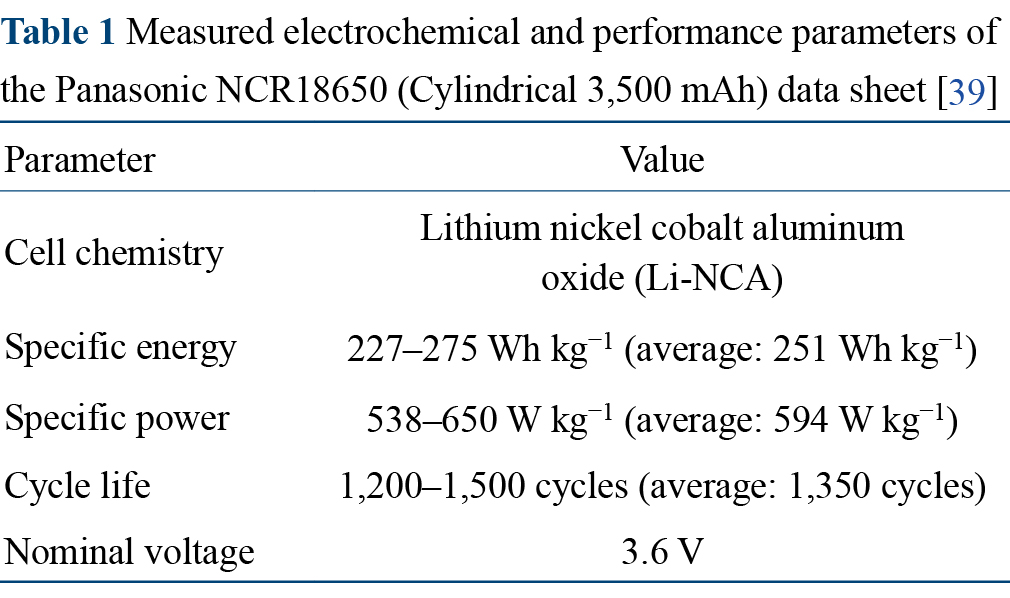
Figure 1A compares the specific power and specific energy of various battery chemistries, illustrating the substantial performance gap between state-of-the-art LIBs and the levels required for large-scale electric aviation (produced using Granta EduPack [38]). Among commercially available systems, lithium–nickel–cobalt–aluminum oxide (Li-NCA) cells, such as the Panasonic NCR18650, remain industry benchmarks owing to their balanced combination of energy density, power capability, and operational safety (Table 1) [39]. These cells provide an average specific energy of 251 Wh kg−1 and a specific power of 594 W kg−1, outperforming legacy chemistries such as lead–acid and nickel–cadmium batteries [40]. While these advances make Li-ion batteries suitable for small-scale electric aircraft, their gravimetric energy density remains several orders of magnitude lower than that of conventional aviation fuels (≈ 12,000 Wh kg−1) [41].
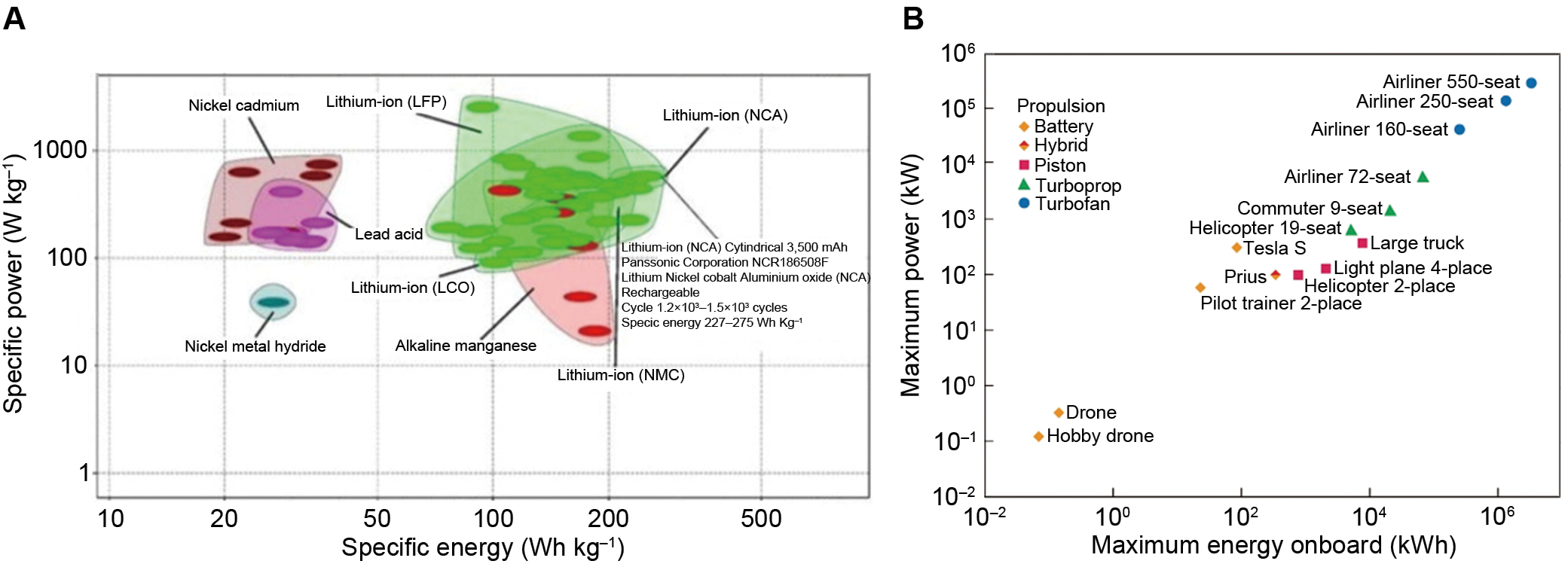
In addition to battery chemistry performance, Figure 1B correlates the maximum onboard energy (kWh) with the maximum power output (kW) for representative propulsion systems and aircraft classes [8]. Battery-powered systems, including drones, electric vehicles, and pilot-training aircraft, cluster in the lower-left region of the plot, reflecting limited energy and power availability. As aircraft scale in size and mission complexity, both power and energy demands increase sharply: piston engines (102–103 kW) power light general-aviation aircraft, turboprop engines (103–104 kW) serve regional commuters, and turbofan engines (> 105 kW) dominate commercial and wide-body aircraft. Each successive propulsion class requires exponentially higher onboard energy (102–106 kWh), highlighting the challenge of scaling electric propulsion, as current battery technologies remain several orders of magnitude below the requirements for turbofan-class flight [8].
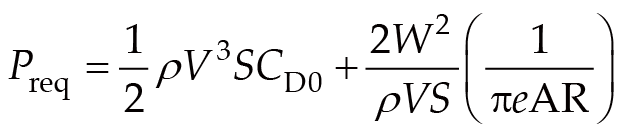
The power requirements of different aircraft types, from general-aviation aircraft to wide-body jets, are determined by their aerodynamic and propulsion parameters (refer to Supporting Information (SI)). The required propulsive power Preq to sustain level flight is expressed as:(1)where ρ is the air density (kg m−3), V is the flight velocity (m s−1), S is the wing surface area (m2), CD0 is the zero-lift drag coefficient, W is the aircraft weight (N), e is Oswald's efficiency and AR is the wing aspect ratio.
Using representative aerodynamic parameters and MATLAB-based simulations, the power demand was calculated for typical cruise velocities and altitudes. A conversion efficiency of approximately 75% was assumed to account for electrical-to-mechanical losses in the propulsion system. The results indicate that wide-body aircraft require exponentially higher power owing to their greater mass and cruise velocity, underscoring the intrinsic difficulty of scaling electric propulsion while maintaining acceptable efficiency and safety margins [8].
One of the primary challenges in electric aviation is generating sufficient power for sustained flight. Unlike hydrocarbon fuels, which possess exceptionally high energy and power densities, batteries are constrained by their specific power, defined as the maximum deliverable power per unit mass [42]. This limitation imposes a minimum battery mass required to meet the aircraft's power demand, directly affecting payload capacity and overall feasibility.
Figure 2A compares the minimum required battery mass (refer to SI) with the typical fuel mass allocation for different aircraft classes, including general aviation (Cessna 172), regional aircraft (Saab 340), narrow-body aircraft (A320), and wide-body aircraft (A350). The analysis shows that battery-based propulsion is feasible for smaller aircraft but becomes impractical for larger platforms due to prohibitively high energy-storage mass requirements.
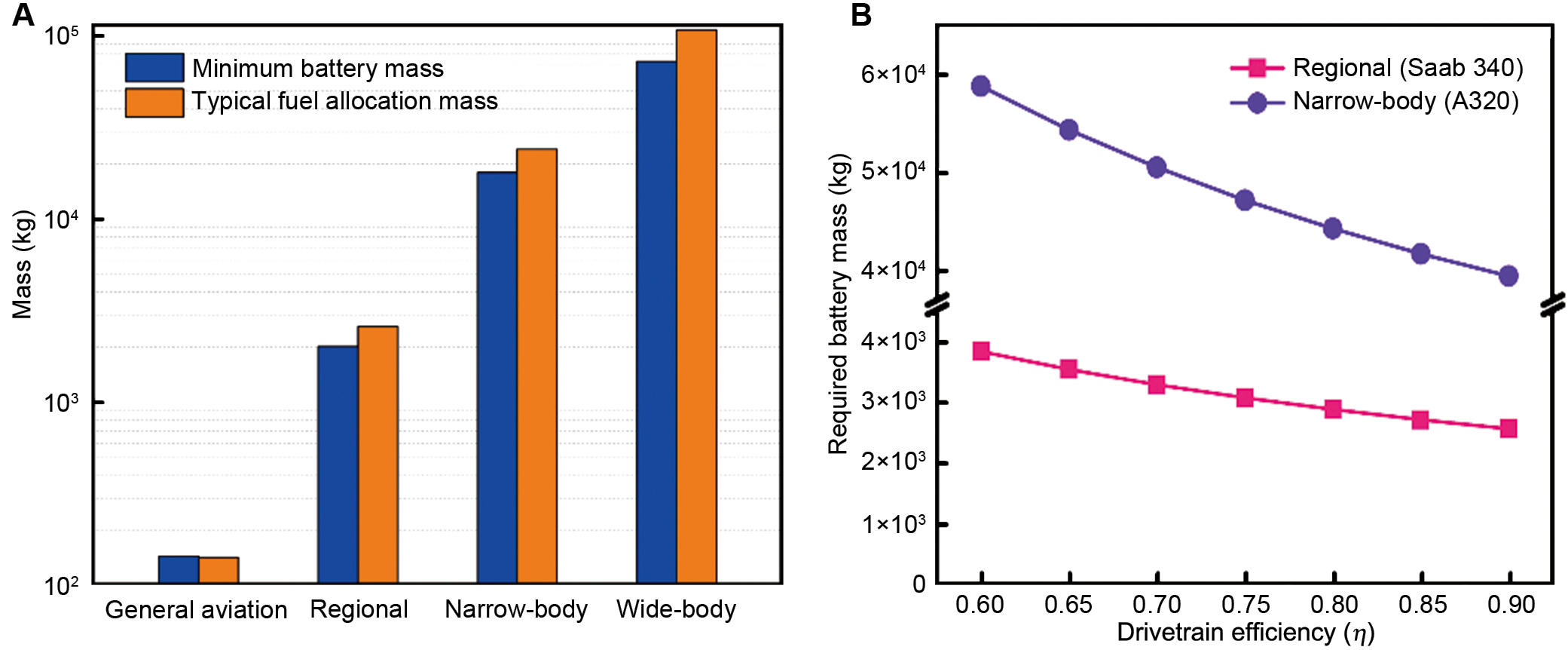
While Equation (1) defines the aerodynamic power requirement, the actual electrical power drawn from the battery depends on the overall drivetrain efficiency (η), which includes losses in the inverter, motor, gearbox, and propeller. To account for these effects, a sensitivity analysis was conducted by varying η between 0.6 and 0.9 for representative regional (Saab 340) and narrow-body (A320) aircraft. As shown in Figure 2B, improving drivetrain efficiency substantially reduces the required battery mass. For the A320, increasing η from 0.6 to 0.9 results in a battery-mass reduction exceeding 30%, corresponding to several tens of tonnes.
This analysis highlights that advances in motor design, power electronics, and thermal management can deliver immediate system-level benefits independent of improvements in battery chemistry. While achieving higher specific energy remains a long-term objective, enhancing drivetrain efficiency represents a practical near-term pathway for reducing mass penalties and improving the feasibility of regional- and narrow-body electric aircraft.
Range is one of the most critical performance metrics in aircraft design, as it directly determines operational viability across passenger, cargo, and defense applications. For electric aircraft, achievable range strongly influences both economic competitiveness and environmental benefits relative to conventional fuel-powered aviation. Among the contributing factors, the aircraft's total mass, including the airframe, payload, and battery mass, plays the dominant role in determining attainable range.
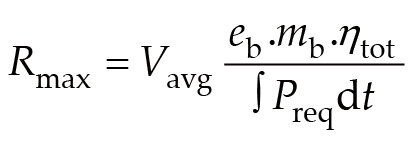
The theoretical maximum range (Rmax) of an electric aircraft can be expressed as:(2)where Vavg is the average cruise velocity of the aircraft (m s−1), eb is the specific energy of the battery (Wh kg−¹), mb is the mass of the battery (kg), ηtot is the overall energy drivetrain efficiency, and Preq is the propulsive power requirement (W) derived from Equation (1). This relation highlights that flight range scales directly with specific energy and efficiency, while it decreases with increasing power demand.
Figure 3 presents modeled cruise-range results for four representative aircraft categories: general aviation (Cessna 172), regional (Saab 340), narrow-body (A320), and wide-body (A350), evaluated under varying battery mass fractions (BMFs) ranging from 0.2 to 0.6. The BMF represents the fraction of the aircraft's maximum take-off mass allocated to batteries. Simulations were performed using MATLAB, assuming representative cruise velocities and aerodynamic parameters obtained from published literature.
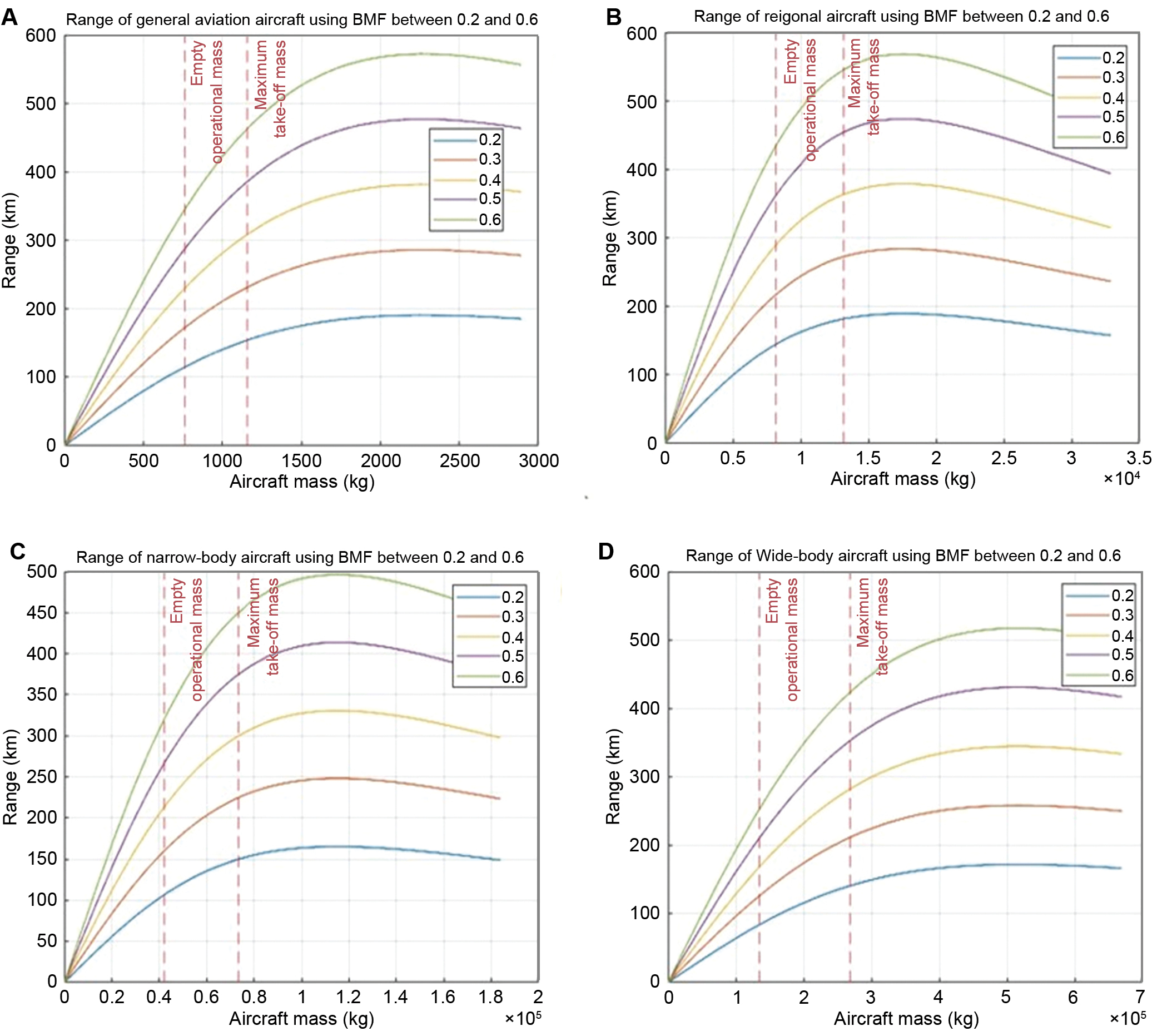
The results indicate that increasing battery mass without a corresponding increase in specific energy leads to severe range penalties, particularly for larger aircraft. For comparison, conventional jet fuel has a specific energy of approximately 13.3 kWh kg−1, which is nearly 53 times greater than that of a typical Panasonic NCR18650 Li-ion cell (~ 0.25 kWh kg−1). Consequently, while general-aviation aircraft can achieve practical ranges of several hundred kilometers (km), wide-body aircraft experience range reductions exceeding 95% when powered by current Li-ion technology.
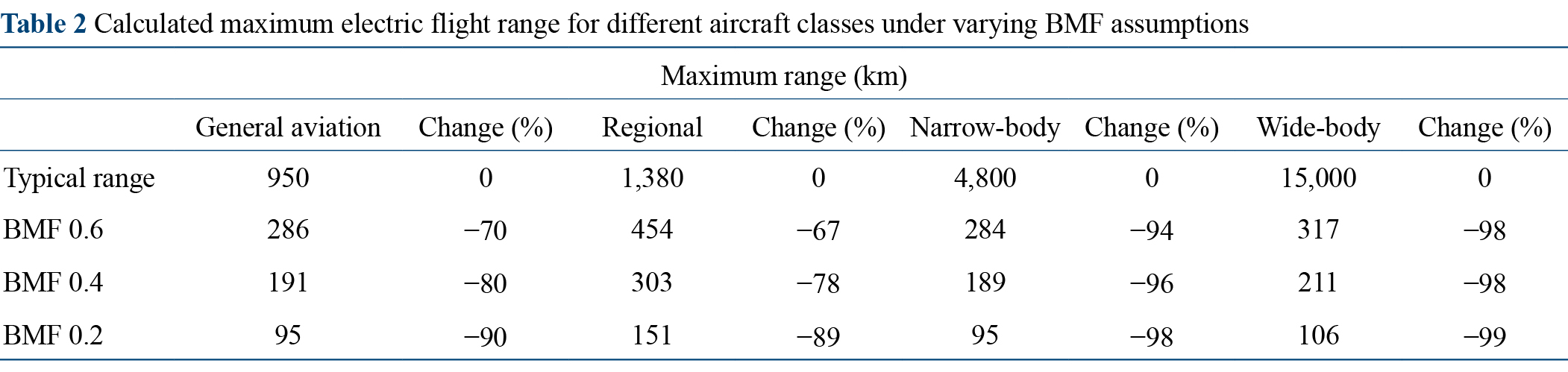
Table 2 summarizes the calculated maximum electric range for different aircraft categories under varying BMF assumptions. Even at optimistic BMF values, the achievable ranges for narrow-body and wide-body aircraft remain far below conventional operational requirements. These findings emphasize that long-haul electric flight remains impractical with existing battery technologies. Conventional aircraft benefit from progressive fuel burn during flight, which continuously reduces mass and improves aerodynamic efficiency, whereas electric aircraft retain nearly constant mass throughout the mission, eliminating this advantage.
Improving electric-aircraft range, therefore, requires simultaneous increases in BMF and battery-specific energy without compromising payload capacity or structural integrity. Conventional aircraft typically allocate 15%–45% of their take-off mass to fuel, depending on mission range (~20% for short-haul and up to ~45% for long-haul operations). In contrast, electric aircraft may require battery mass fractions exceeding 50% to achieve comparable ranges. Realizing such configurations would necessitate lightweight structural materials, aerodynamic optimization, and the integration of batteries into load-bearing aircraft structures.
Figure 4 illustrates the pack-level specific energy requirements needed for different aircraft categories to achieve ranges comparable to conventional aircraft, based on Monte Carlo simulations reported by Bills et al. [43]. Regional aircraft require pack-specific energies in the range of 500–800 Wh kg−1, while narrow-body and wide-body aircraft demand values approaching 700–1,280 Wh kg−1, far exceeding the capabilities of current commercial Li-ion cells (~250–300 Wh kg−1). These requirements are driven primarily by increasing range demands rather than aircraft mass alone. While these projections underscore the challenges associated with electrifying large commercial jets, they indicate that electric propulsion remains feasible for small and regional aircraft[44, 45].
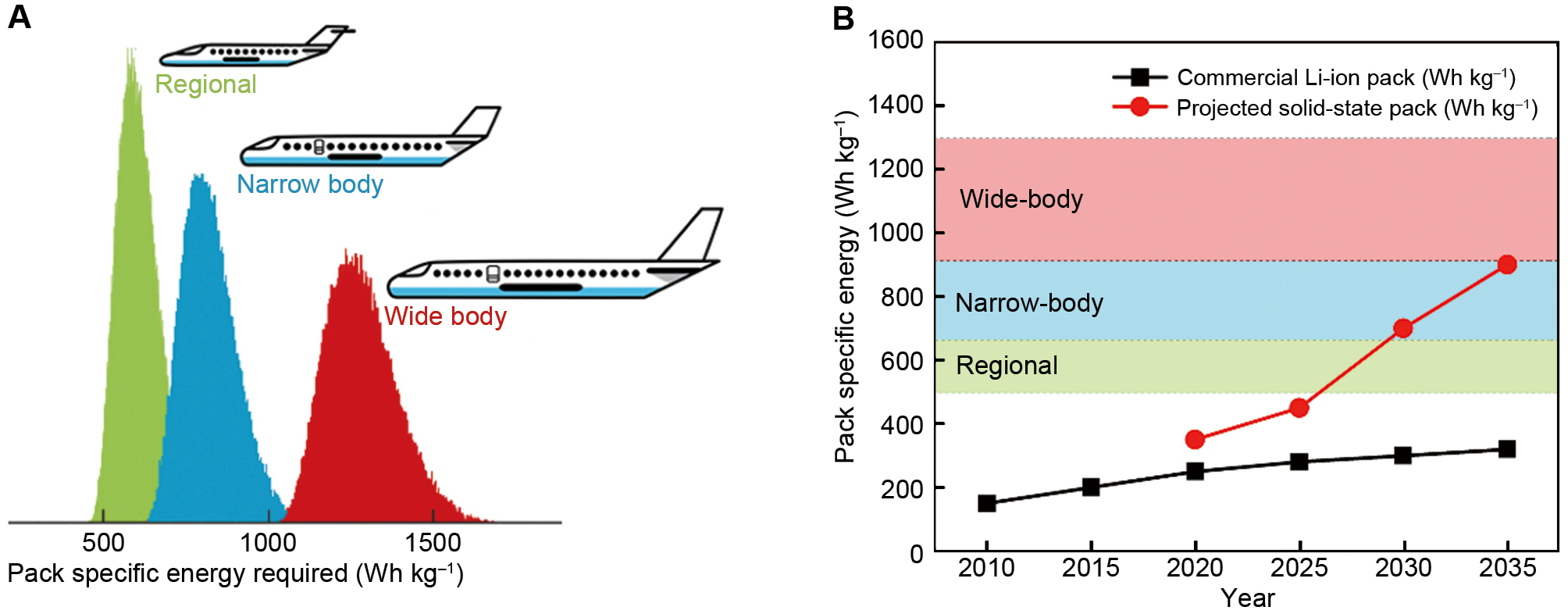
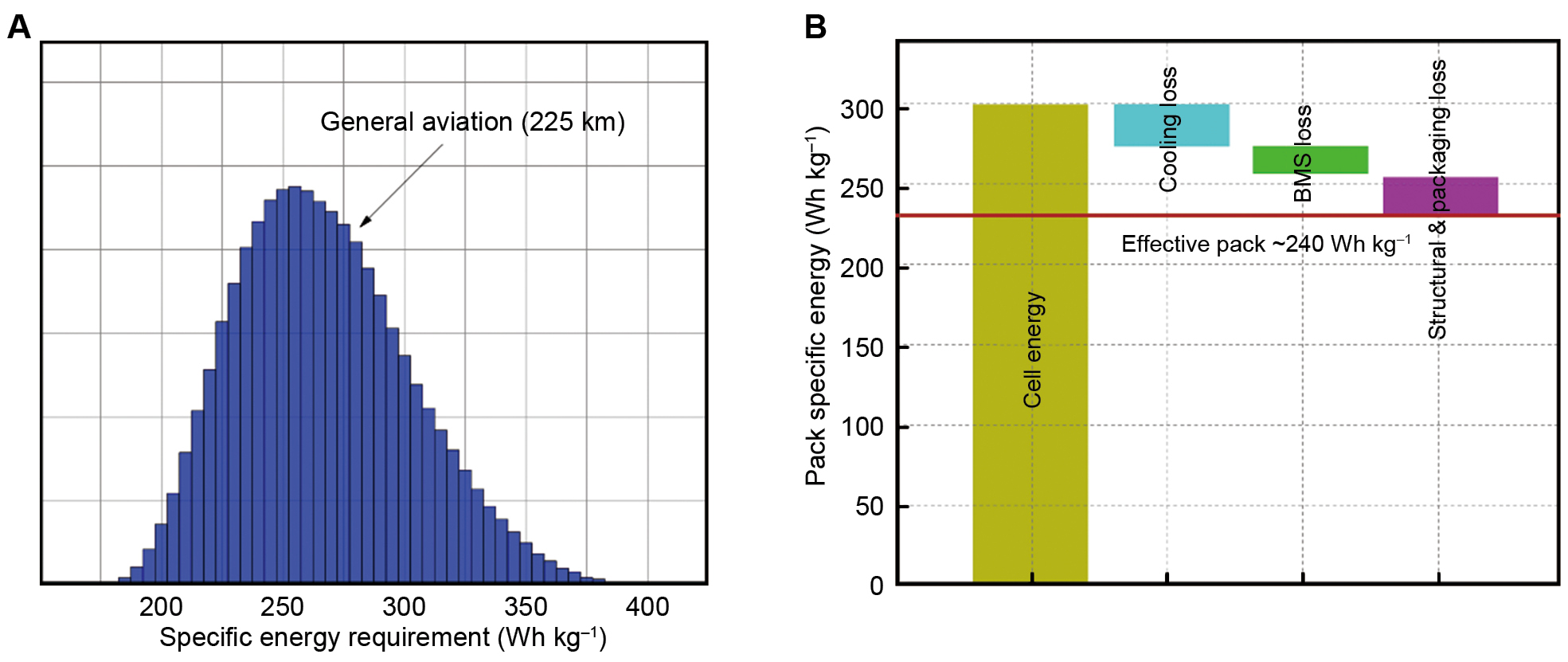
Figure 5 focuses on general-aviation aircraft with mission targets of 200–250 km. As shown in Figure 5A, these aircraft require pack-specific energies of approximately 250–300 Wh kg−1, values that may be attainable using near-term Li-metal and advanced high-nickel Li-ion chemistries. However, practical implementations must account for system-level losses. Empirical data from NASA's Electrified Aircraft Propulsion program and the United States (U.S.) Department of Energy Vehicle Technologies Office indicates that pack-level efficiencies typically range from 75% to 85% of nominal cell energy [18, 46]. As illustrated in Figure 5B, cooling systems, battery-management electronics, and structural supports reduce the effective pack-level specific energy by 15%–25%, such that a nominal 300 Wh kg−1 cell may yield only 225–255 Wh kg−1 at the aircraft system level. Accounting for these losses is essential for accurate range estimation and realistic performance validation.
While advances in battery technologies have enabled sufficient energy storage and power delivery for short-duration electric flights [16], an electric aircraft must also efficiently convert this stored electrical energy into propulsive thrust. The propulsion architecture comprising electric motors, inverters, gearboxes, and propellers plays a decisive role in determining overall system efficiency and, consequently, the achievable flight envelope of electric aircraft.
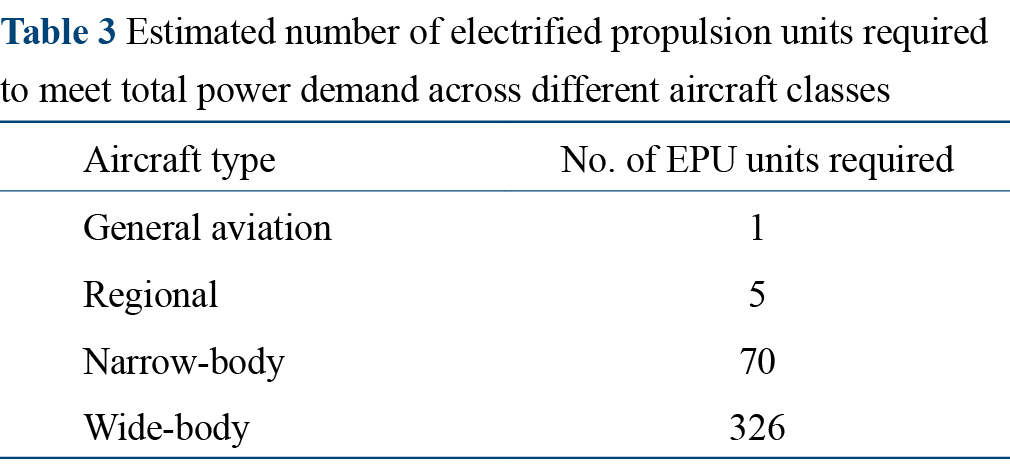
Rolls-Royce has developed a series of electrified propulsion units (EPUs) specifically designed for electric and hybrid-electric aircraft platforms [47]. Each EPU is capable of delivering a continuous power output of approximately 320 kW, making it suitable for small fixed-wing aircraft and vertical take-off and landing (VTOL) configurations [48]. However, as aircraft scale in size, total propulsion power requirements increase non-linearly, necessitating a substantially larger number of EPUs (Table 3). This scaling introduces significant challenges related to system mass, thermal management, power distribution, and operational reliability. Maintaining high motor efficiency at elevated power levels is particularly demanding and requires advanced cooling strategies and robust, fault-tolerant motor control systems.
Alternative propulsion architectures, such as those demonstrated in NASA's X-57 Maxwell program, employ distributed electric propulsion (DEP) to enhance aerodynamic and propulsive efficiency [49]. In DEP configurations, multiple smaller electric motors are distributed along the wing in place of conventional centralized engines. This approach improves lift distribution, reduces induced drag, and enables precise thrust control. Such advantages are especially beneficial for short-haul and regional aircraft, where noise reduction, energy efficiency, and thrust flexibility are critical performance objectives. Extending DEP concepts to long-duration or high-speed missions remains technologically challenging. At higher Reynolds numbers, characteristic of larger aircraft and faster flight regimes, flow turbulence intensifies and convective heat transfer coefficients increase. While enhanced convection can improve cooling potential, motors and batteries are simultaneously subjected to higher thermal loads due to increased aerodynamic heating and elevated current densities required for propulsion. These conditions amplify power-density constraints, as components must dissipate greater heat flux per unit volume. Consequently, more aggressive thermal-management solutions such as liquid cooling systems and advanced heat exchangers are required to maintain safe operating temperatures and prevent performance degradation.
To bridge the gap between present battery limitations and the power demands of large aircraft, hybrid-electric propulsion has emerged as a practical transitional strategy. In hybrid configurations, conventional turbine engines operate alongside electric motors: batteries supply power during high-demand phases such as take-off and climb, while fuel-based turbines sustain cruise operations and may recharge onboard energy-storage systems [50]. This architecture enables reductions in fuel consumption and overall emissions without compromising operational reliability or range, offering a scalable pathway toward future fully electric commercial aviation.
Economic feasibility remains a decisive factor in determining the large-scale adoption of electric aircraft [51, 52]. While electrification offers clear environmental and acoustic advantages, its long-term viability depends primarily on minimizing operational and maintenance costs [53]. This section quantifies key operational cost components for electric aircraft and compares them with those of conventional fuel-based aviation.
Fuel constitutes the second-largest contributor to aircraft operating costs after depreciation and crew expenses. Despite continuous improvements in turbine efficiency, volatility in global oil prices has sustained high operating costs for conventional aviation [54]. In contrast, the operating cost of electric aircraft is dominated by electricity consumption, which depends on both the unit price of electricity and the overall energy efficiency of the propulsion system. Electric propulsion systems typically achieve overall efficiencies of approximately 92%, with propulsive efficiencies in the range of 75%–85%, substantially exceeding the ~30% thermal efficiency associated with jet-fuel combustion [55]. As a result, even when electricity and fuel prices are comparable on a per-unit-energy basis, the higher conversion efficiency of electric systems leads to significantly lower energy expenditure per km.
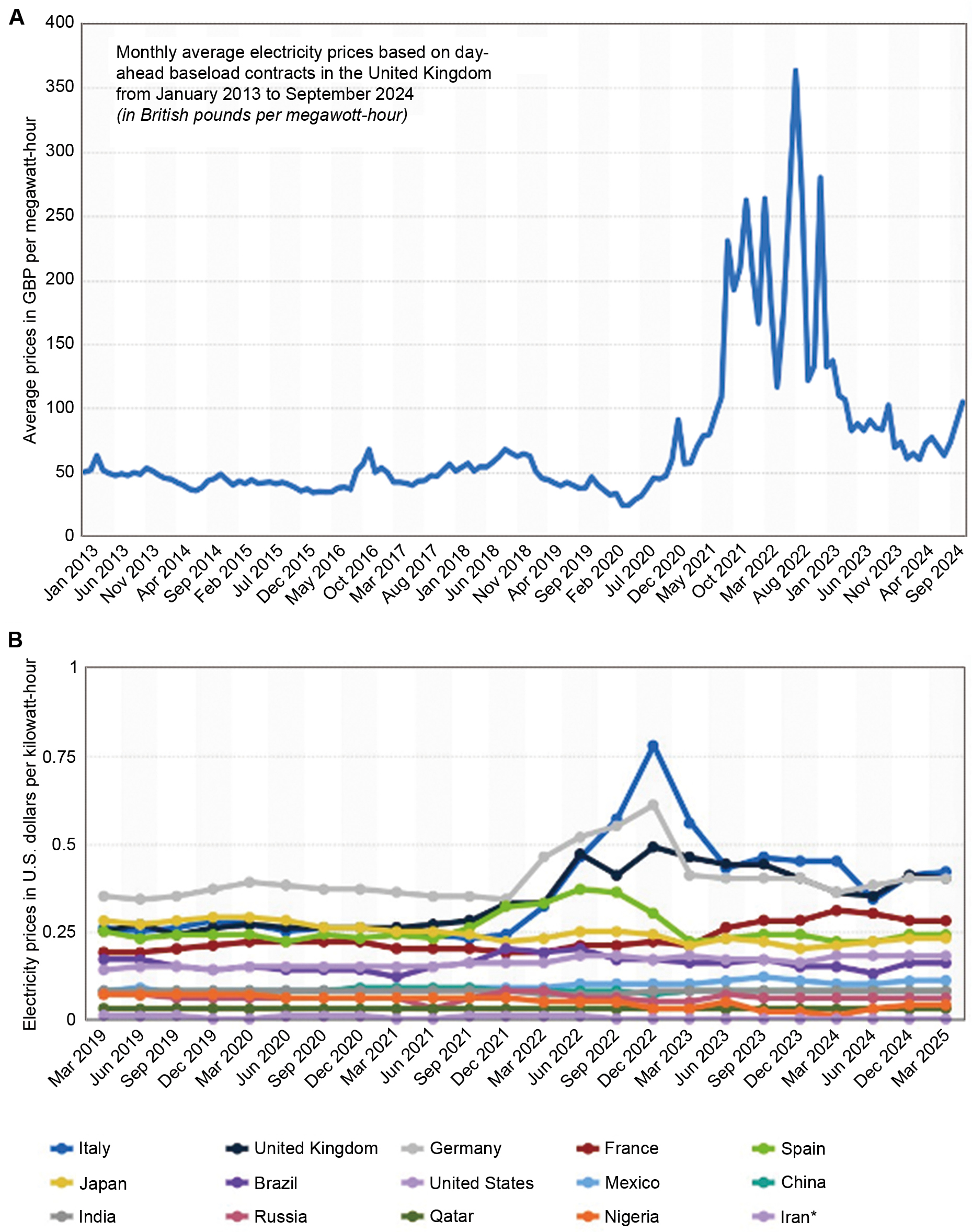
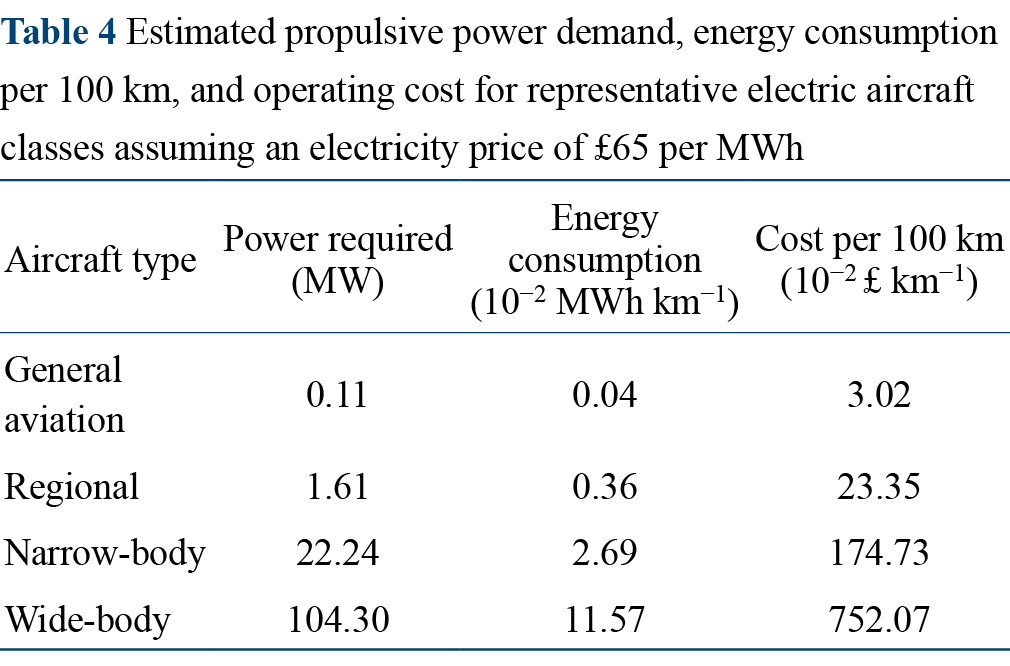
Figure 6 illustrates historical and regional variations in electricity pricing relevant to electric aviation. Figure 6A shows average monthly wholesale electricity prices in the United Kingdom (UK) from January 2013 to September 2024 [56], highlighting periods of pronounced volatility. Figure 6B compares household electricity prices worldwide between March 2019 and March 2025 [57], demonstrating substantial regional disparities that directly influence the economic viability of electric aircraft operations. The energy consumption rate, derived from Equation (1), provides a direct analog to conventional fuel burn and enables quantitative cost comparisons between electricity-powered and jet-fuel-powered aircraft over equivalent flight distances. Table 4 summarizes the estimated propulsive power demand, energy consumption per 100 km, and corresponding operating cost for representative aircraft classes, assuming a nominal electricity price of £65 per MWh.
The results indicate that smaller aircraft achieve the greatest operational cost advantage due to their lower power requirements and shorter mission profiles. In contrast, wide-body aircraft remain costly to operate on a per-distance basis despite high propulsive efficiency, primarily because of their large mass and high cruise speeds.
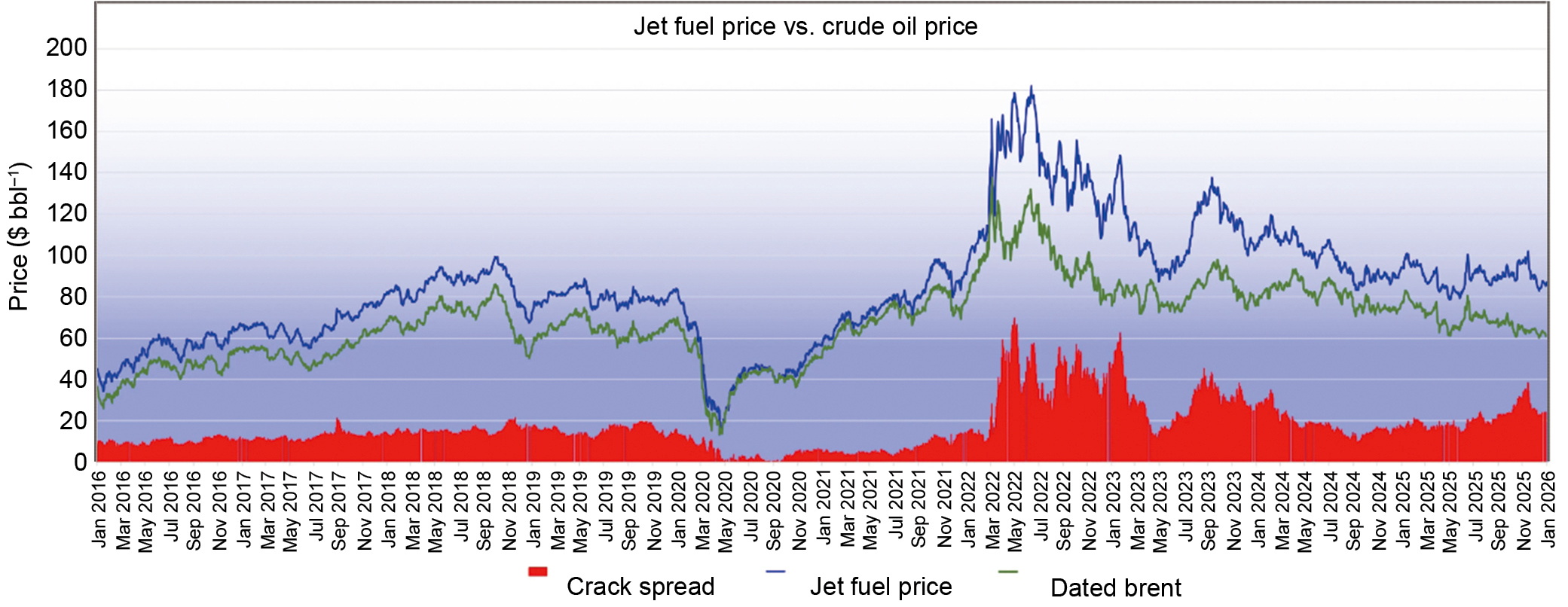
To contextualize these findings, Figure 7 presents global jet-fuel prices from January 2016 to January 2025 [58], which exceeded $100 per barrel during several periods. Given jet fuel's energy density of approximately 9.6 kWh L−1, this corresponds to an effective energy cost of roughly £52 per MWh at current exchange rates [48]. Although jet fuel appears less expensive on a per-unit-energy basis, the approximately 2.5-fold higher efficiency of electric propulsion systems results in lower total energy costs over equivalent flight distances. As renewable-energy penetration increases and electricity prices stabilize, electric propulsion is expected to achieve further cost reductions, enhancing the long-term economic competitiveness of electric aircraft relative to conventional aviation [59].
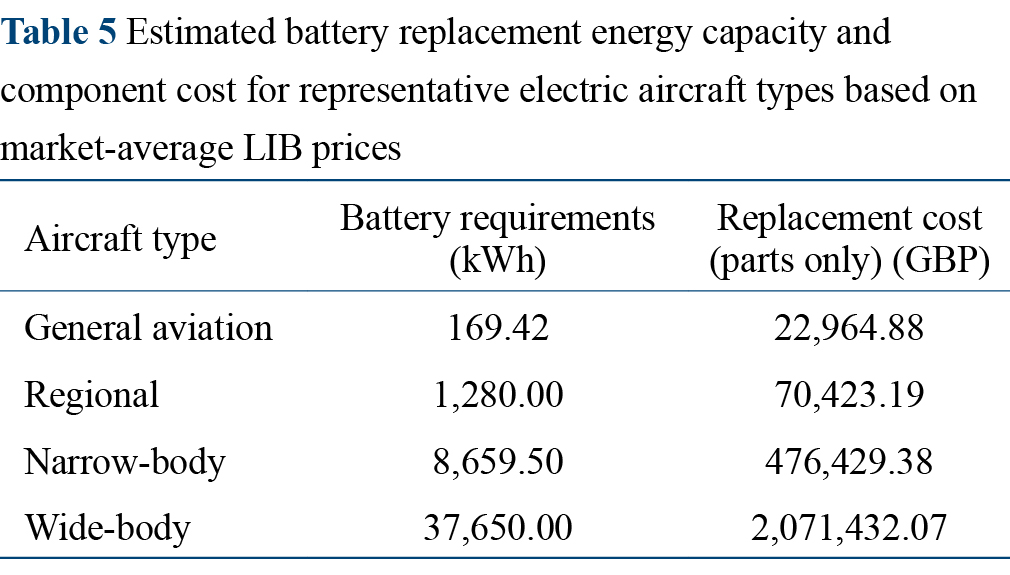
Maintenance represents a significant component of airline operating expenditure, particularly for high-utilization fleets. In electric aircraft, maintenance costs are dominated by battery replacement and electrical system upkeep rather than traditional engine overhauls. The replacement frequency of LIBs depends on several factors, including operating temperature, depth of discharge (DoD), and charge–discharge cycle frequency [41]. Assuming an end-of-life threshold corresponding to 80% state of health (SOH), the Panasonic NCR18650 Li-ion cells discussed earlier exhibit a capacity retention of approximately 1,500 charge cycles. Depending on the mission profile, this cycle life may correspond to less than two years of intensive regional aircraft operation (up to eight cycles per day), whereas lighter daily cycling conditions may extend battery service life to approximately four years [40, 60]. The estimated battery replacement energy capacities and associated component costs for representative electric aircraft types are summarized in Table 5, based on market-average LIB prices.
Battery degradation has a direct impact on the long-term economic sustainability of electric aviation [61, 62]. Aircraft with higher energy demands require proportionally larger battery systems that experience higher cumulative cycling, leading to increased replacement costs over the operational lifetime. Although labor, inspection, and certification costs remain non-negligible, these expenses are partially offset by the absence of fuel delivery systems, turbine overhauls, lubrication systems, and exhaust-related maintenance typically associated with conventional propulsion systems.
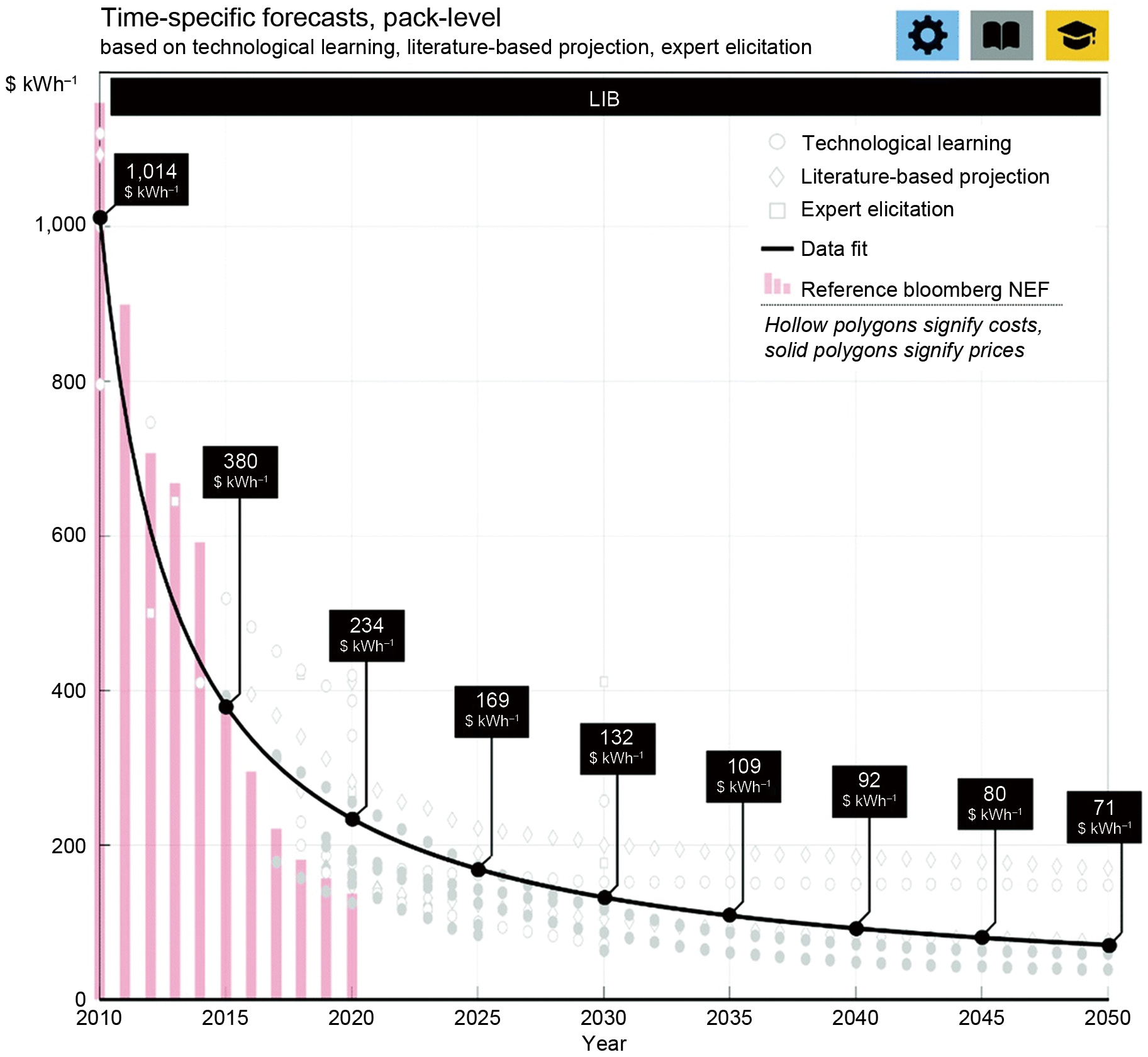
Figure 8 illustrates projected trends in LIB production costs over time [63]. Continuous reductions in manufacturing cost, coupled with improvements in specific energy, cycle life, and charging efficiency, are expected to reduce long-term maintenance burdens. Consequently, while early-generation electric aircraft may incur higher upfront battery replacement costs, continued technological maturation is anticipated to improve life-cycle economics, gradually narrowing the total cost-of-ownership gap between electric and conventional aviation systems [59].
The electrification of aircraft aims primarily to reduce aviation's carbon footprint by eliminating direct in-flight emissions [64]. However, achieving genuine environmental sustainability requires a comprehensive life-cycle perspective that accounts for emissions and resource consumption associated with battery production, electricity generation, and end-of-life management [65, 66]. This section evaluates the environmental impacts across each stage of the life cycle to assess whether electric aviation meaningfully advances global carbon-neutral objectives.
The production of LIBs, which form the foundation of electric aircraft propulsion, involves extensive extraction and processing of critical raw materials, including copper, cobalt, nickel, lithium, and rare-earth elements. According to the International Energy Agency (IEA), electric vehicles already require up to six times more mineral inputs than internal-combustion counterparts [67], and this demand increases further for electric aircraft due to their substantially higher energy requirements.
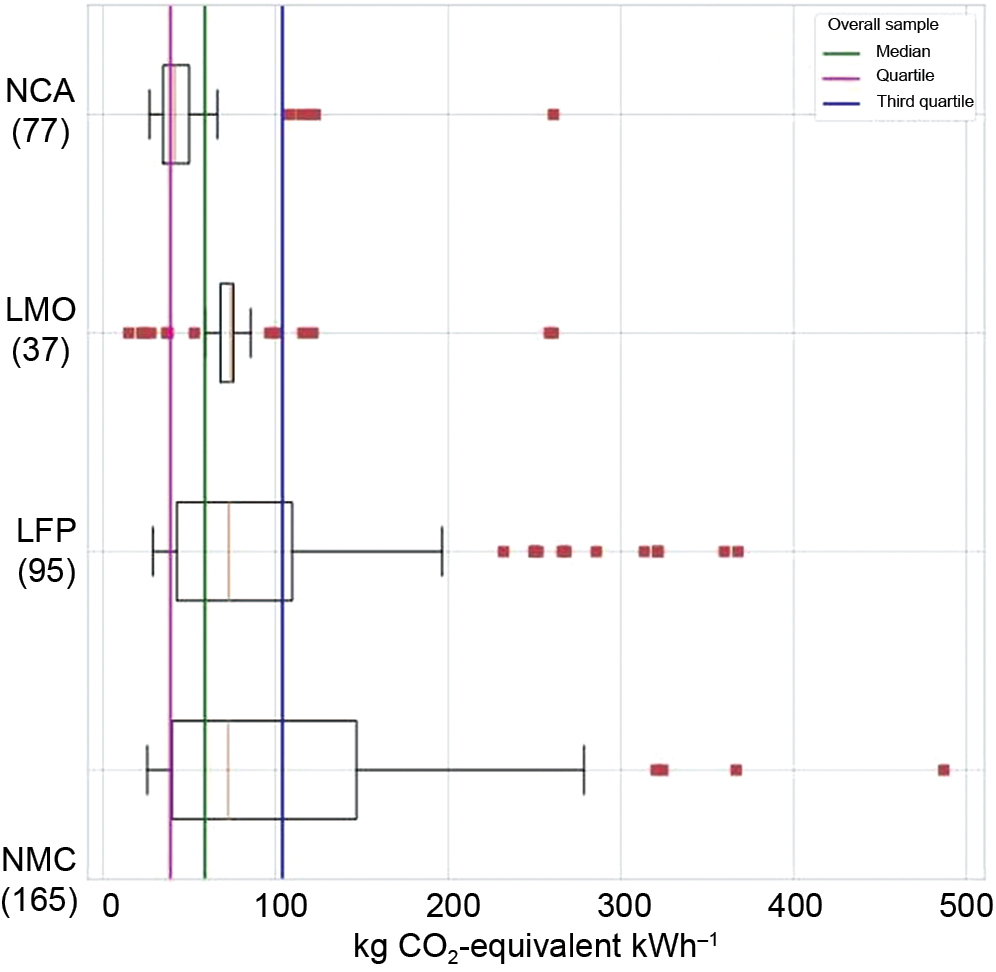
Figure 9 presents the carbon emissions associated with the production of different LIB chemistries [68]. Reported values vary among studies owing to differences in system boundaries, data sources, and assumed manufacturing pathways. In the dataset shown, nickel–cobalt–aluminum (NCA) batteries exhibit the lowest life-cycle emissions, typically below 50 kg CO2 per kWh, followed by nickel–manganese–cobalt (NMC), lithium–iron–phosphate (LFP), and lithium–manganese–oxide (LMO) systems. However, recent life-cycle assessment studies indicate that LFP batteries can achieve the lowest carbon footprint due to their reliance on more abundant elements such as iron and phosphorus [69].
For context, the emission of one tonne of CO2 corresponds to approximately 6,000 km of travel in a modern diesel vehicle. Given the finite lifespan of battery systems and their periodic replacement, these embodied emissions accumulate over an aircraft's operational lifetime, partially offsetting the benefits of zero-emission flight. Over the long term, however, large-scale recycling of LIBs has the potential to significantly reduce this footprint. Recycled cathode materials require substantially less energy and emit considerably less CO2 than newly manufactured materials, suggesting that future closed-loop supply chains could mitigate cumulative emissions associated with repeated battery replacement.
Although electric aircraft eliminate direct combustion emissions during operation, their indirect environmental impact depends strongly on the carbon intensity of the electricity used for charging [70]. In 2022, approximately 44% of the UK's electricity was generated from renewable sources, compared with only 2% in 1990, while the remaining share originated from fossil fuels (primarily natural gas) and nuclear power.
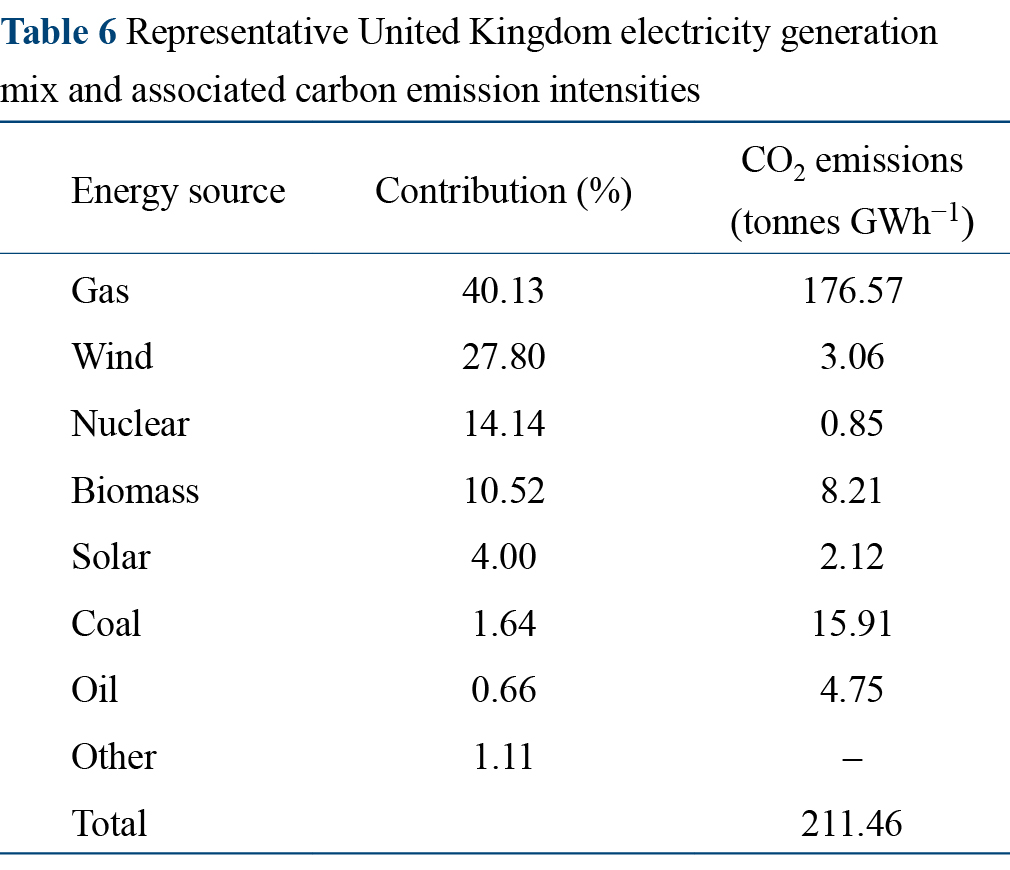
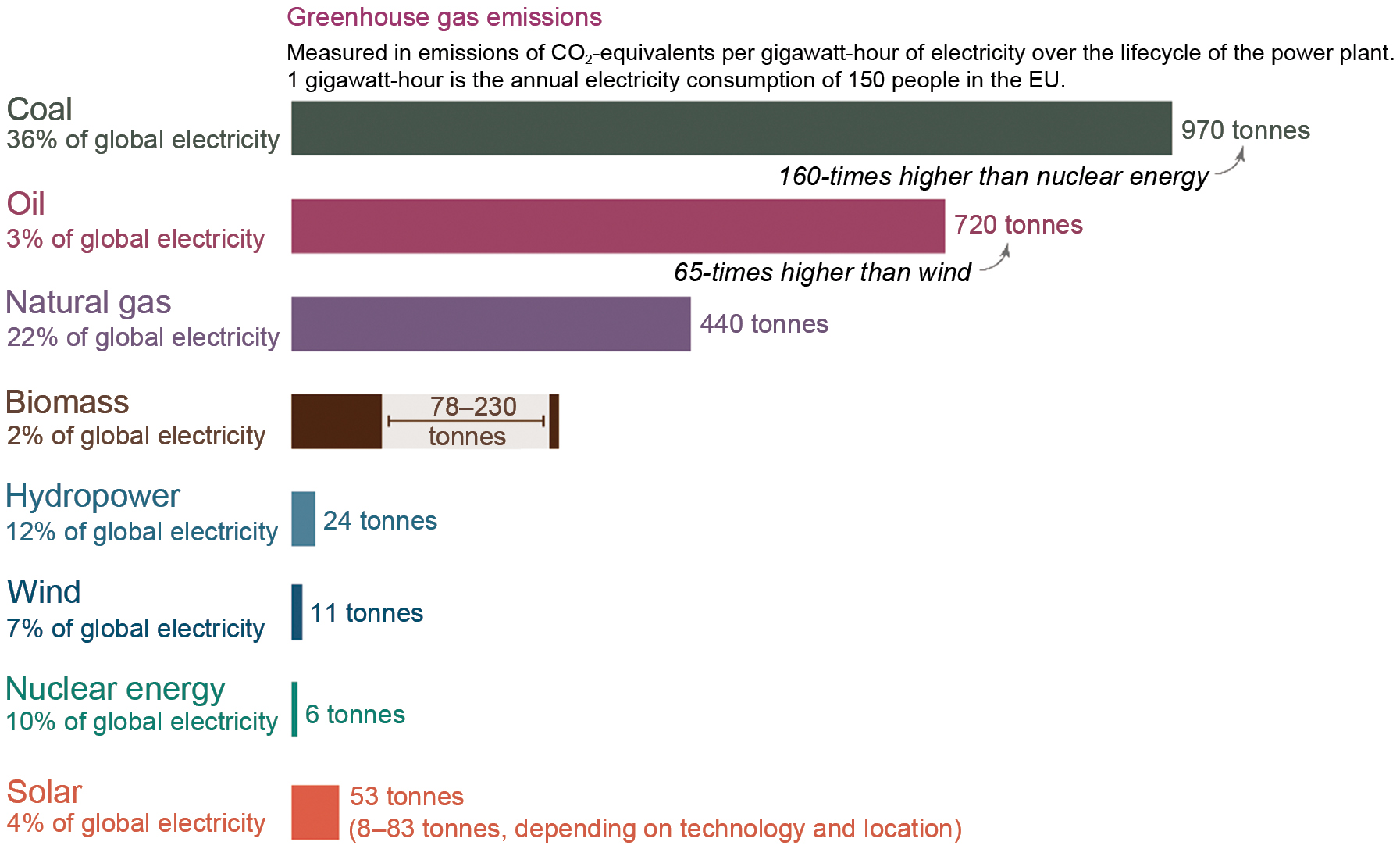
Table 6 summarizes a representative UK electricity generation mix and the associated CO2 emission intensities for different energy sources. Renewable sources such as wind and solar exhibit emission factors below 5 tonnes GWh−1, whereas fossil-fuel-based generation dominates the remaining carbon footprint.
Figure 10 illustrates the weighted-average carbon intensity of electricity production in the European Union (EU), which is approximately 211 tonnes GWh−1 [71]. While this value is substantially lower than emissions from direct kerosene combustion, it remains dependent on continued decarbonization of the power grid. If electric aircraft were charged exclusively from such a grid, their indirect emissions would reflect this weighted mix. A transition toward predominantly renewable electricity could reduce the operational carbon footprint of electric aviation by more than 80%, highlighting the critical role of clean-energy policy in enabling sustainable electric flight [72].
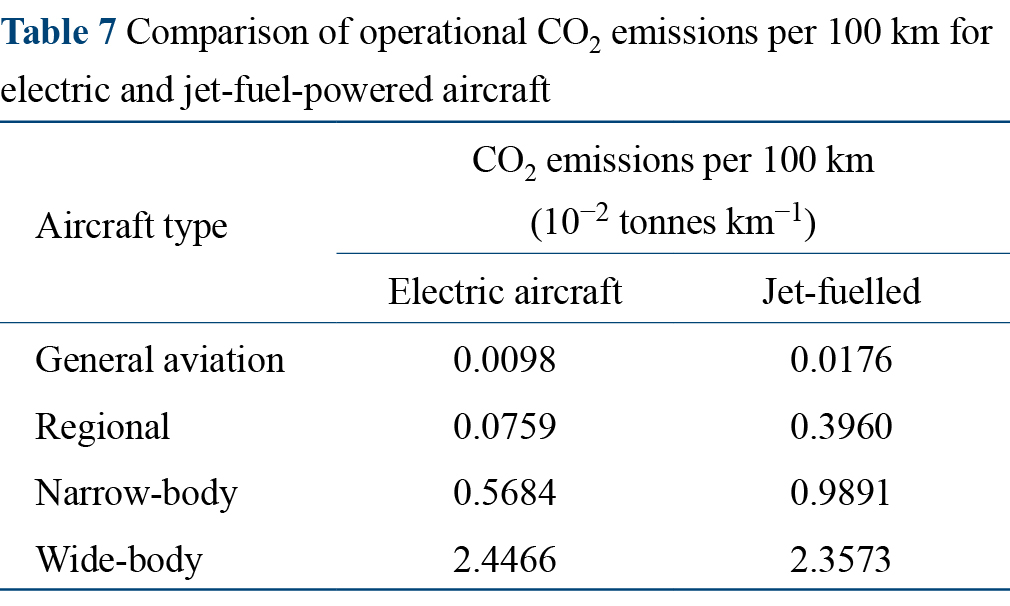
To quantify the operational environmental benefits of electric aviation, Table 7 compares CO2 emissions per 100 km for representative aircraft classes powered by batteries and conventional jet fuel.
The results demonstrate that electric propulsion provides clear emissions reductions for small and regional aircraft. However, for wide-body aircraft, the environmental advantage diminishes due to large energy demands, battery mass penalties, and reliance on fossil-based electricity generation. While battery-electric propulsion can reduce emissions by 60%–80% for light aircraft, continued improvements in battery energy density, structural weight reduction, and renewable-energy integration are essential to extend these benefits to larger commercial platforms.
Achieving sustainable electric aviation also requires responsible end-of-life management of high-capacity battery systems [73, 74]. Improper disposal of LIBs poses risks of toxic metal leaching into soil and groundwater, whereas recycling mitigates these impacts by recovering valuable materials such as lithium, cobalt, and nickel. Current industrial recycling approaches, including pyrometallurgical and hydrometallurgical processes, enable partial material recovery but remain energy-intensive and costly [75, 76]. Emerging direct-recycling techniques, which preserve cathode structure and reduce energy consumption, offer a promising pathway toward low-impact circular battery economies [77]. The integration of such closed-loop recycling strategies will be critical for minimizing life-cycle emissions and ensuring that electric aviation aligns with broader global sustainability objectives.
Safety remains the cornerstone of the civil aviation industry and a prerequisite for public acceptance of any emerging transportation technology. Modern air transport is among the safest modes of travel, with an average fatality rate of approximately 0.13 per million departures [78]. Statistically, an individual would need to fly daily for more than 22,000 years to experience a fatal accident. These stringent safety standards have underpinned the industry's sustained growth and continual improvement [79].
The transition to electric propulsion introduces new safety considerations, particularly related to the performance, reliability, and failure modes of LIBs. This section examines battery-related safety risks, outlines the relevant regulatory framework, and discusses mitigation strategies necessary to ensure compliance with civil aviation safety requirements.
The U.S. Federal Aviation Administration (FAA) has documented 476 onboard incidents involving LIBs since 2006, including six reported cases in 2024 alone [80]. While the majority of these incidents involved consumer electronic devices and had limited operational consequences, a comparable failure in an aircraft's primary energy storage system could be catastrophic.
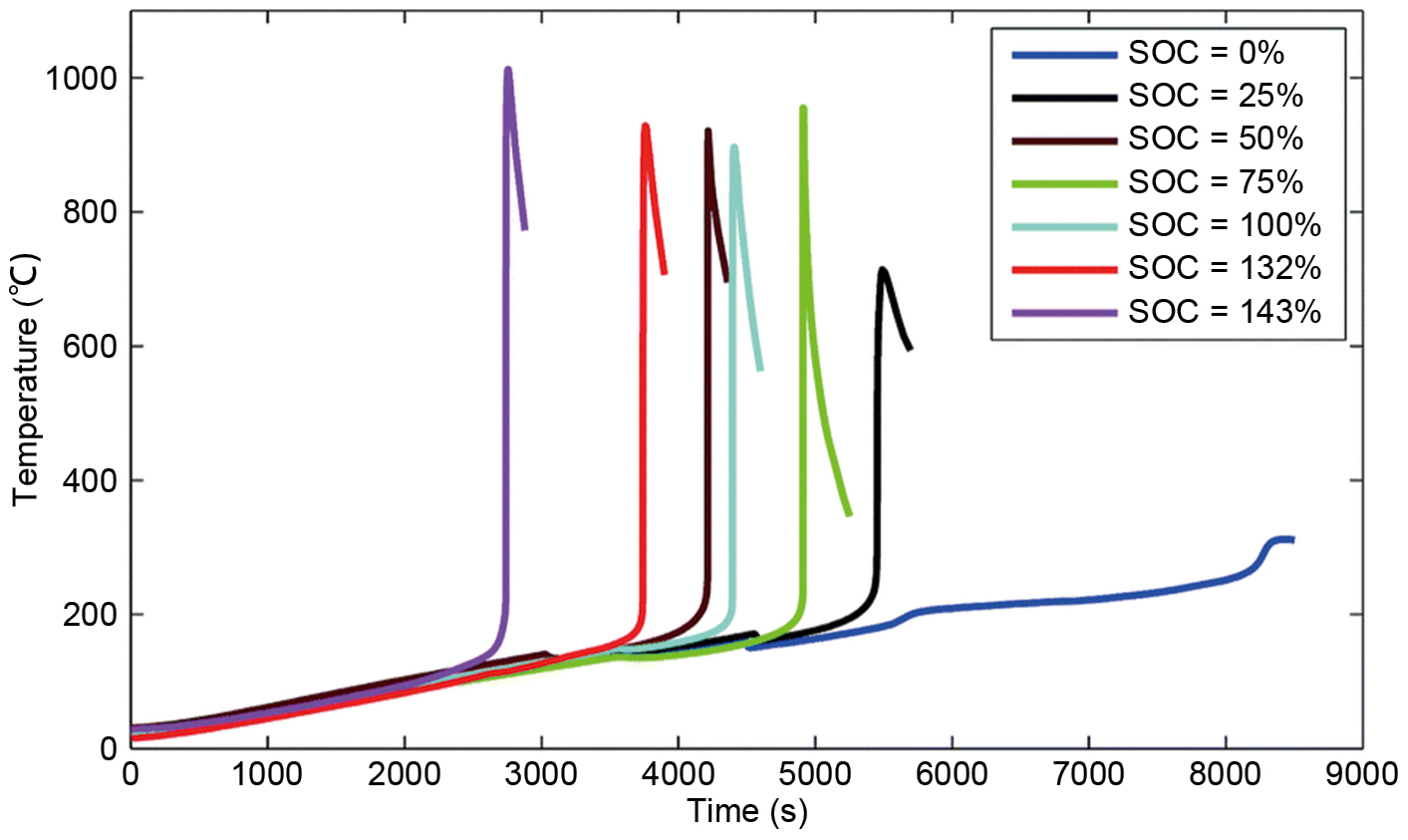
The most critical hazard associated with LIBs is thermal runaway, a self-accelerating sequence of exothermic reactions that rapidly elevates cell temperature and internal pressure [81, 82]. Laboratory thermal-ramp tests conducted on commercial 18650 NCA-type cells have demonstrated temperature excursions exceeding 1,000°C within seconds once runaway is initiated [83]. The onset temperature is strongly dependent on the state of charge (SOC), with higher SOC levels presenting increased risk. Overcharging and internal short circuits further reduce the threshold for runaway initiation. Importantly, a significant proportion of reported battery fires occur during charging to full SOC. Although this process typically takes place on the ground, it has direct implications for aviation safety, as charging infrastructure, operational protocols, and pre-flight inspection procedures must effectively mitigate risks before batteries are installed and operated onboard.
Figure 11 illustrates the rapid thermal escalation characteristic of LIB thermal runaway, emphasizing the necessity of effective monitoring and thermal management systems. These hazards are amplified in aviation-scale battery packs containing thousands of interconnected cells, where a localized failure may propagate rapidly if not adequately isolated [84]. Consequently, aircraft battery systems require robust containment, controlled venting, and continuous monitoring to prevent escalation under fault conditions.
To ensure airworthiness, aviation authorities such as the FAA and the European Union Aviation Safety Agency (EASA) have established dedicated certification standards for rechargeable battery systems used in aircraft [85]. A key reference document is RTCA DO-311A, introduced in 2017, which defines qualification procedures for assessing thermal stability, fault tolerance, and containment performance under abusive operating conditions [86].
Compliance with these standards ensures that battery systems meet the stringent reliability requirements of flight-critical components, where acceptable failure probabilities are typically below 10⁻⁹ per flight hour [87]. The certification framework extends beyond individual cells to encompass pack architecture, enclosure design, venting strategies, and fault-isolation mechanisms, forming a multi-layered safety assurance approach consistent with broader aerospace certification practices.
A robust battery management system (BMS) is essential for preventing and mitigating battery failure scenarios. The BMS continuously monitors critical parameters such as voltage, temperature, current, and SOC, ensuring that cells operate within predefined safety limits [88]. Compared with automotive systems, aviation-grade BMS designs require substantially higher levels of redundancy, fault detection, and thermal awareness due to more demanding reliability and environmental constraints [89, 90].
An effective BMS can prevent overcharging, balance cell voltages, detect abnormal behavior, and initiate rapid electrical isolation during fault conditions, thereby limiting the propagation of thermal runaway. However, these protective measures introduce additional mass and system complexity, which can marginally reduce overall aircraft efficiency. Optimizing the balance between safety redundancy and energy performance, therefore, remains an active area of research in electric aviation.
Achieving safety parity with conventional aircraft propulsion systems requires extensive qualification testing, including exposure to vibration, altitude, temperature extremes, and abuse conditions. Although LIB technology has matured significantly, aviation-grade reliability demands continued advances in battery chemistry, thermal architecture, and predictive diagnostics. The development of solid-state batteries, which eliminate flammable liquid electrolytes, offers a promising pathway toward inherently safer energy storage.
In parallel, real-time health-monitoring systems employing machine-learning algorithms to predict degradation and detect early-stage failures could provide an additional preventive safety layer. The aviation sector's stringent certification culture, combined with rapid progress in materials science and data-driven monitoring technologies, indicates that electric aircraft can ultimately achieve and potentially surpass the safety performance of conventional jet-powered systems.
This study critically examined the feasibility, limitations, and future potential of integrating advanced battery technologies into electric aircraft propulsion systems. Electric aviation represents a transformative pathway toward achieving the aviation industry's net-zero emission targets by 2050 [91], yet its realization is constrained by interdependent technological, economic, environmental, and safety factors.
The analysis demonstrates that battery-electric aircraft are already viable for short-haul and regional operations, where current LIB technologies can meet range and power requirements with favorable operational efficiency. In contrast, wide-body commercial aircraft remain fundamentally constrained, as present-day gravimetric energy densities support only a limited fraction of conventional mission profiles. Substantial improvements in specific energy, power-to-weight ratio, and thermal stability are therefore essential for scaling electric propulsion to larger aircraft classes.
From an economic perspective, small and regional electric aircraft exhibit clear advantages, achieving lower operational and maintenance costs due to high drivetrain efficiency, simplified mechanical systems, and reduced fuel dependence. However, these cost benefits diminish with increasing aircraft size, where escalating energy-storage demands drive higher system mass, replacement frequency, and capital expenditure.
Environmentally, electric aircraft eliminate direct in-flight emissions, but their life-cycle sustainability depends strongly on electricity-generation carbon intensity and battery manufacturing pathways. Continued decarbonization of power grids, combined with sustainable mineral sourcing and high-efficiency battery recycling, is critical for ensuring that electrified aviation delivers genuine climate benefits.
Safety remains a decisive challenge. Risks associated with thermal runaway, overcharging, and battery degradation necessitate robust battery management systems, advanced cell chemistries, and harmonized certification frameworks. As battery technologies and diagnostic capabilities mature, the safety and reliability of electric propulsion systems are expected to align with the aviation industry's exceptionally stringent standards.
Overall, while significant technological and infrastructural barriers persist, sustained innovation in materials science, propulsion integration, and renewable-energy deployment positions electric aviation as both a viable and necessary component of future sustainable air transport. Continued interdisciplinary research, industrial investment, and regulatory cooperation will be essential to translate this potential into widespread operational reality.
Advancing electric aviation from experimental demonstrations to large-scale commercial deployment will require coordinated progress across technology development, infrastructure integration, life-cycle sustainability, and regulatory harmonization. The coming decade is likely to be decisive in shaping the trajectory of electrified flight. Based on the limitations and opportunities identified in this review, several priority research directions emerge:
Hybrid-electric propulsion architectures. Hybrid-electric systems that integrate turbine generators with high-energy battery packs offer a practical intermediate pathway toward full electrification. Future efforts should focus on optimizing hybridization ratios, certifiable energy-management strategies, and lightweight integrated generators capable of meeting the power demands of regional and narrow-body aircraft. Such architectures enable an extended range while delivering immediate emissions reductions.
Advanced battery chemistry and pack design. Commercially meaningful electric aviation will require pack-level specific energies of ~400–600 Wh kg−1 for regional aircraft and ~700–1,000 Wh kg−1 for narrow-body platforms. Promising approaches include hybrid battery architectures that combine high-energy chemistries (e.g., Li-metal, Li–S, and solid-state systems) with high-power LIBs to meet take-off and climb requirements. Parallel advances in thermal management are essential to maintain safety without imposing excessive mass penalties. Structural battery concepts offer additional weight savings but introduce challenges related to repairability, certification, and end-of-life replacement.
Safety protocols and predictive monitoring. Future electric aircraft must incorporate advanced battery health diagnostics and predictive monitoring, including physics-informed artificial intelligence capable of identifying early failure signatures. Given that many battery fire events occur at high SOC during charging, research into safer charging protocols, thermal-runaway suppression materials, and high-integrity containment architectures will be critical for aviation certification.
System-level aircraft optimization. Electric aircraft design must adopt a system-of-systems approach, accounting for interactions between battery placement, aerodynamics, DEP, and structural integration. High-fidelity digital twins, multi-physics simulation, and propulsion–airframe co-design tools will play a central role in developing efficient, certifiable aircraft configurations.
Grid integration and renewable-energy coupling. The climate benefits of electric aviation are inseparable from access to low-carbon electricity. Future studies should examine airport-scale microgrids, renewable-energy coupling, megawatt-class fast-charging infrastructure, and second-life applications for aviation batteries. Techno-economic analyses must assess charging turnaround times, peak power demand, and impacts on airport energy systems.
Battery recycling and low-carbon manufacturing. Long-term sustainability requires closed-loop battery supply chains. Recycling of lithium, nickel, and cobalt can reduce upstream emissions by 40%–70%, substantially improving life-cycle performance. Future work should develop aviation-specific recycling pathways, low-carbon cathode manufacturing processes, and strategies for integrating recycled materials into certified aircraft batteries.
Standardization and regulatory harmonization. Electric propulsion introduces novel certification challenges related to battery behavior, thermal events, redundancy, and electromagnetic compatibility. Harmonized standards across FAA, EASA, and International Civil Aviation Organization (ICAO) addressing battery design, pack-level safety testing, charging protocols, and DEP-specific airworthiness requirements will be essential for global deployment.
Socio-economic and policy integration. The adoption of electric aviation will ultimately depend on airline economics, public acceptance, and supportive policy frameworks. Future research should evaluate operational models (e.g., commuter aircraft and electric vertical take-off and landing (eVTOL) services), workforce transitions, regional connectivity benefits, and long-term battery cost trajectories. Policy incentives and regulatory clarity will strongly influence adoption timelines.
In summary, the future of electric aviation lies at the convergence of materials science, aerospace engineering, and energy policy. Although the path forward remains technologically demanding, continued progress in high-energy batteries, efficient propulsion architectures, and renewable electricity generation positions electric aviation as a cornerstone of next-generation sustainable air transport.
Santosh Behara: Investigation; data curation; writing & editing. Lewis Jones: Data curation & writing. M. Anji Reddy: Conceptualization; review & editing.
The data that support the findings of this study are available from the corresponding author upon reasonable request.
Additional supporting information can be found online in the Supporting Information section.
A. J. Gabric, "The Climate Change Crisis: A Review of Its Causes and Possible Responses," Atmosphere 14, no. 7 (2023): 1081, https://doi.org/10.3390/atmos14071081.
F. W. M. H. Wong, D. Al Kez, D. F. Del Rio, A. Foley, D. Rooney, and M. Abai, "Decarbonizing and Offsetting Emissions in the Airline Industry: Current Perspectives and Strategies," Energy 313 (2024): 133809, https://doi.org/10.1016/j.energy.2024.133809.
S. Becken and F. Carmignani, "Are the Current Expectations for Growing Air Travel Demand Realistic?" Annals of Tourism Research 80 (2020): 102840, https://doi.org/10.1016/j.annals.2019.102840.
B. Wang, Z. J. Ting, and M. Zhao, "Sustainable Aviation Fuels: Key Opportunities and Challenges in Lowering Carbon Emissions for Aviation Industry," Carbon Capture Science & Technology 13 (2024): 100263, https://doi.org/10.1016/j.ccst.2024.100263.
M. Yuan, J. Z. Thellufsen, H. Lund, and Y. Liang, "The Electrification of Transportation in Energy Transition," Energy 236 (2021): 121564, https://doi.org/10.1016/j.energy.2021.121564.
U. Fesli and M. B. Ozdemir, "Electric Vehicles: A Comprehensive Review of Technologies, Integration, Adoption, and Optimization," IEEE Access 12 (2024): 140908–140931, https://doi.org/10.1109/ACCESS.2024.3469054.
T. Muhith, S. Behara, and M. A. Reddy, "An Investigation Into the Viability of Battery Technologies for Electric Buses in the UK," Batteries 10, no. 3 (2024): 91, https://doi.org/10.3390/batteries10030091.
V. Viswanathan, A. H. Epstein, Y. M. Chiang, et al., "The Challenges and Opportunities of Battery-Powered Flight," Nature 601, no. 7894 (2022): 519–525, https://doi.org/10.1038/s41586-021-04139-1.
S. Singh, "Eviation Moves Closer to Flying Its All-Electric Alice Aircraft," Simple Flying, accessed October 20, 2025, https://simpleflying.com/eviation-closer-alice/.
J. Kuhr, "NASA Axes Its X-57 Maxwell Electric Aircraft," Payload, accessed October 20, 2025, https://payloadspace.com/nasa-axes-its-x-57-maxwell-electric-aircraft/.
F. Holland, "Beta Hopes Its Electric Vertical Aircraft Deal With UPS Validates This New Mode of Transport," CNBC, accessed October 20, 2025, https://www.cnbc.com/2021/04/07/beta-hopes-evtol-aircraft-deal-with-ups-validates-new-transport-mode.html.
A. Schwab, A. Thomas, J. Bennett, E. Robertson, and S. Cary, Electrification of Aircraft: Challenges, Barriers, and Potential Impacts, National Renewable Energy Laboratory (NREL) Technical Report, 2021, https://doi.org/10.2172/1827628.
K. Schmidt-Rohr, "How Batteries Store and Release Energy: Explaining Basic Electrochemistry," Journal of Chemical Education 95, no. 10 (2018): 1801–1810, https://doi.org/10.1021/acs.jchemed.8b00479.
R. Borah, F. R. Hughson, J. Johnston, and T. Nann, "On Battery Materials and Methods," Materials Today Advances 6 (2020): 100046, https://doi.org/10.1016/j.mtadv.2019.100046.
Y. Liu and S. Li, "Analysis for the Usage of Li-Ion Battery in Electric Aircraft," in Proceedings of 2022 International Conference on Manufacturing, Industrial Automation and Electronics (ICMIAE), 393–396, IEEE, 2022, https://doi.org/10.1109/ICMIAE57032.2022.00085.
T. Pattanayak and D. Mavris, "Battery Technology for Sustainable Aviation: A Review of Current Trends and Future Prospects," Applied Energy 397 (2025): 126356, https://doi.org/10.1016/j.apenergy.2025.126356.
N. Cooperman, "Electric Flight: A Closer Look at the Pipistrel Velis Electro," Simple Flying, accessed February 8, 2025, https://simpleflying.com/pipistrel-velis-electro-feature/.
B. Tiede, C. O’Meara, and R. Jansen, "Battery Key Performance Projections Based on Historical Trends and Chemistries," in Proceedings of 2022 IEEE Transportation Electrification Conference & Expo (ITEC), 754–759, IEEE, 2022, https://doi.org/10.1109/ITEC53557.2022.9814008.
S. Sripad, A. Bills, and V. Viswanathan, "A Review of Safety Considerations for Batteries in Aircraft With Electric Propulsion," MRS Bulletin 46, no. 5 (2021): 435–442, https://doi.org/10.1557/s43577-021-00097-1.
L. Yang, Y. Zhang, H. Chen, et al., "Thermal Runaway Prevention and Mitigation for Lithium-Ion Battery-Powered Electric Aircraft: Challenges and Perspectives," Aerospace Traffic and Safety 1, no. 2–4 (2024): 103–118, https://doi.org/10.1016/j.aets.2024.12.005.
J. Hemmerdinger, "Eviation Alice Prototype Damaged by Electric Fire in Arizona," FlightGlobal, accessed February 6, 2025, https://www.flightglobal.com/eviation-alice-prototype-damaged-by-electric-fire-in-arizona/136327.article.
M. A. Rosen and A. Farsi, "Battery System Design," in Proceedings of Battery Technology, 161–198, Elsevier, 2023, https://doi.org/10.1016/B978-0-443-18862-6.00006-9.
J. Sun, S. Yang, and X. Zhang, "Design of Civil Aircraft Lithium Battery Management System and Study of Common Failure Countermeasures," in Proceedings of 2022 2nd International Conference on Electrical Engineering and Control Science (IC2ECS), 965–969, IEEE, 2022, https://doi.org/10.1109/IC2ECS57645.2022.10088030.
M. H. Khan, V. Tucci, P. Lamberti, R. Longo, and L. Guadagno, "Lithium-Based Batteries in Aircraft," in Engineering Proceedings 25 (2025): 39, https://doi.org/10.3390/engproc2025090039.
W. Ni, "Perspectives on Advanced Lithium–Sulfur Batteries for Electric Vehicles and Grid-Scale Energy Storage," Nanomaterials 14, no. 12 (2024): 990, https://doi.org/10.3390/nano14120990.
N. Tapia-Ruiz, S. W. T. Price, R. J. Clément, et al., "2021 Roadmap for Sodium-Ion Batteries," Journal of Physics: Energy 3, no. 3 (2021): 031503, https://doi.org/10.1088/2515-7655/ac01ef.
M. Kane, "This Electric Aircraft Features a 900-kWh Battery, 650-Mile Range," InsideEVs, accessed February 8, 2025, https://insideevs.com/news/336485/this-electric-aircraft-features-a-900-kwh-battery-650-mile-range/.
N. K. Borer, "Flight Performance Estimates for the NASA X-57 Distributed Electric Propulsion Flight Demonstrator," paper presented at the 34th Congress of the International Council of the Aeronautical Sciences, Florence, Italy, September 9–13, 2024, https://ntrs.nasa.gov/citations/20240010807.
Radu, "Electric Planes: Ushering in a New Era of Sustainable Aviation," The Flying Engineer, accessed February 8, 2025, https://theflyingengineer.com/electric-planes/.
W. Xu, J. Wang, F. Ding, et al., "Lithium Metal Anodes for Rechargeable Batteries," Energy & Environmental Science 7, no. 2 (2014): 513–537, https://doi.org/10.1039/C3EE40795K.
G. Warwick, "Safran, Cuberg Team on Lithium-Metal Batteries for Electric Aviation," Aviation Week Network, accessed February 7, 2025, https://aviationweek.com/aerospace/advanced-air-mobility/safran-cuberg-team-lithium-metal-batteries-electric-aviation.
P. Lienert, "QuantumScape's Solid-State Battery Could Power Electric Planes," Reuters, accessed February 7, 2025, https://www.reuters.com/article/business/quantumscapes-solid-state-battery-could-power-electric-planes-director-idUSKBN28I2Y0/.
B. Garrett-Glaser, "Oxis Energy and Texas Aircraft to Build eColt With Lithium–Sulfur Batteries," Avionics International, accessed February 8, 2025, https://www.aviationtoday.com/2020/07/23/oxis-energy-texas-aircraft-build-ecolt-lithium-sulfur-batteries/.
B. Bell, "Making Better Batteries a Reality: A Battery You Can Charge Hundreds of Thousands of Times," University of California News, accessed February 8, 2025, https://www.universityofcalifornia.edu/news/making-better-batteries-reality-battery-you-can-charge-hundreds-thousands-times.
K. McAlpine, "Electric Aviation: Batteries That Stay Strong for the Flight Duration," University of Michigan News, accessed February 8, 2025, https://news.umich.edu/electric-aviation-batteries-that-stay-strong-for-the-flight-duration/.
T. Duque, "Battery Breakthrough Gives Boost to Electric Flight and Long-Range Electric Cars," UC Berkeley College of Chemistry News, accessed February 8, 2025, https://chemistry.berkeley.edu/news/battery-breakthrough-gives-boost-electric-flight-and-long-range-electric-cars.
R. E. Wolleswinkel, R. de Vries, M. Hoogreef, and R. Vos, "A New Perspective on Battery-Electric Aviation, Part I: Reassessment of Achievable Range," in Proceedings of AIAA SciTech 2024 Forum, 1489, AIAA, 2024, https://doi.org/10.2514/6.2024-1489.
CES Granta, EduPack: Teaching Resources for Materials and Process Education (Granta Design Ltd., 2007).
Batemo Cell Model, "Panasonic NCR18650-BD Model," accessed October 21, 2025, https://www.batemo.cn/products/batemo-cell-explorer/panasonic-ncr18650-bd/.
B. T. Schneidegger, "Performance Characterization of High Energy Commercial Lithium-Ion Cells," NASA Technical Memorandum NASA/TM-2010-216926, Report no. E-17502, 2010. https://ntrs.nasa.gov/citations/20110003627.
J. Mukhopadhaya and B. Graver. 2022. Performance Analysis of Regional Electric Aircraft, ICCT White Paper, International Council on Clean Transportation.
T. Bærheim, J. J. Lamb, J. K. Nøland, and O. S. Burheim, "Potential and Limitations of Battery-Powered All-Electric Regional Flights—A Norwegian Case Study," IEEE Transactions on Transportation Electrification 9, no. 1 (2023): 1809–1825, https://doi.org/10.1109/TTE.2022.3200089.
A. Bills, S. Sripad, W. L. Fredericks, et al., "Performance Metrics Required of Next-Generation Batteries to Electrify Commercial Aircraft," ACS Energy Letters 5, no. 2 (2020): 663–668, https://doi.org/10.1021/acsenergylett.9b02574.
T. Hettesheimer, C. Neef, I. Inclán, et al., Lithium-Ion Battery Roadmap—Industrialization Perspectives Toward 2030, Fraunhofer ISI, 2023, https://doi.org/10.24406/publica-2153.
D. Wu and F. Wu, "Toward Better Batteries: Solid-State Battery Roadmap 2035+," eTransportation 16 (2023): 100224, https://doi.org/10.1016/j.etran.2022.100224.
S. Thompson, VTO Battery R&D Program—Prospects for Ultra-High Energy Density Batteries, U.S. Department of Energy, Vehicle Technologies Office, https://arpa-e.energy.gov/sites/default/files/2025-09/18%20VTO-Simon%20Thompson.pdf.
M. Holder, "Rolls-Royce Eyes First Battery Planes From 2025 as It Inks Private E-Jet Deal," Trellis, accessed October 21, 2025, https://trellis.net/article/rolls-royce-eyes-first-battery-planes-2025-it-inks-private-e-jet-deal/.
Jetpack Aviation, "The State of Battery Technology—Understanding the Future of Electric VTOL Aircraft," accessed February 8, 2025, https://sqtfkz3k.jetpackaviation.com/the-state-of-battery-technology/.
S. Mann, "X-57 Project Creates Paths Toward Electric Aviation," NASA, accessed February 8, 2025, https://www.nasa.gov/aeronautics/x-57-project-creates-paths-toward-electric-aviation-2/.
J. Zamboni, R. Vos, M. Emeneth, and A. Schneegans, "A Method for the Conceptual Design of Hybrid Electric Aircraft," in Proceedings of AIAA SciTech 2019 Forum, 1587, AIAA, 2019, https://doi.org/10.2514/6.2019-1587.
A. W. Schäfer, S. R. H. Barrett, D. G. Doyme, et al., "Technological, Economic and Environmental Prospects of All-Electric Aircraft," Nature Energy 4, no. 2 (2018): 160–166, https://doi.org/10.1038/s41560-018-0294-x.
H. Kong, "Market Viability of Electric Aircraft: Overcoming Challenges and Unlocking Potential," Research Archive of Rising Scholars, March 23, 2025, https://doi.org/10.58445/rars.2359.
G. Schuh, M. Spangenberg, Q. Zhang, B. Dannbeck, and J. Stuerken, "Economic Feasibility Study of a Hybrid-Electric 19-Passenger Commuter Aircraft," in Proceedings of the Deutscher Luft- und Raumfahrtkongress 2020, 1–9, Deutscher Gesellschaft für Luft-und Raumfahrt, 2021, https://doi.org/10.25967/530307.
A. I. Amhamed, A. H. A. Assaf, L. M. Le Page, and O. F. Alrebei, "Alternative Sustainable Aviation Fuel and Energy (SAFE): A Review With Selected Simulation Case Studies," Energy Reports 11 (2024): 3317–3344, https://doi.org/10.1016/j.egyr.2024.03.002.
D. Buvarp and J. Leijon, "Comparison of Energy Use, Efficiency and Carbon Emissions of an Electric Aircraft and an Internal Combustion Engine Aircraft," in Proceedings of AIAA Aviation Forum and ASCEND 2024, AIAA, 2024, https://doi.org/10.2514/6.2024-4183.
Statista Research Department, "Electricity Prices Over the Past 10 Years in the UK," Statista, accessed February 8, 2025, https://www.statista.com/statistics/589765/average-electricity-prices-uk/.
Statista Research Department, "Household Electricity Prices Worldwide From March 2019 to March 2025, by Select Country," Statista, accessed February 8, 2025. https://www.statista.com/statistics/1461537/household-electricity-price-worldwide-by-country/.
IATA and S&P Global Platts, "Jet Fuel Price Monitor," accessed February 8, 2025, https://www.iata.org/en/publications/economics/fuel-monitor/.
N. Avogadro and R. Redondi, "Demystifying Electric Aircraft's Role in Aviation Decarbonization: Are First-Generation Electric Aircraft Cost-Effective?" Transportation Research Part D 130 (2024): 104191, https://doi.org/10.1016/j.trd.2024.104191.
M. Y. Arafat, Characterization and Modelling of Second-Life 18650 Lithium-Ion Batteries (Master's thesis, University of Vaasa, 2024). https://osuva.uwasa.fi/server/api/core/bitstreams/0f026481-c9fb-47d2-91ee-24cacde3f0dd/content.
M. A. Clarke and J. J. Alonso, "Forecasting the Operational Lifetime of Electric Aircraft Through Battery Degradation Modeling," in Proceedings of AIAA SciTech 2022 Forum, 1996, AIAA, 2022, https://doi.org/10.2514/6.2022-1996.
S. W. Paek, S. Kim, and C. V. R. Rayappan, "Impact of Battery Degradation on Lifetime Ranges of Electric Aircraft and Unmanned Underwater Vehicles," in Proceedings of the 2019 IEEE Conference on Control Technology and Applications (CCTA), 79–85, IEEE, 2019, https://doi.org/10.1109/CCTA.2019.8920412.
L. Mauler, F. Duffner, W. G. Zeier, and J. Leker, "Battery Cost Forecasting: A Review of Methods and Results With an Outlook to 2050," Energy & Environmental Science 14, no. 9 (2021): 4712–4739, https://doi.org/10.1039/D1EE01530C.
M. J. Molina, F. Graffeo, S. Vaschetto, and A. Tenconi, "Application and Performance Trends of Electric Motors for Aircraft Propulsion," in Proceedings of the 2024 IEEE Transportation Electrification Conference and Expo (ITEC), 1–8, IEEE, 2024, https://doi.org/10.1109/ITEC60657.2024.10598961.
M. S. Koroma, J. Liu, A. F. Schlosser, et al., "Life Cycle Assessment of Battery Electric Vehicles: Implications of Future Electricity Mix and Different Battery End-of-Life Management," Science of the Total Environment 831 (2022): 154859, https://doi.org/10.1016/j.scitotenv.2022.154859.
H. Zhang, J. Wang, Y. Zhang, et al., "Life Cycle Environmental Impact Assessment for Battery-Powered Electric Vehicles at the Global and Regional Levels," Scientific Reports 13, no. 1 (2023): 7952, https://doi.org/10.1038/s41598-023-35150-3.
International Energy Agency (IEA), "The Role of Critical Minerals in Clean Energy Transitions: Executive Summary," accessed February 8, 2025, https://www.iea.org/reports/the-role-of-critical-minerals-in-clean-energy-transitions/executive-summary.
A. Bouter and X. Guichet, "The Greenhouse Gas Emissions of Automotive Lithium-Ion Batteries: A Statistical Review of Life Cycle Assessment Studies," Journal of Cleaner Production 344 (2022): 130994, https://doi.org/10.1016/j.jclepro.2022.130994.
E. Kallitsis, J. J. Lindsay, M. Chordia, et al., "Think Global, Act Local: The Dependency of Global Lithium-Ion Battery Emissions on Production Location and Material Sources," Journal of Cleaner Production 449 (2024): 141725, https://doi.org/10.1016/j.jclepro.2024.141725.
R. Shoukat and R. Redondi, "GHG Emissions Evaluation of Conventional, Electric, Hybrid, Biofuel, and Hydrogen Aircraft," Journal of the Air Transport Research Society 4 (2025): 100067, https://doi.org/10.1016/j.jatrs.2025.100067.
H. Ritchie, "What Are the Safest and Cleanest Sources of Energy?" Our World in Data, accessed February 8, 2025, https://ourworldindata.org/safest-sources-of-energy.
M. Lindberg and J. Leijon, "Electrifying Aviation: Innovations and Challenges in Airport Electrification for Sustainable Flight," Advances in Applied Energy 18 (2025): 100222, https://doi.org/10.1016/j.adapen.2025.100222.
D. Paul, S. Das, P. K. Chatterjee, et al., "Life Cycle Assessment of Lithium-Based Batteries: Review of Sustainability Dimensions," Renewable and Sustainable Energy Reviews 206 (2024): 114860, https://doi.org/10.1016/j.rser.2024.114860.
C. M. Richard, N. Tepylo, A. Sherwood, and J. Laliberte, "Life Cycle Analysis of Battery Modules to Be Integrated Into Hybrid/Electric Aircraft," in Proceedings of AIAA SciTech 2024 Forum, AIAA, 2024, https://doi.org/10.2514/6.2024-0279.
M. Kaya, "State-of-the-Art Lithium-Ion Battery Recycling Technologies," Circular Economy 1, no. 2 (2022): 100015, https://doi.org/10.1016/j.cec.2022.100015.
K. Davis and G. P. Demopoulos, "Hydrometallurgical Recycling Technologies for NMC Li-Ion Battery Cathodes: Current Industrial Practice and New R&D Trends," RSC Sustainability 1, no. 8 (2023): 1932–1951, https://doi.org/10.1039/D3SU00142C.
Y. Ji, J. Zheng, H. Zhang, et al., "Direct Recycling Technologies of Cathode in Spent Lithium-Ion Batteries," Computational and Theoretical Chemistry Research 1, no. 2 (2021): 124–151, https://doi.org/10.3934/ctr.2021007.
International Air Transport Association (IATA), "2021 Safety Performance Shows Strong Improvements," accessed February 8, 2025, https://airlines.iata.org/2022/03/03/2021-safety-performance-shows-strong-improvements.
M. Szczukowski, "Safety in Transportation: A Review of the Concept, Its Context, Safety Preservation and Improvement Effectiveness," Scientific Journal of Silesian University of Technology 95 (2017): 197–212, https://doi.org/10.20858/sjsutst.2017.95.18.
Federal Aviation Administration (FAA), "Lithium Battery Incidents," accessed February 8, 2025, https://www.faa.gov/hazmat/resources/lithium_batteries/incidents.
S. Shahid and M. Agelin-Chaab, "A Review of Thermal Runaway Prevention and Mitigation Strategies for Lithium-Ion Batteries," Energy Conversion and Management: X 16 (2022): 100310, https://doi.org/10.1016/j.ecmx.2022.100310.
X. Zhang, S. Chen, J. Zhu, and Y. Gao, "A Critical Review of Thermal Runaway Prediction and Early-Warning Methods for Lithium-Ion Batteries," Energy Materials Advances 4 (2023): 0008, https://doi.org/10.34133/energymatadv.0008.
A. W. Golubkov, D. Fuchs, J. Wagner, et al., "Thermal Runaway of Commercial 18650 Li-Ion Batteries With LFP and NCA Cathodes: Impact of State of Charge and Overcharge," RSC Advances 5, no. 70 (2015): 57171–57186, https://doi.org/10.1039/C5RA05897J.
G. M. D. Silva, T. J. Lima, D. D. D. Silva, and I. B. Henriques, "Assessment of Thermal Runaway Propagation in Lithium-Ion Battery Modules With Different Separator Materials," International Journal of Thermal Sciences 197 (2024): 108836, https://doi.org/10.1016/j.ijthermalsci.2023.108836.
N. Pereira, "Lithium Battery Systems for Aerospace Applications," FAA TSO Workshop, accessed February 8, 2025, https://www.faa.gov/aircraft/air_cert/design_approvals/dah/lithium_batteries.
RTCA, RTCA DO-311: Minimum Operational Performance Standards for Rechargeable Lithium Batteries and Battery Systems, accessed February 8, 2025, https://standards.globalspec.com/std/10270501/rtca-do-311.
SAE International, ARP4761: Guidelines and Methods for Conducting the Safety Assessment Process on Civil Airborne Systems and Equipment, SAE Standard ARP4761. 1996. https://doi.org/10.4271/ARP4761.
M. Shahjalal, S. Roy, M. M. Hasan, et al., "A Review of Thermal Management for Li-Ion Batteries: Prospects, Challenges, and Issues," Journal of Energy Storage 39 (2021): 102518, https://doi.org/10.1016/j.est.2021.102518.
B. Tarhan, O. Yetik, and T. H. Karakoc, "Hybrid Battery Management System Design for Electric Aircraft," Energy 234 (2021): 121227, https://doi.org/10.1016/j.energy.2021.121227.
SAE International Information Report, AIR6897: Battery Management Systems for Rechargeable Lithium Batteries Used in Aerospace, SAE Standard AIR6897. 2020. https://doi.org/10.4271/AIR6897.
International Energy Agency (IEA), "Net Zero Emissions by 2050 Scenario (NZE)," accessed February 8, 2025, https://www.iea.org/reports/global-energy-and-climate-model/net-zero-emissions-by-2050-scenario-nze.
 Top