ContentsFigures & Tables
As the global energy structure accelerates its transition towards clean and low-carbon energy, battery technology, as the core carrier for electric vehicles, smart grids, and renewable energy systems, is experiencing unprecedented explosive growth [1–5]. According to statistics from the International Energy Agency (IEA), the global lithium-ion battery production capacity exceeded 3000 GW·h in 2024, nearly five times the capacity in 2018, with about 70% of the capacity concentrated in the field of power batteries [6, 7]. However, behind this rapid growth lies a severe resource crisis and environmental risks [8, 9]. The dependence of battery production on critical metals such as lithium, cobalt, and nickel has reached a critical point, and improper disposal of spent batteries can cause irreversible and severe pollution to land, water, and other natural environments [10, 11]. For example, lithium hexafluorophosphate (LiPF6) in electric vehicle power batteries decomposes into highly toxic hydrogen fluoride (HF) when it comes into contact with water, directly threatening ecosystems and human health [12]. Therefore, efficiently recycling and processing spent batteries is an important means of alleviating resource shortages and supply chain risks and a key measure to reduce environmental pollution and promote coordinated economic and environmental development [13–15].
In recent years, blockchain technology, as an innovative distributed ledger technology, has shown broad application prospects in many fields due to its unique advantages of decentralization, immutability, transparency, and security [16, 17]. Blockchain technology stores data in the form of blocks on multiple network nodes. Encryption technology connects each block with the previous one, forming an unchangeable and continuously extending chain. This unique data structure and storage method also reduces the risk of data tampering or loss, and the entire system is more robust. In battery recycling, integrating blockchain technology and the internet of things (IoT) provides new ideas for solving problems in the current battery recycling system, such as data fragmentation, lack of transparency, and low efficiency of reverse logistics [18–20]. Real-time data on batteries at various stages—including production, use, retirement, and recycling—can be collected through IoT devices. This data is then uploaded to the blockchain platform to form a complete and tamper-proof data chain, ensuring authenticity, traceability, and providing a transparent information view for regulators, enterprises, and consumers [21, 22].
This study aims to comprehensively explore the application of blockchain technology in the field of battery recycling, analyze its advantages and challenges in battery supply chain monitoring, battery transactions, and recycling processes, and propose corresponding solutions. The study will be carried out from the following aspects: First, it will introduce the basic principles, core elements, and application scenarios of blockchain technology in the field of battery recycling. Second, it will analyze the structural challenges faced by the current battery recycling system, such as data fragmentation, low efficiency of reverse logistics, regulatory failure, and trust crisis. Third, it will explore the specific applications of integrating blockchain and IoT technologies, including full-life-cycle data management, intelligent monitoring and early warning, and reverse logistics optimization. Fourth, it will study innovative business models such as decentralized recycling platforms, data-driven business models, and sharing economy models, and analyze their application cases. Finally, it will propose the necessity of establishing unified blockchain industry standards, explore the main directions of standard formulation, and the path of international cooperation and standard unification. By analyzing existing battery recycling technologies and studying the application cases of blockchain technology, this study will provide practical application guidance for battery recycling enterprises and a reference for government departments to formulate relevant policies and standards, promoting the standardization and sustainable development of the battery recycling industry.
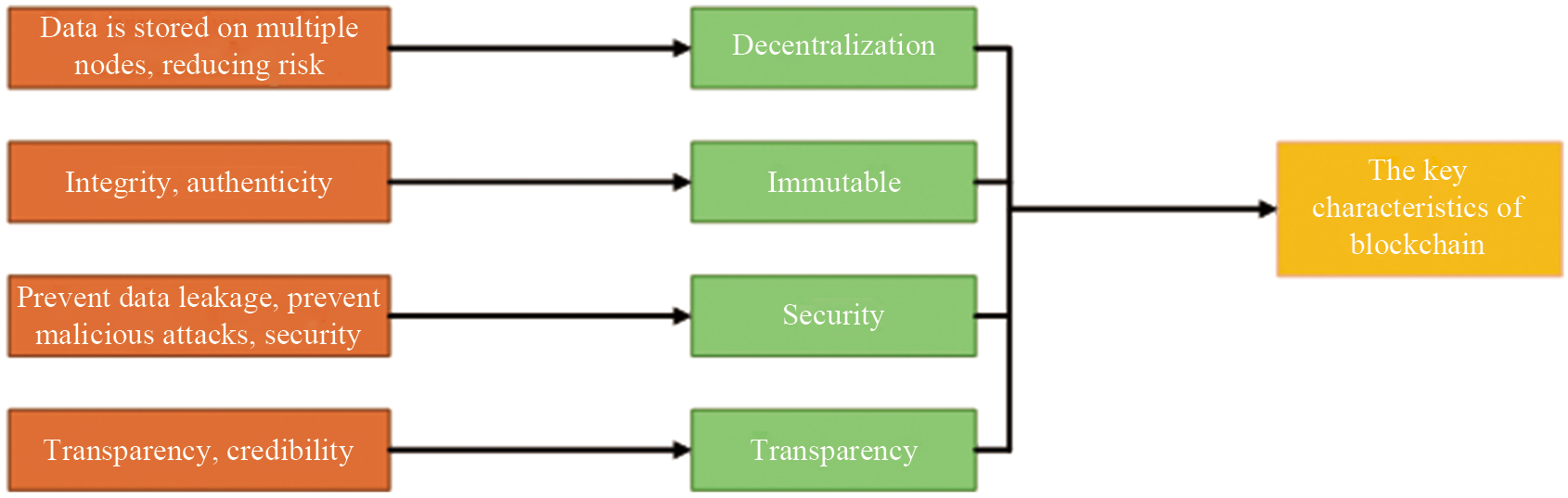
Blockchain technology is a type of distributed ledger technology that was initially designed for cryptocurrency transactions such as bitcoin [23]. Its core mechanism involves storing data in the form of blocks across multiple nodes on a network and linking each block to the previous one through cryptographic techniques, forming an unalterable and continuously extending chain [24]. This unique data structure and storage method endows blockchain with several key characteristics [25, 26]. The key characteristics of blockchain are shown in Fig. 1.
Blockchain technology boasts numerous unique advantages, the most prominent of which is its decentralized architecture. Data no longer relies on a single central server but is stored across multiple nodes. This reduces the risk of data tampering or loss and makes the entire system more robust. Even if some nodes fail, it will not affect the normal operation of the entire network. Moreover, once data is recorded on the blockchain, it cannot be modified or deleted. This immutability ensures the authenticity and integrity of the data, making it extremely valuable in scenarios where highly trustworthy data is required [27]. Transparency is another important feature of blockchain. All participants can view the transaction records on the blockchain, which greatly enhances the transparency and credibility of information, strengthens trust among users, and also makes regulation easier. And security is the core guarantee of blockchain technology [28]. Through advanced cryptographic techniques and consensus mechanisms, blockchain can effectively prevent data leakage and malicious attacks, ensuring confidentiality, integrity, and consistency of data [29]. These characteristics constitute the strong advantages of blockchain technology together, which shows broad application prospects in many fields.
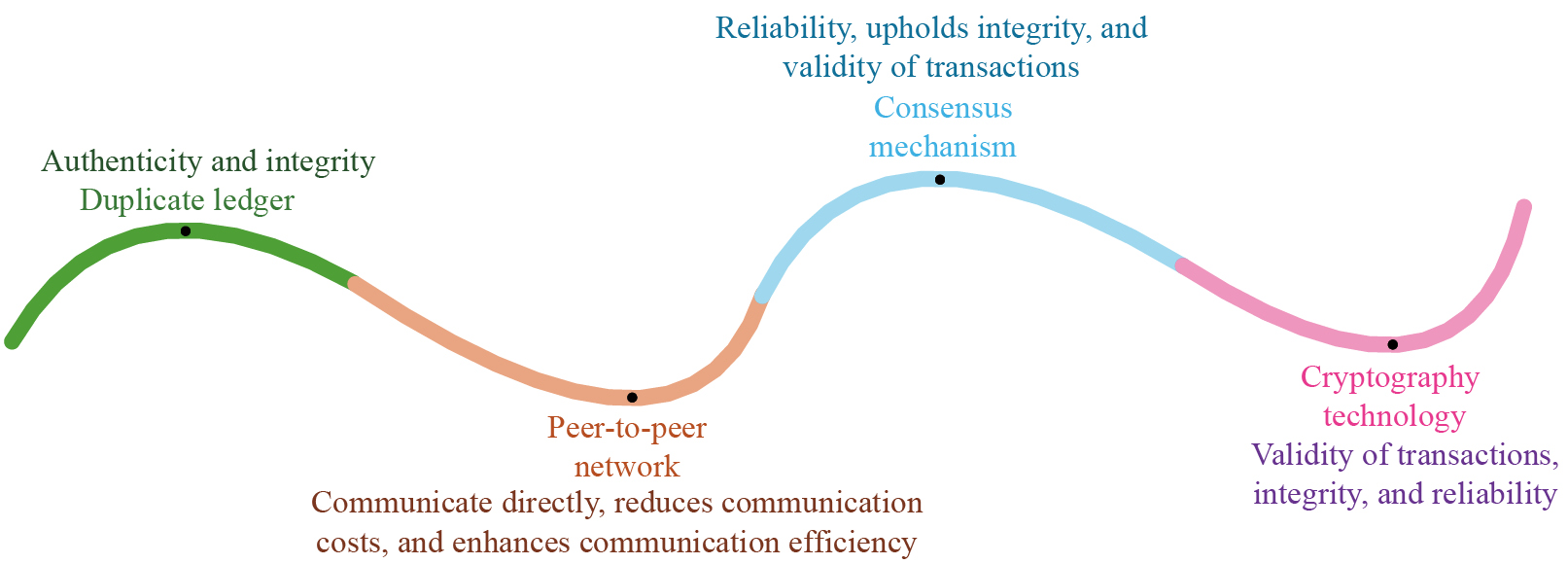
As shown in Fig. 2, the implementation of blockchain technology relies on four core elements: a replicated ledger, a peer-to-peer network, a consensus mechanism, and cryptography.
Each node maintains a complete copy of the transaction history. The data across all nodes are synchronized and updated in real time, ensuring data consistency across the network [30]. In a consortium blockchain, multiple enterprise nodes share the ledger, and data consistency ensures the accuracy of inter-enterprise transaction data, avoiding data disputes and improving collaboration efficiency. At the same time, since there is no single data storage point, the failure of any node will not affect the integrity of the entire network's data, and the network has high availability and fault tolerance, ensuring business continuity.
The network architecture of blockchain is decentralized, with no single control point, which enhances the network's resistance to attacks and censorship, making it difficult to be maliciously controlled or blocked, and ensuring the network's freedom and openness. Nodes communicate directly through a peer-to-peer network without needing a central server to forward information, reducing communication costs and improving communication efficiency. Information transmission is faster and more direct. In the distributed file storage system, user nodes directly transmit file fragments to each other without going through a central server, speeding up file sharing and saving storage space.
Consensus mechanisms are important mechanisms in blockchain technology for ensuring data consistency and network security. Common consensus mechanisms include proof of work (PoW), proof of stake (PoS), and practical Byzantine fault tolerance (PBFT). Bitcoin uses the PoW mechanism, where nodes compete for the right to record accounts by calculating complex hash values. Although this method requires a large amount of computing power and ensures network security, it is energy-intensive and has a slow transaction speed [31]. Ethereum 2.0 uses the PoS mechanism, where nodes obtain the right to record accounts based on their holdings of tokens. This method is energy-efficient and fast in transaction speed, but there is a risk of the rich getting richer, and the mechanism needs to be optimized to ensure fairness. Consortium blockchains commonly use the PBFT mechanism, where nodes reach consensus through multiple rounds of voting. This method is efficient, low-energy-consuming, and suitable for consortium blockchain scenarios with relatively fixed nodes and higher trust levels.
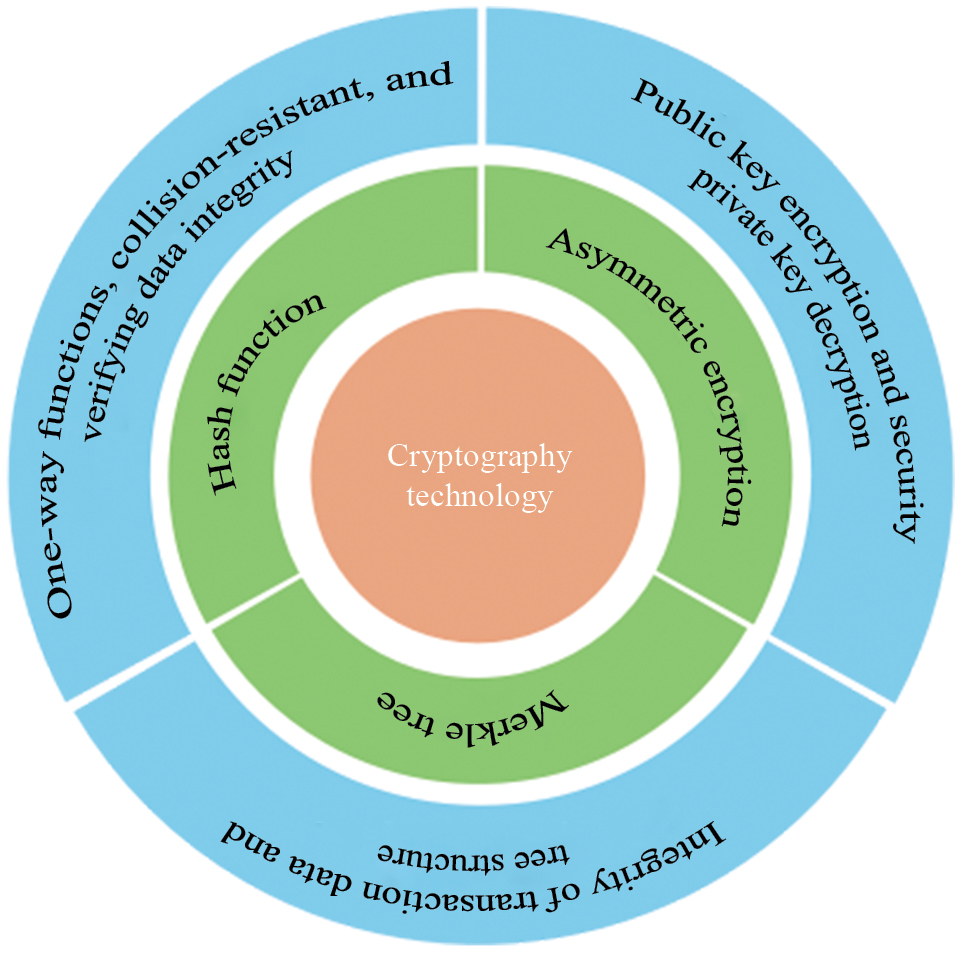
As shown in Fig. 3, cryptography is an important support for blockchain technology, including hash functions, asymmetric encryption, and Merkle trees. Hash functions map data of arbitrary length to a fixed-length hash value, with one-way and collision-resistant properties. It is used for data integrity verification to ensure that data has not been tampered with. Asymmetric encryption uses public key encryption and private key decryption to provide data transmission security. For example, the elliptic curve digital signature algorithm (ECDSA) is used for digital signatures to verify the transactor's identity and prevent identity theft. Merkle trees are used to verify the integrity of transaction data in blocks efficiently. Transaction data is hashed layer by layer to form a tree structure. Only a small number of hash values need to be verified to verify a large amount of transaction data. In light wallets, users verify whether transactions are in blocks through Merkle trees without downloading the entire block, saving storage space and network bandwidth.
Hash functions can map data inputs of arbitrary length to fixed-length hash values. This process is one-way and collision-resistant. One-way means that restoring the original data from the hash value is almost impossible, and collision resistance ensures that it is almost impossible to find two different input data such that their hash values are the same. These properties make hash functions very suitable for data integrity verification. In blockchain, each block contains a hash value, which is generated by the previous block's hash value and the current block's data. This chain structure ensures the immutability of the blockchain [32]. Once the data in a block is modified, its hash value will change, which in turn will cause the hash values of all subsequent blocks to change. This change can easily be detected by other nodes in the network, thereby preventing the possibility of data tampering. For example, in the bitcoin network, the hash value of each block must meet specific difficulty conditions. Miners adjust the nonce value in the block to calculate a hash value that meets the conditions. This process is called "mining". Hash functions not only ensure data integrity but also provide the basis for blockchain consensus mechanisms. For example, Merkle trees are widely used in lightweight wallet applications, where users can verify specific transactions with only a small subset of hashes instead of downloading the full blockchain, significantly reducing storage and computational requirements. Similarly, hash functions are essential in block linking, ensuring that even a single bit of tampering can be immediately detected throughout the blockchain.
The architecture of blockchain can be divided into several layers, mainly including the data layer, network layer, consensus layer, incentive layer, and application layer. The data layer is the foundation of the blockchain, responsible for storing and managing data. Data is stored in blocks, each containing a set of transaction records and linked to the previous block through a hash value to form a chain structure. The network layer is responsible for communication and data transmission between nodes. The blockchain network consists of multiple nodes that exchange data through peer-to-peer communication protocols. Consensus mechanisms are one of the core technologies of blockchain, used to ensure that all nodes in the network reach a consensus on data consistency. Common consensus mechanisms include PoW, PoS, and Byzantine fault tolerance (BFT). Incentive mechanisms are used to encourage nodes to participate in the maintenance and operation of the blockchain network. The application layer is the part where blockchain technology is combined with actual application scenarios and is responsible for developing and deploying various blockchain applications.
Blockchain technology has significant advantages in battery supply chain monitoring and battery trading. Its distributed ledger characteristics ensure that data is immutable and transparent, providing complete supply chain transparency and traceability. This helps reduce fraudulent behavior and ensures that the source and history of batteries are true and reliable. At the same time, blockchain technology enhances data security through encryption and distributed storage, preventing data leakage and unauthorized access. In addition, the smart contract function of blockchain technology can automatically execute contract terms, reducing human intervention, improving transaction efficiency, reducing error rates, eliminating or reducing intermediary links, and reducing transaction costs. Blockchain technology supports the reuse and recycling of batteries, reducing dependence on primary materials and promoting the sustainable development of a circular economy [33]. At the same time, it can help more accurately assess the environmental impact of batteries and support enterprises in meeting environmental regulations [34–37]. Blockchain technology also enhances trust among participants in the supply chain by providing transparent and immutable data records, reducing misunderstandings and conflicts caused by information asymmetry. In addition, it helps enterprises better comply with relevant regulations and ensure compliance operations.
Combined with the IoT, blockchain technology can achieve real-time battery status monitoring, helping enterprises better manage inventory, optimize production plans, and improve supply chain efficiency. Quality data recorded through blockchain can also help enterprises better control quality and predict failures, improving product quality and reliability. In the battery swap mode of electric vehicles, blockchain technology can ensure the safety and transparency of the battery swap process, reducing trust issues between users and battery swap stations. In addition, blockchain technology can record and certify the carbon footprint of batteries, helping enterprises obtain carbon emission quotas and credits, and supporting sustainable development. Blockchain technology improves transparency, security, and efficiency in battery supply chain monitoring and battery trading, and reduces transaction costs and environmental risks. It also supports innovative business models and sustainable development, providing strong technical support for the future development of the battery industry.
As an innovative distributed ledger technology, blockchain technology has a wide range of applications and is constantly expanding. It covers a variety of fields such as finance, supply chain management, the Internet of Things, healthcare, energy management, government services, battery recycling, the food industry, law, intellectual property, and education.
In the financial field, blockchain technology supports the operation of cryptocurrencies such as Bitcoin and Ethereum and records transactions through a decentralized ledger to ensure the transparency and security of transactions [38]. In addition, it is applied to cross-border payments, reducing transaction costs and time, and in the clearing and settlement of securities trading to improve efficiency and reduce error rates. In supply chain management, blockchain technology can record the entire life cycle of a product, from raw material procurement to final sale. Consumers can obtain detailed information about the product by scanning a QR code to ensure its quality and safety. At the same time, it can also record the transportation status and location of goods in real time to improve the transparency and efficiency of logistics and better manage supplier relationships to ensure the stability and reliability of the supply chain.
The IoT also benefits from blockchain technology. Blockchain provides a unique identity for IoT devices, preventing devices from being tampered with or forged, while protecting the privacy and security of data generated by devices [39]. IoT devices can also automatically perform tasks through smart contracts on the blockchain, such as automatically paying for electricity or water bills. In healthcare, blockchain technology can securely store patients' electronic medical records, ensuring data privacy and integrity. Patients can authorize doctors to access their medical records to improve the efficiency of medical services. In addition, it can also record the production, transportation, and sales process of medicines to prevent counterfeit medicines from entering the market and support the payment and data management of remote medical services to ensure the safety and reliability of medical services.
In energy management, blockchain technology can support peer-to-peer transactions of distributed energy (such as solar and wind energy), improve energy utilization efficiency, and optimize the trading process of the energy market to reduce trading costs and increase market transparency [40]. In the government and public service sector, blockchain technology can ensure the fairness and transparency of electronic voting, prevent fraud, and be used for land registration to ensure the accuracy and immutability of land ownership. It can also improve the transparency and efficiency of public funds to prevent corruption.
In battery recycling, blockchain technology can record the entire life cycle of batteries, including production, use, and recycling, to ensure transparency and traceability. Through blockchain technology, incentive mechanisms can also be designed to encourage consumers and enterprises to participate in battery recycling, increase recycling rates, and prevent batteries from entering illegal recycling channels to reduce environmental pollution and support government regulatory policies [41]. The food industry also uses blockchain technology to record the production, processing, transportation, and sales process of food to ensure food safety. Consumers can query food quality information through blockchain to increase trust in food.
In law and intellectual property, blockchain technology can record the creation and copyright information of works to prevent infringement and support the management and execution of legal contracts to ensure the transparency and fairness of contracts. In education, blockchain technology can store academic certificates and transcripts to prevent academic fraud and support online education's payment and certificate management to improve the transparency and credibility of educational services. As technology continues to develop, the application scenarios of blockchain technology will continue to expand and deepen. In the future, it is expected to play an important role in more fields and bring new opportunities and changes to the development of society and the economy.
Despite blockchain technology's great potential in battery recycling, there are still some challenges in practical applications. First, the implementation and maintenance of blockchain technology require a high level of technical expertise, which may pose a technical barrier for some small recycling enterprises. Second, the deployment and operation of blockchain technology require certain costs, including hardware equipment, software development, and maintenance costs. In addition, although blockchain technology can improve transparency and regulatory efficiency, regulatory authorities may need to adjust regulatory methods and policies due to its decentralized nature. Finally, data privacy issues still need to be resolved in some cases, although blockchain technology can ensure the security and immutability of data.
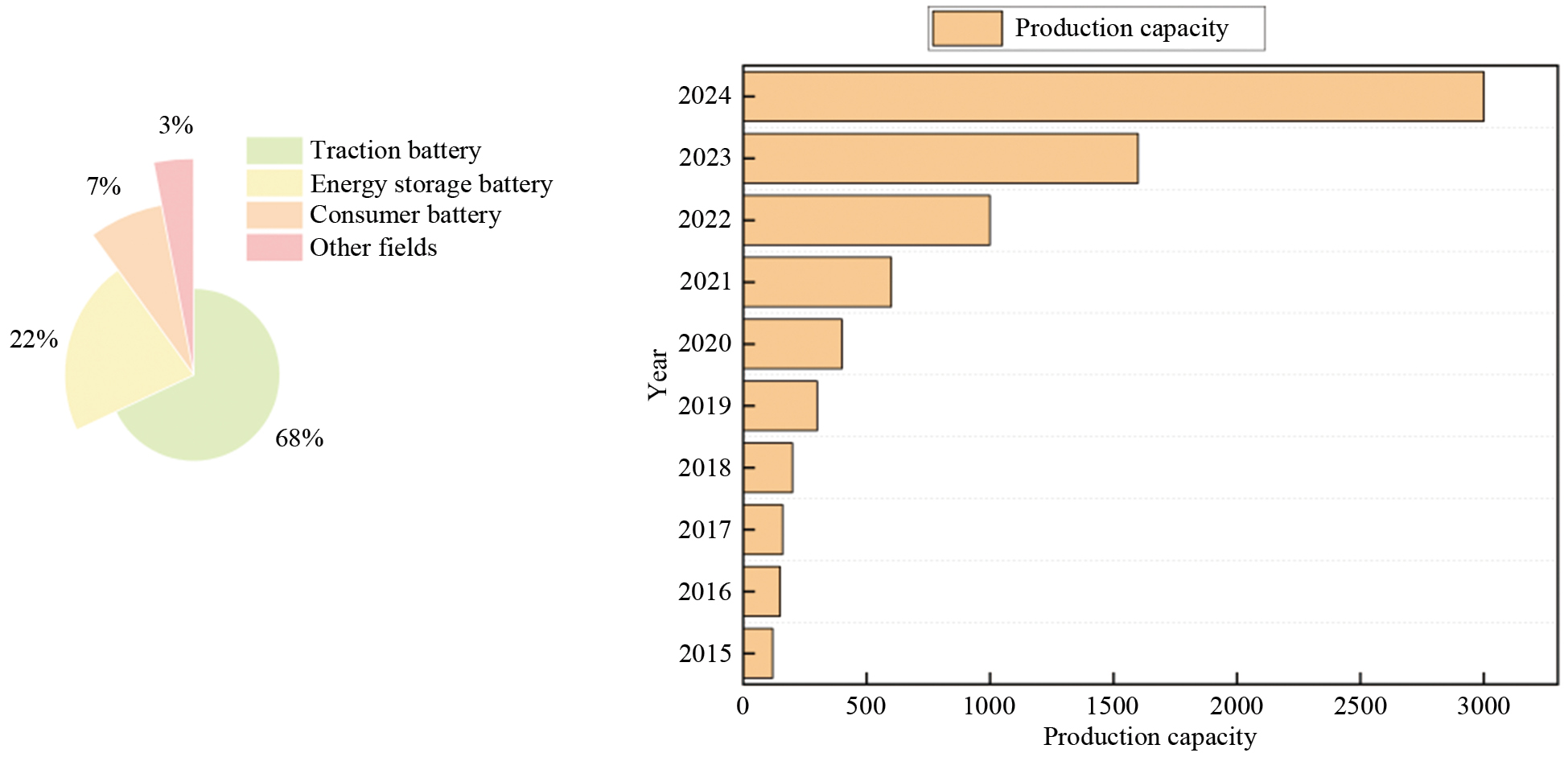
With the global energy structure accelerating its transition toward clean and low-carbon solutions, battery technology, as the core enabler of electric vehicles, smart grids, and renewable energy systems, is experiencing unprecedented exponential growth. According to statistics from the IEA (Fig. 4), global lithium-ion battery capacity surpassed 3000 GW·h in 2024, a fivefold increase compared to 2018. Approximately 70% of this capacity is concentrated in the power battery sector.
However, this rapid growth conceals severe resource crises and environmental risks—battery production's reliance on critical metals such as lithium, cobalt, and nickel has reached a critical point. Recycling end-of-life lithium batteries can reduce dependence on virgin mineral resources, effectively lower production costs, and enhance resource utilization efficiency.
The lithium battery supply chain, for instance, faces vulnerabilities and risks. The supply of key minerals like lithium and cobalt is constrained by geographical distribution, political stability, and market demand-supply dynamics. Implementing efficient battery recycling can mitigate reliance on these scarce resources, thereby alleviating supply chain pressures and risks. Thus, effective recycling and processing of end-of-life lithium batteries are pivotal to achieving sustainable development in the battery industry.
Simultaneously, the environmental hazards of discarded batteries cannot be overlooked. A single battery contains metals such as mercury, cadmium, nickel, and lithium along with corrosive, acidic, or alkaline electrolytes. Improper disposal can cause irreversible pollution to soil and water sources. For example, LiPF6 in electric vehicle power batteries decomposes into highly toxic HF upon contact with water, posing direct threats to ecosystems and human health [42, 43]. Research by the United Nations Environment Programme (UNEP) indicates that improper battery disposal leads to significant economic losses due to heavy metal contamination, with approximately 600 000 children in developing countries suffering from intellectual developmental disorders due to lead-acid battery leakage [44, 45]. This "high-growth and low-recycling" industry trend contradicts carbon neutrality goals and may trigger new resource conflicts and ecological disasters [46].
Despite these challenges, the strategic value of battery recycling has made it a global focal point from an economic perspective. The recycling industry is emerging as a new growth driver. For instance, new energy batteries contain valuable metals such as cadmium, lithium, and cobalt, which can yield substantial economic benefits through efficient recycling. According to industry data, recycling current-generation electric vehicle batteries can generate over 10 billion yuan in economic value. As battery stockpiles continue to rise, the volume of end-of-life batteries will increase annually, further amplifying economic benefits.
Moreover, with the accelerating global energy transition, the expanding adoption of new energy vehicles and renewable energy systems has driven surging demand for batteries as core energy storage components. However, the carbon emissions from battery production, spanning raw material extraction, processing, and assembly, are significant. Effective battery recycling can reduce the need for virgin materials, lower carbon emissions from mining and processing, and enable material circularity, thereby decreasing energy consumption and emissions in new battery production. Additionally, recycled batteries can be repurposed for energy storage systems, enhancing energy efficiency and supporting renewable energy integration and stable supply to advance carbon neutrality goals.
In summary, efficient battery recycling is a critical measure to alleviate resource shortages and supply chain risks and a key initiative to reduce environmental pollution and promote coordinated economic and environmental development. Battery recycling plays an indispensable role in achieving carbon neutrality and is central to advancing the sustainable development of the lithium battery industry.
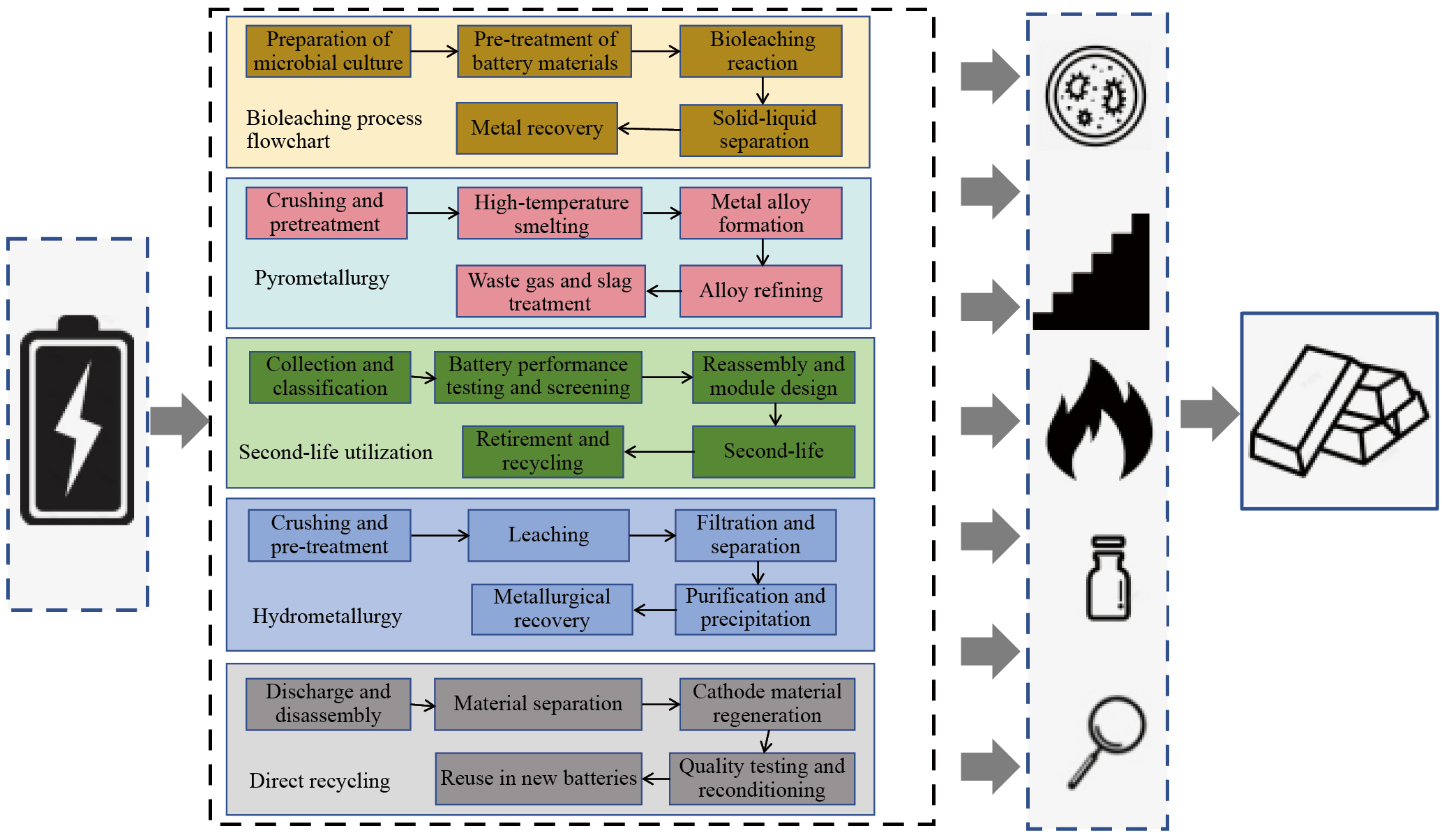
Under the global surge in retired power batteries, battery recycling technologies are developing towards diversification, high efficiency, and environmental friendliness. As shown in Fig. 5, cascade utilization extends battery life cycles but is limited by single application scenarios; pyrometallurgy has large processing capacity but high energy consumption, with emerging plasma technology promoting low-carbon transformation; hydrometallurgy achieves high-purity metal extraction but at higher costs; direct recycling repairs cathode structures with high capacity recovery rates, but requires solving consistency issues; bioleaching is environmentally friendly but has long reaction cycles. These technological paths each have advantages and challenges in the future. Through technological innovation and policy support, an efficient, low-carbon, and sustainable battery recycling system must be built to support the global green energy transition.
Cascade utilization of power batteries is an innovative resource management strategy that aims to extend the value of retired power batteries in different application scenarios by classifying them according to remaining capacity and performance. Specifically, batteries with better performance can be used in low-speed electric vehicles or energy storage systems and other equipment with relatively lower battery performance requirements, thereby extending their service life, while batteries with poorer performance can be recycled to extract valuable metals and materials. This graded utilization method can not only significantly improve resource utilization efficiency and reduce the demand for new batteries, but also reduce the potential environmental hazards of waste batteries. In addition, cascade utilization also creates additional economic value for supply chain participants such as battery manufacturers, original equipment manufactures (OEMs), and third-party recyclers, promoting sustainable development across the entire industry. With continuous technological progress and gradual policy improvement, cascade utilization of power batteries is ushering in new development opportunities and is expected to be more widely applied globally, providing strong support for the sustainable development of the new energy vehicle industry.
As a highly mature recycling technology in industrial applications, pyrometallurgy mainly achieves effective separation of metal components through high-temperature smelting. In actual operation, crushed battery materials are first put into electric arc furnaces or rotary kilns, and then in a high-temperature environment of 1200–1400 ℃, the organic matter in the battery materials burns and gasifies, while the metal oxides are converted into alloy states through reduction reactions and finally deposited at the bottom of the furnace [47, 48]. This process can not only efficiently separate valuable metal components but also has significant efficiency advantages when processing large-scale waste battery materials.
Hydrometallurgy demonstrates unique technical advantages in the battery recycling field, with its core value lying in the precision of metal purification and the sustainability of the process. Compared to the limitation of pyrometallurgy in recovering metals in mixed alloy forms, the hydrometallurgical process achieves layer-by-layer separation of different metal elements through stepwise dissolution and selective extraction, thereby obtaining higher-purity elemental products [49]. It is currently the mainstream process. Its core involves using acid or alkaline solvents to dissolve waste batteries, thereby obtaining a solution containing various metal ions [50]. Commonly used acid leaching solvents, such as sulfuric acid or hydrochloric acid, dissolve metals into ions through chemical reactions [51]. Additionally, sodium hydroxide is often used as the alkaline solution for alkaline leaching [52, 53], enabling efficient extraction of metal ions [54]. After leaching, separation and purification methods are used to remove impurities and extract metal ions, preparing for subsequent processing. Solvent extraction utilizes the solubility differences between metal ions and solvents to separate metal ions and impurities in a two-phase system, effectively removing impurities, such as aluminum and copper. The chemical precipitation method adjusts the pH of the solution to precipitate different metals, thereby completing metal separation and impurity removal. This directional separation capability not only enhances the reuse value of materials but also significantly reduces energy consumption by optimizing reaction conditions. Especially when processing battery materials with complex compositions, hydrometallurgy can target specific metals for extraction, avoiding resource waste and providing a more flexible solution for the circular economy.
Direct recycling is regarded as a next-generation disruptive technology, with its core being the bypassing of metal extraction steps to repair the crystal structure of cathode materials directly, restoring the capacity and performance lost during battery recycling [55, 56]. The direct recycling technology for waste lithium-ion batteries focuses on material structure repair, achieving efficient resource regeneration through systematic processes. The technology first performs deep discharge to eliminate residual electricity, then uses mechanical crushing and sorting technology to non-destructively separate battery casings, separators, and electrode components [57]. The electrolyte is recovered through supercritical extraction of organic solvents, while electrode materials are separated from metal foil substrates using ultrasonic peeling technology [58, 59]. To address lithium-ion loss and structural distortion caused by cycling aging, hydrothermal lithium supplementation or solid-phase sintering processes are used to repair crystal defects and restore the electrochemical activity of electrode materials. Markey et al. [60] used boric acid (5 wt.%) pretreatment and short-term annealing (750–1050 ℃, 1 hour) to restore the composition and structural defects of degraded graphite. During the regeneration process, high temperatures or strong acid-base treatments should be avoided to maximize the retention of the material's intrinsic properties, enabling the regenerated cathode to be directly used in new battery production, forming a closed-loop recycling system. This technological path promotes the evolution of battery recycling towards low energy consumption and high value through the synergistic effects of physical separation and mild repair.
Bioleaching is an innovative bio-hydrometallurgical technology that ingeniously uses microorganisms (such as fungi, chemo-lithotrophic bacteria, and acidophilic bacteria) as natural leaching agents to accurately extract high-value metal components from complex substrates [61]. These microorganisms play a key role in the leaching process, using ferrous ions and sulfur as energy sources to produce specific metabolites in the leaching medium that can effectively promote metal dissolution and recovery. One study used an ascorbic acid (0.1 mol/L)-based mixed medium with an initial pH of 2.5, a sulfur dosage of 10 g/L, and a high pulp density (20 g/L). The addition of ascorbic acid significantly improved metal recovery rates. Specifically, the recovery rates of cobalt and lithium increased from 40% and 60% to 94% and 95%, respectively [62]. Biswal et al. [63] conducted two experiments using chemo-lithotrophic bacteria: one-step and two-step methods. The results showed cobalt (Co) recovery rates of 2.7% and 22.6%, and lithium (Li) recovery rates of 22.8% and 66%, respectively. In summary, future research directions may include exploring more efficient microbial combinations, optimizing bioleaching conditions, and evaluating their feasibility in large-scale industrial applications.
The power battery recycling technology system is developing diversely, covering cascade utilization, pyrometallurgy, hydrometallurgy, direct recycling, and bioleaching. Cascade utilization extends service life by screening the remaining capacity of retired batteries and reassembling them for use in energy storage, low-speed vehicles, and other fields, but is limited by single application scenarios and supply-demand imbalances. Pyrometallurgy uses high-temperature smelting to separate metal alloys, with large processing capacity but high energy consumption, while emerging plasma technology promotes low-carbon transformation. Hydrometallurgy achieves high-purity metal extraction through acid/alkali leaching-extraction-electrowinning processes, which are especially suitable for ternary batteries, but chemical reagent consumption and wastewater treatment increase costs. Direct recycling bypasses metal extraction steps to repair cathode structures, with high-capacity recovery rates, but requires solving battery consistency issues. Bioleaching uses microorganisms to extract metals, with high environmental friendliness but long reaction cycles, limiting industrial applications. On the policy front, the EU and China have introduced regulations to promote full lifecycle traceability and requirements for the proportion of recycled materials, forcing companies to upgrade technology and compete compliantly. It is expected that the market size will continue to expand in the future, with technological iteration and resource control becoming key factors for companies to break through.
Through its subsidiary, Brunp Recycling, Contemporary Amperex Technology Co. Limited (CATL) has established a full-chain system that includes mineral mining and recycled materials. Its hydrometallurgical technology achieves lithium recovery rates of 85% and cobalt/nickel recovery rates of 98%. The $1.2 billion nickel laterite hydrometallurgical project in Indonesia is expected to meet 40% of overseas nickel demand by 2025 while using low-carbon processes to circumvent carbon barriers under the EU Battery Regulation. In the first half of 2024, Brunp processed 52 000 tons of retired batteries, with recycled materials directly supplied to 4680 battery production lines, increasing nickel/cobalt self-sufficiency to 18%.
GEM deeply integrates power battery recycling with electronic waste processing. Its AI visual sorting system achieves 92% efficiency, while citric acid-assisted leaching technology reduces wastewater discharge by 80%. In 2023, GEM processed 38 000 tons of retired batteries and 1.5 million tons of electronic waste, accounting for 25% of the domestic recycled cobalt/nickel supply. Cross-category resource synergy reduces copper foil manufacturing costs by 15% per metal unit. The POSCO recycling base built in cooperation with South Korea's ECOPRO employs hydrogen reduction roasting technology, increasing nickel/cobalt recovery rates to 96%. In 2024, it supplied 15 000 tons of recycled precursors to Samsung SDI.
Tesla adopts high-temperature pyrolysis (1200 ℃ oxygen-free environment) combined with electrochemical relithiation, restoring recycled materials to 95% of new battery capacity. The recycling center at its Berlin factory uses blockchain to generate "battery digital passports" for full carbon footprint traceability. By inputting real-time data from 13 million in-service vehicles into recycling prediction models, Tesla has reduced lifespan prediction errors from the industry average of 15% to 5%. In Q1 2024, Tesla recycled 12 000 tons of batteries globally, with 90% of nickel/cobalt directly supplied to 4680 production lines, increasing lithium self-sufficiency to 12%.
At its Shenyang base, BMW deploys whole-pack energy storage systems where retired battery packs are directly connected to the grid without disassembly. Bidirectional inverters control charge/discharge depth, extending cycle life to 4000 cycles. The AI diagnostic system predicts the remaining lifespan with 93% accuracy based on historical charge/discharge data. BMW's Battery-as-a-Service (BaaS) model charges users 1.5% of the vehicle price monthly as a rental fee; post-retirement, battery ownership reverts to BMW for use in photovoltaic power station storage. In 2024, BMW completed a 120 MW·h cascaded energy storage project in China with a levelized cost of 0.35 RMB/(kW·h), 40% lower than new battery systems. In Sweden, BMW's joint venture "Green Recycling Plant" with Northvolt uses hydropower for hydrometallurgy, achieving only 0.8 tons of carbon emissions per ton processed, with recycled aluminum and nickel directly supplied to German factories.
Ganfeng Lithium has built a vertically integrated lithium ecosystem encompassing "brine lithium extraction-battery manufacturing-recycling regeneration." Its Xinyu facility in Jiangxi employs bio-adsorption and membrane separation processes, increasing lithium recovery rates to 91% with battery-grade purity. At Argentina's Salar Salt Lake, Ganfeng constructed a recycling plant to secondarily recover 0.3% residual lithium from extraction tailings secondarily, boosting comprehensive Salt Lake lithium extraction rates from 65% to 82%. In 2024, Ganfeng formed a lithium resource alliance with GAC and Geely, where automakers prepay 30% of battery costs in exchange for priority procurement rights of recycled lithium, securing 50 000 ton LCE orders accounting for 35% of Ganfeng's total production capacity.
The current power battery recycling system faces multiple structural challenges. Data fragmentation and lack of transparency make full lifecycle information difficult to trace, while rampant issues such as black-market tampering with battery parameters and false capacity reporting drive up raw material costs for compliant enterprises. Inefficient reverse logistics, due to dispersed recycling networks and insufficient consumer participation, keep collection costs persistently high. More critically, regulatory failures and a crisis of trust persist—illegal dismantling workshops profit through non-compliant operations, while traditional regulatory approaches struggle to address cross-regional, multi-stage complexities.
Blockchain technology offers new solutions to these challenges. Its decentralized ledger can establish a trusted data chain covering the entire battery lifecycle, ensuring transparency and traceability from production to recycling. For instance, blockchain platforms integrated with IoT can collect real-time battery status parameters, significantly improving cascaded utilization efficiency while reducing data tampering risks. Meanwhile, smart contracts can automatically execute recycling task assignments and incentive settlements, converting user participation into redeemable benefits through token economic models, fundamentally enhancing the appeal of compliant recycling. Such models can multiply recycling rates severalfold.
However, deeper industry contradictions remain unresolved. Reverse logistics systems must address sorting challenges posed by diverse battery designs, while fragmented policies and a lack of standards hinder cross-border regulatory collaboration. For example, discrepancies between EU and Asian standards for calculating recycling rates impede technical cooperation, and conflicting regional regulations exacerbate corporate compliance costs. This misalignment among technology, industry, and policy has trapped the sector in a dilemma of "expanding scale yet struggling to profit."
With the rapid development of the battery recycling industry, data transparency and integrity have become key to improving recycling efficiency [64]. As mentioned in Section 3, the current battery recycling system faces issues of data fragmentation and lack of transparency, with severe data silos in various stages [65]. The decentralized and tamper-proof characteristics of blockchain technology, combined with the real-time data collection capabilities of IoT devices, can effectively address this issue. Through IoT sensors, data from the production, use, retirement, and recycling stages of batteries can be collected in real-time and uploaded to the blockchain platform, forming a complete data chain. This integration not only ensures the authenticity and traceability of data but also provides a transparent information view for regulators, enterprises, and consumers. To address data privacy concerns during the battery lifecycle data management, blockchain systems can incorporate advanced privacy-preserving technologies, such as zero-knowledge proofs (zk-SNARKs), federated learning models, and homomorphic encryption. Zero-knowledge proofs allow validation of battery status without exposing sensitive details. Federated learning ensures that sensitive operational data remains on local IoT nodes during collaborative model training. Homomorphic encryption enables computation on encrypted battery data without decrypting it, enhancing confidentiality across the recycling chain. In addition, differentiated privacy protection strategies should be adopted based on the data types involved in battery recycling. For user-side data, such as battery usage patterns and charging/discharging behaviors, privacy-preserving techniques like zero-knowledge proofs and federated learning are recommended to ensure individual privacy and prevent personal information leakage. For enterprise-side data, such as battery recycling logistics records and process data, emphasis should be placed on authenticity, traceability, and secure multi-party data sharing, which can be achieved through on-chain hashing and cross-chain verification mechanisms. Such differentiated strategies balance data privacy requirements with the needs for transparency and interoperability across different blockchain networks. Here are some specific applications of blockchain and IoT integration [66].
Utilizing IoT devices to monitor key parameters of batteries in real-time, such as voltage, temperature, and charge/discharge cycles, and uploading this data to the blockchain platform can achieve complete lifecycle data management of batteries and build a data foundation for battery cascaded utilization. CATL [67], a global leading power battery manufacturer, has collaborated with Ant Blockchain to develop the "Battery Cloud Platform". This platform, through its "cloud-edge-end" architecture, leverages IoT, big data, and artificial intelligence technologies to manage and optimize the entire lifecycle of batteries. The platform collects and transmits battery operation data to the cloud, where blockchain's distributed storage technology efficiently manages it. With machine learning, deep learning, and big data analytics, the platform can perform battery health monitoring, intelligent scheduling, and charging/swapping management applications, enhancing battery efficiency and lifespan. Moreover, the vast amount of data stored on the blockchain provides reliable support for the cascaded utilization and recycling of batteries. By analyzing battery health data, CATL can identify batteries suitable for cascaded utilization and deploy them in energy storage systems or other low-energy-consumption scenarios, extending the battery life [68]. Although the end-cloud fusion battery management architecture has made some progress, there are still delays in data transmission and command issuance on the cloud platform. Optimizing the end-cloud fusion architecture to reduce latency can further enhance the real-time performance and efficiency of battery management [69].
A blockchain-based IoT system can monitor the health status of batteries in real-time and effectively issue early warnings for battery status. GEM, a company specializing in battery recycling and resource regeneration, has deployed a blockchain and IoT-based intelligent monitoring system at its Wuhan base. Through IoT devices, the system monitors the health status of batteries in real-time [70]. When battery performance degrades to a certain level or anomalies occur, the system can automatically issue warnings and trigger corresponding processing procedures through smart contracts. Through smart contracts, the system can achieve automated management. In the battery recycling stage, smart contracts can automatically execute the recycling process according to predefined rules, improving efficiency and reducing human intervention. This integration not only enhances the transparency and safety of power battery management but also provides strong technical support for GEM in resource recycling and reuse [71]. Despite the initial success of GEM's blockchain technology application, many areas remain for improvement. First, the blockchain system's transaction speed is relatively slow, which may not meet the needs of large-scale real-time monitoring and data processing. Future efforts should focus on optimizing blockchain algorithms to increase data processing speed to better adapt to the high-frequency data requirements of power battery lifecycle monitoring. Second, although IoT and blockchain technologies have achieved preliminary integration, there is still room for improvement in the integration and collaboration between system modules in practical applications. Further optimizing the data interaction process between IoT devices and blockchain systems can reduce latency and improve overall system efficiency [72]. Lastly, while the decentralized and tamper-proof nature of blockchain provides a basis for data security, data privacy protection still needs to be strengthened. Advanced encryption technologies should be considered to ensure data privacy during transmission and storage.
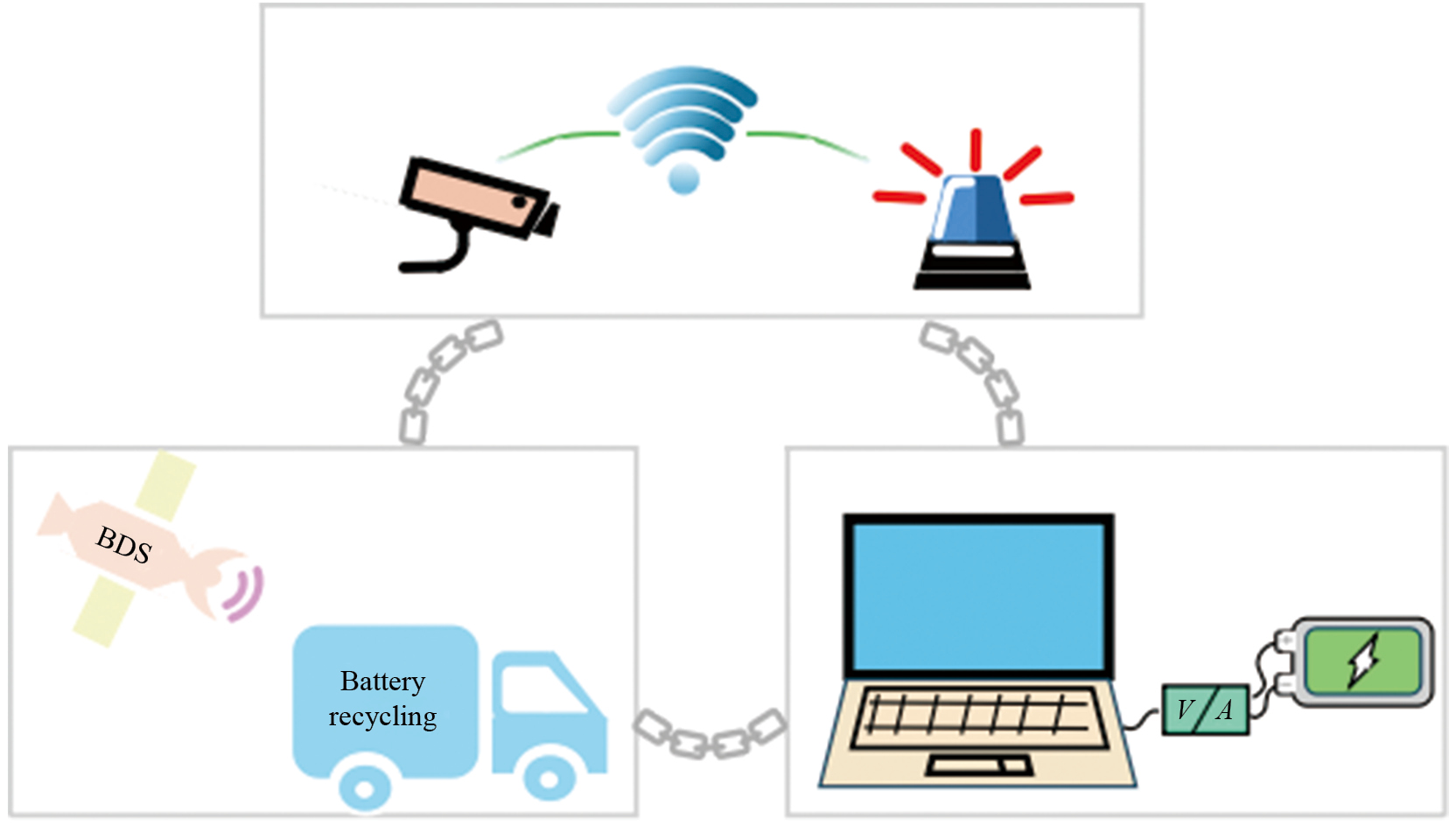
By tracking the geographical location of batteries in real-time through IoT devices and combining it with data on the blockchain platform, dynamic optimization of reverse logistics can be achieved [73] (Fig. 6). Huayou Cobalt has constructed a pyrometallurgical-hydrometallurgical combined production line in the Morowali Industrial Park in Indonesia, using blockchain technology to optimize reverse logistics. Through IoT devices, the system tracks the geographical location of batteries in real-time and combines it with data on the blockchain platform to dynamically optimize reverse logistics. When a large number of retired batteries need to be recycled, the system can automatically plan the optimal recycling route based on the battery's location, status, and the recycling processor's capacity. By analyzing historical data and real-time information, the system can dynamically adjust transportation plans to reduce logistics costs. This optimization not only improves recycling efficiency but also reduces battery aging and safety hazards caused by logistics delays. However, there is still room for improvement in this model. Smart contracts play an important role in the battery recycling process, but their functionality and flexibility still need to be enhanced. In the waste battery recycling stage, smart contracts can automatically execute the recycling process based on more complex conditions to further improve efficiency [74].
In the future, in-depth research and optimization of blockchain algorithms are needed to increase data processing speed to better meet the high-frequency data requirements of reverse logistics [75]. As blockchain and IoT technologies mature, their integration will become even more profound. On the one hand, the intelligence level of IoT devices will further increase, enabling data collection from more dimensions. On the other hand, blockchain technology will continue to be optimized to improve data storage and processing efficiency. This integration will bring higher efficiency, lower costs, and stronger transparency to the battery recycling industry, promoting its sustainable development. In the future, more advanced encryption technologies should be introduced to ensure data privacy during transmission and storage, fully respecting customer privacy and information security. In the future, through the integration of blockchain and IoT, battery recycling companies will be able to achieve complete lifecycle management of batteries, with every stage from production to recycling being monitored and optimized in real-time, thereby improving resource utilization efficiency and reducing environmental pollution [76].
(1) Platform architecture and advantages
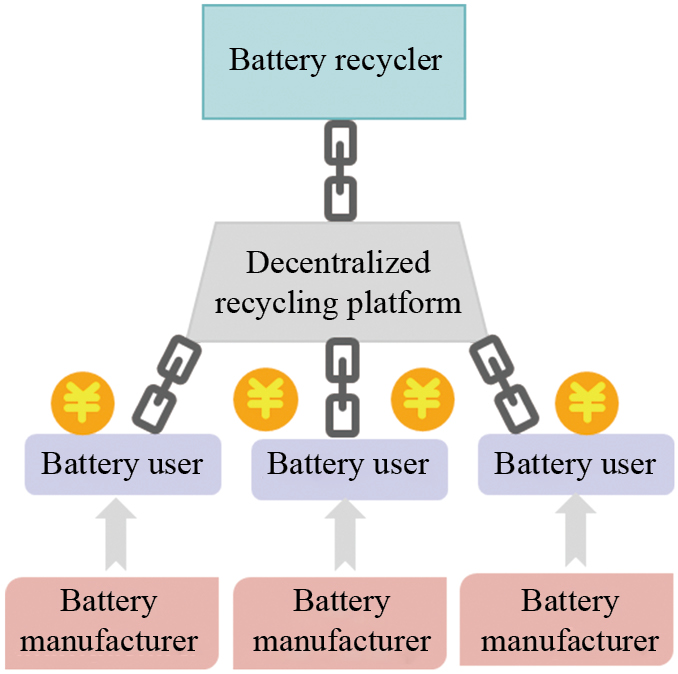
A decentralized recycling platform allows direct participation of battery suppliers, recyclers, and manufacturers, reducing intermediary links and lowering transaction costs. Tesla has established a decentralized battery recycling platform (Fig. 7) using blockchain technology, connecting global battery suppliers and recyclers. The platform uses distributed ledger technology to ensure that transaction records are tamper-proof, enhancing transaction transparency and security. Tesla connects directly with battery manufacturers through this platform, reducing intermediary links and operational costs. In addition, Tesla has launched a "trade-in+ residual value lock" business model, where car owners can trade in their old batteries for up to 10% off the price of a new car [77]. The onboard BMS system monitors battery health in real-time and generates a residual value report automatically when the battery is retired, ensuring transparent pricing. Through the decentralized platform, all parties can transact directly, reducing transaction costs and time delays caused by intermediaries.
(2) Incentive mechanism and user participation
Blockchain tokens or point systems can be used to incentivize consumers and recyclers to participate actively in battery recycling. GEM has pioneered a government and recycling enterprise joint paid acquisition model in cooperation with the government. Citizens can exchange a used battery for a certain amount of goods, with the government and enterprises sharing the cost. This model increases public participation in battery recycling through economic incentives. Currently, there is no mature token model in this field, but it can be further improved based on existing foundations. Consumers can earn points by handing over retired batteries to recyclers, and these points can be exchanged for batteries or related products, increasing consumer participation. This incentive mechanism not only increases the recycling rate but also enhances users' trust in the recycling system. In addition, smart contracts can automatically execute recycling task assignments, carbon credit settlements, and reward and punishment incentives, further improving the platform's operational efficiency and transparency. Personalized incentive plans can also be designed based on the contributions and roles of participants to increase their enthusiasm.
(3) Transaction efficiency improvement
The decentralized platform reduces intermediary links, resulting in faster transaction speeds and more timely fund settlements. Compared with traditional recycling models, transaction time is reduced from several days to a few hours, and fund settlement cycles are shortened from weeks to days. This highly efficient transaction model improves corporate operational efficiency, reduces capital occupation costs, and enhances corporate competitiveness.
(1) Battery health data market
Blockchain records battery health data, forming a data market for secondary utilization or cascaded utilization, increasing the residual value of batteries. Ant Blockchain has collaborated with Duduhuandian to apply blockchain technology to the complete lifecycle management of power batteries. By installing blockchain communication modules in battery management systems, data such as the charge level, charge/discharge cycles, and battery health of each cell is recorded on the blockchain. These data are trustworthy and tamper-proof at the source. This model not only provides accurate battery health data for battery recycling companies, reducing detection costs, but also increases the efficiency of battery cascaded utilization. It is estimated that after using blockchain technology, the utilization efficiency of retired batteries can increase by 20% to 30%, and some battery packs with high health levels can even be sold at three times the previous price when recycled. In addition, Ant Blockchain has collaborated with Saide Mei, Jiecheng New Energy, and other battery recycling companies to create an "ecosystem" around battery recycling, promoting the formation and development of the battery health data market. This data-driven business model not only improves battery utilization efficiency but also creates new revenue sources for companies. However, this model still faces some challenges, such as difficulties in data acquisition, the need for high-precision sensors and complex measurement devices, and high hardware costs. Data noise, missing values, and other issues can affect the accuracy of models. Insufficient interpretability of algorithms and poor model generalization capabilities also pose significant challenges to the system. To address these issues, more advanced sensor technologies and data preprocessing algorithms should be introduced to reduce data noise and improve data quality. Combining electrochemical models with data-driven methods, more efficient and interpretable battery health assessment algorithms should be developed.
(2) Carbon footprint tracking and trading
Siemens has launched a blockchain-based product, a carbon footprint trustworthy calculation and traceability solution called SiGREEN. Relying on edge computing technology, this solution collects energy consumption and carbon emission data in real-time during the production process and accurately allocates it to individual products, calculating carbon emission information on an hourly basis. At the same time, it uses blockchain technology to securely and reliably share and collaborate on supply chain carbon emission data, ensuring the credibility and transparency of the data. In Siemens Digital Factory in Chengdu, on the PLC production line, the deployment of SiGREEN has enabled precise calculation and traceability of carbon emission data throughout the manufacturing process, significantly improving carbon footprint transparency and providing a basis for companies to explore carbon reduction potential. We can use blockchain to record carbon emission data during battery production, use, and recycling to support the carbon trading market and help companies achieve their carbon reduction goals. Companies can sell their excess carbon quotas on the carbon trading market for additional revenue by optimizing the battery recycling process to reduce carbon emissions. This carbon footprint tracking and trading model not only helps companies achieve their carbon neutrality goals but also promotes the green transformation of the entire industry. However, integrating blockchain technology with carbon footprint tracking systems involves a variety of complex technologies, such as IoT, edge computing, and artificial intelligence. This not only increases the development and maintenance costs of the system but also poses high technical requirements for companies. Currently, for some small and medium-sized enterprises, it may be difficult to bear the high costs and technical barriers. There is an urgent need to explore simpler, more efficient, and lower-cost technical solutions to lower the application threshold.
(1) Battery sharing model
The battery sharing model reduces user costs and improves user experience, promoting the popularization of new energy products. BMW has launched "Battery as a Service" (BaaS), where users pay a monthly lease fee of 1.5% of the car price. After retirement, battery ownership returns to BMW, which uses it for photovoltaic power station energy storage. This shared economy model not only reduces user costs but also improves battery utilization. Users do not need to purchase expensive batteries but can lease them as needed, lowering the usage threshold and increasing market acceptance of new energy products.
(2) Battery configuration optimization
Blockchain technology can allocate battery resources reasonably based on their health status and usage requirements, improving resource utilization efficiency. High-performance batteries are assigned to high-demand scenarios, such as electric vehicles, while lower-performance batteries are used in low-demand scenarios, such as energy storage systems. This resource optimization configuration model not only extends battery life but also creates higher economic benefits for companies.
(3) Extending battery lifecycle
Through blockchain technology, battery leasing and sharing can extend battery life, reducing resource waste. Shared electric bicycle companies lease batteries through blockchain platforms, with users using them as needed. This reduces the frequency of battery replacements and improves resource utilization. This model not only reduces the demand for battery production but also minimizes environmental impact.
In the future, blockchain-based business models in the battery recycling field will develop in a diversified and deepened direction. On the one hand, decentralized recycling platforms will continue to improve, attracting more participants to form an efficient recycling ecosystem. Incentive mechanisms will become more personalized, increasing the enthusiasm of all parties to participate. Transaction efficiency will also be further improved, reducing corporate operational costs. On the other hand, data-driven business models will be continuously deepened. Through big data analysis and artificial intelligence technology, the commercial value of battery data will be further explored, expanding the battery health data market and helping companies optimize resource allocation and create more economic benefits. At the same time, shared economy models will gradually become popular, promoting rational allocation and efficient utilization of battery resources. This will reduce user costs, extend battery life, reduce resource waste, and promote the popularization of new energy products and the green transformation of industry.
Currently, the application of blockchain technology in battery recycling has not formed a unified standard. The inconsistency in data formats and interfaces between different platforms leads to data compatibility and interoperability issues. Establishing unified technical standards can ensure seamless data connections between different blockchain platforms, improve the promotion efficiency of the technology, and reduce communication costs caused by technical differences. Meanwhile, although blockchain technology has the characteristic of being tamper-proof, data security and privacy still need further regulation. Establishing data security standards can ensure the secure storage and transmission of battery recycling data, prevent data leakage, enhance users' trust in the platform, and provide a safer data management environment for enterprises. In addition, with the increasingly widespread application of blockchain technology in battery recycling, regulatory authorities need to clarify the legal effect of blockchain data and the legal status of smart contracts. Establishing industry standards can provide a clear basis for regulatory authorities to ensure that the application of blockchain technology complies with legal requirements and prevent smart contracts from being maliciously exploited, thereby promoting the standardization and sustainable development of the battery recycling industry.
(1) Data format and interface standards
Establishing unified blockchain data formats and interface standards to ensure seamless data connections between different platforms. For example, stipulate the storage formats for battery production, use, and recycling data, as well as the data interaction protocols between different blockchain platforms. Through these standardized data formats and interfaces, battery recycling companies can share and exchange data across different blockchain platforms, reducing communication costs caused by technical differences. When establishing blockchain data format standards for battery recycling, reference can be made to the ISO/IEC 23247 series, which specifies frameworks for industrial IoT information modeling and data interoperability. Aligning with international standards will help ensure seamless communication between diverse recycling platforms globally.
(2) Security and privacy protection standards
Establishing blockchain data security standards to regulate corporate data management practices and enhance data security. For example, stipulate data encryption algorithms, access permission management, and other security measures to ensure user privacy and corporate trade secrets. Through this data security and privacy protection mechanism, battery recycling companies can better protect users' personal information and corporate trade secrets, enhancing users' trust in the platform.
(3) Smart contract standards
Establish development and execution standards for smart contracts to ensure their legal effect and security. For example, stipulate the writing standards, execution procedures, and legal status of smart contracts to prevent them from being maliciously exploited. Through this standardized smart contract development and execution mechanism, battery recycling companies can better utilize smart contracts to achieve automated business processes and improve operational efficiency.
(4) Cross-chain interoperability standards
Cross-chain technologies such as sidechains, relays, and blockchain gateways should be incorporated into the standardization process to ensure that different blockchain networks (e.g., national, enterprise, regional recycling platforms) can securely and efficiently exchange battery lifecycle data.
(1) Cross-border data sharing
Blockchain technology can promote the sharing of cross-border battery recycling data and establish global battery recycling standards. For example, cross-border battery manufacturers and recyclers can share data through blockchain platforms, unify data formats and standards, and improve cooperation efficiency. This cross-border data sharing mechanism not only improves the efficiency of cross-border battery recycling but also promotes the standardized development of the global battery recycling industry.
(2) International regulatory collaboration
Through blockchain technology, governments of various countries can collaborate more efficiently to jointly address global challenges in battery recycling. For example, countries can share regulatory information through blockchain platforms and jointly combat illegal battery recycling activities to protect the global environment. This international regulatory collaboration mechanism not only improves the regulatory efficiency of cross-border battery recycling but also promotes the sustainable development of the worldwide battery recycling industry.
With the continuous development of blockchain technology, domestic blockchain industry standards will continue to improve. On the one hand, domestic standards will be aligned with international standards to promote the standardized development of the global battery recycling industry. On the other hand, establishing standards will focus more on the innovation and practicality of technology, providing strong support for the application of blockchain technology in battery recycling. By establishing unified blockchain data formats and interface standards, battery recycling companies can share and exchange data across different blockchain platforms, thereby reducing communication costs caused by technical differences. Through the establishment and promotion of standards, blockchain technology will play a greater role in the field of battery recycling and promote the sustainable development of the industry.
To effectively promote blockchain standardization in battery recycling, a phased implementation framework is proposed. In the initial stage, pilot demonstration projects should be launched to test unified data formats, privacy protocols, and smart contract templates within selected enterprises and recycling alliances. In the second stage, cross-regional technical validation and interoperability testing should be conducted to ensure broader applicability. Finally, alignment with international standards such as ISO/IEC 23247 should be pursued, forming a globally compatible blockchain-based recycling data ecosystem. This progressive approach can ensure feasibility, scalability, and international integration.
The integration of blockchain and IoT technologies has addressed data fragmentation issues in battery recycling, enabling complete lifecycle data management. CATL's "battery cloud platform" collects battery operational data and transmits it to the cloud, utilizing blockchain's distributed storage technology for management. This enhances battery efficiency and lifespan while providing data support for battery cascading use and recycling, significantly improving recycling efficiency. The application of smart contracts reduces manual intervention and lowers operational costs. For example, GEM employs smart contracts to automatically execute recycling task assignments and incentive settlements, improving platform operational efficiency, transparency, and reducing transaction costs.
Blockchain's tamper-proof nature ensures data authenticity and transparency, making the battery recycling process more credible and strengthening stakeholder trust. In decentralized recycling platforms, transaction records are immutable, enhancing transaction transparency and security. For instance, Tesla has established a decentralized battery recycling platform using blockchain technology, connecting global battery suppliers and recyclers to ensure transparent and secure transactions.
Blockchain technology contributes to the sustainable development of the battery industry by improving resource utilization efficiency and reducing environmental pollution. For example, BMW Group's BaaS model not only reduces user costs but also increases battery utilization, extends battery lifecycles, and minimizes resource waste.
Decentralized recycling platforms allow direct participation from battery suppliers, recyclers, and manufacturers, reducing intermediaries and lowering transaction costs. Tesla's decentralized battery recycling platform employs distributed ledger technology to ensure immutable transaction records, enhancing transparency and security.
Blockchain records battery health data, creating a data market for secondary or cascading use, thereby increasing residual battery value. Ant Chain's collaboration with Dudu Battery Swap applies blockchain to the complete lifecycle management of power batteries, providing accurate health data to recycling companies, reducing inspection costs, and improving cascading utilization efficiency.
Currently, blockchain technology faces several technical challenges in battery recycling applications. For instance, blockchain systems have slow transaction speeds, making it difficult to meet large-scale real-time monitoring and data processing demands. Additionally, data interaction processes between IoT devices and blockchain systems require optimization to reduce latency and improve overall system efficiency. Data privacy protection remains a critical issue; while blockchain provides a foundation for data security, further enhancements in privacy protection are needed.
Future efforts should focus on in-depth research and optimization of blockchain algorithms to improve data processing speeds. Cross-chain technology will become a key development direction, enabling data sharing and interaction across different blockchain platforms. IoT devices will become more intelligent, capturing multi-dimensional data, while blockchain technology will continue to evolve, enhancing data storage and processing efficiency.
Although innovative business models such as decentralized recycling platforms, data-driven models, and sharing economy approaches have shown initial success, further refinement and broader adoption are necessary. For example, in the battery health data market, data acquisition remains challenging due to the need for high-precision sensors and complex measurement equipment, which drive up hardware costs. Additionally, issues such as poor algorithm interpretability and weak model generalization capabilities pose significant challenges to the system.
In the future, blockchain-based business models in battery recycling will diversify and deepen. Decentralized recycling platforms will continue to improve, attracting more participants and forming efficient recycling ecosystems. Data-driven business models will deepen, leveraging big data analytics and AI to unlock greater commercial value from battery data. Sharing economy models will gradually gain traction, promoting rational allocation and efficient utilization of battery resources.
Currently, blockchain applications in battery recycling lacks unified standards, with inconsistent data formats and interfaces across platforms, leading to compatibility and interoperability issues. Establishing uniform technical standards is crucial for future development. As blockchain adoption in battery recycling expands, regulators must clarify the legal validity of blockchain data and the legal status of smart contracts. Developing industry standards will provide clear regulatory guidelines, ensuring compliance with legal requirements, preventing malicious exploitation of smart contracts, and fostering standardized, sustainable development in the battery recycling industry. In addition to technical challenges, broader systemic limitations persist. Blockchain standardization efforts remain remain early, with fragmented regulations and data interoperability issues across different countries. Furthermore, a fundamental trade-off exists between ensuring data privacy and achieving full transparency in battery lifecycle management. Addressing these challenges will be crucial for the large-scale, practical deployment of blockchain in sustainable battery recycling.
This study comprehensively explores the application of blockchain technology in the battery recycling sector, detailing its fundamental principles, core elements, and architectural layers while analyzing its advantages in battery supply chain monitoring and transactions.
The study introduces a novel approach combining blockchain and IoT technologies, enabling real-time data collection and decentralized storage to achieve complete lifecycle battery data management, thereby improving recycling efficiency and transparency. It explores innovative business models such as decentralized recycling platforms, data-driven models, and sharing economy frameworks, offering new pathways for the sustainable development of the battery recycling industry. Additionally, the research underscores the importance of establishing unified standards for blockchain data formats, interfaces, security, privacy protection, and smart contracts, providing a theoretical foundation for industry standardization.
This study enriches the theoretical framework of blockchain applications in resource recycling, serving as a reference for related academic research. Analyzing blockchain's role in battery recycling expands the scope of blockchain research and offers new perspectives and methodologies for future studies. It also provides practical guidance for battery recycling enterprises, helping them enhance efficiency, reduce costs, and improve transparency. Furthermore, the findings offer valuable insights for policymakers in formulating regulations and standards, facilitating the industry's standardized and sustainable growth.
While this study advances the integration of blockchain and IoT technologies in battery recycling, several challenges remain. These include the early stage of blockchain standardization, difficulties in balancing privacy protection with data transparency, and the need for more mature cross-chain interoperability solutions. Future research should address these limitations to facilitate large-scale and sustainable applications.
Future research should focus on optimizing blockchain algorithms to meet the demands of large-scale data processing in battery recycling. This includes exploring more efficient consensus mechanisms to increase transaction speeds and reduce energy consumption. Cross-chain technology applications should be investigated to enable data sharing and interoperability across different blockchain platforms, addressing data silos and enhancing data integrity and reliability.
To cater to diverse market and user needs, the development of diversified blockchain-enabled business models, such as green finance models and integrated battery recycling-renewable energy systems, should be explored. Additionally, transnational battery recycling collaboration models leveraging blockchain technology should be studied to facilitate global standard-setting and improve international cooperation in addressing battery recycling challenges.
Policy measures supporting blockchain adoption in battery recycling—including fiscal subsidies, tax incentives, and R&D investments—should be researched to encourage industry adoption and innovation. Finally, the standardization system for blockchain in battery recycling should be further refined, emphasizing promoting and implementing standards to ensure data compatibility and interoperability across platforms, fostering the industry's healthy development.
Jilong Song: conceptualization, methodology, validation, investigation, resources, writing original draft, review, and editing; Su Yao: validation, formal analysis, validation, writing, review, and editing; Ke Xu: methodology, formal analysis, investigation, project administration; Kai Wang: conceptualization, methodology, writing, review, editing, supervision, project administration, and funding acquisition. All authors read and approved the final manuscript.
H. Luo, Y. Sun, X. S. Tao, W. W. Tan, and F. Kamarudin, "Effects of global value chains on energy efficiency in G20 countries," Energy, vol. 313, p. 133929, 2024.
Y. Yang, Y. N. Zhou, Y. L. Shan, and K. Hubacek, "The shift of embodied energy flows among the Global South and Global North in the post-globalisation era," Energy Economics, vol. 131, p. 107408, 2024.
Z. H. Zhang, H. B. Wu, Y. P. Zhang, S. L. Hu, Y. X. Pan, and Y. C. Feng, "Does digital global value chain participation reduce energy resilience? Evidence from 49 countries worldwide," Technological Forecasting and Social Change, vol. 208, p. 123712, 2024.
R. Pirta-Dreimane, A. Romanovs, J. Bikovska, J. Peksa, T. Vartiainen, M. Valliou, J. Kamsamrong, and B. Eltahawy, "Enhancing smart grid resilience: An educational approach to smart grid cybersecurity skill gap mitigation," Energies, vol. 17, p. 1876, 2024.
P. Zhang, S. A. Mansouri, A. R. Jordehi, M. Tostado-Véliz, Y. Z. Alharthi, and M. Safaraliev, "An ADMM-enabled robust optimization framework for self-healing scheduling of smart grids integrated with smart prosumers," Applied Energy, vol. 363, p. 123067, 2024.
K. Raut, A. Shendge, J. Chaudhari, R. Lamba, and N. F. Alshammari, "Modeling and simulation of photovoltaic powered battery-supercapacitor hybrid energy storage system for electric vehicles," Journal of Energy Storage, vol. 82, p. 110324, 2024.
J. Y. Zhang, H. N. Huang, G. Q. Zhang, Z. T. Dai, Y. L. Wen, and L. Q. Jiang, "Cycle life studies of lithium-ion power batteries for electric vehicles: A review," Journal of Energy Storage, vol. 93, p. 112231, 2024.
Y. Y. Pan, K. Xu, Z. L. Chen, and K. Wang, "Advanced techniques for internal temperature monitoring in lithium-ion batteries: A review of recent developments," Coatings, vol. 15, p. 268, 2025.
H. Zhang, Z. Li, Y. Y. Liu, X. Du, Y. Gao, W. Q. Xie, X. R. Zheng, and H. L. Du, "Oxygen vacancies-modulated C-WO3/BiOBr heterojunction for highly efficient benzene degradation," Vacuum, vol. 234, p. 114117, 2025.
J. L. Guelfo, P. L. Ferguson, J. Beck, M. Chernick, A. Doria-Manzur, P. W. Faught, T. Flug, E. P. Gray, N. Jayasundara, D. R. U. Knappe, A. S. Joyce, P. P. Meng, and M. Shojaei, "Lithium-ion battery components are at the nexus of sustainable energy and environmental release of per- and polyfluoroalkyl substances," Nature Communications, vol. 15, p. 5548, 2024.
T. K. Sankar and A. & P. Meshram, "Environmental impact assessment in the entire life cycle of lithium-ion batteries," Reviews of Environmental Contamination and Toxicology, vol. 262, p. 5, 2024.
Y. Ugata, Y. C. Chen, S. Miyazaki, S. Sasagawa, K. Ueno, M. Watanabe, and K. Dokko, "High-concentration LiPF6 sulfone electrolytes: Structure, transport properties, and battery application," Physical Chemistry Chemical Physics, vol. 25, pp. 29566–29575, 2023.
Y. L. Yao, M. Y. Zhu, Z. Zhao, B. H. Tong, Y. Q. Fan, and Z. S. Hua, "Hydrometallurgical processes for recycling spent lithium-ion batteries: A critical review," ACS Sustainable Chemistry & Engineering, vol. 6, pp. 13611–13627, 2018.
S. Y. Lei, W. Sun, and Y. Yang, "Comprehensive technology for recycling and regenerating materials from spent lithium iron phosphate battery," Environmental Science & Technology, vol. 58, pp. 3609–3628, 2024.
J. C. Y. Jung, P. C. Sui, and J. J. Zhang, "A review of recycling spent lithium-ion battery cathode materials using hydrometallurgical treatments," Journal of Energy Storage, vol. 35, p. 102217, 2021.
F. Lu, W. Chen, S. Hu, L. Chen, S. W. Sharshir, C. Dong, and L. J. A. E. Zhang, "Achieving a smart thermal management for lithium-ion batteries by electrically-controlled crystallization of supercooled calcium chloride hexahydrate solution," vol. 364, p. 123180, 2024.
Z. B. Zheng, S. A. Xie, H. N. Dai, X. P. Chen, and H. M. Wang, "Blockchain challenges and opportunities: A survey," International Journal of Web and Grid Services, vol. 14, pp. 352–375, 2018.
B. Z. Zang, J. Y. Yong, R. S. Li, and S. T. Su, "Research on the application of blockchain technology in ubiquitous power system internet of things," 2nd International Conference on Blockchain Technology and Applications (ICBTA), Xi'an, China, 9–11 December 2019, pp. 118–123.
M. Peng, Y. Jiang, B. Cao, B. Liu, and Y. Li, "Blockchain enabled ubiquitous trustworthy IoT: Architecture, technology, and challenges," Journal of Chongqing University of Posts and Telecommunications Natural Science Edition, vol. 35, pp. 391–404, 2023.
J. Reinert and G. Corser, "Classification of blockchain implementation in mobile electronic health records and internet of medical things devices research," IEEEE Southeast Conference (SoutheastCon), Atlanta, GA, USA, 10–13 March 2021, pp. 148–152.
S. F. Ahmed, M. S. Bin Alam, S. Afrin, S. J. Rafa, S. B. Taher, M. Kabir, S. M. Muyeen, and A. H. Gandomi, "Toward a secure 5G-enabled internet of things: A survey on requirements, privacy, security, challenges, and opportunities," IEEE Access, vol. 12, pp. 13125–13145, 2024.
A. Hazra, A. Alkhayyat, and M. Adhikari, "Blockchain for cybersecurity in edge networks," IEEE Consumer Electronics Magazine, vol. 13, pp. 97–102, 2024.
C. A. R. Júnior, E. R. Sanseverino, P. Gallo, D. Koch, H.-G. Schweiger, and H. Zanin, "Blockchain review for battery supply chain monitoring and battery trading," Sustainable Energy Reviews, vol. 157, p. 112078, 2022.
A. S. Rajasekaran, M. Azees, and F. Al-Turjman, "A comprehensive survey on blockchain technology," Sustainable Energy Technologies and Assessments, vol. 52, p. 102039, 2022.
P. Xing and M. Wang, "The interplay of recycling channel selection and blockchain adoption in the new energy vehicle supply chain under the government reward-penalty scheme," Journal of Cleaner Production, vol. 487, p. 144384, 2025.
Z. Li, X. Zhong, and X. Xu, "The mechanism of retired power batteries recycling through blockchain token incentives," Journal of Cleaner Production, vol. 415, p. 137560, 2023.
J. Li, F. Liu, J. Z. Zhang, L. Li, and J. Ferreira, "Forward–reverse blockchain traceability: Promoting electric vehicles with battery recycling in the presence of subsidy," Annals of Operations Research, vol. 2024, pp. 1–28, 2024.
S. S. J. Sarmah, "Understanding blockchain technology," Computer Science Engineering, vol. 8, pp. 23–29, 2018.
D. Yaga, P. Mell, N. Roby, and K. Scarfone, "Blockchain technology overview," arXiv preprint arXiv:11078, 2019.
F. O. Jimoh, U. G. Abdullahi, and I. Ibrahim, "An overview of blockchain technology adoption," Journal of Computer Science, vol. 7, pp. 26–36, 2019.
H. Guo and X. Yu, "A survey on blockchain technology and its security," Blockchain Research Applications, vol. 3, p. 100067, 2022.
Y. Li, W. Yang, P. He, C. Chen, and X. Wang, "Design and management of a distributed hybrid energy system through smart contract and blockchain," Applied Energy, vol. 248, pp. 390–405, 2019.
Y. Lu, "The blockchain: State-of-the-art and research challenges," Journal of Industrial Information Integration, vol. 15, pp. 80–90, 2019.
Q. Wang and M. Su, "Integrating blockchain technology into the energy sector—From theory of blockchain to research and application of energy blockchain," Computer Science Review, vol. 37, p. 100275, 2020.
S. Dong, K. Abbas, M. Li, and J. Kamruzzaman, "Blockchain technology and application: An overview," PeerJ Computer Science, vol. 9, p. e1705, 2023.
V. Brilliantova and T. W. Thurner, "Blockchain and the future of energy," Technology in Society, vol. 57, pp. 38–45, 2019.
A. Yildizbasi, "Blockchain and renewable energy: Integration challenges in circular economy era," Renewable Energy, vol. 176, pp. 183–197, 2021.
M. Xu, X. Chen, and G. Kou, "A systematic review of blockchain," Financial Innovation, vol. 5, pp. 1–14, 2019.
K. Y. Yap, H. H. Chin, and J. J. Klemeš, "Blockchain technology for distributed generation: A review of current development, challenges and future prospect," Sustainable Energy Reviews, vol. 175, p. 113170, 2023.
A. Hasankhani, S. M. Hakimi, M. Bisheh-Niasar, M. Shafie-khah, and H. Asadolahi, "Blockchain technology in the future smart grids: A comprehensive review and frameworks," International Journal of Electrical Power Energy Systems, vol. 129, p. 106811, 2021.
D. Strepparava, L. Nespoli, E. Kapassa, M. Touloupou, L. Katelaris, and V. J. E. R. Medici, "Deployment and analysis of a blockchain-based local energy market," Energy Reports, vol. 8, pp. 99–113, 2022.
D. F. Yang, J. L. Song, and K. Wang, "Research progress of human motion monitoring with self-drive technology based on nanogenerator," ACS Applied Electronic Materials, vol. 6, pp. 5456–5464, 2024.
Y. Y. Pan, G. L. Wang, and K. Wang, "Frictional nanogenerators (TENGs) in medical health monitoring: A progress review," AIP Advances, vol. 15, p. 040701, 2025.
L. Kang, B. Y. Xu, P. F. Li, K. Wang, J. Chen, H. L. Du, Q. Q. Liu, L. Zhang, and X. Q. Lian, "Controllable preparation of low-cost coal gangue-based SAPO-5 molecular sieve and its adsorption performance for heavy metal ions," Nanomaterials, vol. 15, p. 366, 2025.
Y. Y. Pan, K. Xu, R. Q. Wang, H. H. Wang, G. D. Chen, and K. Wang, "Lithium-ion battery condition monitoring: A frontier in acoustic sensing technology," Energies, vol. 18, p. 1068, 2025.
Y. Yuan, X. P. Peng, B. Wang, K. S. Xue, Z. Q. Li, Y. T. Ma, B. Zheng, Y. H. Song, and H. Lu, "Solvate ionic liquid-derived solid polymer electrolyte with lithium bis(oxalato) borate as a functional additive for solid-state lithium metal batteries," Journal of Materials Chemistry A, vol. 11, pp. 1301–1311, 2023.
Y. Li, W. Lv, H. Huang, W. Yan, X. Li, P. Ning, H. Cao, and Z. Sun, "Recycling of spent lithium-ion batteries in view of green chemistry," Green Chemistry, vol. 23, pp. 6139–6171, 2021.
G. Harper, R. Sommerville, E. Kendrick, L. Driscoll, P. Slater, R. Stolkin, A. Walton, P. Christensen, O. Heidrich, and S. Lambert, "Recycling lithium-ion batteries from electric vehicles," Nature, vol. 575, pp. 75–86, 2019.
B. K. Biswal and R. Balasubramanian, "Recovery of valuable metals from spent lithium-ion batteries using microbial agents for bioleaching: A review," Frontiers in Microbiology, vol. 14, p. 1197081, 2023.
X. Fan, C. Song, X. Lu, Y. Shi, S. Yang, F. Zheng, Y. Huang, K. Liu, H. Wang, and Q. Li, "Separation and recovery of valuable metals from spent lithium-ion batteries via concentrated sulfuric acid leaching and regeneration of LiNi1/3Co1/3Mn1/3O2," Journal of Alloys, vol. 863, p. 158775, 2021.
X. Zheng, W. Gao, X. Zhang, M. He, X. Lin, H. Cao, Y. Zhang, and Z. Sun, "Spent lithium-ion battery recycling–Reductive ammonia leaching of metals from cathode scrap by sodium sulphite," Waste Management, vol. 60, pp. 680–688, 2017.
H. Ku, Y. Jung, M. Jo, S. Park, S. Kim, D. Yang, K. Rhee, E. -M. An, J. Sohn, and K. Kwon, "Recycling of spent lithium-ion battery cathode materials by ammoniacal leaching," Journal of Hazardous Materials, vol. 313, pp. 138–146, 2016.
H. Wang, K. Huang, Y. Zhang, X. Chen, W. Jin, S. Zheng, Y. Zhang, and P. Li, "Recovery of lithium, nickel, and cobalt from spent lithium-ion battery powders by selective ammonia leaching and an adsorption separation system," ACS Sustainable Chemistry, vol. 5, pp. 11489–11495, 2017.
N. Gaye, R. S. Gueye, J. Ledauphin, M. Balde, M. Seck, A. Wele, and M. Diaw, "Alkaline leaching of metals from cathodic materials of spent lithium-ion batteries," Asian Journal of Applied Chemistry Research, vol. 3, pp. 1–7, 2019.
V. Gupta, X. Yu, H. Gao, C. Brooks, W. Li, and Z. Chen, "Scalable direct recycling of cathode black mass from spent lithium-ion batteries," Advanced Energy Materials, vol. 13, p. 2203093, 2023.
G. Ji, J. Wang, Z. Liang, K. Jia, J. Ma, Z. Zhuang, G. Zhou, and H. -M. Cheng, "Direct regeneration of degraded lithium-ion battery cathodes with a multifunctional organic lithium salt," Nature Communications, vol. 14, p. 584, 2023.
P. Xu, D. H. Tan, B. Jiao, H. Gao, X. Yu, and Z. Chen, "A materials perspective on direct recycling of lithium‐ion batteries: Principles, challenges and opportunities," Advanced Functional Materials, vol. 33, p. 2213168, 2023.
A. A. Pavlovskii, K. Pushnitsa, A. Kosenko, P. Novikov, and A. A. Popovich, "A minireview on the regeneration of NCM cathode material directly from spent lithium-ion batteries with different cathode chemistries," Inorganics, vol. 10, p. 141, 2022.
Y. Zhao, X. Yuan, L. Jiang, J. Wen, H. Wang, R. Guan, J. Zhang, and G. Zeng, "Regeneration and reutilization of cathode materials from spent lithium-ion batteries," Chemical Engineering Journal, vol. 383, p. 123089, 2020.
B. Markey, M. Zhang, I. Robb, P. Xu, H. Gao, D. Zhang, J. Holoubek, D. Xia, Y. Zhao, and J. Guo, "Effective upcycling of graphite anode: Healing and doping enabled direct regeneration," Journal of The Electrochemical Society, vol. 167, p. 160511, 2020.
P. Moazzam, Y. Boroumand, P. Rabiei, S. S. Baghbaderani, P. Mokarian, F. Mohagheghian, L. J. Mohammed, and A. Razmjou, "Lithium bioleaching: An emerging approach for the recovery of Li from spent lithium ion batteries," Chemosphere, vol. 277, p. 130196, 2021.
T. Naseri, N. Bahaloo-Horeh, and S. M. Mousavi, "Bacterial leaching as a green approach for typical metals recovery from end-of-life coin cells batteries," Journal of Cleaner Production, vol. 220, pp. 483–492, 2019.
B. K. Biswal, U. U. Jadhav, M. Madhaiyan, L. Ji, E. -H. Yang, and B. Cao, "Biological leaching and chemical precipitation methods for recovery of Co and Li from spent lithium-ion batteries," ACS Sustainable Chemistry, vol. 6, pp. 12343–12352, 2018.
M. Belotti, N. Božić, G. Pujolle, and S. Secci, "A vademecum on blockchain technologies: When, which, and how," IEEE Communications Surveys Tutorials, vol. 21, pp. 3796–3838, 2019.
R. M. Bhavadharini and S. Karthik, "Blockchain enabled metaheuristic cluster based routing model for wireless networks," Computer Systems Science and Engineering, vol. 44, pp. 1233–1250, 2023.
K. T. Cao, F. Lin, C. H. Qian, and K. Y. Li, "A high efficiency network using DAG and consensus in blockchain," 2019 IEEE Int Conf on Parallel and Distributed Processing with Applications, Big Data and Cloud Computing, Sustainable Computing and Communications, Social Computing and Networking (ISPA/BDCloud/SocialCom/SustainCom), Xiamen, China, 16–18 December 2019, pp. 279–285.
F. Corradini, A. Marcelletti, A. Morichetta, B. Re, and L. Ruschioni, "A digital twin approach for blockchain smart contracts," 2024 IEEE International Conference on Software Analysis, Evolution and Reengineering - Companion (SANER-C), Rovaniemi, Finland, 12–15 March 2024, pp. 1–11.
A. Covaci, S. Madeo, P. Motylinski, and S. Vincent, "NECTAR: Non-interactive smart contract protocol using blockchain technology," 1st ACM/IEEE International Workshop on Emerging Trends in Software Engineering for Blockchain (WETSEB), Gothenburg, Sweden, 27 May – 03 June 2018, pp. 17–24.
M. Di Pierro, "What is the blockchain?" Computing in Science Engineering, vol. 19, pp. 92–95, 2017.
T. R. Gadekallu, T. Huynh-The, W. Wang, G. Yenduri, P. Ranaweera, Q. -V. Pham, D. B. da Costa, and M. Liyanage, "Blockchain for the metaverse: A review," arXiv preprint arXiv:09738, 2022.
M. Nofer, P. Gomber, O. Hinz, and D. Schiereck, "Blockchain," Business Information Systems Engineering, vol. 59, pp. 183–187, 2017.
M. Pilkington, "Blockchain technology: Principles and applications," in Research Handbook on Digital Transformations, Edward Elgar Publishing, 2016, pp. 225–253.
Y. Liu, Q. Li, and K. Wang, "Revealing the degradation patterns of lithium-ion batteries from impedance spectroscopy using variational auto-encoders," Energy Storage Materials, vol. 69, p. 103394, 2024.
K. Wüst and A. Gervais, "Do you need a blockchain?" 2018 Crypto Valley Conference on Blockchain Technology (CVCBT), Zug, Switzerland, 20–22 June 2018, pp. 45–54.
D. Yaga, P. Mell, N. Roby, and K. Scarfone, "Blockchain technology overview," arXiv preprint, arXiv:1906.11078, 2019.
J. Yli-Huumo, D. Ko, S. Choi, S. Park, and K. Smolander, "Where is current research on blockchain technology?—A systematic review," PLoS ONE, vol. 11, p. e0163477, 2016.
 Top