ContentsFigures & Tables
In recent years, artificial intelligence (AI) has been increasingly applied across a wide range of fields, including energy systems [1, 2], intelligent transportation, healthcare technologies [3], and smart manufacturing [4, 5]. By enabling real-time data-driven decision-making and predictive control, AI technologies have significantly enhanced system efficiency, safety, and sustainability [6, 7]. Particularly in transportation, integrating AI into autonomous vehicles and intelligent infrastructure is reshaping how human mobility is managed, with a strong emphasis on improving road safety and optimizing traffic flow.
With the rapid evolution of intelligent transportation systems (ITS) and the increasing integration of autonomous vehicles into urban environments, the accurate recognition and prediction of pedestrian motion intention have become critical for enhancing transportation safety and operational efficiency. In complex traffic scenarios such as intersections, shared spaces, and pedestrian crossings, the ability to perceive and interpret human movement with intent enables the development of proactive, adaptive control strategies for intelligent systems.
Human motion intention recognition (HMIR) has been widely applied in rehabilitation medicine, wearable robotics, and human–machine interaction, where it facilitates decoding neuromuscular signals for personalized assistive control [8–11]. In addition to these domains, HMIR also holds significant potential in ITS, where timely and accurate recognition of pedestrian movement intention can support predictive behavioral modeling, enhance situational awareness, and enable context-aware decision-making for autonomous vehicles and urban mobility infrastructures.
At the core of lower-limb motion intent recognition lies deciphering movement signals governed by neuromuscular control mechanisms. Recent studies have focused on three primary modalities, including biomechanical information [12], bioelectrical signals (e.g., surface electromyography, sEMG) [13, 14], and video-based motion analysis [15]. Although biomechanical data provide structural information regarding limb position, they are limited in capturing anticipatory movement intent [16]. Similarly, vision-based techniques face challenges in dynamic, cluttered environments, reducing their robustness in real-time traffic scenarios. In contrast, sEMG offers the advantage of capturing muscle activation preceding actual movement, allowing earlier and more accurate inference of motor intent [17].
Recent studies have increasingly adopted sEMG-based methods for gait phase recognition, employing signal decomposition techniques and machine learning classifiers to improve accuracy [18, 19]. For example, Gao et al. [20] first denoised the sEMG signal, extracted five kinds of features, and used the artificial bee colony algorithm to optimize the support vector machine for gait recognition, which improved the average recognition rate of the support vector machine by 3.18% and increased the stability of recognition. Anam and Al-Jumaily [21] established an extreme learning machine. They used surface EMG signals to recognize finger movements of amputees and non-amputees, achieving 98.55% and 99.5% recognition accuracy, respectively. Kyeong et al. [22] used support vector machine (SVM) and linear discriminant analysis (LDA) models to classify the walking environment using only sEMG signals, with an accuracy of 79% and 76.3%, respectively. Wang et al. [23] mapped multi-channel sEMG signals to human lower limb movements. Then they constructed a multi-branch neural network (MBNN) with convolutional neural layers and recurrent neural layers, using the extracted features and raw data to analyze human motion. To mitigate the susceptibility of single-modal signals to interference, recent studies have adopted multimodal fusion approaches that integrate sEMG, inertial measurement unit (IMU) data, and other modalities via data fusion algorithms, thereby enhancing the accuracy and robustness of human motion intention recognition. For instance, Yuan et al. [24] implemented a glowworm swarm optimization-random forest (GSO-RF) algorithm to decode motion intention using posture and sEMG signals, which was further applied to the compliant control of assistive exoskeletons. Similarly, Wang et al. [25] proposed a gate-based multitask Takagi–Sugeno–Kang (TSK) fuzzy inference system, achieving precise motion-mode recognition through the fusion of air-pressure mechanomyography sensors, IMUs, and force-sensitive resistors. Although these methods have achieved certain results, there are still many challenges when dealing with complex and nonlinear human movement data.
To address these limitations, this study proposed a multimodal fusion framework integrating sEMG and joint angle data, combined with a modified particle swarm optimization-support vector machine (MPSO-SVM) for motion intent recognition. By synergistically analyzing neuromuscular activation and joint kinematics, this method provides a comprehensive representation of dynamic motion states, thereby improving detection accuracy under complex environmental and inter-subject variability scenarios. This method advances traditional unimodal approaches by mitigating their reliance on single data sources, enhancing the precision of human-robot interaction systems, and personalized rehabilitation technologies.
Gait is a fundamental behavioral characteristic of human lower limb movement. A normal gait demonstrates the integration of regularity and coordination, maintaining stability during motion. Gait analysis serves as a critical methodology for characterizing human locomotion, as illustrated in Fig. 1. According to the unilateral leg phase, a gait cycle can be divided into four phases, namely, plantarflexion control phase (CP), dorsiflexion control phase (CD), plantarflexion drive phase (PP), and swing phase (SW). The CP phase is from heel contact to foot flat. The ankle moment is proportional to the angular displacement at this stage. The CD phase is from flat foot to heel lift. At this stage, the foot surface is in contact with the ground to reserve energy for the movement, and the ankle moment is proportional to the angular displacement. The PP phase is raised from the back heel to the front toe off the ground. In this stage, energy is released to provide torque compensation for walking, and the ankle torque has a nonlinear relationship with the angular displacement. In the SW phase, the foot can swing off the ground from the front toe to the back heel.

For this study, sEMG signals and joint angle data were combined to detect the movement intention of human lower limbs. The sEMG signal reflects the state of muscle activity, while the joint angle data provides information about the position of the joint movement. By fusing these two data sources, a more comprehensive understanding of the movement intention of the lower limbs can be achieved. Specifically, the sEMG signal is first normalized by a preprocessing step to reduce noise interference. Then, feature extraction techniques extract key muscle activity features from sEMG signals. At the same time, the joint angle data are acquired through the sensor and processed accordingly. Next, the particle swarm optimization support vector machine (PSO-SVM) algorithm is proposed to classify and identify the fused data to judge the movement intention of the lower limbs. This method combines the advantages of EMG and joint angles to improve the accuracy and reliability of movement intention detection. To achieve synchronous acquisition of multimodal signals, a multimodal data synchronization system was developed. Specifically, a high-precision temporal reference was established using a quartz crystal oscillator. This reference signal was distributed to all sensors, enabling their operation based on a unified time synchronization protocol, thereby ensuring temporally aligned acquisition of multimodal data.
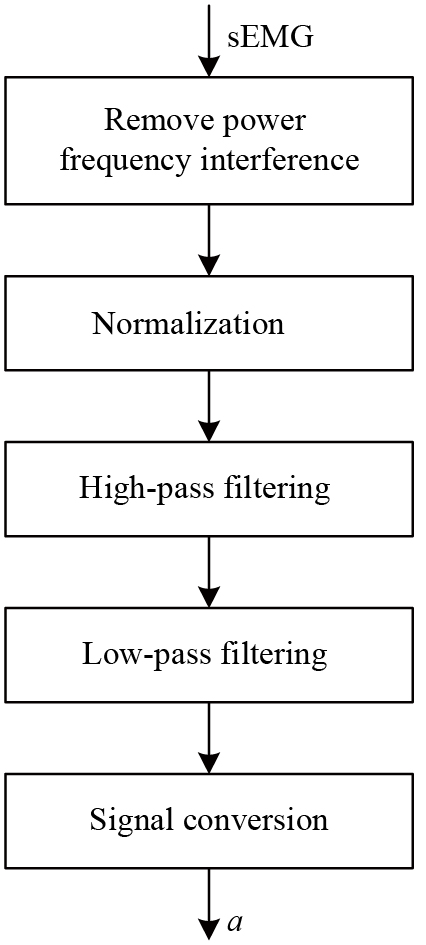
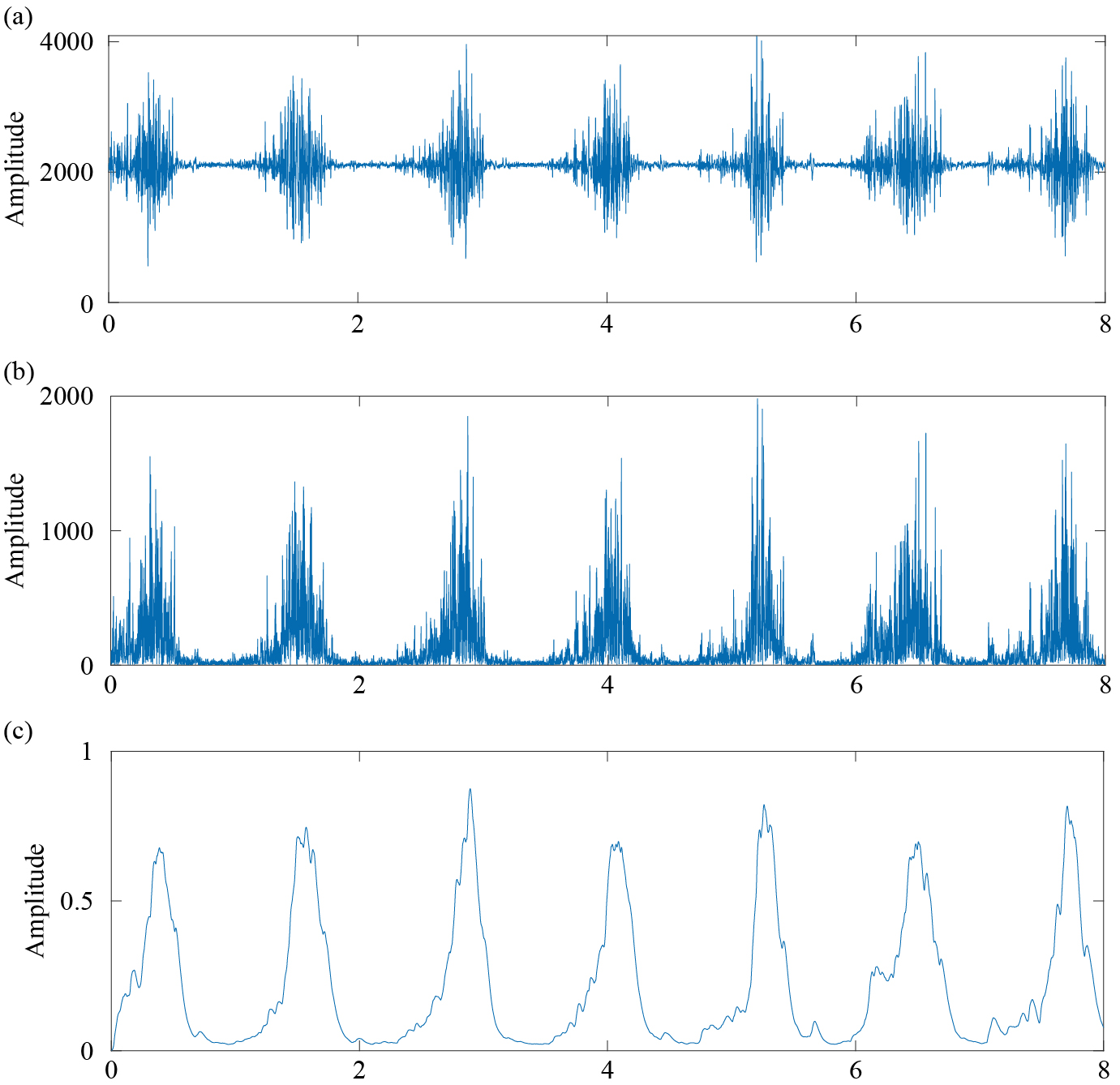
sEMG signal is the bioelectric change phenomenon that occurs when the human muscle activity is excited and the muscle tissue is stimulated to contract [26]. In this work, the EMG signals were recorded using a multi-channel EMG acquisition system (model ELONXI EMG 100-Ch-Y-RA, Hangzhou JiaoPu Technology Co., Ltd., Hangzhou, China). The raw EMG signal of the muscle collected by the EMG acquisition instrument is a weak electrical signal with an amplitude range of 0.1–5 mV. The muscle activation of 0–1 was obtained after removing power frequency interference, filtering, normalization, and other operations. The processing flow of muscle sEMG signals is shown in Fig. 2.
The raw sEMG signals are subjected to a standardized preprocessing protocol to mitigate contamination from noise and artifacts. Initial processing involves the elimination of power-line interference (PLI), a 50 Hz phenomenon arising from electromagnetic coupling with electrical infrastructure. This is achieved by applying adaptive notch filters with harmonic suppression capabilities, effectively attenuating fundamental frequency components and their integer multiples. Subsequent spectral refinement employs a fourth-order Butterworth band-pass filter (20–500 Hz cutoff frequencies) to isolate the physiologically relevant myoelectric spectrum. This frequency window optimally captures motor unit action potential trains while rejecting extraneous low-frequency baseline drift (<20 Hz) and high-frequency instrumentation noise (>500 Hz). Signal normalization is performed using the min-max scaling technique.
Feature extraction is a crucial step in fully using sEMG signals for human lower limb movement intention recognition. This study extracted six features, including one frequency domain feature and five time domain features, from the collected sEMG signals.
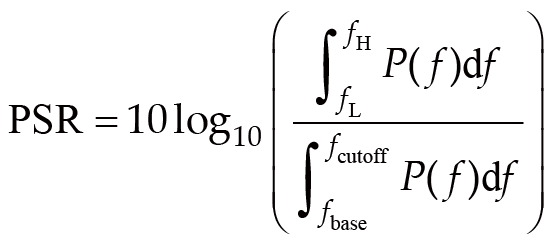
(1) Power spectral ratio (PSR) as a frequency domain feature for gait phase-specific muscle contraction quantification, which is defined as the logarithmic energy proportion between specific neuromuscular frequency bands, provides biomechanical insights into gait-dependent muscle recruitment strategies. This metric is mathematically expressed as:(1)where P(f) denotes the power spectral density (PSD) estimated via Welch's method (512-point Hamming window, 50% overlap), fH−fL represents the characteristic contraction band (typically 30–150 Hz), and fbase − fcutoff spans the full sEMG bandwidth (20–500 Hz).
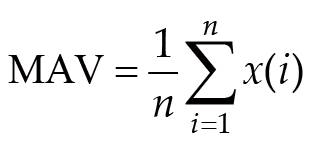
(2) Mean absolute value (MAV). Quantifies the average intensity of an sEMG signal segment:(2)
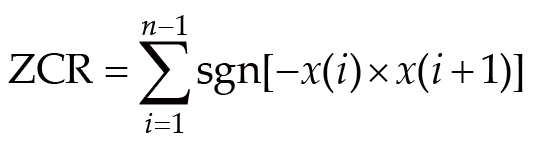
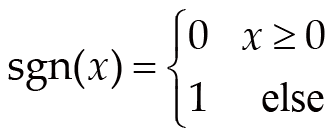
(3) Zero crossing rate (ZCR). Characterizes the frequency of amplitude polarity changes in sEMG signals:(3)(4)
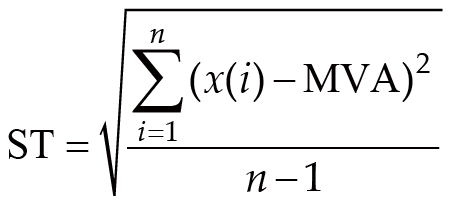
(4) Standard deviation. Measures the dispersion of sEMG intensity around the mean value:(5)
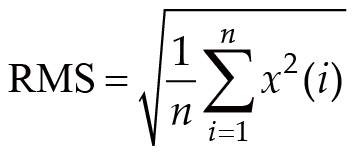
(5) Root mean square (RMS). Represents the signal's average power, reflecting sustained muscle contraction:(6)
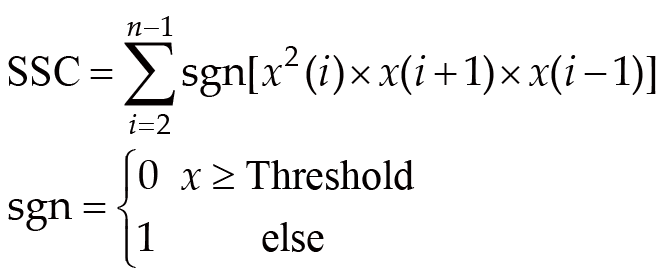
(6) Slope sign change (SSC). Counts the alternations in sEMG signal slope polarity:(7)
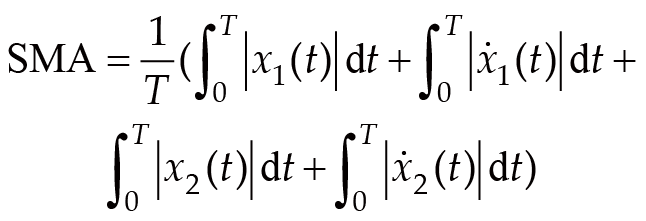
This study used the BWT901CL attitude sensor to obtain the ankle angle signal. The sensor cooperated with the dynamic Kalman filter algorithm, and the measurement accuracy reached 0.05° in the dynamic environment, and the ankle angle and angular velocity signals could be output simultaneously. In the feature extraction process, the angle change rate reflects the speed and acceleration of ankle movement, which is one of the important indicators used to judge the movement intention. The angle range, on the other hand, reflects the ankle's range of motion in different actions and helps distinguish different motion modes. On the other hand, the average angle provides information about the stable state of the ankle joint maintained over a period, which is important for understanding the continuous movement intention. This study used advanced signal processing techniques to extract these features more accurately. Firstly, the dynamic Kalman filtering algorithm was used to filter the original angle signal, eliminating noise and interference and improving the signal-to-noise ratio. Secondly, by calculating the first and second derivatives of the angle, the angle change rate and acceleration information are obtained, which further enriches the feature set. Therefore, the signal amplitude domain (SMA) is proposed to represent the intensity of body movement per unit time, which is expressed as follows:(8)where, T is the time width of the moving window, and T=0.2 s is chosen in this paper.
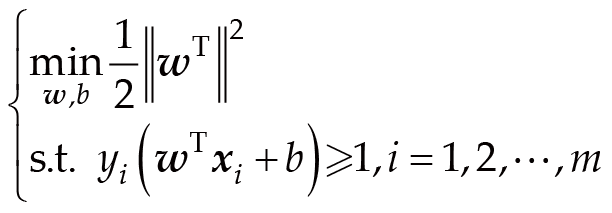
Support vector machine is a highly efficient supervised learning algorithm primarily used for classification tasks [27, 28]. Its core principle involves finding an optimal hyperplane that separates samples of different classes while maximizing the minimum margin between the two classes to enhance the model's generalization capability. The hyperplane is determined by the closest sample points (termed support vectors), which act as critical anchors for the classification boundary. Mathematically, solving for the optimal hyperplane can be formulated as a convex quadratic optimization problem:(9)where, w is the hyperplane normal vector, b denotes the bias term, xi represents the input sample data, and y corresponds to the gait pattern.
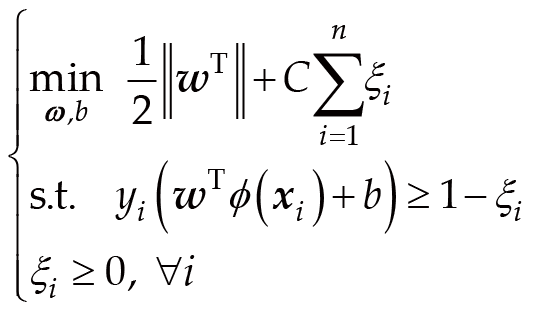
Human lower limb motion patterns constitute a linearly non-separable problem, necessitating the introduction of kernel functions and soft margins. The kernel function maps the sample data from the original space to a high-dimensional feature space so that the sample data is linearly separable in the high-dimensional feature space. However, the role of the soft margin is to allow the partition of the hyperplane to be wrong on some samples by introducing penalty factors and slack variables. In this case, the updated objective function and constraints for solving the generalized optimal classification hyperplane are:(10)where, C is the penalty factor, ξi denotes the slack variable, and ϕ(xi) the feature vector of the reduced xi mapping to the high-dimensional feature space.
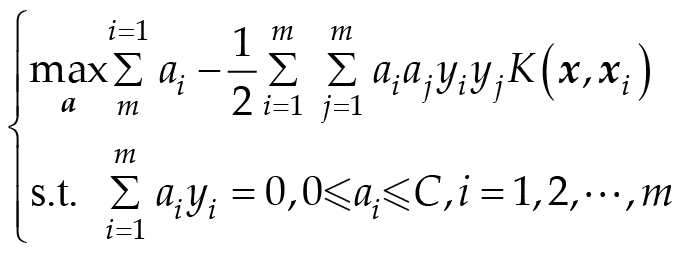
Using the Lagrange multiplier method and the duality principle, the dual problem of Eq. (2) is obtained as follows:(11)where, a is the Lagrange multiplier vector, ai is the Lagrange multiplier, and K(x, xi). is the kernel function.
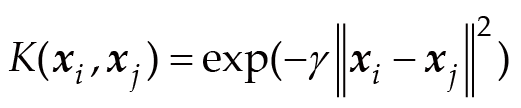
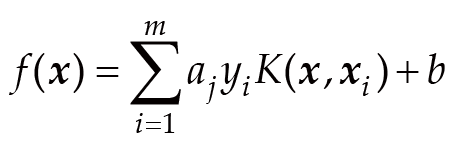
Different kernel functions can lead to different classification results, and the choice of kernel function is crucial for solving specific problems. Commonly used kernel functions include linear kernel, polynomial kernel, radial basis function (RBF) kernel, and sigmoid kernel. In the context of gait recognition, the RBF kernel is often selected due to its strong ability to handle nonlinear relationships and its good performance in practical applications. By adjusting the parameters of the RBF kernel, the complexity of the decision boundary can be controlled, thereby achieving better classification effects. The expression of the RBF kernel function is:(12)where, γ is the kernel parameter. The final classification decision function is:(13)
In conclusion, the classification performance of SVM is closely related to the settings of the penalty factor C and the kernel function parameter γ. Therefore, this paper employs the particle swarm optimization (PSO) algorithm to optimize the parameters of SVM, thereby enhancing its classification accuracy and robustness.
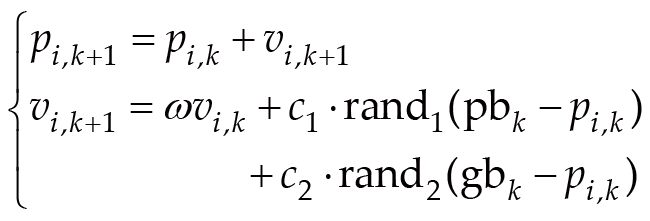
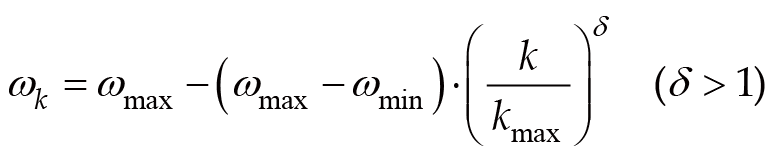
The PSO algorithm is inspired by the foraging behavior of birds [29, 30]. It treats the position of individual birds or food sources as potential solutions to optimization problems. Through information exchange between individuals and the optimal solution within the group, the algorithm guides each particle to converge toward the current best solution while retaining its own historical information. By iteratively updating positions, the swarm ultimately reaches the optimal solution [31]. Due to its advantages, such as fast convergence rate and simple yet efficient workflow, PSO has been widely applied in multi-objective parameter optimization. The core of PSO lies in the velocity and position updates of particles, which can be expressed as:(14)where, pi,k and vi,k represent the position and velocity of the i-th individual in the population during the k-th iteration, respectively, pbk denotes the particle best solution in the k-th iteration, gbk is the historical global best solution, rand1 and rand2 are random numbers uniformly distributed in the range [0, 1], c1 and c2 are the individual learning factor and global learning factor, typically valued between 0 and 2, ωk is the inertia factor that balances the trade-off between local exploration and global exploitation. Prior research demonstrates that implementing a concave function-based decreasing strategy for inertia weight adjustment not only prevents premature convergence but also enhances convergence rates during later optimization stages. Therefore, the inertia factor is adjusted using a concave function, expressed as:(15)where, ωmax and ω min are the upper and lower bounds of the inertia weight, kmax is the total number of iterations, δ controls the concavity of the adjustment curve.
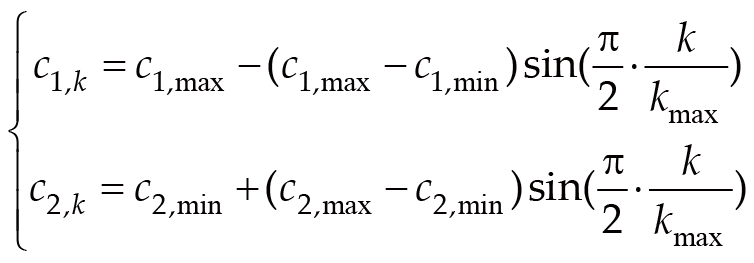
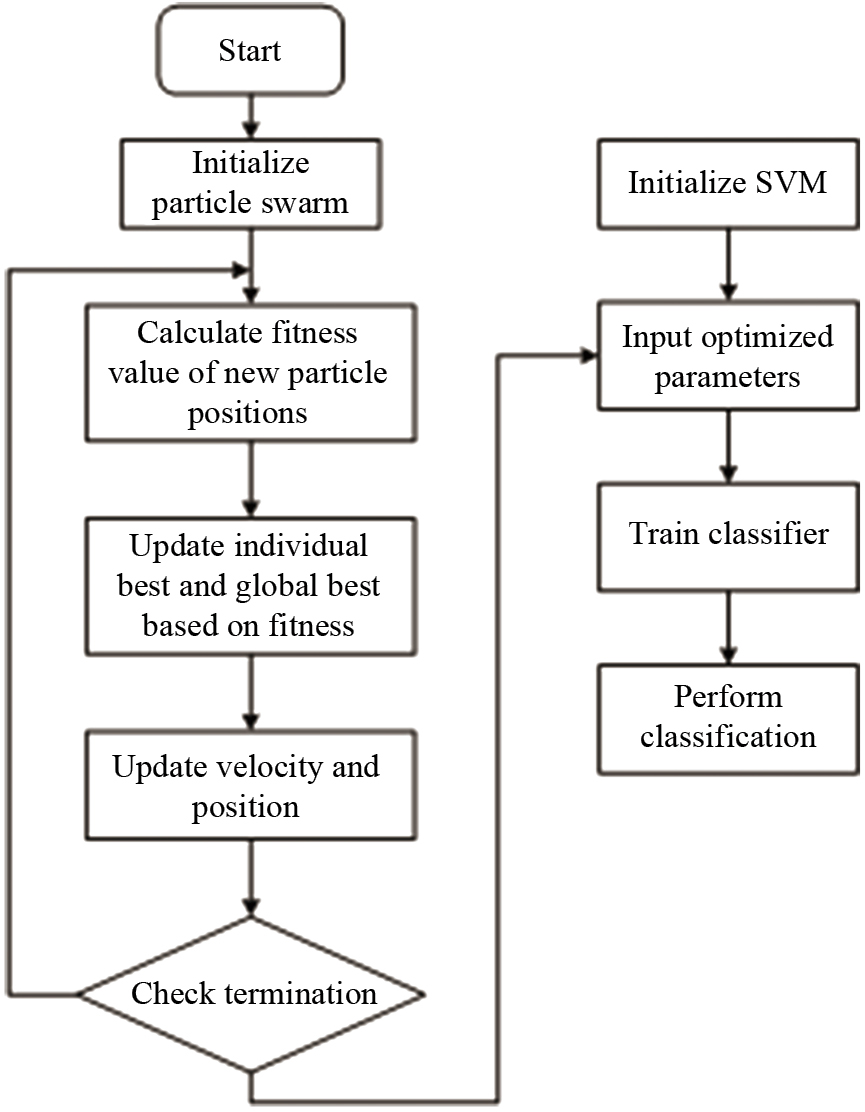
The individual learning factor c1 and the global learning factor c2 influence the particle's optimization search capability by biasing the particle's new positions. A higher c1 provides new positions in distant regions of the search space, enhancing global exploration, and a lower c2 refines local search capabilities by focusing on nearby areas [32, 33]. In the initial stage and the later stage of optimization, the requirements of global search and local search ability of the algorithm are different. This paper adopts an adaptive learning factor, so that c1 gradually decreases with iteration, and c2 gradually increases with iteration, which is expressed as:(16)where, c1,max and c1,min are the upper and lower limits of the individual learning factor, c2,max and c2,min are the upper and lower limits of the global learning factor, respectively. This work applies the particle swarm optimization algorithm to the SVM to optimize the input weights and bias values. In this paper, the PSO algorithm is used to optimize the penalty factor C and the kernel function parameter γ in SVM, and the schematic diagram of the algorithm is shown in Fig. 3. The main steps of the MPSO-SVM algorithm are as follows:
Step 1: Divide all sample data into two parts, training data and test data.
Step 2: Initialize the particle swarm, including PSO parameters ω, c1 , c2, and kmax, and set the parameter range of the SVM classifier. That is, the range of penalty factor C, the range of kernel function parameter γ. In this work, the algorithm parameters are configured as follows: an inertia weight ω=0.8, cognitive and social acceleration coefficients c1=1.6, c2 =1.8, a maximum iteration count kmax=100, and a population size of 30. The search ranges for both the penalty factor C and kernel parameter γ are defined within the interval [10–6 106].
Step 3: Calculate the new fitness value of each particle, select the appropriate inertia factor according to Eq. (8), and complete the update of particle position and velocity.
Step 4: The fitness values of the particles are sorted, and the optimal position of the current particle swarm and the historical individual optimal position are calculated.
Step 5: Determine whether the number of evolutions is less than or equal to the maximum number of evolutions. If it is less than or equal to, return to Step 3; otherwise, end the evolution process.
Step 6: Output the optimal solution (C,γ) and create an SVM classifier for model training and classification prediction.
A series of experiments were conducted to evaluate the effectiveness of the proposed PSO-SVM for human lower extremity motion intention detection. The study involved four healthy adult participants (2 males, two females; age: 24.5 years ± 2.3 years; height: 170.2 cm ± 5.6 cm; weight: 65.8 kg ± 7.1 kg) with no history of neuromuscular disorders or lower-limb injuries. Participants were instructed to avoid strenuous exercise 24 hours before the experiment to minimize the effects of muscle fatigue. During the experiment, the participants performed four gait phases (CP, CD, PP, SW) on a motorized treadmill (Woodway, USA) at a controlled speed of 1.25 m·s–1. Each trial lasted 15 min, with 5-min rest intervals to prevent fatigue. A total of 3800 valid gait cycles were recorded.
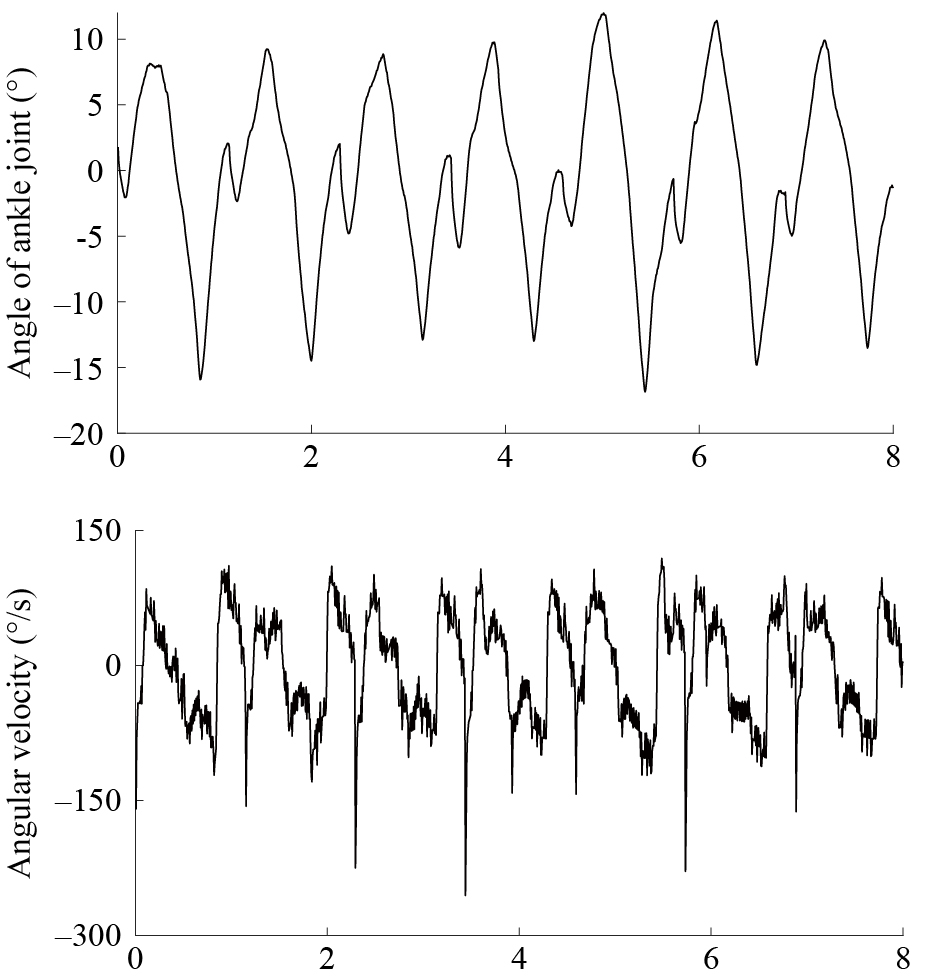
The EMG signal of the soleus (SOL) during walking is shown in Fig. 4. The raw signals were high-pass filtered (4th-order Butterworth) and normalized to maximum voluntary contraction. As shown in Fig. 5, the ankle angle information was captured using the BWT901CL attitude sensor attached to the shank segment of the participants' legs. The sensor provided real-time data on ankle dorsiflexion and plantarflexion angles, which is crucial for identifying different gait phases. The collected data were synchronized with the sEMG signals to ensure accurate analysis. It can be seen from the figure that the EMG signal and ankle angle information have periodic changes during human walking, and the sEMG has noticeable changes at different moments of the gait cycle.
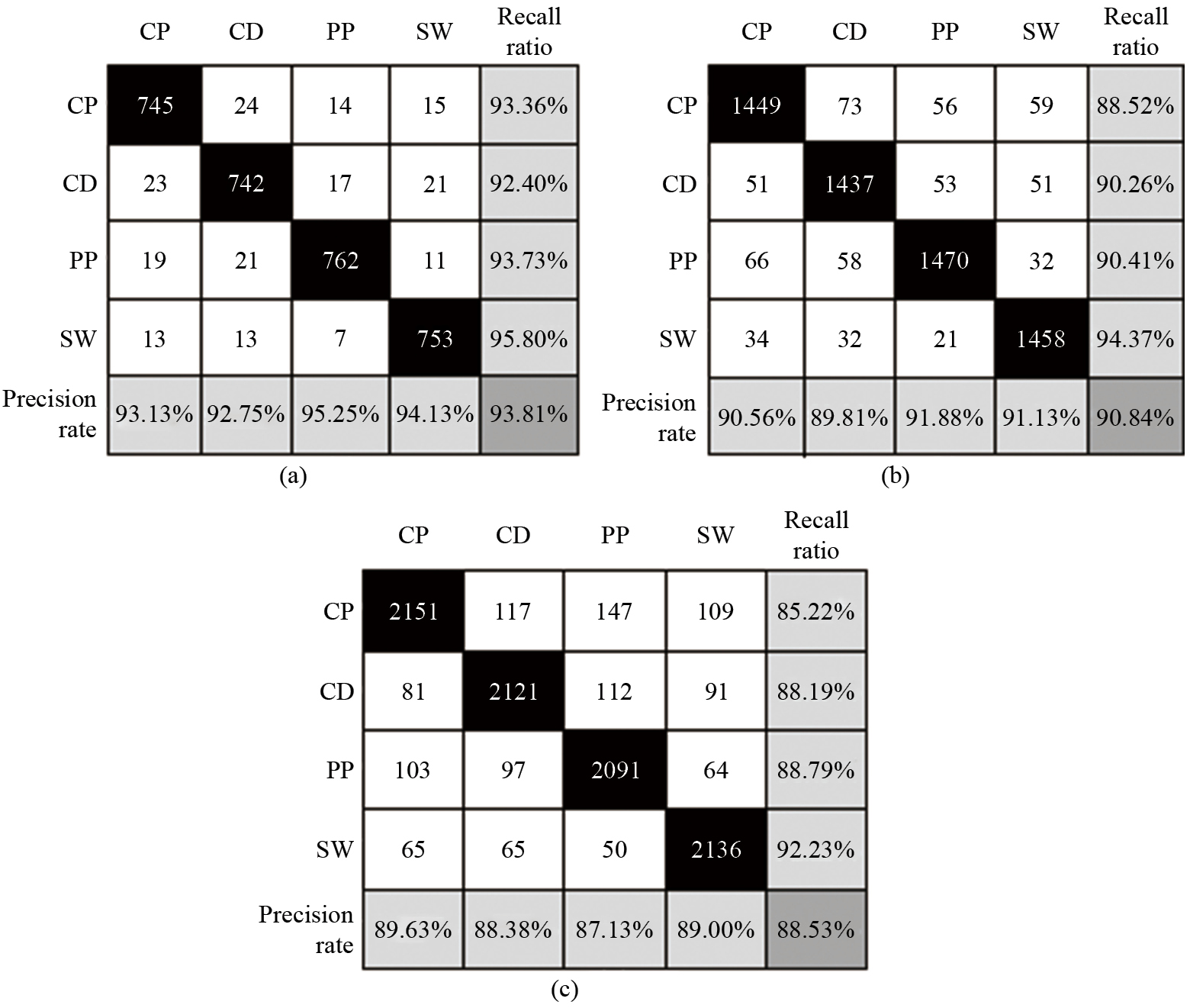
The respective eigenvalues are extracted using the obtained ankle angle signal and muscle electromyography information to form the feature matrix. To verify the influence of training set size on the recognition performance of the proposed improved MPSO-SVM recognition method, the collected original data sets are randomly divided into training and test sets in the ratios of 0.8:0.2, 0.6:0.4, and 0.4:0.6 in this work. Different gait types are recognized using the MPSO-SVM recognition algorithm proposed in this paper. The recognition results of the MPSO-SVM for human valking gait phases recognition are described in Fig. 6. And, (a) The ratio of training and test sets is 0.8:0.2; (b) The ratio of training and test sets is 0.4:0.6; (c) The ratio of training and test sets is 0.6:0.4. The diagonal black box stands for the correctly identify sample number, the white box indicates the incorrectly identify sample number, the last row in the gray box represents the recognition precision rate, The last column in the gray box represents the recall rate, the final gray box is the average recognition precision rate. From the experimental results, it can be clearly seen that the average recognition precision rate is the highest, reaching 93.81%, when the training set and the test set are randomly allocated at the ratio of 0.8:0.2. In this case, the precision rate is more than 92% against the four gait phases, for the CP gait phase, the MPSO-SVM algorithm achieved a high recognition accuracy of 93.13%, with only a small number of misclassified samples. Similarly, the recognition accuracies for the CD, PP, and SW gait phases were 92.75%, 95.25%, and 94.13%, respectively. The recall ratio has the same result. In particular, the recall ratio is more than 92% against the four PD gait phases, which are 93.36%, 92.40%, 93.73%, and 95.80% for CP, CD, PP, and SW, respectively. These results demonstrate that the MPSO-SVM algorithm has excellent performance in recognizing different gait phases. When the training set and test set are randomly assigned in the ratio of 0.6 to 0.4, the average recognition accuracy of the recognition method is 90.84%. When the ratio is 0.4:0.6, the average recognition accuracy of the recognition method is 88.53%. This indicates that as the training data ratio decreases, the MPSO-SVM algorithm's recognition performance declines. However, even when the training-to-test data ratio is as low as 0.4:0.6, the MPSO-SVM algorithm still maintains a relatively high recognition accuracy level, suggesting its robustness and adaptability.
In addition, to further verify the MPSO-SVM algorithm's performance, we compared it with several common classification algorithms, including the traditional K-nearest neighbor (KNN), decision tree (DT), and random forest (RF).
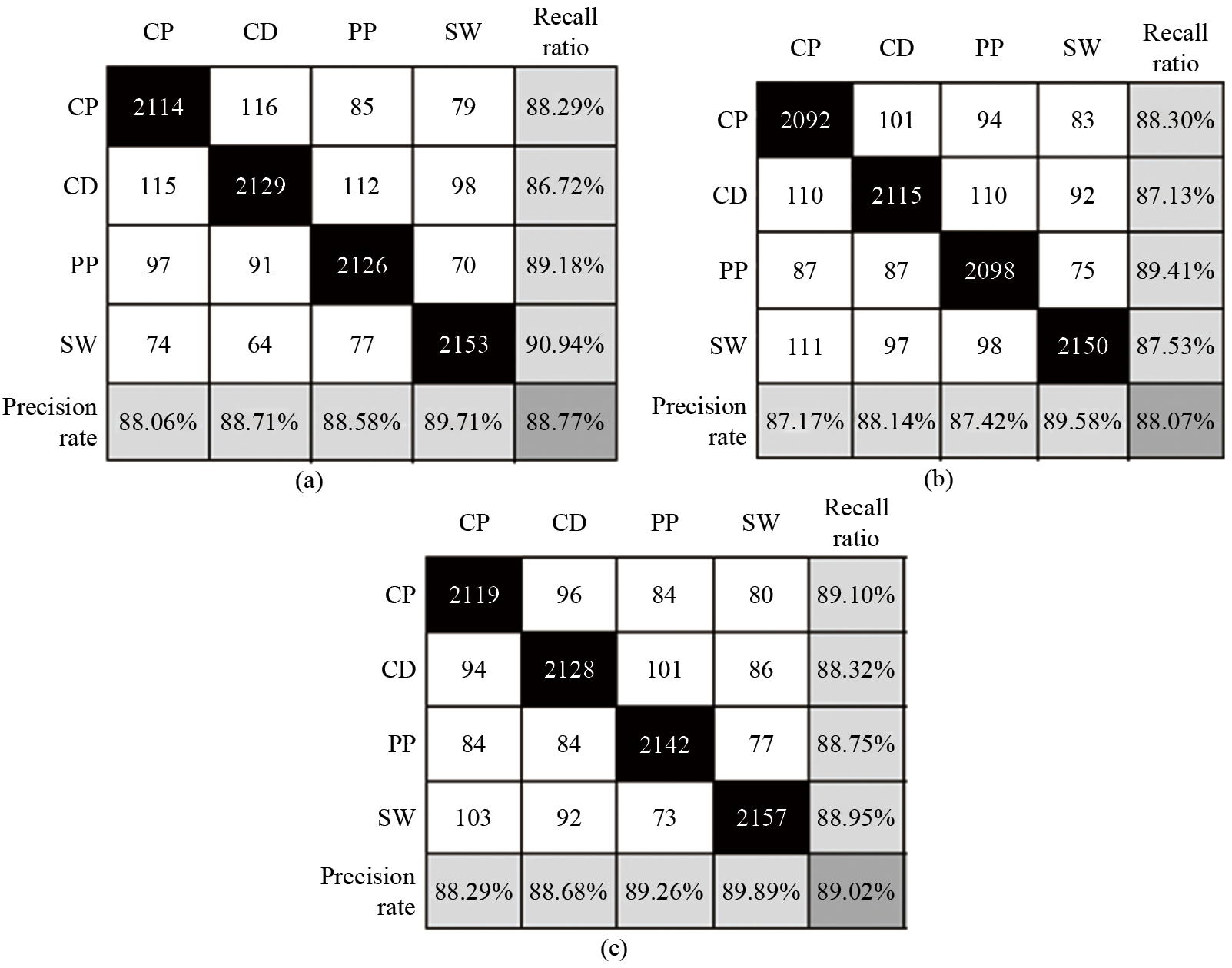
To further evaluate the performance of the proposed MPSO-SVM algorithm, we compared it with other commonly used gait phase recognition algorithms, such as KNN, DT, and RF. The comparison results are shown in Fig. 7. (a) the KNN recognition performance; (b) the DT recognition performance; and (c) the RF recognition performance. The KNN average recognition accuracy is 88.77%, and the recognition precision rate is 88.06%, 88.71%, 88.58%, and 89.71% for CP, CD, PP, and SW, respectively. And for the DT, the average recognition accuracy is 88.07%, and the recognition precision rate is 87.17%, 88.14%, 87.42%, and 89.58% for CP, CD, PP, and SW, respectively. And for the RF, the average recognition accuracy is 89.02%, and the recognition precision rate is 88.29%, 88.68%, 89.26%, and 89.89% for CP, CD, PP, and SW, respectively. It can be seen from the figure that the proposed MPSO-SVM algorithm has the highest average recognition accuracy among all algorithms, reaching 93.81%. And the recall ratio shows the same result. Specifically, the average recall ratio of MPSO-SVM is about 5.1% higher than KNN, 5.8% higher than decision tree, and 4.8% higher than RF. This demonstrates the superiority of the MPSO-SVM algorithm in gait phase recognition tasks. In addition, we also analyzed the computational efficiency of the proposed MPSO-SVM algorithm. The experimental results show that the MPSO-SVM algorithm has a relatively short recognition time, which meets the real-time requirements of gait phase recognition systems. In summary, the experimental results demonstrate that the proposed MPSO-SVM algorithm has excellent performance in recognizing different gait phases, with high accuracy, strong robustness, and efficient computation. This lays a solid foundation for applying gait phase recognition technology in rehabilitation training, exoskeleton control, and other fields. Within all the phases of human normal walking gait, the probability of the adjacent phases being confusedly classified is the highest. This phenomenon primarily stems from the temporal misalignment inherent in multimodal biosignal acquisition during phase transition. Specifically, surface sEMG signals precede actual movements by approximately 50 ms, while joint angle sensors exhibit 10–30 ms response latency. Such temporal discrepancies induce phase ambiguity regions in feature fusion matrices, thereby compromising classification reliability. In order to deal with this challenge, an attention mechanism can be added to the MPSO-SVM framework in later research. This architecture strategically amplifies the influence of historical data information on gait pattern classification, effectively mitigating temporal bias artifacts through weighted temporal context integration.
This paper presents a multimodal pedestrian gait intention recognition framework tailored for intelligent transportation applications. Combining surface electromyography, ankle joint kinematics, and applying an MPSO-SVM algorithm, the proposed method achieves high classification accuracy and strong robustness against inter-subject and environmental variations. Experimental validation shows that the approach outperforms traditional classifiers and can maintain recognition accuracy above 93% even under varying training–testing conditions. These findings highlight the potential of the method for integration into intelligent transportation infrastructures, particularly in systems requiring early-stage pedestrian behaviour prediction, such as autonomous vehicle control at intersections, dynamic traffic light scheduling, and intelligent pedestrian monitoring. Future research will focus on embedding the system into wearable or vehicular platforms for real-time motion prediction, enabling proactive safety measures and improved human-machine collaboration in urban transport systems.
This work is partly supported by the Research Project of Higher Education in Henan Province (Grant no. 23A413008) and partly by the Project of the Science and Technology Department of Henan Province (Grant no. 252102221011).
Z. Feng, Y. Luo, D. Li, J. Pan, R. Tan, and Y. Chen, "Integrating digital twins and machine learning for advanced control in green hydrogen production," Chain, vol. 2, no. 1, pp. 1–14, 2025.
Z. Feng, I. Eiubovi, Y. Shao, Z. Fan, and R. Tan, "Review of digital twin technology applications in hydrogen energy," Chain, vol. 1, no. 1, pp. 54–74, 2024.
S. Balasubramanian, V. Shukla, N. Islam, A. Upadhyay, and L. Duong, "Applying artificial intelligence in healthcare: Lessons from the COVID-19 pandemic," International Journal of Production Research, vol. 63, no. 2, pp. 594–627, 2025.
T. Wang, P. Zheng, S. Li, and L. Wang, "Multimodal human-robot interaction for human‐centric smart manufacturing: A survey," Advanced Intelligent Systems, vol. 6. no. 3, p. 2300359, 2024.
X. Tian, S. Zhou, H. Hao, H. Ruan, R. R. Gaddam, R. C. Dutta, and R. Tan, "Machine learning and density functional theory for catalyst and process design in hydrogen production," Chain, vol. 1, no. 2, pp. 150–166, 2024.
Z. Feng, J. Huang, S. Jin, G. Wang, and Y. Chen, "Artificial intelligence-based multi-objective optimisation for proton exchange membrane fuel cell: A literature review," Journal of Power Sources, vol. 520, p. 230808, 2022.
Z. Feng, S. Jin, H. Xiang, D. Li, S. Sun, H. Zhang, and Y. Chen, "Artificial intelligence-based optimization for ring-opening metathesis polymerization of proton exchange membrane," Journal of Polymer Research, vol. 30, no. 11, p. 418, 2023.
L. Zhu, Z. Wang, Z. Ning, Y. Zhang, and C. Chen, "A novel motion intention recognition approach for soft exoskeleton via IMU," Electronics, vol. 9, no. 12, p. 2176, 2020.
P. Zhang, J. Zhang, and A. Elsabbagh, "Lower limb motion intention recognition based on sEMG fusion features," IEEE Sensors Journal, vol. 22, no. 7, pp. 7005–7014, 2022.
K. Yin, K. Xiang, M. Pang, J. Chen, and L. Yang, "Personalised control of robotic ankle exoskeleton through experience-based adaptive fuzzy inference," IEEE Access, vol. 7, pp. 72221–72233, 2019.
K. Yin, Y. Xue, Y. Yu, and S. Xie, "Variable impedance control for bipedal robot standing balance based on artificial muscle activation model," Journal of Robotics, vol. 5, p. 8142161, 2021.
L. -L. Li, G. -Z. Cao, H. -J. Liang, Y. -P. Zhang, and F. Cui, "Human lower limb motion intention recognition for exoskeletons: A review," IEEE Sensors Journal, vol. 23, no. 24, pp. 30007–30036, 2023.
S. Kyeong, J. Feng, J. K. Ryu, J. J. Park, K. H. Lee, and J. Kim, "Surface electromyography characteristics for motion intention recognition and implementation issues in lower-limb exoskeletons," International Journal of Control, Automation and Systems, vol. 20, no. 3, pp. 1018–1028, 2022.
A. J. Young, T. A. Kuiken, and L. J. Hargrove, "Analysis of using EMG and mechanical sensors to enhance intent recognition in powered lower limb prostheses," Journal of Neural Engineering, vol. 11, no. 5, p. 056021, 2014.
J. Li, Z. Wang, C. Wang, and W. Su, "GaitFormer: Leveraging dual-stream spatial–temporal vision transformer via a single low-cost RGB camera for clinical gait analysis," Knowledge-Based Systems, vol. 295, p. 111810, 2024.
Y. Wang, X. Cheng, L. Jabban, X. Sui, and D. Zhang, "Motion intention prediction and joint trajectories generation toward lower limb prostheses using EMG and IMU signals," IEEE Sensors Journal, vol. 22, no. 11, pp. 10719–10729, 2022.
Z. Zhou, Q. Tao, N. Su, J. Liu, Q. Chen, and B. Li, "Lower limb motion recognition based on sEMG and CNN-TL fusion model," Sensors, vol. 24, no. 21, p. 7087, 2024.
J. Wang, Y. Dai, and X. Si, "Analysis and recognition of human lower limb motions based on electromyography (EMG) signals," Electronics, vol. 10, no. 20, p. 2473, 2021.
B. Wang, C. Ou, N. Xie, L. Wang, T. Yu, G. Fan, and J. Chu, "Lower limb motion recognition based on surface electromyography signals and its experimental verification on a novel multi-posture lower limb rehabilitation robots," Computers and Electrical Engineering, vol. 101, p. 108067, 2022.
F. Gao, T. Tian, T. Yao, and Q. Zhang, "Human gait recognition based on multiple feature combination and parameter optimization algorithms," Computational Intelligence and Neuroscience, vol. 2021, no. 1, p. 6693206, 2021.
K. Anam and A. Al-Jumaily, "Evaluation of extreme learning machine for classification of individual and combined finger movements using electromyography on amputees and non-amputees," Neural Networks, vol. 85, pp. 51–68, 2017.
S. Kyeong, J. Feng, J. K. Ryu, and J. J. Park, "Surface electromyography characteristics for motion intention recognition and implementation issues in lower-limb exoskeletons," International Journal of Control, Automation and Systems, vol. 20, no. 3, pp. 1018–1028, 2022.
X. Wang, D. Dong, X. Chi, S. Wang, Y. Miao, M. An, and A. Gavrilov, "sEMG-based consecutive estimation of human lower limb movement by using multi-branch neural network," Biomedical Signal Processing and Control, vol. 68, p. 102781, 2021.
X. Yuan, T. Wu, X. Yuan, and W. Wang, "Research on a full-body power-assisted exoskeleton control method based on GSO-RF intent recognition algorithm," Journal of Mechanical Engineering, vol. 60, no. 17, pp. 91–101, 2024.
E. Wang, X. Chen, Y. Li, Z. Fu, and J. Huang, "Lower limb motion intent recognition based on sensor fusion and fuzzy multitask learning," IEEE Transactions on Fuzzy Systems, vol. 32, no. 5, pp. 2903–2914, 2024.
A. F. T. Ibrahim, V. R. Gannapathy, L. W. Chong, L. W. Chong, and I. S. M. Isa, "Analysis of electromyography (EMG) signal for human arm muscle: A review," Advanced Computer and Communication Engineering Technology: Proceedings of ICOCOE 2015, vol. 2015, pp. 567–575, 2015.
E. Farago, D. MacIsaa, M. Suk, and A. D. C. Chan, "A review of techniques for surface electromyography signal quality analysis," IEEE Reviews in Biomedical Engineering, vol. 16, pp. 472–486, 2022.
A. Roy and S. Chakraborty, "Support vector machine in structural reliability analysis: A review," Reliability Engineering & System Safety, vol. 233, p. 109126, 2023.
M. Bansal, A. Goyal, and A. Choudhary, "A comparative analysis of K-nearest neighbor, genetic, support vector machine, decision tree, and long short-term memory algorithms in machine learning," Decision Analytics Journal, vol. 3, p. 100071, 2022.
K. Yin, B. Tang, M. Li, and H. Zhao, "A multi-objective optimization approach based on an enhanced particle swarm optimization algorithm with evolutionary game theory," IEEE Access, vol. 11, pp. 77566–77584, 2023.
D. Wang, D. Tan, and L. Liu, "Particle swarm optimization algorithm: An overview," Soft Computing, vol. 22, no. 2, pp. 387–408, 2018.
A. G. Gad, "Particle swarm optimization algorithm and its applications: A systematic review," Archives of Computational Methods in Engineering, vol. 29, no. 5, pp. 2531–2561, 2022.
 Top
Top