ContentsFigures & Tables
With the development of global industrialization, there is an urgent need to find green energy sources that can replace fossil fuels [1]. A fuel cell system is considered one of the most promising technologies because of its high energy conversion efficiency, short fuel refueling time, no vibration, and low noise [2, 3]. Advancing fuel cell technology plays a crucial role in promoting energy restructuring and establishing a sustainable, eco-friendly society. Among various fuel cell categories, proton exchange membrane fuel cells (PEMFC) have the advantages of continuously operating at high current densities and low temperature [4, 5], zero pollution [6], high reliability [7], and fast start-up [8]. Therefore, PEMFC applications have evolved from aerospace applications to vehicle applications in recent years.
Currently, most automobile manufacturers have developed vehicles that are primarily powered by PEMFC, with the most prominent being Honda, Toyota, and Hyundai [9]. It is estimated that more than 5 million hydrogen fuel cell vehicles could be sold on the market by 2032 [10]. However, at present, the main factors hindering the commercialization of fuel cell vehicles are that PEMFC systems generally have problems such as high development costs and short life span [11–13]. Therefore, there is still a large technical gap for researchers to study the fuel cell system technology, and a detailed analysis of the fuel cell system technology is very important to help the development of the fuel cell system.
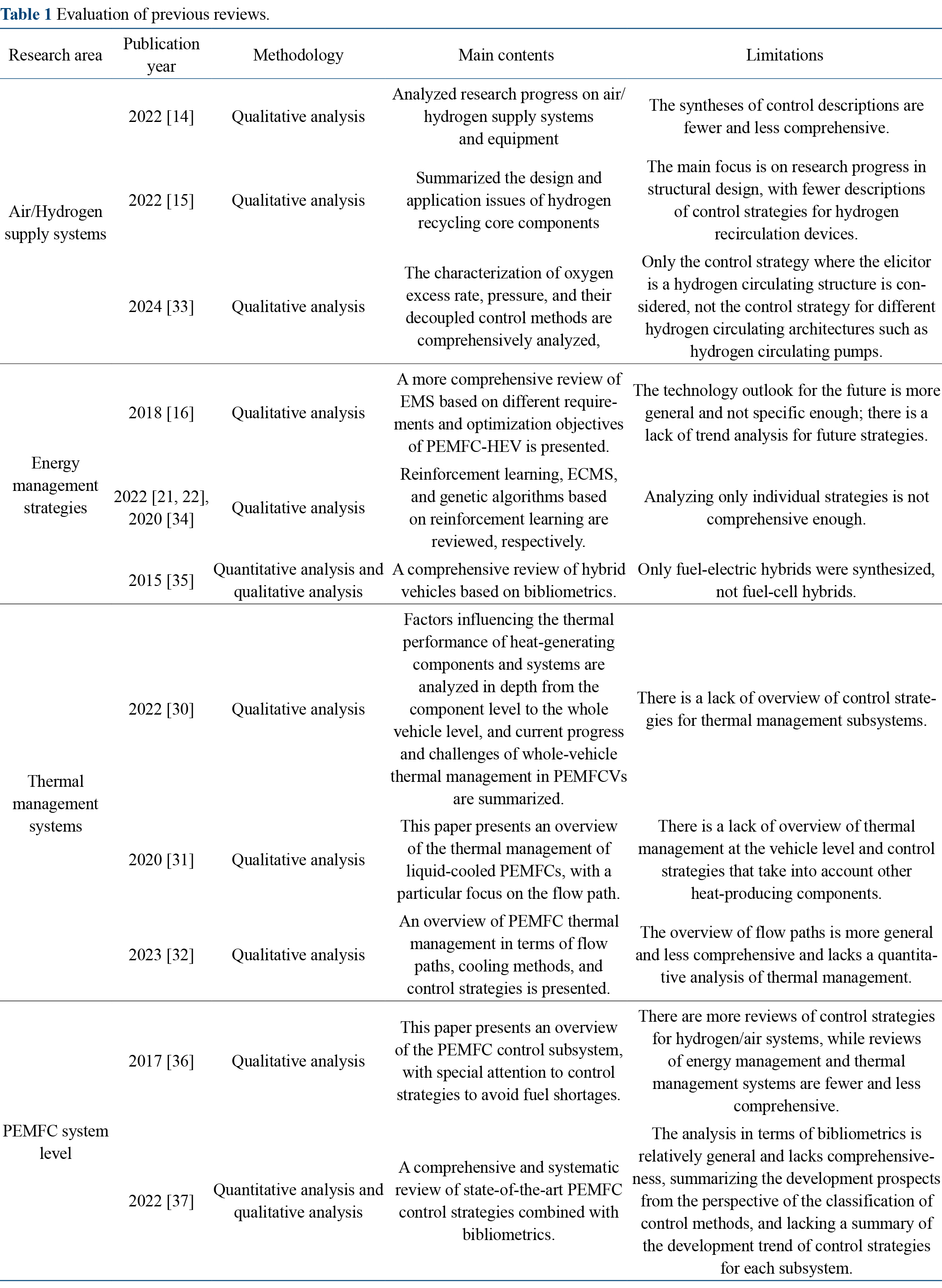
The main control difficulties of the fuel cell system are as follows: firstly, the pressure and flow rate of the reaction gas of the system fluctuates greatly and is difficult to determine. Consequently, many researchers [14, 15] have organized the core components of the hydrogen/air supply system and the control strategy. Secondly, due to the weak output characteristics of fuel cells and their inability to recover braking energy, PEMFC usually form a hybrid structure with Li-ion batteries and other auxiliary energy sources (e.g., supercapacitors). The design of the energy management system architecture and its control algorithms for the hybrid system is a complex task which has a direct impact on the scale, cost, and efficiency of the entire system [16–20]. Therefore, many researchers [21–24] reviewed the research on reinforcement learning, equivalent consumption minimization strategies (ECMS), and genetic algorithms in the field of fuel cell energy management strategy (EMS) respectively. Furthermore, the research reported in Refs. [16, 25–28] provides some reviews of energy management strategies for hybrid vehicles with PEMFC as the main power source, and particularly reviewing EMS that consider both battery degradation and hydrogen consumption. Thirdly, PEMFCs are capable of operating at relatively low temperatures, ranging from –40 ℃ to 120 ℃. Nevertheless, considering the durability and performance of the PEMFC, the optimal operating temperature should be controlled within the range of 60 ℃ to 80 ℃ [29]. There must be a reasonable cooling system to take away the residual heat generated by the fuel cell operation to avoid thermal runaway, so the thermal management subsystem is the main guarantee related to the safe operation of the fuel cell. Some researchers [30–32] provide some reviews of thermal management control methods and cooling systems at the fuel cell system and vehicle level. The previous literature has summarized the control strategies of different subsystems of PEMFC from different perspectives. However, there are still some shortcomings that need to be improved, and the main elements and limitations of the previous reviews are listed in Table 1.
| Research area | Publication year | Methodology | Main contents | Limitations |
|---|---|---|---|---|
| Air/Hydrogen supply systems | 2022 [14] | Qualitative analysis | Analyzed research progress on air/hydrogen supply systems and equipment | The syntheses of control descriptions are fewer and less comprehensive. |
| 2022 [15] | Qualitative analysis | Summarized the design and application issues of hydrogen recycling core components | The main focus is on research progress in structural design, with fewer descriptions of control strategies for hydrogen recirculation devices. | |
| 2024 [33] | Qualitative analysis | The characterization of oxygen excess rate, pressure, and their decoupled control methods are comprehensively analyzed, | Only the control strategy where the elicitor is a hydrogen circulating structure is considered, not the control strategy for different hydrogen circulating architectures such as hydrogen circulating pumps. | |
| Energy management strategies | 2018 [16] | Qualitative analysis | A more comprehensive review of EMS based on different requirements and optimization objectives of PEMFC-HEV is presented. | The technology outlook for the future is more general and not specific enough; there is a lack of trend analysis for future strategies. |
| 2022 [21, 22], 2020 [34] | Qualitative analysis | Reinforcement learning, ECMS, and genetic algorithms based on reinforcement learning are reviewed, respectively. | Analyzing only individual strategies is not comprehensive enough. | |
| 2015 [35] | Quantitative analysis and qualitative analysis | A comprehensive review of hybrid vehicles based on bibliometrics. | Only fuel-electric hybrids were synthesized, not fuel-cell hybrids. | |
| Thermal management systems | 2022 [30] | Qualitative analysis | Factors influencing the thermal performance of heat-generating components and systems are analyzed in depth from the component level to the whole vehicle level, and current progress and challenges of whole-vehicle thermal management in PEMFCVs are summarized. | There is a lack of overview of control strategies for thermal management subsystems. |
| 2020 [31] | Qualitative analysis | This paper presents an overview of the thermal management of liquid-cooled PEMFCs, with a particular focus on the flow path. | There is a lack of overview of thermal management at the vehicle level and control strategies that take into account other heat-producing components. | |
| 2023 [32] | Qualitative analysis | An overview of PEMFC thermal management in terms of flow paths, cooling methods, and control strategies is presented. | The overview of flow paths is more general and less comprehensive and lacks a quantitative analysis of thermal management. | |
| PEMFC system level | 2017 [36] | Qualitative analysis | This paper presents an overview of the PEMFC control subsystem, with special attention to control strategies to avoid fuel shortages. | There are more reviews of control strategies for hydrogen/air systems, while reviews of energy management and thermal management systems are fewer and less comprehensive. |
| 2022 [37] | Quantitative analysis and qualitative analysis | A comprehensive and systematic review of state-of-the-art PEMFC control strategies combined with bibliometrics. | The analysis in terms of bibliometrics is relatively general and lacks comprehensiveness, summarizing the development prospects from the perspective of the classification of control methods, and lacking a summary of the development trend of control strategies for each subsystem. |
As evident from Table 1, most of the previous research mainly focuses on a single subsystem for qualitative analysis at the technical level or a few specific methods for comparative analysis. Quantitative analysis of relevant articles helps researchers to more intuitively grasp the research trends in the field. Nevertheless, few reviews in the field of PEMFC have been quantitatively analyzed. Bibliometrics is a typical quantitative analysis method, that can visualize the publication status of different countries and journals in the research field, and better help scholars to analyze the policy support, cutting-edge technology trends, national importance, and research hotspots in this field, which in turn can have a positive impact on the industrialization of the whole research field. Therefore, for automotive fuel cell, which is a new type of energy system based on hydrogen energy, combining bibliometrics with quantitative and qualitative methods to analyze the publication status, research hotspots and trends of automotive fuel cell system control and other cutting-edge information is extremely necessary to promote the industrialization of the automotive fuel cell system and commercial operation.
This paper combines bibliometrics to analyze the relevant literature of Web of Science (WOS) from 2000 to 2024 for the key subsystems of PEMFC and summarizes the development status and trends of each subsystem and key technologies of vehicular PEMFC systems, including hydrogen/air supply systems, EMS, and thermal management research, to provide some ideas and basis for future research of scholars in this field.
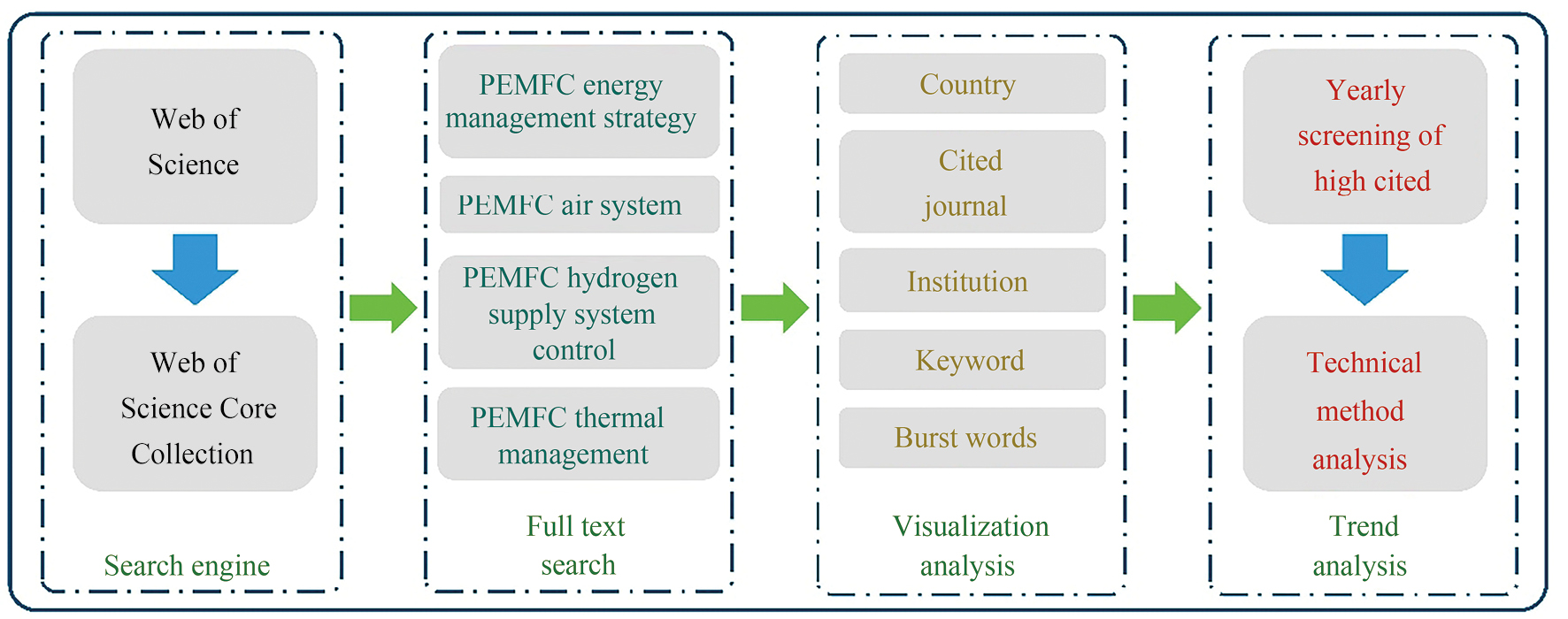
Bibliometrics is an effective tool for evaluating the contribution and progress of a particular research area and is the process of tracking the output, impact, structure, and development of a PEMFC research area by analyzing publications in the field using various tools and software [38]. In this paper, the visual analysis method in bibliometrics was used to combine bibliometrics with data charts and graphs to visualize the output of the collected data in the form of co-occurrence diagrams and histograms for the readers' quick understanding [35, 39]. The research process framework of this paper is shown in Fig. 1 [37]. First, the information needed for bibliometrics is obtained through the core database of the Web of Science Core Collection. Since the number of literature retrieved by topic is small and insufficient for bibliometric analysis, the paper is organized by "PEMFC energy management strategy", "PEMFC air system", "PEMFC hydrogen supply system control", and "PEMFC thermal management". The full text was searched. Subsequently, the retrieved literature was exported, organized, visualized, and analyzed by Citespace software, thus revealing the best-performing countries, the highly-cited journals, the research institutes with the highest number of publications, and the hottest keywords in the relevant fields in the past two decades. Finally, representative papers with high citation counts in different periods were searched by combining the outbreak words in different periods to analyze the main methods used by researchers in different periods as well as the research trends in recent years.
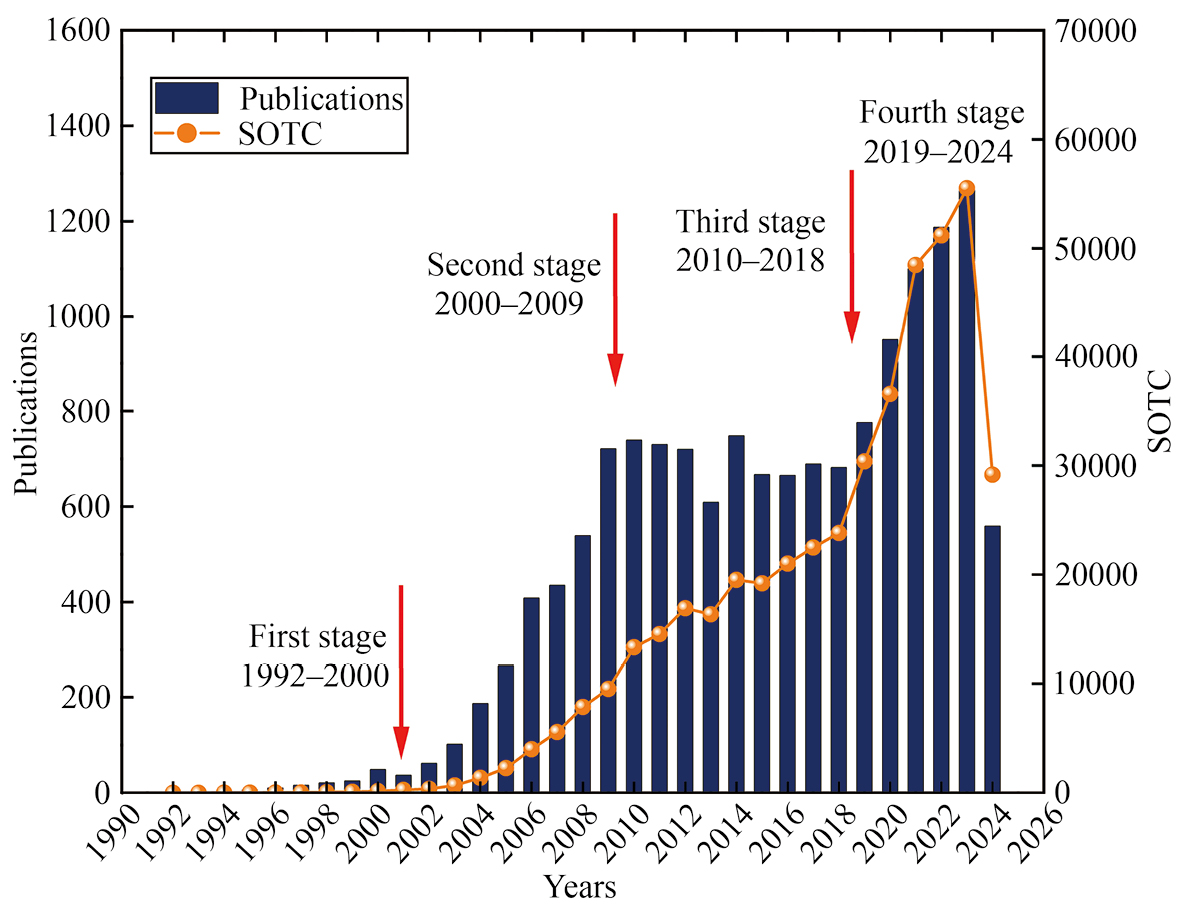
Under normal circumstances, the trend of article publication in the subsystems should be similar to the trend of article publication in the whole PEMFC. Therefore, in order to find all the literature in the key technology areas of the PEMFC system as completely as possible, during the data analysis stage, the literature publication of the whole PEMFC was firstly econometrically analyzed to summarize the trend of the industry. Then the subsequent chapters will specifically analyze the literature publication of the subsystems on the basis of this analysis. All the literature used in this study is from Web of Science Core Database. A WOS search of the literature up to July 1, 2024 was performed using "ALL=(PEMFC)" as the constraint formula, and the annual publication trends are shown in Fig. 2.
As can be seen from Fig. 2, the literature published before 2000 is relatively small. Therefore, this paper focuses on analyzing the literature from 2000 and later. There was a gradual increase from 2003 to 2009. On the one hand, this may be due to the fact that automobile giants such as Honda and Mercedes-Benz launched fuel cell vehicles one after another in 2002 [40], which played a positive stimulating role in the industry; on the other hand, Toyota launched hydrogen fuel cell vehicle leasing services in the U.S. and Japan in 2002–2003 [41], in addition, the U.S. Department of Energy invested 1.2 billion dollars to promote the development of fuel cells [42], and other favorable policies have boosted the development of the industry. The publication of articles from 2010 to 2018 remained relatively stable, which may be due to the fact that the industry's confidence has been dampened by the decrease in positive policies on fuel cells worldwide, the highlighting of technological bottlenecks, the high cost, the difficulty of commercialization, and the fact that some breakthrough technological issues cannot be solved in a short period. Against the background of global climate change, the publication of articles climbed rapidly after 2018, which may be attributed to the increase of favorable policies on the fuel cell industry in China, the United States, Japan, and Europe, as well as some technological breakthroughs, the cost began to drop, and the confidence in the commercialization of fuel cell vehicles began to increase, which promoted the enthusiasm of scholars for research. The number of publications reached 559 in the first half of 2024, and it was obvious that the research fever of PEMFC remains unabated under the support of the policy.
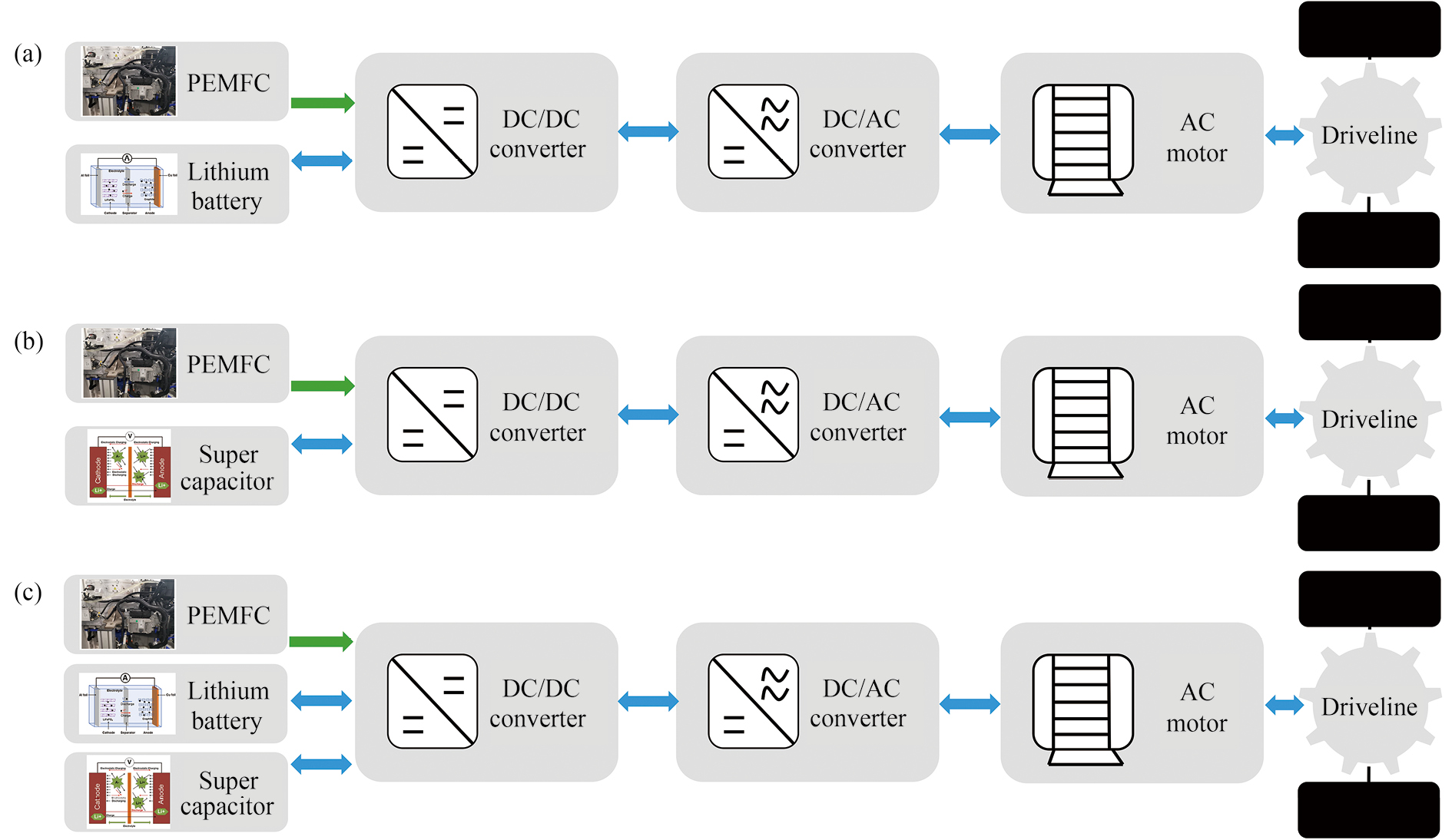
Due to the soft output characteristics of fuel cells and the inability to recover braking energy, lithium-ion batteries or supercapacitors are commonly used as energy buffers for fuel cell vehicles [43]. The main purpose of an EMS is to maximize the benefits of the energy storage medium in a hybrid electric vehicle (HEV) to achieve the function of peak shaving and valley filling of the overall vehicle power while the vehicle is in motion. For example, it is possible to capture the heat generated by conventional braking in the form of electrical energy to the battery [44–46]. The energy distribution between different energy sources needs to be managed. According to the different components of the hybrid power source composition, it is generally divided into three types of energy mixing with a fuel cell as the main source, as shown in Fig. 3, where Fig. 3(a) is the PEMFC-battery hybrid energy [47, 48], Fig. 3(b) is the PEMFC-supercapacitor hybrid energy, and Fig. 3(c) is the PEMFC-battery-supercapacitor hybrid energy [49]. Recently, most of the fuel cell vehicles are equipped with PEMFC-battery hybrid power systems, so it is necessary to develop a suitable energy management strategy to recover and distribute the system energy appropriately.
In the WOS, the core collection of the WOS was searched for the period from January 1, 2000 to July 1, 2024 with the full text of "PEMFC energy management strategy". The retrieved literature was sorted by relevance, and the top 500 articles were analyzed. The key information co-occurrence graph analysis through Citespace is shown in Fig. 4. Figure 4(a) shows the mapping of the keyword co-occurrence network after removing irrelevant keywords; each halo consists of multiple circles, and the width of each circle is proportional to the number of papers published in that year; The larger the halo, the more frequently the keyword appears in the literature. The blue-to-yellow halo color represents how far back the article was published. The bluer the color, the older the article was published. It is evident that model and strategy are the most frequent keywords. More specifically, the fuzzy logic has a more uniform color change of the halo, which means that articles on these strategies are published almost every year. Deep reinforcement learning (DRL), equivalent hydrogen consumption minimization strategies, model predictive control (MPC), fuzzy PID control, and EMS that take into account both battery degradation and hydrogen consumption rates are hot research topics in the literature in recent years.
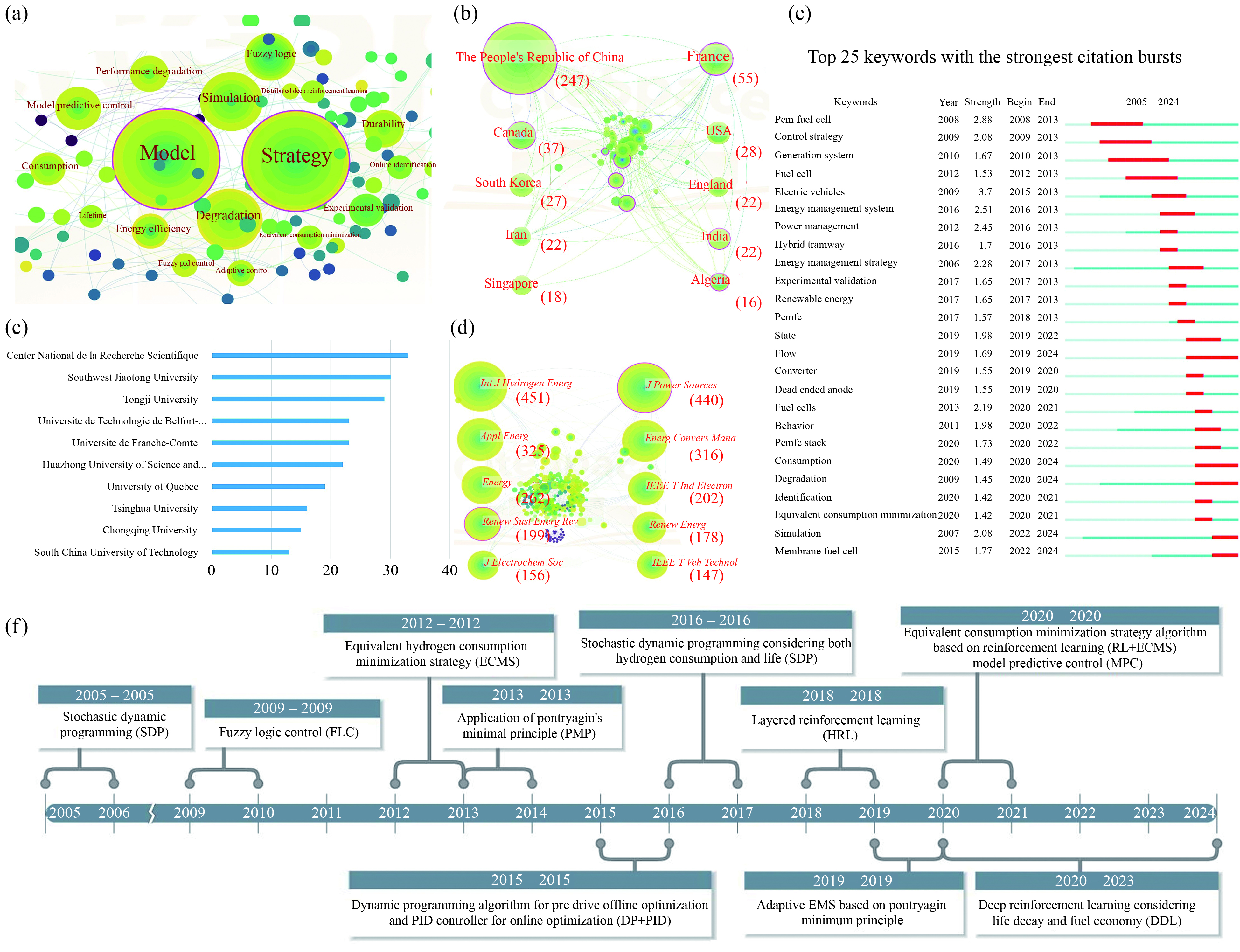
Figure 4(b) demonstrates the analysis of the co-occurrence graph of national collaboration networks. The width of the purple outer circle indicates the centrality of national collaborations [50], which shows that there are relatively frequent collaborations between research institutions in China, France, Canada, the United States, the United Kingdom, and Germany. China's halo is yellowish with uniform color change, indicating that China's research in this field started late, but the publication volume has soared and increased steadily in recent years, and the publication volume in just a few years has far exceeded that of other countries, which may be related to China's formulation of new energy policies. It is interesting to note that although the total number of publications in France is much lower than that in China, the French CNRS ranks first among institutions presented in Fig. 4(c), which shows that most of the publications in China in the field of PEMFC energy management research are more evenly dispersed among research institutions, whereas France has a relatively concentrated number of research institutions in this field. Figure 4(d) illustrates journal co-citations, with International Journal of Hydrogen Energy and Journal of Power Sources at the top of the correlation list, representing the most prominent co-citations. Although many articles are published in Asian countries such as China, the top ten most cited journals are all from Europe and the United States. Publications from Asian countries receive relatively little attention in terms of citations compared to North America and Europe.
Figure 4(e) shows the 25 burst words (red part) based on keywords from 2000 to 2024. These burst words reflect the research trends in this field during different periods PEM fuel cells and control strategy are the earliest and longest-lasting burst words, while degradation and consumption are the new burst words in recent years. It means that the research trends on fuel cell energy management in recent years are not only aimed at reducing hydrogen consumption but also focus on EMS such as the equivalent hydrogen minimization method to simultaneously optimize the battery life degradation with the hydrogen consumption minimization objective.
Unlike oil-electric hybrid vehicles, the efficiency curves of PEMFC hybrids tend to be flat [51]. Therefore, fuel cell vehicles should pay more attention to their cost, drive performance, energy consumption, and durability [52–55]. EMS can be primarily categorized into rule-based and optimization-based approaches. The foundational concept of fuel cell hybrid electric vehicles (FCHEV) emerged during the 1980s, pioneered by McElroy. However, systematic investigations into multi-energy coordination challenges in FCHEV only gained momentum in the closing years of the 20th century [56]. During this period, almost all management strategies have been rule-based. Rule-based control strategies are divided into two main categories: deterministic rule-based control strategies [57, 58] and fuzzy logic control (FLC) [36]. In recent years, optimization-based approaches have been developed that can be divided into global and local optimization [22, 59, 60]. Local optimization strategies reduce the global optimization problem to a series of local optimization problems, thus eliminating the requirement to obtain a priori knowledge, examples of commonly used local optimization strategies include MPC, ECMS, and stochastic dynamic programming (SDP). Figure 4(f) summarizes the representative methods of EMS in different periods.
In the early 21st century, the research reported in Refs. [61–63] applied SDP to EMS to reduce hydrogen consumption. Back in 2005, Andreas et al. introduced the SDP algorithm based on a simple model developed that retained only two dynamics: the vehicle speed and the state of charge (SOC) of the battery. This model resulted in a 2%–3% reduction in hydrogen consumption for fuel cell vehicles compared to a benchmark algorithm developed based on a traditional rule-based approach. The proposed model achieved a hydrogen consumption decrease of 2%–3% for fuel cell-powered vehicles when benchmarked against conventional rule-based algorithmic solutions. Since fuzzy logic using expert empirical knowledge for nonlinear control can provide a better solution for complex and variable control environments. Previously, it has been applied by researchers to hybrid vehicles, while its application to fuel cell vehicles is relatively recent. Some researchers [64–66] applied the FLC method to the power distribution of hybrid vehicles to improve the overall efficiency by optimizing the center of the optimized affiliation function and the width of the affiliation function. In particular, as early as 2009, Li et al. conducted a comprehensive analysis of the effects of fuel cell engine dimensioning and power distribution strategy on the hydrogen consumption rate. Through the implementation of FLC in hybrid vehicle power management, they established optimized parameters for the mixture ratio and power regulation mechanism. This approach involved precise calibration of membership function parameters, including their central values and distribution ranges, thereby achieving enhanced operational efficiency for the fuel cell-battery hybrid propulsion system.
There are more studies on EMS between 2010 and 2020, on the one hand, optimizing previous strategies to address the lack of consideration for battery life and other situations; on the other hand, researching real-time optimization strategies with better real-time performance and higher efficiency. Most of the papers before this period only considered the hydrogen consumption rate and ignored the extra cost caused by battery life degradation. Therefore, an ECMS was proposed in the research reported in Ref. [67]. In addition, some researchers have combined the ECMS to achieve a reasonable trade-off between hydrogen consumption and PEMFC health protection. Further reduction in total cost of ownership compared to traditional ECMS strategies [68]. An optimal real-time energy management strategy based on Pontryagin's minimization principle (PMP) was proposed in the research reported in Ref. [69]. Li et al. [70] proposed an improved Markov-based speed prediction method and an adaptive EMS based on PMP, which effectively improved the fuel economy. Although the operating cost of the proposed PMP strategy is 1.4% higher than Dynamic programming, it is applicable to real-time control systems. The EMS proposed in the literature [71] uses a dynamic programming algorithm for offline optimization and a PID controller for online optimization. Unlike the earlier SDP strategies described earlier that focused only on the hydrogen consumption rate, Fletcher et al. [52] utilized SDP for optimal design, while improving hydrogen consumption and battery degradation problems.
In recent years, with the development of machine learning, researchers have begun to introduce reinforcement learning and DRL into fuel cell EMS, in addition to the growing interest in the relationship between EMSs and battery life degradation [72, 73]. Huo et al. proposed an advanced EMS based on double-delay deep deterministic policy gradient (TD3) DDL, which extends fuel cell lifetime by 32.6% [74]. Zhou et al. established an EMS based on a deep deterministic policy gradient (DDPG) algorithm, considering both hydrogen consumption and electric reactor lifetime, with a total cost reduction of 22% [75]. Two new strategies based on the SALP swarm algorithm (SSA) and mine blast optimization are proposed in the research reported in Ref. [76] to reduce hydrogen consumption. The research reported in Ref. [77] considers both hydrogen consumption and Pt degradation that affects the lifetime of the power stack, designs various strategies to suppress Pt degradation using the PMP optimization algorithm, and tests the effectiveness of the PMP algorithm under different strategies on a hardware-in-the-loop (HIL) simulation platform. Hydrogen consumption increases by only 2% with the inclusion of trends to limit high potentials and voltage variations in the PMP algorithm. In contrast, the degradation of the stack is reduced by nearly 50%, which greatly extends the lifetime of the stack and reduces the overall cost of ownership of the system. Sun et al. [78] proposed an ECMS energy management strategy based on reinforcement learning, which is effective in reducing hydrogen consumption. The research reported in Refs. [79–81] introduced reinforcement learning to fuel cell EMS. Some studies [81–84] combined neural networks and reinforcement learning to introduce DRL into the field of energy management for hybrid vehicles, using neural networks to fit value functions and avoiding reinforcement learning state discretization. Some researchers [85, 86] used DRL to optimize both fuel economy and lifetime decay of fuel cells.
Although the computational resources required for MPC are very demanding and current automotive controllers are not able to meet its computational requirements, it has been favored by many researchers in recent years as a result of the continuous development of the computing power of calculators in recent years, as well as its ability to effectively reduce the consumption of hydrogen and extend battery life, among other advantages. He et al. [87] applied MPC to EMS. Compared with the rule-based strategy, the novelty of this strategy reduces the hydrogen consumption by 9.98% while considering the battery lifetime, and the real-time performance of the MPC strategy is verified by hardware-in-the-loop experiments showing an average CPU load factor of 2.21%. Quan et al. [88] imported the total future vehicle power demand predicted by a Markov speed predictor into an energy management system response prediction model, with the objective function set to minimize equivalent hydrogen consumption and fuel cell degradation suppression. The strategy reduces the total operating cost and effectively improves the computational speed.
In summary, with the development of control technology, the control objective of energy management is no longer only to reduce hydrogen consumption. The EMS strategy that reduces hydrogen consumption and extends the service life of the fuel cell simultaneously by utilizing emerging methods such as machine learning and MPC has become a trend for future research.
Currently, the large-scale commercialization and widespread adoption of PEMFC systems still face many technical challenges. Among them, the gas supply subsystem is an important factor affecting the output performance and battery pack life of PEMFC systems [89]. If excess air is added, the workload of the air compressor will increase. When the total output power of the battery pack does not increase significantly, the parasitic power will increase significantly, resulting in a lower net output power of the system. Controlling the ratio of oxygen flow into the cathode of the battery stack to the oxygen flow consumed by the electrochemical reaction (i.e., the excess oxygen ratio) precisely and quickly within the desired range is a viable and effective solution to the above contradiction [90].
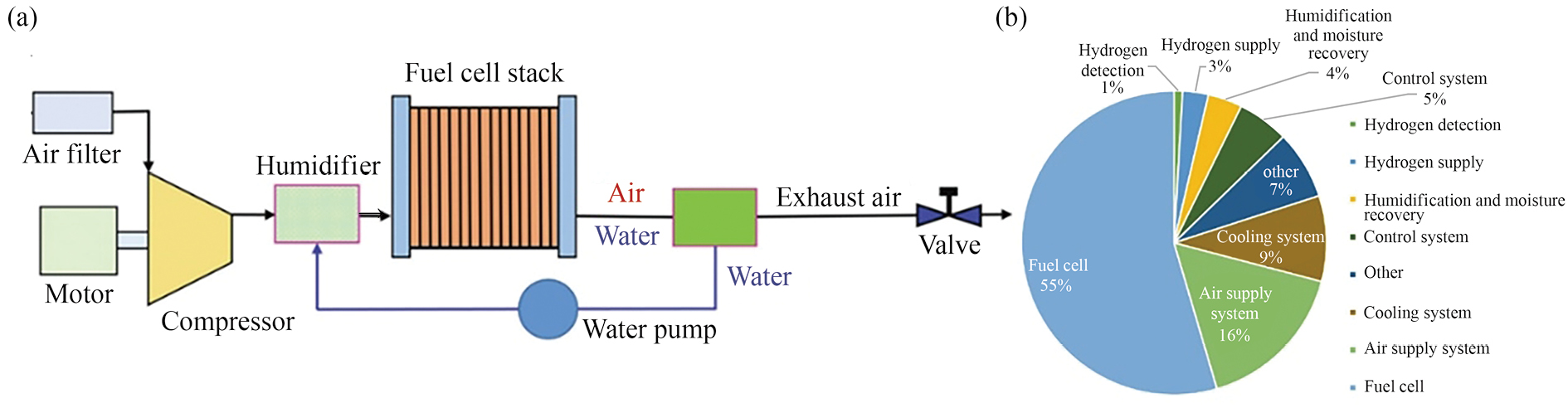
In a fuel cell system, the air pressure supplied by the air supply system has an important effect on the performance of the fuel cell. The structure of the air supply system is shown in Fig. 5(a) [14]. Fresh air enters the air compressor through the air filter. The air compressor pressurizes the air and sends it to the humidifier. Humidified air enters the reactor to participate in the reaction. The water produced by the reaction can be circulated through the pump to the humidifier. The cost distribution of each component in the fuel cell system is shown in Fig. 5(b). The cost of the fuel cell pack and the air supply system account for the top two within the total cost of the fuel cell system, accounting for about 15% of the total cost. In terms of energy consumption, the air system consumes 20% of the total output power.
In the WOS, the Core Collection of the WOS was searched for the period from January 1, 2000 to July 1, 2024 with the full text of "PEMFC air system". The retrieved articles were sorted by relevance, and a total of 500 articles were analyzed. The key information co-occurrence map analysis through Citespace is shown in Fig. 6. Figure 6(a) demonstrates the mapping of the keyword co-occurrence network for air systems, and it is clearly visible that design, modeling, oxygen excess ratio (OER), and attenuation are the most frequent keywords, which implies that researchers have paid more attention to the control of the OER of the air system as well as air starvation caused by insufficient air supply. More specifically, the aura color of air compressors changes uniformly, which represents that researchers have been paying attention to the progress of air compressor research. The yellowish color of DRL, FLC, fuzzy PID control, and sliding mode control implies that the above control methods have been more popular among researchers in recent years. Figure 6(b) demonstrates the analysis of the co-occurrence graph of the national cooperation network, which shows that there are relatively frequent collaborations between research institutions in China, the United States, Germany, Spain, France, and South Korea. China's halo is yellowish with uniform color change, indicating that China's research in this field still starts late and increases steadily. China occupies seven seats in the ranking of institutions displayed in Fig. 6(c), which is consistent with the fact that China's total number of papers published in this field far exceeds that of other countries. Although the total number of articles published by the United States and South Korea is higher than that of France, the Université technique de Belfort-Montpellier in France is the research institution with the second highest number of publications, while neither the United States nor South Korea is in the top ten, which implies that the French research institutions are more centralized in comparison to these countries. Figure 6(d) shows the journal co-citations; the highest number of articles and relevance are in the Journal of Power Sources, which are still all from Europe and the United States.
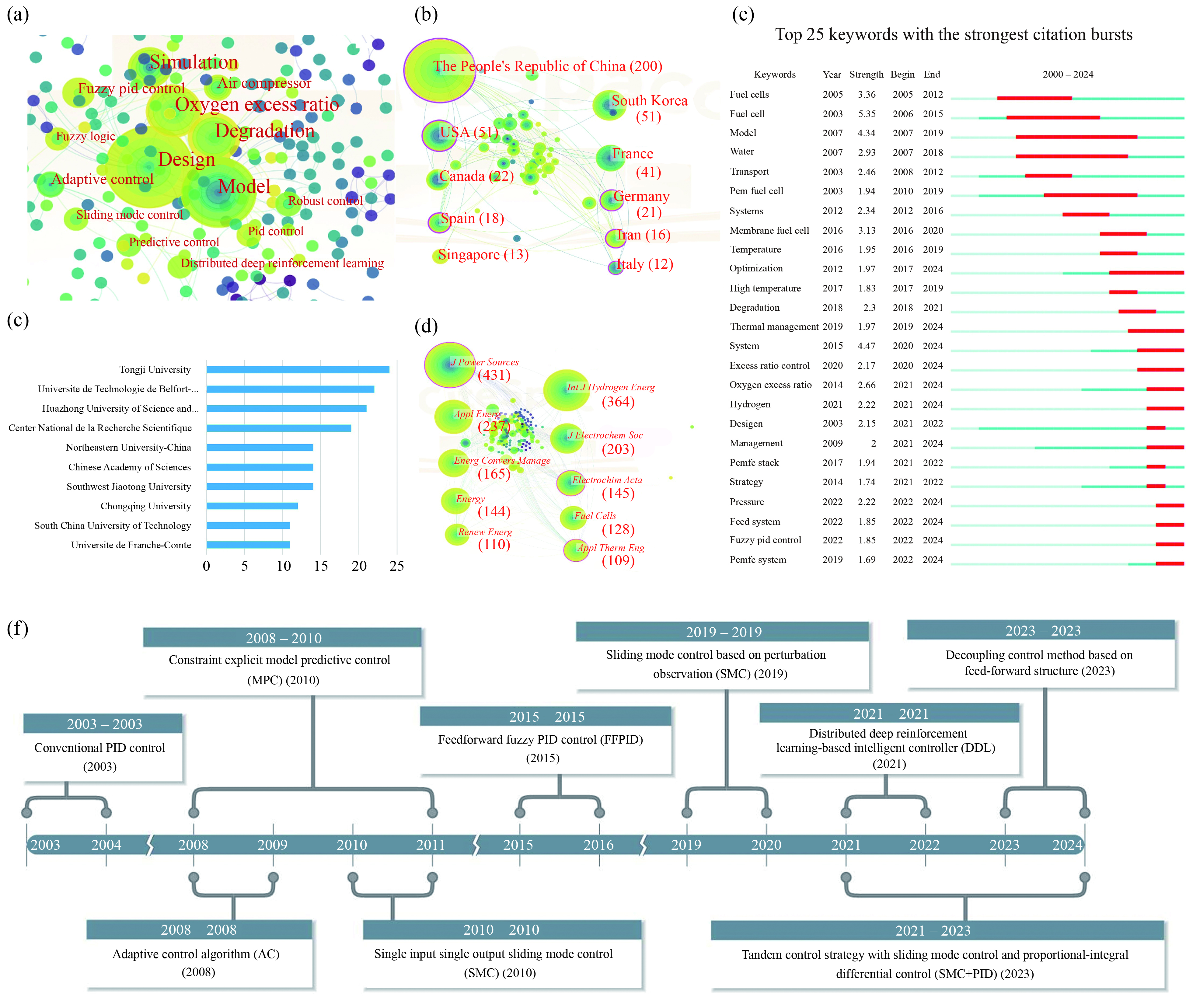
Figure 6(e) shows the 15 burst words based on keywords from 2000–2024 (in red), which reflect the research trends in this field at different periods. model, fuel cells are the earliest and longest-lasting burst words. OER, pressure, feed system, and fuzzy PID control are new words that have emerged in the last few years, representing that OER control is still the research hotspot of the air supply system in recent years; in addition, the pressure control of the air has also been paid attention to, and the feedback control and fuzzy PID are the control methods that have attracted much attention in the field of air supply system control in recent years.
Based on the hotspot analysis diagram of the literature above, it is clear that the research on the fuel cell air supply subsystem focuses on the shutdown component (air compressor) and the over-oxygen ratio control strategy of the fuel cell system. The most important component in the air supply system is the air compressor. Its main job is to pressurize the air so that the air pressure entering the fuel reactor can be increased to a certain extent compared with the atmospheric pressure, thus improving the reactor's performance. At present, most of the research on air supply systems is focused on or centered on air compressors, mainly including system optimization design, modeling, and control studies. When it comes to air compressors, centrifugal air compressors are considered as the future mainstream direction due to their high efficiency, low noise, long service life, and compact structure designed for high-speed operation [30]. Improving air compressor performance, minimizing air compressor size, and noise and vibration are the main problems that need to be solved in the future. Therefore, Ren et al. studied water-lubricated bearings for high-speed centrifugal air compressors, and the study effectively reduced air compressor losses, increased speed, and improved air compressor performance [91, 92]. Katherine et al. proposed a new first-principles model for predicting mild and deep surging of centrifugal compressors, which can capture and predict the stable operation, mild surging, transition from mild surging to deep surging, deep surging, and exceeding the surging limit of centrifugal compressors, thus effectively reducing the vibration and noise of air compressor operation [93].
The control strategy of the air supply system can regulate the airflow and pressure to stabilize the system's peroxide ratio near the optimal value and avoid hypoxia and saturation by appropriate control strategies. In this paper, we analyze several representative papers from 2000–2023 to study the control strategy trends of fuel cell air supply systems in different periods. Figure 6(f) summarizes representative control methods regarding the air supply subsystem for different periods.
In the early period, researchers mainly used the conventional PID to control the airflow. Some researchers [94, 95] used PID control methods to regulate the hydrogen and oxygen pressures to maintain a constant output voltage. Serra et al. [96] applied PI control methods. Since improper selection of air system operating parameters may lead to unfavorable conditions in the heap, which entails the risk of efficiency and lifetime deterioration [97], it is necessary to properly select the set of parameters while considering specific constraints. This is crucial to ensure safe, robust, and durable operation. A widely used method for integrating such constraints is MPC. Arce et al. [98] verified the improved transient response performance of the MPC controller on a 1.2 kW PEMFC testbed. Hahn et al. [99], developed a MPC-based operating strategy for an automotive fuel cell air system to reduce hydrogen consumption and the risk of harmful operating conditions.
After 2010, to improve the conventional PID control with the problems of drift of control variables, inaccurate control, and relatively slow response. Garcia-Gabin et al. [100] implemented single-input single-output sliding mode control (SMC) for managing fuel cell airflow regulation. Notably, fuzzy logic control offers the capability to manage intricate nonlinear processes within PEMFC through the application of straightforward rules or expert-derived heuristics, without requiring comprehensive system characterization. This distinctive feature has positioned FLC as a prominent control methodology, extensively employed for flow regulation of both air and hydrogen within PEMFC [36]. In the research reported in Ref. [89], a feedforward, fuzzy PID control method was combined to propose a feedforward-based fuzzy PID controller (FFPID) to regulate the OER and optimize the PID parameters using online fuzzy logic. Conventional PID and fuzzy PID are compared to verify the performance of the FFPID control method. A control-oriented dynamic model of the PEM fuel cell was developed and simulated. The results showed that the proposed feedforward fuzzy PID method is effective in regulating the OER and reducing parasitic power losses [89]. Baroud et al. [101] proposed a novel fuzzy PID hybrid controller to adjust the OER at a given set value to prevent oxygen deficiency and damage to the fuel cell stack. Prasad et al. [102] proposed three control strategies, namely, fuzzy feedforward control strategy, fuzzy feedforward controller with feedback loop, and fuzzy feedforward control with feedback loop and conditional switching, and the performance of the proposed strategies was evaluated in comparison with the performance metrics such as integral squared error (ISE), integral absolute error (IAE), and total variation (TV) of the closed-loop control system. The results show that the fuzzy feedforward control with feedback loop and conditional switching performs better than other strategies. In the research reported in Refs. [103, 104], a model robust control method based on a second-order sliding mode algorithm was proposed for a polymer electrolyte membrane fuel cell gas supply system to regulate the OER to its desired value to avoid oxygen starvation.
In recent years, with the development of machine learning, an intelligent controller based on distributed DRL in the research reported in Ref. [105] has demonstrated better control over the air flux in the PEMFC gas supply system. This controller exhibits better control performance and robustness. In addition, researchers have developed controllers with better performance by combining the advantages of multiple approaches. Aihua et al. [106] proposed a cascade control strategy of SMC and PID to adjust the OER to a reference value to improve the net power of the PEMFC. Since the regulation of OER and air pressure are coupled in a centrifugal compression system, fluctuations in OER and air pressure can cause oxygen deficiency and disrupt the positive pressure balance, affecting the output power and lifetime of the PEMFC, respectively [107], a dynamic decoupling strategy for OER and pressure control based on fuzzy logic was proposed in the research reported in Ref. [107]. Liu et al. designed a fuzzy PID controller for the PEMFC air supply system incorporating a feed-forward decoupling. It was experimentally demonstrated under NEDC operating conditions that the controller improves the dynamic response and stability of the air system, thereby extending the lifetime of the fuel cell system. Zeng et al. [108] proposed a decoupling control method based on a feedforward structure to achieve independent control of inlet mass, flow, and pressure. The controller uses the diagonal matrix decoupling method to design the feedback loop to coordinate the compensation of compressor speed and throttle angle to further eliminate the control error in the feedforward part. In addition, the authors validated the method in bench and real-world tests on a fuel cell prototype, and the results show that the strategy has a better control effect in reducing the interaction between the mass flow rate and the pressure coupling loop. It also offers better interference immunity compared to an alternative strategy without the decoupling compensation effect in the feedback loop.
To summarize, the fuel cell air supply system is a subsystem that has been widely concerned by researchers and is also the most studied, and the advantages and disadvantages of its control effect affect the performance and lifetime of the fuel cell. In recent years, after the breakthrough in the control method of OER, researchers continue to deepen their efforts to take both pressure and OER as the control targets and try to accurately control the OER and cathode pressure by combining traditional and intelligent algorithms such as fuzzy PID. Therefore, the combination of multiple control methods to optimize the control of peroxide ratio and pressure at the air end of the fuel cell is a major trend in the future.
The external energy supply for automotive fuel cells depends primarily on the continuous supply and precise control of hydrogen and oxygen. The hydrogen supply system has a great influence on the efficiency, dynamic response, and lifetime of the fuel cell. Therefore, it is important to propose a reasonable hydrogen supply system structure and a high-precision hydrogen feed control strategy for fuel cell systems. The fuel cell hydrogen supply system configuration mainly includes dead-end mode, inducer recirculation mode, hydrogen recirculation pump recirculation mode, and hybrid recirculation mode [109].
In the WOS, the core collection of the WOS from January 1, 2000 to July 1, 2024 was searched using the keyword 'PEMFC hydrogen supply system control'. The retrieved literature was sorted by relevance, and a total of 240 articles were analyzed. The keyword co-occurrence map analysis through Citespace is shown in Fig. 7. Figure 7(a) demonstrates the mapping of the keyword co-occurrence network for the hydrogen supply system, and it is clearly visible that modeling, strategy, optimization, and recirculation are the most frequent keywords, which implies that the researchers have paid more attention to the modeling of the hydrogen recirculation system, optimization of the strategy, as well as the control and equipment in the recirculation mode. More specifically, the aura color of the strategy varies uniformly, which represents that researchers have been focusing on the research progress of control strategies for hydrogen supply systems. The greenish color of neural networks, fuzzy logic, PID, and adaptive control represents that these methods are older in research and less relevant in recent years. The colors of DRL and hydrogen excess ratio (HER) control are yellowish, implying that methods such as using HER as the control objective and DRL have become more popular among researchers in recent years. The halos of dead-end anode and recirculation both change from green to yellow and have a bright yellow color, implying that researchers have also studied dead-end anode and recirculation modes before, but there is a tendency to increase in recent years.

Figure 7(b) demonstrates the analysis of the co-occurrence diagram of the national collaboration network, revealing relatively frequent collaborations between research institutions in China, France, the United States, Spain, Tunisia, and Australia. Interestingly, Tunisia is among the top ten, which may be related to the rapid development of the green hydrogen industry for renewable energy conversion in Tunisia. In the ranking of institutions presented in Fig. 7(c), China is still the country with the largest number of research institutions, and the University of Lorraine, France, is the institution with the highest number of publications, but all of them were published earlier. Figure 7(d) demonstrates the journal co-citation, with the Journal of Power Sources having the highest number of publications and relevance. This similarity to the ranking of air systems may be attributed to the interconnected nature of research on hydrogen and air systems, prompting scholars to simultaneously explore both areas of research.
Figure 7(e) shows the 15 burst words based on keywords from 2000–2023 (in red), which reflect the research trends in this field over different periods. Hydrogen is the earliest burst word. The dynamic model is the longest-lasting burst word. HER control, anode recirculation, and air feed system are the new words that have emerged in the last few years, representing the fact that most of the literature in the last few years has focused on hydrogen supply, system design, and parameter optimization of fuel cell hydrogen supply systems. This represents the focus of researchers in recent years on the control of the HER of hydrogen recirculation architectures. In addition, since the pressure of the hydrogen supply system follows the pressure of the air supply system, researchers have begun to focus on the synergistic control of the air system and the hydrogen supply system, not only to study the pressure control of the hydrogen supply system under typical step conditions but also to study the anode pressure following the pressure change of the air terminal control performance of the anode pressure following the pressure change at the air end.
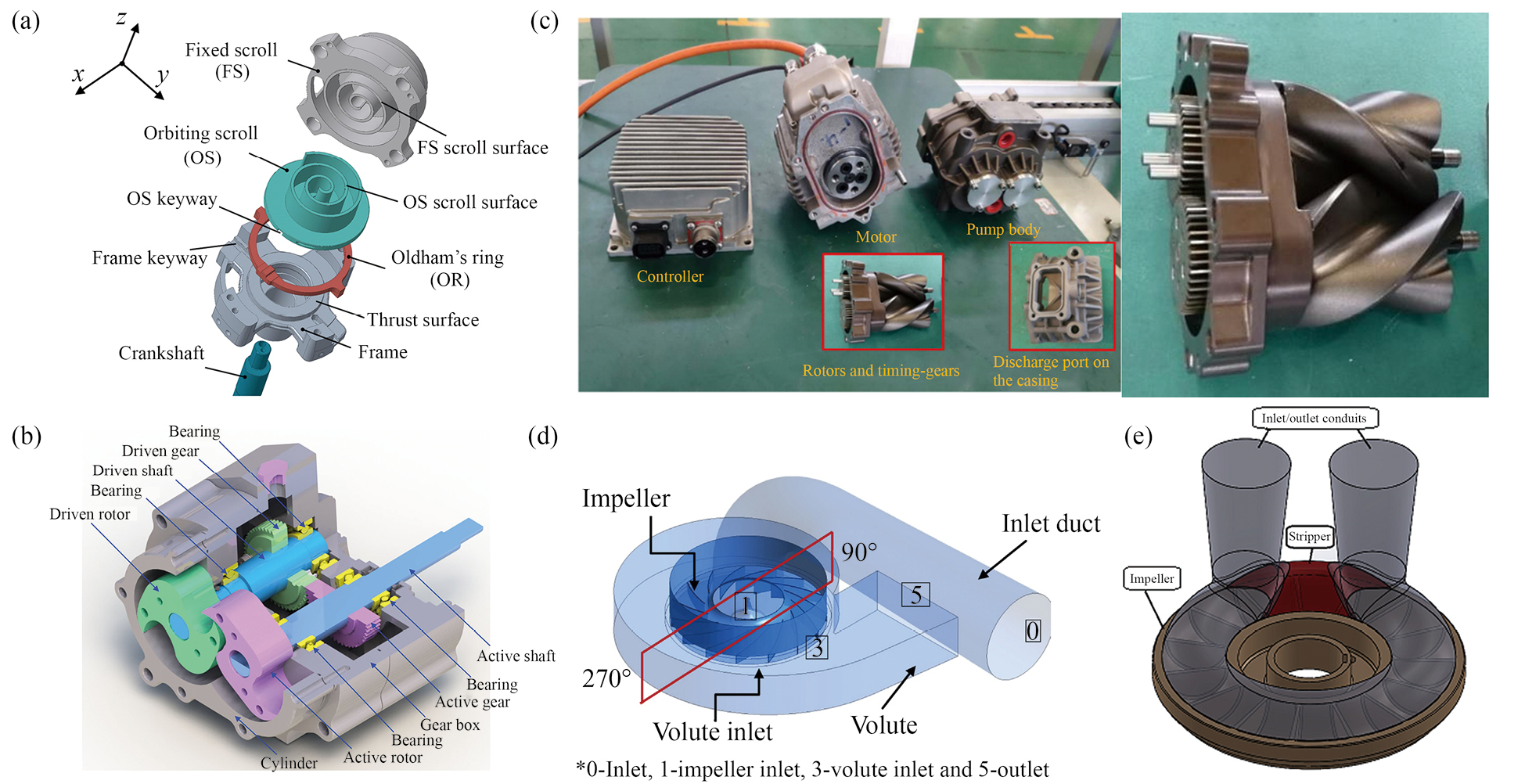
The core unit of the hydrogen recirculation subsystem is the hydrogen recirculation equipment with a pressurization function. Commonly used hydrogen recirculation equipment includes mechanical pumps and ejectors. Circulation pump mode is to increase the pressure of the circulating gas through the circulation pump to carry out gas circulation, this process will consume electrical energy. The anode outlet gas is pressurized by mechanical pressurization and sent to the anode inlet again for hydrogen circulation, which has the advantages of good stability performance, applicability to complex working conditions, and fast response speed. A hydrogen circulation pump is essentially a low-pressure compressor that has a variety of structural solutions. Currently, vortex pump (Fig. 8(a)) [110], claw pump (Fig. 8(b)) [111], roots pump (Fig. 8(c)) [112, 113], centrifugal pump (Fig. 8(d)) [114], and thermal storage pump (Fig. 8(e)) [115] have been studied and applied in PEMFC systems, as shown in Fig. 8 [15, 116].
Another special type of hydrogen recirculation device is the ejector, which works on the principle that the high-pressure hydrogen from the pressure valve passes through the nozzle, causing a localized pressure reduction around the periphery, creating a low-pressure zone in front of the mixing area, which causes the secondary fluid to move towards the low-pressure zone and mix in the mixing area, and finally the mixed fluid is ejected out of the outlet without the need to consume electrical power. The ejector was first proposed and patented by the Canadian scholar Merritt et al. for application to fuel cells. The ejector has gained significant adoption in PEMFC owing to its compact configuration, absence of mechanical components, exceptional operational reliability, and cost-effectiveness. Beyond independent utilization of either mechanical pumps or ejectors, these components can be implemented in a synergistic hybrid configuration to enhance system performance [117]. The research reported in Refs. [118, 119] conducted comprehensive performance evaluations among ejectors, electrochemical pumps, and mechanical pumps within hydrogen recirculation configurations. Experimental findings demonstrated that electrochemical pump systems exhibited lower energy consumption compared to their mechanical counterparts. The main application of the fuel cell hydrogen supply system is the hydrogen recirculation pump, and the hydrogen recirculation pump will be developed in the direction of reducing the size and power consumption in the future. Recently, researchers [120] from Xi'an Jiaotong University proposed a new six-lobe Roots hydrogen circulation pump, which has higher adiabatic indication efficiency and is more compact, improving the performance and reducing the size of hydrogen circulation pumps in hydrogen fuel cell vehicles. In recent years, some scholars have also started to focus on the study of the application of ejectors, using MPC to optimize hydrogen recovery from the exhaust stream passively using a venturi injector in the research reported in Ref. [121] and a dual ejector to control the hydrogen pressure in the research reported in Ref. [122].
In the control research of fuel cell gas supply systems, there are relatively more studies on air supply systems and fewer studies on hydrogen supply systems. Figure 7(f) summarizes the research trends on the hydrogen supply subsystem in different periods. In the early days, researchers mostly fed back PID control to regulate hydrogen pressure and flow rate. In recent years, researchers incorporated FLC and MPC to improve the dynamic performance of hydrogen supply. In addition, research on ejectors has gradually become a hot research topic.
For the control of the hydrogen supply subsystem, PID control of hydrogen flow has been the predominant approach for a long time. Wang et al. [123] developed an advanced hybrid control system incorporating intelligent PID methodologies through dynamic simulation analysis. The system architecture implements a neural network-based PI controller for anode humidity regulation via precise water injection management in the hydrogen cell. Furthermore, the design integrates an enhanced PID controller utilizing diagonal recurrent neural network (DRNN) dynamic identification, enabling more precise and stable anode pressure control through hydrogen flow rate modulation. This innovative control approach resolves PEMFC coupling issues while demonstrating superior system adaptability. Through this strategy, critical operational parameters, including anode humidity levels and pressure values, are maintained at optimized targets. Significantly, the system addresses the critical issue of anode-cathode pressure differentials, which could potentially compromise membrane integrity and consequently reduce the operational lifespan of the fuel cell system. Some researchers [124–126] used a second-order sliding mode multiple-input multiple-output (MIMO) controller to regulate the hydrogen pressure.
In recent years, researchers have started to use emerging control methods such as fuzzy control and MPC. Ye et al. [127] designed a Mamdani fuzzy controller to regulate the hydrogen pressure. Li et al. [128] improved the response time of air and hydrogen flow to load changes based on distributed deep reinforcement learning (DDRL). The research reported in Refs. [129–131] introduced MPC into a field of control research for hydrogen supply subsystems to improve the dynamic performance, disturbance immunity, and hydrogen utilization of hydrogen supply. Zhang et al. [132] consider both the system inlet pressure and the hydrogen excess rate to regulate the hydrogen pressure by PID control.
The air supply system requires complex prediction algorithms to predict the future speed and power, etc., and then predict the future required air flow rate and other parameters, while the pressure of the hydrogen supply system follows the air supply system, so the control study of the hydrogen supply system is simpler and less popular than that of the air supply system. However, in recent years, the hydrogen recirculation mode has gradually replaced the dead-end mode to achieve the improvement of hydrogen utilization, and the problem brought by the recirculation mode is that its structure and control strategy are more complicated, which requires researchers to consider the control of proportional valves and hydrogen recirculation components at the same time. Therefore, the control of hydrogen ratio and pressure followed by advantageous algorithms such as MPC and DDRL for many different recirculation structures is a hot spot for future research on hydrogen supply systems.
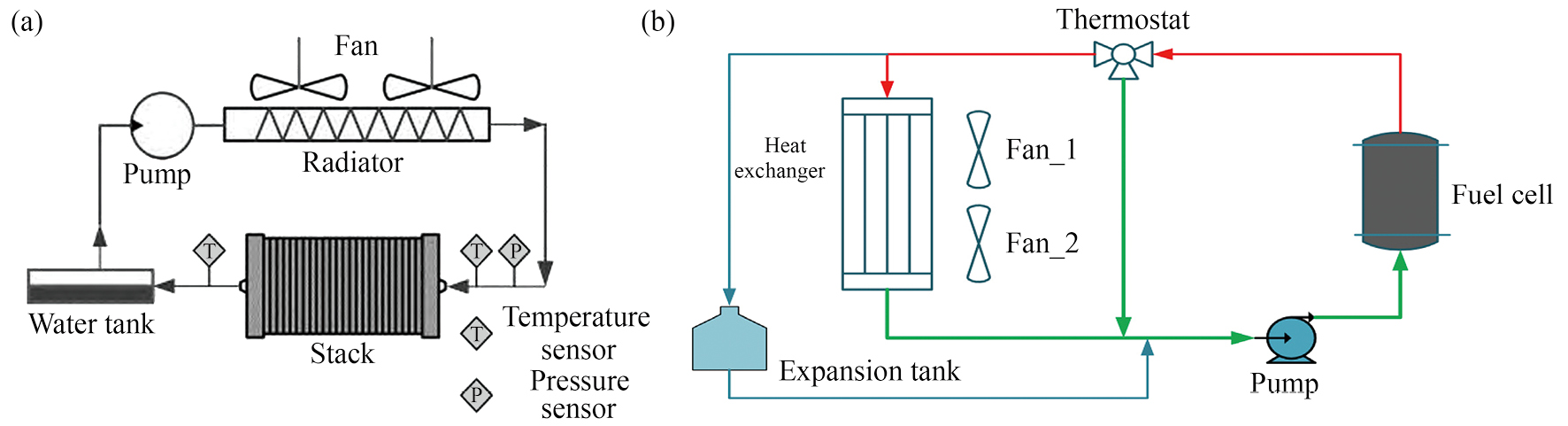
The abnormal operating temperature of fuel cells can lead to a significant reduction in their normal operating performance or even damage the related components. Therefore, researchers need to design a reasonable thermal management subsystem structure, heat transfer and heat production models, and control strategies to reduce the impact of temperature abnormalities on their efficiency and stability. Fuel cell cooling is generally divided into two forms: air-cooled and water-cooled. Typical automotive fuel cell systems have high power levels, so liquid cooling is usually used. The structure of liquid cooling generally includes components such as a water pump, water tank, radiator, and fan. Cheng et al. [133] proposed a cooling system that considered only the cooling circuit of a single stack, using a water pump as the coolant power source and the coolant circulating between the stack and the heat sink, as shown in Fig. 9(a). Su et al. [134] incorporated a thermostat and built a Simulink-GT fuel cell cooling system model, as shown in Fig. 9(b).
The retrieved literature was sorted by relevance, and a total of 500 pieces of literature were analyzed. The keyword co-occurrence map analysis through Citespace is shown in Fig. 10. Figure 10(a) demonstrates the mapping of the keyword co-occurrence network of the thermal management system, and it is evident that model, water management, simulation, heat transfer, and flow channel are the most frequent keywords, which implies that the researchers have paid more attention to the modeling and simulation process of the thermal management system, the heat transfer mechanism, the coupling relationship with the water management and the joint control, and the design of the flow channel. More specifically, the uniform variation of the halo colors for modeling, simulation, and water management represents that researchers have been focusing on the research progress in these three areas. The bluish color of matter transport and neural network represents that these two studies are older and less relevant in recent years. The yellowish color of integration means that the thermal management of the whole vehicle considering multiple heat-generating components has become more popular among researchers in recent years. The halos of numerical simulation and runner MPC are changing from green to yellow, and the color of yellow is bright, which means that the researchers have paid attention to the research of runner design, numerical simulation, and MPC before, and there is a tendency to increase in recent years. Figure 10(b) shows the analysis of the co-occurrence diagram of national collaboration networks, which shows that there are relatively frequent collaborations between research organizations in China, the United States, France, Iran, the United Kingdom, and Spain. China's halo is yellowish with uniform color changes, indicating that China's research in this field still starts late and has been steadily increasing. In the ranking of institutions displayed in Fig. 10(c), although the total number of articles published in the United States, South Korea, and Canada is higher than that of France, the CNRS is the second-highest publishing research institution, following China's Huazhong University of Science and Technology, which means that the research institutions in France are more centralized in comparison to these countries. Figure 10(d) shows the co-citation situation of journals; the journal with the highest number of articles and relevance remains the Journal of Power Sources, which is still from Europe and the U.S. It is expected that in the future, there will be more high-quality journals in underdeveloped regions, such as Asia and Africa, so as to promote the globalization of the automotive fuel cell industry.

Figure 10(e) shows the 25 keyword-based burst words (in red) from 2000 to 2024, which reflect the research trends in the field over time. mathematical model, transport, and fuel cells are the earliest burst words, and water is the longest-lasting burst word. Temperature control, plates, and cold start are new words that have emerged in recent years. This represents most of the literature in recent years to investigate new temperature control strategies to realize thermal management of fuel cell systems in terms of physical heat dissipation mechanisms such as novel pole plates and flow channels. In addition, cold start strategy and thermal management strategy are related, so how to realize a low-temperature cold start by suitable thermal management strategy is also a hot research topic in recent years.
A core of thermal management lies in the optimization of the flow field structure. The design of the cooling channels also plays a crucial role in good thermal management [135, 136]. There are various types of flow fields, including parallel flow fields, serpentine flow fields, high-cost bionic flow fields, and single flow channels such as C, V, U, and 3D flow channels [137, 138]. The research reported in Refs. [139–141] compared serpentine and parallel flow fields and found that the serpentine flow field has better cooling performance. In the research reported in Ref. [142], six PEMFCs with serpentine flow fields were investigated, and it was found that the spiral flow field has better temperature distribution and performance. The research reported in Refs. [143, 144] found that the V-shaped flow path provided the best balance between heat transfer enhancement and pressure loss. Sasmito et al. [145] investigated the design of a new type of hybrid channel that performed better than the other five in the co-flow mode. Lin et al. [146] compared the co-flow, cross-flow, and counter-flow configurations under certain serpentine design patterns and found that the counter-flow coolant channel configuration was better at avoiding local hot spots. Song et al. [147] found that the flow channel distribution of the multi-helical flow field and honeycomb structured flow field was more beneficial in improving the temperature uniformity compared to the serpentine flow and other flow fields.
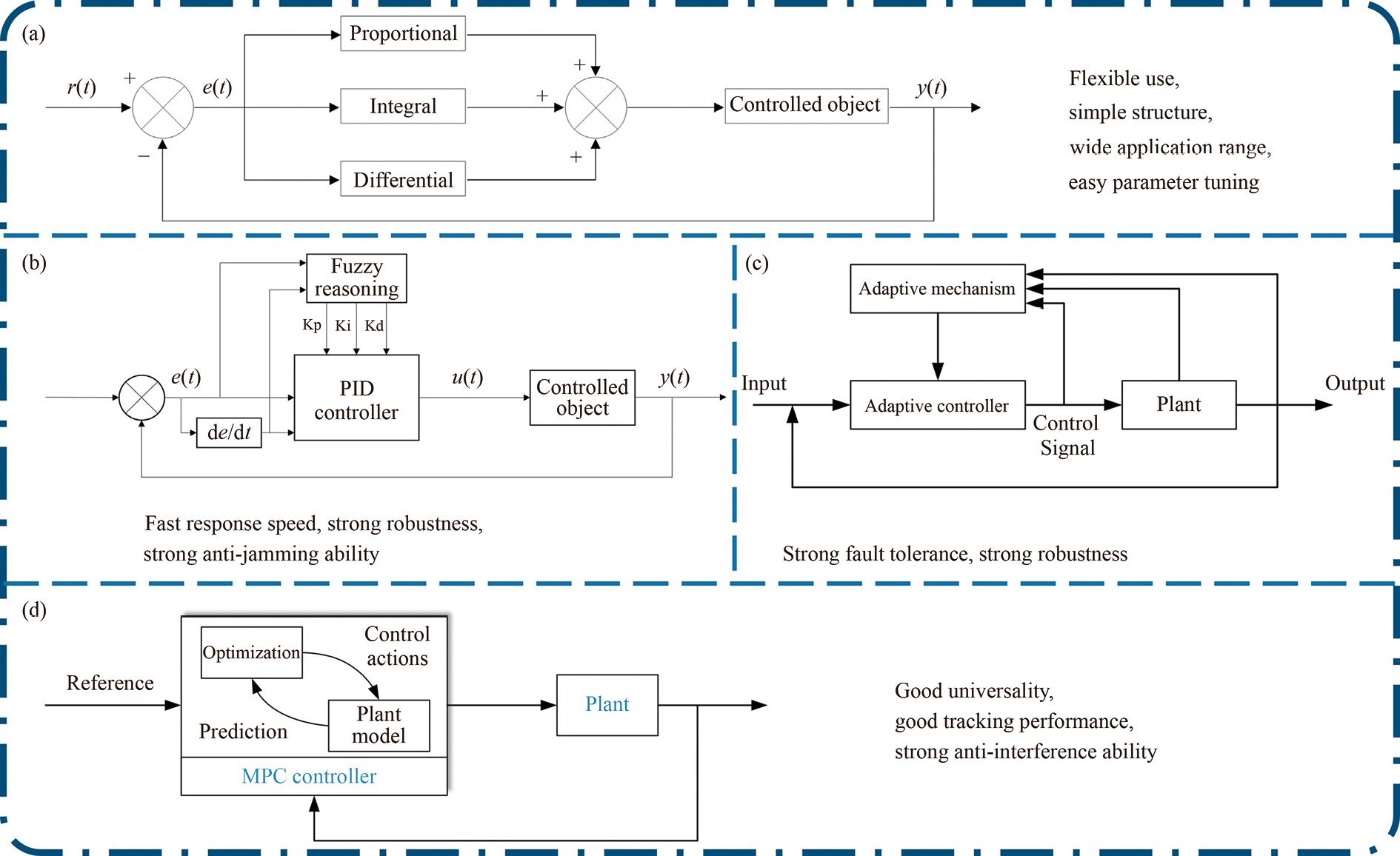
The development of thermal management models and the study of control strategies are among the most important research directions concerning the efficiency and durability of fuel cell systems. There are many thermal management control strategies, including traditional PI and PID control, fuzzy PID control (MPC, and adaptive control. According to their respective characteristics, these control strategies are applied in different operating scenarios, and He et al. [32] summarized the control schematic diagrams of several commonly used control methods, as shown in Fig. 11.
Low fuel cell temperatures lead to increased internal losses, resulting in stack performance deterioration. In addition, when the temperature is too low, water that has not been purged in time can turn into ice and plug the pores of the catalytic layer. Theoretically, the cold start fails when the ice completely covers the reaction sites [148]. Therefore, yang et al. proposed an efficient cold-start strategy that combines the advantages of self-starting and coolant heating to realize self-starting from –20 °C in 30 s [149]. Wang et al. analyzed a current and voltage-controlled start-up strategy using a fuel cell stack consisting of 20 cells and successfully performed a cold start from –25 °C to 30 °C without auxiliary heating of the stack [150]. High stack temperatures can impact stack durability and lifespan. Therefore, the thermal management strategy directly affects the output characteristics and lifetime of the fuel cell. Figure 10(f) summarizes the research trends on thermal management subsystems over different periods.
In the early period, researchers focused on the development of system thermal management models and the control of cooling fan speed and pump flow rate using PID controllers. Some researchers [151–153] established three-dimensional numerical models of thermal management systems, but these models could not be applied to real-time control design due to the large computational volume and slow speed. In the early stage of fuel cell thermal management development, a relatively simple PID control was usually used. The research reported in Refs. [154, 155] used a classical proportional-integral (PI) controller and thermal lapse feedback control. Although the classical PID control is widely used due to its simple algorithm and low computation when regulating the temperature by controlling the cooling water flow, fan speed, and other parameters, the fuzzy temperature control strategy does not need an accurate mathematical model, so the fuzzy control can better realize the temperature control, and compared with the traditional PID control, the fuzzy control offers faster respond speed, strong anti-interference ability, robustness, and better temperature regulation capability. Hu et al. [156] employed fuzzy control to regulate the circulating coolant flow and bypass valve coefficients. Li et al. [157] used a genetic algorithm (NGA) to optimize the control parameters of the thermal model. Liso et al. [158] used a PID controller to vary the air mass flow rate of the radiator fan, incorporating feedforward control of the fuel cell air and hydrogen mass flow rates. In the research reported in Ref. [159], a multi-input multi-output fuzzy controller was developed with the main control objective, including the speed of the cooling fan.
Since each controller has its advantages and disadvantages, for example, fuzzy controllers are prone to static errors, combining these controllers can effectively mitigate their shortcomings and leverage their respective strengths, resulting in more precise control of PEMFC temperature. In recent years, researchers have incorporated fuzzy PID control and MPC to improve the robustness of the controller and its responsiveness. Xu et al. [160] established an effective vehicle-integrated thermal management (VITM) system at the whole vehicle level by PID control. The research reported in Refs. [161, 162] proposed a PEMFC temperature-voltage dynamic management controller based on the MPC, which has a smaller overshoot and faster response time compared to the PID controller for MPC temperature control. Zhao et al. [163] used a fuzzy PID controller to control the cooling water flow, while a diploid genetic algorithm was used to optimize the controller's affiliation function, which improved the adaptability of the control system. Su et al. [134] established a pump flow controller and a fuzzy PID fan controller by combining decoupled control methods. In addition, digital twin technology is used to realize the interactive mapping of digital models and physical entities in virtual space, which plays a crucial role in promoting the transformation of battery management to digitalization and intelligence [164].
The operating temperature of PEMFC is generally controlled at 80 degrees Celsius, and deviation from the range will reduce its efficiency, power, and other performance indicators. From the aspect of control strategy, researchers in recent years began to use MPC, fuzzy PID, and other control strategies to control the fan and pump to stabilize the temperature of the fuel cell system in the optimal operating range; in addition, the coupling mechanism of the fan and the pump is also a new research hot spot. From the aspect of energy utilization, the utilization of waste heat is in line with the current background of energy saving and emission reduction; therefore, considering the heat generation and transfer of components other than air conditioning, DC/DC, and other systems, the thermal management of the vehicle is a new trend for future research.
This paper innovatively combines the visualization analysis in bibliometrics with the technical analysis of various subsystems of fuel cells, allowing for a more intuitive analysis of research trends in the target research area; it also provides guidance for the subsequent qualitative analysis at the technical level. Although some results have been achieved in this study, the following limitations exist.
(1) The data in this study were obtained from the Web of Science and did not take into account the search results of other knowledge bases such as Google Scholar, so there may be problems such as the lack of comprehensive data collection. In addition, this paper did not consider studies before 2000 and after July 1, 2024, and only analyzed the top 500 articles in terms of relevance. Subsequent scholars may consider a wider period or supplement it from other perspectives, such as citation volume.
(2) In the process of analyzing the technical level, the number of citations is used as an important literature screening index for the early literature, which may exclude some less-cited articles. In addition, this study focuses on the development status and trend of the control strategy for subsystems. It gave less attention to the equipment of subsystems and structural optimization; additional research on these areas could be beneficial.
First of all, this paper conducts a quantitative analysis of the recent literature related to the air/hydrogen supply subsystem, thermal management subsystem, and energy management strategy of PEMFC. Secondly, visual analysis was conducted based on the searched literature, specifically analyzing the research hotspots of each subsystem and the research trends in recent years. Finally, representative literature with relatively high citation frequency in the control aspects of each subsystem was analyzed, and the development trends of control strategies in different periods were summarized. Future research includes the following aspects.
(1) In terms of air supply systems, initially, researchers used classical feedback PID control and feedforward control to regulate airflow and pressure. Due to the coupling between OER and air pressure in centrifugal compression systems, fluctuations in OER and air pressure can cause hypoxia, disrupt the positive pressure balance, and affect the output power and service life of PEMFC. Therefore, recent research trends have focused on optimizing control effects by combining the advantages of multiple control methods. Additionally, decoupling control methods to independently control intake air flow rate, and pressure to improve control accuracy.
(2) In terms of hydrogen supply systems, early research predominantly relied on feedback PID control to regulate hydrogen pressure and flow. In order to improve the response-ability and robustness of controllers, in recent years, researchers have begun to use intelligent controllers such as FLC, MPC, and DRL to improve the dynamic performance of hydrogen supply. In addition, research on the synergistic control of pressure and flow rate of various circulation structures, such as ejectors and hydrogen circulation pumps, is becoming a hot topic.
(3) In terms of energy management strategy, at first, global optimization methods such as rule-based or SDP were used. The main optimization goal was fuel economy without considering durability. In recent years, the optimization goal of energy management was not only to reduce hydrogen consumption but also to improve the durability of the system and the whole vehicle through reasonable EMS. This is aimed at reducing the total operating cost of fuel-cell vehicles. With the rise of the Internet era, machine learning has rapidly developed in various fields. Reinforcement learning and DRL have been introduced into fuel cell energy management to optimize hydrogen consumption and durability. Researchers have introduced emerging control and learning methods, combined with the advantages of multiple control strategies, and developed new strategies that comprehensively consider hydrogen consumption. The optimization research on the total travel cost caused by the decline of stack performance and battery aging provides strong preparation for future applications in real vehicles.
(4) In terms of the thermal management subsystem, in the early days, researchers mainly focused on the establishment of the system's thermal management model and the use of PID controllers to control the speed of the cooling fan and the flow of the water pump but did not consider the strong coupling between the fan and the water pump. In recent years, researchers began to carry out coordinated control of the water pump and fan, combined with decoupling control methods to optimize the pump flow controller and fan controller. In addition, considering the coupling of water and heat in electric reactors, the coordinated control of water and heat is also an important research direction. In terms of control strategies, fuzzy PID control and MPC methods are used to improve robustness and response speed.
This work was supported in part by the National Key Research and Development Program (No. 2022YFB3504705), the State Key Laboratory of Mechanical Transmission in Chongqing University (No. SKLMT-ZZKT-2022R02), the Automobile Collaboration Center Unveiling Project (No. 2022CDJDX-004), the Mechanical transmission laboratory independent topic general project, multi-field coupling mechanism, and performance improvement method of the electromechanical transmission system (No. SKLMT-ZZKT-2022M08).
S. Yang, B. Sun, H. Guang, R. Wang, B. Zheng, W. Gong, Y. Wang, Y. Shi, Z. Tong, L. Zhang, K. Yang, X. Liu, Y. Cao, J. Li, and Y. Wang, "CHAINS: CHAIN-based fusion safety system framework for intelligent connected vehicle," Chain, vol. 1, no. 1, pp. 2–45, 2024.
S. T. Deng, J. Zhang, C. Z. Zhang, M. Z. Luo, M. Ni, Y. Li, and T. Zeng, "Prediction and optimization of gas distribution quality for high-temperature PEMFC based on data-driven surrogate model," Applied Energy, vol. 327, p. 120000, 2022.
X. Z. Yuan, L. Hui, S. Zhang, J. Martin, and H. Wang, "A review of polymer electrolyte membrane fuel cell durability test protocols," Journal of Power Sources, vol. 196, no. 22, pp. 9107–9116, 2011.
N. F. Asri, T. Husaini, A. B. Sulong, E. H. Majlan, and W. R. W. Daud, "Coating of stainless steel and titanium bipolar plates for anticorrosion in PEMFC: A review," International Journal of Hydrogen Energy, vol. 42, no. 14, pp. 9135–9148, 2016.
L. H. Fan, G. B. Zhang, and K. Jiao, "Characteristics of PEMFC operating at high current density with low external humidification," Energy Conversion and Management, vol. 150, pp. 763–774, 2017.
X. Chen, Z. K. Yu, C. Yang, Y. Chen, C. Jin, Y. J. Ding, W. B. Li, and Z. M. Wan, "Performance investigation on a novel 3D wave flow channel design for PEMFC," International Journal of Hydrogen Energy, vol. 46, no. 19, pp. 11127–11139, 2021.
M. Y. Silaa, M. Derbeli, O. Barambones, and A. Cheknane, "Design and implementation of high order sliding mode control for PEMFC power system," Energies, vol. 13, no. 17, p. 4317, 2020.
R. Cozzolino, S. P. Cicconardi, E. Galloni, M. Minutillo, and A. Perna, "Theoretical and experimental investigations on thermal management of a PEMFC stack," International Journal of Hydrogen Energy, vol. 36, no. 13, pp. 8030–8037, 2011.
S. Sagaria, R. C. Neto, and P. Baptista, "Assessing the performance of vehicles powered by battery, fuel cell and ultra-capacitor: Application to light-duty vehicles and buses," Energy Conversion and Management, vol. 229, no. 9, p. 113767, 2021.
E. B. Agyekum, J. D. Ampah, T. Wilberforce, S. Afrane, and C. Nutakor, "Research progress, trends, and current state of development on PEMFC-new insights from a bibliometric analysis and characteristics of two decades of research output," Membranes, vol. 12, no. 11, p. 1103, 2022.
D. Liu and S. Case, "Durability study of proton exchange membrane fuel cells under dynamic testing conditions with cyclic current profile," Journal of Power Sources, vol. 162, no. 1, pp. 521–531, 2006.
A. H. Tang, Y. H. Yang, Q. Q. Yu, Z. G. Zhang, and L. Yang, "A review of life prediction methods for PEMFCs in electric vehicles," Sustainability, vol. 14, no. 16, p. 9842, 2022.
N. Guerrero Moreno, M. Cisneros Molina, D. Gervasio, and J. F. Perez Robles, "Approaches to polymer electrolyte membrane fuel cells (PEMFCs) and their cost," Renewable & Sustainable Energy Reviews, vol. 52, pp. 897–906, 2015.
Z. C. Gao, Y. Y. Zhao, Q. C. Yang, L. S. Li, Y. X. Liu, and G. B. Liu, "Air and hydrogen supply systems and equipment for PEM fuel cells: A review," International Journal of Green Energy, vol. 19, no. 4, pp. 331–348, 2022.
J. Q. Han, J. M. Feng, P. Chen, Y. M. Liu, and X. Y. Peng, "A review of key components of hydrogen recirculation subsystem for fuel cell vehicles," Energy Conversion and Management-X, vol. 15, p. 100265, 2022.
X. Q. Lu, Y. Qu, Y. D. Wang, C. Qin, and G. Liu, "A comprehensive review on hybrid power system for PEMFC-HEV: Issues and strategies," Energy Conversion and Management, vol. 171, pp. 1273–1291, 2018.
F. Segura, J. M. Andujar, and E. Duran, "Analog current control techniques for power control in pem fuel-cell hybrid systems: A critical review and a practical application," IEEE Transactions on Industrial Electronics, vol. 58, no. 4, pp. 1171–1184, 2011.
P. Garcia, L. M. Fernandez, C. A. Garcia, and F. Jurado, "Energy management system of fuel-cell-battery hybrid tramway," IEEE Transactions on Industrial Electronics, vol. 57, no. 12, pp. 4013–4023, 2010.
W. Jiang and B. Fahimi, "Active current sharing and source management in fuel cell–battery hybrid power system," IEEE Transactions on Industrial Electronics, vol. 57, no. 2, pp. 752–761, 2010.
Z. Feng, I. Eiubovi, Y. Shao, Z. Fan, and R. Tan, "Review of digital twin technology applications in hydrogen energy," Chain, vol. 1, no. 1, pp. 54–74, 2024.
Q. Li, X. Meng, F. Gao, G. R. Zhang, W. R. Chen, and K. Rajashekara, "Reinforcement learning energy management for fuel cell hybrid system: A review," IEEE Industrial Electronics Magazine, vol. 17, no. 4, pp. 45–54, 2022.
H. B. Zhang, Q. Li, H. Q. Wang, Q. Y. Li, G. F. Qin, and Q. Wu, "A review of energy management optimization based on the equivalent consumption minimization strategy for fuel cell hybrid power systems," Fuel Cells, vol. 22, no. 4, pp. 116–130, 2022.
X. Q. Lu, Y. B. Wu, J. Lian, Y. Y. Zhang, C. Chen, P. S. Wang, and L. Z. Meng, "Energy management of hybrid electric vehicles: A review of energy optimization of fuel cell hybrid power system based on genetic algorithm," Energy Conversion and Management, vol. 205, p. 112474, 2020.
Y. K. Zhou, "Advances of machine learning in multi-energy district communities– mechanisms, applications and perspectives," Energy and AI, vol. 10, p. 100187, 2022.
T. Teng, X. Zhang, H. Dong, and Q. Xue, "A comprehensive review of energy management optimization strategies for fuel cell passenger vehicle," International Journal of Hydrogen Energy, vol. 45, no. 39, pp. 20293–20303, 2020.
M. Yue, S. Jemei, R. Gouriveau, and N. Zerhouni, "Review on health-conscious energy management strategies for fuel cell hybrid electric vehicles: Degradation models and strategies," International Journal of Hydrogen Energy, vol. 44, no. 13, pp. 6844–6861, 2019.
T. Rudolf, T. Schurmann, S. Schwab, and S. Hohmann, "Toward holistic energy management strategies for fuel cell hybrid electric vehicles in heavy-duty applications," Proceedings of the IEEE, vol. 109, no. 6, pp. 1094–1114, 2021.
Y. Luo, Y. H. Wu, B. Li, J. K. Qu, S. P. Feng, and P. K. Chu, "Optimization and cutting-edge design of fuel-cell hybrid electric vehicles," International Journal of Energy Research, vol. 45, no. 13, pp. 18392–18423, 2021.
Y. Wang, Y. H. Pang, H. Xu, A. Martinez, and K. S. Chen, "PEM Fuel cell and electrolysis cell technologies and hydrogen infrastructure development—A review," Energy & Environmental Science, vol. 15, no. 6, pp. 2288–2328, 2022.
J. M. Xu, C. Z. Zhang, Z. G. Wan, X. Chen, S. W. Chan, and Z. K. Tu, "Progress and perspectives of integrated thermal management systems in PEM fuel cell vehicles: A review," Renewable and Sustainable Energy Reviews, vol. 155, p. 111908, 2022.
B. Mhsba, C. Maaa, T. A. Qi, L. A. Jing, D. Js, and A. Yw, "Liquid cooling techniques in proton exchange membrane fuel cell stacks: A detailed survey," Alexandria Engineering Journal, vol. 59, no. 2, pp. 635–655, 2020.
L. G. He, Y. Y. Yang, Y. Zhang, P. P. Li, and Y. J. Xin, "A review of thermal management of proton exchange membrane fuel cell systems," Journal of Renewable and Sustainable Energy, vol. 15, no. 1, p. 012703, 2023.
L. Cheng, Z. X. Wu, J. G. Mou, Y. Q. Gu, D. H. Wu, P. J. Zhou, and J. Liu, "Research progress on gas supply system of proton exchange membrane fuel cells," Processes, vol. 12, no. 6, p. 1224, 2024.
X. Lü, Y. Wu, J. Lian, Y. Zhang, C. Chen, P. Wang, and L. Meng, "Energy management of hybrid electric vehicles: A review of energy optimization of fuel cell hybrid power system based on genetic algorithm," Energy Conversion and Management, vol. 205, p. 112474, 2020.
P. Zhang, F. W. Yan, and C. Q. Du, "A comprehensive analysis of energy management strategies for hybrid electric vehicles based on bibliometrics," Renewable & Sustainable Energy Reviews, vol. 48, pp. 88–104, 2015.
W. R. W. Daud, R. E. Rosli, E. H. Majlan, S. A. A. Hamid, R. Mohamed, and T. Husaini, "PEM fuel cell system control: A review," Renewable Energy, vol. 113, pp. 620–638, 2017.
B. Yang, J. Li, Y. Li, Z. Guo, K. Zeng, H. Shu, P. Cao, and Y. Ren, "A critical survey of proton exchange membrane fuel cell system control: Summaries, advances, and perspectives," International Journal of Hydrogen Energy, vol. 47, no. 17, pp. 9986–10020, 2022.
F. Zhou, H. C. Guo, Y. S. Ho, and C. Z. Wu, "Scientometric analysis of geostatistics using multivariate methods," Scientometrics, vol. 73, no. 3, pp. 265–279, 2007.
L. J. Wang, X. Y. Li, P. Y. Guo, S. M. Guo, Z. Z. Yang, and P. C. Pei, "Bibliometric analysis of prognostics and health management (PHM) in hydrogen fuel cell engines," International Journal of Hydrogen Energy, vol. 47, no. 80, pp. 34216–34243, 2022.
A. Martin, "Demonstration fleets on the path to mass commercialization of fuel cell vehicles,"International Hydrogen Energy Conference 2004, Beijing, China, 2004, p. 2.
T. Homma, "Stationary fuel cells application in Japan,"International Hydrogen Energy Conference 2004, Beijing, China, 2004, pp. 179–184.
Q. Zhou, "Trend of lightweight vehicle body technologies," in Proceedings of the 3rd International Forum of Automotive Traffic Safety, Shanghai, China, 2004, pp. 102–109.
J. W. Li and T. Yu, "Sensors integrated control of PEMFC gas supply system based on large-scale deep reinforcement learning," Sensors, vol. 21, no. 2, p. 349, 2021.
C. C. Lin, H. Peng, J. W. Grizzle, J. Liu, and M. Busdiecker, "Control system development for an advanced-technology medium-duty hybrid electric truck,"SAE Technical Paper2003-01-3369, 2003.
M. Kim, Y. J. Sohn, W. Y. Lee, and C. S. Kim, "Fuzzy control based engine sizing optimization for a fuel cell/battery hybrid mini-bus," Journal of Power Sources, vol. 178, no. 2, pp. 706–710, 2008.
M. Ansarey, M. S. Panahi, H. Ziarati, and M. Mahjoob, "Optimal energy management in a dual-storage fuel-cell hybrid vehicle using multi-dimensional dynamic programming," Journal of Power Sources, vol. 250, pp. 359–371, 2014.
P. Polverino, E. Frisk, D. Jung, M. Krysander, and C. Pianese, "Model-based diagnosis through structural analysis and causal computation for automotive polymer electrolyte membrane fuel cell systems," Journal of Power Sources, vol. 357, pp. 26–40, 2017.
C. W. Xiao, B. Wang, D. Zhao, and C. H. Wang, "Comprehensive investigation on lithium batteries for electric and hybrid-electric unmanned aerial vehicle applications," Thermal Science and Engineering Progress, vol. 38, p. 101677, 2023.
R. T. Yadlapalli, R. R. Alla, R. Kandipati, and A. Kotapati, "Supercapacitors for energy storage: Progress, applications and challenges," Journal of Energy Storage, vol. 49, p. 104194, 2022.
K. B. Samal, S. Pati, and R. Sharma, "A review of FCs integration with microgrid and their control strategies," International Journal of Hydrogen Energy, vol. 48, no. 91, pp. 35661–35684, 2023.
A. Rousseau, P. Sharer, and R. Ahluwalia, "Energy storage requirements for fuel cell vehicles,"SAE Technical Papers, 2004-01-1302, 2004.
T. Fletcher, R. Thring, and M. Watkinson, "An energy management strategy to concurrently optimize fuel consumption & PEM fuel cell lifetime in a hybrid vehicle," International Journal of Hydrogen Energy, vol. 41, no. 46, pp. 21503–21515, 2016.
P. Pisu and G. Rizzoni, "A comparative study of supervisory control strategies for hybrid electric vehicles," IEEE Transactions on Control Systems Technology, vol. 15, no. 3, pp. 506–518, 2007.
F. Vidal-Naquet and G. Zito, "Adapted optimal energy management strategy for drivability,"Vehicle Power and Propulsion Conference (VPPC), 2012, IEEE, Seoul, Korea (South), 2012, pp. 358–363.
D. F. Opila, X. Wang, R. Mcgee, R. B. Gillespie, J. A. Cook, and J. W. Grizzle, "An energy management controller to optimally trade off fuel economy and drivability for hybrid vehicles," IEEE Transactions on Control Systems Technology, vol. 20, no. 6, pp. 1490–1505, 2012.
E. Faggioli, P. Rena, V. Danel, X. Andrieu, R. Mallant, and H. Kahlen, "Supercapacitors for the energy management of electric vehicles," Journal of Power Sources, vol. 86, no. 2, pp. 261–269, 1999.
C. H. Zheng, C. E. Oh, Y. I. Park, and S. W. Cha, "Fuel economy evaluation of fuel cell hybrid vehicles based on equivalent fuel consumption," Fuel and Energy Abstracts, vol. 37, no. 2, pp. 1790–1796, 2012.
T. Zeng, C. Zhang, M. Hu, Y. Chen, C. Yuan, J. Chen, and A. Zhou, "Modelling and predicting the energy consumption of a range extender fuel cell hybrid vehicle," Energy, vol. 165, pp. 187–197, 2018.
N. Sulaiman, M. A. Hannan, A. Mohamed, P. J. Ker, E. H. Majlan, and D. Wan, "Optimization of energy management system for fuel-cell hybrid electric vehicles: Issues and recommendations," Applied Energy, vol. 228, pp. 2061–2079, 2018.
H. S. Das, C. W. Tan, and A. Yatim, "Fuel cell hybrid electric vehicles: A review on power conditioning units and topologies," Renewable & Sustainable Energy Reviews, vol. 76, pp. 268–291, 2017.
A. Schell, H. Peng, D. Tran, E. Stamos, C. C. Lin, and J. K. Min, "Modelling and control strategy development for fuel cell electric vehicles," Annual Reviews in Control, vol. 29, no. 1, pp. 159–168, 2005.
F. G. Hamed and F. Meisam, "Online multi-level energy management strategy based on rule-based and optimization-based approaches for fuel cell hybrid electric vehicles," Applied Sciences, vol. 11, no. 9, p. 3849, 2021.
S. Caux, W. Hankache, M. Fadel, and D. Hissel, "On-line fuzzy energy management for hybrid fuel cell systems," International Journal of Hydrogen Energy, vol. 35, no. 5, pp. 2134–2143, 2010.
C. Y. Li and G. P. Liu, "Optimal fuzzy power control and management of fuel cell/battery hybrid vehicles," Journal of Power Sources, vol. 192, no. 2, pp. 525–533, 2009.
L. Qi, W. Chen, Y. Li, S. Liu, and J. Huang, "Energy management strategy for fuel cell/battery/ultracapacitor hybrid vehicle based on fuzzy logic," International Journal of Electrical Power & Energy Systems, vol. 43, no. 1, pp. 514–525, 2012.
Y. C. Wang, Y. Z. Zhang, C. Z. Zhang, J. M. Zhou, D. H. Hu, F. Y. Yi, Z. X. Fan, and T. Zeng, "Genetic algorithm-based fuzzy optimization of energy management strategy for fuel cell vehicles considering driving cycles recognition," Energy, vol. 263, p. 126112, 2023.
B. Geng, J. K. Mills, and D. Sun, "Two-stage energy management control of fuel cell plug-in hybrid electric vehicles considering fuel cell longevity," IEEE Transactions on Vehicular Technology, vol. 61, no. 2, pp. 498–508, 2012.
L. Kwon, D. S. Cho, and C. Ahn, "Degradation-conscious equivalent consumption minimization strategy for a fuel cell hybrid system," Energies, vol. 14, no. 13, p. 3810, 2021.
L. Xu, M. Ouyang, J. Li, F. Yang, L. Lu, and J. Hua, "Application of Pontryagin's minimal principle to the energy management strategy of plugin fuel cell electric vehicles," International Journal of Hydrogen Energy, vol. 38, no. 24, pp. 10104–10115, 2013.
X. Li, Y. Wang, D. Yang, and Z. Chen, "Adaptive energy management strategy for fuel cell/battery hybrid vehicles using Pontryagin's minimal principle," Journal of Power Sources, vol. 440, p. 227105, 2019.
D. Fares, R. Chedid, F. Panik, S. Karaki, and R. Jabr, "Dynamic programming technique for optimizing fuel cell hybrid vehicles," International Journal of Hydrogen Energy, vol. 40, no. 24, pp. 7777–7790, 2015.
X. Tian, S. Zhou, H. Hao, H. Ruan, R. R. Gaddam, R. C. Dutta, T. Zhu, H. Wang, B. Wu, N. P. Brandon, and R. Tan, "Machine learning and density functional theory for catalyst and process design in hydrogen production," Chain, vol. 1, no. 2, pp. 150–166, 2024.
J. Yuan, L. Yang, and Q. Chen, "Intelligent energy management strategy based on hierarchical approximate global optimization for plug-in fuel cell hybrid electric vehicles," International Journal of Hydrogen Energy, vol. 43, no. 16, pp. 8063–8078, 2018.
W. W. Huo, T. Liu, and B. Lu, "A reinforcement learning-based energy management strategy for fuel cell electric vehicle considering coupled-energy sources degradations," Sustainable Energy Grids & Networks, vol. 40, p. 101548, 2024.
J. H. Zhou, H. Y. Zhou, C. Y. Wang, and W. Z. Zhao, "Multi-objective energy management strategy for a dual-stack fuel cell heavy-duty truck via deep reinforcement learning,"Proceedings of the Institution of Mechanical Engineers Part D-Journal of Automobile Engineering, 2024, online first, DOI 10.1177/09544070241279007..
B. Hra, C. Amna, F. Maade, E. Ahad, and H. Afg, "Comparison among various energy management strategies for reducing hydrogen consumption in a hybrid fuel cell/supercapacitor/battery system," International Journal of Hydrogen Energy, vol. 48, no. 8, pp. 6110–6126, 2019.
C. Sheng, Z. Guo, J. Z. Lei, S. Y. Zhang, W. X. Zhang, W. M. Chen, X. F. Jiang, Z. Wang, and X. Li, "Optimal energy management strategies for hybrid power systems considering Pt degradation," Applied Energy, vol. 360, p. 15, 2024.
H. C. Sun, Z. M. Fu, F. Z. Tao, L. L. Zhu, and P. J. Si, "Data-driven reinforcement-learning-based hierarchical energy management strategy for fuel cell/battery/ultracapacitor hybrid electric vehicles," Journal of Power Sources, vol. 455, p. 227964, 2020.
T. Liu, Y. Zou, D. Liu, and F. Sun, "Reinforcement learning of adaptive energy management with transition probability for a hybrid electric tracked vehicle," IEEE Transactions on Industrial Electronics, vol. 62, no. 12, pp. 7837–7846, 2015.
Y. Xia, B. Zhou, and X. Lin, "Online recursive power management strategy based on the reinforcement learning algorithm with cosine similarity and a forgetting factor," IEEE Transactions on Industrial Electronics, vol. 68, no. 6, pp. 5013–5023, 2021.
J. Wu, H. He, J. Peng, Y. Li, and Z. Li, "Continuous reinforcement learning of energy management with deep Q network for a power-split hybrid electric bus," Applied Energy, vol. 222, pp. 799–811, 2018.
X. Han, H. He, J. Wu, J. Peng, and Y. Li, "Energy management based on reinforcement learning with double deep Q-learning for a hybrid electric tracked vehicle," Applied Energy, vol. 254, p. 113708, 2019.
H. F. Kong, J. P. Yan, H. Wang, and L. Fan, "Energy management strategy for electric vehicles based on deep Q-learning using Bayesian optimization," Neural Computing & Applications, vol. 32, no. 18, pp. 14431–14445, 2020.
Y. Li, H. He, J. Peng, and H. Wang, "Deep reinforcement learning-based energy management for a series hybrid electric vehicle enabled by history cumulative trip information," IEEE Transactions on Vehicular Technology, vol. 68, no. 99, pp. 7416–7430, 2019.
Y. Z. Zhang, C. Z. Zhang, R. J. Fan, S. L. Huang, Y. Yang, and Q. W. Xu, "Twin delayed deep deterministic policy gradient-based deep reinforcement learning for energy management of fuel cell vehicle integrating durability information of powertrain," Energy Conversion and Management, vol. 274, p. 116454, 2022.
X. L. Tang, H. T. Zhou, F. Wang, W. D. Wang, and X. K. Lin, "Longevity-conscious energy management strategy of fuel cell hybrid electric vehicle based on deep reinforcement learning," Energy, vol. 238, p. 121593, 2022.
H. He, S. Quan, F. Sun, and Y. X. Wang, "Model predictive control with lifetime constraints based energy management strategy for proton exchange membrane fuel cell hybrid power systems," IEEE Transactions on Industrial Electronics, vol. 67, no. 10, pp. 9012–9023, 2020.
S. Quan, Y. X. Wang, X. Xiao, H. He, and F. Sun, "Real-time energy management for fuel cell electric vehicle using speed prediction-based model predictive control considering performance degradation," Applied Energy, vol. 304, p. 117845, 2021.
K. Ou, Y. X. Wang, Z. Z. Li, Y. D. Shen, and D. J. Xuan, "Feedforward fuzzy-PID control for airflow regulation of PEM fuel cell system," International Journal of Hydrogen Energy, vol. 40, no. 35, pp. 11686–11695, 2015.
J. T. Pukrushpan, A. G. Stefanopoulou, and H. Peng, "Control of fuel cell breathing," Control Systems IEEE, vol. 24, no. 2, pp. 30–46, 2004.
T. Ren and M. Feng, "Anti-shock characteristics of water lubricated bearing for fuel cell vehicle air compressor," Tribology International, vol. 107, pp. 56–64, 2017.
T. Ren and M. Feng, "Stability analysis of water-lubricated journal bearings for fuel cell vehicle air compressor," Tribology International, vol. 95, pp. 342–348, 2016.
K. Powers, I. Kennedy, J. Archer, P. Eynon, J. Horsley, C. Brace, C. Copeland, and P. Milewski, "A new first-principles model to predict mild and deep surge for a centrifugal compressor," Energy, vol. 244, p. 123050, 2022.
M. T. Iqbal, "Modeling and control of a wind fuel cell hybrid energy system," Renewable Energy, vol. 28, no. 2, pp. 223–237, 2003.
C. H. Woo and J. B. Benziger, "PEM fuel cell current regulation by fuel feed control," Chemical Engineering Science, vol. 62, no. 4, pp. 957–968, 2007.
M. Serra, J. Aguado, X. Ansede, and J. Riera, "Controllability analysis of decentralized linear controllers for polymeric fuel cells," Journal of Power Sources, vol. 151, no. 1, pp. 93–102, 2005.
M. Gerard, J. P. Poirot-Crouvezier, D. Hissel, and M. C. Pera, "Oxygen starvation analysis during air feeding faults in PEMFC," International Journal of Hydrogen Energy, vol. 35, no. 22, pp. 12295–12307, 2010.
A. Arce, A. Real, C. Bordons, and D. R. Ramirez, "Real-time implementation of a constrained MPC for efficient airflow control in a PEM fuel cell," IEEE Transactions on Industrial Electronics, vol. 57, no. 6, pp. 1892–1905, 2010.
S. Hahn, J. Braun, H. Kemmer, and H. C. Reuss, "Adaptive operation strategy of a polymer electrolyte membrane fuel cell air system based on model predictive control," International Journal of Hydrogen Energy, vol. 46, no. 33, pp. 17306–17321, 2021.
W. Garcia-Gabin, F. Dorado, and C. Bordons, "Real-time implementation of a sliding mode controller for air supply on a PEM fuel cell," Journal of Process Control, vol. 20, no. 3, pp. 325–336, 2010.
Z. Baroud, M. Benmiloud, A. Benalia, and C. Ocampo-Martinez, "Novel hybrid fuzzy-PID control scheme for air supply in PEM fuel-cell-based systems," International Journal of Hydrogen Energy, vol. 42, no. 15, pp. 10435–10447, 2017.
M. A. Prasad, B. G. U. Bhaskar, and M. Siva, "Fuzzy logic based control strategies for proton exchange membrane fuel cell system," IFAC PapersOnLine, vol. 55, no. 1, pp. 703–708, 2022.
J. Liu, Y. Gao, X. Su, M. Wack, and L. Wu, "Disturbance-observer-based control for air management of pem fuel cell systems via sliding mode technique," IEEE Transactions on Control Systems Technology, vol. 27, no. 3, pp. 1129–1138, 2018.
K. Sankar and A. K. Jana, "Nonlinear multivariable sliding mode control of a reversible PEM fuel cell integrated system," Energy Conversion and Management, vol. 171, no. 1082, pp. 541–565, 2018.
J. W. Li and T. Yu, "Intelligent controller based on distributed deep reinforcement learning for pemfc air supply system," IEEE Access, vol. 9, pp. 7496–7507, 2021.
T. Aihua, Y. Lin, Z. Tao, and Y. Quanqing, "Cascade control method of sliding mode and PID for PEMFC air supply system," Energies, vol. 16, no. 1, p. 228, 2022.
D. Zhao, L. Xia, H. Dang, Z. Wu, and H. Li, "Design and control of air supply system for PEMFC UAV based on dynamic decoupling strategy," Energy Conversion and Management, vol. 253, p. 115159, 2022.
T. Zeng, L. Xiao, J. R. Chen, Y. Li, Y. Yang, S. L. Huang, C. H. Deng, and C. Z. Zhang, "Feedforward-based decoupling control of air supply for vehicular fuel cell system: Methodology and experimental validation," Applied Energy, vol. 335, p. 120756, 2023.
J. Q. Han, J. M. Feng, P. Chen, Y. M. Liu, and X. Y. Peng, "A review of key components of hydrogen recirculation subsystem for fuel cell vehicles," Energy Conversion and Management: X, vol. 15, p. 100265, 2022.
S. Cheng, Y. Z. Feng, K. G. Wang, and X. H. Meng, "A multi-DOF tribo-dynamics analysis of scroll compressor considering wear properties of Oldham's ring," Tribology International, vol. 179, p. 108125, 2023.
B. Zhao, H. Wei, Z. J. Zhang, J. M. Feng, and X. Y. Peng, "Effects of clearances size and fluid medium components on the thermodynamic performance of a claw pump for fuel cell vehicle," International Journal of Energy Research, vol. 46, no. 11, pp. 15054–15065, 2022.
L. F. Xing, J. M. Feng, W. Q. Chen, Z. Y. Xing, and X. Y. Peng, "Development and testing of a roots pump for hydrogen recirculation in fuel cell system," Applied Sciences-Basel, vol. 10, no. 22, p. 8091, 2020.
J. Feng, L. Xing, B. Wang, H. Wei, and Z. Xing, "Effects of working fluids on the performance of a roots pump for hydrogen recirculation in a PEM fuel cell system," Applied Sciences, vol. 10, no. 22, p. 8069, 2020.
C. Hariharan and M. Govardhan, "Improving the performance of an industrial centrifugal blower with parallel wall volutes," Applied Thermal Engineering: Design, Processes, Equipment, Economics, vol. 109, pp. 53–64, 2016.
R. Moradi, E. Habib, E. Bocci, and L. Cioccolanti, "Investigation on the use of a novel regenerative flow turbine in a micro-scale organic Rankine cycle unit," Energy, vol. 210, p. 118519, 2020.
Q. Zhang, J. Feng, W. Jie, and X. Peng, "3D transient CFD modeling of a scroll-type hydrogen pump used in FCVs," International Journal of Hydrogen Energy, vol. 43, no. 41, pp. 19231–19241, 2018.
J. He, S. Y. Choe, and C. O. Hong, "Analysis and control of a hybrid fuel delivery system for a polymer electrolyte membrane fuel cell," Journal of Power Sources, vol. 185, no. 2, pp. 973–984, 2008.
S. Toghyani, E. Afshari, and E. Baniasadi, "A parametric comparison of three fuel recirculation systems in the closed loop fuel supply system of PEM fuel cell," International Journal of Hydrogen Energy, vol. 44, no. 14, pp. 7518–7530, 2019.
S. Toghyani, E. Baniasadi, and E. Afshari, "Performance analysis and comparative study of an anodic recirculation system based on the electrochemical pump in proton exchange membrane fuel cell," International Journal of Hydrogen Energy, vol. 43, no. 42, pp. 19691–19703, 2018.
D. Li, Z. He, S. Sun, C. Wang, and Z. Xing, "Development and analysis of novel six-lobe helical rotors for hydrogen fuel cell vehicle roots blowers," International Journal of Hydrogen Energy, vol. 46, no. 59, pp. 30479–30493, 2021.
J. K. Kuo, W. Z. Jiang, C. H. Li, and T. H. Hsu, "Numerical investigation into hydrogen supply stability and I–V performance of PEM fuel cell system with passive Venturi ejector," Applied Thermal Engineering, vol. 169, p. 114908, 2020.
L. Chen, K. D. Xu, Z. Y. Yang, Z. Yan, and Z. M. Dong, "Optimal design and operation of dual-ejector PEMFC hydrogen supply and circulation system," Energies, vol. 15, no. 15, p. 5427, 2022.
R. M. Wang, Y. Y. Zhang, and G. Y. Cao, "Hybrid intelligent PID control design for PEMFC anode system," Journal of Zhejiang University-Science A, vol. 9, no. 4, pp. 552–557, 2008.
I. Matraji, S. Laghrouche, and M. Wack, "Pressure control in a PEM fuel cell via second order sliding mode," International Journal of Hydrogen Energy, vol. 37, no. 21, pp. 16104–16116, 2012.
J. Liu, W. Lin, F. Alsaadi, and T. Hayat, "Nonlinear observer design for PEM fuel cell power systems via second order sliding mode technique," Neurocomputing, vol. 168, pp. 145–151, 2015.
S. Tong, J. Fang, and Y. Zhang, "Output tracking control of a hydrogen-air PEM fuel cell," IEEE/CAA Journal of Automatica Sinica, vol. 4, no. 2, pp. 273–279, 2017.
X. C. Ye, T. Zhang, H. C. Chen, J. Cao, and J. J. Chen, "Fuzzy control of hydrogen pressure in fuel cell system," International Journal of Hydrogen Energy, vol. 44, no. 16, pp. 8460–8466, 2019.
J. W. Li and Y. Tao, "Sensors integrated control of PEMFC gas supply system based on large-scale deep reinforcement learning," Sensors, vol. 21, no. 2, p. 349, 2021.
R. Cao, H. Wan, Z. He, and Y. Lu, "Multiple model predictive control of perching maneuver based on guardian maps," Chinese Journal of Aeronautics, vol. 35, no. 5, pp. 347–360, 2021.
B. Zhang, D. Hao, J. R. Chen, C. Z. Zhang, B. Chen, Z. B. Wei, and Y. X. Wang, "Modeling and decentralized predictive control of ejector circulation-based PEM fuel cell anode system for vehicular application," Automotive Innovation, vol. 5, no. 3, pp. 333–345, 2022.
Y. Zhu, J. X. Zou, S. Li, C. Peng, and Y. C. Xie, "Nonlinear model predictive control of PEMFC anode hydrogen circulation system based on dynamic coupling analysis," International Journal of Hydrogen Energy, vol. 48, no. 6, pp. 2385–2400, 2023.
B. Zhang, Y. Feng, C. Z. Zhang, Z. C. Gao, T. Zeng, D. Hao, Z. X. Mao, and F. X. Chen, "Modeling, control and analysis of a novel energy-saving oriented fuel cell anode system," Energy Conversion and Management, vol. 283, p. 116942, 2023.
S. L. Cheng, C. Fang, L. F. Xu, J. Q. Li, and M. G. Ouyang, "Model-based temperature regulation of a PEM fuel cell system on a city bus," International Journal of Hydrogen Energy, vol. 40, no. 39, pp. 13566–13575, 2015.
S. Q. Su, J. F. Sun, G. D. Meng, X. Liu, and Y. P. Wang, "Thermal management control strategy of liquid-cooled fuel cell vehicle," Energy Reports, vol. 8, pp. 141–153, 2022.
Y. J. Yang, M. L. Bai, Z. F. Zhou, W. T. Wu, C. Z. Hu, L. S. Gao, Y. Li, Y. B. Li, and Y. C. Song, "Numerical simulation for non-uniform PtCo catalyst degradation under constant voltage condition and its impact on PEMFC performance," International Journal of Heat and Mass Transfer, vol. 218, p. 124793, 2024.
Y. Yuan, L. Chen, X. B. Lyu, W. J. Ning, W. Q. Liu, and W. Q. Tao, "Modeling and optimization of a residential PEMFC-based CHP system under different operating modes," Applied Energy, vol. 353, p. 122066, 2024.
Y. C. Wang, H. J. Ren, and C. Li, "Enhancing proton-exchange membrane fuel-cell heat transfer performance with embedded cooling channel design: A systematic numerical study," Journal of Energy Engineering, vol. 150, no. 1, p. 123326, 2024.
F. Dong, J. P. Zhou, S. Xu, and J. Ni, "Numerical study on the effect of the vane channel parameters on the performance of gas-water separators for a PEMFC system," Chemical Engineering Research and Design, vol. 199, pp. 175–191, 2023.
F. C. Chen, Z. Gao, R. O. Loutfy, and M. Hecht, "Analysis of optimal heat transfer in a PEM fuel cell cooling plate," Fuel Cells, vol. 3, no. 4, pp. 181–188, 2004.
S. M. Rahgoshay, A. A. Ranjbar, A. Ramiar, and E. Alizadeh, "Thermal investigation of a PEM fuel cell with cooling flow field," Energy, vol. 134, pp. 61–73, 2017.
S. M. M. Joibary, S. M. Rahgoshay, M. Rahimi-Esbo, and K. D. Firouzjaee, "Numerical investigation of the influence of different cooling flow channels on the thermal and water saturation distribution in a real dimensional polymer electrolyte membrane fuel cell," International Journal of Hydrogen Energy, vol. 48, no. 7, pp. 2762–2787, 2023.
M. Ghasemi, A. Ramiar, A. A. Ranjbar, and S. M. Rahgoshay, "A numerical study on thermal analysis and cooling flow fields effect on PEMFC performance," International Journal of Hydrogen Energy, vol. 42, no. 38, pp. 24319–24337, 2017.
C. Castelain, Y. Lasbet, B. Auvity, and H. Peerhossaini, "Experimental study of the thermal performance of chaotic geometries for their use in PEM fuel cells," International Journal of Thermal Sciences, vol. 101, pp. 181–192, 2016.
Y. Lasbet, B. Auvity, C. Castelain, and H. Peerhossaini, "Thermal and hydrodynamic performances of chaotic mini-channel: Application to the fuel cell cooling," Heat Transfer Engineering, vol. 28, no. 8–9, pp. 795–803, 2007.
A. P. Sasmito, J. C. Kurnia, and A. S. Mujumdar, "Numerical evaluation of various gas and coolant channel designs for high performance liquid-cooled proton exchange membrane fuel cell stacks," Energy, vol. 44, no. 1, pp. 278–291, 2012.
C. Lin, X. Yan, G. Wei, C. Ke, and J. Zhang, "Optimization of configurations and cathode operating parameters on liquid-cooled proton exchange membrane fuel cell stacks by orthogonal method," Applied Energy, vol. 253, p. 113496, 2019.
J. N. Song, Y. Huang, Y. Liu, Z. P. Ma, L. J. Chen, T. K. Li, and X. Zhang, "Numerical investigation and optimization of cooling flow field design for proton exchange membrane fuel cell," Energies, vol. 15, no. 7, p. 2609, 2022.
M. Z. Pan, D. Li, C. J. Pan, and L. Liang, "Maximum power tracking-based adaptive cold start strategy for proton exchange membrane fuel cell," Energy Conversion and Management, vol. 273, p. 116387, 2022.
X. K. Yang, J. Q. Sun, S. C. Sun, and Z. G. Shao, "An efficient cold start strategy for proton exchange membrane fuel cell stacks," Journal of Power Sources, vol. 542, p. 231492, 2022.
Z. N. Wang, Z. Y. Hu, L. F. Xu, J. Q. Li, and M. G. Ouyang, "Experimental study on cold start strategies of fuel cell stack: Sensitivity analysis, optimization, and boundaries," Journal of the Electrochemical Society, vol. 171, no. 6, p. 064502, 2024.
P. K. Das, X. Li, and Z. S. Liu, "A three-dimensional agglomerate model for the cathode catalyst layer of PEM fuel cells," Journal of Power Sources, vol. 179, no. 1, pp. 186–199, 2008.
M. Hu, A. Gu, M. Wang, X. Zhu, and L. Yu, "Three dimensional, two-phase flow mathematical model for PEM fuel cell: Part I. Model development," Energy Conversion & Management, vol. 45, no. 11–12, pp. 1861–1882, 2004.
Y. Zhang, M. Ouyang, Q. Lu, J. Luo, and X. Li, "A model predicting the performance of proton exchange membrane fuel cell stack thermal systems," Applied Thermal Engineering, vol. 24, no. 4, pp. 501–513, 2004.
J. W. Ahn and S. Y. Choe, "Coolant controls of a PEM fuel cell system," Journal of Power Sources, vol. 179, no. 1, pp. 252–264, 2008.
D. O'Keefe, M. Y. El-Sharkh, J. C. Telotte, and S. Palanki, "Temperature dynamics and control of a water-cooled fuel cell stack," Journal of Power Sources, vol. 256, no. 15, pp. 470–478, 2014.
P. Hu, G. Y. Cao, X. J. Zhu, and M. Hu, "Coolant circuit modeling and temperature fuzzy control of proton exchange membrane fuel cells," International Journal of Hydrogen Energy, vol. 35, no. 17, pp. 9110–9123, 2010.
X. Li, Z. H. Deng, D. Wei, C. S. Xu, and G. Y. Cao, "Parameter optimization of thermal-model-oriented control law for PEM fuel cell stack via novel genetic algorithm," Energy Conversion & Management, vol. 52, no. 11, pp. 3290–3300, 2011.
V. Liso, M. P. Nielsen, S. K. Koer, and H. H. Mortensen, "Thermal modeling and temperature control of a PEM fuel cell system for forklift applications," International Journal of Hydrogen Energy, vol. 39, no. 16, pp. 8410–8420, 2014.
K. Ou, W. W. Yuan, M. Choi, S. Yang, and Y. B. Kim, "Performance increase for an open-cathode PEM fuel cell with humidity and temperature control," International Journal of Hydrogen Energy, vol. 42, no. 50, pp. 29852–29862, 2017.
J. Xu, C. Zhang, R. Fan, H. Bao, and C. Li, "Modelling and control of vehicle integrated thermal management system of PEM fuel cell vehicle," Energy, vol. 199, no. 4, p. 117495, 2020.
X. Chen, Y. Fang, Q. Liu, L. He, Y. Zhao, T. Huang, Z. Wan, and X. Wang, "Temperature and voltage dynamic control of PEMFC stack using MPC method," Energy Reports, vol. 8, pp. 798–808, 2022.
Z. Sun, Z. Chen, Y. Wang, and H. Yuan, "PEM fuel cell thermal management strategy based on multi-model predictive control,"2022 IEEE/IAS Industrial and Commercial Power System Asia (I&CPS Asia), Shanghai, China, 2022, pp. 625–630.
R. K. Zhao, D. C. Qin, B. H. Chen, T. T. Wang, and H. X. Wu, "Thermal management of fuel cells based on diploid genetic algorithm and fuzzy PID," Applied Sciences, vol. 13, no. 1, p. 520, 2022.
 Top