ContentsFigures & Tables
Energy is universally recognized as the foundation of economic development, yet the finite reserves of fossil fuels and the significant environmental damage caused by their combustion underscore the urgent need for sustainable alternatives. With rising global energy consumption and escalating greenhouse gas emissions, the innovative development of clean and renewable energy technologies has become imperative to secure a more sustainable energy future. Addressing these challenges, the 2021 United Nations Climate Change Conference (COP26) in Glasgow brought together 120 world leaders to establish ambitious objectives, including achieving global net-zero emissions by mid-century and limiting the global temperature rise to 1.5 °C [1, 2]. Achieving net-zero requires balancing carbon dioxide emissions with their removal from the environment. To support these goals, the transition to "Carbon Neutrality" has prioritized advancing pure electric propulsion systems, fostering the growth of alternative energy industries, and accelerating the development of next-generation energy storage materials and devices [3]. In recent years, the emergence of clean energy resources including solar, wind and tidal power has provided a promising path for the future of sustainable energy. However, the intermittent and variable nature of these renewable resources hinders their widespread application. Hence, it is a critical priority to develop highly efficient, stable and safe energy storage systems. Among various energy storage technologies, batteries, as a versatile and scalable form of electrochemical energy storage, have garnered global attention and significant research interest [4]. Lithium-ion batteries (LIBs) with a high density of approximately 350 W·h·kg–1, currently dominate the battery markets, particularly in portable electronics and electrical vehicles owing to their exceptional energy density, cycling stability, and superior kinetics [5]. However, their continued utilization is constrained by the limited global supply of lithium and foreseeable increasing cost, and inherent safety concerns associated with the flammable organic electrolytes [6]. Safety issues, such as thermal runaway, remain one of the most critical challenges for LIBs. Thermal runaway occurs when uncontrolled heat generation triggers side reactions within the electrolyte, cathode, anode, and interfacial regions, often exacerbated by mechanical damage, electrical faults (e.g., overcharge or short circuits), or thermal abuse [7]. Key factors include separator failure and oxygen release from the cathode, which can lead to combustion and catastrophic failure. Even under normal operating conditions, heat accumulation in large battery packs or during hot weather can initiate undesirable parasitic reactions, increasing the risk of thermal runaway [8]. These challenges have driven the exploration of alternative energy storage systems that prioritize safety, cost-effectiveness, and improved energy and power density.
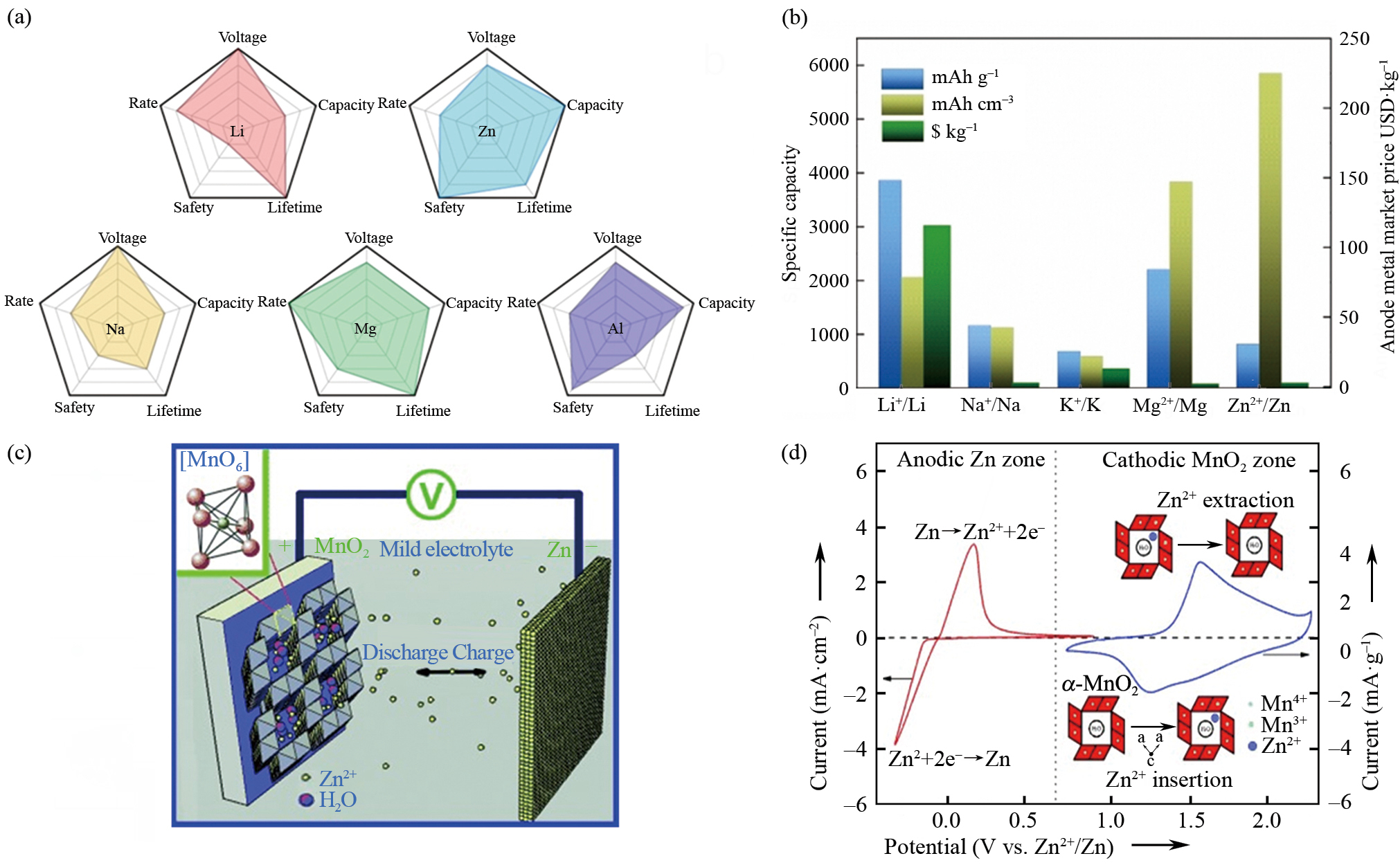
As alternatives to LIBs, emerging multivalent metal-ion batteries, such as magnesium (Mg2+), zinc (Zn2+), calcium (Ca2+), and aluminum (Al3+) batteries, offer significant advantages in cost-effectiveness, owing to the relative abundance of these metals in surface mineral deposits [9]. Their widespread availability reduces the risk of long-term lithium resource shortages and positions them as promising solutions for future energy storage. The multi-electron transfer capability of multivalent metal ions enhances their capacity, leading to higher theoretical gravimetric and volumetric energy densities compared to monovalent ions, as shown in Figs. 1(a) and 1(b). This feature, combined with the inherent safety, low cost, and environmental benefits of aqueous electrolytes, has made multivalent metal-ion batteries increasingly attractive for large-scale applications [10]. Among these, aqueous zinc-ion batteries (AZIBs) have emerged as the most promising candidates for cost-effective, safe, and high-performance rechargeable batteries [11]. Since the concept of rechargeable AZIBs was introduced by Kang and colleagues in 2011 (Fig. 1(c)), AZIBs have garnered significant academic and industrial interest [12]. Their appeal lies in the use of safe, non-toxic aqueous electrolytes, the abundance and environmental compatibility of zinc resources, and the excellent energy and power densities of zinc metal as anodes [13]. The general working principle of AZIBs involves the electroplating/stripping or electrodeposition/solution processes of Zn2+/Zn. Zinc metal anodes offer outstanding properties, including high theoretical capacities (820 mA·h·g–1 and 5,855 mA·h·cm–3), appropriate redox potential (–0.76 V vs. SHE), small ionic radius (0.74 Å), and high ionic conductivity of electrolytes [14]. These characteristics, coupled with the safe and green operating environment, make AZIBs ideal for large-scale energy storage systems and environmental protection. As highlighted in Fig. 1(d), zinc-ion batteries stand out among aqueous electrolyte-based battery technologies due to their abundant natural reserves, low cost, high hydrogen evolution overpotential, and excellent specific energy and energy density. These features underscore their significant potential for addressing global energy storage needs while ensuring safety, sustainability, and scalability [15]. While significant progress has been made in advancing AZIBs, several critical challenges continue to hinder their commercialization [16]. Although ongoing efforts to improve electrode and electrolyte design are crucial, addressing broader practical barriers is equally essential for enabling large-scale deployment. One key limitation is the relatively high redox potential of zinc compared to lithium (–0.76 V vs. SHE for Zn/Zn2+ versus –3.05 V vs. SHE for Li/Li+), which restricts the cell voltage of AZIBs to less than 2.0 V [15]. This necessitates connecting multiple cells in series to achieve voltages comparable to lithium-ion modules, increasing system complexity. Long-term cycle stability of current AZIBs also presents significant challenge. For manganese-based systems, the disproportionation reaction driven by Jahn-Teller distortion (Mn3+ → Mn2+ + Mn4+) causes soluble Mn2+ to diffuse leach into the aqueous electrolyte, especially at lower voltages (~1.1 V vs. Zn/Zn2+). This dissolution alters the system pH, leading to the precipitation of unwanted undesirable salts (e.g., Zn4SO4(OH)6 in ZnSO4 electrolytes), which increase internal resistance, reduce ionic conductivity, and ultimately degrade cycle life [17]. Additionally, pH fluctuations during charge and discharge cycles exacerbate active material dissolution and can corrode metal current collectors, further compromising performance [18].
The complex electrochemical environment of AZIBs—comprising H+, OH–, H2O, and Zn2+—introduces additional challenges for in-depth understanding of charge storage mechanism. For example, while some researchers propose a reversible phase transition between α-MnO2 and Zn-birnessite, allowing stable Zn2+ intercalation, others suggest co-insertion of H+ and Zn2+ into Mn-based oxide cathodes [21]. This lack of consensus regarding the fundamental storage mechanism slows the development of optimized cathode materials and delays commercialization. First-principles calculations, however, indicate that proton intercalation is negligible at the typical pH range of 4–6, suggesting that further clarification of these mechanisms is critical [22]. Additionally, the poor stability and low Coulombic efficiency (CE) of zinc-metal anodes limit their application in large-scale energy storage systems. While surface modifications and additives have been explored to mitigate dendrite formation and improve performance, the underlying mechanisms driving these improvements and the byproducts generated during electrochemical reactions remain inadequately understood [23, 24]. Furthermore, standardized protocols for evaluating AZIBs systems under realistic conditions—such as higher active material loadings and practical current densities—are lacking and must be prioritized to bridge the gap between laboratory studies and commercial viability. To overcome these barriers, future research must focus on addressing cathode dissolution, stabilizing zinc-metal anodes, and standardizing evaluation protocols. Clarifying the fundamental charge-storage mechanisms and optimizing system chemistry will be essential for advancing AZIBs toward practical applications in large-scale energy storage.
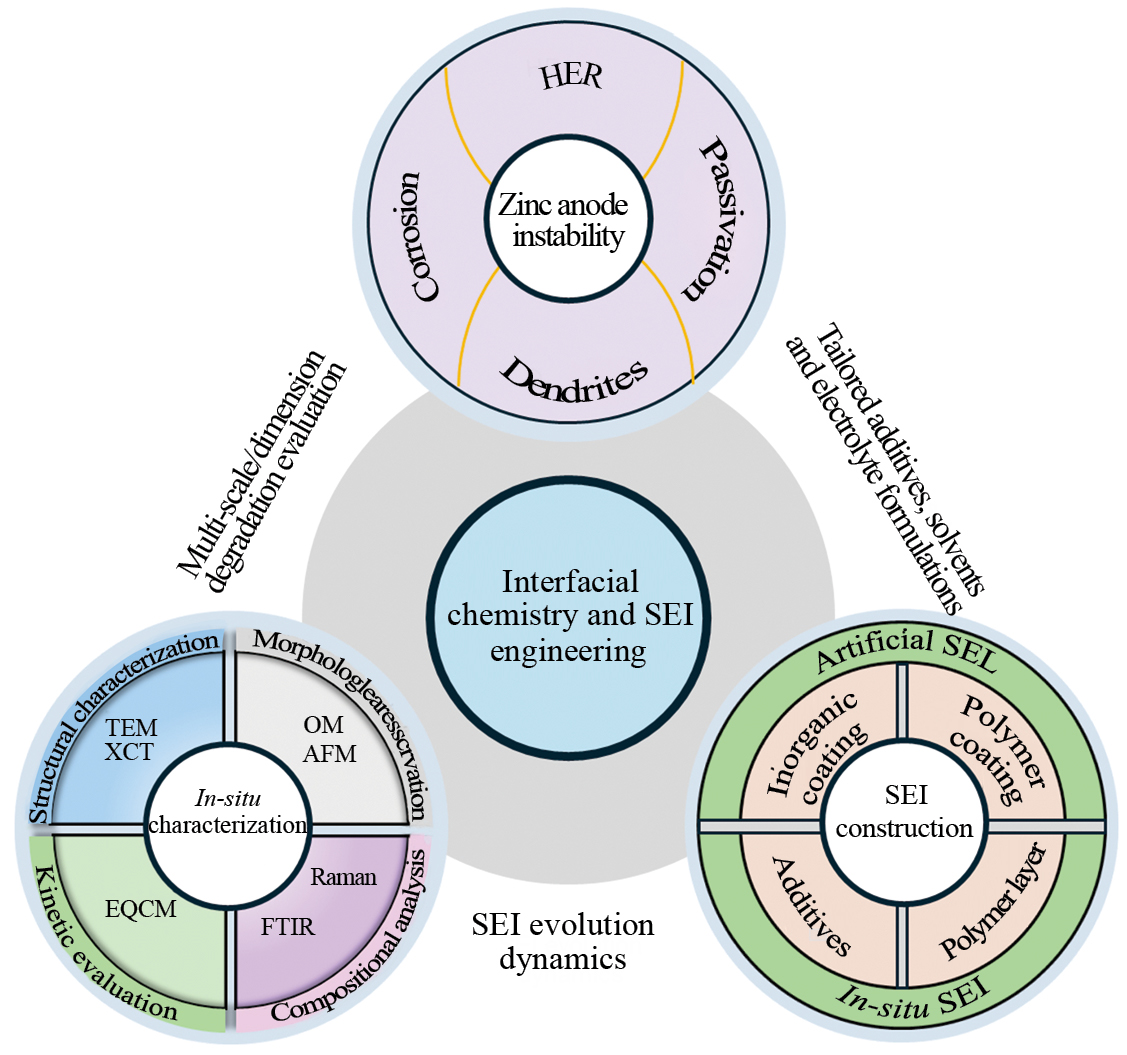
Figure 2 illustrates the overall structure of this paper. In this work, key challenges of zinc anode interfacial instability in AZIBs have been summarized. We comprehensively review the recent advancements in interfacial chemistry modulation and SEI engineering to enhance zinc anode stability. Effective strategies including inorganic and organic additives, tailored solvents and optimized electrolyte formulations enable the construction of robust SEI layers that mitigate dendrite formation, suppress side reactions and stabilize the electrode/electrolyte interface. Additionally, we highlight the advanced in-situ characterization techniques that provide critical insights into SEI formation and ion transport dynamics, paving the way for improved zinc anode performance.
AZIBs hold significant potential for a wide range of applications, from wearable electronic devices to large-scale stationary energy storage systems. Over the past years, AZIBs have garnered extensive attention from both researchers and manufacturers, leading to the exploration of various systems, including Zn–air, Zn–Ag, Zn–NiOOH, Zn–Co3O4, Zn–V2O5, Zn–MnO2, Zn–Br2, and Zn–I2 batteries [25]. A typical aqueous zinc-ion battery comprises four main components: a cathode, an anode, an aqueous electrolyte, and a separator, as illustrated in Fig. 3(a). The charge storage mechanism involves the migration of Zn2+ ions between the zinc metal anode and cathode materials during electrochemical reactions [25, 26].
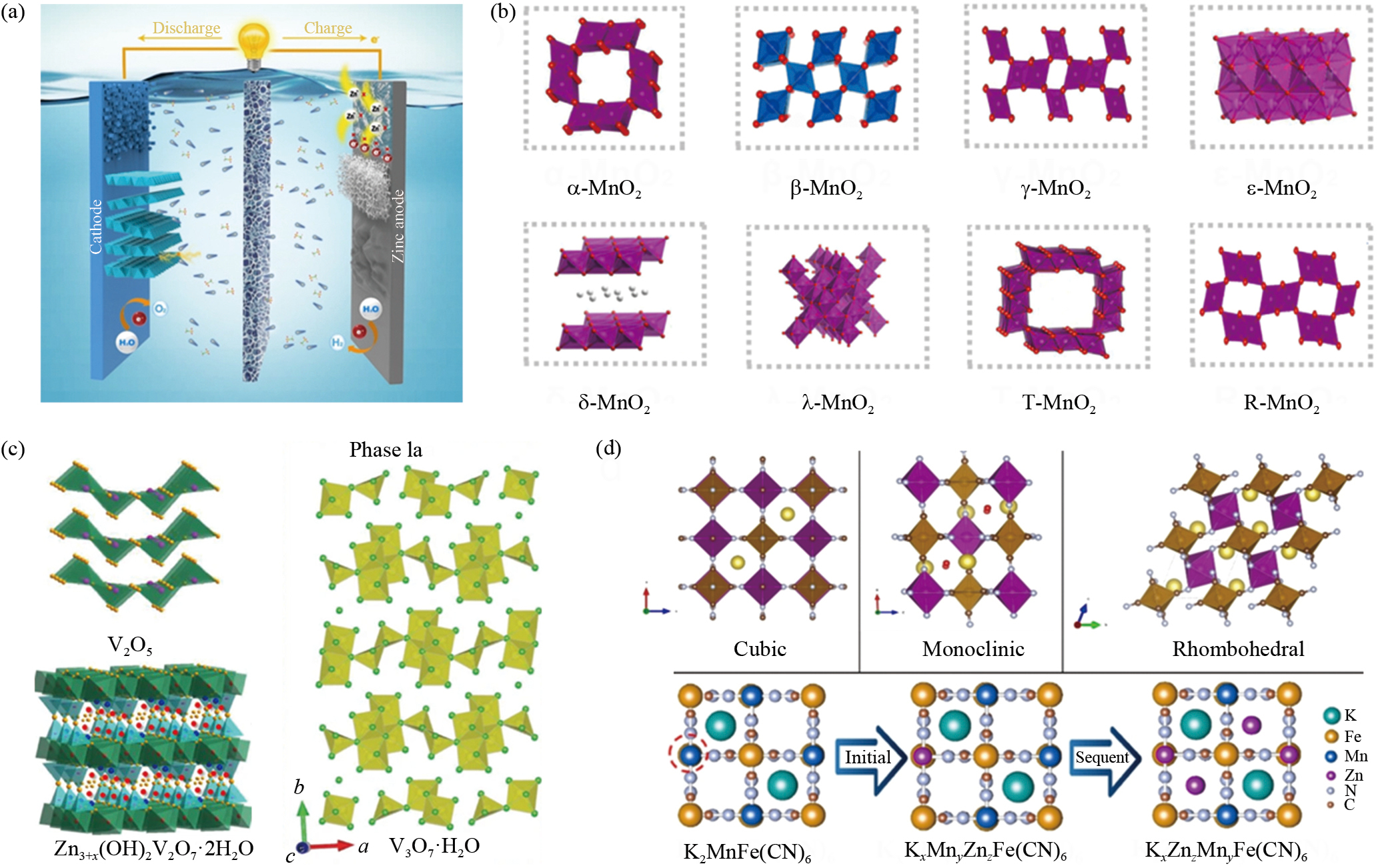
Similar to other battery systems, the performance evaluation of AZIBs, including energy density, power density, and cost, are significantly influenced by the choices of the cathode materials. Research into AZIBs has explored a variety of materials (Figs. 3(b) to 3(d)), including manganese-based oxides (e.g., α-, β-, δ-, and γ-MnO2) as shown in Fig. 3(b) [27], vanadium oxides or vanadates (e.g., V2O5, VO2, V2O3, V6O13, NH4V3O8, and NaV3O8) as shown in Fig. 3(c) [28], Prussian blue analogues (PBAs) such as ZnHCF, FeHCF, NiHCF, and CoFe(CN)6 [20], as well as emerging options like organics [29], MXenes [30], transition metal chalcogenides [31], and layered double hydroxides [32]. These materials are attractive for their low-cost, safety features, sustainability, and favourable gravimetric energy density. However, each cathode type exhibits distinct operating voltage ranges, cycling stability, kinetic properties and discharge capacity, making material selection and engineering a critical role for their battery performance optimization. To enable the industrial-level utilization of AZIBs, cathodes must be designed and engineered to deliver high reversible capacities while maintaining stability over extended cycle life. Despite notable breakthroughs in cathode development, several challenges including low capacity, poor cycle stability, and limited voltage range, remain to be addressed. Among the mainstream cathode materials (manganese-based compounds, vanadium-based compounds, and PBAs), each exhibits specific advantages and limitations [33, 34].
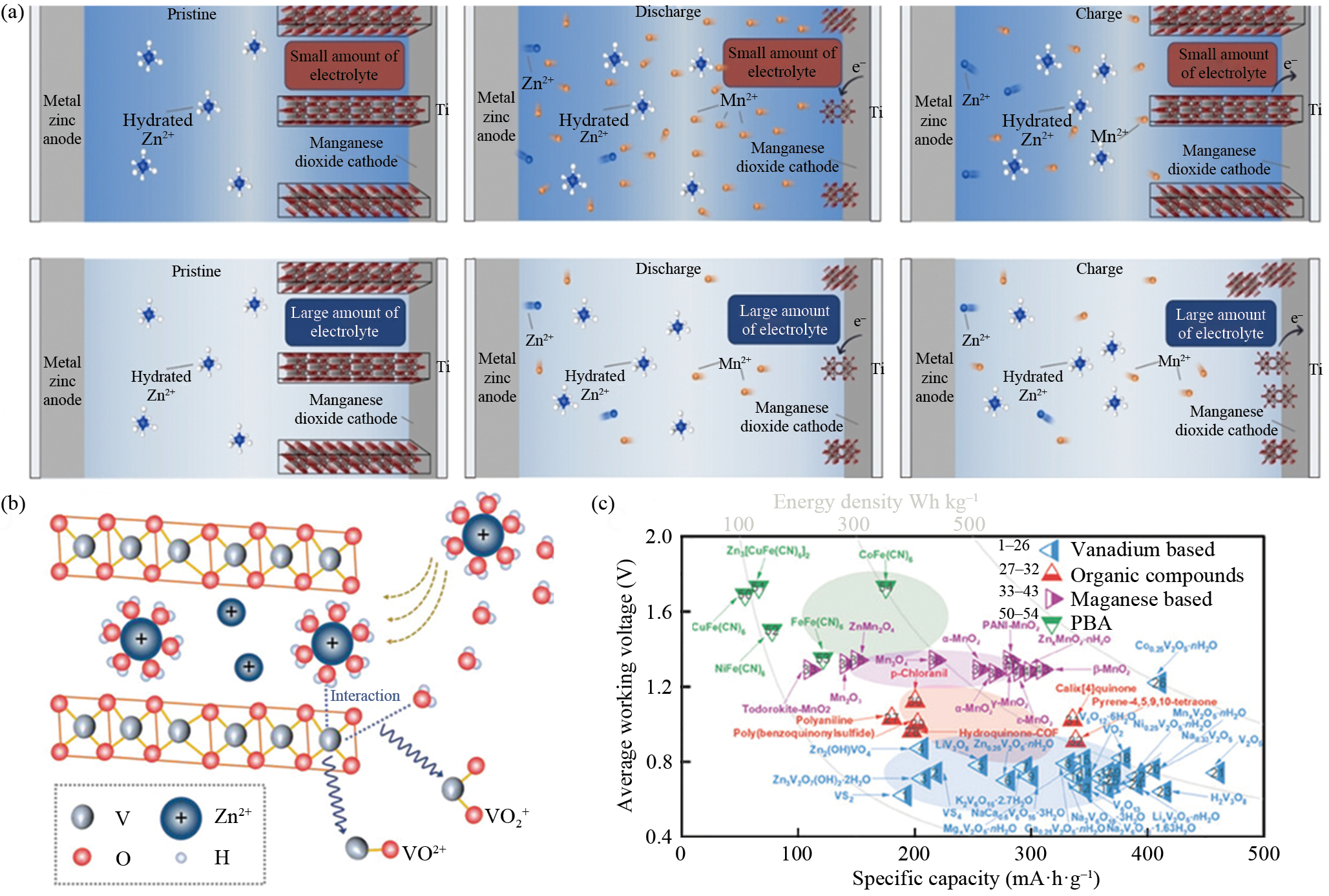
Manganese-based compounds suffer from rapid capacity degradation due to the Mn2+ dissolution driven by the Jahn-Teller effect and disproportionation reactions (Fig. 4(a)) [35, 36]. Vanadium-based compounds, such as V2O5, offer promising high theoretical capacities (>300 mA·h·g–1), but their structural instability and vanadium dissolution remain significant barriers to long-term performance and scalability (Fig. 4(b)) [37, 38]. While PBAs are cost-effective and exhibit excellent cycling stability, their relatively low theoretical capacity limits their energy density and constrains their application in high-performance applications (Fig. 4(c)) [39].
Zinc metal foil is commonly used as the anode in AZIBs due to its impressive theoretical volumetric capacity (5855 mA·h·cm–3) and gravimetric capacity (820 mA·h·g–1), low cost (approximately 20%–30% less than lithium), moderate redox potential (–0.76 V vs. standard hydrogen electrode), and abundance (approximately 300 times greater than lithium) [40, 41]. Despite these advantages, bare zinc metal, commercialized in primary batteries nearly two centuries ago, remains the standard choice in most AZIBs research [42]. However, its practical application is hindered by several significant challenges, including passivation, severe morphology changes, irreversibility, corrosion, hydrogen evolution and dendrite growth during plating and stripping cycles [43]. Dendrite growth not only consumes water and produces irreversible by-products like Zn(OH)42– but also leads to poor Coulombic efficiency, limited cycling life, and compromised battery performance, especially at high current densities. The formation of dendrites is attributed to uneven Zn2+ ion distribution on the flat zinc surface. Sharp dendrite tips act as charge centers under the electric field, promoting further dendrite growth. As dendrites grow, the anode's surface area increases, accelerating corrosion and other surface-dependent reactions, which further degrade battery performance. Zinc dendrites also pose serious safety and reliability concerns. Detached dendrites can puncture the separator, causing internal short circuits and battery failure [44]. Hydrogen evolution exacerbates these issues by generating gas bubbles, leading to pressure imbalances in closed-cell systems and safety risks. Additionally, hydrogen bubbles disrupt solid-liquid phase contact, resulting in large polarization voltages and reduced efficiency [45]. Despite various advantage of zinc metal as potential anode and great efforts devoted for high performance AZIBs, many studies focus on improving specific performance aspects while neglecting adverse effects on other parameters, limiting the real-world feasibility of current strategies. Bridging this gap requires a holistic approach to address these interconnected issues and develop durable, efficient zinc metal anodes suitable for commercial applications.
The electrolyte is a critical component of AZIBs, serving as the medium for Zn2+ ion transport between the cathode and anode. It directly impacts key performance parameters, including ionic conductivity, electrochemically stable potential window, Coulombic efficiency, and the reversibility of the zinc plating/stripping process [46]. The composition and properties of the electrolyte are pivotal in regulating the Zn2+ storage mechanism, cycling stability, capacity, safety, and overall operational conditions of the battery. Conventional aqueous electrolytes typically consist of water and zinc salts, formulated as alkaline, neutral, or mildly acidic solutions. Commonly used electrolyte salts include ZnSO4, ZnCl2, Zn(NO3)2, Zn(ClO4)2, Zn(CH3COO)2, Zn(CF3SO3)2, and Zn(TFSI)2 [47, 48]. These electrolytes offer higher ionic conductivity (10–100 mS·cm–1) compared to organic electrolytes (1–10 mS·cm–1), ensuring efficient ion transport and improved battery performance. The electrolyte type also affects interfacial stability, redox reactions, and compatibility with various cathode materials. To address challenges such as corrosion, passivation, and side reactions, current innovative electrolyte designs incorporate functional additives [49]. Similar to electrolyte additives for lithium-ion batteries, these aqueous electrolyte additives are typically used in low concentrations but significantly enhance cycling stability and battery longevity. By optimizing the chemical environment at the zinc anode/electrolyte interface, these additives enable the formation of interfaces with tailored chemical structures, enhancing stability, cycle life, and overall battery performance [47].
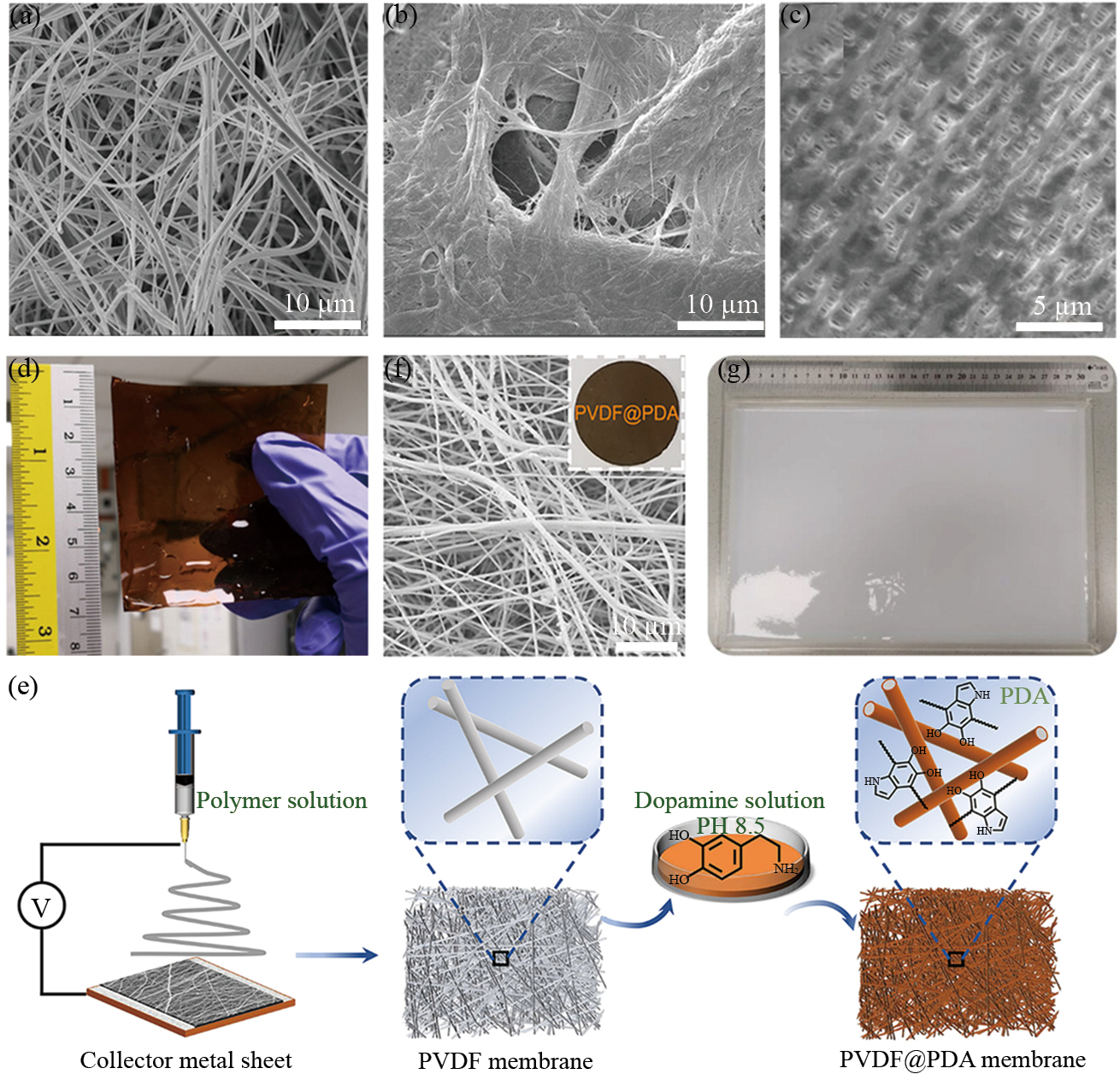
As an indispensable component in batteries, separators serve to maintaining the safe operation of AZIBs [50]. The separators act as an insulating barrier, effectively preventing direct physical contact between the cathode and anode to avoid short circuits. Additionally, it accommodates the electrolyte and provides zinc ions diffusion pathway to facilitate efficient oxidation-reduction reactions during battery operation [51]. Despite being considered non-active components in conventional AZIBs, separators play a vital role in optimizing battery performance. Glass fibres (GFs), filter paper, and hydrophilic polyolefins are the most commonly used separators in current AZIBs [50]. Glass fibers (GFs), the mainstream separators in AZIBs, offer high ionic conductivity, excellent electrolyte infiltration, and suitable porosity (Fig. 5(a)). However, their fragility, nonuniform pores and insufficient mechanical stability make them prone to dendrite penetration, increasing the safety risk and sacrificing cycle stability. Additionally, their considerable thickness (up to 600 µm) extends the ion transport path, occupies excessive battery space and reduces energy density, and raises production costs, limiting their practicality for cost-effective energy storage [52]. Filter paper (Fig. 5(b)) with uneven pores cause inconsistent electrolyte wetting, leading to nonuniform zinc plating on the zinc foil . Polyolefin separators (Fig. 5(c)), widely used in LIBs for their high porosity and excellent insulation, are unsuitable for AZIBs due to low thermal and mechanical tolerance and inability to prevent thermal runaway, leading to short-circuit failures during extended cycling [54]. Non-GF nanoporous separators, including Nafion (Fig. 5(d)) [55], synthetic organic polymer-based (Figs. 5(e) and 5(f)) [56], and natural cellulose-based types (Fig. 5(g)) [57], have emerged as promising alternatives for advanced AZIBs applications.
The energy storage mechanism of AZIBs depends largely on the cathode material. However, electrolyte properties and additives also play a significant role due to interactions between electrolyte pH and cathode crystal structure, leading to competition between Zn2+ and H+ [17]. Electrolyte pH variations influence the battery electrochemical environment. Early research primarily focused on improving electrochemical performance, with later extensive efforts currently shifting toward understanding reaction mechanisms. Several widely recognized redox mechanisms have been proposed: pure Zn2+ intercalation and deintercalation, H+/Zn2+ co-insertion and chemical conversion. Despite extensive studies, the underlying electrochemical mechanisms remain unclear and controversial, with no consensus on a definitive mechanism [58].
In 2011, Xu and colleagues proposed the Zn2+ insertion/extraction mechanism in α-MnO2‖Zn batteries [12]. Similar mechanisms were later identified in other MnO2 crystal forms (β, γ, λ, δ) [59]. This classical Zn2+ insertion/extraction process resembles that of conventional Li-ion and Na-ion batteries, where Zn2+ is reversibly intercalated into or extracted from the host cathode material (Fig. 6(a)). Based on this ion intercalation mechanism, the discharge capacity of MnO2 depends more on its crystallographic structure than surface area [60]. During discharge process, Zn metal at the anode oxidizes, releasing electrons into the circuit and dissolving into the aqueous electrolyte as Zn2+, which migrates to the cathode under the driven force of an electrochemical potential gradient. At the cathode, Zn2+ intercalates into the active material, accepting electrons and reducing the oxidation state of the cathode. During charge process, Zn2+ is released from the cathode, oxidizing the cathode material and migrating back to the aqueous electrolyte, eventually depositing on the anode as metallic Zn. Zn2+ insertion/extraction at the cathode and Zn2+ dissolution/deposition at the anode occur synchronously. Materials with tunnel, layered, or open-frame structures (e.g., Mn-oxides, V-oxides, vanadates, PBAs, and NASICON compounds) provide Zn2+ intercalation pathways. The dissolution and phase transitions of MnO2 cathodes during cycling remain controversial, complicating the mechanism of Zn‖MnO2 cells. In contrast, VO2(B) with its stable tunneling structure offers better long-term stability (Fig. 6(b)) [61, 62].
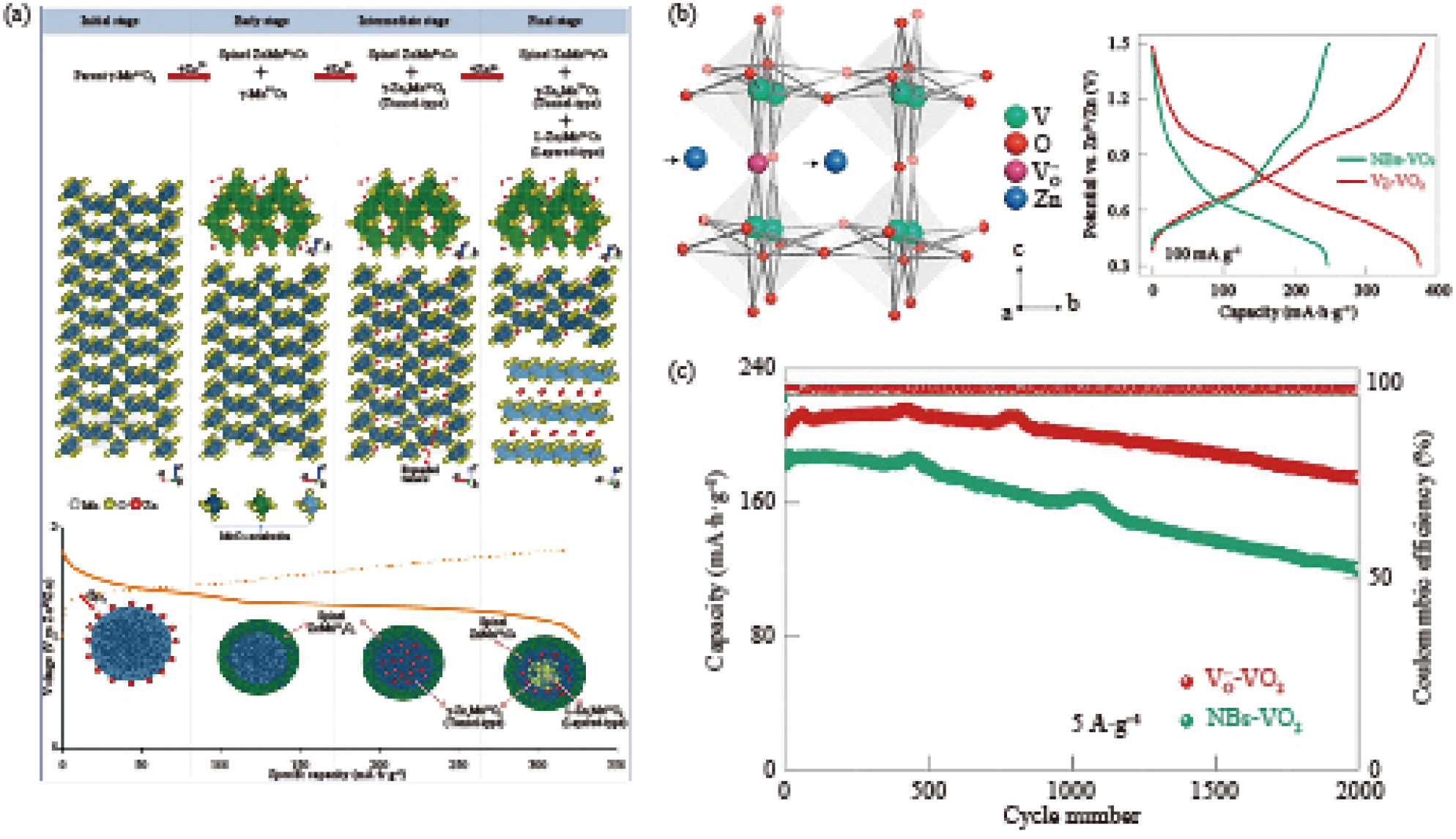
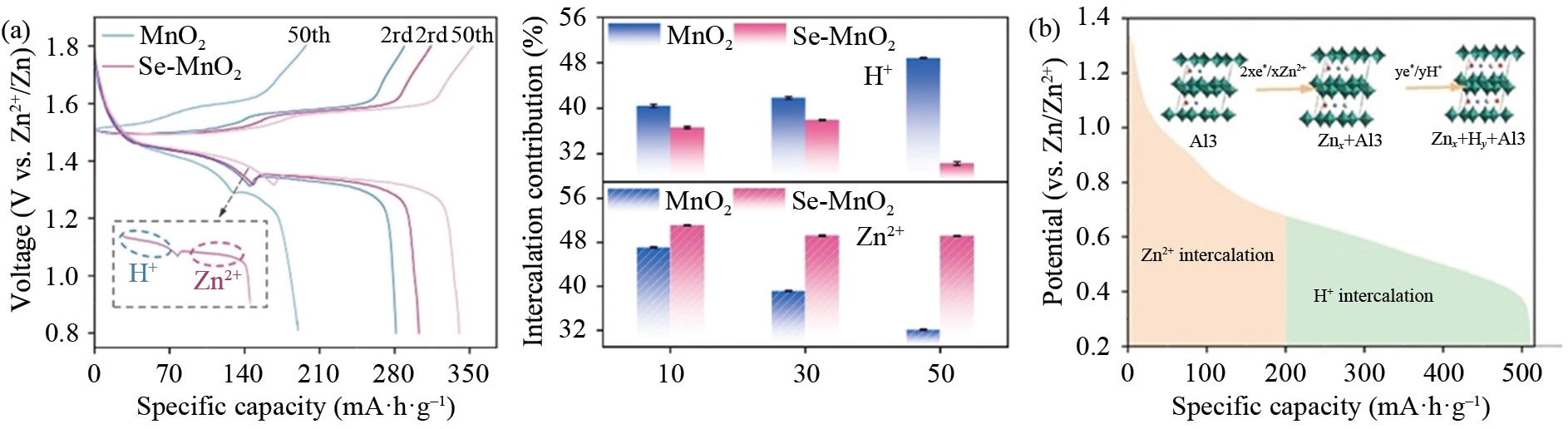
Most electrolytes for AZIBs, such as ZnSO4 and Zn(CF3SO3)2, are neutral or weakly acidic, containing significant H+ ions. These H+ ions can act as charge carriers alongside Zn2+, enabling a co-intercalation energy storage mechanism [63]. During charge/discharge, both H+ and Zn2+ can reversibly intercalate into and de-intercalate from the cathode material (Fig. 7). This Zn2+/H+ co-intercalation mechanism, commonly observed in Mn-based (e.g., α-MnO2, δ-Na0.44MnO2·1.5H2O) as shown in Fig. 7(a) and V-based materials (e.g., NaV3O8·1.5H2O, δ-Ni0.25V2O5), introduces complex electrochemical behaviour that affects capacity and stability (Fig. 7(c)) [64–66]. While co-intercalation can contribute to charge storage, excessive H+ involvement can accelerate irreversible cathode dissolution, particularly at low current rates [67].
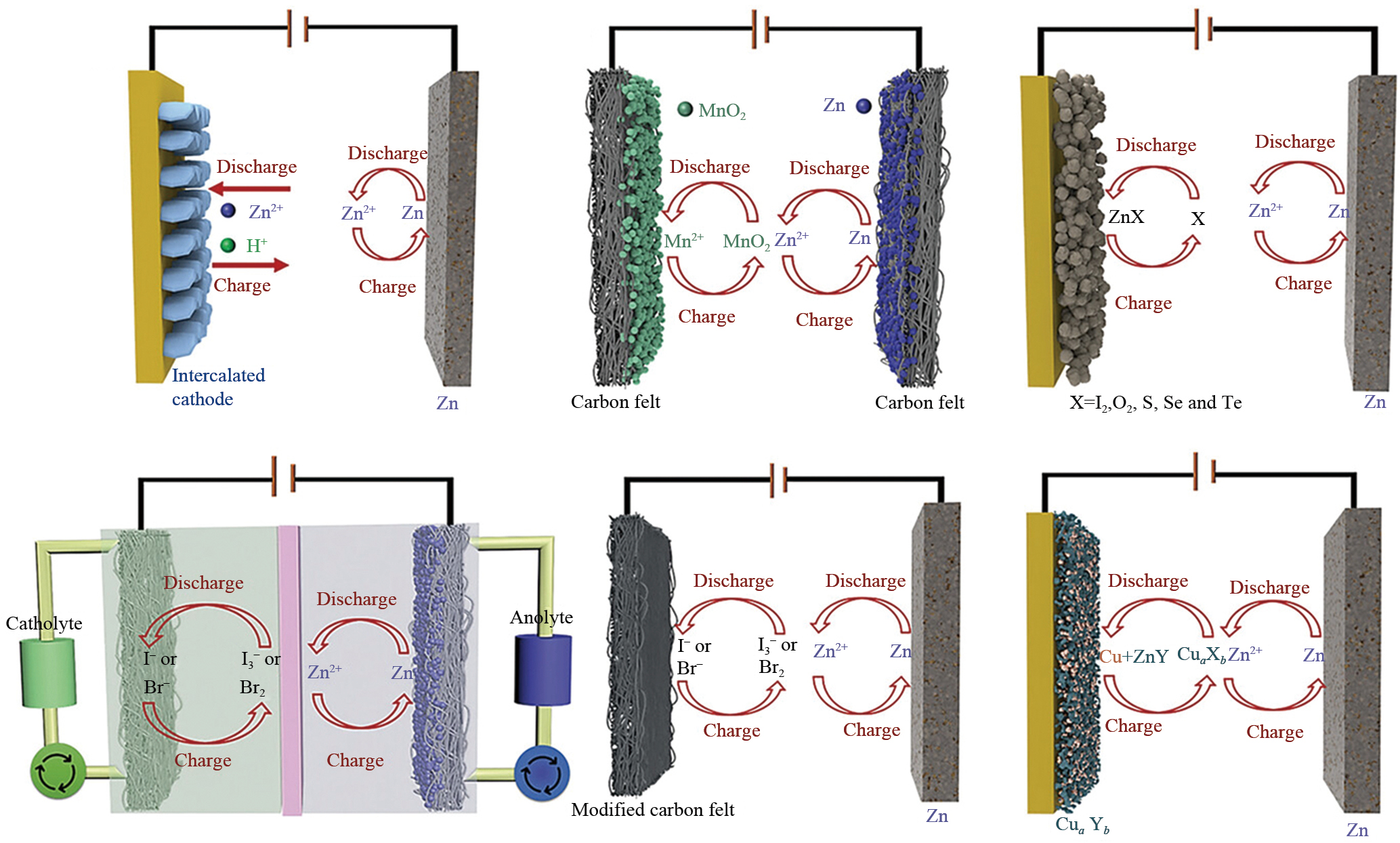
Unlike intercalation mechanisms, electrode materials employing conversion process involve multi-electron reactions, thereby offering higher energy densities. Conversion occurs through redox reactions involving valence state changes rather than Zn2+ intercalation into host tunnels of cathode materials (Fig. 8) [68]. Chemical conversion reactions have been widely reported, particularly in MnO2-based materials, as well as Ni, Co, and Cu oxides (e.g., NiO, NiOOH, CoO, Co3O4, CuO). Recently, diverse conversion cathodes have emerged for AZIBs, including halogens (Cl2, Br2, I2) and chalcogen-based materials (S, Se, Te). These materials enable multi-electron transfer reactions to significantly enhance specific capacity and energy density [69]. For example, zinc-sulfur (Zn-S) batteries utilizing the S-ZnS conversion achieve a high specific capacity of 846 mA·h·g–1 and energy density of 259 W·h·kg–1 [70]. Zinc-tellurium (Zn-Te) batteries offer a remarkable theoretical specific capacity of 1692 mA·h·g–1 (six-electron transfer) [71]. Zinc-iodine (Zn-I2) batteries deliver a a remarkable capacity level of 594 mA·h·g−1 [72].
AZIBs utilizing Zn metal anodes, are gaining extensive attention as promising alternatives due to their abundant reserves and affordable cost, superior open-air and aqueous stability compared to alkali metals (Li, Na, K), and other advantages such as high safety, environmental friendliness [73]. However, their practical application still faces critical challenges, similar to lithium and sodium metal batteries. Key issues include dendrite formation and growth, hydrogen evolution, corrosion, passivation, and volume expansion during Zn deposition. These problems compromise long cycle stability and Coulombic efficiency, reduce service life, trigger safety hazards, eventually limiting their commercial viability [74]. This section will explore the interfacial electrochemistry of zinc metal anode, focusing on the relationship of Zn2+ deposition/stripping and interfacial evolution.
Similar to lithium and sodium metal, Zn metal anodes also rely on ion deposition/dissolution and face challenges with uncontrolled dendrite formation [75]. Zinc dendrite formation primarily arises from the non-uniform electric field distribution and uncontrolled two-dimensional diffusion of Zn2+ ions on the anode-electrolyte interface during deposition [43]. The deposition/dissolution rate of Zn is largely governed by Zn2+ mass transfer in the liquid phase, influenced by factors such as surface texture, electric field distribution, and salt concentration. Compared to lithium, the larger particle size and relatively higher Young's modulus of Zn dendrites exacerbate the dendrite issues in AZIBs [76, 77].
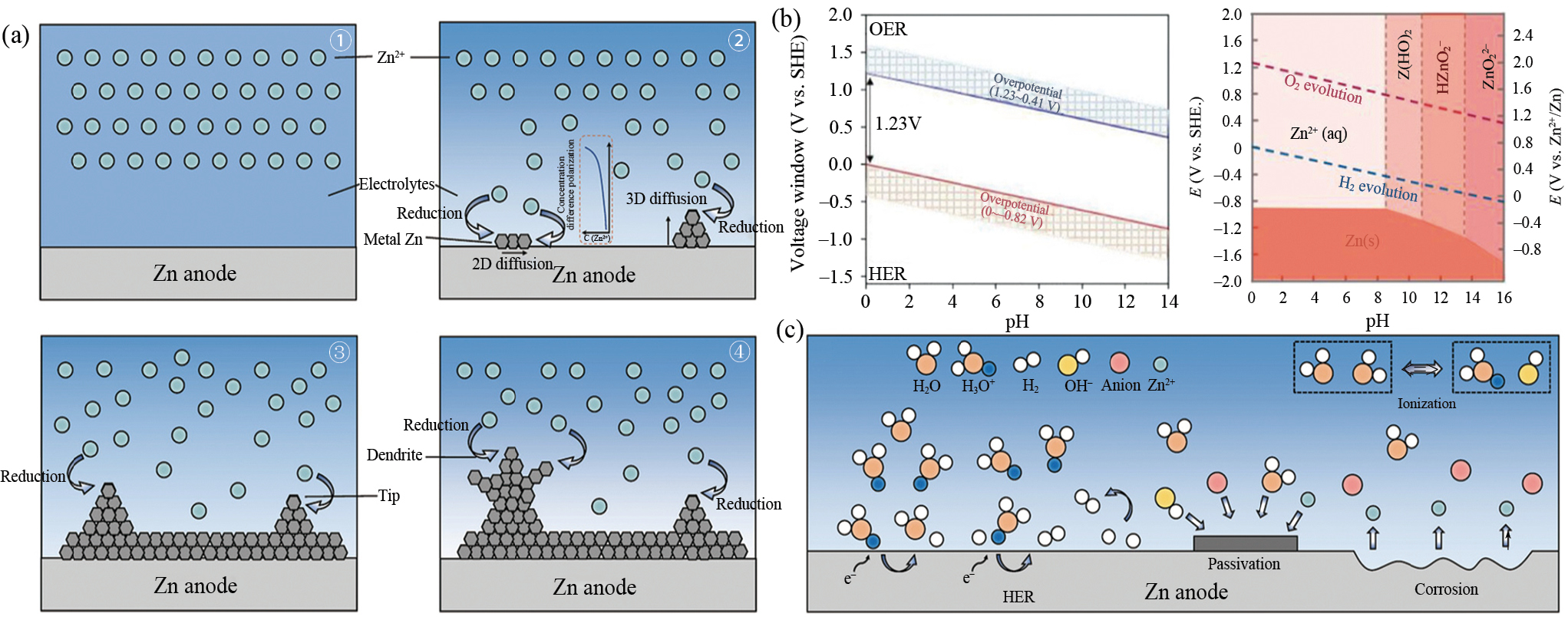
Dendrites refer to irregular deposits formed during zinc deposition. In an aqueous zinc-ion battery system at rest, Zn2+ ions in the electrolyte are uniformly distributed. However, commercial and electroplated zinc surfaces are not atomically smooth. As shown in Fig. 9(a), during charge, Zn2+ ions migrate from the electrolyte toward Zn anode under the electric field and preferentially deposit at energetically favourable sites with low nucleation barriers, such as grain boundaries and defects, initiating uncontrolled two-dimensional diffusion and forming initial nucleation points [5]. This leads to surface protrusions that exacerbate electric field inhomogeneity and promote further dendritic growth. The uneven electrolyte/anode interface and localized charge transfer further amplify non-uniform Zn deposition, resulting in irregular metallic dendrites. Small protrusions scattered across the zinc anode surface, contributes to the "tip effect". The "tip effect" at surface protrusions generates a strong local electric field, attracting Zn2+ ions to preferentially accumulate and deposit at these sites. This leads to an increasingly heterogeneous Zn2+ distribution in the electrolyte, initiating dendrite formation at nucleation points. Compared to flat Zn surfaces, dendritic tips attract higher charge densities, resulting in local Zn2+ accumulation that accelerates growth and creates concentration polarization, further amplifying mass transfer inhomogeneity. As deposition continues, the "tip effect" exacerbates uneven electric field distribution, ion concentration, and deposition rates, promoting dendrite growth. Zn dendrites, shaped by the hexagonal crystal structure, typically form two-dimensional hexagonal sheets. Their morphology evolves with cycling parameters, gradually expanding and risking separator puncture, which can lead to short circuits and reduced battery capacity [78]. Their high mechanical strength allows them to easily puncture separators, leading to short circuits. Additionally, dendrites can detach, forming "dead zinc," which reduces active material, increases impedance, and lowers Coulombic efficiency [79]. The porous structure of Zn deposition exacerbates dendrite breakage, accelerating electrode degradation. The increased electrode-electrolyte contact area also promotes side reactions like hydrogen evolution and corrosion, creating a vicious cycle of performance decline [80]. The uncontrolled growth of Zn dendrites severely impacts the lifespan, efficiency, and safety of AZIBs, representing a critical challenge for their development.
Dendrite morphology is influenced by both thermodynamics and kinetics, including ionic diffusivity, reaction kinetics, nucleation, and crystal growth [82]. At low current densities or with small-volume neutral electrolytes, dendrites are less problematic. However, high current densities or heavily loaded anodes accelerate dendrite formation, rapidly degrading battery performance. In aqueous electrolytes, Zn plating/stripping is influenced by Zn2+ activity and pH [83]. Alkaline electrolytes promote conical dendrite growth due to high electrochemical activity and thermodynamic instability, while neutral and acidic systems typically produce mossy morphologies that better suppress dendrite formation [84]. Dendrite formation and side reactions are interconnected. Side reactions, such as hydrogen evolution (HER), corrosion, and passivation, create surface inhomogeneities that exacerbate uneven Zn deposition and dendrite growth. Dendrites increase the exposed Zn surface area, accelerating HER, altering local pH, and producing inert by-products like Zn(OH)2, which intensify corrosion and further reduce cycling stability [85].
The hydrogen evolution reaction (HER) and Zn dissolution/deposition are competing processes on the zinc anode. Actually, these reactions occur whenever the zinc electrode contacts water in the electrolyte due to the thermodynamic instability of zinc metal in aqueous environments across all pH levels. The pH of the electrolyte determines the HER potential range (0−0.83 V vs. SHE). In acidic environments, HER is more favourable due to a lower critical potential. In alkaline electrolytes with high pH level, the Zn/ZnO redox couple (−1.26 V vs. SHE) has a lower standard reduction potential than HER (−0.83 V vs. SHE), making HER thermodynamically preferred (Fig. 9(b)) [81, 86]. Conversely, in neutral electrolytes (pH=7), the Zn/Zn2+ redox couple (−0.76 V vs. SHE) has a higher reduction potential than HER, reducing HER occurrence. Weakly acidic systems further suppress HER, shifting research focus to these environments for improved battery performance. HER also arises from the interaction of Zn2+ with water in solvated structures like [Zn(H2O)6]2+. The high polarization and charge of Zn2+ foster a robust interaction with H2O and weaken the O–H bond in water, thus increasing the reactivity of bound H2O molecules [14, 87]. During Zn deposition, the solvated [Zn(H2O)6]2+ in the electric double layer releases active water molecules, promoting H2 formation at the Zn interface. Despite high hydrogen evolution overpotential on the Zn electrode, low-rate HER persists, underscoring the challenge of controlling this side reaction in zinc-based batteries.
Hydrogen evolution on the zinc anode surface in zinc metal batteries significantly impacts Zn2+ deposition and degrades overall battery performance. Competition between HER and zinc dissolution/deposition irreversibly consumes active component of both zinc metal and electrolyte, reducing energy density and shortening cycle life [88]. Generated hydrogen gas interferes electrolyte/electrode interactions by impeding zinc nucleation, increasing overpotential and causing uneven zinc ion deposition. The consumption of H+ ions in the aqueous electrolyte elevate the OH– concentration near the anode surface, inducing localized pH fluctuations and other side reactions. The resulting increasingly alkaline environment further exacerbates corrosion and passivation of the zinc anode [74, 87]. Ultimately, these results lead to higher internal resistance, poor Coulombic efficiency, and unstable cycling stability of AZIBs. In sealed battery systems, hydrogen accumulation from HER can increase internal cell pressure and cause cell swelling, which may lead to electrolyte leakage and compromise battery integrity. Worse still, excessive H2 generation may even cause battery explosion.
Metallic zinc is thermodynamically unstable in water across all pH levels, making it susceptible to corrosion and hydrogen evolution in both acidic and alkaline environments. Corrosion and passivation (Fig. 9(c)) of the zinc anode occur simultaneously in various alkaline and weakly acidic electrolytes [47, 87]. Zinc anode corrosion in AZIBs can be categorized into chemical and electrochemical corrosion. Direct contact between the electrolyte and bare zinc induces corrosion, primarily through redox reactions between water and Zn. In alkaline systems, dual corrosion arises due to the lower oxidation potential of ZnO/Zn compared to the hydrogen evolution potential, resulting in pronounced self-corrosion particularly in slightly alkaline electrolytes (pH>9). When zinc is exposed to the electrolyte, electrons transfer to impurities, reacting with H+ or H2O, while Zn oxidizes to Zn2+ and dissolves in to the electrolyte to form Zn(OH)42–. Limited solubility of Zn(OH)42– leads to Zn(OH)2 deposition, which can further dehydrate into ZnO [89, 90].
Mildly acidic electrolytes (pH 3–7) reduce chemical corrosion compared to alkaline systems, but electrochemical corrosion remains a major concern. In these systems, zinc undergoes thermodynamic instability, reacting with H+ or H2O to produce H2, Zn2+, and OH–. The localized HER consumes H+ and generates OH–, creating an alkaline microenvironment with increasing pH at the zinc anode surface. This promotes further reactions with Zn2+ and electrolyte anions (e.g., SO42–, TFSI–, etc.), leading to the formation of loosely stacked, porous and non-conductive alkaline passivation by-products such as Zn(OH)2, basic zinc sulfate, Zn4SO4(OH)6·xH2O, Zn4ClO4(OH)₇ and TFSI-based complexes [87, 89, 90]. During discharge, metallic zinc oxidizes to Zn2+, causing a localized accumulation of Zn2+ near the anode. This net positive charge attracts OH– and anions like SO42–, triggering additional complexation reactions and generating more corrosion byproducts. Common products, including basic zinc sulfate, zinc hydroxide, and ZnO, exhibit low electrochemical activity and poor conductivity, contributing to the irreversible zinc consumption and degraded battery performance.
These corrosion byproducts, typically low-solubility and poor-conductivity Zn-based basic salts, forming loosely structured byproducts that fail to function as a protective solid electrolyte interphase (SEI) layer like those in Li-ion batteries. Excessive accumulation of corrosion byproducts in the electrolyte and on the zinc anode surface obscures active nucleation sites, impeding electron and ion transport, reduces ionic conductivity, and impairs stripping/plating kinetics. This accumulation will increase anode/electrolyte interfacial impedance and electrode polarization. Additionally, these byproducts deplete electrolyte components, including salt and water, reducing ionic conductivity and compromising overall battery performance [11, 91]. Electrochemical corrosion irreversibly consumes metallic zinc during repeated charge-discharge cycles, leading to inert by-products from zinc deposition and electrode reactions. This process depletes both the zinc anode and electrolyte, reducing Coulombic efficiency and cycling stability. Additionally, H2 release disrupts zinc deposition, forming porous deposits that accelerate H2 evolution and worsen surface unevenness. Increased overpotential for Zn2+ deposition exacerbates HER and uneven Zn ion deposition, promoting dendrite growth. Uncontrolled dendrites expand the zinc/electrolyte contact area, facilitating side reactions, further amplifying HER and corrosion, and deteriorating battery performance [15].
Noteworthy, zinc dendrites, hydrogen evolution, corrosion, and anode passivation are interconnected challenges that interact synergistically, creating a self-reinforcing vicious cycle. These issues are not isolated but intricately linked, exacerbating one another and compounding the degradation of zinc anode performance. For instance, the growth of zinc dendrites increases the anode surface area, enhancing its contact with the electrolyte and providing additional reaction sites. Intensified hydrogen evolution raises the local OH– concentration at the Zn anode/electrolyte interface, increasing the electrolyte pH. This accelerates zinc corrosion and promotes the formation of passive byproducts. These byproducts, with low solubility, quickly saturate the electrolyte and deposit on the anode surface. Corrosion and passivation of the zinc anode create rough protrusions and increase surface roughness, leading to uneven Zn deposition and further accelerating dendrite growth. Additionally, H2 evolution during side reactions loosens the anode structure, increasing overpotential and uneven Zn deposition. Addressing challenges in zinc anodes requires understanding their interconnections rather than isolating individual issues. Effective anode modification should focus on regulating the zinc anode/electrolyte interface and optimizing the overall system, rather than targeting a single side reaction.
The practical implementation of metallic zinc anodes remains in its early stages due to significant challenges, including dendrite growth and side reactions such as passivation and hydrogen evolution in mild electrolytes. As a critical component of AZIBs, the cycling stability of Zn anodes directly influences the overall electrochemical performance and durability of these batteries [87]. Enhancing the performance of AZIBs necessitates the regulation of interface stability and the structural optimization of Zn anodes. The electrode-electrolyte interface, where electrochemical and chemical reactions occur, plays a pivotal role in governing ion and electron transport, further determining battery efficiency, performance, and lifespan [47].
In LIBs, SEI, formed from the decomposition of organic solvents, lithium salts, or additives, has become a hot research direction in interfacial engineering for next-generation higher performance battery technologies [92]. The unique SEI contribution in enabling reversible lithium storage in non-aqueous lithium-metal batteries inspires the construction of a stable SEI for zinc anodes in AZIBs. Unlike organic electrolyte systems, aqueous electrolytes pose unique challenges for SEI formation. Decomposition products of water and dissolved salts, such as hydrogen gas and corrosion by-products, cannot serve as effective SEI components. Water, the primary solvent in aqueous electrolyte systems, generates gaseous decomposition products (H2 and O2) that disrupt the formation of a dense and stable interphase. As a result, continuous parasitic reactions between the Zn anode and electrolyte persist, reducing cell lifespan and limiting energy density. Developing robust SEI strategies for Zn anodes is crucial to addressing interfacial instability challenges [93, 94].
A stable SEI is essential for mitigating parasitic reactions, enhancing cycling stability, and suppressing side reactions between the zinc anode and electrolyte during both rest and operation, thereby unlocking the full potential of AZIBs for broad energy storage applications. The quality of the SEI layer is a critical factor influencing the battery cycling stability and rate performance. An ideal SEI in AZBs should exhibit the following characteristics:
Typically, Zn2+ transport through the SEI involves the Zn2+ de-solvation at the electrode surface and migration across the SEI layer. An effective SEI in zinc-ion batteries should exhibit high Zn2+ ionic conductivity to facilitate efficient and uniform Zn deposition at the SEI-anode interface, while maintaining electronic insulation to supress electron transfer with electrolyte and minimize side reactions.
The SEI in zinc-ion batteries should be thin, compact, and uniform, ensuring effective isolation of the zinc anode from the electrolyte while maintaining efficient Zn2+ transport at the interface. A dense and stable SEI prevents direct contact between water and the zinc anode, mitigating side reactions and enhancing cycling stability. Additionally, the SEI must exhibit strong affinity for the zinc surface to ensure preferential adsorption and robust adhesion. Balancing SEI thickness is critical to achieving both effective protection and optimal energy density, without compromising long-term performance.
Robust mechanical, chemical, and electrochemical stability, coupled with low solubility in the electrolyte, are expected to ensure reliable performance across a range of temperatures and operating potentials. The SEI should exhibit thermal stability at elevated temperatures and resist both chemical reactions and electrochemical degradation over long-term cycling. Additionally, the SEI must maintain chemical compatibility with electrode materials even under high mechanical stress caused by anode morphology changes, to support long-term durability and performance.
The formation of a stable SEI in aqueous electrolytes requires additional components, including dissolved gases, anions, co-solvents, and additives. Typically, SEI can form either in-situ, through the electrochemical or chemical decomposition of electrolyte components and salt anions, or ex-situ, via the application of artificial SEI layers. Theoretically, in-situ SEI formation on the zinc anode occurs through spontaneous chemical reactions or the electrochemical reduction of SEI-forming agents with LUMO energy levels below the Fermi energy level of the zinc anode [95]. Electrolyte stability is maintained when the LUMO energy levels of all components exceed the anode Fermi level. However, if LUMO of any component is lower, electron transfer from the zinc anode leads to its reduction, resulting in SEI formation [96]. The limited electrochemical window of AZIBs restricts the range of suitable components for forming a stable SEI. The SEI formed through these mechanisms generally satisfies key requirements for stability, ionic conductivity, and protective functionality, though its composition and structure remain inherently complex. Recent advances in SEI research have focused on enhancing zinc anode reversibility, deepening our understanding of this critical interphase [97, 98]. This section will review functional film-forming agents that facilitate the controlled formation of SEI layers on the zinc anode, advancing performance and longevity in zinc-ion batteries.
The structure, morphology, and chemical composition of the SEI are key determinants of its properties, with certain compounds demonstrating significant benefits for SEI construction in AZIBs. Components including ZnF2, ZnS, ZnCO3, Zn3(PO4)2, and zinc silicate, have been identified as effective SEI components, offering valuable guidance for SEI layer design [99, 100]. As a primary product in F-containing aqueous electrolytes, ZnF2 is a widely used SEI component due to its ionic conductivity (~10–4 mS·cm–1 at room temperature). It facilitates Zn2+ transport through a gap diffusion mechanism and reduces de-solvation activation energy, enhancing electrochemical reversibility and redistributing Zn2+ flux [101, 102]. MgF2, as an analogue of ZnF2, also improve Zn transfer kinetics via interfacial polarization effects [103, 104]. ZnS improves cell performance with an ionic conductivity of 1.3 × 10⁻⁵ S·cm–1, enabling effective Zn2+ diffusion through the protective layer [105]. Zn3(PO4)2·4H2O has an ionic conductivity of 7.2×10⁻⁵ S·cm–1 at room temperature, making it a promising SEI component for enhancing ion transport [106]. Disordered zinc silicate exhibits exceptional ionic conductivity (9.29 mS·cm–1 at room temperature). Its superior performance is attributed to the absence of grain boundaries along Zn2+ transport tunnels, which facilitates efficient ionic diffusion [107].
Advancements in SEI material development highlights the importance of tailoring SEI composition to optimize Zn2+ transport, suppress side reactions, and improve the overall performance and stability of AZIBs. Drawing from research on LIBs, various SEI-forming agents have been introduced into electrolytes to promote the in-situ formation of SEI films on Zn anodes. Key strategies include the use of inorganic additives, organic additives, organic solvents, and artificial SEI coatings.
Additive engineering has emerged as an effective approach to regulate the solvation structure and interfacial chemistry in aqueous electrolytes, significantly mitigating issues such as side reactions, enhancing the reversibility of zinc anodes and enhancing overall battery efficiency and safety [108]. Introducing functional electrolyte additives that favourably decompose prior to water provides a cost-effective method to control SEI composition on zinc anodes. In-situ SEI formation in AZIBs involves the spontaneous generation of a protective layer on the electrode surface during chemical/electrochemical processes. Electrolyte additives, even with small amounts, influence SEI composition and structure, which directly impacts the electrochemical properties of AZIBs.
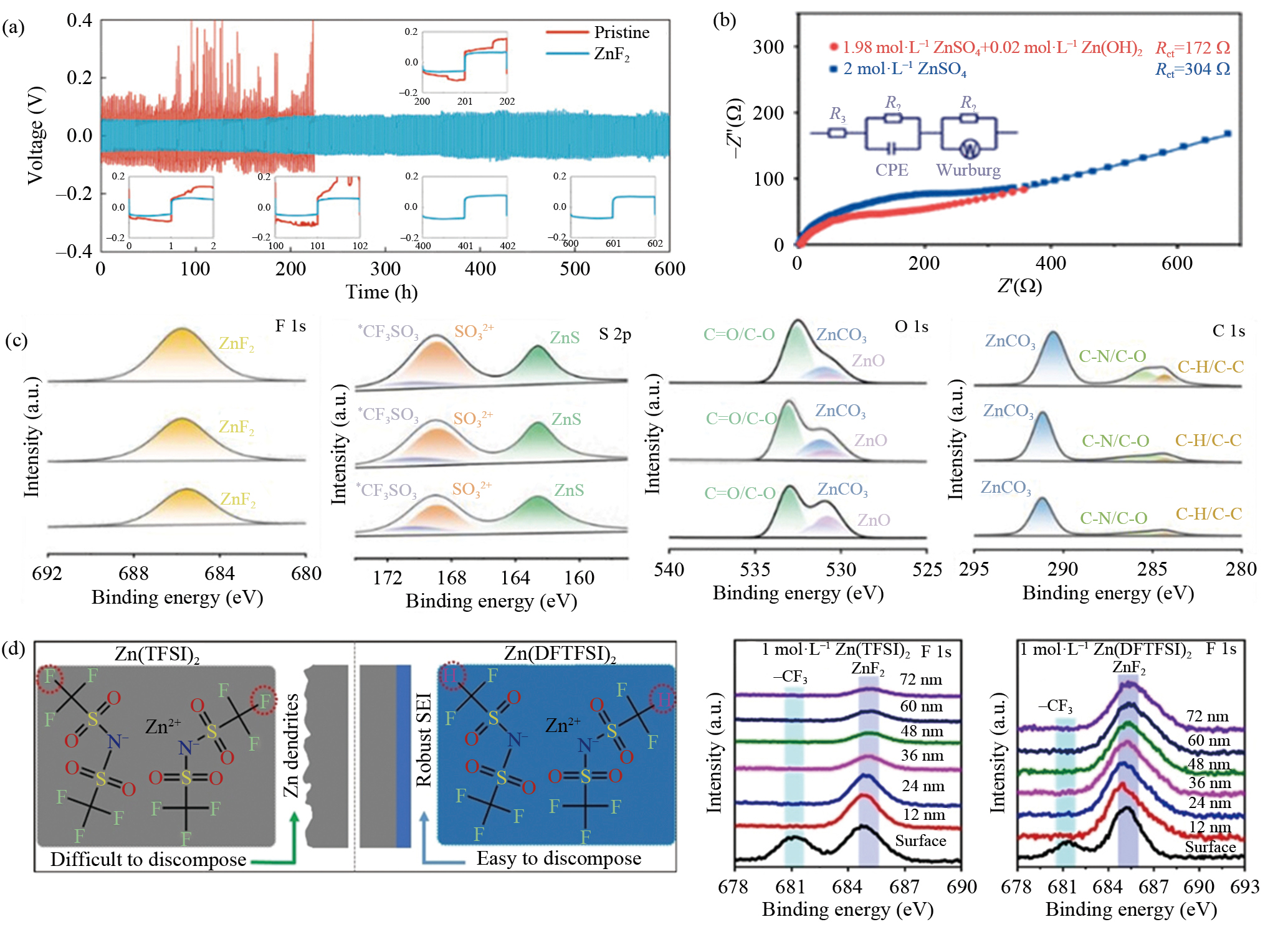
Inorganic salts, known for their high reactivity, are commonly employed to initiate SEI formation. Direct addition of favourable SEI component into electrolyte has been proved effectively. The addition of ZnF2 to the electrolyte in anode-free Zn batteries facilitates the formation of a stable fluorine-rich interfacial layer, promoting uniform Zn deposition and passivating the Zn anode against side reactions (Fig. 10(a)), such as oxygen and hydrogen evolution [109]. Similarly, incorporating Zn(OH)2 into ZnSO4 electrolytes converts the byproduct Zn4(OH)6SO4·xH2O (ZHS) into a uniform solid electrolyte interphase (SEI) with low electronic conductivity (Fig. 10(b)), high Zn2+ ionic conductivity, strong zincophobicity and lower interfacial charge transfer resistance (Fig. 10(b)), effectively mitigating dendrite formation and side reactions [110]. However, the limited solubility of ZnF2 and Zn(OH)2 in water and the formation of non-dense interphases restrict the overall effectiveness of these strategies. Fluorine-containing salts are utilized inAZIBs to decompose on Zn metal, facilitating the formation of an SEI layer enriched with fluorinated components. In a highly concentrated electrolyte with dual fluorine-containing salts, consisting of 1 mol·L–1 Zn(OTf)2 and 20 mol·L–1 LiTFSI, Zn2+ preferentially coordinates with TFSI– anions, partially replacing H2O molecules (Fig. 10(c)). This coordination facilitates the formation of a robust, anion-derived SEI layer with an inorganic-rich composition (Fig. 10(c)), enhancing Zn2+ transport and interfacial stability [111]. In another case, Zn(DFTFSI)2, featuring an asymmetric anion (DFTFSI–), has been designed to enhance ionic conductivity and enable the in-situ formation of a robust, layer-structured SEI through the facile decomposition of DFTFSI– (Fig. 10(d)). The lower stability of DFTFSI– compared to TFSI– allows easier decomposition to ZnF2, forming a stable SEI that enhances Zn2+ transfer and mitigates dendrite formation [112].
Synergistic combinations of optimal SEI components provide a multifunctional strategy for effective SEI regulation. Luo et al. introduced KPF6 as a sacrificial additive to in-situ construct a composite SEI on the zinc anode, primarily composed of Zn3(PO4)2 and ZnF2. Upon adding KPF6 to the electrolyte, it reacts with H2O to produce acidic intermediates (HPO2F2, H2PO3F, and H3PO4), which subsequently react with the zinc anode to form the SEI containing ZnF2 and Zn3(PO4)2. ZnF2 enhances Zn2+ transfer and deposition kinetics, while Zn3(PO4)2 suppresses dendrite growth. This SEI effectively mitigates corrosion reactions and hydrogen evolution, improving anode performance and stability [99].
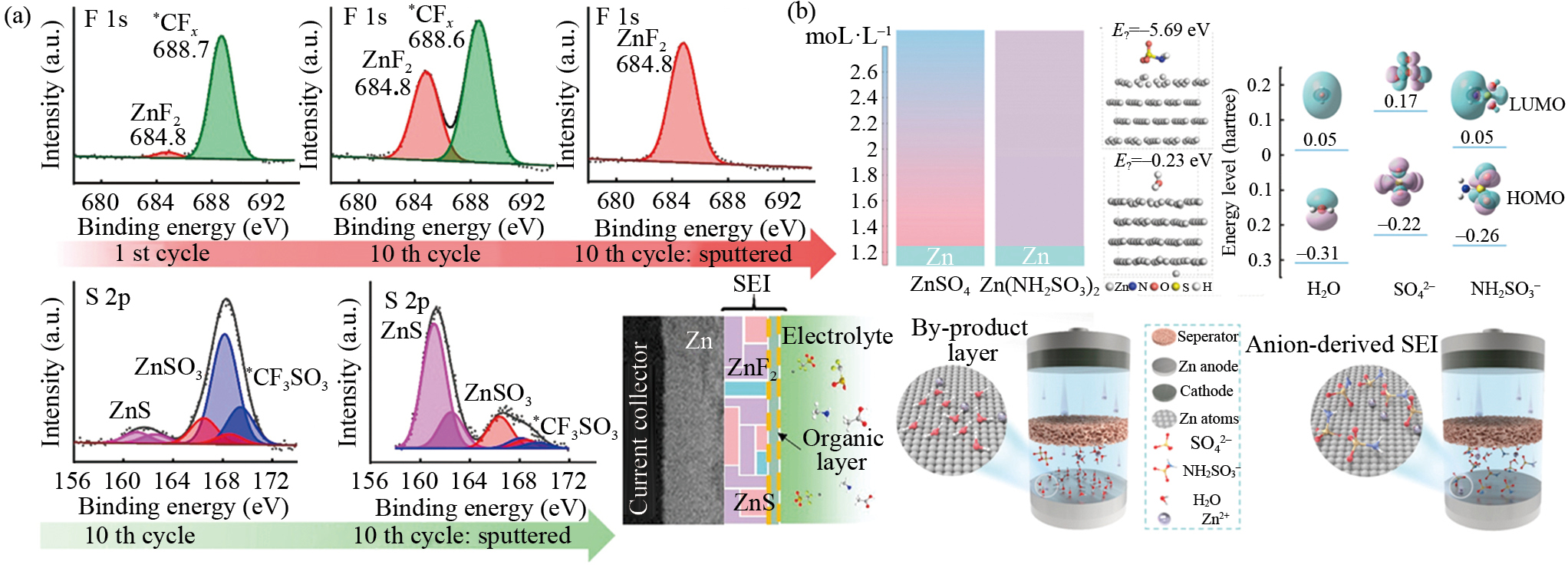
Zn(H2PO4)2 has also been introduced into the electrolyte to achieve highly Zn2+-conductive SEI layer. Thick SEI of ~140 nm composed of Zn3(PO4)2·4H2O facilitates uniform and rapid Zn2+ transport, enabling dendrite-free Zn deposition while isolating active Zn from the bulk electrolyte (Figs. 11(a) and 11(b)), thereby suppressing side reactions [113]. A concentrated hybrid aqueous electrolyte composed of Zn(CF3SO3)2 has been developed to build multi-component SEI. A dense, anion-derived passivation layer rich in –CF3, F–SO3–, and SO3– species has been constructed (Figs. 11(d) and 11(e)). This SEI ensured non-dendritic Zn growth and highly stable plating/stripping behavior ensuring uniform current distribution and preventing direct contact between freshly deposited Zn and the electrolyte [114]. Methylammonium acetate (MAAc) has been used as an electrolyte additive to improve the reversibility and stability of the Zn anode (Fig. 12(a)). The acetate anions in MAAc competitively interact with the Zn2+ solvation structure, reducing water reactivity and promoting an anion-enriched electrolyte environment. Specifically, the SEI induced by anion decomposition (e.g., OTF–) in the MAAc-containing electrolyte, comprising ZnF2 and ZnS (Fig. 12(a)), effectively suppresses dendrite growth by facilitating Zn2+ ion migration and deposition, thereby minimizing parasitic reactions [115]. Zinc sulfamate (Zn(NH2SO3)2), synthesized via a simple acid–base neutralization by Gu et al., incorporates NH2SO3– anions with a low LUMO energy level (Fig. 12(b)). These anions preferentially adsorb onto the zinc anode and the low LUMO energy of NH2SO3– facilitates its reduction and integration into the SEI during zinc deposition, forming a durable sulfamate-derived SEI composed of ZnS, ZnSO3, and ZnCO3. This robust SEI effectively suppresses parasitic reactions, inhibits dendrite formation, and isolates zinc metal from H2O while maintaining efficient interfacial Zn2+ ion transport [116].
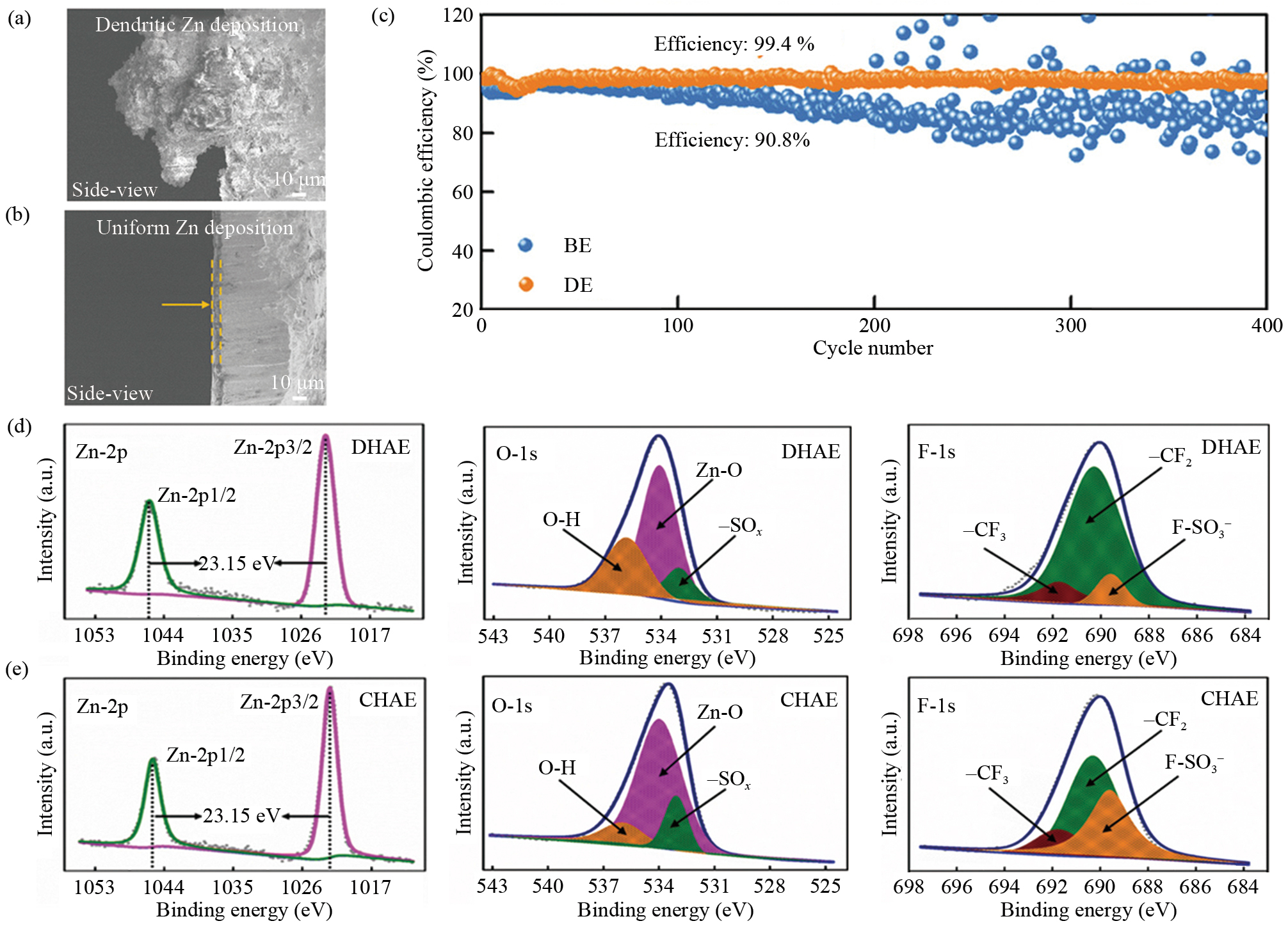
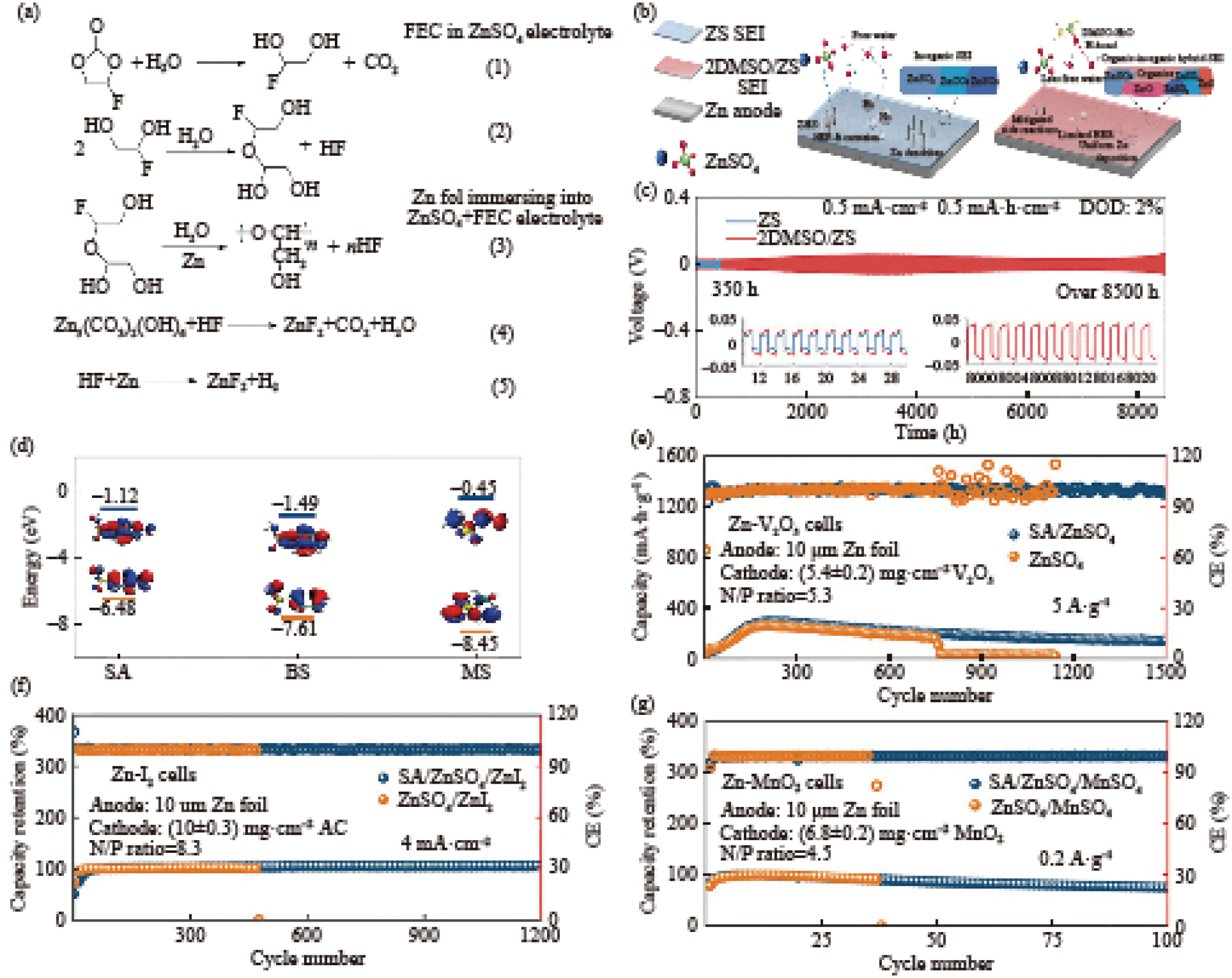
Water-soluble organic additives with diverse functional groups are gaining attention for their ability to modify Zn electrode dissolution/deposition behavior and enhance electrode-electrolyte interfaces by regulating electrolyte electrochemical properties, such as Zn coordination. These additives can be classified into categories based on their composition and functionality, including small heteroatom compounds, supramolecular macrocycles, polyols, organic weak acids, organic salts, ionic liquids, zwitterions (e.g., amino acids), surfactants, and polymers. Fluoroethylene carbonate (FEC) has been introduced as a multifunctional additive to aqueous electrolytes (Fig. 13(a)). FEC facilitates the formation of a high-quality, ZnF2-rich inorganic/organic hybrid SEI layer on the Zn metal anode surface. FEC regulates the Zn2+ solvation structure, reducing H2O reactivity, while the ZHS layer, with strong Zn2+ affinity, prevents dendrite formation and inhibits direct contact between the electrolyte and the anode. Consequently, dendrite growth, Zn corrosion, and hydrogen evolution reactions are significantly suppressed [101]. Me3EtNOTF was added to in-situ form a robust Zn2+-conducting SEI, comprising ZnF2, ZnCO3, ZnSO3, and polyanions. The proposed decomposition mechanism involves alkylammonium reacting with base species (e.g., OH– or CF3–), forming intermediates that interact with dissolved CO2 to precipitate ZnCO3 in the SEI. Concurrently, ethylene scavenges triflate reduction products, contributing to the precipitation of protective, conductive polyanions and a ZnF2-rich SEI (Fig. 13(b)). This SEI suppresses hydrogen evolution and extends the electrochemical stability window of the electrolyte, thus achieve highly reversible and dendrite-free Zn plating/stripping with a Coulombic efficiency (CE) of 99.9% [97]. A low concentration (2% by volume) of dimethyl sulfoxide (DMSO) in the zinc sulfate electrolyte serves as an efficient SEI regulator, promoting the formation of a durable organic-inorganic hybrid SEI on the Zn anode. This innovative strategy achieves exceptional cycling stability, with Zn‖Zn symmetric cells operating for over 8500 hours at 0.5 mA·cm–2 and 6500 hours at 1 mA·cm–2 (Fig. 13(c)) [117]. Sulfonamide-containing additives have been evaluated as promising strategies for stabilizing zinc anodes by forming robust SEIs. Among tested additives, sulfanilamide (SA) outperforms methanesulfonamide (MS) and benzene sulfonamide (BS) due to its high adsorption energy, low lowest unoccupied molecular orbital (LUMO), and narrow highest occupied molecular orbital-LUMO (HOMO-LUMO) gap (Fig. 13(d)), which facilitate its reduction on the Zn anode surface. The SA/ZnSO4 electrolyte enables the formation of an SEI layer enriched with ZnS, providing superior durability and stability. SA's versatility is further validated in full-cell configurations, including Zn-V2O5 (Fig. 13(e)), Zn-MnO2 (Fig. 13(f)), and Zn-I2 (Fig. 13(g)) systems, achieving enhanced cycle performance at low negative-to-positive capacity (N/P) ratios of 5.3, 8.3, and 4.5, respectively [118]. A non-concentrated aqueous electrolyte was reported comprising 2 mol·L–1 zinc trifluoromethanesulfonate (Zn(OTf)2) and dimethyl carbonate (DMC) as an additive. This formulation introduces a unique Zn2+ solvation sheath involving both the DMC solvent and OTf– anion, facilitating the formation of a robust SEI layer rich in ZnF2 and ZnCO3. The SEI, derived from the decomposition of Zn2+-DMC and Zn2+-OTf– coordination structures, effectively suppresses water-induced parasitic reactions and dendrite growth. The Zn anode achieves a high CE of 99.8% for Zn plating/stripping at 2.5 mA·h·cm–2 and supports dendrite-free cycling for over 1000 cycles [119].
N-methyl pyrrolidone (NMP), a common organic solvent, has been introduced as a bifunctional additive to enhance the performance of AZIBs. NMP alters the Zn2+ solvation structure and decomposes in-situ to form a dense, nitrogen-rich SEI on Zn anodes. This SEI protects the Zn surface from corrosion, suppresses dendrite growth, and facilitates uniform Zn plating/stripping. As a result, Zn‖Zn symmetric cells using ZnSO4-H2O-NMP achieve a long cycle life of 200 hours at 10 mA·h·cm–2 with high Zn utilization (85.6%), while asymmetric cells maintain a high Coulombic efficiency of 99.8% over 1000 cycles. Even under demanding conditions, Zn‖MnO2 full cells exhibit excellent cycling performance with high cumulative capacity, despite lean electrolyte usage (E/C ratio = 10 µL mA·h–1), limited Zn supply (N/P ratio = 2.3), and high areal capacity (5.0 mA·h·cm–2) [120].
Ionic liquids (ILs) are emerging as effective additives for improving AZIBs performance. By introducing anions that alter Zn2+ solvation structures, ILs enable control over Zn plating behaviour. In a case study, 1-butyl-3-methylimidazolium trifluoromethanesulfonate ([BMIM]OTf), a water-miscible ionic liquid, as an additive in a 3 mol·L–1 Zn(OTf)2 aqueous electrolyte. The [BMIM]OTf additive preferentially adsorbs onto the Zn anode, modifies the Zn2+ solvation sheath, and promotes the formation of a robust hybrid SEI layer composed of N- and S-containing organic components, ZnF2, ZnS, and ZnSO3. This zincophilic and hydrophobic SEI reduces Zn nucleation overpotential, improves interfacial charge transfer kinetics, suppresses dendrite growth, and mitigates water-induced side reactions. The addition of 0.5 mol·L–1 [BMIM]OTf effectively improve the battery cycle and rate performance at low temperature [122].
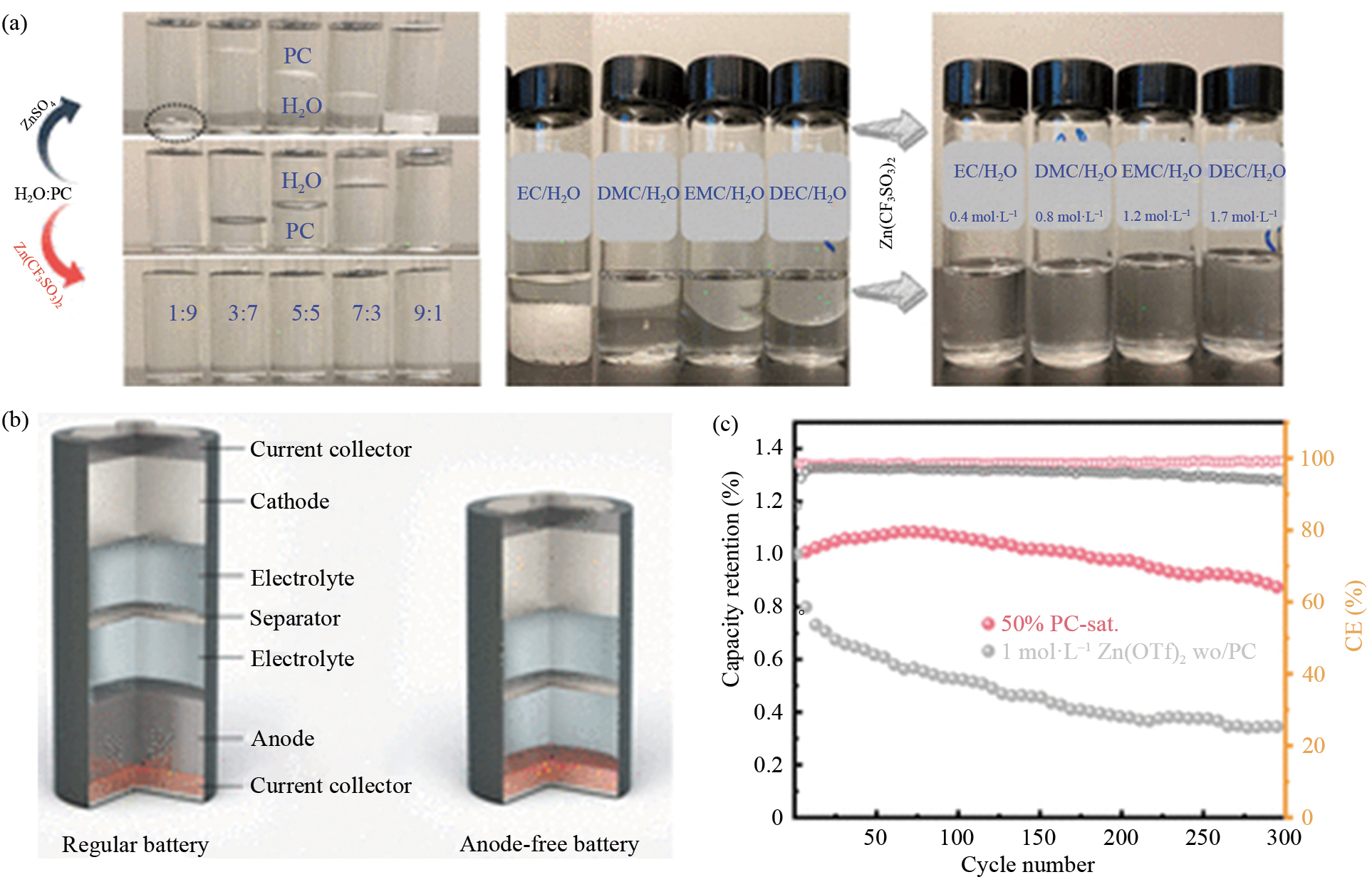
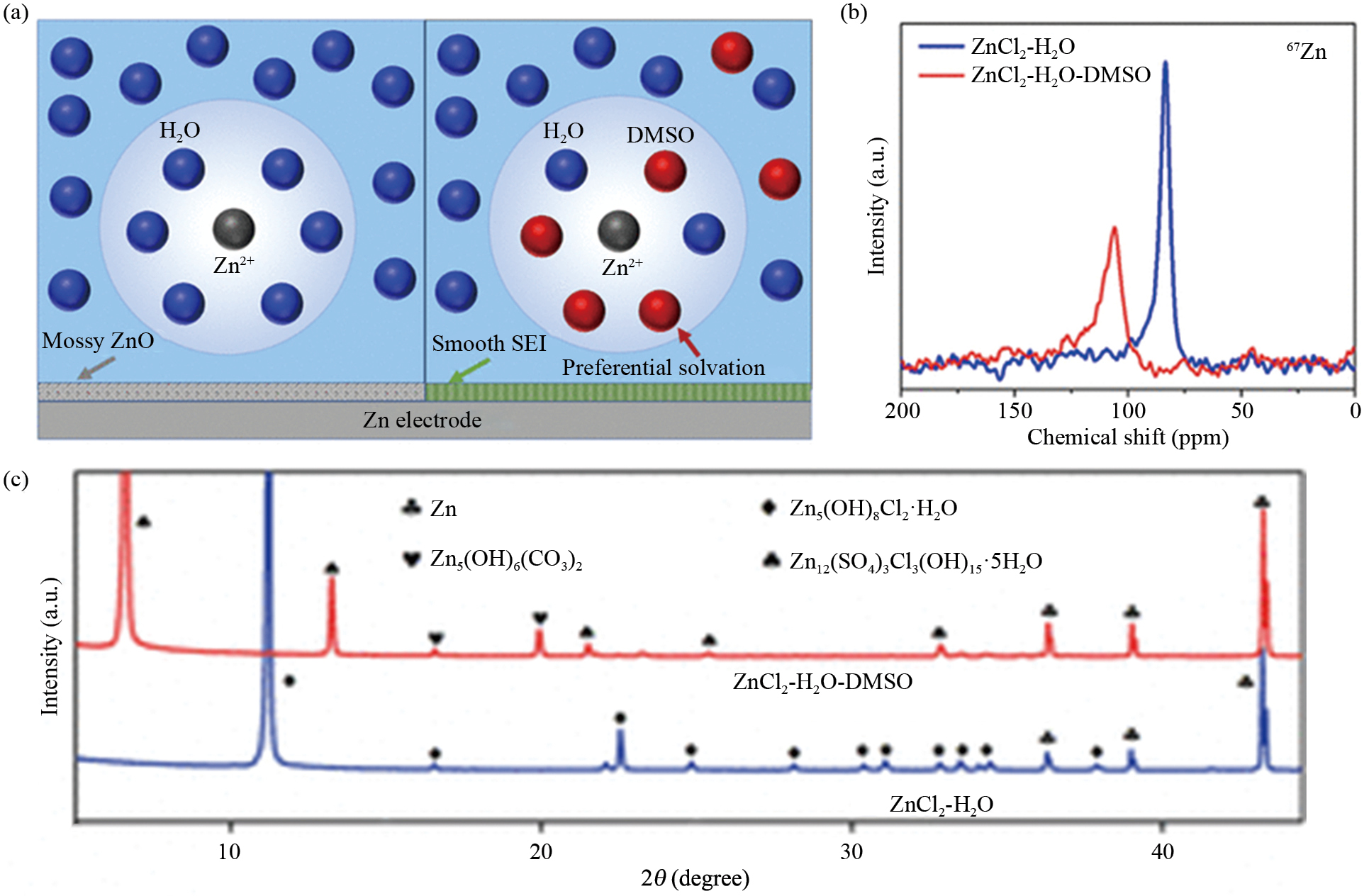
The use of propylene carbonate (PC) as an electrolyte additive has been shown to enhance Zn anode stability by altering the Zn2+ solvation structure. Replacing 50 vol% of H2O in a 1 mol·L–1 Zn(CF3SO3)2 electrolyte with PC creates a solvation structure involving both PC and CF3SO3– anions (Fig. 14(a)). This unique solvation structure facilitates anion reduction, forming a hydrophobic SEI rich in ZnCO3 and ZnF2, which suppresses side reactions and ensures exceptional Coulombic efficiency (CE). The hybrid electrolyte also demonstrates versatility, supporting stable operation across a wide temperature range (−20 to 50 °C) and compatibility with various cathodes. An anode-free Zn metal battery (Fig. 14(b)) using this electrolyte achieved excellent cycling stability (Fig. 14(c)), retaining 80% capacity after 275 cycles at 0.5 mA·cm–2 [121]. Adding dimethyl sulfoxide (DMSO) to a dilute 1.6 mol·L–1 ZnCl2-H2O electrolyte (ZnCl2:H2O=1∶34) creates a 1.3 mol·L–1 ZnCl2/H2O-DMSO electrolyte (H2O:DMSO=4.3:1) that significantly enhances Zn anode performance (Fig. 15(a)). DMSO, with its high Gutmann donor number (29.8) compared to H2O (18), preferentially replaces H2O in the Zn2+ solvation sheath. This solvation alteration and strong H2O-DMSO interactions suppress water activity and inhibit solvated H2O decomposition (Fig. 15(b)). During Zn deposition, the reduction of DMSO produces a dense, self-repairing SEI layer enriched with Zn12(SO4)3Cl3(OH)15·5H2O, ZnSO3, and ZnS (Fig. 15(c)). This SEI layer facilitates Zn2+ transport, blocks H2O penetration, suppresses Zn dendrite growth, and prevents side reactions. As a result, Zn‖Ti half-cells achieve a Coulombic efficiency of ~100% over 400 cycles, while Zn‖MnO2 full cells with a low Zn:MnO2 capacity ratio of 2:1 deliver a high energy density of 212 W·h·kg–1 (based on both electrodes) and retain 95.3% capacity after 500 cycles at 8 C [123]. Cui et al. demonstrates the in-situ formation of a ZnF2-rich organic/inorganic hybrid SEI on Zn anodes using an acetamide-Zn(TFSI)2 eutectic electrolyte (ZES). The SEI is formed through the preferential reductive decomposition of TFSI– anions, induced by their coordination with Zn2+ in large cationic complexes during initial cycling. The resulting SEI features mechanically robust ZnF2 and Zn2+-permeable organic components ((rich in S and N illustrated in Fig. 15(f)). This interphase suppresses dendrite growth, prevents surface passivation, and ensures uniform Zn deposition, enabling highly reversible Zn plating/stripping with an average Coulombic efficiency (CE) of 99.7% over 2000 cycles and stable cycling at high areal capacities (>2.5 mA·h·cm–2). Notably, this SEI-coated Zn anode also maintains electrochemical stability in routine aqueous electrolytes [124].
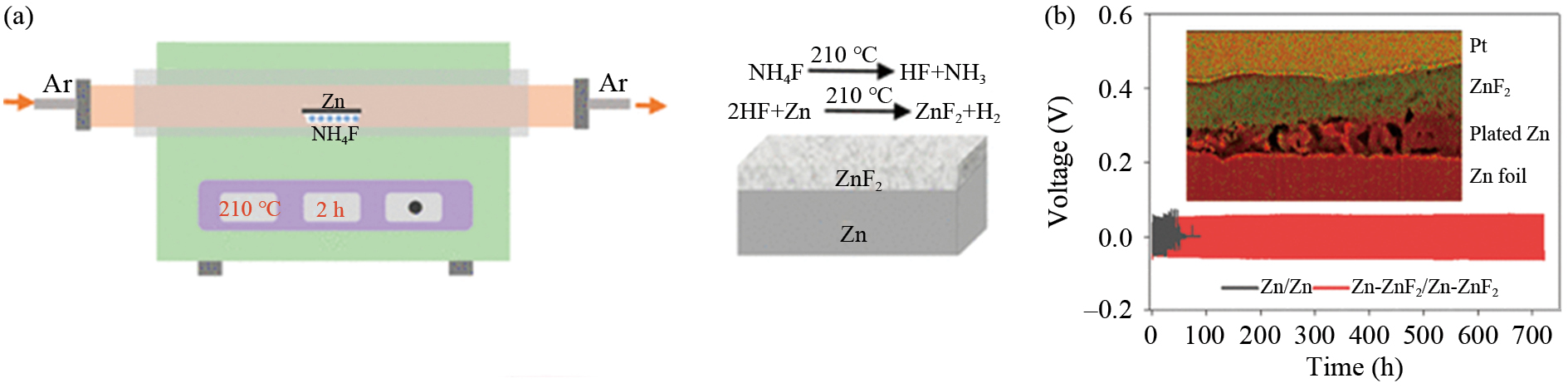
Significant advancements in AZIBs have focused on developing artificial SEI to enhance electrode stability and performance. Artificial SEI layers, constructed prior to cell assembly, are designed with limited solubility and function exclusively as ionic conductors. These layers, made from inorganic compounds, polymers, or MOFs, isolate the Zn anode from water, prevent side reactions, and ensure uniform Zn deposition, effectively stabilize Zn anodes, enabling dendrite-free, high-performance cycling. A thin, one-sided ZnF2 artificial layer with thickness of 1 μm was developed using a simple chemical reaction at 210 °C (Figs. 16(a) and 16(b)). This layer, formed via HF reaction with Zn foil, was shown to be uniform, strongly adherent, and mechanically robust under rolling and twisting tests. Density functional theory (DFT) modeling revealed that ZnF2 facilitates Zn2+ ion transport through interstitial diffusion channels, contrasting with previously proposed vacancy diffusion mechanisms. The artificial ZnF2 layer suppresses dendrite growth by guiding Zn plating/stripping beneath the layer, preventing side reactions and enhancing the electrochemical performance of Zn anodes [125]. Inspired by bio-adhesion principles, polydopamine (PDA) has been coated on a Zn anode via in-situ electrochemical polymerization of a dopamine (DA) additive as an artificial polymeric SEI. The PDA SEI offers hydrophilicity, strong adhesion, and high Zn-ion conductivity, regulating Zn nucleation for dendrite-free deposition while preventing interfacial side reactions. Experimental characterizations (e.g., in-situ Raman spectroscopy, cryogenic electron microscopy, and FTIR) confirm the uniformity and robustness of the PDA layer. Functional catechol groups in PDA interact with Zn2+, harmonizing ion flux and ensuring uniform Zn deposition. This protective SEI significantly enhances electrochemical performance, achieving a Coulombic efficiency of 99.5% over 1000 cycles, even under harsh conditions of 30 mA·cm–2 and 30 mA·h·cm–2. In full-cell tests, Zn‖V2O5 batteries in DA-modified electrolytes deliver high capacity (141.8 mA·h·g–1) and excellent capacity retention (94.3% after 1000 cycles), even with lean electrolytes and low negative-to-positive capacity ratios (N/P≈2) [126]. A multifunctional artificial SEI is constructed using defect-rich CeO2 derived from Ce-MOF-808. The MOF-CeO2 layer, fabricated via pyrolysis and applied through a simple spin-coating process, exhibits a hierarchically porous structure, chemical stability, and unique surface charge properties, making it an excellent protective layer for Zn anodes. Key features of MOF-CeO2 include crystal defects that act as active sites for Zn2+ transfer and a negative zeta potential (−20.5 mV), which selectively attracts cations while electrostatically shielding anions (e.g., OH–, Tfo–) to minimize side reactions. The porous structure promotes Zn2+ de-solvation and balances ion flux, resulting in uniform Zn deposition and effective dendrite suppression. These synergistic properties enable MOF-CeO2@Zn anodes to achieve ultra-stable plating/stripping performance for over 3200 hours with a high Coulombic efficiency of 99.5% [127].
To advance understanding of SEI functions in AZIBs, various characterization techniques are explored, with a focus on uncovering the relationship between interface structure and battery performance. While ex-situ methods have been widely used to investigate the Zn anode electrode-electrolyte interface, they lack the ability to provide real-time, dynamic information on interface evolution during battery operation. This limitation makes in-situ characterization indispensable for elucidating the structure-performance relationship and understanding underlying SEI evolution mechanisms. This section provides a comprehensive overview of in-situ characterization techniques for interfacial investigation of zinc anode. These techniques enable direct observation of interface dynamics during charge/discharge cycles, providing critical insights into dendrite formation and suppression, emphasizing the correlation between SEI composition, structure, and properties in AZIBs.
Visualization techniques provide critical insights into the morphologic evolution of Zn anodes during stripping and plating, revealing their stability and reversibility. These methods capture real-time morphologic details, such as the growth rate and direction of Zn dendrites, offering direct evidence to evaluate the effectiveness of proposed protective strategies. This section discusses various in-situ imaging techniques for monitoring interfacial morphology changes across different scales.
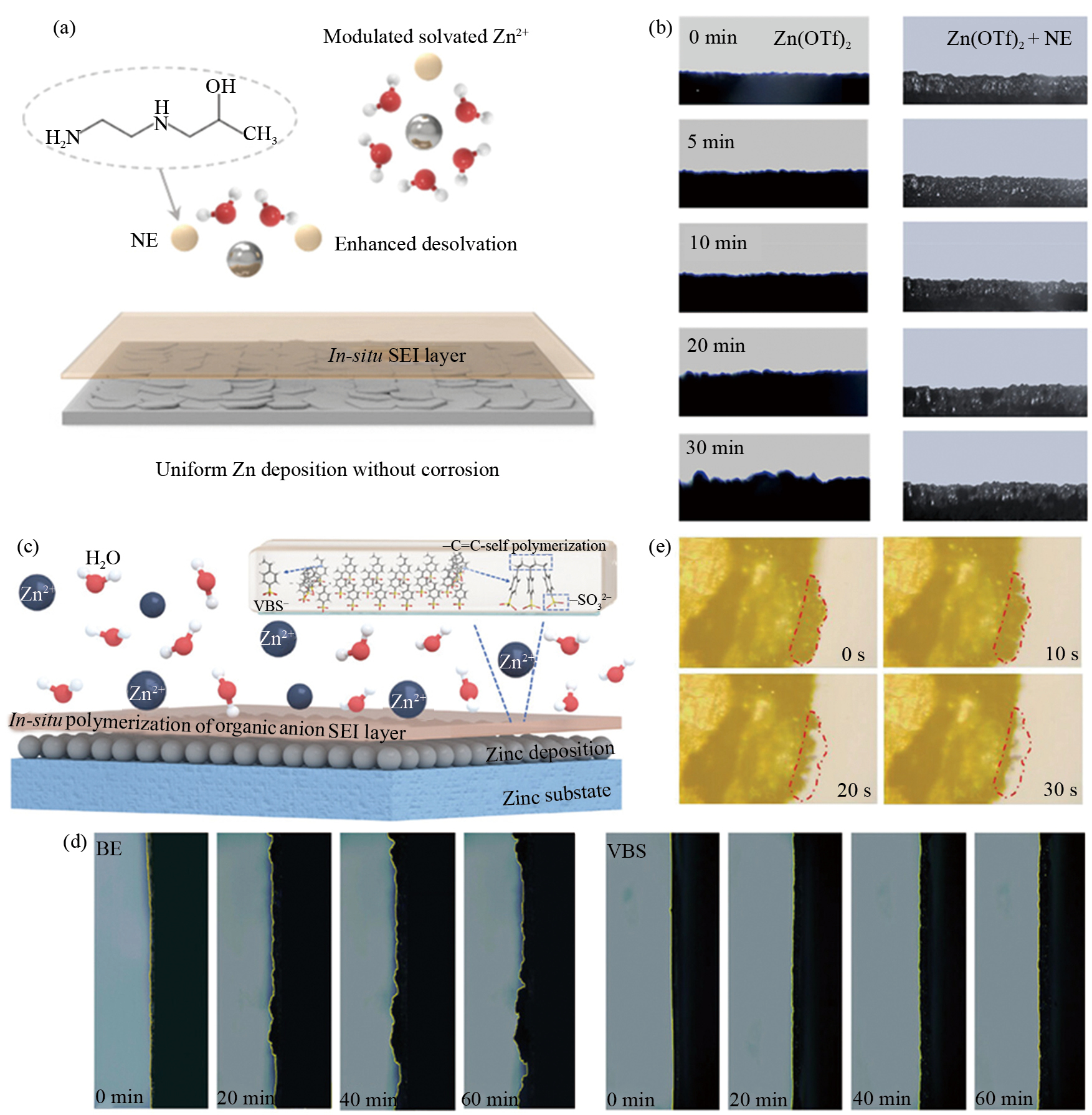
The optical microscope uses visible light for magnifi-cation, enabling low-cost, in-situ monitoring of colour and morphological changes of zinc anode interfacial evolution at the micrometer scale. Microscopic techniques have been extensively utilized to monitor the growth direction, nucleation speed, and morphology of Zn dendrites. N-(2-hydroxypropyl)ethylenediamine (NE) was introduced as a bifunctional additive in a 1 mol·L–1 Zn(OTf)2 electrolyte to enhance Zn anode protection and battery performance (Fig. 17(a)). A robust, ion-conductive SEI layer that mitigates HERs by creating a lean-water inner Helmholtz layer and promotes uniform Zn2+ flux. Real-time observations using in-situ optical microscopy confirmed (Fig. 17(b)) that NE effectively induced uniform Zn deposition, suppressing dendrite formation [128]. Sodium 4-vinylbenzenesulfonate (VBS) as a low-cost, multifunctional electrolyte additive has been utilized to address zinc anode interfacial issues (Fig. 17(c)). The unsaturated ─C═C─ structure of VBS enables in-situ polymerization, creating a robust organic anion SEI layer on the Zn surface. In-situ optical microscopy visualized the impact of VBS on Zn deposition. Without VBS, uneven Zn growth and dendrite formation were observed during electroplating at 8 mA·cm–2. In contrast, VBS promoted uniform Zn deposition, effectively preventing dendrite formation (Fig. 17(d)). VBS-derived SEI successfully suppresses dendrite growth and side reactions, enhancing the reversibility and stability of Zn anodes [129]. Iodine post-functionalized zeolitic imidazolate framework-90 (ZIF-90-I) as a multifunctional additive has been developed to facilitate robust ZnF2-rich SEI formation, ensuring uniform Zn deposition, and rejuvenating inactive Zn through the I3–/I– redox mechanism. Optical microscopy reveals the efficacy of ZIF-90-I in promoting smooth, dendrite-free Zn plating. In Zn(TFSI)2 without ZIF-90-I, dendritic protrusions form rapidly due to localized electric fields, while ZIF-90-I prevents such growth even after 35 minutes. Additionally, the I3–/I– redox process dissolves mossy protrusions and regenerates active Zn during plating/stripping, as evidenced by time-lapse imaging showing rapid disappearance of protrusions within seconds (Fig. 17(e)). This additive offers a practical solution to enhance the performance and reliability of ZMBs [130].
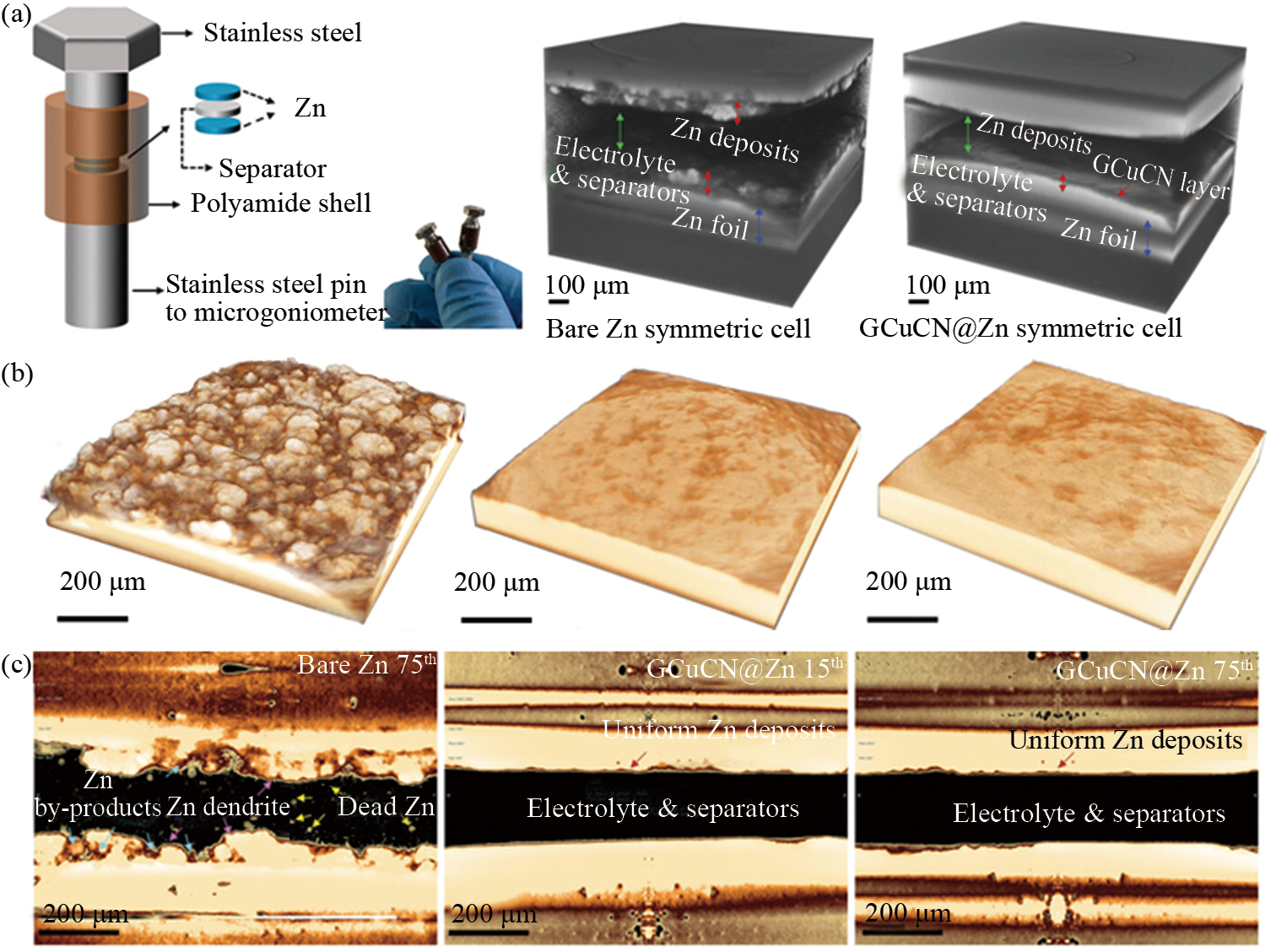
The limited resolution of the optical observation cannot reveal the specific composition of deposited Zn in real-time. Therefore, Dai et al. conducted synchrotron-based in-situ scanning transmission X-ray microscopy (STXM) investigations to further identify the chemical composition and spatial distribution during zinc plating/stripping cycles. In a 50 mmol·L–1·ZnSO4 electrolyte, STXM revealed that the initial formation of moss- and whisker-like dendrites is chemically driven by hydrogen evolution reactions (HER), while their continued growth is governed by ion transport kinetics. Loose and porous SEI layers hinder Zn2+ ion transmission and increase water contact, leading to HER, by-product generation (e.g., ZSH, ZnO), and the formation of unstable "dead Zn" with planar hexagonal morphologies. To address these challenges, adding 50 mmol·L–1 lithium chloride (LiCl) to the electrolyte facilitated the formation of a dense and stable SEI film composed of Li2S2O₇ and Li2CO3, effectively suppressing HER and dendrite growth. As a result, Zn‖Zn symmetric cells achieved a significantly extended cycling life of 138 h at 1 mA·cm–2/1 mA·h·cm–2, compared to 46 h without the additive [132]. A gradient solid electrolyte interphase (SEI) comprising a Cu-dispersed carbon nitride (Cu@g-C3N4) base layer and a g-C3N4 surface layer has been introduced to modify the zinc anode surface. The Cu@g-C3N4 sublayer securely anchors the SEI to the Zn surface, enhancing stability under cycling conditions, while the g-C3N4 top layer facilitates uniform Zn2+ conduction, reduces water reactivity, and alleviates deposition stress with its porous, stiff structure. Synchrotron-based X-ray computed tomography (CT) (Fig. 18(a)) reveals significant morphological differences between bare Zn and GCuCN@Zn after cycling. Bare Zn develops dendritic structures and by-products (e.g., Zn4SO4(OH)6·xH2O), while GCuCN@Zn exhibits a smooth surface with uniform Zn deposition, aligning with SEM and GIXD results (Figs. 18(b) and 18(c)) [131].
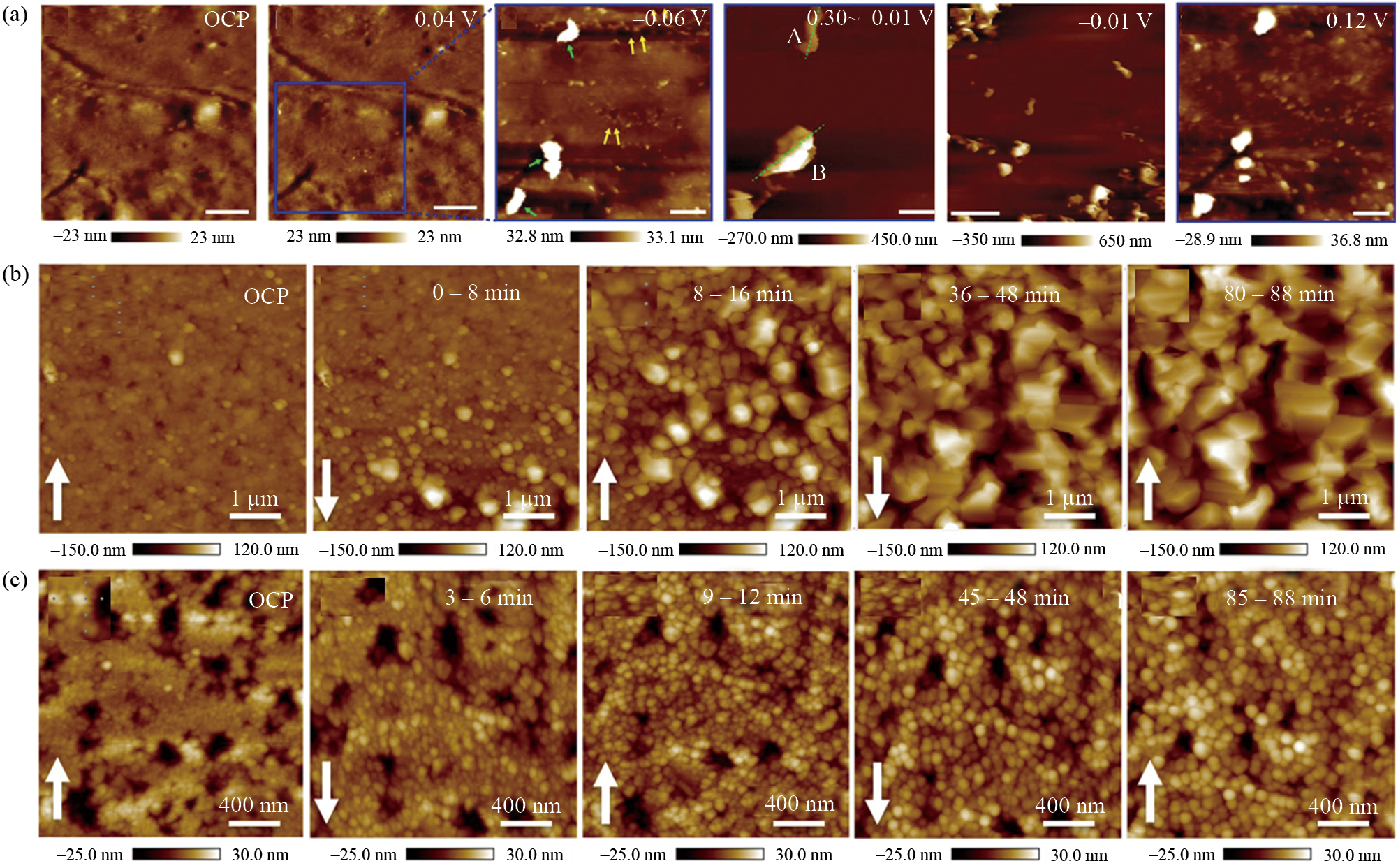
AFM is a versatile probe-based technique that utilizes interatomic forces to acquire detailed surface information. Unlike many other observation methods, AFM provides three-dimensional surface topography with exceptional precision, offering horizontal resolution of 5–10 nm and sub-nanometer vertical resolution. This enables both visual observation of local micro-topography and accurate quantification of surface roughness. Additionally, AFM leverages various interatomic interactions to evaluate specific material properties, such as Young's modulus and surface charge distribution, making it a valuable tool for zinc-ion batteries (ZIBs). In-situ AFM further enhances this capability by delivering real-time measurements of surface roughness, mechanical properties, and 3D surface configurations, making it extensively utilized in the study and optimization of energy storage devices. Wang et al. used in-situ atomic force microscopy (AFM) and optical microscopy to investigate the SEI formation and its influence on Zn plating/stripping behavior in a water-in-salt electrolyte (Fig. 19(a)). A uniform, LiF-rich nanoparticle-shaped SEI effectively regulates Zn2+ deposition, suppressing side reactions and promoting compact, reversible Zn growth aligned with the (002) crystal plane. Conversely, the SEI in Zn(TFSI)2 systems is uneven and ZnO-dominated, leading to non-uniform Zn nucleation, dendrite growth, and the accumulation of inactive "dead" Zn after stripping. In-situ AFM revealed that SEI maintains a dense and uniform structure during extended cycling in the water-in-salt system, whereas the SEI in Zn(TFSI)2 systems is porous and uneven, exacerbating dendrite formation [133]. Liu et al. introduced ethylene glycol monomethyl ether (EGME) as an electrolyte additive to regulate Zn nucleation and growth (Fig. 19(b)). EGME coordinates with Zn2+ ions to modulate the solvation structure while forming a passivation layer on the Zn surface. This dual mechanism enhances the driving force for uniform Zn nucleation, suppresses dendrites, and mitigates hydrogen evolution. Operando electrochemical atomic force microscopy (EC-AFM) and ex-situ electron microscopy revealed that standard electrolytes produce irregular Zn crystals with large protrusions (1–2 µm), while EGME-modified electrolytes yield smaller, round Zn particles (~100 nm) with a smooth, compact surface and significantly reduced surface roughness (Ra~8.0) [134].
TEM utilizes high-energy electron beams to capture atomic-resolution images, providing detailed insights into both external topography and internal crystal structures. In-situ TEM extends this capability by enabling real-time observation of microstructural changes underlying the interface evolution of zinc anode. Liquid-phase transmission electron microscopy (LP-TEM) with a cell-type holder enables real-time nanoscale observation of electrochemical reactions in liquids, surpassing the limitations of traditional cryo-TEM methods. Sasaki et al. employed LP-TEM with an electrochemical micro-device (e-chip) to examine zinc deposition and dissolution behaviors on Pt electrodes in ZnSO4 and modified electrolytes, focusing on dendrite growth mechanisms and mitigation strategies. The experimental setup incorporates an LP-TEM holder, a DC-powered potentiostat, and a three-electrode system (Pt working, counter, and reference electrodes) within a liquid cell containing ZnSO4 electrolyte. To enhance stability and prevent gas generation—a common issue in LP-TEM—a Zn-coated counter electrode (CE) was used, and the electrochemical system was precisely isolated from the TEM column, ensuring reliable measurements. LP-TEM revealed sequential Zn deposition and dissolution at the Pt working electrode under constant-current conditions. In ZnSO4, dendritic Zn structures formed during plating, while incomplete dissolution resulted in inactive Zn residues, indicating inefficiencies and capacity loss. Chronopotentiograms and TEM imaging highlighted competitive deposition and dissolution processes, with higher currents improving deposition efficiency. In-situ TEM demonstrated stepwise Zn plating, where protons were preferentially reduced at the Pt electrode before Zn deposition. The Zn-coated CE reduced overpotential, promoting uniform Zn deposition. Competitive Zn dissolution without electron transfer was observed, consistent with self-discharge mechanisms [135]. Huang et al. utilized in-situ TEM to explore zinc plating/stripping behaviors, dendrite growth mechanisms, and mitigation strategies across various aqueous electrolytes, including ZnSO4, ZnSO4/MnSO4, and Zn(CF3SO3)2. The experimental setup employed a three-electrode micro-device (working, reference, and counter electrodes, all made of Pt) confined within silicon nitride membranes. A micro zinc-ion battery, integrated into an in-situ TEM holder with an on-chip flow liquid cell, enabled real-time observation of zinc electrodeposition. In-situ TEM observations revealed that ZnSO4 and ZnSO4/MnSO4 electrolytes exhibited dendrite formation and inactive zinc accumulation, while Zn(CF3SO3)2 demonstrated dendrite-free, reversible zinc deposition [136].
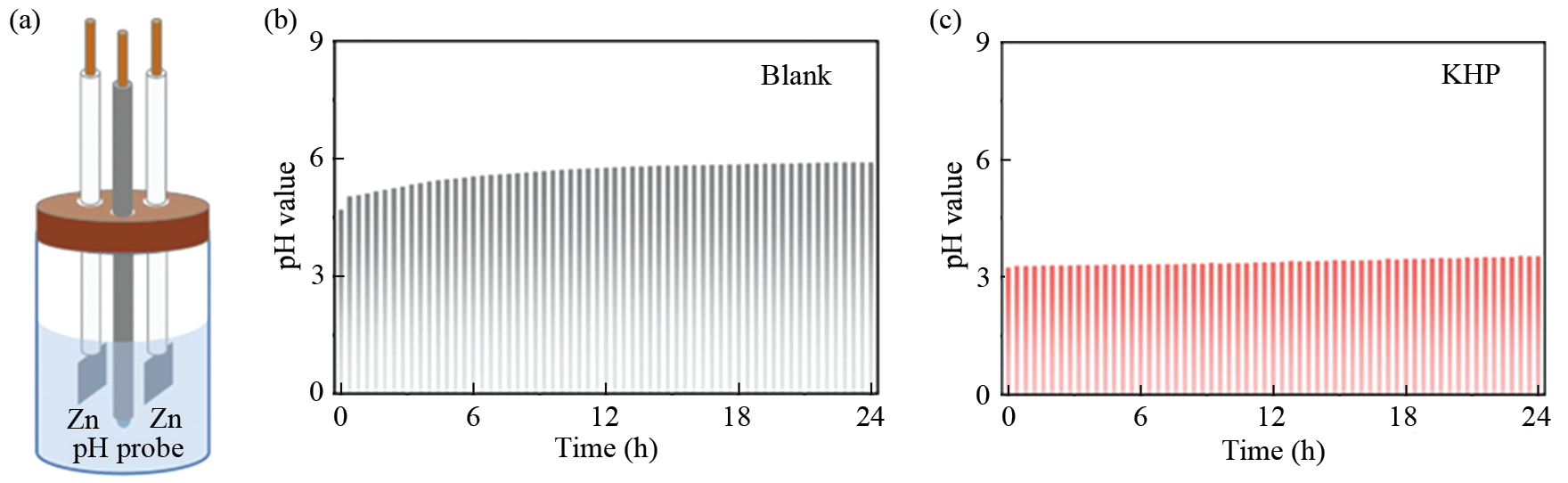
AZIBs (AZIBs) offer safety, high ionic conductivity, and power density but are hindered by water-induced side reactions, including hydrogen evolution (HER), which cause dendrite growth, by-product formation, and reduced stability. To address this, buffering agents have been proposed to stabilize pH during cycling. Zhuang et al. revealed the critical role of initial electrolyte pH in determining the stability of Zn metal anodes, examining both single amphoteric and conjugate acid-base buffering systems (Fig. 20(a)). In-situ pH monitoring during Zn deposition/stripping confirms the stability of the KHP-buffered electrolyte. While the pH in unbuffered systems increases from 4.7 to 5.9 after 24 h (Fig. 20(b)), indicating significant HER, the KHP system maintains a constant pH of 3.3 (Fig. 20(c)), enabling a stable Zn metal/electrolyte interface. This stability extends the lifespan of Zn‖Zn cells to 1050 h at 1 mA·cm–2 for 1 mA·h·cm–2, compared to 100 h in bare electrolytes [137]. Liang et al. proposed proline as a multifunctional electrolyte additive to address these issues. Proline disrupts the hydrogen bond (HB) network and acts as a pH buffer. As an amphoteric compound, it neutralizes OH– ions generated by HER, preventing their reaction with Zn2+ and SO42– to form insulating by-products like Zn4(OH)6SO4·xH2O. In-situ pH monitoring confirmed that proline-stabilized electrolytes maintained a constant pH, in contrast to the fluctuating pH observed in unmodified ZnSO4 electrolytes due to HER and by-product formation [138].
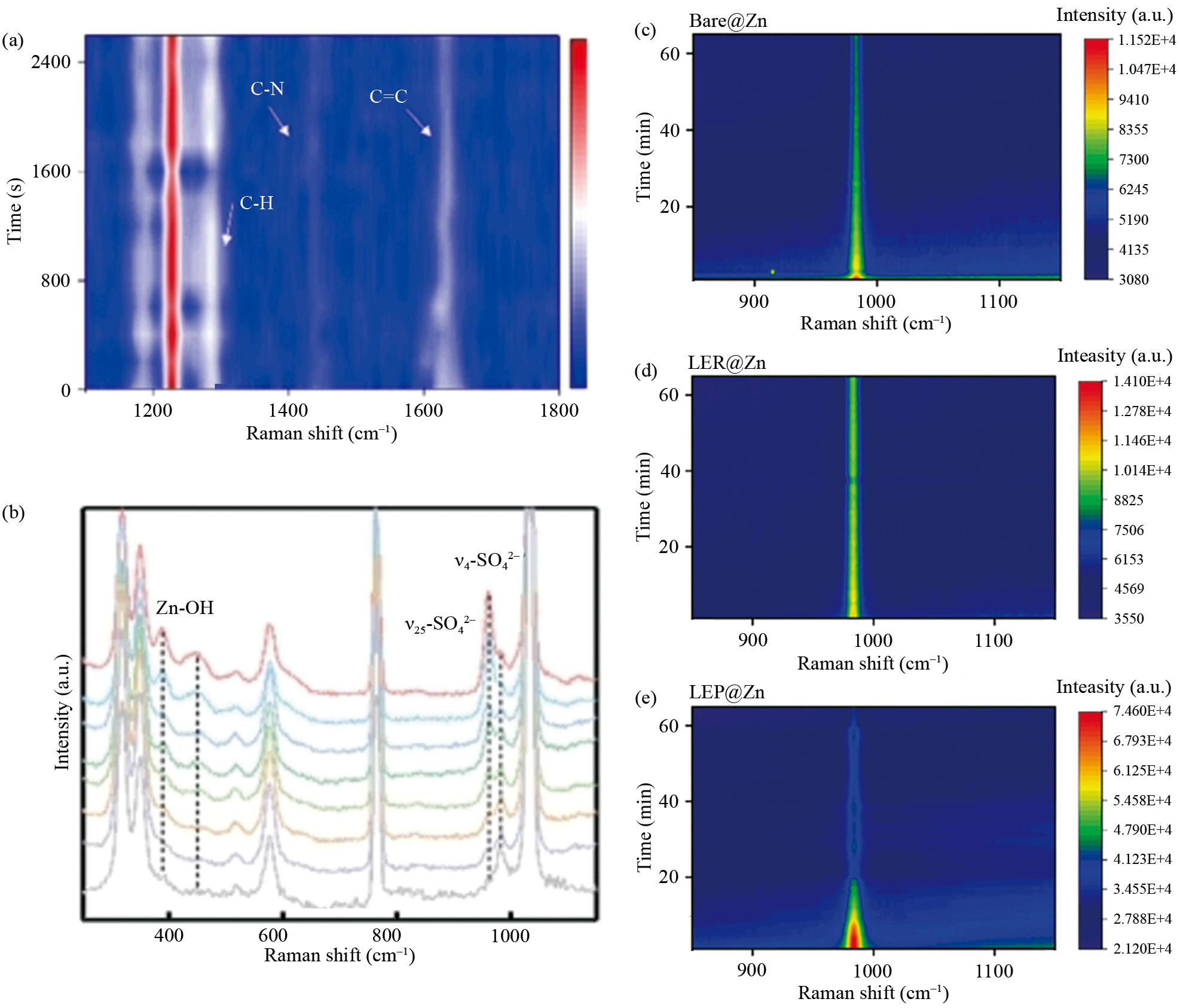
Raman spectroscopy, leveraging the Raman effect from interactions between lasers and chemical bonds, provides insights into material chemical environments. It enables monitoring of chemical composition changes within electrodes and interactions at the electrode-electrolyte interface. Additionally, Raman mapping, combined with operando spectra, offers 2D visualization of chemical bond distribution on electrode surfaces. With its sensitivity to chemical bonds and compositions, Raman spectroscopy is a powerful tool for analyzing electrode and interface dynamics, aiding in the optimization of Zn anodes. Liu et al. introduced a localized electronic-rich (LER) SEI structure that enhances Zn2+ capture and facilitates desolvation of coordinated H2O (cH2O) shells. The LER structure also induces electrostatic repulsion of SO42–, creating a unique H2O-deficient EDL with a Zn2+-H2O-SO42– configuration. In-situ Raman spectroscopy (Fig. 21(c) – Fig. 21(e)) confirms that LER@Zn anodes maintain stable SO42– signals during Zn plating, indicating uniform ion distribution at the interface. In contrast, bare Zn anodes exhibit declining Raman intensity, reflecting uneven Zn2+ flux, while LEP@Zn anodes show rapid SO42– depletion due to anion accumulation [139]. Chen et al. explored the composition-property-performance relationship of SEI in AZIBs and introduced a robust polymer-inorganic hybrid SEI through an innovative in-situ approach. The SEI is formed using an electrolyte comprising 2 mol·L–1 Zn(CF3SO3)2, 0.2 mol·L–1 acrylamide (AM), and 0.2 mol·L–1 ZnSO4. During initial plating, acrylamide polymerizes into polyacrylamide (PAM), and Zn4SO4(OH)6·xH2O (ZHS) precipitates from reactions involving Zn2+, OH–, and SO42– ions. The hybrid SEI leverages the high modulus of inorganic ZHS for mechanical stability and the toughness of PAM for flexibility, ensuring structural integrity and adaptability. In-situ Raman spectroscopy confirms AM polymerization, evidenced by the disappearance of the C=C stretching peak during plating. By combining the strengths of both inorganic and polymeric components, the hybrid SEI delivers superior structural and electrochemical performance [107].
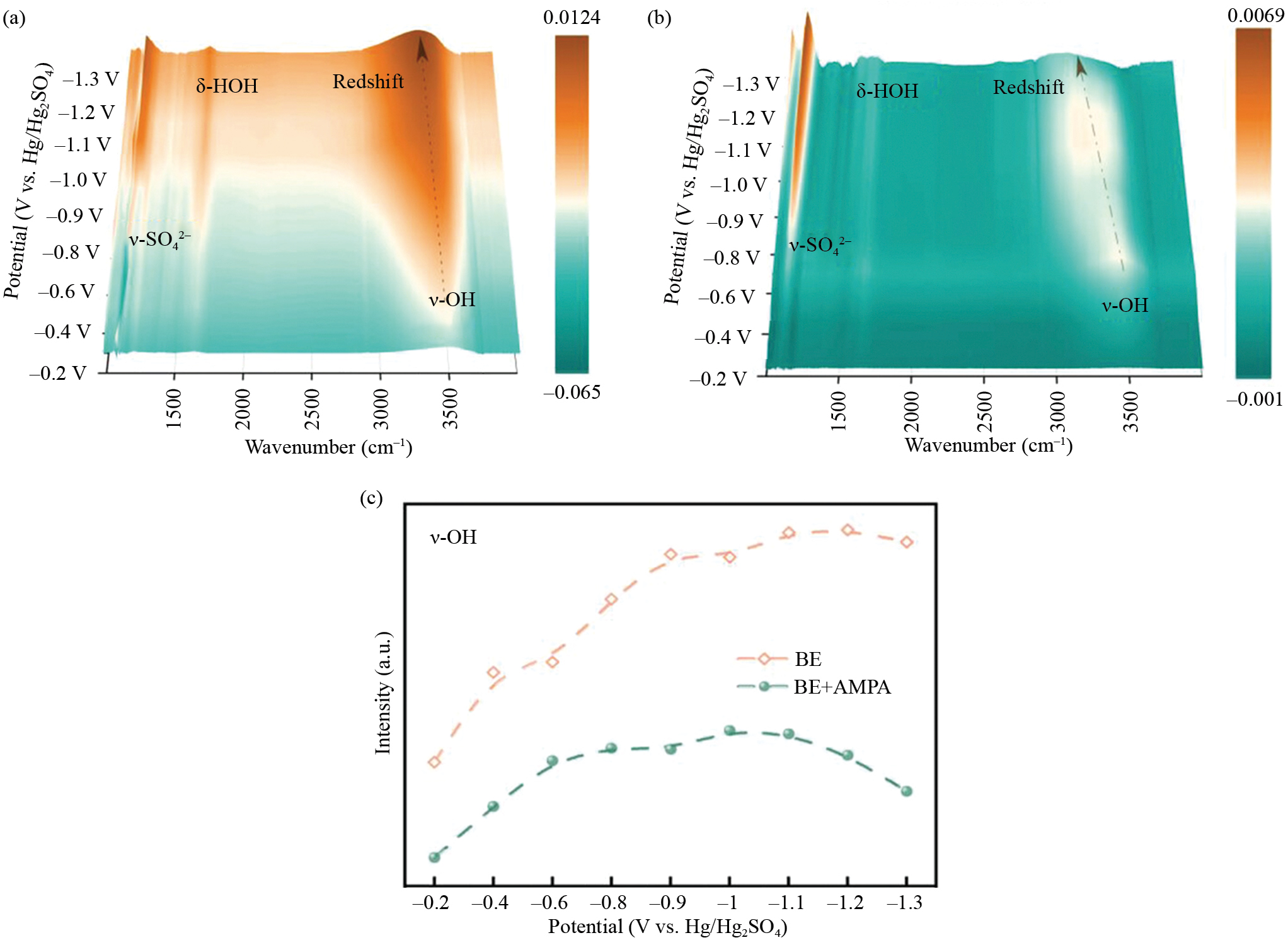
FTIR spectroscopy, based on the absorption of infrared signals by vibrating covalent bonds, provides precise insights into chemical structures. It measures the interaction of infrared radiation with matter through absorption, emission, or reflection, with the term "FTIR" reflecting the Fourier transform process used to generate spectra. Molecules absorb IR frequencies characteristic of their structure at resonant vibrational frequencies. Applied to aqueous batteries, FTIR identifies chemical bonds and functional groups on electrode surfaces, where electrochemical activity is most pronounced. For dendrite analysis, FTIR spectra across discharge/charge states reveal adsorbent species and intermediate products at the electrode-electrolyte interface. Li et al. developed a biocompatible hydrogel electrolyte based on hyaluronic acid (HA) for AZIBs. Hydrophilic functional groups of HA form strong hydrogen bonds with water, reducing parasitic reactions and improving zinc plating/stripping behavior. In-situ FTIR observation confirmed the molecular structure of the HA gel electrolyte, identifying characteristic peaks for the −NH bond (1556 cm–1/1341 cm–1) and −COO– bond (1417 cm–1). Curve-fitting analysis of O–H stretching vibrations (2900–3700 cm–1) revealed three types of hydrogen bonds: strong (3205 cm–1), weak (3410 cm–1), and non-hydrogen bonds (3560 cm–1), further illustrating robust coordination with water molecules of HA [141]. Zhang et al. investigated the role of interfacial water structures in zinc anode electrochemistry, focusing on parasitic reactions like corrosion and hydrogen evolution (HER) in AZIBs (AZIBs). They introduced (aminomethyl)phosphonic acid (AMPA) as an additive to modulate the hydrogen-bond (H-bond) network at the Zn/electrolyte interface. In-situ ATR-SEIRAS revealed that AMPA adsorption significantly altered interfacial water behavior during Zn2+ deposition on an Au thin-film electrode (Fig. 22(a) – Fig. 22(c)). While bare electrolytes showed water enrichment under negative potentials, AMPA-modified interfaces exhibited enhanced AMPA adsorption (N–H bending/stretching at ≈1520/1616 and ≈3030 cm–1) and reduced water absorption, indicating a stabilized H-bond network and suppressed HER activity [140].
In-situdifferential electrochemical mass spectrometry (DEMS). A combination of in-situ DEMS and Raman spectroscopy was employed to evaluate the hydrogen evolution reaction (HER) on the Zn anode surface. DEMS (Fig. 23(a)) revealed a significant reduction in hydrogen evolution with the (aminomethyl)phosphonic acid (AMPA)-modified electrolyte (BE/AMPA) compared to the bare electrolyte (BE). Specifically, BE/AMPA achieved HER inhibition efficiencies of 48.1% during open-circuit potential (OCP) conditions and 55.8% during charge/discharge cycles. These results confirm that AMPA effectively suppresses HER, enhancing Zn anode anticorrosion and stability [140]. DEMS analysis revealed effective HER suppression in ZnCl2/H2O-40GBL electrolyte during Zn plating/stripping (Fig. 23(b) – Fig. 23(c)). Using a porous Au-PTFE electrode, real-time mass spectrometry detected no H2 evolution at the earlier Zn plating onset potential (−0.96 V vs. Ag/AgCl) compared to ZnCl2/H2O (−1.00 V vs. Ag/AgCl). HER onset was delayed (−1.10 V vs. Ag/AgCl) in ZnCl2/H2O-40GBL relative to ZnCl2/H2O (−1.05 V vs. Ag/AgCl), with significantly lower H2 generation at −1.2 V [142].
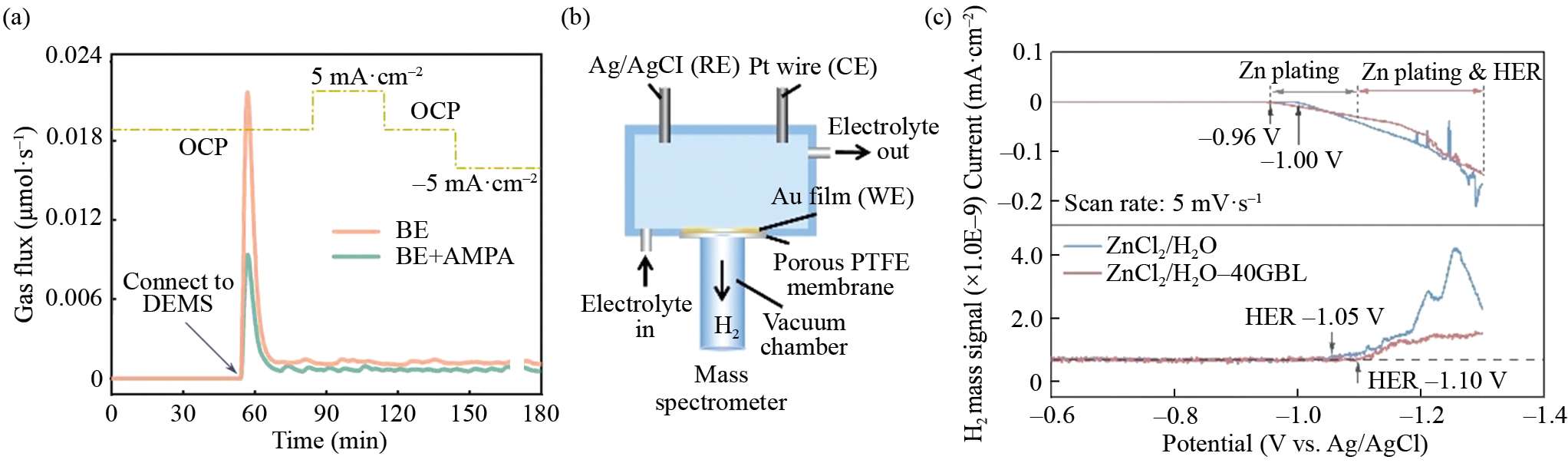
In-situelectrochemical quartz crystal microbalance (EQCM). The electrochemical quartz crystal microbalance (EQCM) provides gravimetric analysis by correlating mass changes with charge transfer during electrochemical processes. It is a powerful technique for investigating SEI formation on zinc metal anodes, including additive adsorption, plating/stripping mechanisms, and interfacial dynamics. EQCM detects mass changes at the electrode, offering insights into specific chemical and structural transformations. Multivalent zinc batteries offer high volumetric capacity and cost efficiency, but challenges persist in understanding interfacial dynamics at the Zn anode/electrolyte interface. Using in-situ EQCM-D and FTIR spectroscopy, Sa et al. explores SEI formation and interfacial mass transport in aqueous ZnCl2 and nonaqueous Zn(TFSI)2 electrolytes. A custom electrochemical cell with an Au-coated quartz resonator (working electrode) and Zn counter/reference electrodes was utilized. Continuous 23 CV cycles in ZnCl2 revealed <1.7% mass discrepancy (Figs. 24(a) and 24(b)) and ~99.9% Coulombic efficiency, demonstrating reversible Zn deposition/dissolution [143]. ZIBs face performance limitations due to dendrite growth and parasitic reactions. Trace sodium cyclamate (CYC-Na) addresses these issues through an atomic-pinning-induced interfacial solvation mechanism. Co-adsorption of CYC's −NH− and −SO3 groups anchors the molecule parallel to the Zn anode, stabilizing the Zn2+ solvation sheath, reducing surface H2O and SO42–, and enabling uniform Zn deposition along the (002) orientation. Without CYC-Na, minimal mass change (Δm~10 ng) calculated by EQCM measurement due to transient H atom and H2O adsorption Figs. 24(c), returning to 0 after five CV cycles. While with CYC-Na, steady Δm increase, reaching ~70 ng at −0.6 V and ~200 ng after five cycles, confirming stable CYC adsorption. This stable adsorption enhances Zn deposition, suppresses dendrite growth, and mitigates surface passivation [144].
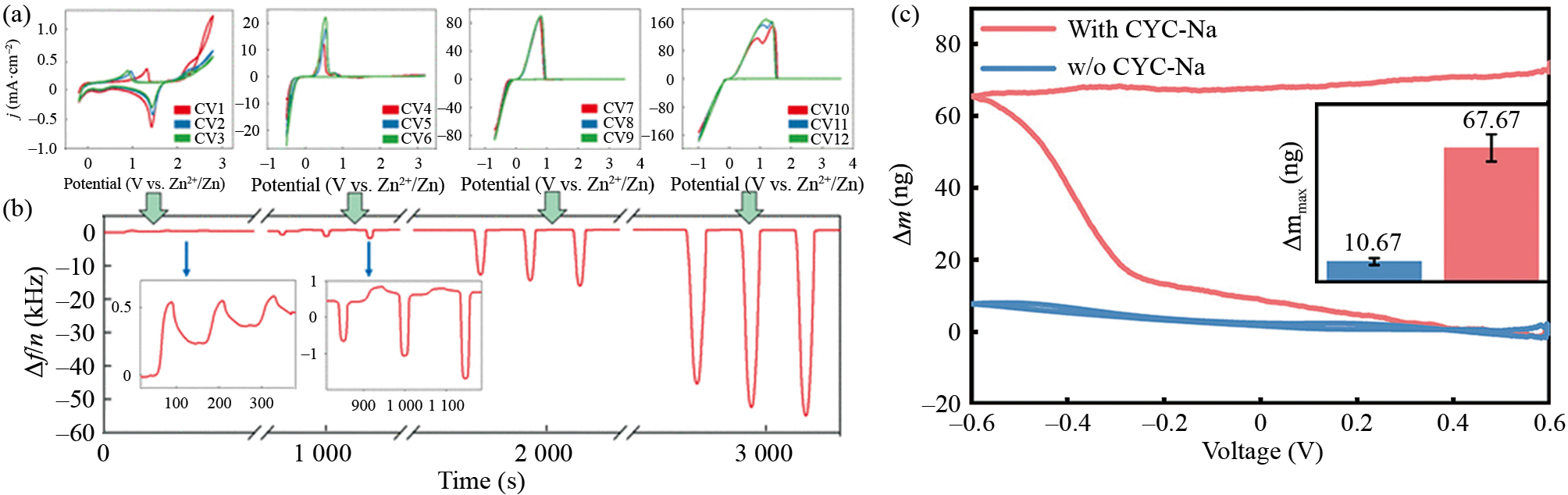
AZIBs have gained significant attention in recent years as a promising alternative to lithium-ion batteries due to their high performance, low cost, and excellent safety. However, the zinc metal anode faces critical challenges of severe interfacial side reaction and poor cycling stability, which limits the advancement of AZIBs. This work highlights the interfacial challenges associated with zinc anodes and provides a comprehensive overview of SEI protection strategies. Recent advancements in electrolyte engineering to promote effective SEI formation on zinc anode surfaces are summarized, including the use of inorganic and organic additives, tailored solvents, and electrolyte formulations. These strategies aim to mitigate issues such as dendrite formation, side reactions, passivation, and morphological instability by establishing robust SEI layers that enhance zinc anode performance in aqueous electrolytes. Despite considerable progress in understanding interphases in AZIBs, significant challenges remain particularly in correlating SEI properties with battery performance. We outline the following perspectives on future innovative SEI engineering and analysing approaches to achieve high-performance AZIBs.
Addressing complicated anode degradation in AZIBs requires the rational design of SEI composition and functionality. Chemical and structural modifications of the SEI are essential to creating chemically and electrochemically stable interphases, necessitating the development of tailored SEI-forming additives and solvents to regulate SEI properties effectively. These SEI-forming agents must tackle multiple challenges by modifying the electrode-electrolyte interface, offering robust protection for zinc anodes, and enhancing overall battery performance. SEI stability in aqueous systems is particularly challenged by higher solubility compared to non-aqueous electrolytes, leading to defects and accelerated irreversible reactions on the anode surface. Understanding SEI evolution and enhancing SEI stability accordingly over time in aqueous environments is crucial for and optimizing battery performance and ensuring durability for practical utilization. While current research often targets single additives, their functionality is inherently limited. Developing synergistic combinations of multiple additives with complementary properties offers a more effective solution. Such additives can better regulate the electrode-electrolyte interface and address challenges across diverse systems. Additionally, SEI-forming agents must meet standards for environmental friendliness, low toxicity, safety, and stability.
Operando techniques integrating multimodal chemical analysis and spectroscopy are crucial for tracking the chemical and structural evolution of the SEI protective layer. In aqueous electrolytes, pH fluctuations during operation significantly affect anode interface evolution, yet the interaction between protons and hydroxide anions and SEI properties remain poorly understood. Real-time structural and chemical analysis of SEI evolution under varying pH conditions is therefore critical. Current ex-situ forensic characterization methods may produce unreliable results due to disruptions caused by electrochemical suspension and cell disassembly. Developing and applying non-destructive characterization is essential for more accurate and real-time interfacial evaluation. Combining advanced characterization methods across various scales and dimensions offers a more comprehensive understanding of the electrolyte engineering-induced SEI composition and formation mechanisms. These integrated approaches provide a more holistic perspective on the properties and evolution of electrolytes, electrodes, and their interfaces. Additionally, to ensure data reliability and practical applicability, it is crucial to enhance the temporal and spatial resolution of characterization techniques, allowing for precise capture of rapid electrochemical processes and subtle structural changes.
Advancements in computational chemistry, including density functional theory (DFT), molecular dynamics (MD) simulations, first-principles calculations, and finite element analysis, enable a deeper understanding of SEI evolution and properties at the atomic and molecular levels. By integrating micro- to macro-scale experimental characterizations with theoretical modelling, the relationship between SEI engineering and zinc anode performance can be comprehensively analysed, revealing underlying mechanisms in a multi-layered approach and providing fundamental insights for informed SEI design. Further efficient and fast exploration of advanced AZIBs requires a collaborative methodology that combines theoretical calculations, machine learning, and experimental insights to deepen our understanding of the electrode-electrolyte interface. Machine learning (ML) enhances research efficiency by addressing the limitations of traditional methods like empirical trial-and-error and DFT-based material discovery, which are time-intensive and costly. ML offers a transformative strategy, aligning with the rapid innovation demands of the energy sector. By complementing or replacing traditional experiments and simulations, ML accelerates material structure analysis and property prediction, facilitating the development of novel functional materials and driving the progress of zinc-metal batteries.
Constructing excellent protective SEI layers is crucial for optimizing battery performance under specific conditions and enabling broad applications. Most current research on aqueous rechargeable zinc-ion batteries focuses on room-temperature and standard electrical testing, overlooking the broader operational demands of varying abuse conditions, such as extreme temperatures, fast charge, and overcharge/discharge. Expanding testing protocols is crucial to ensure the reliability of AZIBs in practical scenarios. A deeper understanding of solid electrolyte interphase (SEI) evolution across different temperatures is vital for tailoring interfacial properties to meet thermal and mechanical demands. Improving battery stability under extreme conditions necessitates novel electrolyte engineering that enhance ionic conductivity and form robust SEI layers, ensuring functionality in harsh environments. These additives must also be scalable and commercially viable to bridge the gap between laboratory research and large-scale production. Current SEI research often assumes low zinc utilization per cycle, which fails to replicate real-world conditions. Higher zinc utilization imposes significant mechanical strain on the SEI, underscoring the need for further investigation under these conditions. Transitioning from zinc foil to zinc powder for future manufacturing could simplify production, but the increased surface area introduces challenges such as zinc inventory loss and SEI evolution, requiring further investigation under high zinc-loading conditions for practical deployment.
D. S. Renné, "Progress, opportunities and challenges of achieving net-zero emissions and 100% renewables," Solar Compass, vol. 1, p. 100007, 2022.
C. Zielinski, "COP27 climate change conference: Urgent action needed for Africa and the world," Palliative Medicine, vol. 37, no. 1, pp. 7–9, 2023.
J. Lin, X. Zhang, E. Fan, R. Chen, F. Wu, and L. Li, "Carbon neutrality strategies for sustainable batteries: From structure, recycling, and properties to applications," Energy & Environmental Science, vol. 16, no. 3, pp. 745–791, 2023.
C. Zhao, P. B. Andersen, C. Traeholt, and S. Hashemi, "Grid-connected battery energy storage system: A review on application and integration," Renewable and Sustainable Energy Reviews, vol. 182, p. 113400, 2023.
J. Jiang, Z. Li, Z. Pan, S. Wang, Y. Chen, Q. Zhuang, Z. Ju, and X. Zhang, "Recent progress and prospects on dendrite-free engineerings for aqueous zinc metal anodes," Energy & Environmental Materials, vol. 6, no. 3, p. e12410, 2022.
J. Wang, K. Yang, S. Sun, Q. Ma, G. Yi, X. Chen, Z. Wang, W. Yan, X. Liu, Q. Cai, and Y. Zhao, "Advances in thermal-related analysis techniques for solid-state lithium batteries," InfoMat, vol. 5, no. 4, p. e12410, 2023.
Y. Wang, X. Feng, W. Huang, X. He, L. Wang, and M. Ouyang, "Challenges and opportunities to mitigate the catastrophic thermal runaway of high-energy batteries," Advanced Energy Materials, vol. 13, no. 15, p. 2203841, 2023.
L. Kong, Y. Li, and W. Feng, "Strategies to solve lithium battery thermal runaway: From mechanism to modification," Electrochemical Energy Reviews, vol. 4, no. 4, pp. 633–679, 2021.
Y. Liang, H. Dong, D. Aurbach, and Y. Yao, "Current status and future directions of multivalent metal-ion batteries," Nature Energy, vol. 5, no. 9, pp. 646–656, 2020.
X. Yang, X. Wang, Y. Xiang, L. Ma, and W. Huang, "Asymmetric electrolytes design for aqueous multivalent metal ion batteries," Nano-Micro Letters, vol. 16, no. 1, p. 51, 2023.
B. Tang, L. Shan, S. Liang, and J. Zhou, "Issues and opportunities facing aqueous zinc-ion batteries," Energy & Environmental Science, vol. 12, no. 11, pp. 3288–3304, 2019.
C. Xu, B. Li, H. Du, and F. Kang, "Energetic zinc ion chemistry: The rechargeable zinc ion battery," Angewandte Chemie International Edition, vol. 51, no. 4, pp. 933–935, 2012.
N. Zhang, X. Chen, M. Yu, Z. Niu, F. Cheng, and J. Chen, "Materials chemistry for rechargeable zinc-ion batteries," Chemical Society Reviews, vol. 49, no. 13, pp. 4203–4219, 2020.
X. Zhang, J. P. Hu, N. Fu, W. B. Zhou, B. Liu, Q. Deng, and X. W. Wu, "Comprehensive review onzinc-ionbattery anode: Challenges and strategies," InfoMat, vol. 4, no. 7, p. e12306, 2022.
T. Zhang, Y. Tang, S. Guo, X. Cao, A. Pan, G. Fang, J. Zhou, and S. Liang, "Fundamentals and perspectives in developing zinc-ion battery electrolytes: A comprehensive review," Energy & Environmental Science, vol. 13, no. 12, pp. 4625–4665, 2020.
S. Liu, R. Zhang, C. Wang, J. Mao, D. Chao, C. Zhang, S. Zhang, and Z. Guo, "Zinc ion batteries: Bridging the gap from academia to industry for grid-scale energy storage," Angewandte Chemie International Edition, vol. 63, no. 17, p. e202400045, 2024.
G. Li, L. Sun, S. Zhang, C. Zhang, H. Jin, K. Davey, G. Liang, S. Liu, J. Mao, and Z. Guo, "Developing cathode materials for aqueous zinc ion batteries: Challenges and practical prospects," Advanced Functional Materials, vol. 34, no. 5, p. 2301291, 2023.
L. E. Blanc, D. Kundu, and L. F. Nazar, "Scientific challenges for the implementation of zn-ion batteries," Joule, vol. 4, no. 4, pp. 771–799, 2020.
H. Ahn, D. Kim, M. Lee, and K. W. Nam, "Challenges and possibilities for aqueous battery systems," Communications Materials, vol. 4, art no. 37, 2023.
M. Li, M. Maisuradze, R. Sciacca, I. Hasa, and M. Giorgetti, "A structural perspective on prussian blue analogues for aqueous zinc‐ion batteries," Batteries & Supercaps, vol. 6, no. 11, p. e202300340, 2023.
W. Shi, W. S. V. Lee, and J. Xue, "Recent development of mn-based oxides as zinc-ion battery cathode," ChemSusChem, vol. 14, no. 7, pp. 1634–1658, 2021.
Z. Azmi, K. C. Senapati, A. K. Goswami, and S. R. Mohapatra, "A comprehensive review of strategies to augment the performance of MnO2 cathode by structural modifications for aqueous zinc ion battery," Journal of Power Sources, vol. 613, pp. 234816, 2024.
J. Yang, B. Yin, Y. Sun, H. Pan, W. Sun, B. Jia, S. Zhang, and T. Ma, "Zinc anode for mild aqueous zinc-ion batteries: Challenges, strategies, and perspectives," Nanomicro Lett, vol. 14, no. 1, p. 42, 2022.
C. Xie, Y. Li, Q. Wang, D. Sun, Y. Tang, and H. Wang, "Issues and solutions toward zinc anode in aqueous zinc‐ion batteries: A mini review," Carbon Energy, vol. 2, no. 4, pp. 540–560, 2020.
P. Ruan, S. Liang, B. Lu, H. J. Fan, and J. Zhou, "Design strategies for high-energy-density aqueous zinc batteries," Angewandte Chemie International Edition, vol. 61, no. 17, p. e202200598, 2022.
W. Ling, P. Wang, Z. Chen, H. Wang, J. Wang, Z. Ji, J. Fei, Z. Ma, N. He, and Y. Huang, "Nanostructure design strategies for aqueous zinc‐ion batteries," ChemElectroChem, vol. 7, no. 14, p. 29572978, 2020.
Y. Zou, J. Sun, Y. Chi, X. Cheng, and D. Yang, "Recent advances and challenges of cathode materials in aqueous rechargeable zinc‐ion batteries," EcoEnergy, vol. 2, no. 4, pp. 599–629, 2024.
M. Chen, S.-C. Zhang, Z.-G. Zou, S.-L. Zhong, W.-Q. Ling, J. Geng, F.-A. Liang, X.-X. Peng, Y. Gao, and F.-G. Yu, "Review of vanadium-based oxide cathodes as aqueous zinc-ion batteries," Rare Metals, vol. 42, no. 9, p. 2868–2905, 2024.
Y. Zhao, C. Yang, and Y. Yu, "A review on covalent organic frameworks for rechargeable zinc-ion batteries," Chinese Chemical Letters, vol. 35, no. 7, p. 108865, 2024.
M. S. Javed, A. Mateen, S. Ali, and X. Zhang, I. Hussain, M. Imran, S. S. A. Shah, W. Han, "The emergence of 2D MXenes based Zn-ion batteries: Recent development and prospects," Small, vol. 18, no. 26, p. e2201989, 2022.
L. Wang, S. Li, C. Wang, S. Yao, G. Chen, and F. Du, "Recent advance and design strategies of chalcogenides for high-performance aqueous zinc-ion batteries," Journal of Physics D: Applied Physics, vol. 57, no. 25, p. 253001, 2024.
Y. Zhao, P. Zhang, J. Liang, X. Xia, L. Ren, L. Song, W. Liu, and X. Sun, "Unlocking layered double hydroxide as a high-performance cathode material for aqueous zinc-ion batteries," Advanced Materials, vol. 34, no. 37, p. e2204320, 2022.
Y. Zhao, Y. Wang, J. Li, J. Xiong, Q. Li, K. K. Abdalla, Y. Zhao, Z. Cai, and X. Sun, "Thermodynamic and kinetic insights for manipulating aqueous Zn battery chemistry: Towards future grid-scale renewable energy storage systems," eScience, in press, 2024, doi: 10.1016/j.esci.2024.100331.
Y. Zhu, G. Liang, X. Cui, X. Liu, H. Zhong, C. Zhi, and Y. Yang, "Engineering hosts for Zn anodes in aqueous Zn-ion batteries," Energy & Environmental Science, vol. 17, no. 2, pp. 369–385, 2024.
Z. Fan, J. Wang, Y. Wu, X. Yan, D. Dai, and X. -L. Wu, "Research progresses on cathode materials of aqueous zinc-ion batteries," Journal of Energy Chemistry, vol. 97, pp. 237–264, 2024.
Y. Li, Y. Li, Q. Liu, Y. Liu, T. Wang, M. Cui, Y. Ding, H. Li, and G. Yu, "Revealing the dominance of the dissolution-deposition mechanism in aqueous Zn-MnO2 batteries," Angewandte Chemie International Edition, vol. 63, no. 6, pp. e202318444, 2024.
T. Lv, Y. Peng, G. Zhang, S. Jiang, Z. Yang, S. Yang, and H. Pang, "How about vanadium-based compounds as cathode materials for aqueous zinc ion batteries?" Advanced Science (Weinh), vol. 10, no. 12, p. e2206907, 2023.
Y. Dai, C. Zhang, J. Li, X. Gao, P. Hu, C. Ye, H. He, J. Zhu, W. Zhang, R. Chen, W. Zong, F. Guo, I. P. Parkin, D. J. L. Brett, P. R. Shearing, L. Mai, and G. He, "Inhibition of vanadium cathodes dissolution in aqueous Zn-ion batteries," Advanced Materials, vol. 36, no. 14, p. e2310645, 2024.
X. Zeng, Z. Gong, C. Wang, P. J. Cullen, and Z. Pei, "Vanadium‐based cathodes modification via defect engineering: Strategies to support the leap from lab to commercialization of aqueous zinc‐ion batteries," Advanced Energy Materials, vol. 14, no. 31, p. 2401704, 2024.
C. Su, X. Gao, K. Liu, Y. Dai, H. Dong, Y. Liu, J. Zhu, Q. Zhang, H. He, and G. He, "From lab to market: A review of commercialization and advances for binders in lithium-, zinc-, sodium-ion batteries," Nano Research Energy, vol. 3, no. 1, p. e9120094, 2024.
L. Miao, Z. Guo, L. Jiao, "Insights into the design of mildly acidic aqueous electrolytes for improved stability of Zn anode performance in zinc-ion batteries," Energy Materials, vol. 3, p. 300014, 2023.
Q. Wen, H. Fu, R. -D. Cui, H. -Z. Chen, R. -H. Ji, L. -B. Tang, C. Yan, J. Mao, K. -H. Dai, X. -H. Zhang, and J. -C. Zheng, "Recent advances in interfacial modification of zinc anode for aqueous rechargeable zinc ion batteries," Journal of Energy Chemistry, vol. 83, pp. 287–303, 2023.
Q. Zhang, J. Luan, Y. Tang, X. Ji, and H. Wang, "Interfacial design of dendrite-free zinc anodes for aqueous zinc-ion batteries," Angewandte Chemie International Edition, vol. 59, no. 32, pp. 13180–13191, 2020.
Z. Feng, Y. Feng, F. Fan, D. Deng, H. Dong, S. Liu, L. Kang, S. C. Jun, L. Wang, J. Zhu, L. Dai, and Z. He, "Functionalization design of zinc anode for advanced aqueous zinc—ion batteries," SusMat, vol. 4, no. 2, pp. e184, 2024.
B. B. Upreti, N. Kamboj, and R. S. Dey, "Advancing zinc anodes: Strategies for enhanced performance in aqueous zinc-ion batteries," Small, in press, 2024, doi: 10.1002/smll.202408138.
S. Huang, J. Zhu, J. Tian, and Z. Niu, "Recent progress in the electrolytes of aqueous zinc-ion batteries," Chemistry, vol. 25, no. 64, pp. 14480–14494, 2019.
Q. -H. Yang, L. -F. Wang, X. -Y. Wang, and M. -M. Zhen, "Progress and challenges of electrolyte modulation in aqueous zinc-ion batteries," Rare Metals, vol. 43, no. 7, pp. 2940–2967, 2024.
Q. Meng, T. Yan, Y. Wang, X. Lu, H. Zhou, and S. Dong, "Critical design strategy of electrolyte engineering toward aqueous zinc-ion battery," Chemical Engineering Journal, vol. 497, p. 154541, 2024.
J. Cao, F. Zhao, W. Guan, X. Yang, Q. Zhao, L. Gao, X. Ren, G. Wu, and A. Liu, "Additives for aqueous zinc-ion batteries: Recent progress, mechanism analysis, and future perspectives," Small, vol. 20, no. 33, p. e2400221, 2024.
L. Li, S. Jia, Z. Cheng, and C. Zhang, "Improved strategies for separators in zinc-ion batteries," ChemSusChem, vol. 16, no. 8, p. e202202330, 2023.
B. Li, Y. Zeng, W. Zhang, B. Lu, Q. Yang, J. Zhou, and Z. He, "Separator designs for aqueous zinc-ion batteries," Science Bulletin (Beijing), vol. 69, no. 5, pp. 688–703, 2024.
Y. Zong, H. He, Y. Wang, M. Wu, X. Ren, Z. Bai, N. Wang, X. Ning, and S. X. Dou, "Functionalized separator strategies toward advanced aqueous zinc-ion batteries," Advanced Energy Materials, vol. 13, no. 20, p. 2300403, 2023.
Y. Qin, P. Liu, Q. Zhang, Q. Wang, D. Sun, Y. Tang, Y. Ren, and H. Wang, "Advanced filter membrane separator for aqueous zinc-ion batteries," Small, vol. 16, no. 39, p. e2003106, 2020.
D. J. Arnot, M. B. Lim, N. S. Bell, N. B. Schorr, R. C. Hill, A. Meyer, Y. T. Cheng, and T. N. Lambert, "High depth-of-discharge zinc rechargeability enabled by a self-assembled polymeric coating," Advanced Energy Materials, vol. 11, no. 38, pp. 2101594, 2021.
D. Yuan, W. Manalastas Jr., L. Zhang, J. J. Chan, S. Meng, Y. Chen, and M. Srinivasan, "Lignin@Nafion membranes forming Zn solid-electrolyte interfaces enhance the cycle life for rechargeable zinc-ion batteries," ChemSusChem, vol. 12, no. 21, pp. 4889–4900, 2019.
Y. Liu, S. Liu, X. Xie, Z. Li, P. Wang, B. Lu, S. Liang, Y. Tang, and J. Zhou, "A functionalized separator enables dendrite‐free Zn anode via metal‐polydopamine coordination chemistry," InfoMat, vol. 5, no. 3, p. e12374, 2022.
H. Qin, W. Chen, W. Kuang, N. Hu, X. Zhang, H. Weng, H. Tang, D. Huang, J. Xu, and H. He, "A nature-inspired separator with water-confined and kinetics-boosted effects for sustainable and high-utilization Zn metal batteries," Small, vol. 19, no. 20, p. e2300130, 2023.
B. Yong, D. Ma, Y. Wang, H. Mi, C. He, and P. Zhang, "Understanding the design principles of advanced aqueous zinc-ion battery cathodes: From transport kinetics to structural engineering, and future perspectives," Advanced Energy Materials, vol. 10, no. 45, p. 2002354, 2020.
N. Zhang, Y. -R. Ji, J. -C. Wang, P. -F. Wang, Y. -R. Zhu, and T. -F. Yi, "Understanding of the charge storage mechanism of MnO2-based aqueous zinc-ion batteries: Reaction processes and regulation strategies," Journal of Energy Chemistry, vol. 82, pp. 423–463, 2023.
M. H. Alfaruqi, V. Mathew, J. Gim, S. Kim, J. Song, J. P. Baboo, S. H. Choi, and J. Kim, "Electrochemically induced structural transformation in a γ-MnO2 cathode of a high capacity zinc-ion battery system," Chemistry of Materials, vol. 27, no. 10, pp. 3609–3620, 2015.
Z. Li, Y. Ren, L. Mo, C. Liu, K. Hsu, Y. Ding, X. Zhang, X. Li, L. Hu, D. Ji, and G. Cao, "Impacts of oxygen vacancies on zinc ion intercalation in VO2," ACS Nano, vol. 14, no. 5, pp. 5581–5589, 2020.
F. Cui, J. Zhao, D. Zhang, Y. Fang, F. Hu, and K. Zhu, "VO2(B) nanobelts and reduced graphene oxides composites as cathode materials for low-cost rechargeable aqueous zinc ion batteries," Chemical Engineering Journal, vol. 390, pp. 124118, 2020.
X. Wang, S. L. Clegg, and D. Di Tommaso, "Bridging atomistic simulations and thermodynamic hydration models of aqueous electrolyte solutions," Journal of Chemical Physics, vol. 156, no. 2, p. 024502, 2022.
J. J. Ye, P. H. Li, Z. Hou, W. Zhang, W. Zhu, S. Jin, and H. Ji, "Se-dopant modulated selective co-insertion of H+ and Zn2+ in MnO2 for high-capacity and durable aqueous Zn-ion batteries," Angewandte Chemie International Edition, vol. 63, no. 43, p. e202410900, 2024.
H. Huang, X. Xia, J. Yun, C. Huang, D. Li, B. Chen, Z. Yang, and W. Zhang, "Interfacial engineering of hydrated vanadate to promote the fast and highly reversible H+/Zn2+ co-insertion processes for high-performance aqueous rechargeable batteries," Energy Storage Materials, vol. 52, pp. 473–484, 2022.
T. Lv, G. Zhu, S. Dong, Q. Kong, Y. Peng, S. Jiang, G. Zhang, Z. Yang, S. Yang, X. Dong, H. Pang, and Y. Zhang, "Co-intercalation of dual charge carriers in metal-ion-confining layered vanadium oxide nanobelts for aqueous zinc-ion batteries," Angewandte Chemie International Edition, vol. 62, no. 5, p. e202216089, 2023.
D. Chen, M. Lu, D. Cai, H. Yang, and W. Han, "Recent advances in energy storage mechanism of aqueous zinc-ion batteries," Journal of Energy Chemistry, vol. 54, pp. 712–726, 2021.
H. Xu, W. Yang, M. Li, H. Liu, S. Gong, F. Zhao, C. Li, J. Qi, H. Wang, W. Peng, and J. Liu, "Advances in aqueous zinc ion batteries based on conversion mechanism: Challenges, strategies, and prospects," Small, vol. 20, no. 27, p. e2310972, 2024.
W. Li and D. Wang, "Conversion-type cathode materials for aqueous Zn metal batteries in nonalkaline aqueous electrolytes: Progress, challenges, and solutions", Advanced Materials, in press, 2023, doi: https://doi.org/10.1002/adma.202304983.
T. Liang, X. Zhang, Y. Huang, Y. Lu, H. Jia, Y. Yuan, L. Meng, Y. Zhou, L. Zhou, P. Guan, T. Wan, M. Ferry, and D. Chu, "Cutting-edge progress in aqueous Zn-S batteries: innovations in cathodes, electrolytes, and mediators," Small, in press, 2024, doi: 10.1002/smll.202405810.
X. Wang, L. Liu, Z. Hu, C. Peng, C. Han, and W. Li, "High energy density aqueous zinc–chalcogen (S, Se, Te) batteries: Recent progress, challenges, and perspective," Advanced Energy Materials, vol. 13, no. 44, pp. 2302927, 2023.
Y. Zou, T. Liu, Q. Du, Y. Li, H. Yi, X. Zhou, Z. Li, L. Gao, L. Zhang, and X. Liang, "A four-electron Zn-I2 aqueous battery enabled by reversible I–/I2/I+ conversion," Nature Communications, vol. 12, no. 1, pp. 170, 2021.
Z. Cao, P. Zhuang, X. Zhang, M. Ye, J. Shen, and P. M. Ajayan, "Strategies for dendrite‐Free anode in aqueous rechargeable zinc ion batteries," Advanced Energy Materials, vol. 10, no. 30, p. 2001599, 2020.
J. Wang, Y. Yang, Y. Zhang, Y. Li, R. Sun, Z. Wang, and H. Wang, "Strategies towards the challenges of zinc metal anode in rechargeable aqueous zinc ion batteries," Energy Storage Materials, vol. 35, pp. 19–46, 2021.
R. Tan, H. He, A. Wang, T. Wong, Y. Yang, S. Iguodala, C. Ye, D. Liu, Z. Fan, M. Furedi, G. He, S. Guldin, D. J. L. Brett, N. B. McKeown, and Q. Song, "Interfacial engineering of polymer membranes with intrinsic microporosity for dendrite-free zinc metal batteries," Angewandte Chemie International Edition, vol. 63, no. 49, p. e202409322, 2024.
X. Wang, C. Sun, and Z. S. Wu, "Recent progress of dendrite‐free stable zinc anodes for advanced zinc‐based rechargeable batteries: Fundamentals, challenges, and perspectives," SusMat, vol. 3, no. 2, pp. 180–206, 2023.
P. Zou, R. Lin, T. P. Pollard, L. Yao, E. Hu, R. Zhang, Y. He, C. Wang, W. C. West, L. Ma, O. Borodin, K. Xu, X. Q. Yang, and H. L. Xin, "Localized hydrophobicity in aqueous zinc electrolytes improves zinc metal reversibility," Nano Letters, vol. 22, no. 18, pp. 7535–7544, 2022.
J. Cao, D. Zhang, X. Zhang, Z. Zeng, J. Qin, and Y. Huang, "Strategies of regulating Zn2+solvation structures for dendrite-free and side reaction-suppressed zinc-ion batteries," Energy & Environmental Science, vol. 15, no. 2, pp. 499–528, 2022.
X. Qian, T. Chen, Y. Wang, Q. Zhang, W. Li, and J. Fu, "Revitalizing dead zinc with ferrocene/ferrocenium redox chemistry for deep-cycle zinc metal batteries," Angewandte Chemie International Edition, early view, p. e202412989, 2024.
Z. Wen, Z. Hu, X. Wang, Y. Zhang, W. Du, M. Ye, Y. Tang, X. Liu, and C. C. Li, "Weakening the space charge layer effect through tethered anion electrolyte and piezoelectric effect toward ultra-stable zinc anode," Advanced Materials, vol. 36, no. 44, p. e2407390, 2024.
Y. Liang, M. Qiu, P. Sun, and W. Mai, "Comprehensive review of electrolyte modification strategies for stabilizing Zn metal anodes," Advanced Functional Materials, vol. 33, no. 51, pp. 2304878, 2023.
X. Guo, Z. Zhang, J. Li, N. Luo, G. -L. Chai, T. S. Miller, F. Lai, P. Shearing, D. J. L. Brett, D. Han, Z. Weng, G. He, and I. P. Parkin, "Alleviation of dendrite formation on zinc anodes via electrolyte additives," ACS Energy Letters, vol. 6, no. 2, pp. 395–403, 2021.
M. Liu, P. Wang, W. Zhang, H. He, G. He, S. Xu, L. Yao, and T. S. Miller, "Strategies for pH regulation in aqueous zinc ion batteries", Energy Storage Materials, vol. 67, pp. 103248, 2024.
Q. Zhang, Z. Yang, H. Ji, X. Zeng, Y. Tang, D. Sun, and H. Wang, "Issues and rational design of aqueous electrolyte for Zn‐ion batteries," SusMat, vol. 1, no. 3, pp. 432–447, 2021.
R. Jayakumar, D. M. Harrison, J. Xu, A. V. Suresh Babu, C. Luo, and L. Ma, "Interphases in aqueous rechargeable zinc metal batteries," Journal of Materials Chemistry A, vol. 11, no. 16, pp. 8470–8496, 2023.
Z. Yi, G. Chen, F. Hou, L. Wang, and J. Liang, "Strategies for the stabilization of Zn metal anodes for Zn‐ion batteries," Advanced Energy Materials, vol. 11, no. 1, pp. 2003065, 2020.
A. Bayaguud, Y. Fu, and C. Zhu, "Interfacial parasitic reactions of zinc anodes in zinc ion batteries: Underestimated corrosion and hydrogen evolution reactions and their suppression strategies," Journal of Energy Chemistry, vol. 64, no. pp. 246–262, 2022.
C. Li, S. Jin, L. A. Archer, and L. F. Nazar, "Toward practical aqueous zinc-ion batteries for electrochemical energy storage," Joule, vol. 6, no. 8, pp. 1733–1738, 2022.
W. Du, E. H. Ang, Y. Yang, Y. Zhang, M. Ye, and C. C. Li, "Challenges in the material and structural design of zinc anode towards high-performance aqueous zinc-ion batteries," Energy & Environmental Science, vol. 13, no. 10, pp. 3330–3360, 2020.
C. Li, X. Xie, S. Liang, and J. Zhou, "Issues and future perspective on zinc metal anode for rechargeable aqueous zinc‐ion batteries," Energy & Environmental Materials, vol. 3, no. 2, pp. 146–159, 2020.
T. Wang, C. Li, X. Xie, B. Lu, Z. He, S. Liang, and J. Zhou, "Anode materials for aqueous zinc ion batteries: Mechanisms, properties, and perspectives," ACS Nano, vol. 14, no. 12, pp. 16321–16347, 2020.
T. Liu, L. Lin, X. Bi, L. Tian, K. Yang, J. Liu, M. Li, Z. Chen, J. Lu, K. Amine, K. Xu, and F. Pan, "In situ quantification of interphasial chemistry in Li-ion battery," Nature Nanotechnology, vol. 14, no. 1, pp. 50–56, 2019.
X. Wang, X. Li, H. Fan, and L. Ma, "Solid electrolyte interface in Zn-based battery systems," Nano-Micro Letters, vol. 14, no. 1, p. 205, 2022.
H. Liu, Q. Zhou, Q. Xia, Y. Lei, X. Long Huang, M. Tebyetekerwa, and X. S. Zhao, "Interface challenges and optimization strategies for aqueous zinc-ion batteries," Journal of Energy Chemistry, vol. 77, pp. 642–659, 2023.
T. Li, S. Hu, C. Wang, D. Wang, M. Xu, C. Chang, X. Xu, and C. Han, "Engineering fluorine-rich double protective layer on zn anode for highly reversible aqueous zinc-ion batteries," Angewandte Chemie International Edition, vol. 62, no. 51, p. e202314883, 2023.
M. Wu, X. Wang, F. Zhang, Q. Xiang, Y. Li, and J. Guo, "Highly reversible and stable Zn metal anodes realized using a trifluoroacetamide electrolyte additive," Energy & Environmental Science, vol. 17, no. 2, pp. 619–629, 2024.
L. Cao, D. Li, T. Pollard, T. Deng, B. Zhang, C. Yang, L. Chen, J. Vatamanu, E. Hu, M. J. Hourwitz, L. Ma, M. Ding, Q. Li, S. Hou, K. Gaskell, J. T. Fourkas, X. Q. Yang, K. Xu, O. Borodin, and C. Wang, "Fluorinated interphase enables reversible aqueous zinc battery chemistries," Nature Nanotechnology, vol. 16, no. 8, pp. 902–910, 2021.
C. Huang, X. Zhao, S. Liu, Y. Hao, Q. Tang, A. Hu, Z. Liu, and X. Chen, "Stabilizing zinc anodes by regulating the electrical double layer with saccharin anions," Advanced Materials, vol. 33, no. 38, p. e2100445, 2021.
Y. Chu, S. Zhang, S. Wu, Z. Hu, G. Cui, and J. Luo, "In situ built interphase with high interface energy and fast kinetics for high performance Zn metal anodes," Energy & Environmental Science, vol. 14, no. 6, pp. 3609–3620, 2021.
Y. Liu, Y. An, L. Wu, J. Sun, F. Xiong, H. Tang, S. Chen, Y. Guo, L. Zhang, Q. An, and L. Mai, "Interfacial chemistry modulation via amphoteric glycine for a highly reversible zinc anode," ACS Nano, vol. 17, no. 1, pp. 552–560, 2023.
D. Xie, Y. Sang, D. H. Wang, W. Y. Diao, F. Y. Tao, C. Liu, J. W. Wang, H. Z. Sun, J. P. Zhang, and X. L. Wu, "ZnF2 -riched inorganic/organic hybrid SEI: In situ-chemical construction and performance-improving mechanism for aqueous zinc-ion batteries," Angewandte Chemie International Edition, vol. 62, no. 7, p. e202216934, 2023.
D. Li, L. Cao, T. Deng, S. Liu, and C. Wang, "Design of a solid electrolyte interphase for aqueous zn batteries," Angewandte Chemie International Edition, vol. 60, no. 23, pp. 13035–13041, 2021.
J. Y. Kim, G. Liu, R. E. A. Ardhi, J. Park, H. Kim, and J. K. Lee, "Stable Zn metal anodes with limited Zn-doping in MgF2 interphase for fast and uniformly ionic flux," Nanomicro Lett, vol. 14, no. 1, p. 46, 2022.
H. Wang, G. Zhao, W. Li, S. Watanabe, and X. Wang, "Fluoride-based artificial interface for a highly reversible zn metal anode interlayer in aqueous zinc-ion batteries," ACS Sustainable Chemistry & Engineering, vol. 12, no. 1, pp. 355–364, 2023.
Y. Chen, Z. Deng, Y. Sun, Y. Li, H. Zhang, G. Li, H. Zeng, and X. Wang, "Ultrathin zincophilic interphase regulated electric double layer enabling highly stable aqueous zinc-ion batteries," Nano-Micro Letters, vol. 16, no. 1, p. 96, 2024.
W. Wang, S. Chen, X. Liao, R. Huang, F. Wang, J. Chen, Y. Wang, F. Wang, and H. Wang, "Regulating interfacial reaction through electrolyte chemistry enables gradient interphase for low-temperature zinc metal batteries," Nature Communications, vol. 14, no. 1, p. 5443, 2023.
R. Chen, W. Zhang, C. Guan, Y. Zhou, I. Gilmore, H. Tang, Z. Zhang, H. Dong, Y. Dai, Z. Du, X. Gao, W. Zong, Y. Xu, P. Jiang, J. Liu, F. Zhao, J. Li, X. Wang, and G. He, "Rational design of an in-situ polymer-inorganic hybrid solid electrolyte interphase for realising stable Zn metal anode under harsh conditions," Angewandte Chemie International Edition, vol. 63, no. 21, p. e202401987, 2024.
Z. Zhang, X. Wang, J. Ke, W. Du, Z. Lv, Y. Tang, M. Ye, Y. Zhang, X. Liu, Y. Yang, Z. Wen, and C. C. Li, "Approaching 100% comprehensive utilization rate of ultra-stable Zn metal anodes by constructing chitosan‐based homologous gel/solid synergistic interface," Advanced Functional Materials, vol. 34, no. 17, p. 2313150, 2024.
Y. An, Y. Tian, K. Zhang, Y. Liu, C. Liu, S. Xiong, J. Feng, and Y. Qian, "Stable aqueous anode‐free zinc batteries enabled by interfacial engineering," Advanced Functional Materials, vol. 31, no. 26, pp. 2101886, 2021.
W. Xin, L. Miao, L. Zhang, H. Peng, Z. Yan, and Z. Zhu, "Turning the byproduct Zn4(OH)6SO4·xH2O into a uniform solid electrolyte interphase to stabilize aqueous Zn anode," ACS Materials Letters, vol. 3, no. 12, pp. 1819–1825, 2021.
J. Li, S. Qin, M. Xu, W. Wang, J. Zou, Y. Zhang, H. Dou, and Z. Chen, "Multifunctional dual‐metal‐salt derived ternary eutectic electrolyte for highly reversible zinc ion battery," Advanced Functional Materials, vol. 34, no. 37, pp. 2024.
S. Chen, S. Li, L. Ma, Y. Ying, Z. Wu, H. Huang, and C. Zhi, "Asymmetric anion zinc salt derived solid electrolyte interphase enabled long-lifespan aqueous zinc bromine batteries," Angewandte Chemie International Edition, vol. 63, no. 11, p. e202319125, 2024.
X. Zeng, J. Mao, J. Hao, J. Liu, S. Liu, Z. Wang, Y. Wang, S. Zhang, T. Zheng, J. Liu, P. Rao, and Z. Guo, "Electrolyte design for in situ construction of highly Zn2+ -conductive solid electrolyte interphase to enable high-performance aqueous Zn-ion batteries under practical conditions," Advanced Materials, vol. 33, no. 11, p. e2007416, 2021.
B. W. Olbasa, C. J. Huang, F. W. Fenta, S. K. Jiang, S. A. Chala, H. C. Tao, Y. Nikodimos, C. C. Wang, H. S. Sheu, Y. W. Yang, T. L. Ma, S. H. Wu, W. N. Su, H. Dai, and B. J. Hwang, "Highly reversible Zn metal anode stabilized by dense and anion‐derived passivation layer obtained from concentrated hybrid aqueous electrolyte," Advanced Functional Materials, vol. 32, no. 7, pp. 2103959, 2021.
L. Zheng, H. Li, X. Wang, Z. Chen, C. Hu, K. Wang, G. Guo, S. Passerini, and H. Zhang, "Competitive solvation-induced interphases enable highly reversible Zn anodes," ACS Energy Letters, vol. 8, no. 5, pp. 2086–2096, 2023.
X. Xu, H. Su, J. Zhang, Y. Zhong, Y. Xu, Z. Qiu, H. B. Wu, X. Wang, C. Gu, and J. Tu, "Sulfamate-derived solid electrolyte interphase for reversible aqueous zinc battery," ACS Energy Letters, vol. 7, no. 12, pp. 4459–4468, 2022.
C. Lin, T. C. Li, P. Wang, Y. Xu, D. S. Li, A. Sliva, and H. Y. Yang, "In situ formed robust solid electrolyte interphase with organic-inorganic hybrid layer for stable Zn metal anode," Small Methods, early view, p. e2400127, 2024.
C. Huang, F. Huang, X. Zhao, Y. Hao, Y. Yang, Y. Qian, G. Chang, Y. Zhang, Q. Tang, A. Hu, and X. Chen, "Rational design of sulfonamide‐based additive enables stable solid electrolyte interphase for reversible Zn metal anode," Advanced Functional Materials, vol. 33, no. 1, pp. 2210197, 2022.
Y. Dong, L. Miao, G. Ma, S. Di, Y. Wang, L. Wang, J. Xu, and N. Zhang, "Non-concentrated aqueous electrolytes with organic solvent additives for stable zinc batteries," Chemical Science, vol. 12, no. 16, pp. 5843–5852, 2021.
D. Wang, D. Lv, H. Liu, S. Zhang, C. Wang, C. Wang, J. Yang, and Y. Qian, "In situ formation of nitrogen-rich solid electrolyte interphase and simultaneous regulating solvation structures for advanced Zn metal batteries," Angewandte Chemie International Edition, vol. 61, no. 52, p. e202212839, 2022.
F. Ming, Y. Zhu, G. Huang, A. H. Emwas, H. Liang, Y. Cui, and H. N. Alshareef, "Co-solvent electrolyte engineering for stable anode-free zinc metal batteries," Journal of The American Chemical Society, vol. 144, no. 16, pp. 7160–7170, 2022.
J. Chen, W. Zhou, Y. Quan, B. Liu, M. Yang, M. Chen, X. Han, X. Xu, P. Zhang, and S. Shi, "Ionic liquid additive enabling anti-freezing aqueous electrolyte and dendrite-free Zn metal electrode with organic/inorganic hybrid solid electrolyte interphase layer," Energy Storage Materials, vol. 53, pp. 629–637, 2022.
L. Cao, D. Li, E. Hu, J. Xu, T. Deng, L. Ma, Y. Wang, X. Q. Yang, and C. Wang, "Solvation structure design for aqueous Zn metal batteries," Journal of The American Chemical Society, vol. 142, no. 51, pp. 21404–21409, 2020.
H. Qiu, X. Du, J. Zhao, Y. Wang, J. Ju, Z. Chen, Z. Hu, D. Yan, X. Zhou, and G. Cui, "Zinc anode-compatible in-situ solid electrolyte interphase via cation solvation modulation," Nature Communications, vol. 10, no. 1, p. 5374, 2019.
J. Han, H. Euchner, M. Kuenzel, S. M. Hosseini, A. Groß, A. Varzi, and S. Passerini, "A thin and uniform fluoride-based artificial interphase for the zinc metal anode enabling reversible Zn/MnO2 batteries," ACS Energy Letters, vol. 6, no. 9, pp. 3063–3071, 2021.
X. Zeng, K. Xie, S. Liu, S. Zhang, J. Hao, J. Liu, W. K. Pang, J. Liu, P. Rao, Q. Wang, J. Mao, and Z. Guo, "Bio-inspired design of anin situmultifunctional polymeric solid–electrolyte interphase for Zn metal anode cycling at 30 mA·cm−2 and 30 mA·h·cm−2," Energy & Environmental Science, vol. 14, no. 11, pp. 5947–5957, 2021.
P. Li, J. Ren, C. Li, J. Li, K. Zhang, T. Wu, B. Li, and L. Wang, "MOF-derived defect-rich CeO2 as ion-selective smart artificial SEI for dendrite-free Zn-ion battery," Chemical Engineering Journal, vol. 451, pp. 138769, 2023.
H. Wu, H. Yin, H. Tian, J. Yang, and R. Liu, "Stable Zn‐Metal anode enabled by solvation structure modulation and in‐situ SEI layer construction," Energy & Environmental Materials, vol., early view, p. e12839, 2024.
H. Yin, H. Wu, Y. Yang, S. Yao, P. Han, Y. Shi, and R. Liu, "Electrical double layer and in situ polymerization SEI enables high reversible zinc metal anode," Small, vol. 20, no. 50, p. e2404367, 2024.
Y. Zhao, H. Hong, L. Zhong, J. Zhu, Y. Hou, S. Wang, H. Lv, P. liang, Y. Guo, D. Wang, P. Li, Y. Wang, Q. Li, S. C. Cao, H. Li, and C. Zhi, "Zn-rejuvenated and SEI‐regulated additive in zinc metal battery via the iodine post-functionalized zeolitic imidazolate framework‐90," Advanced Energy Materials, vol. 13, no. 28, p. 2300627, 2023.
W. Zhang, Q. Yao, C. Wang, R. Feng, N. Chen, J. Zhu, and Z. Li, "Taming Zn Electrochemistry with carbon nitride: Atomically gradient interphase for highly reversible aqueous Zn batteries," Advanced Functional Materials, vol. 34, no. 5, p. 2303590, 2023.
H. Dai, T. Sun, J. Zhou, J. Wang, Z. Chen, G. Zhang, and S. Sun, "Unraveling chemical origins of dendrite formation in zinc-ion batteries via in situ/operando X-ray spectroscopy and imaging," Nature Communications, vol. 15, no. 1, pp. 8577, 2024.
J. Wang, J. X. Tian, G. X. Liu, Z. Z. Shen, and R. Wen, "In situ insight into the interfacial dynamics in "water-in-salt" electrolyte-based aqueous zinc batteries," Small Methods, vol. 7, no. 6, pp. e2300392, 2023.
M. Liu, L. Yao, Y. Ji, M. Zhang, Y. Gan, Y. Cai, H. Li, W. Zhao, Y. Zhao, Z. Zou, R. Qin, Y. Wang, L. Liu, H. Liu, K. Yang, T. S. Miller, F. Pan, and J. Yang, "Nanoscale ultrafine zinc metal anodes for high stability aqueous zinc ion batteries," Nano Letters, vol. 23, no. 2, pp. 541–549, 2023.
Y. Sasaki, K. Yoshida, A. Kuwabara, and Y. Ikuhara, "On-chip electrochemical analysis combined with liquid-phase electron microscopy of zinc deposition/dissolution," Journal of The Electrochemical Society, vol. 168, no. 11, pp. 112511, 2021.
Y. Huang, Q. Gu, Z. Guo, W. Liu, Z. Chang, Y. Liu, F. Kang, L. Dong, and C. Xu, "Unraveling dynamical behaviors of zinc metal electrodes in aqueous electrolytes through an operando study," Energy Storage Materials, vol. 46, pp. 243–251, 2022.
W. Zhuang, Q. Chen, J. Wan, Z. Hou, and L. Huang, "Correlating buffering agents' premier pH with interface stability toward long-term Zn metal anodes," Small, vol. 20, no. 28, pp. e2309519, 2024.
X. Liang, X. Chen, Z. Zhai, T. Yu, H. Yu, H. Wang, D. Meng, L. Peng, and S. Yin, "Synergistic modulation of hydrogen bond network reconstruction and pH buffering of electrolyte enables highly reversible Zn anode," Chemical Engineering Journal, vol. 493, no. p. 152622, 2024.
J. Liu, C. Li, Q. Lv, D. Chen, J. Zhao, X. Xia, Z. Wu, J. Lai, and L. Wang, "Reconstruction of electric double layer on the anode interface by localized electronic structure engineering for aqueous zn ion batteries," Advanced Energy Materials, vol. 14, no. 29, p. 2401118, 2024.
J. Zhang, P. Li, Y. Wang, Z. Zhao, and Z. Peng, "Linking interfacial hydrogen-bond network to electrochemical performance of zinc anode in aqueous solution," Advanced Functional Materials, vol. 33, no. 41, p. 2305804, 2023.
G. Li, Z. Zhao, S. Zhang, L. Sun, M. Li, J. A. Yuwono, J. Mao, J. Hao, J. P. Vongsvivut, L. Xing, C. X. Zhao, and Z. Guo, "A biocompatible electrolyte enables highly reversible Zn anode for zinc ion battery," Nature Communications, vol. 14, no. 1, p. 6526, 2023.
S. J. Zhang, J. Hao, Y. Zhu, H. Li, Z. Lin, and S. Z. Qiao, "pH-triggered molecular switch toward texture-regulated Zn anode," Angewandte Chemie International Edition, vol. 62, no. 17, p. e202301570, 2023.
S. Cora, S. Ahmad, N. Sa, "In Situ probing of mass exchange at the solid electrolyte interphase in aqueous and nonaqueous Zn electrolytes with EQCM-D," ACS Applied Materials & Interfaces, vol. 13, no. 8, pp. 10131–10140, 2021.
 Top