ContentsFigures & Tables
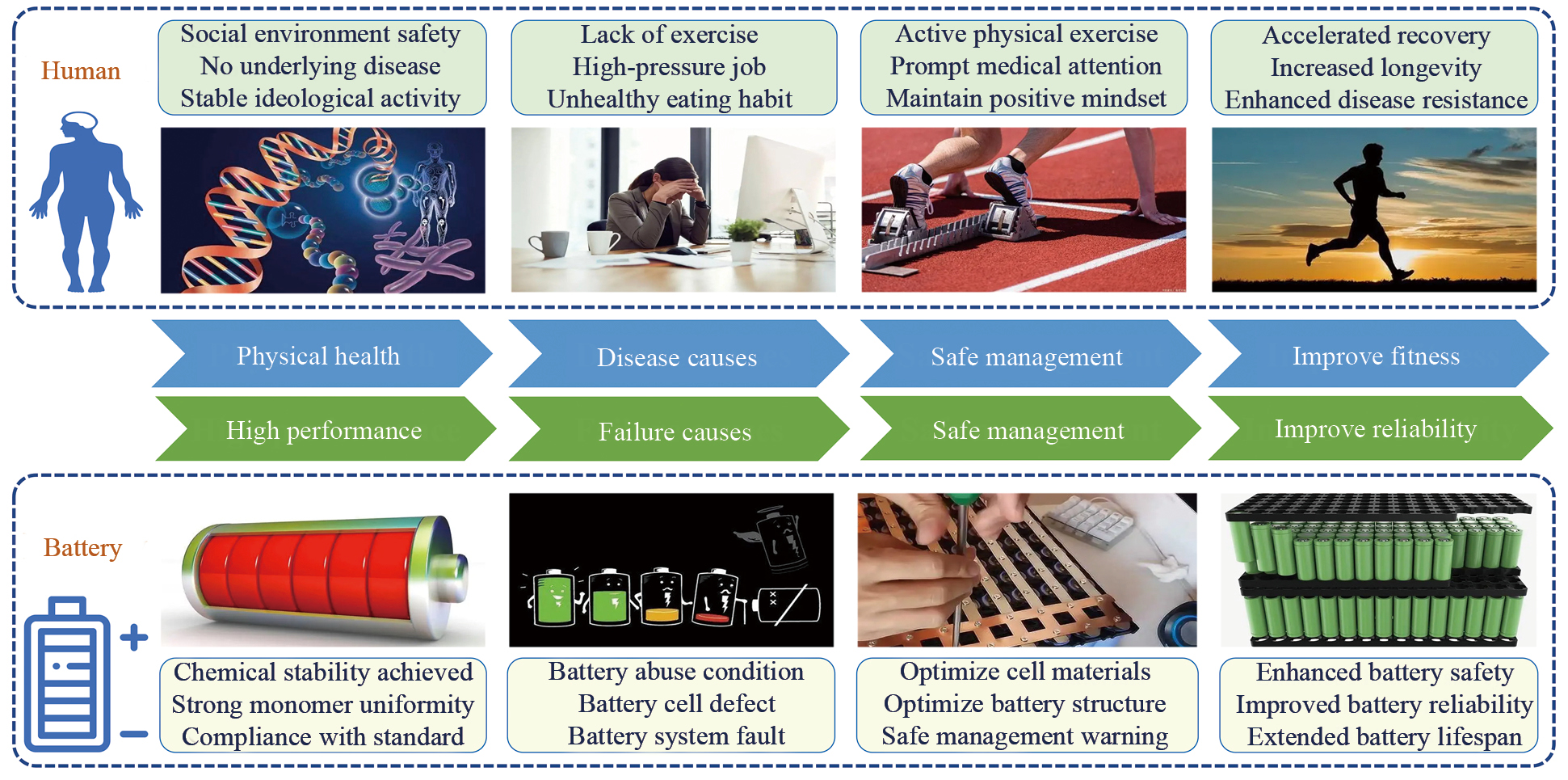
Recently, the matters concerning environmental pollution and the scarcity of energy have attracted considerable attention across diverse sectors. As a result, considerable investments in both capital and resources have been allocated to the research and development of renewable energy sources [1]. Power and energy storage batteries (PAESBs) stand out within this realm due to their significant advantages in reducing carbon emissions, enhancing energy utilization efficiency, optimizing energy storage infrastructure, and maximizing resource utilization [2, 3]. As illustrated in Fig. 1, akin to the health condition of the human body, batteries encounter a myriad of factors that can trigger safety incidents. These safety issues are related to the instability of battery cell materials, battery abuse, external impacts and problems associated with battery system failures. Improving safety management technologies is key to enhancing the robustness of battery systems. Hence, it is imperative to systematically examine and synthesize battery safety management technology, providing a judicious forecast for future advancements.
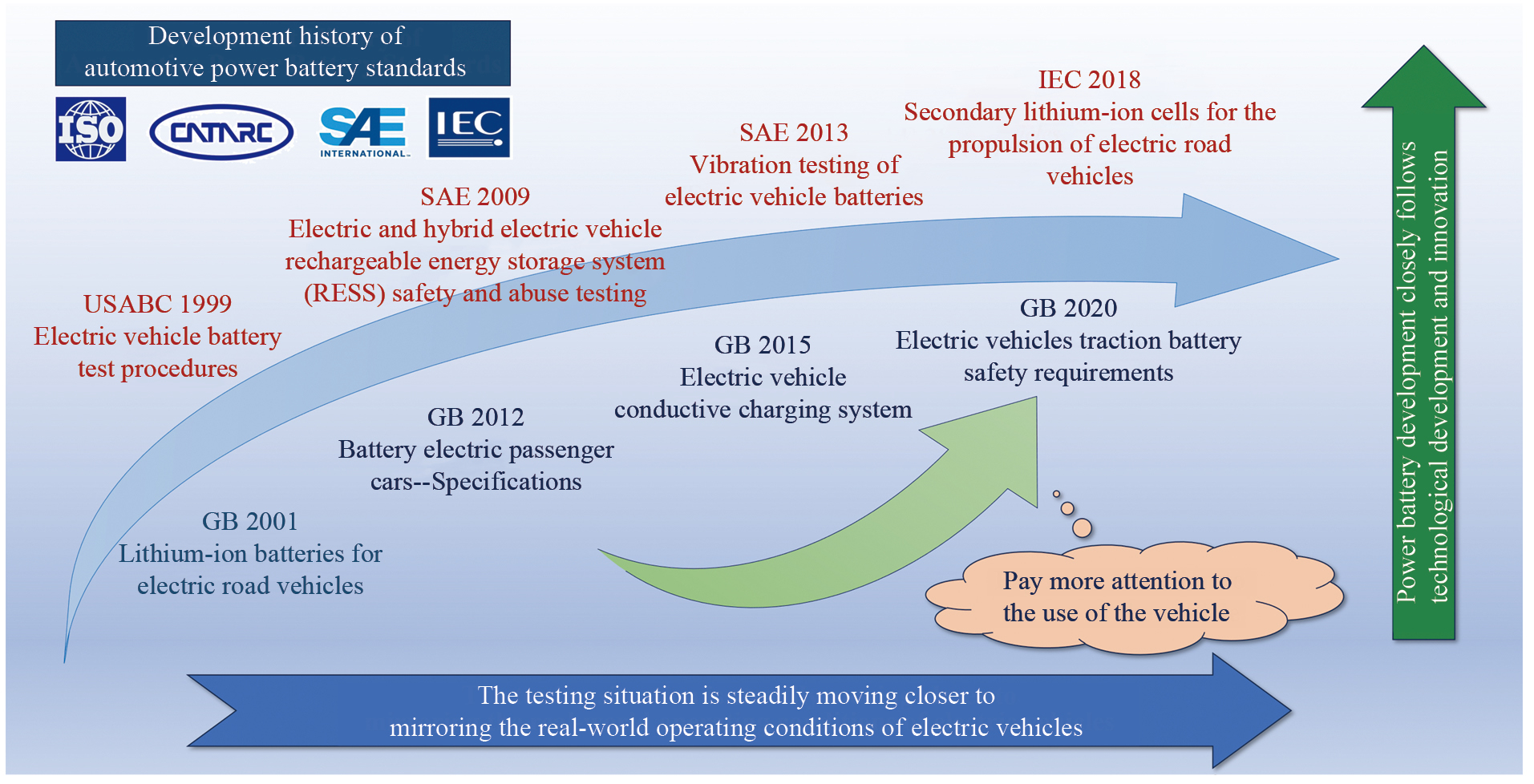
The application of power batteries in the transportation sector can effectively reduce the consumption of fossil energy and the emission of greenhouse gases [4]. Presently, road vehicles are predominantly powered by internal combustion engines and fossil fuels. While enhancements in vehicle aerodynamics and engine technology have improved the efficiency of burning petroleum-based fuels, these measures cannot comprehensively tackle the carbon emission and environmental pollution issues attributed to automobiles [5]. Therefore, many experts and scholars have proposed an practical solution, which involves developing electric vehicles (EVs), hybrid vehicles, and fuel cell vehicles to reduce carbon emissions [6–8]. At the same time, global organizations leading power battery standards, such as China Automotive Technology and Research Center (CATARC), the International Organization for Standardization (ISO), the Society of Automotive Engineers (SAE), and the International Electrotechnical Commission (IEC), are constantly improving the measurement standards for power batteries [9]. As depicted in. Fig. 2, international communities are placing more stakes on battery-powered electric vehicles throughout the iterative process of power battery standards.
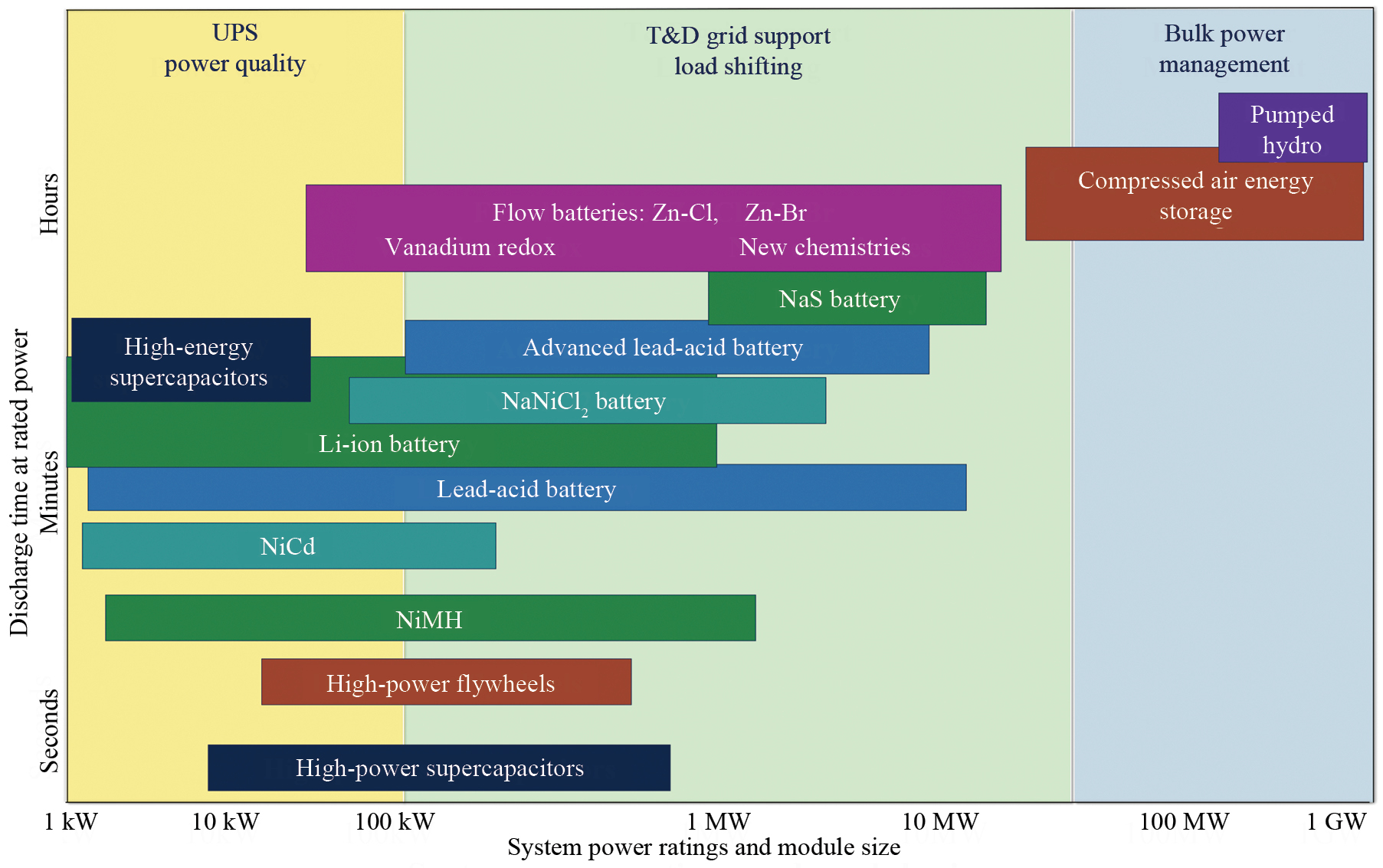
Energy storage technology is expected to improve the robustness of the power grid. Figure 3 presents a comparative analysis of diverse electrical energy storage technologies concerning discharge time and power rating. Compared with the high-power flywheel and high-power supercapacitor, the battery energy storage system is widely used in the power grid for its unique features of pollution-free, flexible and fast response to meet the adjustments of the power grid. It improves the capacity to meet the user load in peak periods of power consumption and the robustness of the power grid [10]. In addition, the advantages of a high return on investment, modular design, flexible installation, and short construction period give the battery energy storage system great commercial and marketing promises [11, 12].
PAESBs have been increasingly adopted to reduce environmental pollution and enhance grid resilience. However, batteries are susceptible to various safety hazards, such as inconsistent capacity decay, leakage, internal short circuits, etc, during operation, storage, and transportation. When faults cannot be diagnosed promptly, they can ultimately evolve into a severe thermal runaway (TR) phenomenon, resulting in significant losses. Battery safety management technology is crucial for reducing the likelihood of battery failures and providing early warning of potential issues at both levels of the individual battery and battery systemIt has become a critical and highly prioritized technical concern.
The primary research contributions of this article are as follows:
(1) Summarizing battery application scenarios: By comparing the application scenarios of PAESBs elucidates the emphasis on their use in the transportation sector and the energy sector.
(2) Categorizing battery fault mechanisms: It categorizes battery fault into internal and external classifications, delving into the interconnections between these factors and their implications on battery safety.
(3) Reviewing the latest safety technologies: This paper describes the state-of-the-art in battery safety management from the perspective of reducing the probability of battery failures and mitigating the hazards caused by such failures.
(4) Providing a forward-looking perspective: Based on battery fault mechanisms and the current advantages and disadvantages of various safety management technologies, the article offers a rational plan and outlook for battery safety management technology.
(5) Promoting further development: This review aims to serve as a reference for advancing research on safety management technology for PAESBs, helping researchers unfamiliar with this technology quickly understand the latest developments in battery safety management technology.
This paper is structured as follows: In the first section, the background and significance of PAESBs widely used in transportation and energy storage are introduced, and the necessity of research on battery safety management technology is explained. The second section provides an overview of the factors to consider when selecting a battery and the real-world application scenarios they encounter. The third section summarizes the battery failure mechanism and clarifies the different internal and external causes of battery failure. In the fourth section, the safety management technologies are categorized into two dimensions: reducing the probability of failures and mitigating the consequences of failures. This section furnishes an exhaustive review of the most recent breakthroughs in both dimensions. The last section summarizes the above contents and puts forward the development trend of battery safety management technology.
Compared to traditional gasoline-powered vehicles, electric vehicles have a clear advantage in reducing carbon emissions and improving energy efficiency [14]. An array of power battery materials, encompassing lead-acid, metal/air, sodium, nickel-metal hydride, and lithium-ion batteries (LIBs), finds applications in electric and hybrid vehicles. Additionally, proton exchange membrane, alkaline, and phosphoric acid fuel cells are utilized in fuel cell vehicles [15–18].
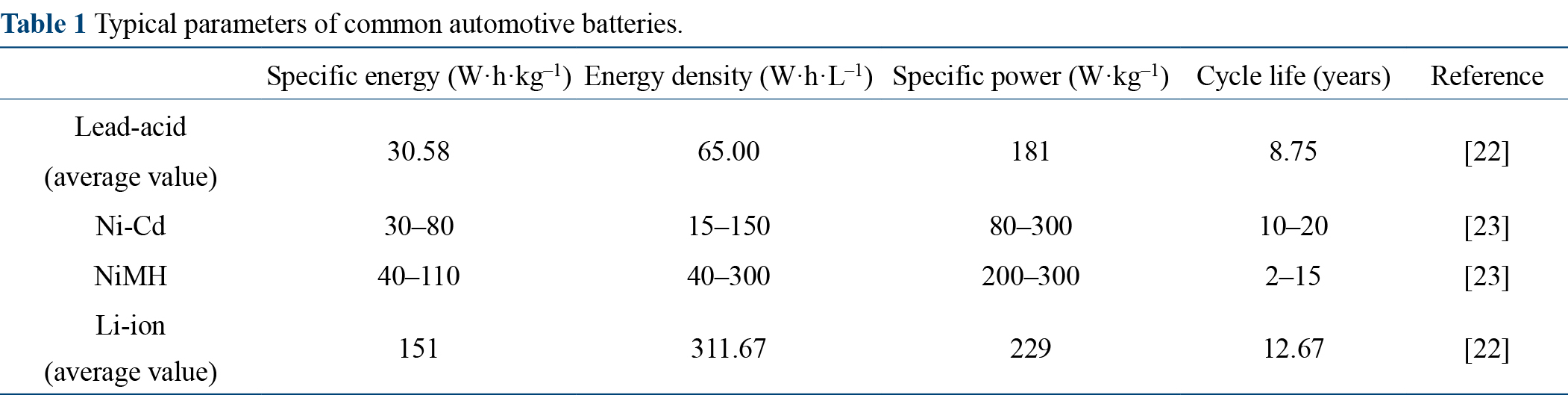
In different historical periods, there have been variations in the selection of power batteries. Consider the case of electric vehicles: during the 1990s, lead-acid batteries enjoyed widespread usage due to their well-established technology, cost-effectiveness, and high specific power [19]. However, the cycle life of lead-acid batteries is gradually becoming inadequate to meet people's requirements. Consequently, efforts were initiated to develop power batteries with extended lifespan and higher specific energy density. Among the myriad of power batteries, LIBs have emerged as the most popular choice to date, owing to their extended cycle life, high energy density, and superior power-to-weight ratio [20, 21]. Table 1 shows the typical characteristics of some automotive power batteries.
In the current trend of energy evolution, incorporating intermittent renewable sources like solar and wind power into the energy matrix has become prevalent. Figure 4(a) shows the predictions of cumulative energy storage devices in various countries worldwide, indicating a sharp increase in demand for energy storage devices with the widespread application of renewable energy in power generation [24, 25].
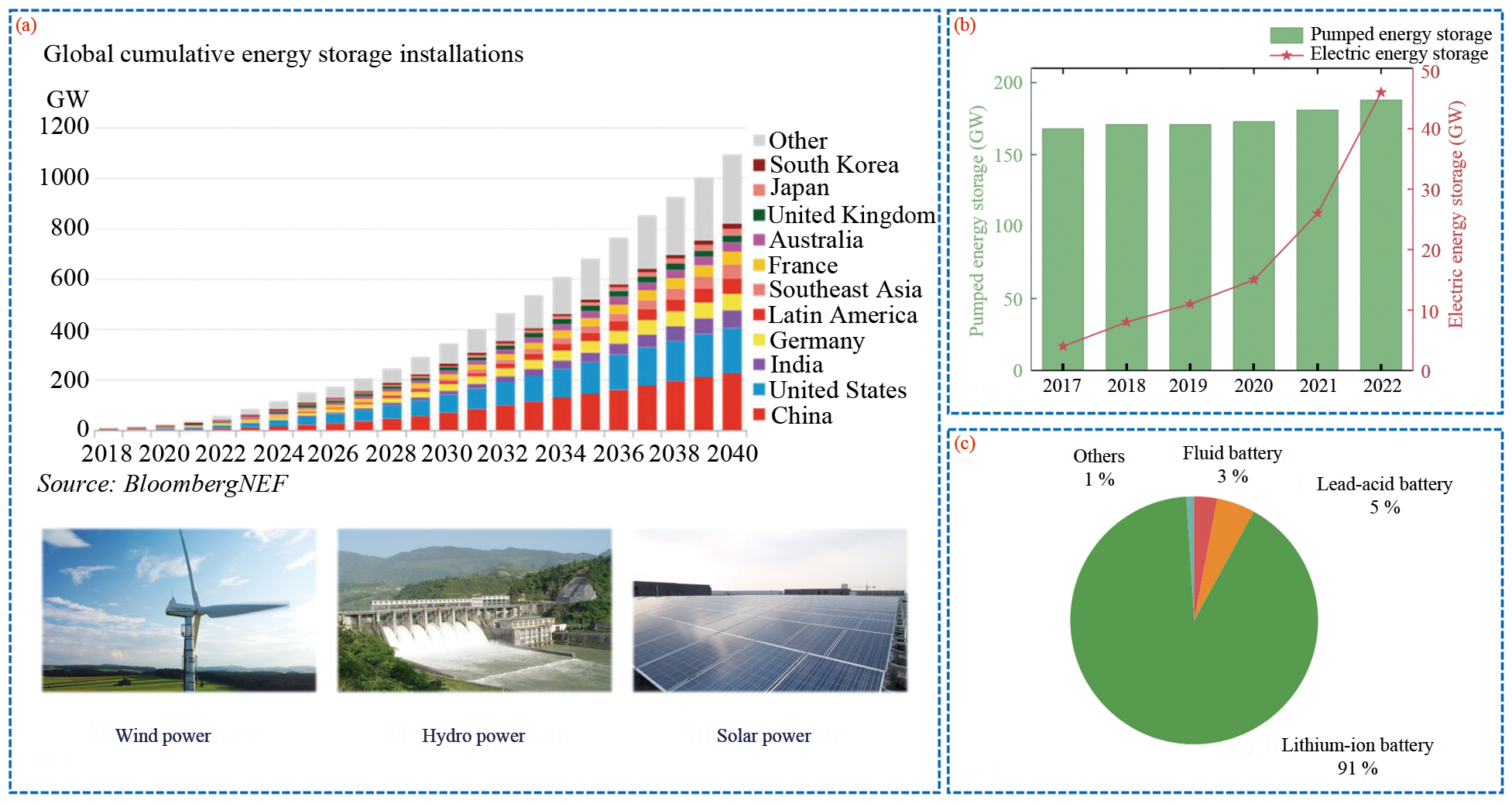
The primary cause of this phenomenon lies in the inherent characteristics of volatility and intermittency exhibited by intermittent renewable energy generation equipment. Simultaneously, power demand on the load side undergoes fluctuations [24]. Nevertheless, the peak demand for electricity and the peak electricity supply often do not align temporally. This mismatch can lead to significant power supply gaps. In Germany in 2013, for example, the volatility of electricity transmission from wind farms made it impossible to meet consumers' demand. This phenomenon resulted in as much as 74.335 MW of electricity still needing to be supplied by conventional power plants, equivalent to 92 percent of the peak load of Germany [26]. The widening gap in power supply has mandated progressively sophisticated scheduling, control, and management of the power grid, resulting in substantial inefficiencies in renewable energy generation systems [27]. Hence, to bolster the stability of grid power supply and optimize the utilization of renewable energy systems, energy storage systems have emerged as a pivotal preference. Simultaneously, as depicted in Fig. 4(b), the growth rate of energy storage battery systems is significantly higher than that of pumped storage systems. This underscores an escalating focus on the establishment of energy storage battery systems.
Among the plethora of energy storage batteries, lead-acid batteries stand out as possessing the most mature energy storage technology and play an exceptionally pivotal role in upholding the power grid's reliability [22]. Nevertheless, owing to inherent constraints such as low energy density, prolonged charging times, and vulnerability to environmental pollution, their integration into the global electricity storage market continues to be constrained. Today, LIBs have gained widespread recognition and deployment in energy storage grids. As illustrated in Fig. 4(c), the distribution of installed capacity within China's electrochemical energy storage sector in 2021 underscores the predominant presence of LIBs in the Chinese battery energy storage market. In the past few years, the continued development of LIBs has resulted in significant performance enhancements [28–30].
In Section 2.1.1, the key considerations for selecting power batteries were outlined. Similarly, when opting for energy storage batteries, factors such as energy density and cycle life should also be considered [31]. Nevertheless, it is crucial to highlight that power batteries are not directly applicable for energy storage purposes. There are two primary distinctions. Firstly, they serve different functions. Energy storage LIBs are employed to store electricity during peak periods in the power grid and subsequently release it during low-demand periods to balance the grid load. Conversely, lithium-ion power batteries utilized in electric vehicles are engineered to deliver high power output, supplying the energy needed for acceleration and driving [32, 33]. Secondly, their size and form factor differ. Energy storage batteries are typically designed as larger and heavier square or rectangular enclosures, while power batteries often require customization to fit the design and structure of the vehicle. This customization ensures a snug installation within the vehicle chassis and compatibility with the vehicle power system [34].
The power transmission routes and functions of power batteries vary slightly in different types of new energy vehicles as illustrated in Fig. 5, which depicts the power transfer pathway of power batteries in different vehicles. In the context of pure electric vehicles, the power battery plays a pivotal role, serving as the primary component for storing electrical energy and providing power. Typically, it is positioned at the vehicle's lower section to lower the center of gravity and enhance stability [35]. In the operational phase of pure electric vehicles, the battery furnishes power to the electric motor, which subsequently transforms electrical energy into mechanical energy. The generated power then traverses through the gearbox to optimize power transmission and fine-tune speed and torque.
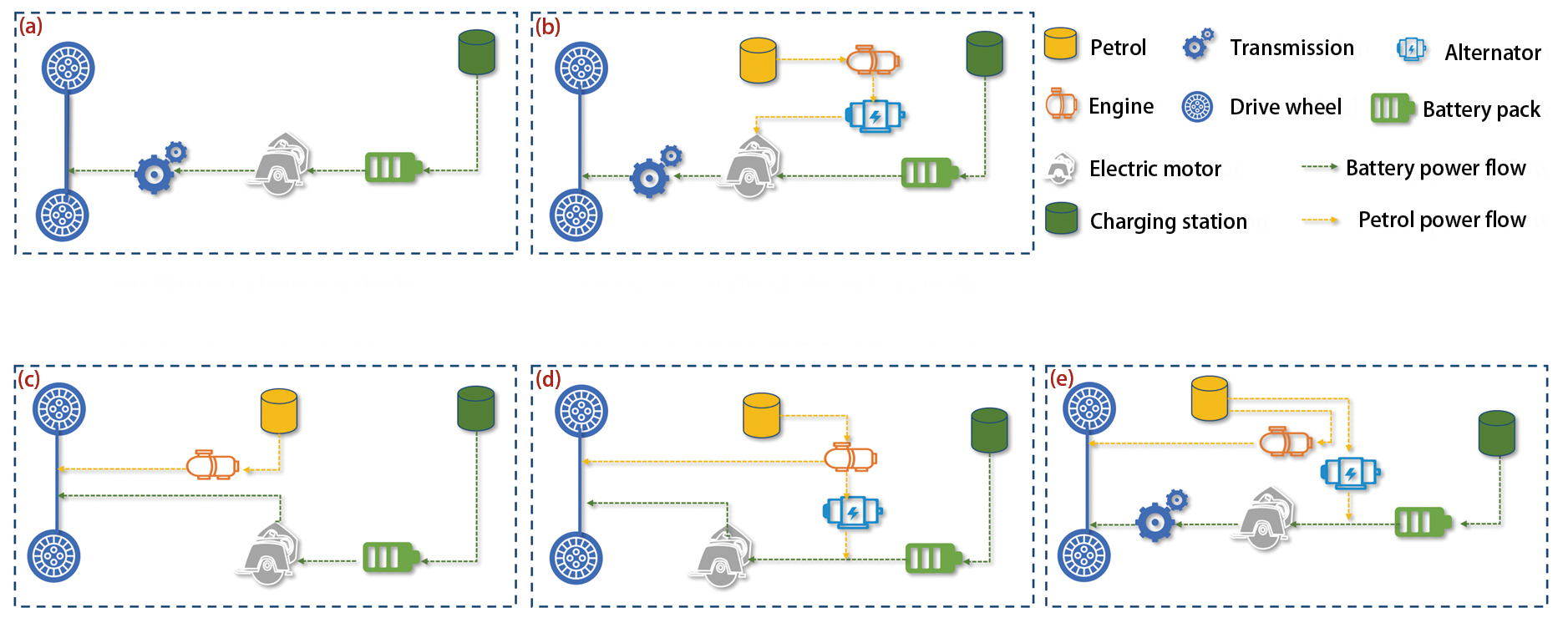
Hybrid electric vehicles utilize vehicle electrification technology and advanced control strategies within the powertrain system to optimize fuel consumption and emissions [36]. Battery technology in hybrid electric vehicles can be classified into four main types: series hybrid, parallel hybrid, series-parallel hybrid, and plug-in hybrid. The power transmission routes for these four vehicle types are illustrated in Fig. 5. Among these, plug-in hybrid electric vehicles enjoy a competitive edge in terms of environmental friendliness, long-distance travel, and superior fuel economy, owing to their larger battery capacity and extended operating range in state of charge (SOC). New models of hybrid electric vehicles are introduced every year, and the technology in this field continues to evolve [37, 38].
The power battery is intricately linked with other components of the power system during the vehicle's operation. The failure of the power battery frequently triggers a chain reaction, leading to more severe safety incidents [39]. Meanwhile, with the significant increase in the number of new energy vehicles, enhancing battery safety management technology throughout the production and driving processes has become a core concern for numerous battery manufacturers and automotive companies [40].
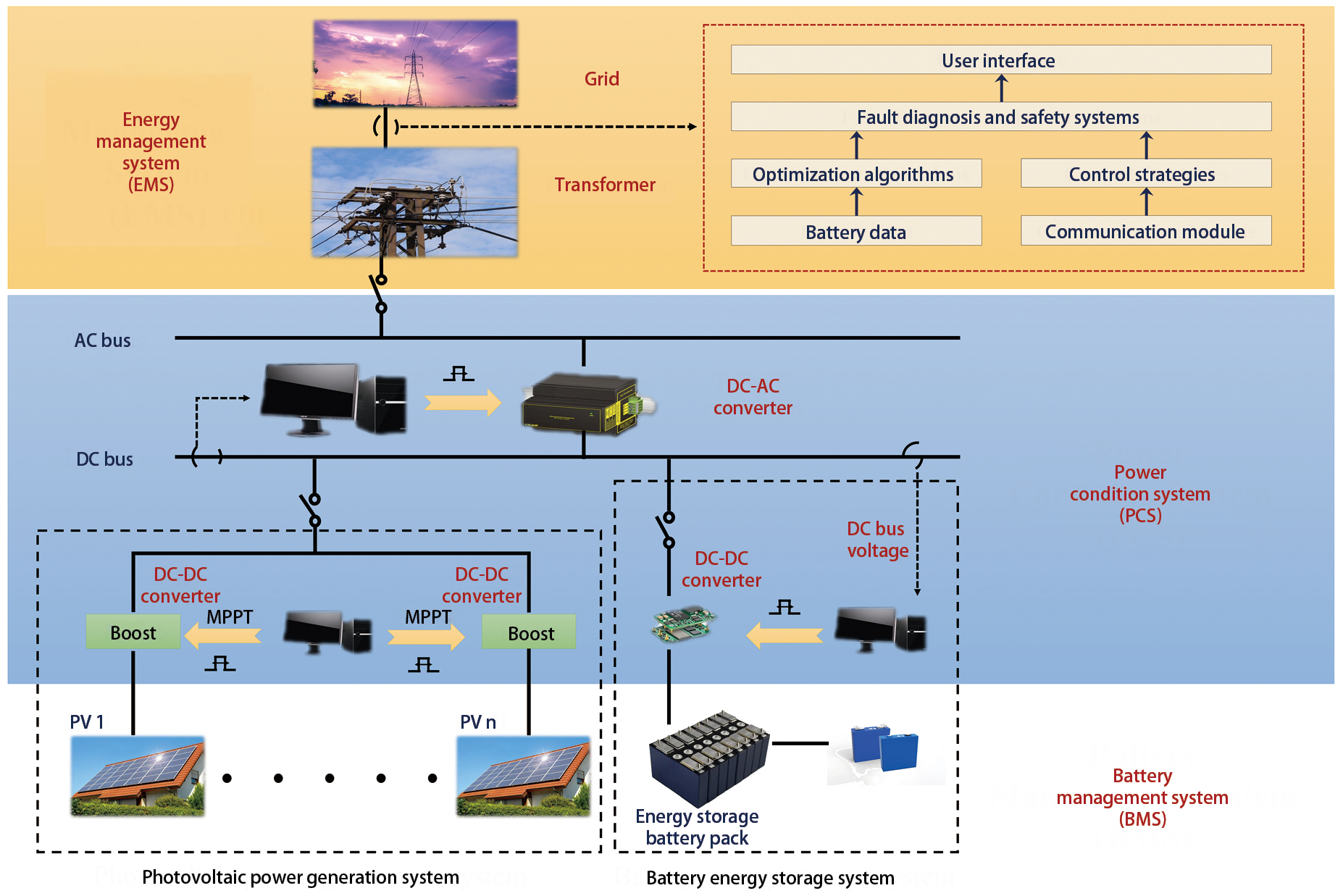
The safe and practical application of energy storage batteries is closely related to the battery energy storage system (BESS). Typically, a BESS comprises a triad of components, namely battery management systems (BMS), power conversion systems (PCS), and energy management systems [41]. Illustrated in Fig. 6, BMS has the functions of monitoring the parameters of the pack, equalizing charge and discharge, and fault detection [11]. PCS, also known as a bidirectional energy storage inverter, is used to control battery charging and discharging process clock for alternating current (AC) / direct current (DC) conversion. The main task of energy management systems is to manage the whole BESS, realize energy optimization, power grid interaction, energy management, data analysis, and prediction functions.
To enhance the elucidation of the practical application of energy storage batteries, it is imperative to comprehend the ramifications of electrical energy storage. The conventional energy industry currently lacks significant electricity storage facilities, and the power transmission and distribution system is configured for unidirectional transmission from remote, large-scale power plants to end-users. Nevertheless, the electric energy storage system can be strategically implemented on the power grid side, transmission side, and user side, thereby comprehensively enhancing the service quality of the power grid [42]. As depicted in Fig. 7(a), the electric energy storage system can not only be seamlessly integrated with the power generation system but also be synergistically coupled with transmission equipment, thereby enhancing the resilience of the power grid. Electric energy storage can also be combined with the sharing mode. Figure 7(b) illustrates that shared electric energy storage primarily consists of energy storage owners, shared electric energy storage operators, and energy storage users. Shared energy storage operators can achieve the optimal operation plan and maximize energy storage potential by allocating electricity exchange between users. Electric energy storage assumes a pivotal role in the entirety of the power supply chain. As depicted in Fig. 7(c), the application of electric energy storage can effectively address challenges across fuel supply, power generation, transmission, distribution, and end-user domains, thereby substantially enhancing power quality.
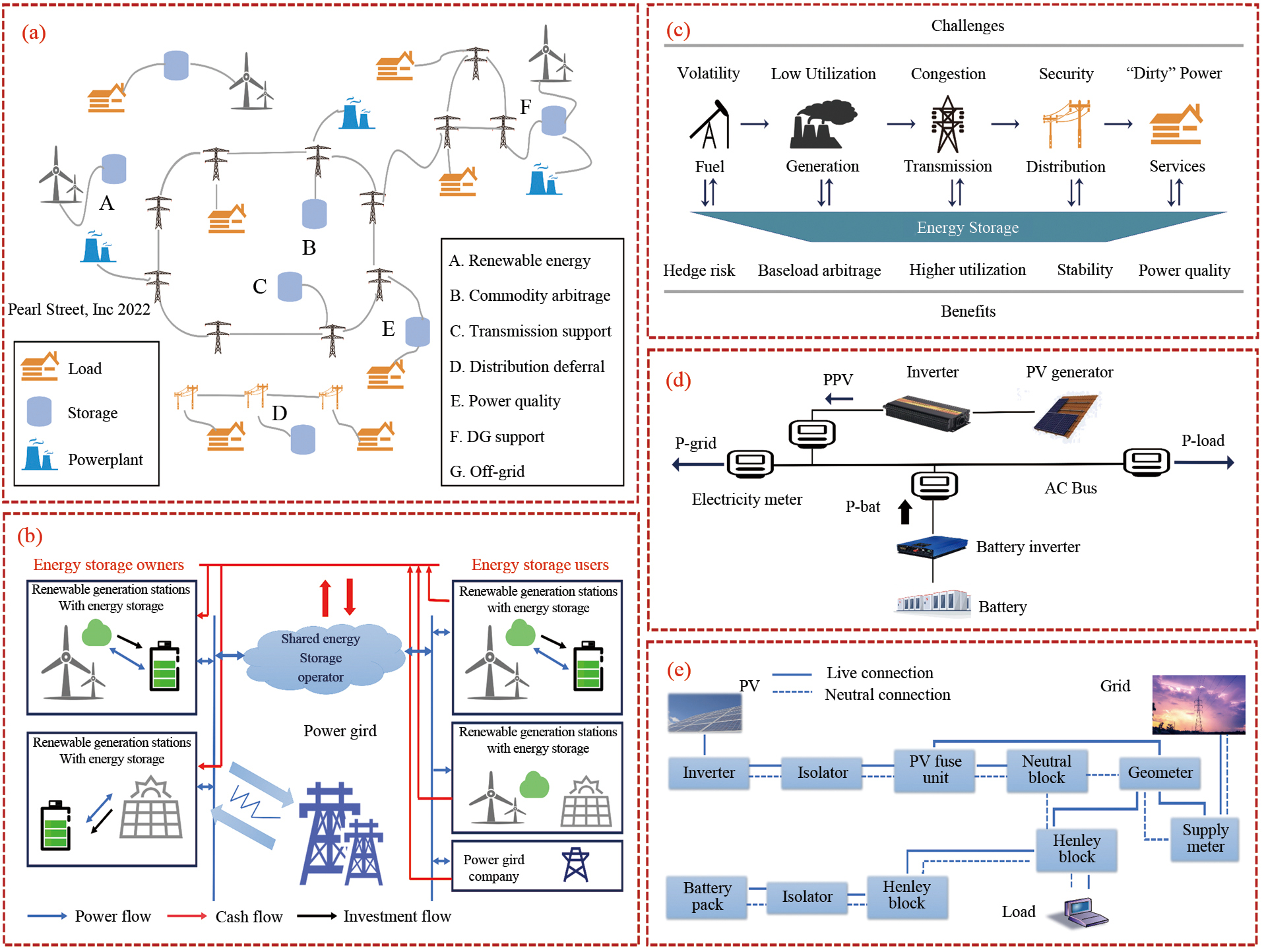
In the introduction section, the rated power and discharge time characteristics of different energy storage devices have been compared, and BESS has become a focus of attention. Based on research findings, BESS commands a substantial market share in the integration of renewable energy systems and residential energy storage [46–48]. Figure 7(d) shows the working mode of the combination of BESS and photovoltaic (PV) system. PV modules are employed to harness solar energy and convert it into electrical energy, while battery modules are utilized to store surplus electrical energy generated by the PV system. Stored electrical energy is discharged during periods of low demand on the electrical grid to fulfill the power requirements of users. This practice enhances the robustness and reliability of the electrical grid. In this process, data measurement tools such as electricity meters are used to separately measure the electrical output from the PV system, the electricity consumption from the grid, and the balanced power of the energy storage system [49]. Figure 7(e) illustrates a schematic diagram of a residential property system featuring static storage and PV components. The residential market primarily comprises the power grid, PV system, and BESS. In the figure, solid lines represent live connections, while dashed lines indicate neutral connections.
Battery signals display time-varying, nonlinear, and nonuniform characteristics. Conditions such as battery overheating, overcharging, external impact, extrusion, and puncture can serve as triggering factors for safety incidents. Furthermore, the fault propagation characteristics differ in terms of the pathway, rate, and other aspects under various fault mechanisms. A comprehensive understanding of the failure mechanisms inherent to PAESBs and an exploration of the paths through which failures propagate will contribute to the advancements of next-generation power battery safety management.
The battery's operational efficiency, longevity, and safety of are intricately interconnected with variables, including its voltage, surface temperature distribution, and localized high temperatures [50]. Nevertheless, battery safety encompasses a range of complex issues, and the industry has yet to establish a standardized definition for battery safety states.
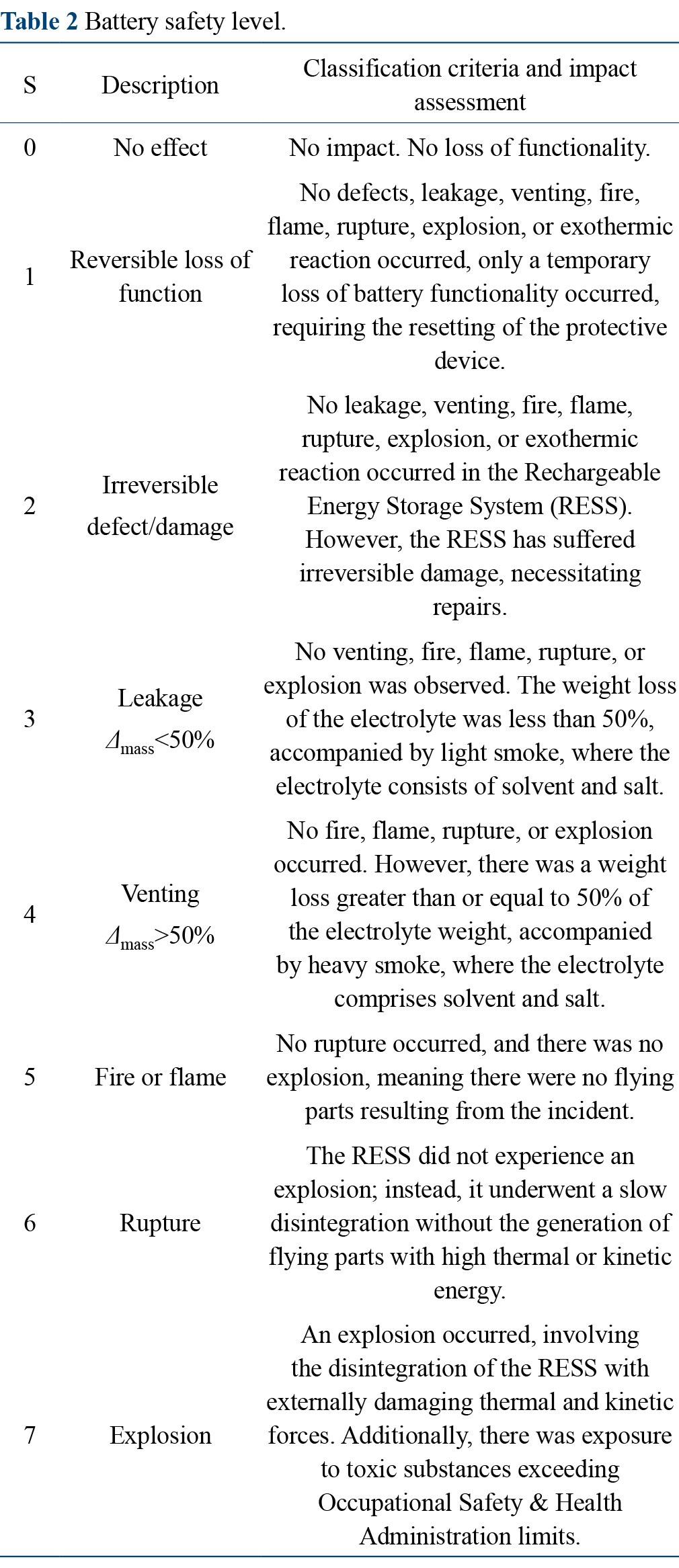
Regarding power batteries, literature [51] delves into the connection between battery safety and driving range. It categorizes battery failure into ten levels and explores the relationship between each failure level and driving range. Additionally, the literature classifies the severity of battery safety issues into seven levels, as depicted in Table 2.
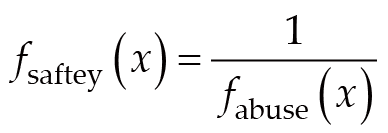
The external characteristic parameters of a battery serve as effective indicators of the battery's safety status. Ashtiani et al. [52] considered the battery's safety state and external characteristic parameters, including battery voltage, charging and discharging current, and temperature. The specific formula is presented as follows in Eq. (1):(1)where x represents all the parameters of the external cell characteristics, fabuse(x) indicates a state of abuse and fsaftey(x) indicates security status; this literature provides a comprehensive definition of fabuse(x) and examines the impact of various parameters on the safety status of power batteries.
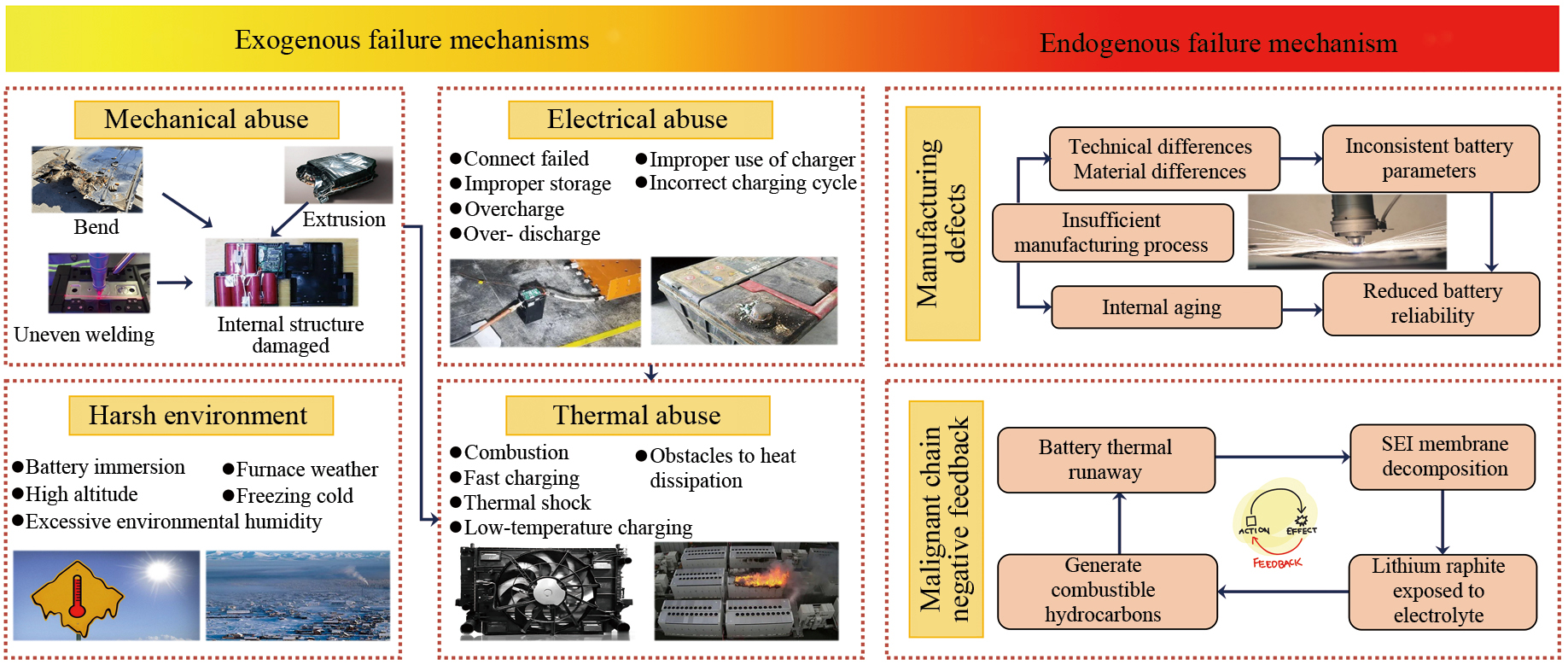
Abuse represents the primary external factor that can lead to safety issues in power batteries, encompassing mechanical, electrical, and thermal abuse. Mechanical abuse, for instance, includes the introduction of mechanical defects during the manufacturing process, such as uneven welding and inadequate sealing [53]. Bending and collisions that may occur during the operation of the power battery are also categorized as mechanical abuse. Mechanical abuse often results in damage to the internal structure of the battery, leading to a cascade of more severe faults. Wang et al. [54] conducted a comprehensive review of the experimental and numerical simulation research regarding the mechanical abuse of LIBs in recent years. Their work explores the distinct mechanical responses of LIBs under both quasi-static and dynamic loads. It further examines the alterations in battery capacity and internal resistance resulting from mechanical abuse, emphasizing the importance of comprehending the behavior of LIBs under such conditions to mitigate potential battery safety incidents. Liu et al. [55] have summarized the four progressive stages (mechanical deformation, internal short circuit, TR, and explosion/fire) that result in safety accidents in LIBs due to mechanical abuse. They also provide recommendations on key considerations for future research at each of these milestones.
Regarding electrical abuse, batteries may encounter issues like battery aging, connection failure, and self-discharge in low batteries [56, 57]. Battery overcharging caused by such fault factors as inconsistent cell, inconsistent SOC, charger failure, and PCS is a common electrical abuse fault of LIBs during use [58]. Among them, safety problems caused by slight overcharging and over-discharging caused by inconsistent batteries have always been the focus of people's attention [59].
Mechanical and electrical abuse tends to lead to more severe thermal abuse. In the work by Xiao et al. [60], mechanical-TR models were classified into five types, distinguishing between various scales, namely microstructures, cell components, battery cells, battery modules, and battery packs. The article underscores the importance of considering factors such as high-speed shock and high SOC under mechanical abuse conditions. These factors increase the risk of internal short circuits and make the battery more prone to TR. Liu et al. [55] reviewed the coupled mechanical-electrochemical-thermal behaviors of LIBs under mechanical loading.
Meanwhile, Zhang et al. [61] explored the effects of slight electrical abuse on the thermal safety characteristics of Li-ion batteries. They highlighted that the impact of mild over-discharge is more crucial than mild overcharging. Qiao et al. [61] researched diagnosing internal short circuits in batteries to avoid more thermal severe runaway hazards caused by short circuits. The team employed a particle swarm optimization algorithm to choose and optimize voltage values at different time points. They conducted comparisons of various machine-learning models using a cross-validation approach. They introduced a solely data-driven approach for early fault diagnosis of internal short circuits in batteries using machine learning algorithms. This method significantly enhanced the accuracy of diagnosing internal short circuits. Conzen et al. [62] introduced the failure mechanism of thermal abuse triggered by relevant mechanical and electrical abuse within the context of energy storage battery systems.
Faults resulting from abuse often occur during the transportation and usage of batteries. However, batteries in a non-operational state, such as standby storage and state monitoring, can also be affected by adverse external environmental conditions [63]. These conditions may include water immersion during battery operation, extreme high and low ambient temperatures, and elevated ambient humidity levels. Safety issues associated with the management of the operating environment, including the battery's location, surrounding area, and environmental factors.Safety issues related to operation environment management (such as location, area, and surrounding environment) shall be considered for the BESS. To mitigate the impact of these harsh conditions, many battery manufacturers concentrate on designing and developing batteries tailored for extreme temperatures or radiation resistance (Fig. 8).
In addition to external factors, the battery itself often exhibits variations in initial performance during the manufacturing process due to disparities in manufacturing technologies and materials. Inconsistencies that arise during the battery's lifecycle, such as uneven capacity decay, voltage irregularities, and the uneven growth of internal resistance, are critical factors leading to battery safety incidents. Literature [64] provides detailed insights into issues like lithium volatilization during production, electrode thickness, contact area, electrode interaction with solid electrolytes, and the safety risks posed by different pack structures to the battery. Furthermore, the internal aging of the battery, including the development of the solid-electrolyte interphase (SEI), lithium plating, and alterations in active substances, represents another substantial internal factor contributing to battery safety concerns [65]. The interplay of multiple inconsistencies and aging processes within the battery cell exposes the battery system to a heightened risk of frequent failures, thereby substantially diminishing its safety and reliability during practical applications [66].
Furthermore, it is important to recognize that the endogenous failure mechanism is closely interconnected with exogenous failures. Mechanical abuse, for instance, often destroys the battery's internal structure, leading to more severe safety incidents [58]. Whether in power or energy storage batteries, overcharging not only diminishes battery capacity but also expedites the loss of battery lifespan. Deep overcharging poses not only a potential threat to the battery's internal structure and chemical composition but also significantly heightens the risk of TR [62]. Huang et al. [67] reviewed internal short-circuit batterie failures induced by external issues, such as mechanical and electrical abuse. They also explored the progression of battery failures at different locations of internal short circuits.
In addition, the TR process of the battery is characterized by a negative feedback vicious cycle. When the temperature surpasses a safe threshold within a narrow range, the SEI film on the graphite anode starts to decompose and contract due to heat absorption. This results in the generation of significant quantities of combustible hydrocarbons, including H2, CH4, C2H6, and more, once the lithiated graphite anode becomes entirely exposed to the electrolyte [68]. As the temperature continues to rise, there is a potential for direct contact between the highly oxidized cathode material and the strongly reduced cathode material. This contact can lead to an internal short-circuit, releasing substantial heat. In turn, this heat may cause the cathode material to decompose, releasing highly reactive oxygen, which reacts with the electrolyte, further intensifying the heat release. Ultimately, this sequence of events can result in diaphragm failure, triggering an explosive thermal reaction within the lithiated graphite and plunging the power battery into a state of TR [69].
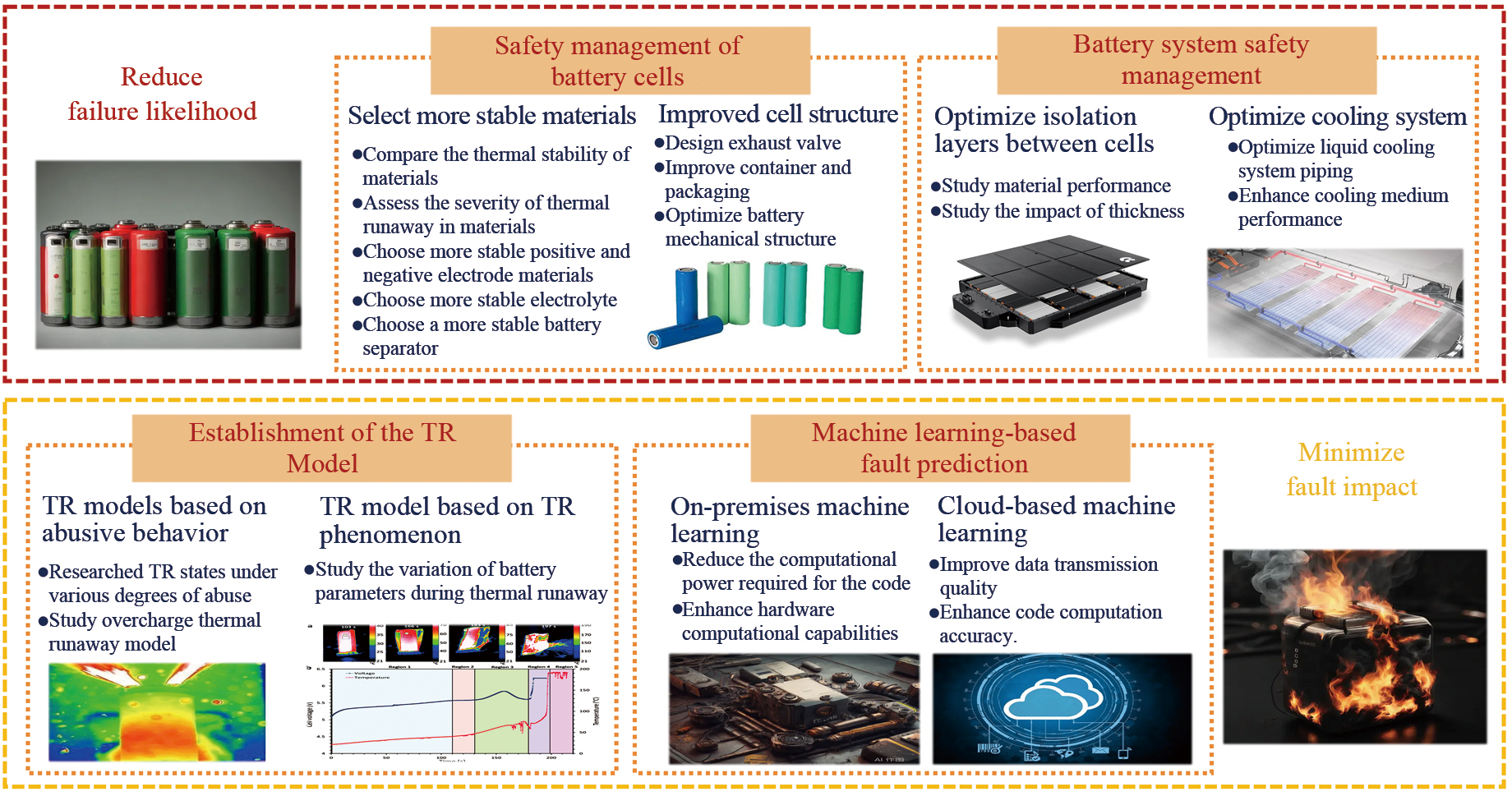
Due to external abuse and internal manufacturing defects, batteries face faults such as voltage inconsistency, lithium plating, and TR during usage and storage. Consequently, an increasing number of researchers are focusing on the study of battery safety management technology. As shown in Fig. 9, security management research can be roughly divided into two main directions. On the one hand, efforts are directed toward enhancing the safety management of individual battery cells and battery systems, aiming to reduce the probability of battery failures. On the other hand, researchers aim to proactively construct TR models for batteries and utilize machine learning algorithms and digital twin technologies to actively monitor in real-time and detect early-stage battery faults, thereby minimizing the impact of battery failures [70, 71]. This section, therefore, categorizes existing battery safety management technologies into individual cell safety management, battery system safety management, TR model construction safety management, and machine learning-based safety management.
Numerous scientific research endeavors are currently focused on enhancing the safety management technology of batteries by optimizing the internal material composition and structural configurations.
Safety technologies related to battery materials are concentrated on the positive and negative electrodes, electrolytes, and separators of the battery. Talele et al. [72] undertook a comparative investigation delving into the ramifications of diverse cathode materials on TR within batteries. The research revealed that in comparison to LiCoO2 and LiNiMnCoO2, LiFePO4 exhibits a superior delay in TR. Wang et al. [73] scrutinized the overcharging tendencies and TR characteristics exhibited by large LIBs featuring distinct cathode materials. The literature evaluates the safety performance of various proposed materials, including ranking the TR risk and overcharge capacity limits for different positive electrode materials under overcharging conditions.
Additionally, it assesses the severity of TR hazards associated with positive electrode materials. The experimental findings showcased that NCM LIBs boast advantageous energy density and a heightened capacity for overcharge tolerance, thereby presenting a lower risk of thermal runaway. Conversely, LFP LIBs displayed a more subdued reaction to overcharging, also implying a diminished risk of thermal runaway.
In the case of NCM LIBs, elevating the nickel content within the cathode material precipitates a decline in the thermal stability of the cathode, consequently heightening the susceptibility to more severe TR hazards. Jiang et al. [74] comprehensively reviewed recent developments in advanced anode materials for high-performance LIBs. This includes nanomaterials and metal-organic frameworks. The review delves into the merits and demerits of various advanced anode materials and explores their potential applications in battery performance and practical use. Furthermore, the article explores present challenges and future trajectories in this domain. Wu et al. [75] conducted an exhaustive examination elucidating the influence of carbon electrodes on battery safety. The article emphasizes that although graphite materials may not exhibit the utmost performance, their safety profile stands notably superior. This study evaluates the implications of diverse carbon materials on battery safety. It indicates that improving the safety performance of graphite materials can be effectively accomplished through techniques like employing hollow graphite anode materials, reducing the porosity of the graphite prototype to no more than 45%, and incorporating an Al2O3 coating to mitigate the nucleation and deposition of lithium metal. These measures serve to mitigate the risk of TR in batteries.
Moreover, beyond enhancing the safety of battery electrode materials, integrating various flame retardants into battery electrolytes can attenuate side reactions and thermal effects arising from the interaction between the positive electrode material and the electrolyte [76, 77]. Many research teams have conducted extensive investigations into the development of flame retardants for electrolytes in LIBs [78, 79, 81]. For example, Chen et al. [82] have devised a novel supramolecular electrolyte, demonstrating a design approach that orchestrates the assembly of a novel supramolecular electrolyte through intermolecular interactions, facilitating the self-assembly of 'gas-phase fire extinguishing agents' and 'SEI & CEI enhancement agents' molecules. This design significantly reduces the self-extinguishing time of carbonate-based electrolytes, effectively restraining TR in batteries. Han et al. [83] elucidated that thermoplastic polyurethane gel polymer electrolytes (TPU GPE) inherently possess a non-flammable characteristic without incorporating flame retardants. However, it was noted that LiPF6 can serve as a flame retardant for TPU polymers. Upon thermal decomposition of TPU GPE, LiPF6 undergoes degradation into LiF and PF5. When PF5 interacts with H2O, it forms H4P2O7 and H3PO4. The protective layers of H4P2O7 and H3PO4 on TPU nanofibers effectively act as a barrier, isolating oxygen and heat. Zhang et al. [81] delivered an exhaustive review of recent breakthroughs in highly flame-retardant separators and solid-state electrolytes. The review outlines the composition, structure, and performance of various internal flame retardants incorporated within batteries. In Reference [103], the authors provide an overview of progress in battery safety materials achieved through machine learning, which has emerged as a mature approach. Computational chemistry has become a powerful complement to experimental research, and machine learning has led to the development of numerous novel databases featuring materials tailored for battery safety.
The separator plays a pivotal role in ensuring the safety of LIBs. Its principal role is to hinder the direct juxtaposition of the anode and cathode, concurrently enabling the bidirectional transport of lithium ions between them [85]. Li et al. [86] successfully prepared a core-shell structured PI/ZrO2 composite separator through in-situ polarity adsorption and hydrolysis techniques. This separator demonstrates exceptional thermal stability, maintaining a thermal shrinkage rate of 0 even at temperatures as high as 300 ℃. This performance surpasses. This performance exceeds the thermal resilience observed in both commercial and modified polyolefin separators. Song et al. [87] utilized an innovative gel-stretching orientation technique to fabricate a nano-porous, non-shrinking separator designed for thermal runaway elimination. Experimental results underscored the outstanding mechanical resilience of the fabricated separator under elevated temperatures, effectively averting internal short circuits in batteries. It also exhibits commendable cycling stability, specific capacity, and rate capability. Wu et al. [88] introduced an innovative core-shell structure composed of PI/SiO2 inorganic-organic composite for an advanced separator with superior performance. The developed separator exhibits minimal energy loss, high ion transport efficiency, excellent mechanical properties, and strong thermal stability over 100 cycles of experimental testing. This not only elevates the electrochemical performance of LIBs but also enhances battery safety, particularly under high-temperature conditions. Liu et al. [85] reviewed the research progress in traditional ceramic-modified separators and multifunctional separators, covering aspects from preventing TR to flame retardancy. The article suggests that incorporating inorganic materials proves to be highly effective in augmenting both the thermal stability and mechanical strength of conventional separators. Nano-ceramic modifiers are currently the most widely used separator material modifiers, capable of improving the mechanical strength of separator materials and reducing high-temperature thermal shrinkage. The review also points out that future research will focus on developing more stimuli-responsive separators to make batteries smarter and safer.
Cylindrical LIBs typically feature safety vent openings on the positive electrode to facilitate the release of internally accumulated gases, thereby mitigating the chain reactions that occur during the TR process of the battery [50]. 18650-type batteries typically incorporate safety vent openings on the positive terminal cap. These vent openings are constructed with washers equipped with puncture membranes and pins [79]. Ouyang et al. [80] conducted a comprehensive experimental study to probe the effects of safety venting on the thermal runaway evolution of 18650-type batteries. A thorough examination was undertaken to evaluate how safety venting influences the evolution of thermal runaway behavior in batteries with diverse SOC and cathode chemical compositions. Drawing from experimental observations during TR, including acoustic intensity, battery surface temperature, battery mass, and various key parameters, the study unveiled that safety venting, functioning as an intrinsic protective measure within the battery, markedly improves the thermal safety of the battery and successfully mitigates thermal runaway under adverse conditions.
Power batteries are intricately composed of numerous interconnected battery cells arranged in both series and parallel configurations, collectively shaping the battery pack. This assembly is designed to furnish the necessary electrical energy to meet diverse operational demands in electric vehicles. Large-scale energy storage battery systems similarly consist of thousands of tightly arranged battery cells in enclosed spaces, which heightens the safety risks during operation [50, 89]. Consequently, the use of insulation layers to isolate individual battery cells becomes a critical safety measure.
Bai et al. [90] performed simulations and analyses to evaluate how varying thicknesses of insulation materials influence the propagation of thermal runaway within battery packs. The results indicated that the optimal insulation thickness between adjacent batteries was 2 mm. Liu et al. [91] conducted a comparative analysis of different thermal insulation materials, assessing their impact on enhancing the cooling efficiency of battery packs. Their findings indicated that fiber-based materials achieved a cooling efficiency of 71.83%, with aerogel materials surpassing this by at least 13%. Furthermore, through an assessment of the capacity characteristics of impaired batteries and the properties of insulation materials, they illustrated that pre-oxidized silk aerogel exhibited the most effective inhibition of heat spread. Gong et al. [92] employed numerical simulations to investigate the impact of silicate, ceramic, and fiberglass insulation materials on inhibiting the propagation of TR in battery packs. Their research offers valuable theoretical insights and recommendations for the safety design and risk assessment of battery packs.
To ensure the safety and reliability of the battery pack, it is imperative to maintain the LIBs within their optimal working temperature, as highlighted by studies [84]. Consequently, the presence of a robust and dependable heat dissipation system becomes paramount. At present, diverse heat dissipation techniques are utilized, broadly classified as air-based, liquid-based, employing phase-change materials, and utilizing heat pipes [83].
Air cooling systems offer simplicity of design and ease of maintenance. Nevertheless, in high-rate discharges, air-cooling systems exhibit a comparatively limited heat transfer capacity, resulting in markedly inferior thermal management performance when compared to liquid cooling and phase-change material cooling systems [93]. The liquid cooling system features a relatively intricate structure, with a gradual decline in cooling performance observed along the liquid flow direction. Recent research, documented in reference [94], comprehensively reviews the advancements in liquid cooling systems. This involves the design of battery packs, the classification of liquid cooling systems, and the evaluation of coolant performance.
Furthermore, the cited literature contrasts various liquid cooling agents in terms of their properties and applications within the categorized spectrum of liquid cooling systems. The literature also delineates distinctions in liquid cooling systems, encompassing dynamic and static cooling, direct and indirect cooling, as well as external and internal cooling. Akbarzadeh et al. [95] conducted a comparative analysis of the cooling efficiency between air-cooling and liquid cooling systems across diverse operational conditions. Their findings revealed that augmenting the coolant flow rate exerted a more pronounced influence on the air-cooling module compared to its impact on the liquid-cooling module. In the experimental phase of elevating power consumption to mitigate the highest battery temperature, the liquid-cooling module outperformed the air-cooling counterpart. Zhao et al. [96] pioneered an inventive hybrid thermal management system for batteries, integrating direct liquid cooling with forced air cooling. Utilizing numerical simulations, they scrutinized the influence of variables such as the separation between the battery and the liquid cooling jacket, the number of cooling channels, liquid flow rates, and fan placement on enhancing cooling efficiency, ultimately refining the design.
Phase change cooling technology utilizes the latent heat released or absorbed during phase transitions between solid and liquid states to regulate the excess heat produced by batteries passively [53]. Phase change materials leverage the heat absorption and melting principles to mitigate the rise in battery temperature. Nevertheless, phase change materials exhibit a gradual recovery in heat storage capacity, resulting in elevated long-term operational costs. Ahmad et al. [97] introduced a strategy to optimize the integration of phase-change material systems with air cooling, employing metal fins to overcome challenges associated with low thermal conductivity and limited secondary heat dissipation in phase-change materials. This novel hybrid cooling system has markedly lowered the maximum battery temperature compared to conventional finless battery thermal management systems, By conducting a thorough analysis, considering factors like the thickness of phase change materials and the dimensions and quantity of metal fins, the optimal parameters for the metal fins have been identified. This introduces innovative concepts for the development of battery thermal management systems.
The three cooling technologies each have their advantages, drawbacks, and suitability. Air cooling systems rely on fans to force the cooling of battery packs. While it has a wide range of applications, it suffers from low heat dissipation efficiency, a large space footprint, and noise issues. Liquid cooling, with its compact structure and high heat dissipation efficiency, has found widespread applications. However, it does come with certain challenges, including the risk of liquid leakage, relatively higher design complexity, and increased maintenance costs. Phase-change material cooling technology offers good temperature uniformity but is unsuitable for larger power batteries due to increased parasitic weight. Each cooling method needs to be carefully chosen based on specific requirements, considering factors such as application scope, efficiency, space constraints, and maintenance considerations.
Optimizing both the positive and negative electrode materials of batteries, along with battery management systems, can reduce the probability of battery safety issues. Despite the low probability of failure, given the extensive integration of batteries across diverse industries, there remains the potential for a considerable number of safety incidents to occur. Hence, the identification and timely handling of early signals of battery faults become particularly crucial, as this can effectively mitigate the harm caused by battery incidents. Given that battery failures often culminate in irreversible TR conditions, many researchers are focused on studying early TR signals to construct more precise and efficient TR models, enhancing early detection of battery safety issues.
Mechanical and electrical abuse often leads to more severe thermal abuse. Hence, numerous studies have extensively developed various TR models for batteries in abusive conditions. Talele et al. [72] explained the evolution process of TR triggering points in different cathode chemical processes under the influence of environmental temperature changes through the use of TR numerical models. And studied the TR state of batteries under different degrees of mechanical abuse. Ma et al. [98] explored the TR phenomenon of batteries under different heat dissipation conditions by establishing an over-charge TR model. Xiao et al. [60] provided a comprehensive overview of the existing research on TR models for batteries subjected to mechanical abuse. They presented modeling techniques for key battery components and conducted a thorough analysis and discussion of TR models resulting from mechanical abuse across various length scales and physical domains. Li et al. [99] used a three-dimensional mechanical electrochemical thermal coupling bidirectional model to elucidate the bridging process of LIBs from short circuits to TR in complex mechanical abuse environments. Studies have demonstrated that this integrated model effectively anticipates the initiation of internal short circuits and the onset of TR in the presence of typical collision conditions.
In addition to studying various factors triggering battery TR behavior, an increasing amount of research is shifting its focus towards analyzing the changes in various parameters during the TR process and the evolution patterns of TR under different TR scenarios. Chen et al. [100] developed a one-dimensional thermal resistance network model to simulate battery TR under various experimental conditions. They examined the influence of battery thickness and the initial location of TR occurrence on the behavior of battery thermal runaway. He et al. [101] comprehensively considered the venting process and internal pressure variations in TR phenomena. To enhance the model's accuracy, this study also incorporated critical factors within the TR process, such as short circuits, electrolyte evaporation, separator behavior, and aluminum melting. Wang et al. [102] investigated the impact of high-energy materials (high-nickel/silicon-graphite) on battery TR and experimentally determined the primary thermal reactions and reaction sequences for high-energy material batteries, thereby enabling precise predictions of TR behavior in high-energy material batteries. Zhang et al. [103] studied the TR propagation phenomenon in long, large-format batteries and validated a three-dimensional TR model using experimental data. Considering the growing prevalence of extended, large-format LIBs in high-power applications, including electrochemical energy storage stations, electric vehicles, and marine electric propulsion, the insights from this study bear significant relevance.
Establishing a TR model based on the TR phenomenon allows for a thorough analysis of the diverse effects of battery parameters on battery TR occurrences. The simulation results not only provide invaluable insights for optimizing the thermal safety design of batteries but also advance our comprehension of the intricate interplay between different battery parameters and thermal runaway behaviors during the pre-TR stage. This provides a more comprehensive dataset for further advancements in battery TR early warning systems.
The mechanism of battery failure is intricate, and evaluating the safety state of batteries involves significant systemic challenges and difficulties. Furthermore, the safety of batteries is inherently connected to external environmental factors. In the domain of automotive power batteries, the management of battery safety is contingent upon variables such as the geographical location of the vehicle, its mileage, speed, and gear selection. Similarly, for energy storage batteries, safety is influenced by factors like electrical power consumption, the location of energy storage facilities, and the operational and maintenance practices of these facilities.
Therefore, relying solely on the establishment of TR models is inadequate to provide early warnings and identify early signals of battery failure, making it challenging to achieve effective fault prediction. Fortunately, in recent years, the maturation of data transmission technology and the development of cloud computing have enabled the widespread application of data-intensive machine learning in battery safety management. Machine learning has now become a primary focus for researching battery fault prediction and early warning.
Prior to this publication, numerous articles have extensively examined the utilization of machine learning in the realm of battery safety governance. The latest progress in the combination of machine learning and thermal management systems has been reviewed in the literature [104], focusing on the application of Artificial Neural Networks, Convolutional Neural Networks, and Long Short-Term Memory networks neural network models in temperature prediction and detection of early battery failure. Lv et al. [105] conducted a review encompassing the integration of machine learning in the formulation of new battery materials and explored its applications in predicting battery performance. Raoofi et al. [106] reviewed the battery state estimation strategy of aircraft power battery management systems based on machine learning and evaluated the knowledge system on battery management strategy and implementation technology.
However, due to the limited hardware iteration technology, not all machine learning models can be integrated into the local end, and the calculation of a large amount of data requires the cloud platform service to ensure the timeliness of the operation. Hence, this section commences with the utilization of machine learning models, specifically focusing on their application endpoints, which are further categorized into the local endpoint and the cloud endpoint of the machine learning method. The introduction encompasses the application of machine learning models in diverse contexts within the domain of battery safety governance.
The utilization of the machine learning method in the cloud eliminates the limitations associated with inadequate computational capacity, excessive power consumption, and constrained size at the local endpoint. Li et al. [107] deliberated on a hybrid architecture energy management strategy deployed in the cloud, aiming to enhance both the electrical and thermal safety of power cell systems. This strategy brings a health awareness energy management strategy based on a deeply deterministic strategy gradient by using different dynamic actual vehicle operation data on a cloud server as a training set. Wang et al. [108] transcended the constraints of conventional battery management systems by leveraging the collaborative capabilities of cloud computing. They addressed the limitations associated with fixed model parameters in traditional BMS through the implementation of online learning and continuous model updating. Zhong et al. [109] introduced a prediction methodology centered on physical features, utilizing the capabilities of a big data platform. This approach substantially enhanced prediction accuracy to approximately 90%, leveraging the computational prowess of the cloud platform. In recent years, dedicated mainframe processors have been replaced by universal CPUs that drive cloud server clusters. The electric battery and energy storage battery industry is also facing this trend. Bosch, Panasonic, Huawei, and other companies have launched cloud computing-based platforms and software for battery security management (Table 3) [110].
The iteration of hardware equipment improves its operating space and computing power and provides the ability to apply machine learning to the local end. Embedding machine learning into hardware has gradually become a breakthrough for more and more teams to solve battery safety problems. Wei et al. [111] proposed a hybrid lump-sum thermal neural network model for the first time by combining a mechanically driven distributed lump-sum thermal model with an axial thermal gradient compensation based on machine learning, which effectively solved the challenge posed by the complex thermal non-uniformity in the LIB space to the facing control thermal model. Jia et al. [112] categorized safety risks into four levels based on empirical findings, and subsequently formulated a machine-learning model for assessing battery safety risks. The F1 score of the model is>0.93, the prediction score is>0.87, and the voltage error is 0.1Mv. Meanwhile, the simplicity of the model architecture allows it to be implemented in the hardware as an intelligent battery detection system. Zhao et al. [113] introduced a new prediction framework based on machine learning. These innovations stem from the utilization of histogram data instead of time series-based features, enabling precise prediction of battery aging trajectory and remaining service life, all while conserving computational power and memory resources. The mentioned machine learning models, due to their relatively simple computational methods, can be effectively deployed for local applications. Unlike machine learning algorithms deployed on the cloud that prioritize higher accuracy, local machine learning algorithms tend to focus on ensuring reasonable accuracy while seeking smaller computational space and reduced computational power consumption. This approach aims to match the capabilities of other local functions effectively.
The deployment of machine learning algorithms in the cloud or on the local side is not strictly distinguished. With the iterative updates of hardware technology and the enhancement of local data processing capabilities, more algorithms are likely to be deployed locally to improve the timeliness of fault diagnosis. It is worth noting that machine learning algorithms applied to PAESB's safety management are primarily focused on data processing. However, these algorithms also demonstrate outstanding learning capabilities when dealing with image data. Learning and processing image data will further strengthen battery safety management, making it one of the future research directions.
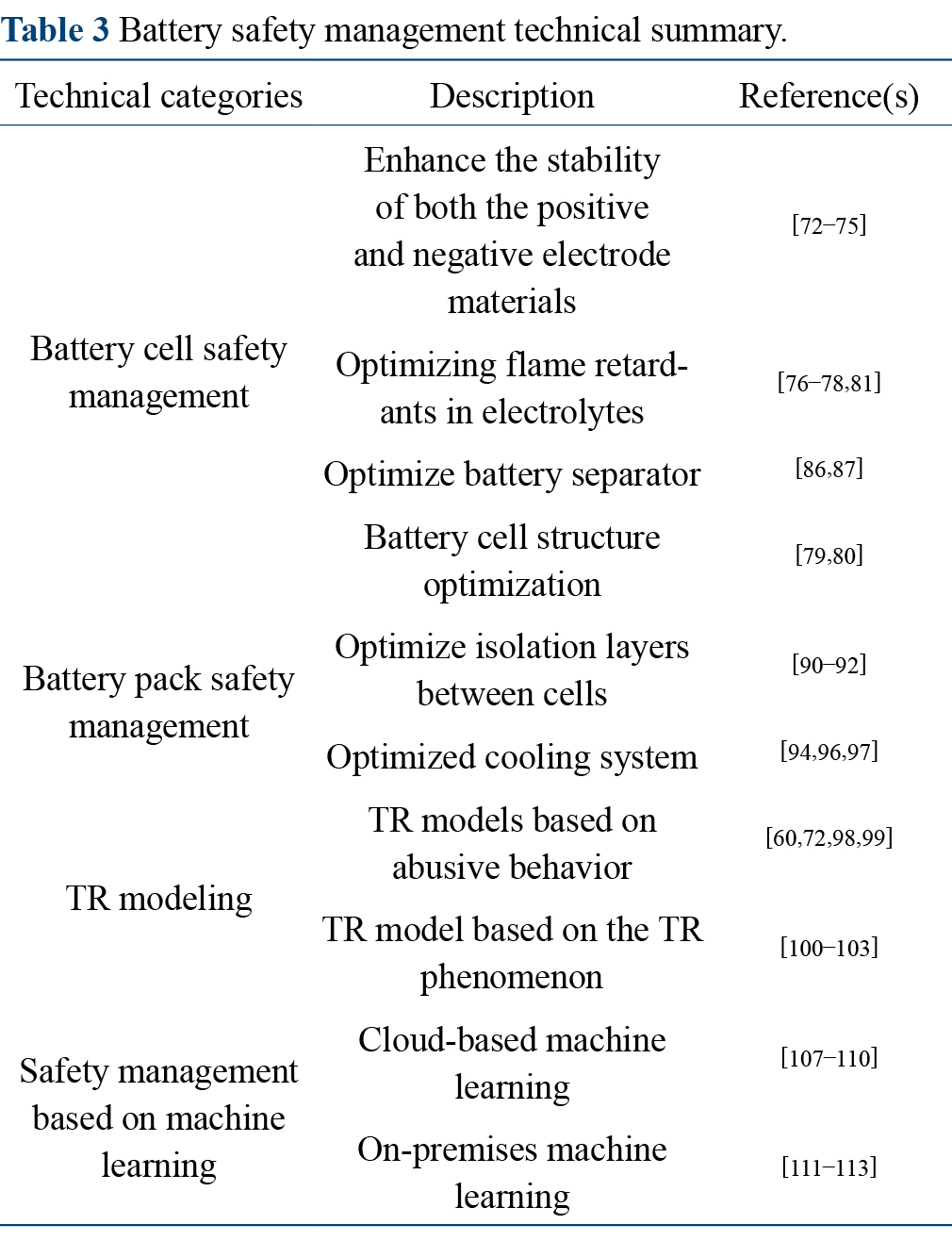
| Technical categories | Description | Reference(s) |
|---|---|---|
| Battery cell safety management | Enhance the stability of both the positive and negative electrode materials | [72–75] |
| Optimizing flame retardants in electrolytes | [76–78,81] | |
| Optimize battery separator | [86,87] | |
| Battery cell structure optimization | [79,80] | |
| Battery pack safety management | Optimize isolation layers between cells | [90–92] |
| Optimized cooling system | [94,96,97] | |
| TR modeling | TR models based on abusive behavior | [60,72,98,99] |
| TR model based on the TR phenomenon | [100–103] | |
| Safety management based on machine learning | Cloud-based machine learning | [107–110] |
| On-premises machine learning | [111–113] |
The advancement of safety management technology for PAESBs holds immense importance in enhancing battery durability, safeguarding personal well-being, extending battery lifespan, and bolstering public trust. Taking the PAESBs safety management as the main line, this paper introduces the application principle, failure mechanism, and the latest PAESBs safety management technology in detail. These aspects are summarized below.
(1)The application of PAESBs exhibits similarities and differences. In the transportation sector, the application of power batteries aims to alleviate environmental pollution by reducing carbon emissions. Conversely, within the energy storage sector, the deployment of energy storage batteries is directed toward mitigating fluctuations in the electrical energy output and consumption. This contributes to fortifying the resilience of the power grid and optimizing the performance of facilities involved in renewable energy generation. In practical application processes, power batteries are typically integrated into the vehicle power systems, producing electric vehicles suitable for various scenarios through various battery integration methods. Energy storage batteries are often connected between the grid and user sides of the transmission network. Through the coordinated operation of EMS, PCS, and BMS, they achieve effective adaptation between the transmission and consumption sides. These different application scenarios lead to differences in the shape of PAESBs. Power battery packs typically consist of multiple cylindrical cells, while energy storage batteries are typically square or rectangular. Regardless of distinctions in application effects, operational methods, and physical appearances between these two battery types, practical implementations often lean towards the selection of LIBs characterized by superior energy density and extended cycle life.
(2) Batteries are subject to both internal failure mechanisms and external failure mechanisms simultaneously. In terms of failure mechanisms, both types of batteries are susceptible to factors that can lead to failures, originating from both external and internal sources. Examining the failure mechanisms associated with mechanical, electrical, and thermal abuse is pivotal in advancing the management of battery safety, considering external factors. In addition to these three forms of abuse, external failure factors for batteries include being influenced by adverse environmental conditions. For example, the installation environment of energy storage batteries may be impacted by excessively high or low temperatures, and power batteries in electric vehicles may encounter extreme environmental conditions. Concerning internal factors, battery cells within the battery pack may exhibit variations in parameters such as capacity, internal resistance, cutoff voltage, and others over their entire lifecycle due to manufacturing defects and other factors. Additionally, the probability of battery safety incidents is heightened by the differences in the aging process among different batteries. Furthermore, the presence of a negative feedback loop within the battery can escalate initial TR events into eventual combustion and explosion.
(3) Safety management techniques will reduce the probability of failure occurrence and mitigate the hazards associated with failures. The safety management technology of PAESBs revolves around reducing the probability of faults and minimizing the harm caused by faults. Through the optimization of electrode materials, fortification of the thermal stability in the separator and electrolyte, elevation of safety measures at the individual battery level, and the implementation of an efficient battery management system, the potential for battery safety concerns can be substantially mitigated. However, given the widespread application of batteries, even with a reduced probability of faults, a considerable number of safety incidents may still occur. Therefore, in addition to minimizing the possibility of battery faults, it is crucial to actively predict and identify early signals of faults, thereby further mitigating battery safety events. Through the establishment of battery TR models and the application of machine learning algorithms, early parameter features indicative of battery TR can be identified. This enables timely intervention and handling of battery faults, preventing severe injuries and casualties.
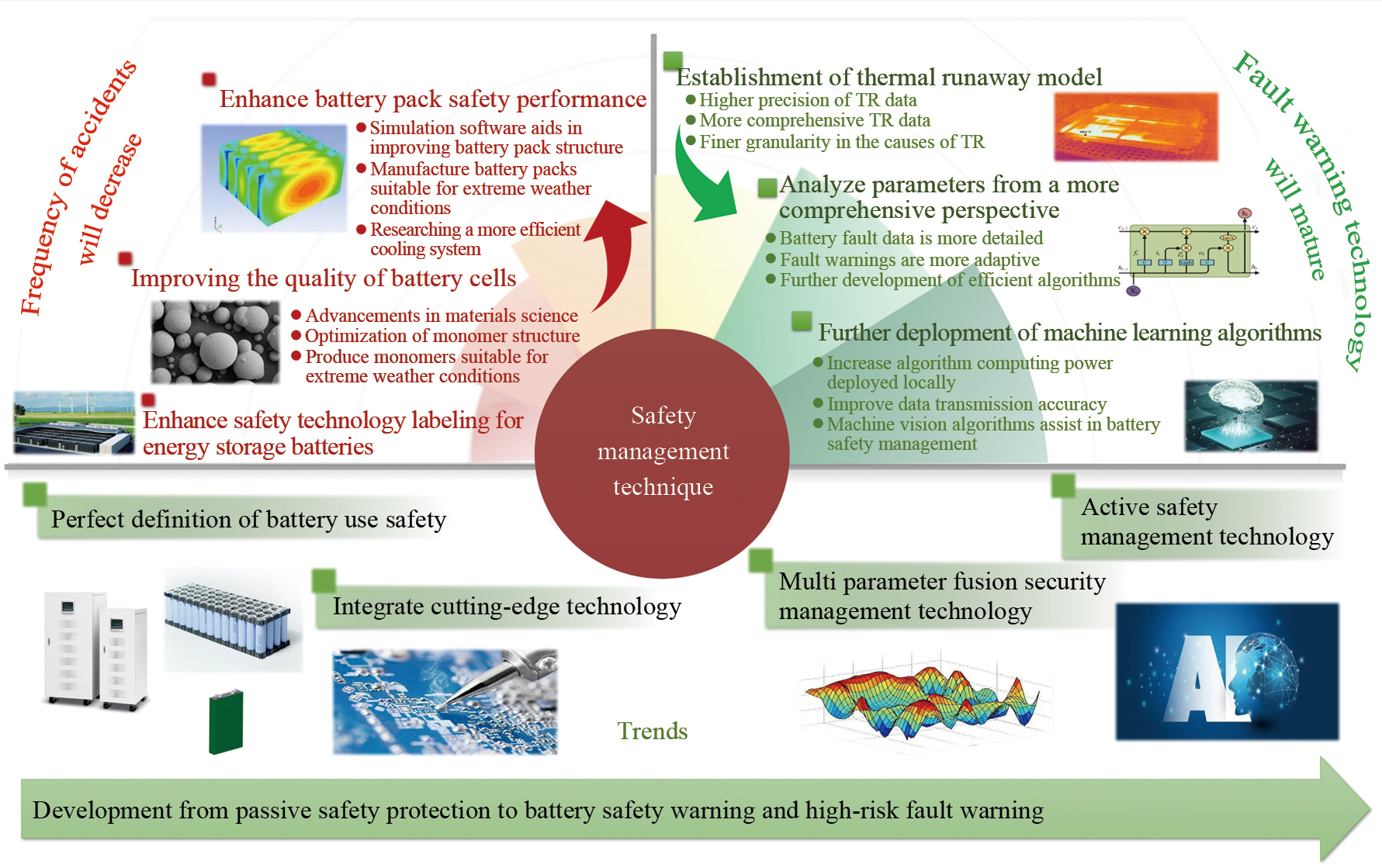
Based on the above analysis, the development trend of PAESBs safety management technology is illustrated in Fig. 10.
(1) Perfect definition of battery use safety. Battery safety definitions encompass international standards for battery production, such as those established by ISO, CATARC, SAE, and IEC, along with specified threshold parameters for batteries during their operational use. Notably, international organizations are progressively aligning power battery production testing standards with the actual operating conditions of electric vehicles, a trend that will drive technological advancement and innovation in power batteries.
It is essential to recognize that batteries for energy storage follow those designed for power applications. Therefore, international organizations will increasingly focus on establishing production standards tailored to the actual operating conditions of energy storage batteries.
(2) Integration with cutting-edge technologies. The manufacturing and application of batteries are currently at the forefront of integration with numerous cutting-edge technologies. The continuous advancement of emerging technologies contributes to battery safety management techniques' increased reliability and efficiency.
In the realm of battery manufacturing, pioneering advancements in materials science, such as progress in nanomaterials, flexible electronics, and graphene materials, coupled with the development of equipment like electron microscopes, scanning electron microscopes, X-ray diffraction, Raman spectroscopy, and nuclear magnetic resonance technology, are poised to lead the research and development of more reliable battery cells. Simultaneously, advancements in 3D printing technology, materials engineering, and multi-physics simulation software foster the creation of battery cooling systems that are increasingly optimized for efficiency.
In the realm of battery applications, the iterative improvement of battery detection sensors has enhanced the measurement accuracy of batteries. Significant breakthroughs in battery safety management have been achieved by utilizing big data and machine learning algorithms. Simultaneously, the application of the Internet of Things and advancements in communication technology makes vehicle-cloud integration possible. Vehicle-side data can be better utilized with the superb computing power of the big data cloud platform, making battery applications safer and more reliable.
(3) Safety management of multi-parameter fusion. The safety of batteries is intricately linked to the working environment and various forms of misuse. Distinct operating conditions, fault origins, and stages of faults lead to varied coupling relationships among key battery parameters, including voltage, current, and internal resistance. This can also induce alterations in the external form of the battery. In the future, with the enhanced capabilities of random machine learning algorithms in handling both data and images, battery safety management technology will consider more parameters simultaneously, improving the adaptability of battery safety management technology.
(4) Develop high-level active safety management technology. Passive safety management techniques for batteries can effectively reduce the probability of battery failures but cannot entirely prevent battery safety incidents. To address this issue, there will be an increased focus on understanding the coupling relationships among various signals during the early stages of battery failure. Gradually, proactive safety management techniques for early warning will be further refined. Furthermore, as the extraction of actual battery operational data and the mining of patterns in parameters related to safety become increasingly mature, establishing multi-level proactive management systems to predict battery safety risks will be a crucial area of research. The transition from passive safety protection to battery safety alerts and early safety warnings for high-risk batteries, aiming to advance the timing of battery failure risk alerts, will be a primary area of research in the future.
The project is supported partly by the National Natural Science Foundation of China (No. 52107220), Beijing Nova Program (No. 20230484272), Postdoctoral Research Fund Project of China (No. 2021M690353), the Opening Foundation of Key Laboratory of Advanced Manufacture Technology for Automobile Parts, Ministry of Education (No. 2022 KLMT03), Postdoctor Research Foundation of Shunde Graduate Innovation School of University of Science and Technology Beijing (No. 2021BH007), and Fundamental Research Funds for the Central Universities (No. FRF-BD-20-08A, NO. FRF-IDRY-21-013).
D. Qiao, X. Wei, W. Fan, B. Jiang, X. Lai, Y. Zheng, X. Tang, and H. Dai, "Toward safe carbon–neutral transportation: Battery internal short circuit diagnosis based on cloud data for electric vehicles," Applied Energy, vol. 317, p. 119168, 2022.
Z. Cheng, B. Zhong, Z. Ni, Z. Y. Cheng, B. L. Zhong, Z. X. Ni, W. Q. Jing, S. Q. Zhang, and J. Liu, "Research progress on simultaneous control of mechanical and magnetic properties of high-strength non-oriented silicon steel for new energy vehicle driving motors," Chinese Journal of Engineering, vol. 45, no. 09, pp. 1482–1492, 2023.
X. Lei, X. Liang, R. Yang, F. Zhang, C. Wang, C. S. Lee, and Y. Tang, "Rational design strategy of novel energy storage systems: Toward high‐performance rechargeable magnesium batteries," Small, vol. 18, no. 22, p. 2200418, 2022.
H. Yaqoob, Y. H. Teoh, T. S. Goraya, F. Sher, M. A. Jamil, and T. Rashid, "Energy evaluation and environmental impact assessment of transportation fuels in Pakistan," Case Studies in Chemical and Environmental Engineering, vol. 3, p. 100081, 2021.
A. Joshi, "Review of vehicle engine efficiency and emissions," SAE International Journal of Advances and Current Practices in Mobility, vol. 4, no. 2022-01-0540, pp. 1704–1733, 2022.
L. Qi, J. Zhao, Q. Li, S. Su, Y. Lai, F. Deng, H. Man, X. Wang, Y Lin, Y. Ding, and H. Liu, "Primary organic gas emissions from gasoline vehicles in China: Factors, composition and trends," Environmental Pollution, vol. 290, p. 117984, 2021.
A. Ghosh, "Possibilities and challenges for the inclusion of the electric vehicle (EV) to reduce the carbon footprint in the transport sector: A review," Energies, vol. 13, no. 10, p. 2602, 2020.
P. Ahmadi and A. Khoshnevisan, "Dynamic simulation and lifecycle assessment of hydrogen fuel cell electric vehicles considering various hydrogen production methods," International Journal of Hydrogen Energy, vol. 47, no. 62, pp. 26758–26769, 2022.
X. Lai, J. Yao, C. Jin, H. Wang, C. Xu, and Y. Zheng, "A review of lithium-ion battery failure hazards: Test standards, accident analysis, and safety suggestions," Batteries, vol. 8, no. 11, p. 248, 2022.
M. A. Hannan, S. B. Wali, P. J. Ker, M.S. Abd Rahman, M. Mansor, V. K. Ramachandaramurthy, K. M. Muttaqi, T. M. I. Mahlia, and Z. Y. Dong, "Battery energy-storage system: A review of technologies, optimization objectives, constraints, approaches, and outstanding issues," Journal of Energy Storage, vol. 42, p. 103023, 2021.
C. Zhang, Y. L. Wei, P. F. Cao, and M. C. Lin, "Energy storage system: Current studies on batteries and power condition system," Renewable and Sustainable Energy Reviews, vol. 82, pp. 3091–3106, 2018.
X. Fan, B. Liu, J. Liu, J. Ding, X. Han, Y. Deng, X. Lv, Y. Xie, B. Chen, W. Hu, and C. Zhong, "Battery technologies for grid-level large-scale electrical energy storage," Transactions of Tianjin University, vol. 26, pp. 92–103, 2020.
B. Dunn, H. Kamath, and J. M. Tarascon, "Electrical energy storage for the grid: a battery of choices," Science, vol. 334, no. 6058, pp. 928–935, 2011.
J. Hong, Z. Wang, C. Qu, Y. Zhou, T. Shan, J. Zhang, and Y. Hou, "Investigation on overcharge-caused thermal runaway of lithium-ion batteries in real-world electric vehicles," Applied Energy, vol. 321, p. 119229, 2022.
S. Verma, S. Mishra, A. Gaur S. Chowdhury, S. Mohapatra, G. Dwivedi, and P. Verma, "A comprehensive review on energy storage in hybrid electric vehicle," Journal of Traffic and Transportation Engineering (English Edition), vol. 8, no. 5, pp. 621–637, 2021.
K. Detka and K. Górecki, "Selected Technologies of Electrochemical Energy Storage—A Review," Energies, vol. 16, no. 13, p. 5034, 2023.
M. Tawalbeh, A. Farooq, R. Martis, and A. Al-Othman, "Optimization techniques for electrochemical devices for hydrogen production and energy storage applications," International Journal of Hydrogen Energy, vol. 52, pp. 1058–1092, 2023.
S. Cheng, G. Zhao, M. Gao, Y. Shi, M. Huang, and M. Marefati, "A new hybrid solar photovoltaic/phosphoric acid fuel cell and energy storage system; Energy and Exergy performance," International Journal of Hydrogen Energy, vol. 46, no. 11, pp. 8048–8066, 2021.
C. C. Chan, E. W. C. Lo, and W. S. Shen, "The available capacity computation model based on artificial neural network for lead–acid batteries in electric vehicles," Journal of power sources, vol. 87, no. 1–2, pp. 201–204, 2000.
D. Qiao, X. Wang, Lai X, Y. Zheng, X. Wei, and H. Dai, "Online quantitative diagnosis of internal short circuit for lithium-ion batteries using incremental capacity method," Energy, vol. 243, p. 123082, 2022.
J. Hong, K. Li, F. Liang, H. Yang, C. Zhang, Q. Yang, and J. Wang, "A novel state of health prediction method for battery system in real-world vehicles based on gated recurrent unit neural networks," Energy, vol. 289, p. 129918, 2024.
A. A. Kebede, T. Coosemans, M. Messagie, T. Jemal, H. A. Behabtu, J. Van Mierlo, and M. Berecibar, "Techno-economic analysis of lithium-ion and lead-acid batteries in stationary energy storage application," Journal of Energy Storage, vol. 40, p. 102748, 2021.
Z. Šimić, D. Topić, G. Knežević, and D. Pelin, "Battery energy storage technologies overview," International Journal of Electrical and Computer Engineering Systems, vol. 12, no. 1, pp. 53–65, 2021.
M. F. Tahir, C. Haoyong, and H. Guangze, "A comprehensive review of 4E analysis of thermal power plants, intermittent renewable energy and integrated energy systems," Energy Reports, vol. 7, pp. 3517–3534, 2021.
A. A. Kebede, Kalogiannis T, J Van Mierlo, and M. Berecibar, "A comprehensive review of stationary energy storage devices for large scale renewable energy sources grid integration," Renewable and Sustainable Energy Reviews, vol. 159, p. 112213, 2022.
H. W. Schiffer, "Flexible operation of coal-fired power plants in Germany under the renewable energy background," Cornerstone, vol. 2, no. 4, pp. 26–31, 2014.
H. Zsiborács, G. Pintér, A. Vincze, Z. Birkner, and N. H. Baranyai, "Grid balancing challenges illustrated by two European examples: Interactions of electric grids, photovoltaic power generation, energy storage and power generation forecasting," Energy Reports, vol. 7, pp. 3805–3818, 2021.
X. Zhang, Z. Li, L. Luo, Y. Fan, and Z. Du, "A review on thermal management of lithium-ion batteries for electric vehicles," Energy, vol. 238, p. 121652, 2022.
Z. Cui, L. Kang, L. Li, L. Wang, and K. Wang, "A combined state-of-charge estimation method for lithium-ion battery using an improved BGRU network and UKF," Energy, vol. 259, p. 124933, 2022.
S. Li, K. Wang, G. Zhang, S. Li, Y. Xu, X. Zhang, X. Zhang, S. Zheng, X. Sun, and Y. Ma, "Fast charging anode materials for lithium‐ion batteries: Current status and perspectives," Advanced Functional Materials, vol. 32, no. 23, p. 2200796, 2022.
M. A. Hannan, S. B. Wali, P. J. Ker, M. S. Abd Rahman, M. Mansor, V. K. Ramachandaramurthy, K. M. Muttaqi, T. M. I. Mahlia, and Z. Y. Dong, "Battery energy-storage system: A review of technologies, optimization objectives, constraints, approaches, and outstanding issues," Journal of Energy Storage, vol. 42, p. 103023, 2021.
J. Wen, D. Zhao, and C. Zhang, "An overview of electricity powered vehicles: Lithium-ion battery energy storage density and energy conversion efficiency," Renewable Energy, vol. 162, pp. 1629–1648, 2020.
F. M. N. U. Khan, M. G. Rasul, A. S. M. Sayem, and N. K. Mandal, "Design and optimization of lithium-ion battery as an efficient energy storage device for electric vehicles: A comprehensive review," Journal of Energy Storage, vol. 71, p. 108033, 2023.
G. Ruan, C. Yu, X. Hu, and J. Hua, "Simulation and optimization of a new energy vehicle power battery pack structure," Journal of Theoretical and Applied Mechanics, vol. 59, no. 4, 2021
G. Memmel and A. Memmel, "Chassis control system combines comfort and stability in electric buses," ATZheavy Duty worldwide, vol. 15, no. 2, pp. 34–37, 2022.
A. Tansini, J. Pavlovic, and G. Fontaras, "Quantifying the real-world CO2 emissions and energy consumption of modern plug-in hybrid vehicles," Journal of Cleaner Production, vol. 362, p. 132191, 2022.
J. Dižo, M. Blatnický, S. Semenov, E. Mikhailov, M. Kostrzewski, P. Droździel, and P. Šťastniak, "Electric and plug-in hybrid vehicles and their infrastructure in a particular European region," Transportation Research Procedia, vol. 55, pp. 629–636, 2021.
L. Guo, X. Zhang, Y. Zou, N. Guo, J. Li, and G. Du, "Cost-optimal energy management strategy for plug-in hybrid electric vehicles with variable horizon speed prediction and adaptive state-of-charge reference," Energy, vol. 232, p. 120993, 2021.
P. V. Chombo and Y. Laoonual, "A review of safety strategies of a Li-ion battery," Journal of Power Sources, vol. 478, p. 228649, 2020.
L. Wang, X. Wang, and W. Yang, "Optimal design of electric vehicle battery recycling network–From the perspective of electric vehicle manufacturers," Applied Energy, vol. 275, p. 115328, 2020.
C. A. O. Wenjiong, L. E. I. Bo, S. H. I. Youjie, D. O. N. G. Ti, P. E. N. G. Peng, and F. J. Y. D. Zheng, "Ponderation over the recent safety accidents of lithium-ion battery energy storage stations in South Korea," Energy Storage Science and Technology, vol. 9, no. 5, p. 1539, 2020.
M. Liu, X. Cao, C. Cao, P. Wang, C. Wang, J. Pei, H. Lei, X. Jiang, R. Li, and J. Li, "A review of power conversion systems and design schemes of high-capacity battery energy storage systems," IEEE Access, vol. 10, pp. 52030–52042, 2022.
S. Van der Linden, "Bulk energy storage potential in the USA, current developments and future prospects," Energy, vol. 31, no. 15, pp. 3446–3457, 2006.
X. Li, L. Chen, F. Sun, Y. Hao, X. Du, and S. Mei, "Share or not share, the analysis of energy storage interaction of multiple renewable energy stations based on the evolution game," Renewable Energy, vol. 208, pp. 679–692, 2023.
K. Uddin, R. Gough, J. Radcliffe, J. Marco, and P. Jennings, “Techno-economic analysis of the viability of residential photovoltaic systems using lithium-ion batteries for energy storage in the United Kingdom,” Applied Energy, vol. 206, pp. 12–21, 2017.
B. D. Olaszi and J. Ladanyi, "Comparison of different discharge strategies of grid-connected residential PV systems with energy storage in perspective of optimal battery energy storage system sizing," Renewable and Sustainable Energy Reviews, vol. 75, pp. 710–718, 2017
Response, Automated Demand, "The Missing Link in the Electricity Value Chain, A. McKane, I. Rhyne, A. Lekov, L. Thompson, and MA Piette." ACEEE Summer Study on Energy Efficiency in Buildings. 2008.
J. Figgener, P. Stenzel, K. P. Kairies, J. Linßen, D. Haberschusz, O. Wessels, and G. Angenendt, "The development of stationary battery storage systems in Germany–A market review,” Journal of Energy Storage, vol. 29, p. 101153, 2020.
H. Dai, B. Jiang, X. Hu, X. Lin, X. Wei, and M. Pecht, "Advanced battery management strategies for a sustainable energy future: Multilayer design concepts and research trends,” Renewable and Sustainable Energy Reviews, vol. 138, p. 110480, 2021.
Z. P. Wang, C. G. Yuan, and X. Y. Li, "An analysis on challenge and development trend of safety management technologies for traction battery in new energy vehicles,” Automotive Engineering, vol. 42, no. 12, pp. 1606–1620, 2020.
C. Ashtiani, "Analysis of battery safety and hazards' risk mitigation,” ECS Transactions, vol. 11, no. 19, p. 1, 2008.
E. Cabrera-Castillo, F. Niedermeier, and A. Jossen, "Calculation of the state of safety (SOS) for lithium-ion batteries,” Journal of Power Sources, vol. 324, pp. 509–520, 2016.
H. Yin, S. Ma, H. Li, G. Wen, S. Santhanagopalan, and C. Zhang, "Modeling strategy for progressive failure prediction in lithium-ion batteries under mechanical abuse,” ETransportation, vol. 7, p. 100098, 2021.
G. Wang, X. Guo, J. Chen, G. Wen, and C. Zhang, "Safety performance and failure criteria of lithium-ion batteries under mechanical abuse," Energies, vol. 16, no. 17, p. 6346, 2023.
B. Liu, Y. Jia, C. Yuan, L. Wang, X. Gao, S. Yin, and J. Xu, "Safety issues and mechanisms of lithium-ion battery cell upon mechanical abusive loading: A review,” Energy Storage Materials, vol. 24, pp. 85–112, 2020.
Zhang J, Li X, Zhang G, J. Guo, Q. Huang, C. Wang, D. Zhou, and D. Wei, "Experimental investigation on the essential cause of the degrading performances for an overcharging ternary battery,” International Journal of Energy Research, vol. 44, no. 4, pp. 3134–3147, 2020.
C. Zhao, T. Wang, Z. Huang, J. Wu, H. Zhou, M. Ma, J. Xu, Z. Wang, H. Li, J. Sun, and Q. Wang, "Experimental study on thermal runaway of fully charged and overcharged lithium-ion batteries under adiabatic and side-heating test,” Journal of Energy Storage, vol. 38, p. 102519, 2021.
G. Zhang, X. Wei, S. Chen, J. Zhu, G. Han, X. Tang, W. Hua, H. Dai, and J. Ye, "Comprehensive investigation of a slight overcharge on degradation and thermal runaway behavior of lithium-ion batteries,” ACS Applied Materials & Interfaces, vol. 13, no. 29, pp. 35054–35068, 2021.
J. Hong, Z. Wang, C. Qu, Y. Zhou, T. Shan, J. Zhang, and Y. Hou, "Investigation on overcharge-caused thermal runaway of lithium-ion batteries in real-world electric vehicles,” Applied Energy, vol. 321, p. 119229, 2022.
Xiao Y, Yang F, Gao Z, M. Liu, J. Wang, Z. Kou, Y. Lin, Y. Li, L. Gao, Y. Chen, S. Ren, and X. Li, "Review of mechanical abuse related thermal runaway models of lithium-ion batteries at different scales,” Journal of Energy Storage, vol. 64, p. 107145, 2023.
D. Qiao, X. Wei, B. Jiang, W. Fan, X. Lai, Y. Zheng, and H. Dai, "Quantitative diagnosis of internal short circuit for lithium-ion batteries using relaxation voltage," IEEE Transactions on Industrial Electronics, Early Access, 2024, DOI: 10.1109/TIE.2023.3342289
J. Conzen, S. Lakshmipathy, A. Kapahi, S. Kraft, and M. DiDomizio, "Lithium ion battery energy storage systems (BESS) hazards,” Journal of Loss Prevention in the Process Industries, vol. 81, p. 104932, 2023.
Y. Liu, P. Sun, S. Lin, H. Niu, and X. Huang“Self-heating ignition of open-circuit cylindrical Li-ion battery pile: Towards fire-safe storage and transport,” Journal of Energy Storage, vol. 32, p. 101842, 2020
J. Tian, Y. Wang, C. Liu, and Z. Chen, "Consistency evaluation and cluster analysis for lithium-ion battery pack in electric vehicles,” Energy, vol. 194, p. 116944, 2020.
C. Chang, X. P. Zhou, J. Jiang, Y. Gao, Y. Jiang, and T. Wu, "Micro-fault diagnosis of electric vehicle batteries based on the evolution of battery consistency relative position,” Journal of Energy Storage, vol. 52, p. 104746, 2022.
R. Xiong, W. Sun, Q. Yu, and F. Sun, "Research progress, challenges and prospects of fault diagnosis on battery system of electric vehicles,” Applied Energy, vol. 279, p. 115855, 2020.
L. Huang, L. Liu, L. Lu, X. Feng, X. Han, W. Li, M. Zhang, D. Li, X. Liu, D. U. Sauer, and M. Ouyang, "A review of the internal short circuit mechanism in lithium‐ion batteries: Inducement, detection and prevention,” International Journal of Energy Research, vol. 45, no. 11, pp. 15797–15831, 2021.
P. Sun, R. Bisschop, H. Niu, and X. Huang. "A review of battery fires in electric vehicles,” Fire Technology, vol. 56, pp. 1361–1410, 2020.
Y. Li, X. Liu, L. Wang, X. Feng, D. Ren, Y. Wu, G. Xu, L. Lu, J. Hou, W. Zhang, et al., "Thermal runaway mechanism of lithium-ion battery with LiNi0.8Mn0.1Co0.1O2 cathode materials,” Nano Energy, vol. 85, p. 105878, 2021.
C. Ghenai, L. A. Husein, M. Al Nahlawi, A. K. Hamid, and M. Bettayeb. "Recent trends of digital twin technologies in the energy sector: A comprehensive review,” Sustainable Energy Technologies and Assessments, vol. 54, p. 102837, 2022.
M. Dubarry, D. Howey, and B. Wu, "Enabling battery digital twins at the industrial scale,” Joule, vol. 7, no. 6, pp. 1134–1144, 2023.
V. Talele, U. Moralı, M. S. Patil, S. Panchal, R. Fraser, M. Fowler, P. Thorat, and Y. P. Gokhale, "Computational modelling and statistical evaluation of thermal runaway safety regime response on lithium-ion battery with different cathodic chemistry and varying ambient condition,” International Communications in Heat and Mass Transfer, vol. 146, p. 106907, 2023.
Z. Wang, J. Yuan, X. Zhu, H. Wang, L. Huang, Y. T. Wang, S. Q. Xu, "Overcharge-to-thermal-runaway behavior and safety assessment of commercial lithium-ion cells with different cathode materials: A comparison study,” Journal of Energy Chemistry, vol. 55, pp. 484–498, 2021.
H. Cheng, J. G. Shapter, Y. Li, and G. Gao, "Recent progress of advanced anode materials of lithium-ion batteries,” Journal of Energy Chemistry, vol. 57, pp. 451–468, 2021.
X. Jiang, Y. Chen, X. Meng, W. Cao, C. Liu, Q. Huang, N. Naik, V. Murugadoss, M. Huang, and Z. Guo, "The impact of electrode with carbon materials on safety performance of lithium-ion batteries: A review,” Carbon, vol. 191, pp. 448–470, 2022.
Z. H. Wu, A. C. Huang, Y. Tang, Y. P. Yang, Y. C. Liu, Z. P. Li, H. L. Zhou, C. F. Huang, Z. X. Xing, C. M. Shu, and J. C. Jiang, "Thermal effect and mechanism analysis of flame-retardant modified polymer electrolyte for lithium-ion battery," Polymers, vol. 13, no. 11, p. 1675, 2021.
X. Chen, S. Yan, T. Tan, P. Zhou, J. Hou, X. Feng, H. Dong, P. Wang, D. Wang, B. Wang, and M. G. Ouyang, "Supramolecular ‘flame-retardant’ electrolyte enables safe and stable cycling of lithium-ion batteries," Energy Storage Materials, vol. 45, pp. 182–190, 2022.
L. Han, C. Liao, Y. Liu, H. Yu, S. Zhang, Y. Zhu, Z. Li, X. Li, Y. Kan, and Y. Hu, "Non-flammable sandwich-structured TPU gel polymer electrolyte without flame retardant addition for high performance lithium ion batteries," Energy Storage Materials, vol. 52, pp. 562–572, 2022.
J. Zhu, X. Zhang, E. Sahraei, and T. Wierzbicki, "Deformation and failure mechanisms of 18650 battery cells under axial compression," Journal of Power Sources, vol. 336, pp. 332–340, 2016.
D. Ouyang, J. Weng, M. Chen, and J. Wang, "What a role does the safety vent play in the safety of 18650-size lithium-ion batteries?" Process Safety and Environmental Protection, vol. 159, pp. 433–441, 2022.
X. Zhang, Q. Sun, C. Zhen, Y. Niu, Y. Han, G. Zeng, D. Chen, C. Feng, N. Chen, W. Lv, and W. He, "Recent progress in flame-retardant separators for safe lithium-ion batteries." Energy Storage Materials, vol. 37, pp. 628–647, 2021.
Q. Arooj and U. A. Khan, "An improved hybrid DC circuit breaker with battery banks for energy storage in HVDC system."2022 19th International Bhurban Conference on Applied Sciences and Technology (IBCAST), IEEE, pp. 603–608, 2022.
Y. Lu, J. Wang, F. Liu, Y. Liu, F. Wang, N. Yang, D. Lu, and Y. Jia, "Performance optimisation of Tesla valve-type channel for cooling lithium-ion batteries," Applied Thermal Engineering, vol. 212, pp. 118583, 2022.
H. Zhou, F. Zhou, S. Shi, W. Yang, and Z. Song, "Influence of working temperature on the electrochemical characteristics of Al2O3-coated LiNi0.8Co0.1Mn0.1O2 cathode materials for Li-ion batteries," Journal of Alloy and Compounds, vol. 847, p. 156412, 2020.
Z. Liu, Y. Jiang, Q. Hu, S. Guo, L. Yu, Q. Li, Q. Liu, and X. Hu, "Safer lithium‐ion batteries from the separator aspect: Development and future perspectives," Energy & Environmental Materials, vol. 4, no. 3, pp. 336–362, 2021.
X. Li, K. Liu, Y. Yan, J. Yu, N. Dong, B. Liu, G. Tian, S. Qi, and D. Wu, "Thermostable and nonflammable polyimide/zirconia compound separator for lithium-ion batteries with superior electrochemical and safe properties," Journal of Colloid and Interface Science, vol. 625, pp. 936–945, 2022.
Y. Song, X. Liu, D. Ren, H. Liang, L. Wang, Q. Hu, H. Cui, H. Xu, J. Wang, C. Zhao, X. Zuo, and G. L. Xu, "Simultaneously blocking chemical crosstalk and internal short circuit via gel‐stretching derived nanoporous non‐shrinkage separator for safe lithium‐ion batteries," Advanced Materials, vol. 34, no. 2, p. 2106335, 2022.
D. Wu, N. Dong, R. Wang, S. Qi, B. Liu, and D. Wu, "In situ construction of high-safety and non-flammable polyimide ‘Ceramic’ lithium-ion battery separator via SiO2 Nano-encapsulation," Chemical Engineering Journal, vol. 420, p. 129992, 2021.
D. Li, L. Wang, C. Duan, Q. Li, and K. Wang, "Temperature prediction of lithium‐ion batteries based on electrochemical impedance spectrum: A review," International Journal of Energy Research, vol. 46, no. 8, pp. 10372–10388, 2022.
Q. Bai, Q. Li, J. Zan, J. Liu, J. Ou, and J. Liu, "Influence of insulation material thickness on spread of thermal runaway in battery packs," Processes, vol. 11, no. 5, p. 1321, 2023.
F. Liu, J. Wang, N. Yang, F. Wang, Y. Chen, D. Lu, H. Liu, Q. Du, X. Ren, and M. Shi, "Experimental study on the alleviation of thermal runaway propagation from an overcharged lithium-ion battery module using different thermal insulation layers," Energy, vol. 257, p. 124768, 2022.
J. Gong, B. Liu, H. Lian, J. Y. Liu, H. Fu, Y. X. Miao, and J. L. Liu, "Numerical investigation of suppressing thermal runaway propagation in a lithium-ion battery pack using thermal insulators," Process Safety and Environmental Protection, vol. 176, p. 1063–1075, 2023.
R. Y. Ren, Y. H. Zhao, Y. H. Diao, L. Liang, and H. R. Jing, "Active air cooling thermal management system based on U-shaped micro heat pipe array for lithium-ion battery," Journal of Power Sources, vol. 507, pp. 230314, 2021.
O. Kalaf, D. Solyali, M. Asmael, Q. Zeeshan, B. Safaei, and A. Askir, "Experimental and simulation study of liquid coolant battery thermal management system for electric vehicles: A review," International Journal of Energy Research, vol. 45, no. 5, pp. 6495–6517, 2021.
M. Akbarzadeh, T. Kalogiannis, J. Jaguemont, L. Jin, H. Behi, D. Karimi, H. Beheshti, J. Van Mierlo, and M. Berecibar, "A comparative study between air cooling and liquid cooling thermal management systems for a high-energy lithium-ion battery module," Applied Thermal Engineering, vol. 198, p. 117503, 2021.
L. Zhao, W. Li, G. Wang, W. Cheng, and M. Chen, "A novel thermal management system for lithium-ion battery modules combining direct liquid-cooling with forced air-cooling," Applied Thermal Engineering, vol. p. 120992, 2023.
S. Ahmad, Y. Liu, S. A. Khan, M. L. Hao, and X. Y. Huang, "Hybrid battery thermal management by coupling fin intensified phase change material with air cooling," Journal of Energy Storage, vol. 64, p. 107167, 2023.
N. Mao, Z. Wang, T. Gao, and D. Ouyang, W. Yan, "An investigation on thermal runaway behaviours of lithium-ion battery with Li (Ni0.6Co0.2Mn0.2)O2 cathode induced by overcharge under different heat dissipation conditions," International Journal of Heat and Mass Transfer, vol. 217, p. 124677, 2023.
H. Li, D. Zhou, M. Zhang, B. Liu, and C. Zhang, "Multi-field interpretation of internal short circuit and thermal runaway behavior for lithium-ion batteries under mechanical abuse," Energy, vol. 263, p. 126027, 2023.
J. Chen, D. Ren, H. Hsu, L. Wang, X. He, C. Zhang, X. Feng, and M. Ouyang, "Investigating the thermal runaway features of lithium-ion batteries using a thermal resistance network model," Applied Energy, vol. 295, p. 117038, 2021.
C. X. He, Q. L. Yue, Q. Chen, and T. S. Zhao, "Modeling thermal runaway of lithium-ion batteries with a venting process," Applied Energy, vol. 327, p. 120110, 2022.
Y. Wang, D. Ren, X. Feng, L. Wang, and M. Ouyang, "Thermal runaway modeling of large format high-nickel/silicon-graphite lithium-ion batteries based on reaction sequence and kinetics," Applied Energy, vol. 306, p. 117943, 2022.
F. Zhang, X. Feng, C. Xu, F. Jiang, and M. Ouyang, "Thermal runaway front in failure propagation of long-shape lithium-ion battery," International Journal of Heat and Mass Transfer, vol. 182, p. 121928, 2022.
A. Li, J. Weng, A. C. Y. Yuen, W. Wang, H. Liu, E. W. M. Lee, J. Wang, S. Kook, and G. H. Yeoh, "Machine learning assisted advanced battery thermal management system: A state-of-the-art review," Journal of Energy Storage, vol. 60, p. 106688, 2023.
C. Lv, X. Zhou, L. Zhong, C. Yan, M. Srinivasan, Z. W. Seh, C. Liu, H. Pan, S. Li, Y. Wen, and Q. Yan, "Machine learning: an advanced platform for materials development and state prediction in lithium‐ion batteries," Advanced Materials, vol. 34, no. 25, p. 2101474, 2022.
T. Raoofiand and M. Yildiz, "Comprehensive review of battery state estimation strategies using machine learning for battery management systems of aircraft propulsion batteries," Journal of Energy Storage, vol. 59, p. 106486, 2023.
W. Li, H. Cui, T. Nemeth, J. Jansen, C. Ünlübayir, Z. Wei, X. Feng, X. Han, M. Ouyang, H. Dai, X. Z. Wei, and D. U. Sauer, "Cloud-based health-conscious energy management of hybrid battery systems in electric vehicles with deep reinforcement learning," Applied Energy, vol. 293, p. 116977, 2021.
Y. Wang, R. Xu, C. Zhou, X. Kang, and Z. Chen, "Digital twin and cloud-side-end collaboration for intelligent battery management system," Journal of Manufacturing Systems, vol. 62, pp. 124–134, 2022.
Y. Zhang and M. Zhao, "Cloud-based in-situ battery life prediction and classification using machine learning," Energy Storage Materials, vol. 60, p. 106688, 2023.
D. Shi, J. Zhao, C. Eze, Z. Wang, J. Wang, Y. Lian, and A. F. Burke, "Cloud-based artificial intelligence framework for battery management system," Energies, vol. 16, no. 11, p. 4403, 2023.
Z. Wei, X. Yang, Y. Li, H. He, W. Li, and D. U. Sauer, "Machine learning-based fast charging of lithium-ion battery by perceiving and regulating internal microscopic states," Energy Storage Materials, vol. 56, p. 62–75, 2023.
Y. Jia, J. Li, W. Yao, Y. Li, and J. Xu, "Precise and fast safety risk classification of lithium-ion batteries based on machine learning methodology," Journal of Power Sources, vol. 548, p. 232064, 2022.
 Top