ContentsFigures & Tables
As the world shifts towards a low-carbon economy for combating climate change and curbing greenhouse gas emissions, hydrogen energy has become crucial, marking its significance as a critical component in the pursuit of sustainable and environmentally friendly energy solutions. Hydrogen, derived from renewable resources, stands as a zero-emission option distinct from conventional fossil fuels. It bolsters global energy security by offering a diverse range of sources and facilitating the storage and transportation of renewable energy. Due to its higher energy density, hydrogen excels in heavy transport and industrial applications. It seamlessly integrates with current energy infrastructure, effectively managing the variability of renewables. Transitioning to hydrogen decreases dependency on fossil fuels and enhances economic stability by promoting the growth and use of local energy resources [1].
The hydrogen industry is an energetic and rapidly progressing sector, essential in driving the global shift towards sustainable energy [2, 3]. The rapidly developing hydrogen industry not only offers significant economic opportunities but also drives job growth and market development. The potential of hydrogen in facilitating the integration of large-scale renewable energy and its role in international collaboration are crucial to the joint efforts in mitigating climate change and advancing global sustainability goals, with its importance being undeniable. Positioning hydrogen as a key element in energy strategies, this comprehensive approach represents a critical step towards achieving a more sustainable, secure, and prosperous energy future [4].
In recent years, the digitalization of engineering systems has garnered significant interest due to its extensive benefits in enhancing the overall system's performance and reducing costs [5, 6]. Among these artificial intelligence techniques, digital twin (DT) stands out as a particularly promising method [7]. Industry 4.0 marks the transition to interconnected, automated manufacturing, integrating technologies like the internet of things (IoT) and cloud computing. A key element of this era is DT technology, which links the physical and digital realms. It boosts manufacturing efficiency and innovation by creating digital versions of physical systems for detailed analysis and optimization. Industry 4.0 represents a significant upgrade to the manufacturing sector, introducing concepts of next-generation intelligent manufacturing [8]. This paradigm shift focuses on achieving high adaptability and enabling rapid design changes, primarily through the integration of advanced digital information technologies. Moreover, it strongly advocates for cultivating a technical workforce that is more adaptable and armed with the necessary skills and knowledge to navigate the changing landscapes of manufacturing environments. This strategy aims to enhance efficiency and productivity while offering greater customization in manufacturing processes, marking a shift towards production systems that are more agile and responsive [9–11]. Achieving an accurate, real-time representation of the entire state of an intelligent manufacturing system presents a considerable challenge in the field. Nevertheless, the advent of DT technology has opened new avenues for addressing this challenge [12–15]. Manufacturing systems possess the capability to observe physical processes and generate a corresponding DT within the physical domain. These systems are designed to acquire real-time data from the physical environment, facilitating simulation analysis. This enables the execution of informed decisions, underpinned by real-time communication and collaboration with human operators [16].
This review is the first to summarize the applications of DTs in the field of hydrogen energy. The structure of this review is methodically arranged to guide the reader through the intricate relationship between DT technology and hydrogen energy systems. Section 2 lays the foundational knowledge of DT technology, detailing its definition, principles, and the structural intricacies that enable its functionality, along with an exploration of its key features. In Section 3, the review focuses on the various applications of DT technology in hydrogen energy systems. The following section, Section 4, offers a critical assessment of the current state of this technology within the hydrogen energy sphere. Finally, Section 5 wraps up the review, presenting a forward-looking viewpoint and identifying potential future research directions in this field.
DT technology represents a paradigmatic advancement within the domain of digital transformation [17]. DT has been considered as one of the most promising technologies promoting the development of the industry and has successfully achieved significant applications in many fields [18]. This technology entails the generation of an exact digital analogue of a tangible entity, system, or procedural framework. Its burgeoning significance is evident across a diverse array of sectors, where it plays a critical role in enhancing operational efficiency, augmenting predictive analytical capabilities, and catalyzing innovative processes. The application of DTs within the energy sector could represent a transformative shift in energy system management [19]. This innovation is anticipated to lead to significant improvements in energy efficiency, a reduction in system downtime, and a decrease in maintenance costs [20].
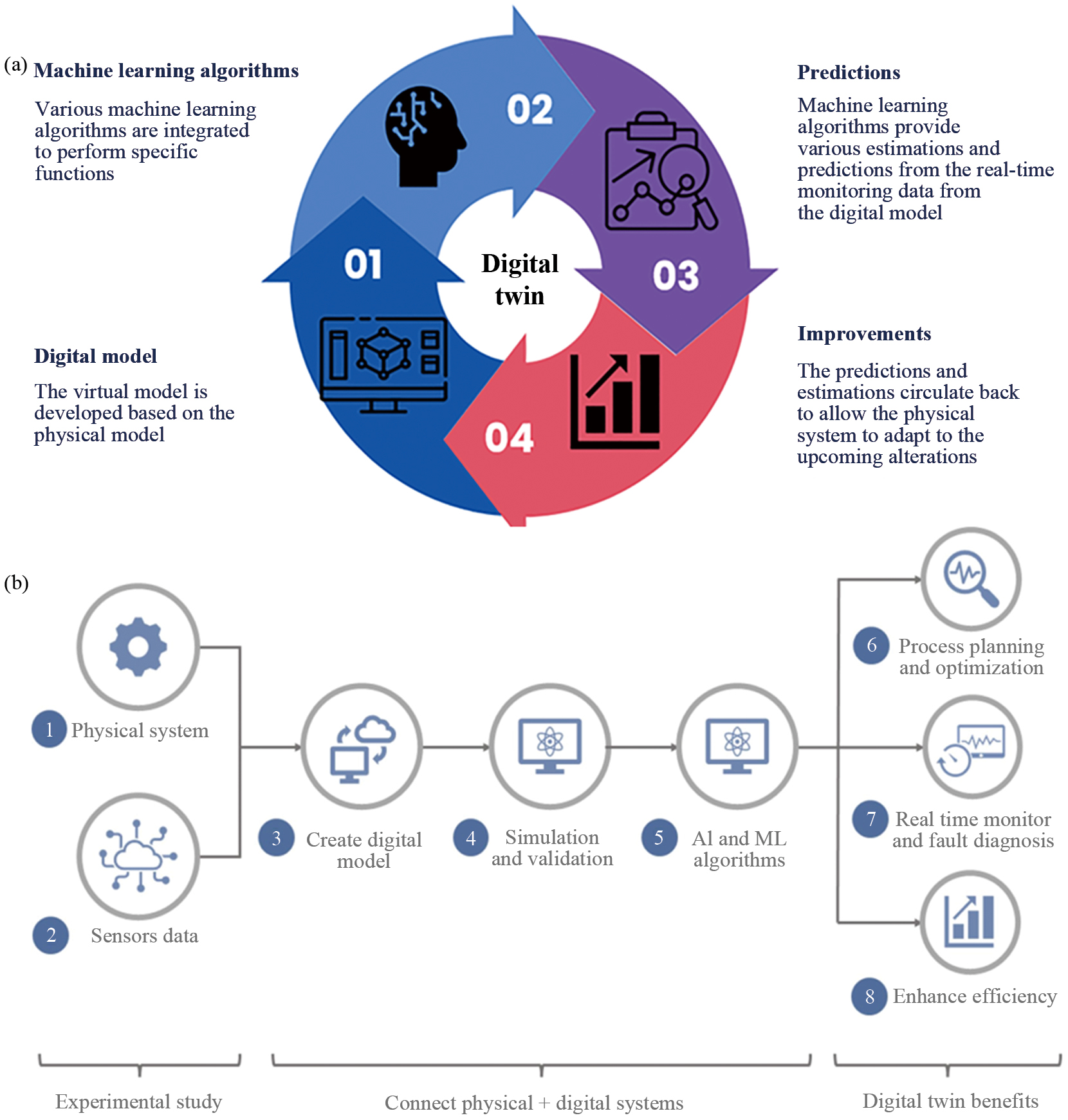
A DT is a virtual representation that serves as the real-time digital counterpart of a physical object or process [20–22]. Figure 1(a) delineates the integral operations of a DT system and the consequential improvements it imparts to the associated physical entity. The process initiates with the "digital model" (01), which is a virtual construct based on the physical entity. The selection of an appropriate model is contingent upon a confluence of project-specific factors, which include required level of accuracy, computational resources accessible for the project, temporal constraints imposed, and degree of complexity inherent in the system that is subject to modelling. Subsequently, it is coupled with the AI algorithms, such as "machine learning algorithms" (02). These algorithms are employed to execute specific tasks, notably the processing and interpretation of data. This leads to the generation of "predictions" (03), wherein the algorithms utilize data monitored in real-time from the digital model to produce forecasts and insights. The final segment, "improvements" (04), illustrates the feedback loop where the insights and forecasts inform enhancements in the physical system, enabling it to adjust to imminent changes. This cyclical and interactive mechanism underscores the responsive and evolving nature of the DT, underpinning its role in the continuous refinement and advancement of the physical system it mirrors [9]. In DT technology, the most used algorithms are Machine Learning algorithms, particularly for predictive analysis and optimization. These include neural networks, which are excellent for recognizing patterns and trends in large data sets, and regression algorithms, used for forecasting and predicting future states. Additionally, simulation algorithms like finite element analysis (FEA) are crucial for creating accurate models of physical systems, allowing for detailed analysis and testing in a virtual environment. These algorithms form the backbone of DT technology, enabling it to effectively replicate and optimize real-world systems.
The flowchart presented in Fig. 1(b) articulates the sequential operations integral to the functioning of a DT system. It commences with the acquisition of data from the physical system (1) via sensor technology (2). This dataset informs the development of a virtual representation (3), which is subjected to rigorous simulation and validation (4) to ensure fidelity to the physical counterpart. Advanced analytic techniques, facilitated by artificial intelligence and machine learning algorithms (5), are then employed to interpret the model sand predict future states. The consequent insights are instrumental in strategizing process planning and optimization (6), thereby elevating the system's performance and efficiency. Additionally, the architecture supports real-time surveillance and fault diagnosis (7), enabling prompt detection and remediation of anomalies. The culmination of this process is the enhancement of the physical system's operational efficiency (8), underscored by the iterative feedback and insights procured from DT.
Data layer. The foundational layer of a DT is established through the aggregation of data from a diverse array of sources, including but not limited to sensors, internet of things (IoT) devices, and additional relevant technologies [24]. The significance of this layer is underscored by the fact that the precision and completeness of DT are intrinsically dependent on both the quality and the volume of the data accrued.
Integration layer. This phase is characterized by the processing and consolidation of data, employing advanced analytical approaches that include machine learning algorithms and artificial intelligence techniques. The integration of these elements is crucial for deriving significant insights and enabling informed decision-making, grounded in the comprehensively aggregated data [25].
Application layer. This layer signifies the final stage in the process where insights and simulations are made accessible. Achieved through the implementation of user-friendly interfaces, detailed dashboards, or immersive virtual reality environments, it facilitates intuitive engagement with and visualization of complex datasets and models [26].
Feedback mechanism. The Feedback Mechanism is a critical element in the DT framework, as it leverages generated insights and predictions to direct alterations or advancements in the associated physical entity [27]. This mechanism is essential for the ongoing development and refinement of the system, guaranteeing that the virtual models consistently mirror their real-world analogs in a dynamic manner [28].
The digital twin technology functions by establishing an accurate virtual replica of a physical object, constantly refreshed with real-time data. This setup enables comprehensive analysis and simulation, providing crucial decision-making insights to enhance the performance and upkeep of the actual entity [29].
Data collection. The initial phase of the process involves gathering real-time data from the physical entity, achieved through the strategic placement of sensors and IoT devices. These tools are crucial for comprehensively recording various operational parameters and environmental interactions associated with the specific physical system under study [30].
Data processing. In this phase, the data collected from the physical entity is subjected to extensive processing and analysis. Techniques such as predictive analytics, simulation models, and machine learning algorithms are employed. The primary aim is to extract and decipher patterns and behaviours embedded in the data, essential for comprehensively understanding the operational dynamics and forecasting potential future scenarios of the physical system.
Simulation and modelling. At the core of the DT's functionality lies its ability to replicate a range of scenarios, evaluate possible outcomes, and forecast future behaviours. This capability is facilitated through the utilization of data and models obtained in the preliminary stages. These simulations play a crucial role in fostering proactive decision-making and strategic planning, all based on insights gleaned from data.
Interaction and feedback. The user interaction interface of the DT is a key component, enabling users to derive insights, develop predictions, and experiment with different scenarios. Importantly, the system is structured to deliver feedback to its physical counterpart. This feedback loop is crucial, often leading to improved performance, enhanced maintenance strategies, or design modifications. The interactive and adaptive nature of the DT highlights its role in facilitating ongoing improvements and adjustments in the system.
Continuous learning and updating. This process is fundamental to ensuring that the DT consistently mirrors its physical counterpart with precision and contemporaneity. Such ongoing adaptation is crucial for maintaining the relevance and accuracy of the DT in reflecting the real-time status and conditions of the physical entity.
The key features of DT technology include real-time data integration, dynamic simulation capabilities, predictive analytics, and decision support, all of which contribute to enhanced performance and maintenance optimization of physical systems [31].
Real-time data analysis. A salient feature of DT technology is its capability to facilitate the immediate acquisition and analysis of operational data from hydrogen energy systems. This encompasses the monitoring of critical parameters throughout the hydrogen lifecycle, including its production, storage, transportation, and utilization phases. The real-time nature of this monitoring is instrumental in swiftly detecting any deviations in performance, thereby playing a pivotal role in upholding the stability and efficiency of the system.
Predictive modelling. DT technology utilizes historical data in conjunction with machine learning algorithms to project the future behaviour of hydrogen energy systems. This capability allows for the prediction of equipment failures, the identification of maintenance needs, and the assessment of operational efficiency. Implementing this predictive analysis is vital for reducing system downtime, improving maintenance scheduling, and boosting system performance, thus substantially enhancing the reliability and effectiveness of hydrogen energy system management.
Simulation testing. DTs create a virtual milieu wherein novel operational strategies, process flows, or enhancement initiatives can be trialed, independent of the physical hydrogen energy system. This attribute of simulation affords the opportunity to appraise potential advancements without impinging upon the functionality of the real-world system. Such a feature is instrumental in facilitating risk-free experimentation and evaluation, thereby enabling the optimization of hydrogen energy systems in a controlled and non-disruptive manner.
Risk management. In the context of safety and regulatory compliance, DT technology possesses the capability to simulate a range of risk scenarios, encompassing incidents like leaks, equipment malfunctions, or operational mishaps. This simulation process is instrumental in evaluating potential safety hazards and formulating strategies to mitigate such risks. By enabling pre-emptive identification and management of safety concerns, DT technology plays a critical role in enhancing the safety protocols and compliance measures of hydrogen energy systems.
Integration and interoperability. DT technology offers the capability to interface with ancillary systems, including supply chain management and environmental monitoring frameworks. This integration facilitates a holistic perspective and yields deeper insights, thereby enhancing system-wide coordination and optimization. By enabling this interconnectedness, DT technology serves as a pivotal tool in synthesizing diverse data streams and operational aspects, contributing to a more integrated and efficient approach in the management of complex systems [32].
Continuous improvement and learning. DTs are distinguished by their ongoing learning from incoming data, perpetually refining their models to accurately represent prevailing operational circumstances and environmental changes [33]. This capacity for adaptation is essential for keeping hydrogen energy systems flexible and reactive to forthcoming changes and challenges. The dynamic nature of DTs plays a vital role in preserving the pertinence and efficacy of hydrogen energy systems within an ever-changing energy environment.
Elucidate the potential and necessity of applying DT technology in the field of hydrogen energy. Hydrogen energy digitalization, particularly using DT technology, represents a cutting-edge approach in the energy sector [34, 35]. This technology facilitates a detailed virtual representation of hydrogen energy systems, allowing for real-time monitoring, analysis, and optimization of processes. By mirroring physical assets in a digital space, it enables enhanced operational efficiency, predictive maintenance, and strategic decision-making. The integration of DTs in hydrogen energy systems exemplifies a significant step towards more sustainable, efficient, and advanced energy management practices [36].
The hydrogen production and energy storage power station harness the intermittent energy from clean power generation and off-peak grid electricity for hydrogen production through water electrolysis [37]. In applications spanning the chemical industry and transportation sector, hydrogen energy is either directly utilized or converted into electricity via hydrogen fuel cells during peak grid consumption periods, subsequently integrated into the transmission grid through rectification and inversion processes [38, 39]. This power station represents a significant integration of various key technologies. It includes water electrolysis, which is essential for hydrogen production. Additionally, the station utilizes metal hydride solid-state hydrogen storage. Another critical component is the hydrogen fuel cell for power generation. Together, these elements demonstrate a diverse and comprehensive use of hydrogen energy [40, 41]. In hydrogen technology, DT technology is widely applied in various industrial sectors, particularly in fuel cells and water electrolysis systems [42]. Its implementation in these areas enhances system efficiency and performance by executing specialized functions. This showcases the DT's role in optimizing and advancing hydrogen energy solutions, underscoring its versatility and significant impact [43].
This sector encompasses the full range of hydrogen production and focuses on developing efficient storage and transportation methods, integral to cleaner and more sustainable energy systems [44]. Hydrogen production is commonly achieved via processes such as steam methane reforming (SMR) and water electrolysis. The categorization of hydrogen is based on the method of production and its associated environmental impact, including three main types. Grey hydrogen is derived from fossil fuels and is associated with high emissions. Blue hydrogen, while also produced from fossil fuels, involves carbon capture technologies to reduce emissions [45]. In contrast, green hydrogen is generated using renewable energy sources like water electrolysis, leading to significantly lower emissions [46]. This classification highlights the varying environmental impacts of hydrogen production. Despite encountering challenges like high production costs and the need for extensive infrastructure development, the hydrogen industry is expected to undergo substantial growth [47].
Traditional experimental methodologies necessitate the use of sophisticated instrumentation [48, 49]. These conventional approaches are characterized by their complexity and the substantial costs associated with conducting such experiments. This reliance on intricate and expensive experimental setups presents a significant challenge in the in-depth exploration of the cell dynamics. Additionally, the commonly employed multiphysics models are known for their extensive time requirements and the substantial computing resources they necessitate. A novel data-driven DT model of high temperature proton exchange membrane electrolyzer cells (HT-PEMEC) is established by Zhao and co-workers. This methodology aims to streamline the research process by effectively integrating multiphysics models with system identification techniques [50]. The primary objective of this approach is to facilitate rapid computational analysis while ensuring a level of accuracy that is sufficient for the intended applications. This methodological innovation represents a significant advancement in the field, offering a balanced approach to computational efficiency and precision. As is shown in Fig. 2(a), a 2D multiphysics simulation DT model was established to study the electrolyser cell, in which electrochemistry, mass transfer, momentum transfer and heat transfer were considered. The multiphysics model generates dynamic data which is utilized for system identification. This identification model is then validated through a comparative analysis with the multiphysics model to ensure accuracy and reliability. To accurately model and anticipate the dynamic responses of HT-PEMECs and to quantify the efficiency throughout variable operational states, three distinct sub-models have been specified: the sub-model for power consumption, which gauges the energy input; the sub-model for hydrogen production, which measures the output; and the sub-model for operating temperature, which monitors and regulates the thermal conditions of the system. These sub-models are integral for the comprehensive analysis of HT-PEMEC performance metrics under dynamic process conditions.
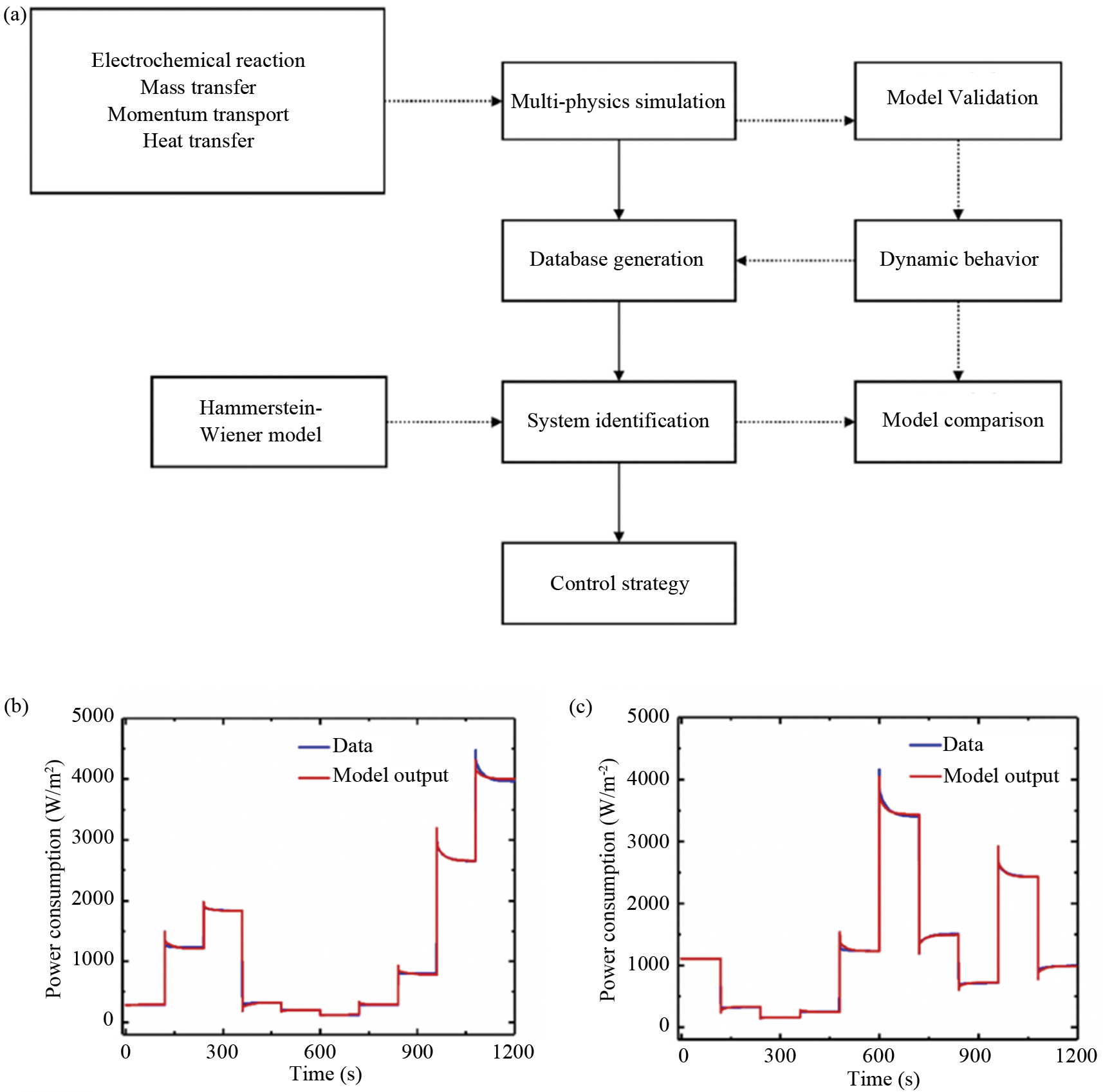
A fuzzy logic control strategy, alongside a neural network predictive control strategy, has been developed to modulate power consumption, with the aim of enhancing the dynamic behaviour of the system [51]. Compared to fuzzy logic control strategies, neural network predictive control exhibits superior dynamic performance with reduced overshoot; however, it demands greater computational resources. As shown in Figs. 2(b) and 2(c), the output of the identification model is juxtaposed with the identification and validation datasets to corroborate the accuracy of the hydrogen generation sub-model. Upon a stochastic transition in irradiance from 1857 W/m² to 2513 W/m², it was observed that the power overshoot exhibited by the neural network predictive control strategy diminished by 92% in comparison to the fuzzy logic control strategy.
Presently, this approach is exclusively utilized in systems characterized by a single-input single-output configuration. Prospective expansions of this methodology could encompass multiple-input multiple-output systems, entailing the synchronized control of diverse physical parameters.
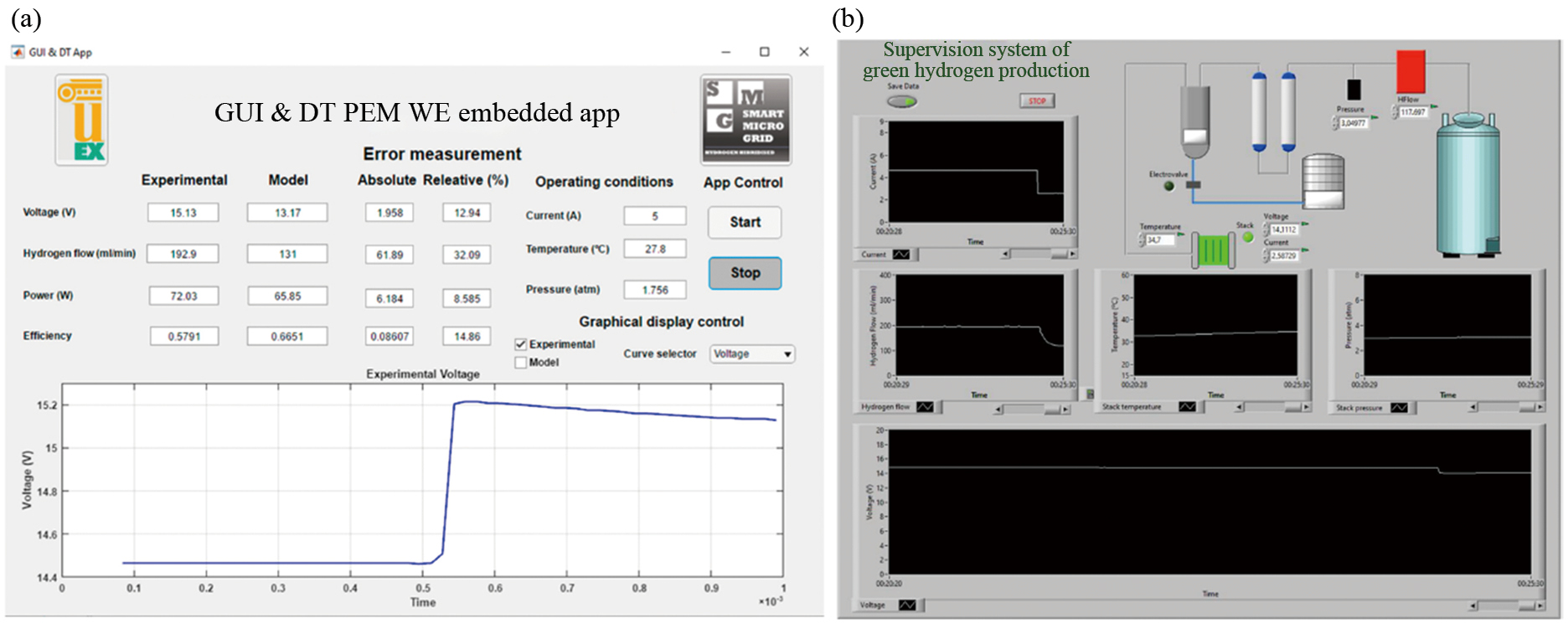
In the field of physical system management, graphical user interfaces (GUIs) play a pivotal role, undergirding both the monitoring and control operations. Serving as an interactive conduit between the user and the system, these graphical tools not only facilitate system surveillance but also assist in the acquisition and display of operational information. Folgado and co-workers presented a MATLAB-based application for the study of a PEMWE through a combination of interface and DT [52, 53]. As is shown in Fig. 3, the GUI provides a user-friendly environment and visualises the evolution of the operation of an experimental electrolyser by the means of a Modbus TCP/IP communication that allows the real-time reading of the data. This information is used by the embedded DT to simulate the behaviour of the electrolyser and return a series of results based on an equivalent electrical model. Besides, they also presented a supervision system to monitor and characterize the green hydrogen generation process through a PEM electrolyzer framed in a photovoltaic-powered microgrid. The system performs the functions of measurement, data acquisition, and storage, as well as the real-time representation of the key variables of the process. Part of these functions are performed through LabVIEW software via a local OPC DA server and a graphical user interface. The interface provides a user-friendly environment for controlling the electrolyzer and visualizing the evolution of the most significant parameters of the process. Future research guidelines will deal with the development of DT of the electrolyzer using the data gathered with the developed system.
The storage and transportation of hydrogen present challenges because of its low density and high reactivity [54]. It is commonly stored and transported either as a high-pressure gas or in the form of a cryogenic liquid. Moreover, the industry also covers the diverse applications of hydrogen across numerous fields, ranging from powering fuel cells in vehicles to its use in industrial processes and energy storage [55, 56]. In the storage and transportation of hydrogen, the safety of hydrogen storage cylinders is paramount, involving the use of high-strength materials to withstand high pressure, equipped with pressure release devices to prevent over-pressurization, and advanced leak detection systems for timely identification of hydrogen leaks [57]. Additionally, temperature control is necessary to maintain the integrity of the storage materials, strict adherence to transportation and safety regulations is required, and correct handling and installation procedures must be implemented. Regular inspections and maintenance are also key to ensuring safety. Overall, ensuring the safety of hydrogen storage and transportation requires a comprehensive approach encompassing various measures and technologies.
Dongyun and co-workers established a 3D operation and maintenance model of the hydrogen production and energy storage power station [40]. Leveraging its 3D DT model, alongside integrated sensor data and camera systems, the hydrogen production and energy storage power station facilitates the remote realization of an intuitive display and video information playback. This integration exemplifies the convergence of advanced digital technologies in optimizing the operational oversight of energy infrastructure. Utilizing the capabilities of the DT and the industrial Internet platform, the system achieves the integration and collaborative management of water, gas, and electric circulation systems. Furthermore, it encompasses the unified oversight of equipment, environmental conditions, security, and fire protection information, thereby facilitating a comprehensive approach to infrastructure management and control. Finally, the intelligent online operation and maintenance of hydrogen production and energy storage power stations will be realized. The implementation of intelligent online operation and maintenance protocols for hydrogen production and energy storage power stations will be actualized, signifying a significant advancement in the field of energy management and sustainability.
Yang and colleagues have developed a comprehensive intelligent monitoring system dedicated to ensuring the safety of hydrogen states, presenting a notable advancement in the field of hydrogen safety management [58]. This framework, incorporating a state-of-the-art monitoring system bolstered by intelligent technology, facilitates the real-time observation and analysis of both internal and external conditions of hydrogen cylinders, exemplifying a significant advancement in precision surveillance methodologies. Employing a sophisticated monitoring system integrated with advanced intelligent technology, this system is adept at continuously observing the conditions inside and outside the hydrogen cylinder. It can conduct immediate risk assessments, mapping the state monitoring data and assessment results in real-time. This approach significantly reduces the risks associated with hydrogen storage and transportation. It capitalizes on contemporary intelligent standards to offer maximum support to personnel, thereby substantially enhancing the efficacy of risk mitigation during the storage and transportation of hydrogen.
Hydrogen demonstrates its versatility across a spectrum of applications, not only fuelling electricity generation through fuel cells and serving as a storage solution for excess renewable energy but also propelling zero-emission vehicles, with expanding roles in aviation and maritime transportation [59–61]. In industrial spheres, it's integral to processes like refining, ammonia production, and metal refining. Its potential extends to heating solutions in residential and commercial settings. Moreover, hydrogen plays a crucial role in integrated energy systems, where it helps balance and optimize diverse energy sources, and in microgrids, where it contributes to localized, sustainable energy management and resilience. This broad range of applications underscores hydrogen's adaptability and significance in various energy-related sectors. The diverse applications of hydrogen highlight its key role in achieving a sustainable, low-carbon future, though its broader adoption still depends on technological progress, infrastructure development, and economic viability.
Fuel cells (FCs) are a highly efficient and promising category of energy conversion devices, capable of directly transforming the chemical energy of hydrogen, a key component in hydrogen energy systems, into electrical energy [62, 63]. They are notable for their quick start-up times, high efficiency, and low or zero emissions of air pollutants, making them an attractive option for sustainable energy solutions [64, 65]. The application of DTs in the field of fuel cells is gradually evolving. Complex physical and chemical processes occur in FCs. The development of a DT for a fuel cell, which entails creating an accurate virtual replica to effectively ascertain and monitor its multi-physics field state, holds immense significance for enhancing cell design and control operations [66]. The conventional experimental observation and in-situ prediction models are limited in the scope of information they can gather, while the computational fluid dynamics approach, although detailed, requires an extended duration to acquire comprehensive data.
To reach a full knowledge of PEMFC real-time state, Bai and co-workers established a complete 3D virtualization-multi-physics DT for PEMFCs based on the proper orthogonal decomposition (POD) method, as is shown in Fig. 4 [67]. A total of 139 snapshots were developed using Pairwise Independent Combinatorial Testing and simulated based on a three-dimensional, two-phase, non-isothermal numerical model, under the assumption of continuous liquid pressure. Subsequently, the modes of each field in the snapshots are extracted using the singular value decomposition method, employing the Jacobi algorithm. Lastly, the coefficients within the POD prediction equation are determined through the application of multivariate adaptive regression splines. The results indicate that, for the examined PEMFC, the DT technique is proficient in capturing both the global values and the local distribution characteristics of each physical field effectively within 0.913 seconds. Across 20 groups of randomly varied conditions within extensive ranges of current density and operational parameters, the mean global deviations for the four fields are recorded as 5.7%, 1.3%, 8.9%, and 12.0%, respectively.
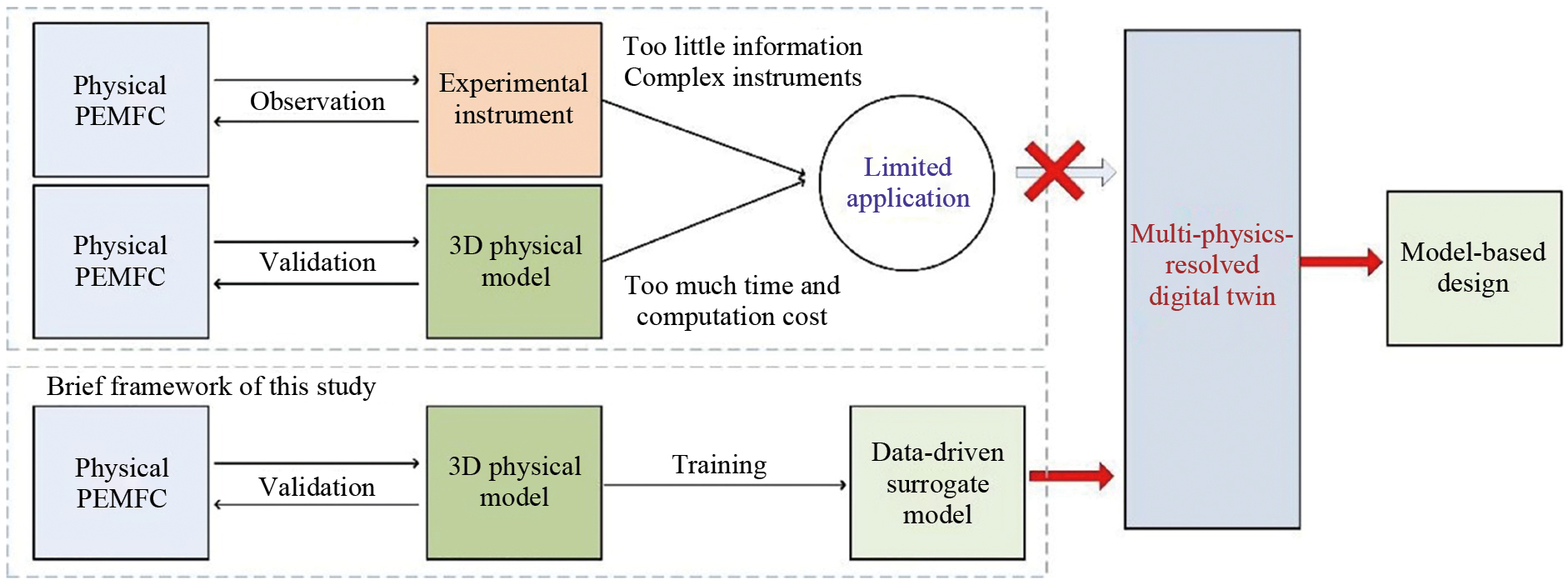
The progression of PEMFCs technology is substantially augmented by the formulation of DTs that comprehensively address multiple physical phenomena. Wang and colleagues introduced a hybrid surrogate modelling approach, integrating a cutting-edge three-dimensional PEMFC physical model with a data-driven model, to address this scientific challenge effectively. In the realm of multi-physics field prediction, the accuracy of the data-driven surrogate model is comparable to that of the comprehensive 3D physical model. However, this model significantly reduces computational costs and time, thereby achieving an efficient, multi-physics-resolved DT. The results from the surrogate model's predictions indicate that the relative root mean square errors (rRMSEs) across the multi-physics fields range from 3.88% to 24.80%, proficiently encapsulating the distribution characteristics inherent within these fields. This research underscores the potential of integrating data-driven methodologies with detailed physical models for the development of DTs in complex systems.
The integration of hydrogen into energy systems represents a multifaceted solution, pivotal not only in energy production but also in aspects such as storage, transportation, and industrial applications [68]. Its adaptability to interface with various sectors, including transportation, residential, commercial, and industrial, is particularly noteworthy. This versatility plays a significant role in bridging the intermittency of renewable energy sources like solar and wind, thereby greatly enhancing the stability and reliability of energy grids. The energy management system (EMS) is a vital component in modern energy infrastructure, with significant applications in both renewable energy systems and advanced vehicular systems, including hybrid and electric vehicles [69]. Its primary function is the detailed management and optimization of energy flows, which facilitates the efficient and sustainable use of energy resources. In the domain of renewable energy systems, EMS plays a crucial role in the synchronization and integration of various energy sources such as solar, wind, and hydroelectric power. It is instrumental in ensuring that the generated energy is utilized efficaciously, appropriately stored as required, and seamlessly integrated into the power grid with stability and consistency.
EMS is a pivotal component in the advancement of fuel cell hybrid electric vehicles (FCHEVs). In this regard, vehicle control strategies can be strategically formulated to fulfil a singular or an array of objectives, encompassing the minimization of energy consumption, the enhancement of dynamic response, the refinement of drivability, among others [70]. Bartolucci and colleagues developed a DT for a fuel cell hybrid electric vehicle, specifically tailored for light-duty commercial applications. They evaluated the effects of two control strategies, Range Extender and optimized fuzzy logic control, on vehicle and component performance, emphasizing the energy impact of these systems on the balance of plant [70, 71].
The powertrain of the vehicle is defined by an electric motor, which is powered by a fuel cell stack (FCS) and supplemented by a battery pack [72]. The DT facilitates comprehensive modelling of auxiliary systems to account for energy demands, thereby quantifying the Balance of Plant. It also enables representation of deviations in the behaviour of individual components from their design conditions, specifically due to thermal effects. The implementation showcased an increase in range by approximately 30 kilometres, while concurrently minimizing the stress on the battery pack. The vehicle would significantly benefit from the implementation of fuzzy logic control, given its additional degrees of freedom for both design and operation.
Temperature is also a crucial parameter within an EMS, necessitating meticulous monitoring and regulation for the efficient and safe functioning of its components [73]. This includes battery systems, fuel cells, electronic devices, and other equipment integral to energy generation, storage, and distribution [74]. Apart from the external temperature, the EMS significantly influences the behaviour and consumption of thermal systems. A notable distinction is observed in the temperature of the battery pack: as the primary energy source in the range extender logic, the battery pack's temperature is considerably higher compared to its state under fuzzy logic control, leading to an increased burden on the chiller system. Additionally, thermal stresses and the cycles of charging and discharging contribute to increased battery inefficiencies, thereby elevating energy dissipation. Conversely, the battery pack could gain from a reduced depth of discharge, as achieved through fuzzy logic control, which in turn would enhance its overall efficiency. They undertook a case study setting ambient temperatures at 0 °C for winter conditions, 25 °C for standard conditions, and 40 °C for summer conditions. This was done to showcase the DT's capabilities and highlight the impact of auxiliary system energy consumption on hybrid vehicles. The investigation elucidated that the thermal regulation of system components and fuel cell auxiliaries markedly affects the aggregate energy consumption, exhibiting a relative impact that spans from around 28% under standard conditions to more than 40% in winter scenarios.
Increasing the battery pack capacity of the vehicle to double its original size can result in notable enhancements in battery efficiency and thermal management, which in turn positively influences the vehicle's range. Conducting economic evaluations is crucial for determining both the feasibility and cost-effectiveness of increasing storage capacity, considering the anticipated benefits. Cost-effectiveness analysis involves evaluating the economic efficiency of an option in achieving its goals. This process entails examining whether the advantages or results attained from a certain action are worth the costs involved, with the objective of finding options that deliver the most favourable outcomes at the lowest possible expense. Guo and colleagues developed a strategy for parameter identification based on artificial rabbits optimization (ARO) to achieve precise DT modelling of photovoltaic (PV) cells and solid oxide fuel cells (SOFCs). This approach was subsequently validated using the PV double diode model (DDM) and the SOFC electrochemical model across diverse operational scenarios [75]. Simulation outcomes revealed that ARO exhibits superior performance in terms of optimization accuracy and stability when compared to other algorithms. For example, the root mean square error (RMSE) achieved using ARO was 1.81% and 13.11% lower than those obtained by the ABC and WOA algorithms, respectively, under the DDM of a PV cell. Additionally, in the parameter identification for the SOFC electrochemical model using the 5-kW cell stack dataset, the RMSE achieved with ARO was just 2.72% and 4.88% compared to PSO under the conditions of (1 atm, 1173 K) and (3 atm, 1273 K), respectively.
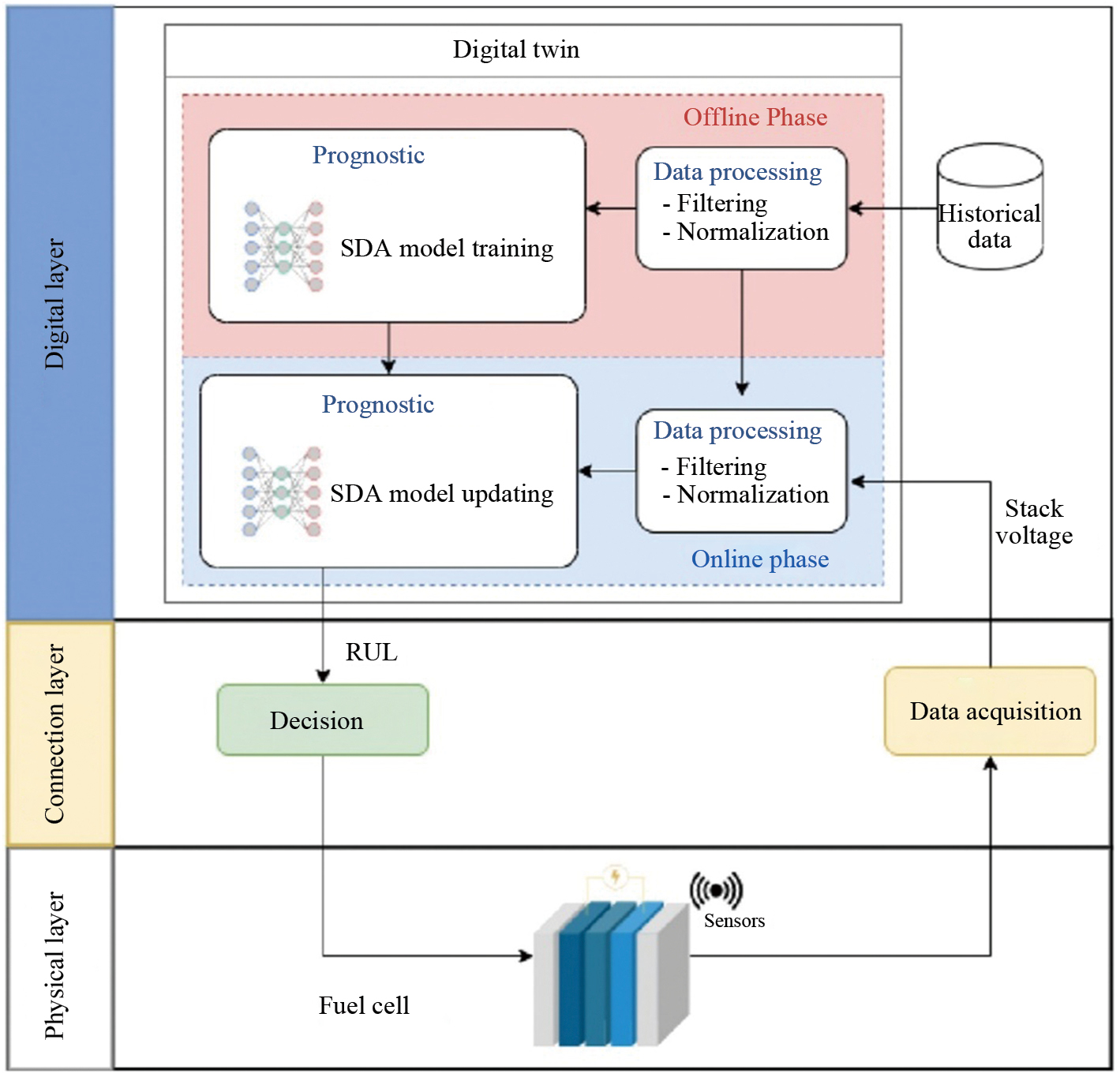
Recently, the field of proton exchange membrane fuel cell (PEMFC) systems has seen an increased emphasis on prognostics and health management. The intensified research interest in this area stems largely from the durability issues of PEMFC stacks, a major technical hurdle that hinders their broad commercial adoption. DT is applied to establish an ensemble remaining useful life prediction system [76]. Given that PEMFC are commonly deployed in intricate system configurations, it is imperative to conduct precise monitoring and prognostication of their health state. Such measures are essential to facilitate the implementation of appropriate interventions, thereby safeguarding the system's integrity and ensuring its continued reliability. Meraghni et al. introduced a data-driven DT (DT) approach for prognostics, aimed at predicting the remaining useful lives (RULs) of PEMFC applications as is shown in Figure 5. This method enhances the capability to update the degradation model of the PEMFC on the digital side using real-time measurements from the physical side. Such an approach significantly improves the prognostics performance, considering varying operating conditions and differences between individual cells. In the digital component of the DT (DT), the degradation model is constructed using a stacked denoising autoencoder (SDA), which directly models the remaining useful life (RUL) of the PEMFC from the input stack voltage. This model is continuously updated through a connection to the physical aspect of the DT (DT), where it receives real-time measurement data. The empirical results demonstrate that the prognostic methodology presented herein effectively forecasts the remaining useful life of the specified PEMFC with an average precision surpassing 0.9. Significantly, this high level of predictive accuracy is maintained notwithstanding the constraints posed by a limited dataset of measurement inputs.
In addition to empirical investigations, DTs contribute significantly to both the understanding and reduction of performance degradation in fuel cells, while also bolstering support for model-based design methodologies [77]. Mus et al. explored the feasibility of using DTs to model PEMFCs through Siemens Simcenter STAR-CCM+ software. In this process, they formulated a general roadmap for the development of these models. The objective is to design and validate a DT of a 20 W open cathode PEMFC stack. The analysis of the simulation results is conducted systematically, following a sequential, step-by-step process. A fundamental mesh study, combined with the monitoring of residuals, is employed to ascertain high-quality mesh, which is vital for obtaining reliable and meaningful results. The application of this methodology, coupled with a comprehensive parametric analysis, elucidates that certain parameters delineated in scholarly literature exert a pronounced influence on the simulation outcomes. Notably, the intrinsic permeability of the gas diffusion layer emerges as the parameter with the most substantial impact on these results. The reliability of the outcome is compromised when realistic values, which exceed the software's limitations, are utilized.
The EMS is pivotal in guaranteeing efficient utilization of generated energy, its proper storage as necessitated, and its smooth, stable, and consistent integration into the power grid [78]. In the context of large-scale microgrid management, effective monitoring and maintenance pose significant challenges. The integration of an artificial intelligence (AI)-powered DT presents a viable solution, enhancing the operational functionalities of the microgrid. This approach not only facilitates real-time monitoring but also enables intelligent predictive maintenance, thereby improving system reliability and efficiency [79]. Prospective enhancements to the microgrid system are projected to integrate advanced technologies, notably hydrogen storage systems and electric vehicle (EV) charging and discharging infrastructure. This strategic expansion is designed to significantly augment the system's capacity for energy diversification and sustainable management. Such developments are in direct response to emerging technological innovations and heightened environmental stewardship imperatives [80].
Savage and co-workers extend a web-based DT to integrate data that are critical to solving these problems, including a description of the energy infrastructure, energy consumption and climate in the UK. The design of the DT is universal—it can and will be extended to cover other types of data. It can update itself and to support data-driven decision making in complex environments [81, 82].
The concept of "perfect foresight," which refers to the utilization of detailed annual data concerning load demands and renewable generation profiles, is instrumental in determining the optimal design of energy systems. However, in actual operations, this level of foresight is not attainable, and control strategies might have to rely solely on the current state and heuristic rules. Consequently, the real-world operation may substantially diverge from the optimal operation envisioned during the system design, necessitating considerable backup capacity. To circumvent reliance on heuristic controls, one viable approach is the implementation of model predictive control (MPC) [83]. Designing and operating long-term energy storage systems optimally, especially when integrating them into the broader renewable energy landscape, presents significant challenges. Research has been conducted on small-scale applications like microgrids in both grid-connected and island modes of operation. This includes studies on energy management in buildings with seasonal thermal storage and renewable systems equipped with hybrid storage solutions. However, the prevalence of applications for fully renewable systems utilizing seasonal storage is limited, a circumstance attributable in part to the intricate modelling demands of these systems. Such modelling necessitates a comprehensive analysis of the entire year with a high degree of temporal resolution. Thaler and colleagues have elucidated a comprehensive methodology for model predictive energy management, specifically tailored to purely renewable systems. This methodology includes provisions for seasonal storage of both electricity and heat. The design of the system incorporates multiple flexibility options, including battery and thermal energy storage, demand-side management, and hydrogen production for seasonal energy storage. The proposed approach adopts a model predictive control framework, employing a DT optimizer that replicates the actual system. This setup is strategically designed to ascertain the most effective energy management strategy. Data-driven prediction models supply the requisite boundary data for the DT, incorporating both historical and forecasted meteorological data as key inputs. To mitigate the limitations of imperfect predictions, heuristic rules were employed to enhance the control strategies recommended by the optimizer, resulting in a hybridized control approach. The seasonal characteristic of hydrogen storage was incorporated by integrating a hydrogen cost term into the cost function utilized within the framework of receding horizon optimization [83]. The implementation of the hybrid control strategy yielded a notable enhancement in performance, surpassing both the conventional rule-based approach and the purely predictive control methods. Relative to the rule-based approach, this strategy facilitated a reduction in system size, which consequently led to a cost decrease of at least 12%. Furthermore, a prediction horizon spanning 24 hours was determined to be adequate for achieving near-optimal operational efficiency.
Tyagunov et al. developed a universal methodology that swiftly and precisely ascertains the optimal composition, parameters, and operational modes of hybrid energy complexes. These complexes comprise power plants utilizing renewable energy sources and energy storage systems, with a focus on ensuring safe operation and guaranteed supply of electricity and heat to consumers in isolated and remote areas. The study demonstrates the efficacy of research and the development of guidelines for selecting parameters and operational modes of hybrid power complexes. These complexes, characterized by a varied composition of generating units, exhibit significant dependence on natural uncertainties across all life cycle stages. The effectiveness of these guidelines is substantiated through the application of a specially developed universal DT. This DT was validated using real power complexes with diverse equipment configurations as case studies [22].
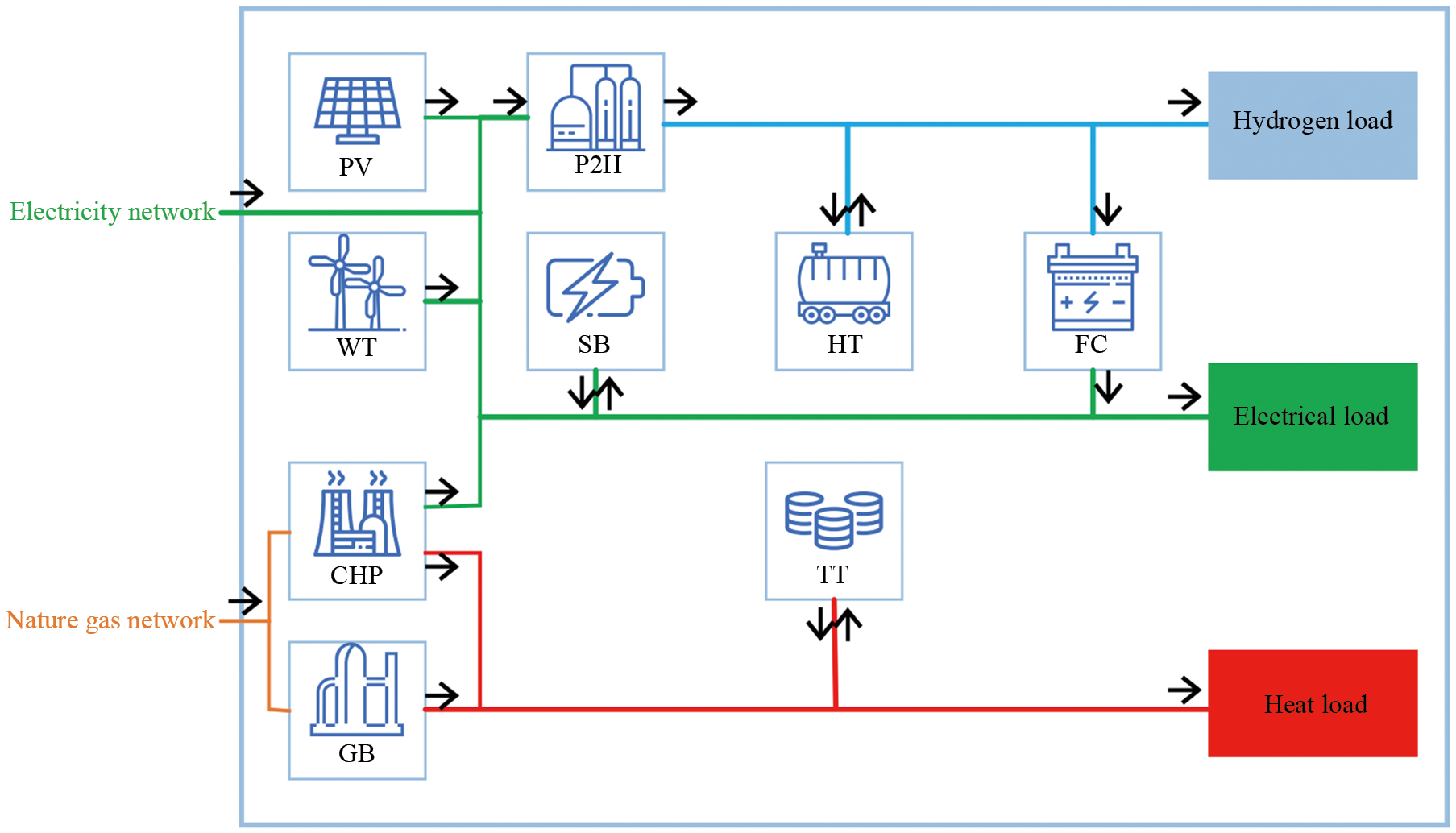
Xing et al. examine the multi-energy flow simulation and optimization within an integrated electricity, heat, gas, and hydrogen energy system, employing DT technology as the foundational analytical tool. As depicted in Fig. 6, the virtual space twin is constructed, integrating disparate networks encompassing electricity, heat, gas, and transportation [84]. This integration is facilitated through an array of energy conversion equipment and communication devices. Initially, the twin model was constructed based on physical drive principles, followed by the prediction of the unit's output and load. The obtained results were then juxtaposed with analogous historical data and subsequently adjusted for accuracy. A decision analysis framework is proposed for evaluating the economic and environmental benefits derived from the optimization results of hydrogen systems. Conclusively, by using an industrial park as a case study, the integrated energy system is optimized for energy dispatch, resulting in enhanced consumption of wind and photovoltaic energy and an elevated level of economic operation [84].
DT technology in hydrogen energy systems, characterized by its dynamic nature, faces multifaceted challenges in industrial application [85]. The digital component of these systems, especially in the case of data-driven DT prognostics methods, requires integration of complex measurements adaptable to diverse operational conditions. This necessitates robust data integration and advanced analytics for accurate representation. However, experimental setups often provide limited data, inadequate for comprehensive machine learning applications, thus underscoring the need for improved data collection and analysis techniques [66, 76].
Additionally, cost-effectiveness is paramount, involving the assessment of computational demands versus the capabilities of industrial-grade servers [86]. A key challenge lies in optimizing the balance between computational efficiency and predictive accuracy for large-scale, economically feasible industrial implementation. This includes considerations for ongoing system maintenance, updates, and continual algorithm training with new data [87].
Moreover, DT technology primarily relies on data-driven machine learning for predictive analysis rather than facilitating convergence in computational fluid dynamics (CFD) simulations [88]. The effectiveness of predictions is directly tied to the quality of data and the sophistication of learning algorithms. Therefore, enhancing data integrity and algorithmic complexity is essential for improving prediction accuracy. This is particularly challenging in extensive offline CFD simulations, which are time-consuming and may question the practicality of DTs in large-scale or time-sensitive applications. State-of-the-art 3D CFD models, while effective in simulating PEMFCs, often rely on idealized assumptions that neglect real-world variations. A more accurate DT framework requires addressing these discrepancies, possibly increasing model complexity but offering more realistic simulations. Machine learning and optimization algorithms can be employed to fine-tune uncertain parameters in the physical model, aligning it more closely with the actual PEMFC performance. The trade-off between real-time response and extensive offline simulation is a critical consideration. For real-time predictive analysis in PEMFC, rapid responsiveness is required, yet detailed simulations demand significant offline time. Balancing detailed simulations with the need for rapid responses is crucial, especially in dynamic operational settings [89].
The integral role of algorithm selection in the development of DT technologies for hydrogen energy systems is paramount [90]. The effectiveness and reliability of a DT heavily depend on its underlying computational algorithms, which are responsible for processing complex data, simulating scenarios, and predicting outcomes. These algorithms range from traditional statistical models to advanced machine learning techniques, each offering unique strengths and capabilities [91]. Machine learning algorithms, for instance, provide the ability to handle large and complex datasets, learning and adapting from the data to predict future trends and behaviours. This is crucial in hydrogen energy systems where variables are numerous and conditions are dynamic. Conversely, optimization algorithms play a vital role in resource allocation and system efficiency, often crucial in managing energy distribution and consumption. Moreover, algorithms based on deep learning can uncover intricate patterns in data, offering insights into system performance and potential improvements. Algorithms that specialize in pattern recognition and anomaly detection are particularly valuable for predictive maintenance, a key aspect of ensuring longevity and efficiency in hydrogen energy systems. Incorporating these diverse algorithmic approaches into DTs allows for a more comprehensive and nuanced analysis of hydrogen energy systems. The choice of algorithms thus becomes a strategic decision, shaping the DT's capacity to provide accurate simulations, actionable insights, and decision-making support [92]. This selection process is integral to the development of DTs, underscoring their role as a transformative tool in the hydrogen energy sector.
This review has systematically examined the emerging role of digital twin technology in the hydrogen energy landscape. This technology offers the distinct advantage of enabling real-time monitoring and predictive maintenance of systems, leading to significant improvements in efficiency and risk management. Additionally, it allows for detailed simulation and analysis, fostering innovation and optimizing performance across various applications. The thorough analysis presented herein illuminates the capacity of digital twin technology to not just refine the discrete facets of hydrogen production, storage, transportation, and utilization, but also to act as an integrative mechanism that coalesces these distinct elements into a synergistic whole. DTs are expected to be key in moving towards a future that is both sustainable and energy efficient. Ensuring the continued development and expansion of this technology is crucial, as it has the potential to significantly transform hydrogen energy systems and beyond, making it a vital tool in the evolution of various industries towards more sustainable practices.
To date, a notable gap persists in the creation of an efficient multi-physics DT for hydrogen production, storage, and transport. There is a need for implementing innovative features that enhance the application's utility for studying electrolysers, while simultaneously ensuring ease of use and maintaining a user-friendly interface. The outlook for DTs in the hydrogen energy sector is both promising and multifaceted, reflecting the growing emphasis on sustainable energy solutions and technological advancements. Here are some key aspects of this outlook.
Modelling mprovements. Future efforts will be directed towards enhancing the modelling aspect, especially in areas such as thermal branches and internal fuel cell system (FCS) auxiliaries. This will include integrating real-world data into the models to validate and refine the performance and accuracy of subsystems. Through these improvements, the models are expected to reflect real-world scenarios more accurately, providing deeper insights and more reliable simulations.
EMS development. Extending the application of DTs to grid-connected microgrids is another future direction, along with analysing how prediction performance affects control quality. More efforts will be intensified to implement and evaluate various EMS to enhance the performance of the powertrain. This will encompass addressing component degradation and investigating alternative control strategies, such as sub-optimal or rule-based controls. These controls will be developed and refined through off-line global optimization methods, including techniques like Dynamic Programming, to ensure more efficient and effective powertrain management.
Integration of advanced technologies. Future research is expected to focus on developing frameworks that integrate optimization and AI with DTs to enhance their analytical and control functionalities. This will involve creating and managing multi-purpose DTs, optimized for applications such as predictive control, condition monitoring, fault detection, and scheduling. Emphasis will also be placed on enhancing automatic data collection and preprocessing, along with incorporating emerging technologies like 5G, IoT, big data, and cloud computing to improve real-time operations and synchronization between virtual and physical systems.
Long-term validity of DTs. Future research endeavours will concentrate on developing frameworks designed to periodically evaluate the validity of DTs, with the goal of ensuring their sustained accuracy and effectiveness over time. This approach is essential for maintaining the reliability and applicability of DTs in dynamic and evolving real-world scenarios.
N. Chen, S. Y. Paek, J. Y. Lee, J. H. Park, S. Y. Lee, Y. M. Lee, “High-performance anion exchange membrane water electrolyzers with a current density of 7.68 A·cm−2 and a durability of 1000 hours,” Energy & Environmental Science, no. 14, pp. 6338–6348, 2021.
K. Jiao, J. Xuan, Q. Du, Z. Bao, B. Xie, B. Wang, Y. Zhao, L. Fan, H. Wang, Z. Hou, S. Huo, N. P. Brandon, Y. Yin, and M. D. Guiver, "Designing the next generation of proton-exchange membrane fuel cells," Nature, vol. 595, no. 7867, pp. 361–369, Jul, 2021.
K.-S. Lee, J. S. Spendelow, Y.-K. Choe, C. Fujimoto, and Y. S. Kim, "An operationally flexible fuel cell based on quaternary ammonium-biphosphate ion pairs," Nature Energy, vol. 1, no. 9, pp. 1–7, 2016.
Q. Hassan, S. Algburi, A. Z. Sameen, H. M. Salman, and M. Jaszczur, "Green hydrogen: A pathway to a sustainable energy future," International Journal of Hydrogen Energy, vol. 50, pp. 310–333, 2023.
Z. Feng, J. Huang, S. Jin, G. Wang, and Y. Chen, "Artificial intelligence-based multi-objective optimisation for proton exchange membrane fuel cell: A literature review," Journal of Power Sources, vol. 520, pp. 230808–230824, 2022.
X. Y. Tai, L. Xing, S. D. R. Christie, and J. Xuan, "Deep learning design of functionally graded porous electrode of proton exchange membrane fuel cells," Energy, vol. 283, pp. 128463–128480, 2023.
J. Leng, D. Wang, W. Shen, X. Li, Q. Liu, and X. Chen, "Digital twins-based smart manufacturing system design in Industry 4.0: A review," Journal of Manufacturing Systems, vol. 60, pp. 119–137, 2021.
B. Wang, F. Tao, X. Fang, C. Liu, Y. Liu, and T. Freiheit, "Smart manufacturing and intelligent manufacturing: A comparative review," Engineering, vol. 7, no. 6, pp. 738–757, 2021.
C. Semeraro, A. G. Olabi, H. Aljaghoub, A. H. Alami, M. Al Radi, M. Dassisti, and M. A. Abdelkareem, "Digital twin application in energy storage: Trends and challenges," Journal of Energy Storage, vol. 58, pp. 106347–106362, 2023.
C. Semeraro, H. Aljaghoub, M. A. Abdelkareem, A. H. Alami, and A. G. Olabi, "Digital twin in battery energy storage systems: Trends and gaps detection through association rule mining," Energy, vol. 273, pp. 127086–127099, 2023.
Y. Shen, K. Li, Z. Xu, Z. Wang, and J. Ge, "Research on energy digital twin quality model based on data driven,"2022 IEEE Intl Conf on Dependable, Autonomic and Secure Computing, Intl Conf on Pervasive Intelligence and Computing, Intl Conf on Cloud and Big Data Computing, Intl Conf on Cyber Science and Technology Congress (DASC/PiCom/CBDCom/CyberSciTech), Falerna, Italy, 2022, pp. 12–15.
B. He and K.-J. Bai, "Digital twin-based sustainable intelligent manufacturing: A review," Advances in Manufacturing, vol. 9, no. 1, pp. 1–21, 2020.
T. A. Huynh and E. Zondervan, "Process intensification and digital twin — The potential for the energy transition in process industries," Physical Sciences Reviews, vol. 0, no. 0, pp. 4859–4877, 2022.
N. Kumari, A. Sharma, B. Tran, N. Chilamkurti, and D. Alahakoon, "A comprehensive review of digital twin technology for grid-connected microgrid systems: State of the art, potential and challenges faced," Energies, vol. 16, no. 14, pp. 5525–5544, 2023.
P. Y. Liew, P. S. Varbanov, A. Foley, and J. J. Klemeš, "Smart energy management and recovery towards sustainable energy system optimisation with bio-based renewable energy," Renewable and Sustainable Energy Reviews, vol. 135, pp. 110385–110390, 2021.
Y. Li, S. Wang, X. Duan, S. Liu, J. Liu, and S. Hu, "Multi-objective energy management for Atkinson cycle engine and series hybrid electric vehicle based on evolutionary NSGA-II algorithm using digital twins," Energy Conversion and Management, vol. 230, pp. 113788–113809, 2021.
F. Gao and B. He, "Power supply line selection decision system for new energy distribution network enterprises based on digital twinning," Energy Reports, vol. 7, pp. 760–771, 2021.
S. Deng, L. Ling, C. Zhang, C. Li, T. Zeng, K. Zhang, and G. Guo, "A systematic review on the current research of digital twin in automotive application," Internet of Things and Cyber-Physical Systems, vol. 3, pp. 180–191, 2023.
U. Cali, B. D. Dimd, P. Hajialigol, A. Moazami, S. N. G. Gourisetti, G. Lobaccaro, and M. Aghaei, "Digital twins: Shaping the future of energy systems and smart cities through cybersecurity, efficiency, and sustainability,"2023 International Conference on Future Energy Solutions (FES), Vaasa, Finland, 2023, pp. 1–6.
J. V. S. do Amaral, C. H. dos Santos, J. A. B. Montevechi, and A. R. de Queiroz, "Energy digital twin applications: A review," Renewable and Sustainable Energy Reviews, vol. 188, pp. 113891–113909, 2023.
M. Manfren, P. A. B. James, V. Aragon, and L. Tronchin, "Lean and interpretable digital twins for building energy monitoring—A case study with smart thermostatic radiator valves and gas absorption heat pumps," Energy and AI, vol. 14, pp. 100304–100319, 2023.
M. G. Tyagunov and R. P. Sheverdiev, "Digital twin as an effective and versatile tool for modeling and optimizing hybrid energy complexes at all stages of the life cycle,"2023 International Russian Smart Industry Conference (SmartIndustryCon), Sochi, Russia, 2023, pp. 1–5.
C. Ghenai, L. A. Husein, M. Al Nahlawi, A. K. Hamid, and M. Bettayeb, "Recent trends of digital twin technologies in the energy sector: A comprehensive review," Sustainable Energy Technologies and Assessments, vol. 54, pp. 102837–102854, 2022.
H. Xu, J. Wu, Q. Pan, X. Guan, and M. Guizani, "A Survey on digital twin for industrial internet of things: Applications, technologies and tools," IEEE Communications Surveys & Tutorials, vol. 25, no. 4, pp. 2569–2598, 2023.
M. Segovia and J. Garcia-Alfaro, "Design, modeling and implementation of digital twins," Sensors (Basel), vol. 22, no. 14, pp. 5396–5426, 2022.
P. Yu, W. Zhaoyu, G. Yifen, T. Nengling, and W. Jun, "Application prospect and key technologies of digital twin technology in the integrated port energy system," Frontiers in Energy Research, vol. 10, pp. 1044978–1044995, 2023.
H. Zhang, S. Zhao, G. Kou, C.-C. Li, Y. Dong, and F. Herrera, "An overview on feedback mechanisms with minimum adjustment or cost in consensus reaching in group decision making: Research paradigms and challenges," Information Fusion, vol. 60, pp. 65–79, 2020.
Y. Xing, J. Wu, F. Chiclana, G. Yu, M. Cao, and E. Herrera-Viedma, "A bargaining game based feedback mechanism to support consensus in dynamic social network group decision making," Information Fusion, vol. 93, pp. 363–382, 2023.
Y. Fan, J. Yang, J. Chen, P. Hu, X. Wang, J. Xu, and B. Zhou, "A digital-twin visualized architecture for flexible manufacturing system," Journal of Manufacturing Systems, vol. 60, pp. 176–201, 2021.
Y. Yi, Y. Yan, X. Liu, Z. Ni, J. Feng, and J. Liu, "Digital twin-based smart assembly process design and application framework for complex products and its case study," Journal of Manufacturing Systems, vol. 58, pp. 94–107, 2021.
C. Semeraro, M. Lezoche, H. Panetto, and M. Dassisti, "Digital twin paradigm: A systematic literature review," Computers in Industry, vol. 130, pp. 103469–103492, 2021.
X. Zheng, J. Lu, and D. Kiritsis, "The emergence of cognitive digital twin: Vision, challenges and opportunities," International Journal of Production Research, vol. 60, no. 24, pp. 7610–7632, 2021.
K. Xia, C. Sacco, M. Kirkpatrick, C. Saidy, L. Nguyen, A. Kircaliali, and R. Harik, "A digital twin to train deep reinforcement learning agent for smart manufacturing plants: Environment, interfaces and intelligence," Journal of Manufacturing Systems, vol. 58, pp. 210–230, 2021.
V. L. Bondarenko, D. N. Ilyinskaya, A. A. Kazakova, P. S. Kozlovtsev, and N. A. Lavrov, "Digitalization of determining the basic properties of hydrogen," Chemical and Petroleum Engineering, vol. 58, no. 1–2, pp. 47–51, 2022.
S. Baidya, V. Potdar, P. Pratim Ray, and C. Nandi, "Reviewing the opportunities, challenges, and future directions for the digitalization of energy," Energy Research & Social Science, vol. 81, pp. 102243–102267, 2021.
V. L. Bondarenko, D. N. Ilyinskaya, A. A. Kazakova, P. S. Kozlovtsev, and N. A. Lavrov, "Use of digital technologies for selecting the hydrogen storage and transportation type," Chemical and Petroleum Engineering, vol. 58, no. 1–2, pp. 58–62, 2022.
M. A. Vaziri Rad, A. Kasaeian, X. Niu, K. Zhang, and O. Mahian, "Excess electricity problem in off-grid hybrid renewable energy systems: A comprehensive review from challenges to prevalent solutions," Renewable Energy, vol. 212, pp. 538–560, 2023.
C. Wang, Z. Feng, Y. Zhao, X. Li, W. Li, X. Xie, S. Wang, and H. Hou, "Preparation and properties of ion exchange membranes for PEMFC with sulfonic and carboxylic acid groups based on polynorbornenes," International Journal of Hydrogen Energy, vol. 42, no. 50, pp. 29988–29994, 2017.
X. Wu, N. Chen, C. Hu, H. A. Klok, Y. M. Lee, and X. Hu, "Fluorinated Poly(aryl piperidinium) membranes for anion exchange membrane fuel cells," Adv Mater, vol. 35, no. 26, pp. 2210432–2210442, 2023.
D. Dongyun, W. Zheng, Y. Yimin, S. Zhongqing, Y. Huisheng, and J. Weiyun, "Research on intelligent online operation and maintenance system of 3D visualization hydrogen production and energy storage power station,"2022 4th International Conference on Smart Power & Internet Energy Systems (SPIES), Beijing, China, 2022, pp. 2128–2133.
S. Aslam, S. Rani, K. Lal, M. Fatima, T. Hardwick, B. Shirinfar, and N. Ahmed, "Electrochemical hydrogen production: sustainable hydrogen economy," Green Chemistry, vol. 25, no. 23, pp. 9543–9573, 2023.
L. Fan, Z. Tu, and S. H. Chan, "Recent development of hydrogen and fuel cell technologies: A review," Energy Reports, vol. 7, pp. 8421–8446, 2021.
A. K. Sleiti, J. S. Kapat, and L. Vesely, "Digital twin in energy industry: Proposed robust digital twin for power plant and other complex capital-intensive large engineering systems," Energy Reports, vol. 8, pp. 3704–3726, 2022.
S. E. Hosseini and M. A. Wahid, "Hydrogen production from renewable and sustainable energy resources: Promising green energy carrier for clean development," Renewable and Sustainable Energy Reviews, vol. 57, pp. 850–866, 2016.
F. S. AlHumaidan, M. Absi Halabi, M. S. Rana, and M. Vinoba, "Blue hydrogen: Current status and future technologies," Energy Conversion and Management, vol. 283, pp. 116840–116877, 2023.
Z. Feng, P. O. Esteban, G. Gupta, D. A. Fulton, and M. Mamlouk, "Highly conductive partially cross-linked poly (2,6-dimethyl-1,4-phenylene oxide) as anion exchange membrane and ionomer for water electrolysis," International Journal of Hydrogen Energy, vol. 46, no. 75, pp. 37137–37151, 2021.
M. T. Ahad, M. M. H. Bhuiyan, A. N. Sakib, A. Becerril Corral, and Z. Siddique, "An overview of challenges for the future of hydrogen," Materials (Basel), vol. 16, no. 20, pp. 6680–6708, 2023.
D. Atkins, E. Capria, K. Edström, T. Famprikis, A. Grimaud, Q. Jacquet, M. Johnson, A. Matic, P. Norby, H. Reichert, J. P. Rueff, C. Villevieille, M. Wagemaker, and S. Lyonnard, "Accelerating battery characterization using neutron and synchrotron techniques: Toward a multi‐modal and multi‐scale standardized experimental workflow," Advanced Energy Materials, vol. 12, no. 17, pp. 202102694–202102714, 2021.
J. Yang, A. Sudik, C. Wolverton, and D. J. Siegel, "High capacity hydrogen storage materials: attributes for automotive applications and techniques for materials discovery," Chem Soc Rev, vol. 39, no. 2, pp. 656–75, 2010.
D. Zhao, Q. He, J. Yu, M. Guo, J. Fu, X. Li, and M. Ni, "A data-driven digital-twin model and control of high temperature proton exchange membrane electrolyzer cells," International Journal of Hydrogen Energy, vol. 47, no. 14, pp. 8687–8699, 2022.
J. Faria, J. Pombo, M. Calado, and S. Mariano, "Power management control strategy based on artificial neural networks for standalone PV applications with a hybrid energy storage system," Energies, vol. 12, no. 5, pp. 902–924, 2019.
F. J. Folgado, I. González, and A. J. Calderón, "PEM electrolyser digital twin embedded within MATLAB-based graphical user interface,"in Engineering Proceedings, vol. 19, no. 1, pp. 21–27, 2022.
F. J. Folgado, D. Orellana, I. González, and A. J. Calderón, "Processes supervision system for green hydrogen production: Experimental characterization and data acquisition of PEM electrolyzer," Engineering Proceedings, vol. 19, no. 1, pp. 36–41, 2022.
A. M. Abdalla, S. Hossain, O. B. Nisfindy, A. T. Azad, M. Dawood, and A. K. Azad, "Hydrogen production, storage, transportation and key challenges with applications: A review," Energy Conversion and Management, vol. 165, pp. 602–627, 2018.
J. A. Gómez and D. M. F. Santos, "The status of on-board hydrogen storage in fuel cell electric vehicles," Designs, vol. 7, no. 4, p. 97, 2023.
F. Qureshi, M. Yusuf, M. Arham Khan, H. Ibrahim, B. C. Ekeoma, H. Kamyab, M. M. Rahman, A. K. Nadda, and S. Chelliapan, "A state-of-the-art review on the latest trends in hydrogen production, storage, and transportation techniques," Fuel, vol. 340, pp. 127574–127592, 2023.
I. A. Hassan, H. S. Ramadan, M. A. Saleh, and D. Hissel, "Hydrogen storage technologies for stationary and mobile applications: Review, analysis and perspectives," Renewable and Sustainable Energy Reviews, vol. 149, no. 3, p. 111311, 2021.
X. Yang, "Research on an intelligent monitoring system for hydrogen state based on virtual simulation,"2022 IEEE International Conference on Advances in Electrical Engineering and Computer Applications (AEECA), Dalian, China, 2022, pp. 1445–1448.
X. Li, Y. Zhao, Z. Feng, X. Xiang, S. Wang, X. Xie, and V. K. Ramani, "Ring-opening metathesis polymerization for the preparation of polynorbornene-based proton exchange membranes with high proton conductivity," Journal of Membrane Science, vol. 528, pp. 55–63, 2017.
Z. Li, S. Wang, W. Li, T. Zhu, Z. Fan, and X. Xie, "Droplet dynamics in a proton exchange membrane fuel cell flow field design with 3D geometry," International Journal of Hydrogen Energy, vol. 46, no. 31, pp. 16693–16707, 2021.
S. Wang, Z. He, X. Wang, C. Wang, X. Li, and Y. Zhao, "Ultrathin semi-interpenetrating network membranes based on perfluorinated sulfonic acid resin and polydivinylbenzene with declined hydrogen crossover for proton exchange membrane fuel cell," Journal of The Electrochemical Society, vol. 168, no. 8, p. 084508, 2021.
Y. Zhao, X. Li, W. Li, Z. Wang, S. Wang, X. Xie, and V. Ramani, "A high-performance membrane electrode assembly for polymer electrolyte membrane fuel cell with poly(arylene ether sulfone) nanofibers as effective membrane reinforcements," Journal of Power Sources, vol. 444, p. 227250, 2019.
J. Wang, H. Jiang, G. Chen, H. Wang, L. Lu, J. Liu, and L. Xing, "Integration of multi-physics and machine learning-based surrogate modelling approaches for multi-objective optimization of deformed GDL of PEM fuel cells," Energy and AI, vol. 14, pp. 100261–100275, 2023.
Z. Feng, S. Jin, H. Xiang, D. Li, S. Sun, H. Zhang, and Y. Chen, "Artificial intelligence-based optimization for ring-opening metathesis polymerization of proton exchange membrane," Journal of Polymer Research, vol. 30, no. 11, pp. 418–427, 2023.
M. Yue, S. Jemei, R. Gouriveau, and N. Zerhouni, "Review on health-conscious energy management strategies for fuel cell hybrid electric vehicles: Degradation models and strategies," International Journal of Hydrogen Energy, vol. 44, no. 13, pp. 6844–6861, 2019.
B. Wang, G. Zhang, H. Wang, J. Xuan, and K. Jiao, "Multi-physics-resolved digital twin of proton exchange membrane fuel cells with a data-driven surrogate model," Energy and AI, vol. 1, pp. 100004–100017, 2020.
F. Bai, H.-B. Quan, R.-J. Yin, Z. Zhang, S.-Q. Jin, P. He, Y.-T. Mu, X.-M. Gong, and W.-Q. Tao, "Three-dimensional multi-field digital twin technology for proton exchange membrane fuel cells," Applied Energy, vol. 324, pp. 119763–119779, 2022.
I. Marouani, T. Guesmi, B. M. Alshammari, K. Alqunun, A. Alzamil, M. Alturki, and H. Hadj Abdallah, "Integration of renewable-energy-based green hydrogen into the energy future," Processes, vol. 11, no. 9, pp. 2685–2714, 2023.
M. H. Moradi, M. Hajinazari, S. Jamasb, and M. Paripour, "An energy management system (EMS) strategy for combined heat and power (CHP) systems based on a hybrid optimization method employing fuzzy programming," Energy, vol. 49, pp. 86–101, 2013.
L. Bartolucci, E. Cennamo, S. Cordiner, V. Mulone, F. Pasqualini, and M. A. Boot, "Digital twin of a hydrogen fuel cell hybrid electric vehicle: Effect of the control strategy on energy efficiency," International Journal of Hydrogen Energy, vol. 48, no. 54, pp. 20971–20985, 2023.
V. Cigolotti, L. Bartolucci, E. Cennamo, S. Cordiner, V. Mulone, F. Pasqualini, and M. Aimo Boot, "Digital twin of fuel cell hybrid electric vehicle: A detailed modelling approach of the hydrogen powertrain and the auxiliary systems," E3S Web of Conferences, vol. 334, pp. 06003–06010, 2022.
M. Chandran, K. Palanisamy, D. Benson, and S. Sundaram, "A review on electric and fuel cell vehicle anatomy, technology evolution and policy drivers towards EVs and FCEVs market propagation," Chemical Record, vol. 22, no. 2, p. e202100235, Feb, 2022.
Q. Yang, T. Zeng, C. Zhang, W. Zhou, L. Xu, J. Zhou, P. Jiang, and S. Jiang, "Modeling and simulation of vehicle integrated thermal management system for a fuel cell hybrid vehicle," Energy Conversion and Management, vol. 278, pp. 116745–116760, 2023.
M. Yekini Suberu, M. Wazir Mustafa, and N. Bashir, "Energy storage systems for renewable energy power sector integration and mitigation of intermittency," Renewable and Sustainable Energy Reviews, vol. 35, pp. 499–514, 2014.
Z. Guo, Z. Ye, P. Ni, C. Cao, X. Wei, J. Zhao, and X. He, "Intelligent digital twin modelling for hybrid PV-SOFC power generation system," Energies, vol. 16, no. 6, pp. 2806–2827, 2023.
S. Meraghni, L. S. Terrissa, M. Yue, J. Ma, S. Jemei, and N. Zerhouni, "A data-driven digital-twin prognostics method for proton exchange membrane fuel cell remaining useful life prediction," International Journal of Hydrogen Energy, vol. 46, no. 2, pp. 2555–2564, 2021.
J. Mus, S. Mylle, S. Schotte, S. Fevery, S. K. Latre, and F. Buysschaert, "CFD modelling and simulation of PEMFCs in STAR-CCM+,"2022 11th International Conference on Renewable Energy Research and Application (ICRERA), Nagasaki, Japan, 2022, pp. 260–267.
R. H. Byrne, T. A. Nguyen, D. A. Copp, B. R. Chalamala, and I. Gyuk, "Energy management and optimization methods for grid energy storage systems," IEEE Access, vol. 6, pp. 13231–13260, 2018.
I. Natgunanathan, V. Mak-Hau, S. Rajasegarar, and A. Anwar, "Deakin microgrid digital twin and analysis of AI models for power generation prediction," Energy Conversion and Management: X, vol. 18, pp. 100370–100381, 2023.
T.-A. Nguyen-Huu, T. T. Tran, M.-Q. Tran, P. H. Nguyen, and J. Slootweg, "Operation orchestration of local energy communities through digital twin: A review on suitable modeling and simulation approaches,"2022 IEEE 7th International Energy Conference (ENERGYCON), Riga, Latvia, 2022, pp. 1–6.
T. Savage, J. Akroyd, S. Mosbach, N. Krdzavac, M. Hillman, and M. Kraft, "Universal digital twin: Integration of national-scale energy systems and climate data," Data-Centric Engineering, vol. 3, p. e23, 2022.
T. Savage, J. Akroyd, S. Mosbach, M. Hillman, F. Sielker, and M. Kraft, "Universal digital twin—The impact of heat pumps on social inequality," Advances in Applied Energy, vol. 5, pp. 100079–100096, 2022.
B. Thaler, S. Posch, A. Wimmer, and G. Pirker, "Hybrid model predictive control of renewable microgrids and seasonal hydrogen storage," International Journal of Hydrogen Energy, vol. 48, no. 97, pp. 38125–38142, 2023.
J. Xing, S. Sun, P. Yu, Y. Li, Y. Cheng, Y. Wang, S. Li, and J. Zhu, "Multi-energy simulation and optimal scheduling strategy based on digital twin,"2022 Power System and Green Energy Conference (PSGEC), Shanghai, China, 2022, pp. 96–100.
W. Marcus, M. Tobias, and T. Philipp, "The potential of FMI for the development of digital twins for large modular multi-domain systems,"in Proceedings of 14th Modelica Conference 2021, Linköping, Sweden, September 20–24, 2021, pp. 235–240.
M. Vuković, O. Jorg, M. Hosseinifard, and G. Fantoni, "Low-cost digitalization solution through scalable IIoT prototypes," Applied Sciences, vol. 12, no. 17, pp. 8571–8593, 2022.
J. Gama, "A survey on learning from data streams: Current and future trends," Progress in Artificial Intelligence, vol. 1, no. 1, pp. 45–55, 2012.
L.-T. Zhu, X.-Z. Chen, B. Ouyang, W.-C. Yan, H. Lei, Z. Chen, and Z.-H. Luo, "Review of machine learning for hydrodynamics, transport, and reactions in multiphase flows and reactors," Industrial & Engineering Chemistry Research, vol. 61, no. 28, pp. 9901–9949, 2022.
B. Hess, "GROMACS 4: Algorithms for highly efficient, load-balanced, and scalable molecular simulation," Journal of Chemical Theory and Computation, vol. 4, no. 3, pp. 435–447, 2008.
H. C. Z. Z. P. Karamanakos, "Digital twin techniques for power electronics-based energy conversion systems: A survey of concepts, application scenarios, future challenges, and trends," IEEE Industrial Electronics Magazine, vol. 17, no. 2, pp. 20–36, 2023.
A. Rasheed, O. San, and T. Kvamsdal, "Digital twin: Values, challenges and enablers from a modeling perspective," IEEE Access, vol. 8, pp. 21980–22012, 2020.
 Top
Top